

health and wellness
5 Ways Heart Health Care Can Improve

Last Updated on December 13, 2024 by Daily News Staff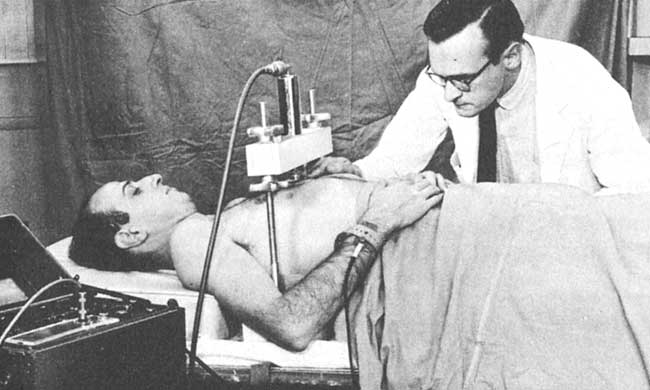
(Family Features) Before the advent of antibiotics, infectious diseases, such as pneumonia, tuberculosis and diphtheria, were the most common causes of death in the industrialized world. Today, heart disease is the leading cause of death in the United States, and has been since 1921, according to the Centers for Disease Control and Prevention.
However, more than half of people in the U.S. (51%) aren’t aware of that fact, according to a Harris Poll survey conducted on behalf of the American Heart Association. What’s more, nearly half of all people in the U.S. (48.6%) have some type of cardiovascular disease (CVD), including coronary heart disease, heart failure, stroke or, most notably, high blood pressure, according to the annual statistical update, “2024 Heart Disease and Stroke Statistics: A Report of U.S. and Global Data From the American Heart Association,” published in “Circulation.”
“Heart disease along with stroke, which is the fifth-leading cause of death, claim more lives in the U.S. than all forms of cancer and chronic lower respiratory disease combined, based on the most recent data available,” said Joseph C. Wu, M.D., Ph.D., FAHA, volunteer president of the American Heart Association, director of the Stanford Cardiovascular Institute and the Simon H. Stertzer Professor of Medicine and Radiology at Stanford School of Medicine. “Finding that most people do not know the significant impact of heart disease is discouraging and even a bit frightening.”
While death rates from CVD have declined 60% since 1950 and the number of people in the U.S. dying from heart attack has dropped from 1 in 2 in the ’50s to about 1 in 8 today, challenges still remain.
In 2024, with Bold Hearts – the American Heart Association’s centennial celebration – the organization celebrates 100 years of progress and identified several issues that must be addressed to make the next century of life-saving work as impactful as the first 100 years:
- Scientific literacy must be enhanced to increase public knowledge and understanding about the methods and interpretation of scientific data.
- Non-traditional approaches to health care are needed to address the social and structural determinants of health by moving evidence-based approaches rapidly into communities to address food insecurity, transportation problems, education, housing, access to care, chronic psychosocial stress and other social needs.
- The interconnectedness of organ systems, mechanisms of disease and stages of life are critical to understanding the role cardiovascular health plays in overall health.
- Appreciation of systems of care will beimportant to achieving significant clinical benefits. Reliance on individual physicians may not be realistic in managing diseases involving multiple organ systems such as cardiovascular-kidney-metabolic disease or disorders affecting the heart, brain and mind simultaneously.
- More funding for research is a critical need due to the pace of scientific advances. In the next century, laboratory experiments may demand more sophisticated equipment, translational science will incorporate expensive new technologies like artificial intelligence and population health will require greater computing power and larger sample sizes.
“There is much to learn from this historic shift in the reduction of deaths from infectious diseases and the current prevalence in deaths from cardiovascular diseases,” Wu said. “Through scientific research, technological advances and public health policy, most of these infectious diseases have become controlled, and many have been or are nearly eradicated. As we apply these same clinical and epidemiological methods to the someday hopeful eradication of heart disease and stroke, the American Heart Association is making great progress. Although still too many people die each year, many are living longer, more productive lives while managing their cardiovascular disease and risk factors.”
To learn more, visit heart.org/centennial.
SOURCE:
American Heart Association
STM Daily News is a vibrant news blog dedicated to sharing the brighter side of human experiences. Emphasizing positive, uplifting stories, the site focuses on delivering inspiring, informative, and well-researched content. With a commitment to accurate, fair, and responsible journalism, STM Daily News aims to foster a community of readers passionate about positive change and engaged in meaningful conversations. Join the movement and explore stories that celebrate the positive impacts shaping our world.


Health and Life Insurance
Lessons in Life Insurance: 4 Reasons Getting It May Be Easier Than You Think
Life is the most valuable thing you have – and like all valuable things, it should be insured. Even thinking about life insurance can be stressful, so it’s one of those things that’s easy to put off and tell yourself you’ll do another day. Consider these four ways to make getting life insurance simpler than you thought.

Lessons in Life Insurance: 4 Reasons Getting It May Be Easier Than You Think
(Feature Impact) Life is the most valuable thing you have – and like all valuable things, it should be insured. Even thinking about life insurance can be stressful, so it’s one of those things that’s easy to put off and tell yourself you’ll do another day.
If that’s how you feel, you aren’t alone. According to the 2026 Life Happens Life Insurance Survey, nearly half (46%) of U.S. adults have getting life insurance on their to-do list but plan to deal with it later or not at all. Confusion, procrastination and cost concerns are among the main reasons people kick this can down the road, according to 45% of respondents.
Yet the survey also uncovered an interesting disconnect: 69% of Americans said they personally know someone who had life insurance or whose family used a life insurance policy, most often a parent or parent figure (33%), but still haven’t made getting coverage a priority.
“Life insurance isn’t unfamiliar to most Americans,” Life Happens Executive Director Brian Steiner said. “The challenge is turning that awareness into action. People may think life insurance is something they can deal with later, but waiting can leave the people they love financially vulnerable. Getting started doesn’t have to be complicated, and professional guidance can help you find protection that fits your needs and budget.”
Consider these four ways to make getting life insurance simpler than you thought.
Watch this video to learn more
1. Find a policy that’s a fit.
Roughly 4 in 10 survey respondents reported feeling overwhelmed, anxious or some combination of both about planning for life insurance, with 12% citing thinking it’ll be too expensive as a reason they’ve delayed looking into, buying or updating life insurance.
The good news: There’s a policy that’s right for your current needs. It may be term life insurance, which provides protection for a specific period of time, like to cover a mortgage or tuition for children. There’s also permanent life insurance, which offers lifelong protection, as long as you pay the premiums.
2. Take advantage of digital tools
One-quarter of respondents said they’d be more likely to look into life insurance if they learned it was easier to get than they thought, and digital tools can help make that demand a reality.
It can take as little as two minutes to find out how much you need, for example, with the life insurance needs calculator from the nonprofit Life Happens. Just answer a few simple questions to estimate the amount of life insurance coverage you may need to take care of your family.
3. It’s about protection, not perfection.
Part of the anxiety around life insurance may be the perception that it should be perfect. For more than 1 in 5 survey participants, the plan is to seriously look at it when they feel more financially stable, and another 12% simply said they’ll do it when they’re older.
However, life insurance doesn’t have to check all the boxes for every stage of your life – you can find what works for your family right now then adjust as things change over time.
4. Professional help is available.
Perhaps the biggest hurdle to tackling life insurance is the feeling that you’re in it alone. Overall, 55% of respondents said if they learned life insurance may be easier to get than they expected, they’d be more likely to start the process.
With professional help only a few clicks away, you can rest assured you’re on the path to a life insurance fit that’s right for you by visiting findapro.lifehappens.org.
Photo courtesy of Shutterstock

SOURCE:
Child Health
Changing the Landscape of Childhood Cancer Survivorship
Childhood Cancer: hile “cancer” is a term no family wants to hear, especially when it comes to their children, there is reason for hope. Today, 85% of children diagnosed with cancer survive at least five years. Survival is only part of the journey, however.
Changing the Landscape of Childhood Cancer Survivorship
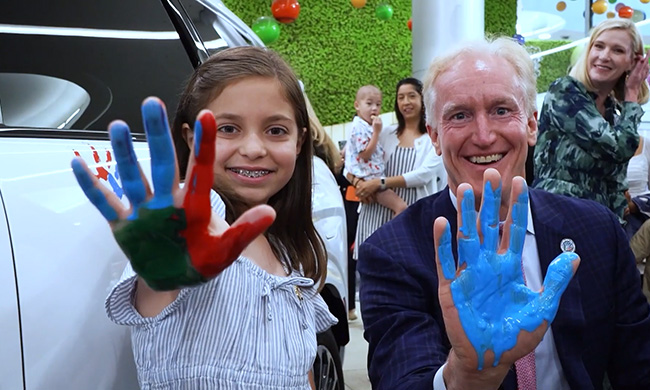
(Feature Impact) While “cancer” is a term no family wants to hear, especially when it comes to their children, there is reason for hope. Today, 85% of children diagnosed with cancer survive at least five years, according to the National Cancer Institute, up from 75% three decades ago.
Watch this video to learn more
“This progress is driven in large part by dedicated research,” Hyundai Hope on Wheels Board Member Kevin Reilly said. “Over the last 28 years, Hyundai Hope on Wheels has committed over $300 million in pediatric cancer research and program grants, awarding more than 1,600 grants to 210 medical institutions nationwide, impacting thousands of young lives each year.”
Survival is only part of the journey, however. Nearly half (46%) of U.S. adults believe a child ringing the hospital bell after cancer treatment means the child is cancer-free and their medical journey is largely over, according to a survey conducted by Atomik Research on behalf of Hyundai Hope on Wheels. For the children and families living through a diagnosis, the reality is far more complex.
“The reality is that healing continues long after treatment, which is why sustained investment in survivorship care is a priority for us,” said John Guastaferro, executive director of Hyundai Hope on Wheels.
Isabella Franco-Capps, 11, understands that journey firsthand. Diagnosed with B-cell acute lymphoblastic leukemia at age 5, her journey took two years before she could say she’s “a cancer survivor.”
“I was diagnosed with b-cell acute lymphoblastic leukemia,” she said. “This began my two-year-long journey of scans, pokes, chemotherapy and hospital stays. And now I’m a cancer survivor.”
Fellow Hyundai Hope on Wheels National Youth Ambassador, Jackson Trihn, 12, is using his voice to call for continued research and to bring hope to others.
“The role … is being able to share my story,” he said. “Not just to spread awareness but to spread hope to kids that need it. And awareness is so important because people don’t understand how hard pediatric cancer can be.”
Continued progress can help ensure more children ring the bell and receive the care and support they need long after they’ve had the opportunity to do so. To learn more about these efforts and how you can help, visit HyundaiHopeOnWheels.org.

SOURCE:
💪 Your health journey starts here! Explore the latest health news, fitness tips, wellness trends, and healthy living advice. Share your thoughts in the comments and subscribe to the STM Daily News newsletter to stay informed and inspired every day.

(Feature Impact) Driven by rising rates of obesity, diabetes, high blood pressure and other risk factors,cardiovascular disease has surpassed cancer as the leading cause of death among Hispanic adults in the United States.
Hispanic people represent nearly 1 in 5 of the U.S. population and are the nation’s largest ethnic minority group, yet many continue to face barriers to achieving heart health and accessing high-quality healthcare. A new scientific statement published in the American Heart Association’s flagship journal, “Circulation,” revealed how social, economic, cultural and environmental factors contribute to persistent disparities in cardiovascular health, calling for culturally tailored prevention strategies, equitable access to care and greater representation of Hispanic populations in cardiovascular research.
“Hispanic populations in the U.S. are incredibly diverse even within their own communities with differences in genetic ancestry, language, cultural traditions and social experiences that can significantly influence cardiovascular health,” said Johanna Contreras, M.D., M.Sc., FAHA, director of the Division of Heart Failure and medical director of the Hispanic Heart Center within the Mount Sinai Health System. “Yet Hispanic people remain underrepresented overall in the research that guides prevention and treatment strategies… Without better representation and more detailed data, we risk overlooking important differences that can help us improve care and save lives.”
Hispanic Cardiovascular Health by the Numbers
Cardiovascular risk factors – obesity (nearly 46%), type 2 diabetes (15.5%) and high blood pressure (approximately 44%) – are prevalent among Hispanic adults and often emerge at younger ages and occur more frequently among Hispanic adults compared with white adults.
According to the report, only about 1 in 5 Hispanic adults achieves ideal cardiovascular health as defined by the American Heart Association’s original Life’s Simple 7 metrics. Updated analyses using the Life’s Essential 8 framework demonstrated persistent disparities for heart and brain health, as well as suboptimal dietary quality, sleep patterns and levels of physical activity.
Social and Economic Barriers Matter
Biology alone does not explain cardiovascular health disparities. The environments where people live, work and age, along with social and economic challenges, impact heart health. In fact, approximately 17% of Hispanics live below the federal poverty threshold, compared with 8.2% of white adults.
“Many Hispanic adults face obstacles that extend far beyond the doctor’s office,” Contreras said. “Limited health insurance coverage, language differences, food insecurity, environmental exposures and concerns related to immigration status can make it more difficult to prevent disease, manage chronic conditions and receive timely treatment.”
Contreras emphasized the cultural values and practices of Hispanic people also influence how they perceive their health and healthcare options.
“Family plays a central role in many Hispanic communities and can be an extraordinary source of strength, support and resilience,” Contreras said. “At the same time, family members are often called upon to translate medical information, navigate health systems and help make healthcare decisions for loved ones. Those responsibilities can shape how health information is understood and acted upon.”
An Action Plan for Improving Hispanic Health
There are practical opportunities to achieve equitable cardiovascular health and reduce disparities through community engagement, culturally responsive care, inclusive research and policies that address the underlying drivers of health.
“Reducing cardiovascular disease among Hispanic populations demands action at every level,” Contreras said, “from improving access to culturally responsive care and expanding research participation to addressing the social and environmental conditions that shape health.”
By addressing both medical risk factors and the social conditions that shape health, experts believe there is an important opportunity to reduce disparities and help more people live longer, healthier lives. Learn more at Heart.org.
Photo courtesy of Shutterstock

SOURCE:
Subscribe to our news letter STM Daily News





