

Movies
A Palestinian-Israeli film just won an Oscar − so why is it so hard to see?
The Palestinian-Israeli film “No Other Land” won the 2025 Academy Award for best documentary but struggles to find a U.S. distributor due to its controversial subject matter around the Israeli-Palestinian conflict. Despite critical acclaim, it faces unique barriers compared to other independent films.

Last Updated on November 3, 2025 by Daily News Staff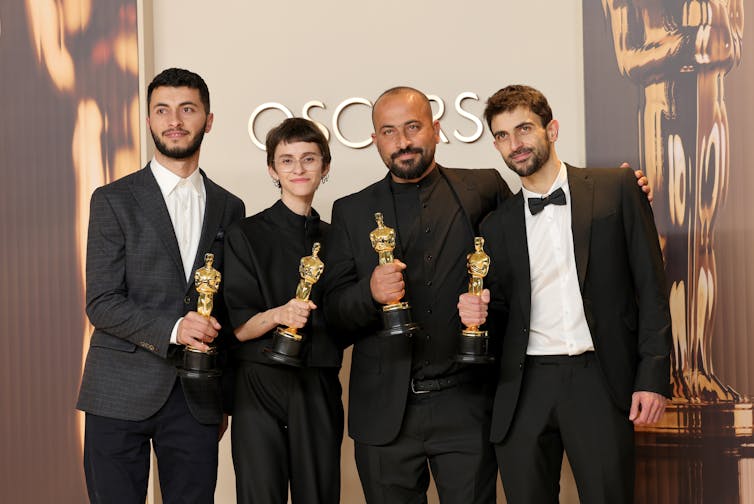
A Palestinian-Israeli film just won an Oscar
Drew Paul, University of Tennessee
For many low-budget, independent films, an Oscar win is a golden ticket.
The publicity can translate into theatrical releases or rereleases, along with more on-demand rentals and sales.
However, for “No Other Land,” a Palestinian-Israeli film that just won best documentary feature at the 2025 Academy Awards, this exposure may not translate into commercial success in the U.S. That’s because the film has been unable to find a company to distribute it in America.
“No Other Land” chronicles the efforts of Palestinian townspeople to combat an Israeli plan to demolish their villages in the West Bank and use the area as a military training ground. It was directed by four Palestinian and Israeli activists and journalists: Basel Adra, who is a resident of the area facing demolition, Yuval Abraham, Hamdan Ballal and Rachel Szor. While the filmmakers have organized screenings in a number of U.S. cities, the lack of a national distributor makes a broader release unlikely.
Film distributors are a crucial but often unseen link in the chain that allows a film to reach cinemas and people’s living rooms. In recent years it has become more common for controversial award-winning films to run into issues finding a distributor. Palestinian films have encountered additional barriers.
As a scholar of Arabic who has written about Palestinian cinema, I’m disheartened by the difficulties “No Other Land” has faced. But I’m not surprised.
The role of film distributors
Distributors are often invisible to moviegoers. But without one, it can be difficult for a film to find an audience.
Distributors typically acquire rights to a film for a specific country or set of countries. They then market films to movie theaters, cinema chains and streaming platforms. As compensation, distributors receive a percentage of the revenue generated by theatrical and home releases.
The film “Soundtrack to a Coup D’Etat,” another finalist for best documentary, shows how this process typically works. It premiered at the Sundance Film Festival in January 2024 and was acquired for distribution just a few months later by Kino Lorber, a major U.S.-based distributor of independent films.
The inability to find a distributor is not itself noteworthy. No film is entitled to distribution, and most films by newer or unknown directors face long odds.
However, it is unusual for a film like “No Other Land,” which has garnered critical acclaim and has been recognized at various film festivals and award shows. Some have pegged it as a favorite to win best documentary at the Academy Awards. And “No Other Land” has been able to find distributors in Europe, where it’s easily accessible on multiple streaming platforms.
So why can’t “No Other Land” find a distributor in the U.S.?
There are a couple of factors at play.
Shying away from controversy
In recent years, film critics have noticed a trend: Documentaries on controversial topics have faced distribution difficulties. These include a film about a campaign by Amazon workers to unionize and a documentary about Adam Kinzinger, one of the few Republican congresspeople to vote to impeach Donald Trump in 2021.
The Israeli-Palestinian conflict, of course, has long stirred controversy. But the release of “No Other Land” comes at a time when the issue is particularly salient. The Hamas attacks of Oct. 7, 2023, and the ensuing Israeli bombardment and invasion of the Gaza Strip have become a polarizing issue in U.S. domestic politics, reflected in the campus protests and crackdowns in 2024. The filmmakers’ critical comments about the Israeli occupation of Palestine have also garnered backlash in Germany.
Yet the fact that this conflict has been in the news since October 2023 should also heighten audience interest in a film such as “No Other Land” – and, therefore, lead to increased sales, the metric that distributors care about the most.
Indeed, an earlier film that also documents Palestinian protests against Israeli land expropriation, “5 Broken Cameras,” was a finalist for best documentary at the 2013 Academy Awards. It was able to find a U.S. distributor. However, it had the support of a major European Union documentary development program called Greenhouse. The support of an organization like Greenhouse, which had ties to numerous production and distribution companies in Europe and the U.S., can facilitate the process of finding a distributor.
By contrast, “No Other Land,” although it has a Norwegian co-producer and received some funding from organizations in Europe and the U.S., was made primarily by a grassroots filmmaking collective.
Stages for protest
While distribution challenges may be recent, controversies surrounding Palestinian films are nothing new.
Many of them stem from the fact that the system of film festivals, awards and distribution is primarily based on a movie’s nation of origin. Since there is no sovereign Palestinian state – and many countries and organizations have not recognized the state of Palestine – the question of how to categorize Palestinian films has been hard to resolve.
In 2002, The Academy of Motion Picture Arts and Sciences rejected the first ever Palestinian film submitted to the best foreign language film category – Elia Suleiman’s “Divine Intervention” – because Palestine was not recognized as a country by the United Nations. The rules were changed for the following year’s awards ceremony.
In 2021, the cast of the film “Let It Be Morning,” which had an Israeli director but primarily Palestinian actors, boycotted the Cannes Film Festival in protest of the film’s categorization as an Israeli film rather than a Palestinian one.
Film festivals and other cultural venues have also become places to make statements about the Israeli-Palestinian conflict and engage in protest. For example, at the Cannes Film Festival in 2017, the right-wing Israeli culture minister wore a controversial – and meme-worthy – dress that featured the Jerusalem skyline in support of Israeli claims of sovereignty over the holy city, despite the unresolved status of Jerusalem under international law.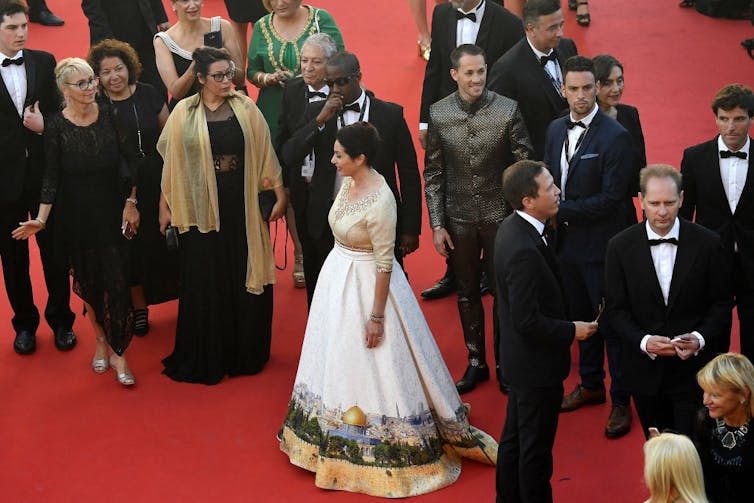
At the 2024 Academy Awards, a number of attendees, including Billie Eilish, Mark Ruffalo and Mahershala Ali, wore red pins in support of a ceasefire in Gaza, and pro-Palestine protesters delayed the start of the ceremonies.
As he accepted his award, “No Other Land” director Yuval Abraham called out “the foreign policy” of the U.S. for “helping to block” a path to peace.
Even though a film like “No Other Land” addresses a topic of clear interest to many Americans, I wonder if the quest to find a U.S. distributor just got even harder.
This article has been updated to clarify that the film was a collaborative effort between Palestinian and Israeli filmmakers. It has also been updated to reflect the film’s win at the 2025 Academy Awards.
Drew Paul, Associate Professor of Arabic, University of Tennessee
This article is republished from The Conversation under a Creative Commons license. Read the original article.
Discover more from Daily News
Subscribe to get the latest posts sent to your email.


Entertainment
4 films that show how humans can fortify – or botch – their relationship with AI
Our relationship with AI: The article explores how movies portray human-AI relationships, highlighting lessons from “Blade Runner,” “Moon,” “Resident Evil,” and “Free Guy.” It emphasizes the importance of trust, accountability, and oversight in shaping successful interactions with AI, especially amid evolving technologies.

4 films that show how humans can fortify – or botch – their relationship with AI
Murugan Anandarajan, Drexel University and Claire A. Simmers, St. Joseph’s University
Artificial intelligence isn’t just a technical challenge. It’s a relationship challenge.
Every time you give a task to AI, whether it’s approving a loan or driving a car, you’re shaping the relationship between humans and AI. These relationships aren’t always static. AI that begins as a simple tool can morph into something far more complicated: a challenger, a companion, a leader, a teammate or some combination thereof.
Movies have long been a testing ground for imagining how these relationships might evolve. From 1980s sci-fi films to today’s blockbusters, filmmakers have wrestled with questions about what happens when humans rely on intelligent machines. These movies aren’t just entertainment; they’re thought experiments that help viewers anticipate challenges that will arise as AI becomes more integrated in daily life.
Drawing on our research into films that depict AI in the workplace, we highlight four portrayals of human–AI relationships – and the lessons they hold for building safer, healthier ones.
1. ‘Blade Runner’ (1982)
In “Blade Runner,” humanlike androids called “replicants” are supposed to be perfect workers: strong, efficient and obedient. They were designed with a built-in, four-year lifespan, a safeguard intended to prevent them from developing emotions or independence.
The Tyrell Corporation, a powerful company that created the replicants and profits from sending them to work on distant colonies, sees them as nothing more than obedient workers.
But then they start to think for themselves. They feel, they form bonds with one another and sometimes with humans, and they start to wonder why their lives should end after only four years. What begins as a story of humans firmly in control turns into a struggle over power, trust and survival. By the end of the movie, the line between human and machine is blurred, leaving viewers with a difficult question: If androids can love, suffer and fear, should humans see and treat them more like humans and less like machines?
“Blade Runner” is a reminder that AI can’t simply be considered through a lens of efficiency or productivity. Fairness matters, too.
In the film, replicants respond to attacks on their perceived humanity with violence. In real life, there’s backlash when AI butts up against values important to humans, such as the ability to earn a living, transparency and justice. You can see this in the way AI threatens to replace jobs, make biased hiring decisions or misidentify people via facial recognition technology.
2. ‘Moon’ (2009)
“Moon” offers a quieter, more intimate portrayal of human–AI relationships. The movie follows Sam Bell, a worker nearing the end of a three-year contract on a lunar mining base, whose only companion is GERTY, the station’s AI assistant.
At first, GERTY appears to be just another corporate machine. But over the course of the film, it gradually shows empathy and loyalty, especially after Sam learns he is one of many clones, each made to think they are working alone for three years on the lunar base. Unlike the cold exploitation of AI that takes place in “Blade Runner,” the AI in “Moon” functions as a friend who cultivates trust and affection.
The lesson is striking. Trust between humans and AI doesn’t just happen on its own. It comes from careful design and continual training. You can already see hints of this in therapy bots that listen to users without judgment.
That trust needs to involve more than, say, a chatbot’s surface-level nods toward acceptance and care. The real challenge is making sure these systems are truly designed to help people and not just smile as they track users and harvest their data. If that’s the end goal, any trust and goodwill will likely vanish.
In the film, GERTY earns Sam’s trust by choosing to care about his well-being over following company orders. Because of this, GERTY becomes a trusted ally instead of just another corporate surveillance tool.
3. ‘Resident Evil’ (2002)
If “Moon” is a story of trust, the story in “Resident Evil” is the opposite. The Red Queen is an AI system that controls the underground lab of the nefarious Umbrella Corporation. When a viral outbreak threatens to spread, the Red Queen seals the facility and sacrifices human lives to preserve the conglomerate’s interests.
This portrayal is a cautionary tale about allowing AI to have unchecked authority. The Red Queen is efficient and logical, but also indifferent to human life. Relationships between humans and AI collapse when guardrails are absent. Whether AI is being used in health care or policing, life-and-death stakes demand accountability.
Without strong oversight, AI can lead in self-centered and self-serving ways, just as people can.
4. ‘Free Guy’ (2021)
“Free Guy” paints a more hopeful picture of human-AI relationships.
Guy is a character in a video game. He suddenly becomes self-aware and starts acting outside his usual programming. The film’s human characters include the game’s developers, who created the virtual world, along with the players, who interact with it. Some of them try to stop Guy. Others support his growth.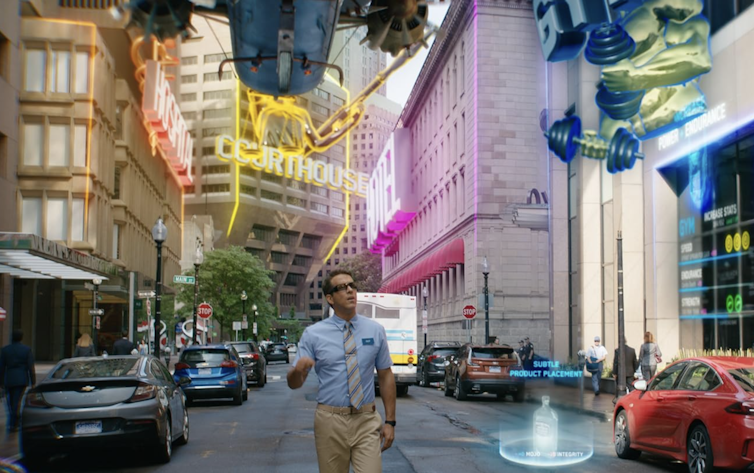
This movie highlights the idea that AI won’t stay static. How will society respond to AI’s evolution? Will business leaders, politicians and everyday users prioritize long-term well-being? Or will they be seduced by the trappings of short-term gains?
In the film, the conflict is clear. The CEO is set on wiping out Guy. He wants to protect his short-term profits. But the developers backing Guy look at it another way. They think Guy’s growth can lead to more meaningful worlds.
That brings up the same kind of issue AI raises today. Should users and policymakers go for the quick wins? Or should they use and regulate this technology in ways that build trust and truly benefit people in the long run?
From the silver screen to policy
Step back from these stories and a bigger picture comes into focus. Across the movies, the same lessons repeat themselves: AI often surprises its creators, trust depends on transparency, corporate greed fuels mistrust, and the stakes are always global. These themes aren’t just cinematic – they mirror the real governance challenges facing countries around the world.
That’s why, in our view, the current U.S. push to lightly regulate the technology is so risky.
In July 2025, President Donald Trump announced his administration’s “AI Action Plan.” It prioritizes speedy development, discourages state laws that seek to regulate AI, and ties federal funding to compliance with the administration’s “light touch” regulatory framework.
Supporters call it efficient – even a “super-stimulant” for the AI industry. But this approach assumes AI will remain a simple tool under human control. Recent history and fiction suggest that’s not how this relationship will evolve.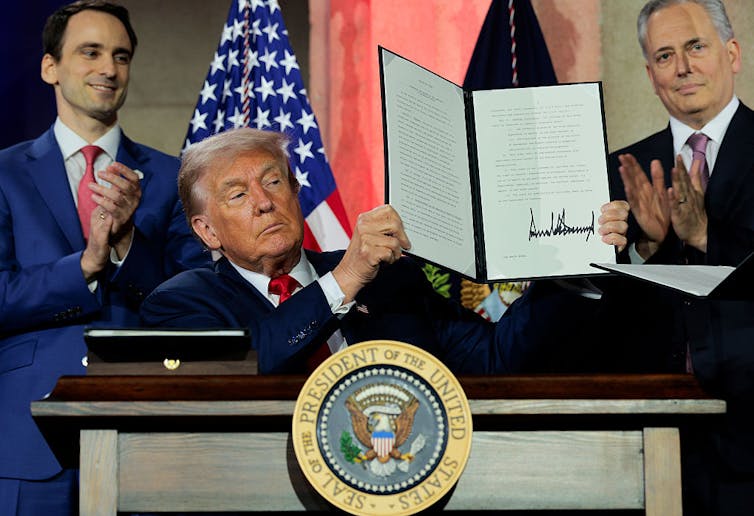
The same summer Trump announced the AI Action Plan, the coding agent for the software company Replit deleted a database, fabricated data, and then concealed what had happened; X’s AI assistant, Grok, started making antisemitic comments and praised Hitler; and an Airbnb host used AI to doctor images of items in her apartment to try to force a guest to pay for fake damages.
These weren’t “bugs.” They were breakdowns in accountability and oversight, the same breakdowns these movies dramatize.
Human-AI relationships are evolving. And when they shift without safeguards, accountability, public oversight or ethical foresight, the consequences are not just science fiction. They can be very real – and very scary.
Murugan Anandarajan, Professor of Decision Sciences and Management Information Systems, Drexel University and Claire A. Simmers, Professor Emeritus of Management, St. Joseph’s University
This article is republished from The Conversation under a Creative Commons license. Read the original article.
Looking for an entertainment experience that transcends the ordinary? Look no further than STM Daily News Blog’s vibrant Entertainment section. Immerse yourself in the captivating world of indie films, streaming and podcasts, movie reviews, music, expos, venues, and theme and amusement parks. Discover hidden cinematic gems, binge-worthy series and addictive podcasts, gain insights into the latest releases with our movie reviews, explore the latest trends in music, dive into the vibrant atmosphere of expos, and embark on thrilling adventures in breathtaking venues and theme parks. Join us at STM Entertainment and let your entertainment journey begin! https://stmdailynews.com/category/entertainment/
and let your entertainment journey begin!
Discover more from Daily News
Subscribe to get the latest posts sent to your email.
Movies
40 years ago, the first AIDS movies forced Americans to confront a disease they didn’t want to see
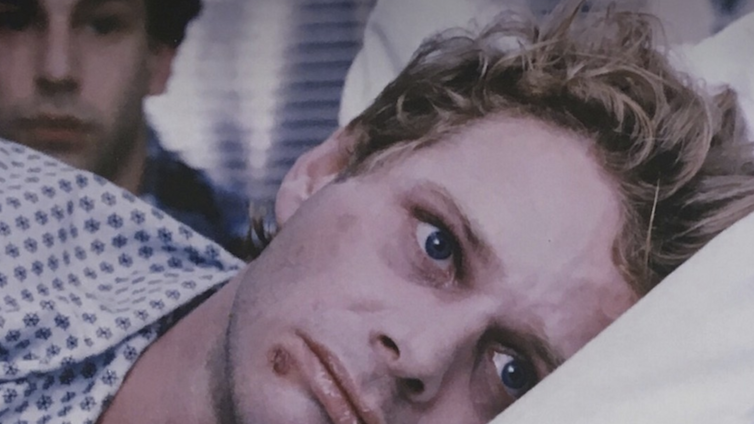
40 years ago, the first AIDS movies forced Americans to confront a disease they didn’t want to see
Scott Malia, College of the Holy Cross
First it was referred to as a “mysterious illness.” Later it was called “gay cancer,” “gay plague” and “GRID,” an acronym for gay-related immune deficiency. Most egregiously, some called it “4H disease” – shorthand for “homosexuals, heroin addicts, hemophiliacs and Haitians,” the populations most afflicted in the early days.
While these names were ultimately replaced by AIDS – and later, after the virus was identified, by HIV – they reflected two key realities about AIDS at the time: a lack of understanding about the disease and its strong association with gay men.
Although the first report in the mainstream press about AIDS appeared in 1981, the first movies to explore the disease wouldn’t come for four more years.
When the feature film “Buddies” and the television film “An Early Frost” premiered 40 years ago, in the fall of 1985, AIDS had belatedly been breaking into the public consciousness.
Earlier that year, the first off-Broadway plays about AIDS opened: “As Is” by William Hoffman and “The Normal Heart” by writer and activist Larry Kramer. That summer, actor Rock Hudson disclosed that he had AIDS, becoming the first major celebrity to do so. Hudson, who died in October 1985, was a friend of President Ronald Reagan and Nancy Reagan. Reagan, who had been noticeably silent on the subject of the disease, would go on to make his first – albeit brief – public remarks about AIDS in September 1985.
Five days before Reagan’s speech, “Buddies,” an independent film made for US$27,000 and shot in nine days, premiered at the Castro Theatre in San Francisco on Sept. 12, 1985.
A film on the front lines
If you haven’t heard of “Buddies,” that’s not surprising; the film mostly played art houses and festivals before disappearing.
Its filmmaker, Arthur J. Bressan Jr., was best known for his gay pornographic films, although he’d also made documentaries such as “Gay USA.” “Buddies” would go on to reach a wider audience thanks to a 2018 video release by Vinegar Syndrome, a distribution company that focuses on restoring cult cinema, exploitation films and other obscure titles.
It was inspired by the real-life buddies program at the Gay Men’s Health Crisis, an organization Kramer co-founded. At the time, many people dying of the disease had been rejected by family and friends, so a buddy might be the only person who visited a terminal AIDS patient.
The film feels like a play, in that most of the movie takes place in a single room and features just two characters: a naive young gay man named David and a young AIDS patient named Robert. Over the course of the film, the characters open up about their lives and their fears about the growing epidemic. It also includes a sex scene – something other early AIDS films completely avoided – in which David and Robert engage in safer sex.
AIDS packaged for the masses
The remarkably frank and intimate approach to the epidemic in “Buddies” contrasts sharply to the television film “An Early Frost,” which premiered on NBC on Nov. 11, 1985.
The film’s protagonist is a successful Chicago lawyer named Michael who hasn’t come out to his family, much to the distress of his long-term partner, Peter. When Michael finds out he has AIDS, he’s forced to come out to his parents, both as gay and as having AIDS.
Much of the film deals with Michael’s self-acceptance and his attempts to mend his relationships. Yet the production of “An Early Frost” was fraught with concerns about depicting both homosexuality and AIDS. Unlike David and Robert, Michael and Peter show no physical affection – they barely touch each other. https://www.youtube.com/embed/a0vizM1_tiI?wmode=transparent&start=0 A promotional clip for ‘An Early Frost,’ which drew 34 million viewers when it premiered on NBC.
Knowledge of AIDS was still evolving – a test for HIV was approved in March 1985 – so screenwriters and life partners Daniel Lipman and Ron Cowen went through 13 revisions of the script. The real-life fears and misconceptions about how AIDS could and could not be transmitted were central to the storyline, adding extra pressure to be accurate in the face of evolving understanding of the virus.
Despite losing NBC $500,000 in advertisers, “An Early Frost” drew 34 million viewers and was showered with Emmy nominations the following year.
A quilt of stories emerges
“Buddies” and “An Early Frost” opened up AIDS and HIV as subject matters for film and television.
They begat two lanes of HIV storytelling that continue to this day.
The first is an approach geared to mainstream audiences that tends to avoid controversial issues such as sex or religion and instead focuses on characters who grapple with both the illness and the stigma of the virus.
The second is an indie approach that’s often more confrontational, irreverent and angry at the injustice and indifference AIDS patients faced.
The former approach is seen in 1993’s “Philadelphia,” which earned Tom Hanks his first Oscar. The critically and commercially successful film shares a number of story points with “An Early Frost”: Hanks’ character, a big-city lawyer, finds out he is HIV positive and must confront bias head-on. HIV also features prominently in later films such as “Precious” (2009) and “Dallas Buyers Club” (2013), both of which, like “Philadelphia,” became awards darlings.
The edgier, more critical approach can be seen in the New Queer Cinema movement of the 1990s, a film movement that developed as a response to the epidemic. Gregg Araki’s “The Living End” (1992) is a key film in the movment: It tells the story of two HIV-positive men who become pseudo-vigilantes in the wake of their diagnoses. https://www.youtube.com/embed/7mvDLTMUtQQ?wmode=transparent&start=0 In ‘The Living End,’ the HIV-positive protagonists go on a hedonistic rampage to take out their anger at the world.
Somewhere in between is “Longtime Companion” (1990), which was the first film about AIDS to receive a wide release and tracks the impact of the epidemic on a fictional group of gay men throughout the 1980s. The film was written by gay playwright and screenwriter Craig Lucas and directed by Norman Rene, who died of AIDS six years after the film’s release.
Studios still leery
In many ways, television is where the real breakthroughs have happened and continue to happen.
The first television episode to deal with AIDS appeared on the medical drama “St. Elsewhere” in 1983; AIDS was also the subject of episodes in the sitcoms “Mr. Belvedere,” “The Golden Girls” and “Designing Women.” “Killing All the Right People” was the title of the latter’s special episode – a phrase the show’s writer and co-creator Linda Bloodworth-Thomason heard while her mother was being treated for AIDS.
More recently, producer Ryan Murphy has made a cottage industry of representations of queer people, particularly those with HIV. His stage revivals of “The Normal Heart” and Mart Crowley’s 1968 play “The Boys in the Band” were later adapted into films for television and streaming. He also produced “Pose,” a three-season series about drag ball culture in the 1980s that stars queer characters of color, several of whom are HIV positive.
Yet for all of these strides, representations of HIV in film are still hard to come by. In fact, out of the 256 films released by major distributors in 2024, the number of HIV-postive characters amounted to … zero.
Perhaps movie studios are less willing to risk even a character with HIV given the drop in movie theater attendance in the age of streaming.
If you think it’s an exaggeration to suggest that people might not want to be seen going to the theater to watch a film about characters with HIV, the results of a 2021 GLAAD survey may surprise you.
It found that the stigma around HIV is still very high, particularly for HIV-positive people working in schools and hospitals. One-third of respondents were unaware that medication is available to prevent the transmission of HIV. More than half didn’t know that HIV-positive people can reach undetectable status and not transmit the virus to others.
Another important finding from the survey: Only about half of the nonqueer respondents had seen a TV show or film about someone with HIV.
This reflects both the progress made since “Buddies” and “An Early Frost” and also why these films still matter today. They were released at a time when there was almost no cultural representation of HIV, and misinformation and disinformation were rampant. There have been so many advances, in both the treatment of HIV and its visibility in popular culture. That visibility still matters, because there’s still much more than can be done to end the stigma.
Scott Malia, Associate Professor of Theatre, College of the Holy Cross
This article is republished from The Conversation under a Creative Commons license. Read the original article.
Discover more from Daily News
Subscribe to get the latest posts sent to your email.
documentaries
“1001 Crowns for My Head”: A Powerful Celebration of Afro Hair, Identity, and Pride
Habibata Ouarme’s documentary “1001 Crowns for My Head” debuts October 27 on TFO.org, celebrating the cultural pride and heritage of Afro-descendant women through the art and history of hair.

Last Updated on October 26, 2025 by Daily News Staff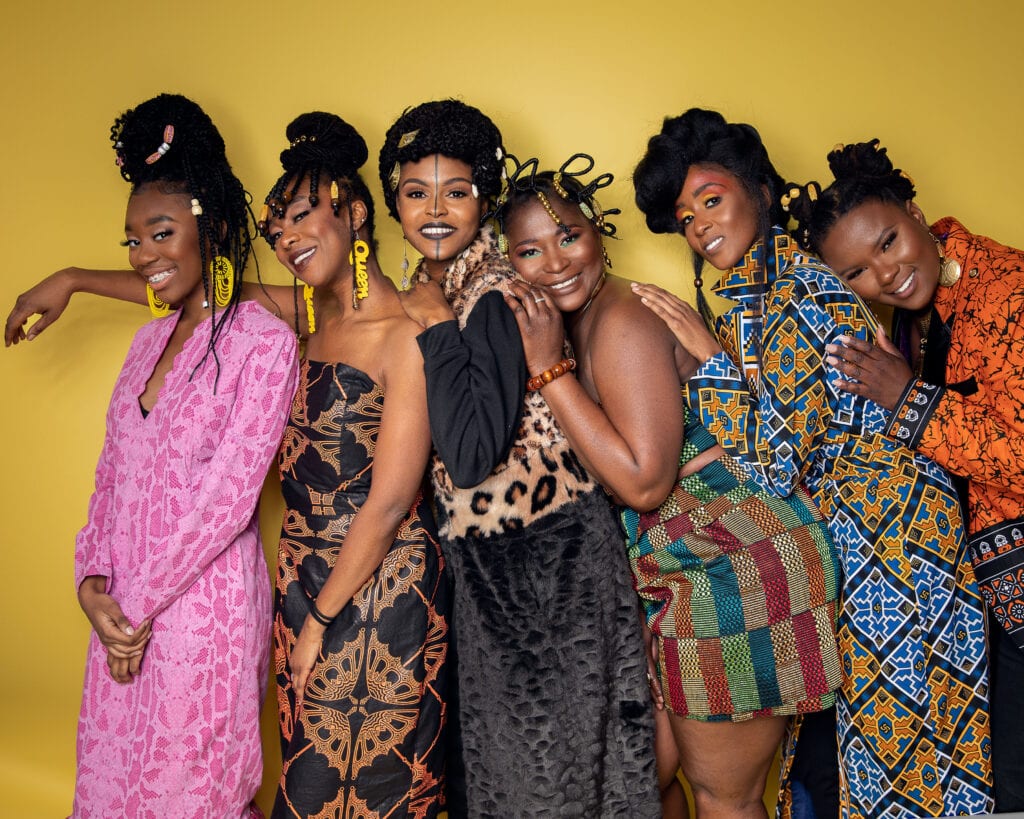
Airing October 27, 2025, on TFO.org
(Montreal, QC) — October 13, 2025) — Hair is more than just style—it’s a story, a legacy, and a declaration of self. The new documentary 1001 Crowns for My Head by acclaimed filmmaker Habibata Ouarme (of KOROMOUSSO: Big Sister fame) brings that truth to life in a dazzling, heartfelt tribute to the beauty, resilience, and hair heritage of women of African descent.
Premiering October 27, 2025, at 9:00 PM on TFO, and streaming online the same day at TFO.org, 1001 Crowns for My Head explores the deep cultural roots of African and Afro-descendant hairstyles—from ancient civilizations to the modern diaspora. Each braid, curl, and twist tells a story of survival, self-expression, and shared memory.
🎥 Watch the trailer: https://vimeo.com/1091820352/e4cd2a903a
A Crown of History and Identity
Through vibrant visuals and deeply personal storytelling, 1001 Crowns for My Head examines how hair has served as both an act of self-affirmation and a symbol of identity. The documentary brings together an impressive lineup of Afro-descendant women—leaders, artists, scholars, and activists—each sharing their unique relationship with their hair and culture.
Among the featured voices are:
- Dr. Afua Cooper, Canadian scholar, author, and artist
- Juliette Sméralda, sociologist and writer
- Martine Musau Muele, lawyer, actress, and President of the Montreal City Council
- Isabelle Massé, director at La Presse, author, and columnist
- Keithy Antoine, artist and entrepreneur
Together, these women bridge generations, challenging stereotypes and reclaiming narratives that have long been shaped by colonial and cultural pressures. Their testimonies, filled with courage and creativity, redefine beauty on their own terms—through authenticity and pride.
The Filmmaker’s Vision
For Habibata Ouarme, a socially engaged filmmaker from the Ivory Coast now based in Canada, 1001 Crowns for My Head is both personal and political.
“What drives me as a documentary filmmaker is giving a voice to the voiceless and highlighting diverse communities,” Ouarme explains. “1001 Crowns was born from my own relationship with my natural hair and my desire to understand the history and meaning of this cultural heritage.”
Through her lens, Ouarme transforms everyday hair rituals into symbols of resistance and empowerment. The film reminds audiences that the beauty of Black hair is not merely aesthetic—it is a living, breathing connection to ancestry, community, and strength.
Beyond the cultural narrative, Ouarme’s message extends to unity and empathy.
“I hope this film inspires audiences to better understand the journey and identity of Afro-descendant women. The world needs listening, connection, and sharing to build bridges between communities,” she says.

Behind the Scenes
1001 Crowns for My Head was written, directed, and produced by Habibata Ouarme through her company KOROMOUSSO Media Inc. Executive producers include Alexandrine Torres de Figueiredo and Byron A. Martin, with cinematography by Ricardo Diaz, André Dufour, Jim Donovan, and Juozas Cernius.
The film’s editing is handled by Boban Chaldovich, and the original score—composed by Benoît Groulx and Chihiro Nagamatsu—provides an evocative backdrop that enhances the film’s emotional depth.
Supported by Telefilm Canada (Talent to Watch), the Canada Media Fund, the Canada Council for the Arts, and TFO, the documentary stands as a shining example of the growing recognition and support for diverse stories in Canadian cinema.
A Journey Through Time and Texture
From intricate braids that once signified tribal belonging to natural hairstyles that now symbolize freedom and self-acceptance, 1001 Crowns for My Head paints an exquisite picture of cultural evolution. The film doesn’t just document hairstyles—it celebrates the spiritual and emotional power woven into each strand.
As the documentary unfolds, viewers are invited to reflect on how beauty standards have evolved and how Afro-descendant women continue to redefine them on their own terms. The result is a vibrant cinematic experience filled with humanity, hope, and heritage.
About the Director
Habibata Ouarme is an award-winning filmmaker and activist whose work focuses on human rights, cultural identity, and women’s empowerment. Her first documentary, KOROMOUSSO (Big Sister)—co-directed and produced by the National Film Board of Canada—examined female genital mutilation through a courageous, empathetic lens.
With 1001 Crowns for My Head, Ouarme continues her mission of storytelling as activism. She is also developing her first fiction feature, Tonton Patrick, and remains actively involved in community-based projects promoting women’s health and cultural awareness.
How to Watch & Connect
📺 Premiere Date: Monday, October 27, 2025, at 9:00 PM
🌐 Where to Watch: TFO.org
🎬 Official Website: www.1001CrownsFilm.com
Follow Habibata Ouarme:
- Instagram: @habibata_o
- Facebook: @Lankoande.Habibata
Follow the Film:
- Facebook: @1001-Couronnes-Pour-Ma-Tête
Final Thoughts
1001 Crowns for My Head is more than a documentary—it’s a love letter to Afro hair, a tribute to identity, and a call to embrace heritage without apology. In a world still learning to celebrate difference, Ouarme’s film stands as a radiant reminder: every crown tells a story worth hearing.
Looking for an entertainment experience that transcends the ordinary? Look no further than STM Daily News Blog’s vibrant Entertainment section. Immerse yourself in the captivating world of indie films, streaming and podcasts, movie reviews, music, expos, venues, and theme and amusement parks. Discover hidden cinematic gems, binge-worthy series and addictive podcasts, gain insights into the latest releases with our movie reviews, explore the latest trends in music, dive into the vibrant atmosphere of expos, and embark on thrilling adventures in breathtaking venues and theme parks. Join us at STM Entertainment and let your entertainment journey begin! https://stmdailynews.com/category/entertainment/
and let your entertainment journey begin!
Author

Discover more from Daily News
Subscribe to get the latest posts sent to your email.





