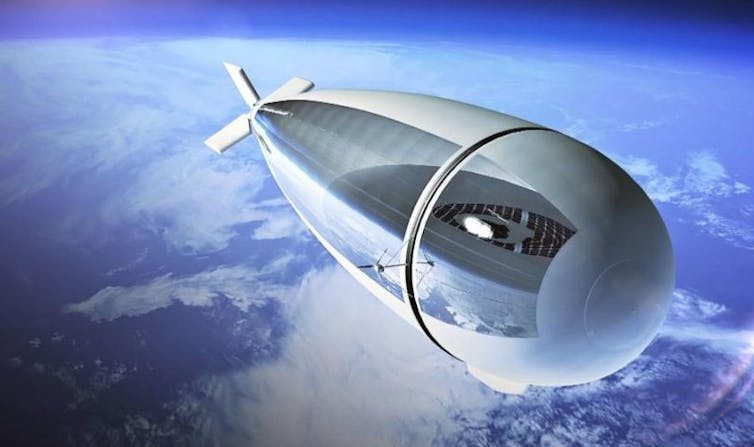
An experimental aircraft like this solar-powered airship could someday play a role in providing internet access to rural areas or disaster zones. Thales Alenia Space via Wikimedia Commons, CC BY-SA
About one-third of the global population, around 3 billion people, don’t have access to the internet or have poor connections because of infrastructure limitations, economic disparities and geographic isolation.
Today’s satellites and ground-based networks leave communications gaps where, because of geography, setting up traditional ground-based communications equipment would be too expensive.
High-altitude platform stations – telecommunications equipment positioned high in the air, on uncrewed balloons, airships, gliders and airplanes – could increase social and economic equality by filling internet connectivity gaps in ground and satellite coverage. This could allow more people to participate fully in the digital age.
One of us, Mohamed-Slim Alouini, is an electrical engineer who contributed to an experiment that showed it is possible to provide high data rates and ubiquitous 5G coverage from the stratosphere. The stratosphere is the second lowest layer of the atmosphere, ranging from 4 to 30 miles above the Earth. Commercial planes usually fly in the lower part of the stratosphere. The experiment measured signals between platform stations and users on the ground in three scenarios: a person staying in one place, a person driving a car and a person operating a boat.
My colleagues measured how strong the signal is in relation to interference and background noise levels. This is one of the measures of network reliability. The results showed that the platform stations can support high-data-rate applications such as streaming 4K resolution videos and can cover 15 to 20 times the area of standard terrestrial towers.
The goal is global connectivity, a cause that brought the platform stations idea recognition in the World Economic Forum’s 2024 Top 10 Emerging Technologies report. The international industry initiative HAPS Alliance, which includes academic partners, is also pushing toward that goal.
Fast, cost effective, flexible
Platform stations would be faster, more cost effective and more flexible than satellite-based systems.
Because they keep communications equipment closer to Earth than satellites, the stations could offer stronger, higher-capacity signals. This would enable real-time communications speedy enough to communicate with standard smartphones, high-resolution capabilities for imaging tasks and greater sensitivity for sensing applications. They transmit data via free-space optics, or light beams, and large-scale antenna array systems, which can send large amounts of data quickly.
Satellites can be vulnerable to eavesdropping or jamming when their orbits bring them over adversarial countries. But platform stations remain within the airspace of a single country, which reduces that risk.
Advertisement
High-altitude platform stations are also easier to put in place than satellites, which have high launch and maintenance costs. And the regulatory requirements and compliance procedures required to secure spots in the stratosphere are likely to be simpler than the complex international laws governing satellite orbits. Platform stations are also easier to upgrade, so improvements could be deployed more quickly.
Platform stations are also potentially less polluting than satellite mega-constellations because satellites burn up upon reentry and can release harmful metals into the atmosphere, while platform stations can be powered by clean energy sources such as solar and green hydrogen.
The key challenges to practical platform stations are increasing the amount of time they can stay aloft to months at a time, boosting green onboard power and improving reliability – especially during automated takeoff and landing through the lower turbulent layers of the atmosphere.
A network of interconnected high-altitude platform stations could connect mobile users and Internet of Things devices in rural areas.
Beyond satellites
Platform stations could play a critical role in emergency and humanitarian situations by supporting relief efforts when ground-based networks are damaged or inoperative.
The stations could also connect Internet of Things (IoT) devices and sensors in remote settings to better monitor the environment and manage resources.
In agriculture, the stations could use imaging and sensing technologies to help farmers monitor crop health, soil conditions and water resources.
Their capability for high-resolution imaging could also support navigation and mapping activities crucial for cartography, urban planning and disaster response.
The stations could also do double duty by carrying instruments for atmospheric monitoring, climate studies and remote sensing of Earth’s surface features, vegetation and oceans.
Balloons offer stable, long-duration operation at high altitudes and can be tethered or free-floating. Airships, also known as dirigibles or blimps, use lighter-than-air gases and are larger and more maneuverable than balloons. They’re especially well suited for surveillance, communications and research.
Gliders and powered aircraft can be controlled more precisely than balloons, which are sensitive to variations in wind speed. In addition, powered aircraft, which include drones and fixed-wing airplanes, can provide electricity to communication equipment, sensors and cameras.
Commerical deployment of platform stations, at least for post-disaster or emergency situations, could be in place by the end of the decade. For instance, a consortium in Japan, a country with remote mountainous and island communities, has earmarked US$100 million for solar-powered, high-altitude platform stations.
Platform stations could bridge the digital divide by increasing access to critical services such as education and health care, providing new economic opportunities and improving emergency response and environmental monitoring. As advances in technology continue to drive their evolution, platform stations are set to play a crucial role in a more inclusive and resilient digital future.
STM Daily News is a vibrant news blog dedicated to sharing the brighter side of human experiences. Emphasizing positive, uplifting stories, the site focuses on delivering inspiring, informative, and well-researched content. With a commitment to accurate, fair, and responsible journalism, STM Daily News aims to foster a community of readers passionate about positive change and engaged in meaningful conversations. Join the movement and explore stories that celebrate the positive impacts shaping our world.
STM Daily News Pop-Culture Fact Check: Do electric cars have fuses?
Do electric cars have fuses? In a 2023 episode of The Neighborhood, Marty claims electric cars don’t have fuses — but that’s technically incorrect and out of character for an engineer. STM Daily News breaks down why EVs absolutely have fuses and why the sitcom got it wrong.
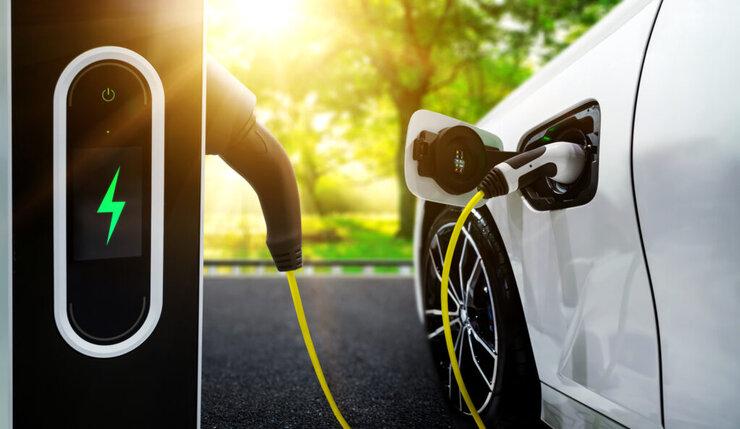
EV charging station for electric car in concept of green energy and eco power produced from sustainable source to supply to charger station in order to reduce CO2 emission .
Do electric cars have fuses?
Did The Neighborhood Get EV Fuses Wrong? Yes — And Marty Should’ve Known Better
Unexpectedly, Marty — the character known for his intelligence, engineering degree, and technical precision — responds with an emphatic: “No!”
For long-time fans, this answer sparked a double-take. Why? Because electric vehicles don’t just have fuses — they rely on multiple types of them to operate safely. Marty, of all people, should know this. While the line serves as a quick punchline, it contradicts the very foundation of his character: a calm, highly educated engineer who rarely makes basic technical mistakes.
The joke lands, but at the cost of technical accuracy and character consistency. Marty is typically the voice of reason and knowledge in the Butler household — especially when it comes to anything mechanical or technological. The idea that he’d misunderstand something as fundamental as an EV fuse system feels out of step with the show’s established internal logic.
Realistically, this is a line that should’ve come from Calvin, whose old-school, hands-on approach to mechanics leaves plenty of room for misunderstandings about modern electric vehicles. Marty would normally be the one who corrects him — not the other way around.
Fact Check: Yes, Electric Cars Have Fuses
Electric cars contain multiple fuse systems, each designed to protect different components and ensure safe operation:
High-Voltage Fuses: Protect the battery pack, inverter, DC-DC converter, and onboard charger.
12-Volt Fuses: Handle accessories like interior lighting, infotainment, power windows, door locks, and safety electronics.
Pyro-Fuses: Specialized safety fuses that instantly disconnect the battery during a crash.
This makes Marty’s confident “No!” not just incorrect but mechanically impossible. EVs rely on fuses in the same way traditional vehicles do — just at higher voltages and sometimes in more sophisticated configurations.
Why the Writers Made This Choice
Like many sitcoms, The Neighborhood occasionally sacrifices technical accuracy for quick comedic timing. The joke required a snappy, surprising answer — and Marty’s overconfident reply delivered that punch. The trade-off is that it momentarily breaks character for a laugh.
For viewers who pay attention to both pop culture and automotive technology, the moment stood out as one of the most transparent technical slips in the series.
What Marty Should Have Said
A more accurate and in-character response could’ve been:
Advertisement
“Yes — and EVs actually use high-voltage fuses, which is why our shop is called The Fuse Box.”
Or the scene could’ve played out with Calvin giving the wrong answer first, and Marty correcting him, keeping both accuracy and humor intact. Either way, the writers opted for the faster laugh, even if it meant bending Marty’s character logic.
Dive into “The Knowledge,” where curiosity meets clarity. This playlist, in collaboration with STMDailyNews.com, is designed for viewers who value historical accuracy and insightful learning. Our short videos, ranging from 30 seconds to a minute and a half, make complex subjects easy to grasp in no time. Covering everything from historical events to contemporary processes and entertainment, “The Knowledge” bridges the past with the present. In a world where information is abundant yet often misused, our series aims to guide you through the noise, preserving vital knowledge and truths that shape our lives today. Perfect for curious minds eager to discover the ‘why’ and ‘how’ of everything around us. Subscribe and join in as we explore the facts that matter. https://stmdailynews.com/the-knowledge/
AI Spacecraft Propulsion: Machine Learning’s Role in Space Travel
AI Spacecraft Propulsion: Discover how AI and machine learning are transforming spacecraft propulsion systems, from nuclear thermal engines to fusion technology, making interplanetary travel faster and more efficient.
Machine learning is a branch of AI that identifies patterns in data that it has not explicitly been trained on. It is a vast field with its own branches, with a lot of applications. Each branch emulates intelligence in different ways: by recognizing patterns, parsing and generating language, or learning from experience. This last subset in particular, commonly known as reinforcement learning, teaches machines to perform their tasks by rating their performance, enabling them to continuously improve through experience. As a simple example, imagine a chess player. The player does not calculate every move but rather recognizes patterns from playing a thousand matches. Reinforcement learning creates similar intuitive expertise in machines and systems, but at a computational speed and scale impossible for humans. It learns through experiences and iterations by observing its environment. These observations allows the machine to correctly interpret each outcome and deploy the best strategies for the system to reach its goal. Reinforcement learning can improve human understanding of deeply complex systems – those that challenge the limits of human intuition. It can help determine the most efficient trajectory for a spacecraft heading anywhere in space, and it does so by optimizing the propulsion necessary to send the craft there. It can also potentially design better propulsion systems, from selecting the best materials to coming up with configurations that transfer heat between parts in the engine more efficiently.In reinforcement learning, you can train an AI model to complete tasks that are too complex for humans to complete themselves.
Reinforcement learning for propulsion systems
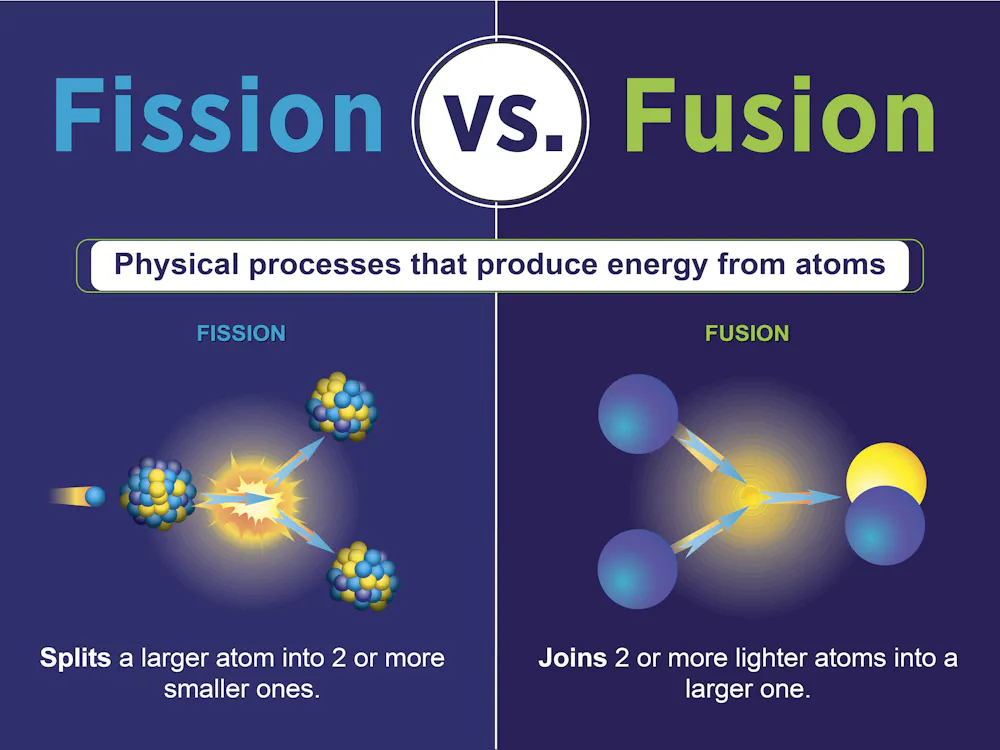
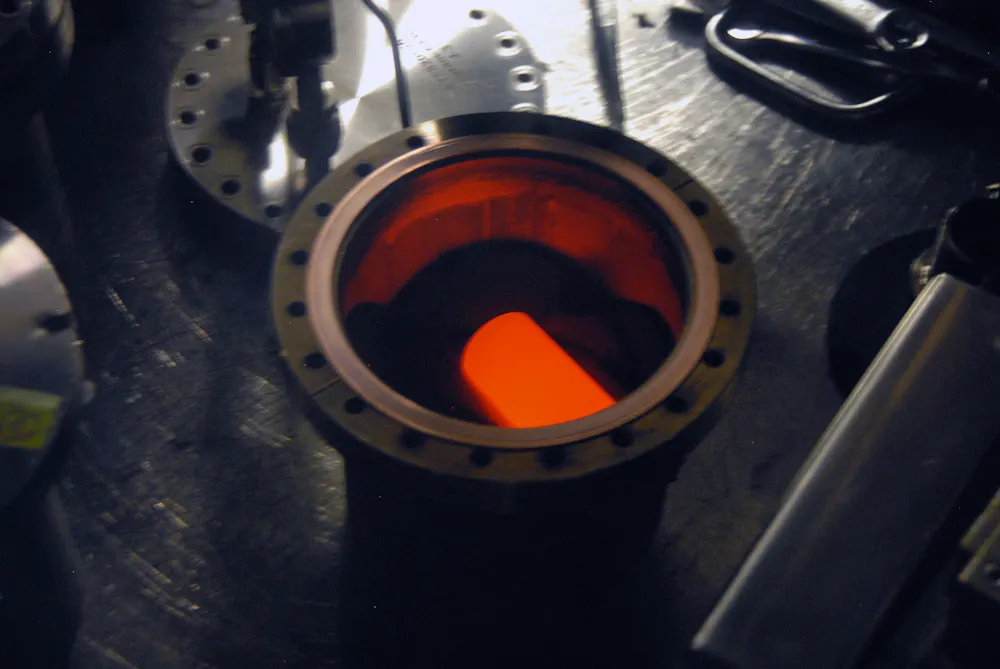
In regard to space propulsion, reinforcement learning generally falls into two categories: those that assist during the design phase – when engineers define mission needs and system capabilities – and those that support real-time operation once the spacecraft is in flight. Among the most exotic and promising propulsion concepts is nuclear propulsion, which harnesses the same forces that power atomic bombs and fuel the Sun: nuclear fission and nuclear fusion. Fission works by splitting heavy atoms such as uranium or plutonium to release energy – a principle used in most terrestrial nuclear reactors. Fusion, on the other hand, merges lighter atoms such as hydrogen to produce even more energy, though it requires far more extreme conditions to initiate.Fission splits atoms, while fusion combines atoms.Sarah Harman/U.S. Department of Energy Fission is a more mature technology that has been tested in some space propulsion prototypes. It has even been used in space in the form of radioisotope thermoelectric generators, like those that powered the Voyager probes. But fusion remains a tantalizing frontier. Nuclear thermal propulsion could one day take spacecraft to Mars and beyond at a lower cost than that of simply burning fuel. It would get a craft there faster than electric propulsion, which uses a heated gas made of charged particles called plasma. Unlike these systems, nuclear propulsion relies on heat generated from atomic reactions. That heat is transferred to a propellant, typically hydrogen, which expands and exits through a nozzle to produce thrust and shoot the craft forward. So how can reinforcement learning help engineers develop and operate these powerful technologies? Let’s begin with design.The nuclear heat source for the Mars Curiosity rover, part of a radioisotope thermoelectric generator, is encased in a graphite shell. The fuel glows red hot because of the radioactive decay of plutonium-238.Idaho National Laboratory, CC BY
Reinforcement learning’s role in design
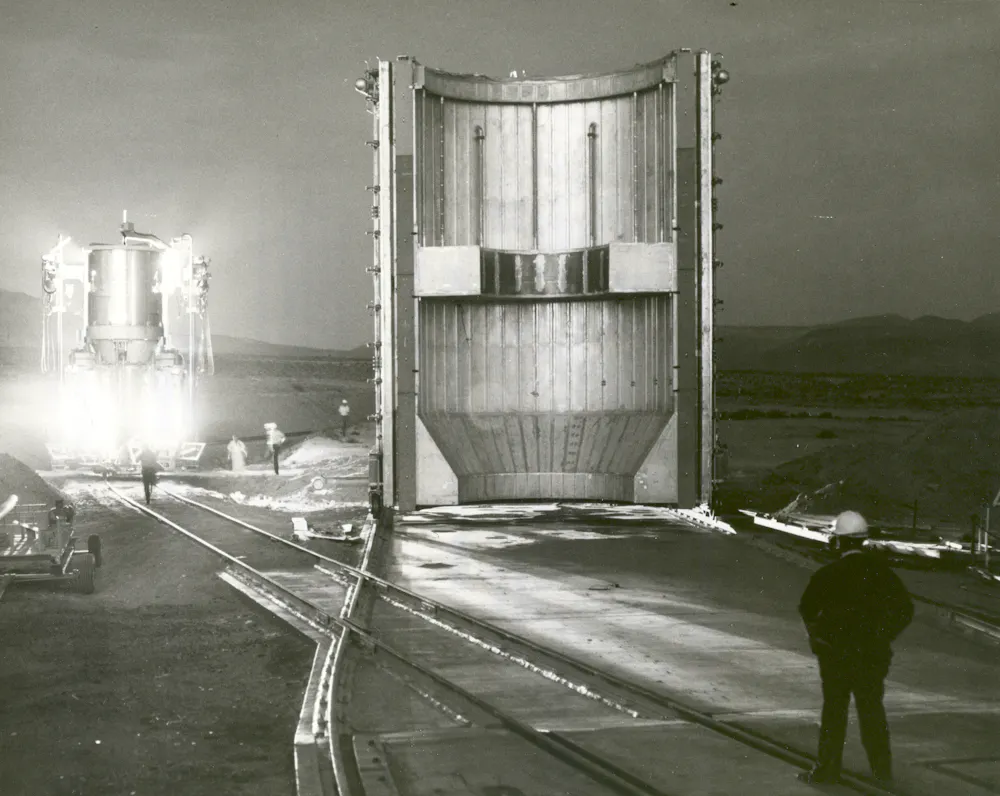
Early nuclear thermal propulsion designs from the 1960s, such as those in NASA’s NERVA program, used solid uranium fuel molded into prism-shaped blocks. Since then, engineers have explored alternative configurations – from beds of ceramic pebbles to grooved rings with intricate channels.The first nuclear thermal rocket was built in 1967 and is seen in the background. In the foreground is the protective casing that would hold the reactor.NASA/Wikipedia Why has there been so much experimentation? Because the more efficiently a reactor can transfer heat from the fuel to the hydrogen, the more thrust it generates. This area is where reinforcement learning has proved to be essential. Optimizing the geometry and heat flow between fuel and propellant is a complex problem, involving countless variables – from the material properties to the amount of hydrogen that flows across the reactor at any given moment. Reinforcement learning can analyze these design variations and identify configurations that maximize heat transfer. Imagine it as a smart thermostat but for a rocket engine – one you definitely don’t want to stand too close to, given the extreme temperatures involved.
Reinforcement learning and fusion technology
Reinforcement learning also plays a key role in developing nuclear fusion technology. Large-scale experiments such as the JT-60SA tokamak in Japan are pushing the boundaries of fusion energy, but their massive size makes them impractical for spaceflight. That’s why researchers are exploring compact designs such as polywells. These exotic devices look like hollow cubes, about a few inches across, and they confine plasma in magnetic fields to create the conditions necessary for fusion. Controlling magnetic fields within a polywell is no small feat. The magnetic fields must be strong enough to keep hydrogen atoms bouncing around until they fuse – a process that demands immense energy to start but can become self-sustaining once underway. Overcoming this challenge is necessary for scaling this technology for nuclear thermal propulsion.
Reinforcement learning and energy generation
However, reinforcement learning’s role doesn’t end with design. It can help manage fuel consumption – a critical task for missions that must adapt on the fly. In today’s space industry, there’s growing interest in spacecraft that can serve different roles depending on the mission’s needs and how they adapt to priority changes through time. Military applications, for instance, must respond rapidly to shifting geopolitical scenarios. An example of a technology adapted to fast changes is Lockheed Martin’s LM400 satellite, which has varied capabilities such as missile warning or remote sensing. But this flexibility introduces uncertainty. How much fuel will a mission require? And when will it need it? Reinforcement learning can help with these calculations. From bicycles to rockets, learning through experience – whether human or machine – is shaping the future of space exploration. As scientists push the boundaries of propulsion and intelligence, AI is playing a growing role in space travel. It may help scientists explore within and beyond our solar system and open the gates for new discoveries. Marcos Fernandez Tous, Assistant Professor of Space Studies, University of North Dakota; Preeti Nair, Master’s Student in Aerospace Sciences, University of North Dakota; Sai Susmitha Guddanti, Ph.D. Student in Aerospace Sciences, University of North Dakota, and Sreejith Vidhyadharan Nair, Research Assistant Professor of Aviation, University of North Dakota This article is republished from The Conversation under a Creative Commons license. Read the original article.
Dive into “The Knowledge,” where curiosity meets clarity. This playlist, in collaboration with STMDailyNews.com, is designed for viewers who value historical accuracy and insightful learning. Our short videos, ranging from 30 seconds to a minute and a half, make complex subjects easy to grasp in no time. Covering everything from historical events to contemporary processes and entertainment, “The Knowledge” bridges the past with the present. In a world where information is abundant yet often misused, our series aims to guide you through the noise, preserving vital knowledge and truths that shape our lives today. Perfect for curious minds eager to discover the ‘why’ and ‘how’ of everything around us. Subscribe and join in as we explore the facts that matter. https://stmdailynews.com/the-knowledge/
Now, that futuristic vision has gained some serious thrust. Archer Aviation — one of the leading players in electric vertical take-off and landing (eVTOL) aircraft — has announced a major move that could change how the city thinks about air mobility.
Archer Takes Control of Hawthorne Airport
In a landmark deal, Archer announced plans to acquire control of Hawthorne Airport — just three miles from LAX — for approximately $126 million in cash.
The 80-acre site, home to 190,000 square feet of hangars and terminal facilities, will become the company’s operational hub for its Los Angeles air-taxi network and a testbed for AI-driven aviation technology.
Alongside the purchase, Archer raised an additional $650 million in new equity funding, bringing its liquidity to more than $2 billion — a strong signal that the company is serious about turning concept into concrete.
What This Means for LA’s Mobility Future
This isn’t just a real estate move. It’s a strategic infrastructure play.
If Los Angeles is to handle Olympic crowds and long-term congestion, new vertical mobility hubs are essential. Hawthorne could serve as the first of several vertiports forming a network across the metro area.
It also puts Archer in a prime position to work alongside city planners and mobility partners preparing for the LA28 Games — potentially transforming how visitors move between venues, airports, and downtown.
Caution: Not Quite “Jetsons” Yet
While this progress looks promising, it’s not smooth skies ahead just yet.
FAA certification remains the biggest hurdle; only about 15% of compliance documentation has been approved. Production and scaling still pose risks — building and maintaining a fleet of electric aircraft at commercial levels isn’t cheap. Public acceptance will matter too. Even the quietest aircraft need to earn the city’s trust for noise, cost, and safety.
Advertisement
Still, compared to even a year ago, the vision of air taxis over Los Angeles feels far less like science fiction.
A Step Toward the Olympic Future
Archer’s move aligns perfectly with the question we raised earlier:
Can Los Angeles turn the 2028 Olympics into a showcase for sustainable, futuristic transportation?
By securing its own hub near LAX and backing it with fresh capital, Archer seems determined to make that answer a yes. Whether passengers will be hailing flying taxis in time for LA28 remains uncertain, but the groundwork — both financial and physical — is clearly being laid.
The skies over LA might just get busier — and cleaner — in the years to come.
Dive into “The Knowledge,” where curiosity meets clarity. This playlist, in collaboration with STMDailyNews.com, is designed for viewers who value historical accuracy and insightful learning. Our short videos, ranging from 30 seconds to a minute and a half, make complex subjects easy to grasp in no time. Covering everything from historical events to contemporary processes and entertainment, “The Knowledge” bridges the past with the present. In a world where information is abundant yet often misused, our series aims to guide you through the noise, preserving vital knowledge and truths that shape our lives today. Perfect for curious minds eager to discover the ‘why’ and ‘how’ of everything around us. Subscribe and join in as we explore the facts that matter. https://stmdailynews.com/the-knowledge/
Rod: A creative force, blending words, images, and flavors. Blogger, writer, filmmaker, and photographer. Cooking enthusiast with a sci-fi vision. Passionate about his upcoming series and dedicated to TNC Network. Partnered with Rebecca Washington for a shared journey of love and art. View all posts