Connect with us

Health

What to Give Someone With Cancer: Skip Fuzzy Socks, Give Practical Help Instead

Research with 50 cancer patients reveals fuzzy socks and care packages often miss the mark. Discover what people with cancer actually want: meal help, grocery gift cards, errand assistance, and practical support that addresses real daily struggles.

Published

on

What to Give Someone With Cancer: Skip Fuzzy Socks, Give Practical Help Instead
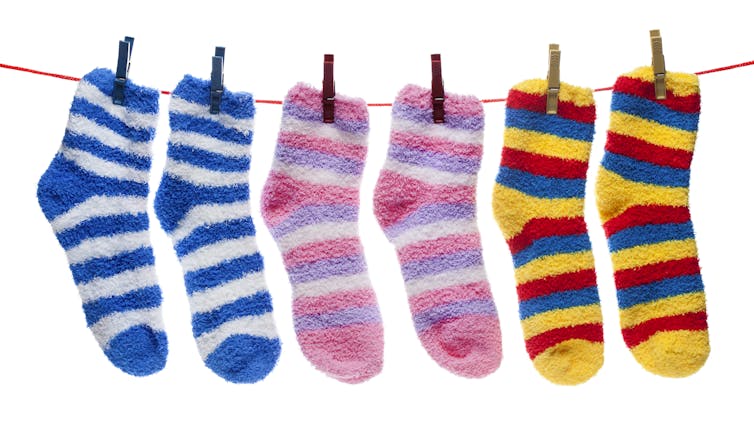
Fuzzy socks are a popular gift for people with a serious illness such as cancer.
pepifoto/iStock via Getty Images Plus

What to Give Someone With Cancer: Skip Fuzzy Socks, Give Practical Help Instead

Ellen T. Meiser, University of Hawaii at Hilo

The season of gifting is in full swing – a time when people scour the internet and shops of all kinds for items that appropriately symbolize their relationships with their loved ones.

Gift givers hope that their gift will appropriately communicate their feelings and bring the recipient joy. But that’s not always the reality. Gifts can be tricky and rife with hidden hazards. Relationships can even be ruined when the mismatch between the giver’s intention and the recipient’s perceptions of it is too vast.

The circumstances of the people involved also shape a gift’s meaning and the way it might be interpreted.

My research partner, Nathalie Rita, and I have been seeking to better understand gifting in one of life’s most dicey, distressing circumstances: cancer.

As sociologists, we use techniques such as in-depth interviews to study the experiences, feelings and motivations of specific groups of people. I focus on restaurant workers and my colleague on migrants and minorities. But in 2021, we were both diagnosed with cancer in our early 30s – breast cancer for me and endometrial cancer for her. This encouraged us to explore the experiences of other young women dealing with cancer.

By 2023, we had interviewed 50 millennial women diagnosed with cancer about a plethora of social and emotional topics related to their illness. Our own bouts with cancer revealed curious patterns in the gifts we very gratefully received from family and friends. So, we included a few questions about gifts in our research.

We expected some eccentric anecdotes similar to our own experiences. But our research, which isn’t yet published, revealed just how much of a mismatch there is between what people wanted and what they received – often driven by the marketing of specific gifts or care packages for cancer patients.

What loved ones give

One of our first questions was, what exactly do women diagnosed with cancer receive from their loved ones? Their answers ran the gamut. Our interviewees reported hundreds of gifts, from stuffed possums to child care help to Vitamix blenders. Friends and family were very eager to shower them in goods.

But from these hundreds of items and acts, 10 popped up over and over again. In order of frequency, they were:

  1. Fuzzy socks.
  2. Food and drinks, particularly herbal teas, groceries, gourmet goodies and Meal Trains.
  3. Money, GoFundMe donations and gift cards.
  4. Blankets.
  5. Fancy, spa-style self-care items.
  6. Written thoughts and prayers.
  7. Flowers and plants.
  8. Mugs, tumblers and bottles.
  9. Adult coloring books.
  10. Books.

The women we spoke with largely understood and appreciated the intentions behind these items in the context of their illness: books to distract, flowers to beautify. They viewed the gifts as material proof that their loved ones wanted to deliver comfort and support in a time of discomfort and helplessness.

But the frequency of certain items perplexed us. Why socks and coloring books instead of, say, Rollerblades and bongs?

Advertisement
Get More From A Face Cleanser And Spa-like Massage

The long shadow of online commerce and gift guides

We traced these gifting trends to two sources: premade cancer care packages and online gift guides.

Numerous women reported receiving some of the items from our top 10 list in premade care packages sourced from Etsy, Amazon or cancer-specific companies such as Rock the Treatment and The Balm Box. They noted that the contents of these packages felt predictable: spa-style self-care goods such as aromatherapy oils, lip balms and soy candles; herbal teas; a mug with a slogan or ribbon; and hard candies or throat lozenges.

Some received more opulent care packages, similar to Rock the Treatment’s large chemo care package for women, which adds adult coloring books, protein-rich snacks, a beanie and fuzzy socks. These additions mirror our interviewees’ top 10 received gifts even more closely.

Online gift guides published by magazines, news sites and stores may be influencing gifters’ behaviors, too. A Google search for “gift guide” yields countless lists for niche demographics – chicken lovers, mathematicians, even people who are always cold. Online viewership of these lists is prolific. For example, New York Magazine’s product recommendation site, The Strategist, received 10.7 million monthly views in 2021.

The top seven Google-ranked gift guides for cancer patients also contain suggestions that align almost perfectly with what our interviewees reported, with the addition of clothing and jewelry emblazoned with inspirational declarations such as “I’m stronger than cancer!”

These overlaps reflect the broader phenomena of the commodification and commercialization of cancer. As businesses seek to extract economic value out of all aspects of daily life, cancer has become a lucrative business opportunity and patients a source of profit.

Our research suggests that these market forces warp how gift givers perceive people with cancer and their desires. In turning cancer into something profitable, the ugly parts of illness are also glossed over to make cancer palatable to the market. Businesses then sell would-be gifters the idea that cancer can be assuaged by purchasing and giving a bejeweled, teal-ribboned Stanley tumbler.

Additionally, while premade care packages ease the labor of decision-making for gifters, they run a greater risk of disappointing recipients. These generic boxes, we found, can communicate a degree of thoughtlessness at a time when our study participants were aching for thoughtfulness.

Woman delivering groceries to a neighbor
Practical gifts, such as bringing groceries, can help relieve daily stressors for people coping with a serious illness.
SDI Productions/E+ via Getty Images

What to actually gift

So, what do women going through cancer treatment actually want to receive? Our interviewees recommended:

  1. Money in the form of cash or useful gift cards, such as for Door Dash, grocery stores and Petco.
  2. Meals and groceries, particularly if the recipient is a parent with mouths to feed.
  3. Help with errands and tasks such as babysitting, transportation, cleaning and lawn care.
  4. Cards and personal messages of love, which serve as check-ins and gestures of care and support.
  5. Practical self-care items such as thick lotions, face masks and soft soaps that don’t irritate skin.

Pragmatic. Simple. Even a little mundane.

There is some overlap between these recommendations and the frequently received gifts mentioned earlier. But notably, almost none of the women we interviewed expressed a desire for the nonessential items usually stocked in commercial care packages or those associated with profiting from cancer.

Instead, the gifts they felt touched them more deeply were ones that addressed ways in which they felt the disease incapacitated their abilities as a worker, woman, mother or caregiver.

Advertisement
Get More From A Face Cleanser And Spa-like Massage

Our interviewees spoke of financial strain from medical bills, fatigue preventing them from mothering in ways they used to, and mounting burdens that made it almost impossible to be present for partners or spouses. A monstera plant in a whimsical vase offered little reprieve from these pressures. However, a chat while folding laundry or a Pyrex of enchiladas did.

Perhaps most importantly, such offerings made them feel cared for and seen – their unvarnished circumstances recognized.

So, if a friend with cancer – or any other serious illness, for that matter – is on your list this holiday season, consider hanging those fuzzy socks back on the rack.

Instead, mull over their daily stresses, and choose an item – or a task – that provides a bit of relief.

Ellen T. Meiser, Assistant Professor of Sociology, University of Hawaii at Hilo

This article is republished from The Conversation under a Creative Commons license. Read the original article.

Continue Reading
Advertisement SodaStream USA, inc

Lifestyle

Women are at a higher risk of dying from heart disease − in part because doctors don’t take major sex and gender differences into account

Heart disease impacts women differently than men due to genetic and gender biases in healthcare. Awareness and improved treatment approaches are essential for better outcomes.

Published

on

Last Updated on April 20, 2026 by Daily News Staff

heart shape object on person s hands
Photo by Puwadon Sang-ngern on Pexels.com

Amy Huebschmann, University of Colorado Anschutz Medical Campus and Judith Regensteiner, University of Colorado Anschutz Medical Campus

A simple difference in the genetic code – two X chromosomes versus one X chromosome and one Y chromosome – can lead to major differences in heart disease. It turns out that these genetic differences influence more than just sex organs and sex assigned at birth – they fundamentally alter the way cardiovascular disease develops and presents.

While sex influences the mechanisms behind how cardiovascular disease develops, gender plays a role in how healthcare providers recognize and manage it. Sex refers to biological characteristics such as genetics, hormones, anatomy and physiology, while gender refers to social, psychological, and cultural constructs. Women are more likely to die after a first heart attack or stroke than men. Women are also more likely to have additional or different heart attack symptoms that go beyond chest pain, such as nausea, jaw pain, dizziness and fatigue. It is often difficult to fully disentangle the influences of sex on cardiovascular disease outcomes versus the influences of gender.

While women who haven’t entered menopause have a lower risk of cardiovascular disease than men, their cardiovascular risk accelerates dramatically after menopause. In addition, if a woman has Type 2 diabetes, her risk of heart attack accelerates to be equivalent to that of men, even if the woman with diabetes has not yet gone through menopause. Further data is needed to better understand differences in cardiovascular disease risk among nonbinary and transgender patients.

Despite these differences, one key thing is the same: Heart attack, stroke and other forms of cardiovascular disease are the leading cause of death for all people, regardless of sex or gender.

We are researchers who study women’s health and the way cardiovascular disease develops and presents differently in women and men. Our work has identified a crucial need to update medical guidelines with more sex-specific approaches to diagnosis and treatment in order to improve health outcomes for all.

Gender differences in heart disease

The reasons behind sex and gender differences in cardiovascular disease are not completely known. Nor are the distinct biological effects of sex, such as hormonal and genetic factors, versus gender, such as social, cultural and psychological factors, clearly differentiated.

What researchers do know is that the accumulated evidence of what good heart care should look like for women compared with men has as many holes in it as Swiss cheese. Medical evidence for treating cardiovascular disease often comes from trials that excluded women, since women for the most part weren’t included in scientific research until the NIH Revitalization Act of 1993. For example, current guidelines to treat cardiovascular risk factors such as high blood pressure are based primarily on data from men. This is despite evidence that differences in the way that cardiovascular disease develops leads women to experience cardiovascular disease differently.

a man checking the elderly woman s blood pressure using sphygmomanometer
Photo by Gustavo Fring on Pexels.com

In addition to sex differences, implicit gender biases among providers and gendered social norms among patients lead clinicians to underestimate the risk of cardiac events in women compared with men. These biases play a role in why women are more likely than men to die from cardiac events. For example, for patients with symptoms that are borderline for cardiovascular disease, clinicians tend to be more aggressive in ordering artery imaging for men than for women. One study linked this tendency to order less aggressive tests for women partly to a gender bias that men are more open than women to taking risks.

In a study of about 3,000 patients with a recent heart attack, women were less likely than men to think that their heart attack symptoms were due to a heart condition. Additionally, most women do not know that cardiovascular disease is the No. 1 cause of death among women. Overall, women’s misperceptions of their own risk may hold them back from getting a doctor to check out possible symptoms of a heart attack or stroke.

These issues are further exacerbated for women of color. Lack of access to health care and additional challenges drive health disparities among underrepresented racial and ethnic minority populations.

Advertisement
Get More From A Face Cleanser And Spa-like Massage

Sex difference in heart disease

Cardiovascular disease physically looks different for women and men, specifically in the plaque buildup on artery walls that contributes to illness.

Women have fewer cholesterol crystals and fewer calcium deposits in their artery plaque than men do. Physiological differences in the smallest blood vessels feeding the heart also play a role in cardiovascular outcomes.

Women are more likely than men to have cardiovascular disease that presents as multiple narrowed arteries that are not fully “clogged,” resulting in chest pain because blood flow can’t ratchet up enough to meet higher oxygen demands with exercise, much like a low-flow showerhead. When chest pain presents in this way, doctors call this condition ischemia and no obstructive coronary arteries. In comparison, men are more likely to have a “clogged” artery in a concentrated area that can be opened up with a stent or with cardiac bypass surgery. Options for multiple narrowed arteries have lagged behind treatment options for typical “clogged” arteries, which puts women at a disadvantage.

In addition, in the early stages of a heart attack, the levels of blood markers that indicate damage to the heart are lower in women than in men. This can lead to more missed diagnoses of coronary artery disease in women compared with men.

The reasons for these differences are not fully clear. Some potential factors include differences in artery plaque composition that make men’s plaque more likely to rupture or burst and women’s plaque more likely to erode. Women also have lower heart mass and smaller arteries than men even after taking body size into consideration.

Reducing sex disparities

Too often, women with symptoms of cardiovascular disease are sent away from doctor’s offices because of gender biases that “women don’t get heart disease.”

Considering how symptoms of cardiovascular disease vary by sex and gender could help doctors better care for all patients.

One way that the rubber is meeting the road is with regard to better approaches to diagnosing heart attacks for women and men. Specifically, when diagnosing heart attacks, using sex-specific cutoffs for blood tests that measure heart damage – called high-sensitivity troponin tests – can improve their accuracy, decreasing missed diagnoses, or false negatives, in women while also decreasing overdiagnoses, or false positives, in men.

Our research laboratory’s leaders, collaborators and other internationally recognized research colleagues – some of whom partner with our Ludeman Family Center for Women’s Health Research on the University of Colorado Anschutz Medical Campus – will continue this important work to close this gap between the sexes in health care. Research in this field is critical to shine a light on ways clinicians can better address sex-specific symptoms and to bring forward more tailored treatments.

The Biden administration’s recent executive order to advance women’s health research is paving the way for research to go beyond just understanding what causes sex differences in cardiovascular disease. Developing and testing right-sized approaches to care for each patient can help achieve better health for all.

Advertisement
Get More From A Face Cleanser And Spa-like Massage

Amy Huebschmann, Professor of Medicine, University of Colorado Anschutz Medical Campus and Judith Regensteiner, Professor of Medicine, University of Colorado Anschutz Medical Campus

This article is republished from The Conversation under a Creative Commons license. Read the original article.

Our Lifestyle section on STM Daily News is a hub of inspiration and practical information, offering a range of articles that touch on various aspects of daily life. From tips on family finances to guides for maintaining health and wellness, we strive to empower our readers with knowledge and resources to enhance their lifestyles. Whether you’re seeking outdoor activity ideas, fashion trends, or travel recommendations, our lifestyle section has got you covered. Visit us today at https://stmdailynews.com/category/lifestyle/ and embark on a journey of discovery and self-improvement.

Continue Reading

health and wellness

Shingles Raises Heart and Stroke Risk: Protect Yourself with Vaccination

Published

on

Shingles Raises Heart and Stroke Risk: Protect Yourself with Vaccination

(Feature Impact) Shingles isn’t just a painful rash and nerve pain. It’s also linked with a higher risk of serious cardiovascular events, including heart attack and stroke, especially in the weeks to months after infection. However, shingles is largely preventable with vaccination.

The world’s leading nonprofit organization focused on changing the future of health for all, the American Heart Association, reminds eligible adults to protect themselves by getting vaccinated and staying on top of their heart health.

According to the Centers for Disease Control and Prevention (CDC), about 1 in 3 adults in the U.S. will get shingles in their lifetime. If you’ve had chickenpox, the virus that causes shingles, also known as herpes zoster, is already inside you. It can “wake up” years later, causing painful blisters and nerve pain that can last for months or longer.

After a shingles episode, one large study published in the “Journal of the American Heart Association” found the risk of heart attack and stroke was nearly 30% higher in the short term and may persist over time.

“Shingles can be very painful and knock you down for weeks,” said Eduardo Sanchez, M.D., FAHA, the American Heart Association’s chief medical officer for prevention. “It’s also associated with a higher chance of heart and stroke problems afterward. If you’re 50 or older, or have a weakened immune system, talk to your doctor or pharmacist about the shingles vaccine. It’s a simple step that can keep you healthier.”

Knowing your risk is the first step toward prevention. Age is the most important risk factor for developing shingles. As people age, their immune systems naturally weaken, making it easier for the virus to reactivate. People over 50, and especially those living with heart disease, diabetes or other chronic illnesses, are more likely to develop shingles.

The risk of serious complications from shingles increases:

  • As you get older
  • If you take drugs that keep your immune system from working properly, like steroids and drugs given after an organ transplant
  • If you have medical conditions that keep your immune system from working properly such as certain cancers like leukemia and lymphoma, or HIV infection

Heart Health Made Simpler

17872 B detail embed2In addition to ensuring you’re up to date on your vaccines, talk to your health care professional about ways you can improve your overall heart health. According to the American Heart Association, heart disease remains the leading cause of death, taking more lives in the United States than any other cause.

Following healthy lifestyle guidance like Life’s Essential 8 can make inroads toward preventing heart disease and stroke, and improving brain health. The set of four health behaviors (eat better, be more active, quit tobacco and get healthy sleep) and four health factors (manage weight, control cholesterol, manage blood sugar and manage blood pressure) are key measures for improving and maintaining cardiovascular health.

How to Get the Shingles Vaccine

  • Check eligibility: Recommended by the CDC for adults 50-plus and adults 19 and older with weakened immune systems.
  • Find a location: Most national pharmacies, many primary care and specialty clinics and local health departments offer it. Search your pharmacy’s app or website, or call your clinician’s office.
  • Book it: Make an appointment online or by phone. Same‑day or walk‑in options may be available at pharmacies.
  • Bring what you need: Photo ID, insurance card and a list of medicines and allergies. Wear a short‑sleeve shirt, if you can.
  • Plan for two doses, 2-6 months apart: When you schedule dose one, set a reminder or book dose two before you leave.
  • Cost and coverage: Many health plans, including Medicare Part D, cover shingles vaccination at low or no cost. Check your benefits or ask the pharmacy to verify coverage.
  • After your shot: A sore arm, fatigue, headache or mild fever are common and usually go away in 2-3 days. Call your clinician about severe or persistent symptoms.
  • If you’ve had shingles before: You can still get vaccinated after you recover. Ask your health care provider about timing.

Learn more at heart.org/shingles.

Signs and Symptoms of Shingles

Symptoms to watch for: tingling, itching or burning on one side of the body or face; a stripe‑like rash that turns into fluid‑filled blisters; headache; fever; or chills.


Act fast: If you think you have shingles, contact your health care professional right away. Treatment works best within 72 hours of the rash appearing. If the rash is near your eye or you have eye pain or changes in vision, seek urgent care.

Lasting impact: The rash typically scabs over and clears within 2-4 weeks, but the pain in the rash area can last about a month. The duration of pain seems to increase with age.

Protect Yourself (and Others) from Shingles

If you have shingles, you can stop the spread by covering the rash and avoiding touching or scratching it. You should also wash your hands often, for at least 20 seconds, and avoid contact with people who may be at heightened risk until your rash scabs over, including:

Advertisement
Get More From A Face Cleanser And Spa-like Massage
  • Pregnant women who never had chickenpox or the chickenpox vaccine
  • Premature or low-birthweight infants
  • People with weakened immune systems

Photos courtesy of Shutterstock

    collect?v=1&tid=UA 482330 7&cid=1955551e 1975 5e52 0cdb 8516071094cd&sc=start&t=pageview&dl=http%3A%2F%2Ftrack.familyfeatures
track

SOURCE:

American Heart Association 

Our Lifestyle section on STM Daily News is a hub of inspiration and practical information, offering a range of articles that touch on various aspects of daily life. From tips on family finances to guides for maintaining health and wellness, we strive to empower our readers with knowledge and resources to enhance their lifestyles. Whether you’re seeking outdoor activity ideas, fashion trends, or travel recommendations, our lifestyle section has got you covered. Visit us today at https://stmdailynews.com/category/lifestyle/ and embark on a journey of discovery and self-improvement.

Continue Reading

health and wellness

Cannabis Legalization Drives Innovation, Raises Health Concerns

Cannabis legalization is driving innovation, but much of it focuses on commercial products rather than patient health. New research highlights gaps between market growth and medical evidence.

Published

on

Cannabis Legalization: A gloved hand gently touching a cannabis plant, symbolizing the complex intersection of scientific research, regulation, and the growing commercial cannabis industry.
Even after legalization, researchers face significant barriers to studying cannabis. Visoot Uthairam/Moment via Getty Images

Lucy Xiaolu Wang, UMass Amherst and Nathan W. Chan, UMass Amherst

Cannabis legalization 

Innovation in health care saves lives. But not all health innovations have enough evidence to actually benefit patients.

Barriers to innovation are often higher in illicit or restricted markets, including cannabis, stem cells and cryptocurrencies. Researchers face higher costs, limited access to raw materials and data, and stricter regulations.

Cannabis illustrates a particularly confusing tension between regulatory restrictions on one hand and research and innovation on the other.

While the U.S. federal government still classifies cannabis as having “no accepted medical use,” many states have legalized it for medical or recreational use. Meanwhile, the Department of Health and Human Services obtained a cannabis-related patent in 2003 covering potential medical uses of cannabis compounds for protecting the brain from damage or degeneration. The patent was exclusively licensed for commercialization.

Research and innovation on cannabis can take many forms. Clinical trials may study cannabis products as medical treatments, the effects of cannabis on its users, or factors related to abuse and dependence. Meanwhile, cannabis-related patents can be filed for wide-ranging purposes, such as chemical formulations, methods for production or new consumer products like edibles, beverages or vaporizers.

But do these innovations actually benefit consumers and patients?

Hand wearing nitrile glove touching a cannabis plant
The complex legal landscape of cannabis makes research and regulation difficult. James MacDonald/Bloomberg

We are economists studying how institutional changes affect innovation in different markets. Our recently published research found that legalization of recreational cannabis use appears to spur innovation, but primarily in ways that expand commercial opportunities rather than scientific understanding or health benefits for patients.

Cannabis’ evolving legality in the US

Cannabis is a plant that contains chemical compounds called cannabinoids. One such compound, tetrahydrocannabinol, or THC, produces psychoactive effects, while another compound called cannabidiol, or CBD, is often used to relieve anxiety and pain. However, there has been insufficient evidence on how effective cannabis products are in treating medical conditions, as well as a lack of consistent medical and dosing guidance.

At the federal level in the U.S., cannabis has been classified as a Schedule I drug for over a half-century. This classification indicates that the federal government considers cannabis to have a high potential for abuse and no accepted medical use.

As a Schedule I drug, there are significant restrictions on cannabis research. Researchers who seek to conduct cannabis-related clinical trials must obtain approval from both the Food and Drug Administration and the Drug Enforcement Administration, a process that can take over a year. They are also limited to using select varieties of cannabis obtained from federally authorized cannabis suppliers, and are generally prohibited from studying products available in state-authorized markets.

Cannabis interacts with the brain’s endocannabinoid system.

There are ongoing pushes to relax these restrictions. Meanwhile, cannabis has been legalized to varying extents in many states. California became the first state to pass a medical cannabis law in 1996, allowing qualified patients to grow, possess and use cannabis for medical purposes. Many states followed suit in the late 1990s and early 2000s. As of June 2025, 40 states allow medical cannabis use.

Advertisement
Get More From A Face Cleanser And Spa-like Massage

A number of states also allow recreational or nonmedical cannabis use among adults, which is regulated in similar ways to alcohol. Colorado and Washington enacted the first recreational cannabis laws in 2012, and there are 24 states that permit adults to use cannabis recreationally as of January 2026.

Altogether, the legal landscape for cannabis in the U.S. has varied considerably across states and over time. States with more permissive laws can lower the costs of medical research and product development with cannabis, even if federal drug scheduling continues to restrict access. For instance, one group of Washington State University researchers asked participants to independently purchase and smoke cannabis from a legal dispensary before returning to their lab for study.

State legalization and cannabis innovation

To systematically examine how state legalization affects cannabis-related innovation, we compiled and analyzed datasets tracking cannabis-related clinical trials and patent applications.

We distinguished different types of cannabis-related innovation. Specifically, we categorized cannabis-related clinical trials based on whether they focused on its potential as a treatment, its usage and effects, or its role in drug abuse. Similarly, we categorized cannabis-related patents based on whether they focused on chemical compounds, medical uses, methods or products.

We also assessed public health concerns across three measures: patents explicitly involving THC; patents with a high risk of misuse; and patents targeting consumers directly, such as high-potency formulations, edibles or vaporizers.

Then, we compared changes in cannabis-related innovation over time in states that legalized cannabis earlier with those in states that did so later or not at all. We measured innovation by counting the number of cannabis-related clinical trials and patent filings. We distinguished between medical and recreational legalization to assess how different policies affect innovation.

Overall, we found that when states legalize cannabis for recreational use, cannabis-related patents increase – but mostly in commercial-oriented areas rather than health-focused ones. Patents were concentrated in market-oriented innovations like cultivation equipment and consumer products, rather than in clinical or science-based research. We also found some evidence that these innovations may raise public health concerns.

Legalization did not result in meaningful increases in clinical trials. This suggests that barriers to cannabis-related clinical research – such as limited access to research-grade cannabis, limited funding and stigma around working with a federally controlled substance – remain substantial.

Gaps between research and product

As 420 – signifying April 20, a day celebrating cannabis culture – approaches each year, public attention turns toward the legal status of cannabis.

The legal landscape has evolved rapidly over the past few decades, and further changes are in the pipeline. Both the Biden and second Trump administrations have made efforts to reclassify cannabis as a Schedule III substance, which would indicate that it has an accepted medical use and low-to-moderate potential for dependence.

Advertisement
Get More From A Face Cleanser And Spa-like Massage

These reevaluations of the legality of cannabis come at a critical time. There has been an explosion of recreational cannabis products in recent years, including increasingly potent strains and a wider variety of ways to use cannabis. Meanwhile, critical research on the health and safety of cannabis use has lagged due to heavy restrictions accompanying Schedule I status.

This gap between medical research and product innovation can have significant public health consequences. The 2019 to 2020 outbreak of lung injuries related to e-cigarette or vape use was linked partly to the use of unregulated or illicit cannabis vaping products. These harms highlight the risks of allowing product innovation for controlled substances to outpace scientific understanding.

Policies that significantly reduce obstacles to clinical research can in turn help close the widening gap between cannabis markets and addressing their public health implications.

Lucy Xiaolu Wang, Assistant Professor of Resource Economics, UMass Amherst and Nathan W. Chan, Professor of Resource Economics, UMass Amherst

This article is republished from The Conversation under a Creative Commons license. Read the original article.

STM Daily News is a vibrant news blog dedicated to sharing the brighter side of human experiences. Emphasizing positive, uplifting stories, the site focuses on delivering inspiring, informative, and well-researched content. With a commitment to accurate, fair, and responsible journalism, STM Daily News aims to foster a community of readers passionate about positive change and engaged in meaningful conversations. Join the movement and explore stories that celebrate the positive impacts shaping our world. 

https://stmdailynews.com/

Continue Reading

Trending