Connect with us

Economy

Tariffs 101: What they are, who pays them, and why they matter now

Learn what tariffs are, who pays them, and why they matter for the U.S. economy. Explore how import taxes impact prices, trade policy, and everyday consumers as the Supreme Court reviews Trump’s global tariffs.

Published

on

Last Updated on December 13, 2025 by Daily News Staff

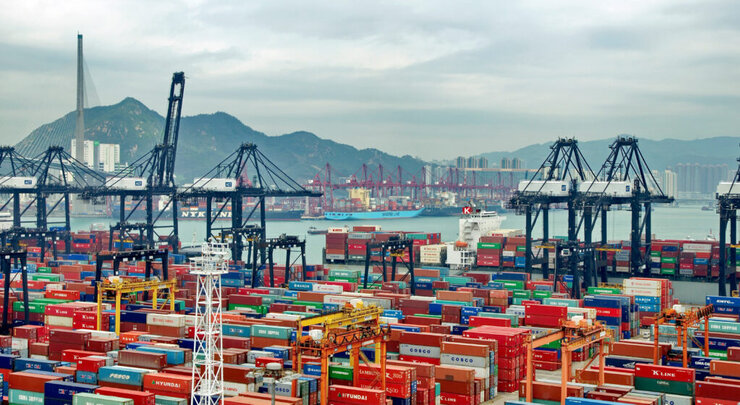
Cargo containers and U.S. Customs officers at a busy port, illustrating the impact of tariffs and trade policy on imported goods.

Tariffs 101: What they are, who pays them, and why they matter now

Kent Jones, Babson College

The U.S. Supreme Court is currently reviewing a case to determine whether President Donald Trump’s global tariffs are legal.

Until recently, tariffs rarely made headlines. Yet today, they play a major role in U.S. economic policy, affecting the prices of everything from groceries to autos to holiday gifts, as well as the outlook for unemployment, inflation and even recession.

I’m an economist who studies trade policy, and I’ve found that many people have questions about tariffs. This primer explains what they are, what effects they have, and why governments impose them.

What are tariffs, and who pays them?

Tariffs are taxes on imports of goods, usually for purposes of protecting particular domestic industries from import competition. When an American business imports goods, U.S. Customs and Border Protection sends it a tariff bill that the company must pay before the merchandise can enter the country.

Because tariffs raise costs for U.S. importers, those companies usually pass the expense on to their customers by raising prices. Sometimes, importers choose to absorb part of the tariff’s cost so consumers don’t switch to more affordable competing products. However, firms with low profit margins may risk going out of business if they do that for very long. In general, the longer tariffs are in place, the more likely companies are to pass the costs on to customers.

Importers can also ask foreign suppliers to absorb some of the tariff cost by lowering their export price. But exporters don’t have an incentive to do that if they can sell to other countries at a higher price.

Studies of Trump’s 2025 tariffs suggest that U.S. consumers and importers are already paying the price, with little evidence that foreign suppliers have borne any of the burden. After six months of the tariffs, importers are absorbing as much as 80% of the cost, which suggests that they believe the tariffs will be temporary. If the Supreme Court allows the Trump tariffs to continue, the burden on consumers will likely increase.

While tariffs apply only to imports, they tend to indirectly boost the prices of domestically produced goods, too. That’s because tariffs reduce demand for imports, which in turn increases the demand for substitutes. This allows domestic producers to raise their prices as well.

Advertisement
SodaStream USA, inc

A brief history of tariffs

The U.S. Constitution assigns all tariff- and tax-making power to Congress. Early in U.S. history, tariffs were used to finance the federal government. Especially after the Civil War, when U.S. manufacturing was growing rapidly, tariffs were used to shield U.S. industries from foreign competition.

The introduction of the individual income tax in 1913 displaced tariffs as the main source of U.S. tax revenue. The last major U.S. tariff law was the Smoot-Hawley Tariff Act of 1930, which established an average tariff rate of 20% on all imports by 1933.

Those tariffs sparked foreign retaliation and a global trade war during the Great Depression. After World War II, the U.S. led the formation of the General Agreement on Tariffs and Trade, or GATT, which promoted tariff reduction policies as the key to economic stability and growth. As a result, global average tariff rates dropped from around 40% in 1947 to 3.5% in 2024. The U.S. average tariff rate fell to 2.5% that year, while about 60% of all U.S. imports entered duty-free.

While Congress is officially responsible for tariffs, it can delegate emergency tariff power to the president for quick action as long as constitutional boundaries are followed. The current Supreme Court case involves Trump’s use of the International Emergency Economic Powers Act, or IEEPA, to unilaterally change all U.S. general tariff rates and duration, country by country, by executive order. The controversy stems from the claim that Trump has overstepped his constitutional authority granted by that act, which does not mention tariffs or specifically authorize the president to impose them.

The pros and cons of tariffs

In my view, though, the bigger question is whether tariffs are good or bad policy. The disastrous experience of the tariff war during the Great Depression led to a broad global consensus favoring freer trade and lower tariffs. Research in economics and political science tends to back up this view, although tariffs have never disappeared as a policy tool, particularly for developing countries with limited sources of tax revenue and the desire to protect their fledgling industries from imports.

Yet Trump has resurrected tariffs not only as a protectionist device, but also as a source of government revenue for the world’s largest economy. In fact, Trump insists that tariffs can replace individual income taxes, a view contested by most economists.

Most of Trump’s tariffs have a protectionist purpose: to favor domestic industries by raising import prices and shifting demand to domestically produced goods. The aim is to increase domestic output and employment in tariff-protected industries, whose success is presumably more valuable to the economy than the open market allows. The success of this approach depends on labor, capital and long-term investment flowing into protected sectors in ways that improve their efficiency, growth and employment.

Critics argue that tariffs come with trade-offs: Favoring one set of industries necessarily disfavors others, and it raises prices for consumers. Manipulating prices and demand results in market inefficiency, as the U.S. economy produces more goods that are less efficiently made and fewer that are more efficiently made. In addition, U.S. tariffs have already resulted in foreign retaliatory trade actions, damaging U.S. exporters.

Trump’s tariffs also carry an uncertainty cost because he is constantly threatening, changing, canceling and reinstating them. Companies and financiers tend to invest in protected industries only if tariff levels are predictable. But Trump’s negotiating strategy has involved numerous reversals and new threats, making it difficult for investors to calculate the value of those commitments. One study estimates that such uncertainty has actually reduced U.S. investment by 4.4% in 2025.

A major, if underappreciated, cost of Trump’s tariffs is that they have violated U.S. global trade agreements and GATT rules on nondiscrimination and tariff-binding. This has made the U.S. a less reliable trading partner. The U.S. had previously championed this system, which brought stability and cooperation to global trade relations. Now that the U.S. is conducting trade policy through unilateral tariff hikes and antagonistic rhetoric, its trading partners are already beginning to look for new, more stable and growing trade relationships.

Advertisement
SodaStream USA, inc

So what’s next? Trump has vowed to use other emergency tariff measures if the Supreme Court strikes down his IEEPA tariffs. So as long as Congress is unwilling to step in, it’s likely that an aggressive U.S. tariff regime will continue, regardless of the court’s judgment. That means public awareness of tariffs ⁠– and of who pays them and what they change ⁠– will remain crucial for understanding the direction of the U.S. economy.

Kent Jones, Professor Emeritus, Economics, Babson College

This article is republished from The Conversation under a Creative Commons license. Read the original article.

STM Daily News is a vibrant news blog dedicated to sharing the brighter side of human experiences. Emphasizing positive, uplifting stories, the site focuses on delivering inspiring, informative, and well-researched content. With a commitment to accurate, fair, and responsible journalism, STM Daily News aims to foster a community of readers passionate about positive change and engaged in meaningful conversations. Join the movement and explore stories that celebrate the positive impacts shaping our world.

https://stmdailynews.com/

View recent photos

Unlock fun facts & lost history—get The Knowledge in your inbox!

We don’t spam! Read our privacy policy for more info.

News

Money Management: The Importance of Financial Literacy

You may have mastered the core subjects like math and grammar in school, but financial literacy – or understanding the basics of money management in order to help you make better financial decisions – often goes overlooked before adulthood. It’s not so much a course of study as it is a plan of action. When you understand how to earn, save, spend and invest wisely, you aren’t just building a stable future for yourself, but your family and community as well.

Published

on

You may have mastered the core subjects like math and grammar in school, but financial literacy – or understanding the basics of money management in order to help you make better financial decisions – often goes overlooked before adulthood. It’s not so much a course of study as it is a plan of action. When you understand how to earn, save, spend and invest wisely, you aren’t just building a stable future for yourself, but your family and community as well.

(Feature Impact) You may have mastered the core subjects like math and grammar in school, but financial literacy – or understanding the basics of money management in order to help you make better financial decisions – often goes overlooked before adulthood. It’s not so much a course of study as it is a plan of action.

Financial literacy in the United States has remained stagnant at generally low levels for several years, according to research from TIAA Institute and the Global Financial Literacy Excellence Center, with even lower levels among Gen Z. Yet greater financial literacy – including key aspects such as goal-setting, budgeting, saving, credit management and investing – is strongly linked to better financial outcomes, including lower rates of debt constraint and financial fragility.

While emboldening yourself to understand financial terms can be a little overwhelming at first, once you have a grasp of basic concepts you can begin to get a handle on your money and make better financial decisions. Simply put: When you understand how to earn, save, spend and invest wisely, you aren’t just building a stable future for yourself, but your family and community as well.

From nonprofit partnerships to volunteer-led programs and fee online resources, Schwab and its employees help millions of people every year build the knowledge and confidence to take charge of their financial futures by serving as board members, mentors, role models and educators.

Because financial health is a lifelong journey, the earlier people learn vital money skills, the better. That’s why the financial advisory services provider develops education programs geared toward kids that continue into adulthood, helping people no matter where they are on their journeys.

Talk Money

It’s never too early to start a conversation about financial literacy. Having teens identify goals that are important to them – such as concert tickets or a first car – can kickstart coversations about money. Working with your child (and a financial advisor, if necessary) on a plan for saving to realize those goals can serve as a jumping off point. After achieving some success, their enthusiasm may grow, which is a powerful motivator to keep saving.

Support School Initiatives and Programs

Outreach programs that empower young people to make smart financial decisions is key to a bright future. Programs like Money Matters – Schwab’s flagship financial education program utilized by the Boys & Girls Clubs of America – gives young people hands-on experience with all aspects of money and investing.

This example, and others, don’t just include program funding – they build partnerships that create impact and opportunity with national collaborations that reach more than 17 million youth annually, empowering young people with the tools and confidence to make smart financial decisions for life.

Spread the Financial Love

Championing financial literacy empowers everyone – individuals, families and communities. By serving as a board member, mentor, role model or educator to help bring financial literacy to others in your community, you can supply the tools and knowledge to lead programs that focus on giving back, empowering future generations in countless ways.

To learn more about financial literacy and find resources to empower your local community, visit SchwabMoneywise.com.

Photo courtesy of Shutterstock

Advertisement
SodaStream USA, inc
    collect?v=1&tid=UA 482330 7&cid=1955551e 1975 5e52 0cdb 8516071094cd&sc=start&t=pageview&dl=http%3A%2F%2Ftrack.familyfeatures
track

SOURCE:

Charles Schwab

Our Lifestyle section on STM Daily News is a hub of inspiration and practical information, offering a range of articles that touch on various aspects of daily life. From tips on family finances to guides for maintaining health and wellness, we strive to empower our readers with knowledge and resources to enhance their lifestyles. Whether you’re seeking outdoor activity ideas, fashion trends, or travel recommendations, our lifestyle section has got you covered. Visit us today at https://stmdailynews.com/category/lifestyle/ and embark on a journey of discovery and self-improvement.

Continue Reading

Automotive

SUVs and EVs Take Center Stage at the 2026 New York International Auto Show

Published

on

Kia. 2026 New York International Auto Show

SUVs and EVs Take Center Stage at the 2026 New York International Auto Show

(Feature Impact) The 2026 New York International Auto Show is shining a spotlight on the latest in automotive innovation, from advanced technology to the growing shift toward electric vehicles. One automaker, Kia, is using the show to highlight two versatile SUVs designed to offer more space, capability and flexibility for modern drivers.

Watch this video to learn more

The all-new 2027 Kia Seltos has grown in size, offering a roomier interior with additional legroom, headroom and cargo space. It also adds a hybrid powertrain, making it the only vehicle in its class with three powertrain options. The SUV comes packed with advanced safety features, a more capable all-wheel-drive system and premium interior touches, including dual 12.3-inch display screens and an available panoramic sunroof.

The automaker is also showcasing the all-electric EV3, a compact SUV designed to make electric vehicle ownership more practical. With an estimated range of up to 320 miles, fast-charging capability and optional all-wheel drive, it balances performance, technology and everyday usability. Its intuitive features and flexible design make transitioning to electric simpler for a wider range of drivers.

Both models represent Kia’s commitment to providing options that blend capability, innovation and style. To learn more, visit Kia.com.

   collect?v=1&tid=UA 482330 7&cid=1955551e 1975 5e52 0cdb 8516071094cd&sc=start&t=pageview&dl=http%3A%2F%2Ftrack.familyfeatures
track

SOURCE:

Kia Motors America

Welcome to the Consumer Corner section of STM Daily News, your ultimate destination for savvy shopping and informed decision-making! Dive into a treasure trove of insights and reviews covering everything from the hottest toys that spark joy in your little ones to the latest electronic gadgets that simplify your life. Explore our comprehensive guides on stylish home furnishings, discover smart tips for buying a home or enhancing your living space with creative improvement ideas, and get the lowdown on the best cars through our detailed auto reviews. Whether you’re making a major purchase or simply seeking inspiration, the Consumer Corner is here to empower you every step of the way—unlock the keys to becoming a smarter consumer today!

https://stmdailynews.com/category/consumer-corner

Continue Reading

Economy

Feeding the Economy Report Says U.S. Food, Agriculture Add $10.4 Trillion

The 2026 Feeding the Economy report says U.S. food and agriculture industries generate $10.4 trillion in economic value and support 48.7 million jobs.

Published

on

The 2026 Feeding the Economy report says U.S. food and agriculture industries generate $10.4 trillion in economic value and support 48.7 million jobs.

New Feeding the Economy Report Highlights Food, Agriculture Industry Strength

America’s food and agriculture industries generated more than $10.4 trillion in economic value in 2026, accounting for nearly 20% of the U.S. economy, according to the 10th annual Feeding the Economy report released by 35 food and agriculture groups. The new farm-to-fork study also found the sector supports 48.7 million jobs nationwide, including 24.3 million direct jobs across farming, food manufacturing, processing, distribution, retail, and foodservice.

The report points to continued resilience despite inflation, trade uncertainty, and ongoing pressure on farmers and producers. It found food and agriculture generate more than $3 trillion in wages and $1.35 trillion in tax revenue, while U.S. exports totaled $177.3 billion. At the same time, the study flagged softer areas to watch, including flat direct employment in production agriculture and food manufacturing, along with a year-over-year decline in exports. For the food and beverage industry, the report reinforces just how deeply agriculture remains tied to jobs, supply chains, and broader economic stability.

Source:
Tenth Annual “Feeding the Economy” Report Demonstrates Strength and Resilience of the American Food and Agriculture Industries Amid Ongoing Economic Pressures — Feeding the Economy via PR Newswire
Further information:
Feeding the Economy

View the original press release on PR Newswire

STM Daily News is a vibrant news blog dedicated to sharing the brighter side of human experiences. Emphasizing positive, uplifting stories, the site focuses on delivering inspiring, informative, and well-researched content. With a commitment to accurate, fair, and responsible journalism, STM Daily News aims to foster a community of readers passionate about positive change and engaged in meaningful conversations. Join the movement and explore stories that celebrate the positive impacts shaping our world. 

https://stmdailynews.com/

Continue Reading

Trending

