
Books and Novels
Bad Seed Book announces the sale of 100,000 Non-Fungible-Trump trading cards
BRONX, N.Y. /PRNewswire/ — www.badseedbook.com announces the sale of 100,000 NON-FUNGIBLE-TRUMP trading cards for $100 on Upstream, the trading app for digital securities and NFTs powered by Horizon Fintex (“Horizon”) and MERJ Exchange Limited (“MERJ”).
We picked Presidents Day to launch our NON-FUNGIBLE-TRUMPs to remind people that the 45th edition was the worst.Tweet
This exclusive collection of 100,000 NON-FUNGIBLE-TRUMPs is derived from 10 classic illustrations by Catalan Artist Ivan Cuadros, from the Bad Seed Book, a legendary online satire of the Trump administration, which is being prepared for publication as an illustrated novel on Trump’s birthday, June 14, 2023. Popular illustrations from the series include, Trump Baby, Trump (statue of) Liberty, Trump Dictator, Trump Godzilla and Trump Slapped (by Stormy Daniels).
According to writer/creator Adam Kidron: “The NON-FUNGIBLE-TRUMPs, like the Bad Seed Book itself, serves as a satirical counterbalance to Trump and his bully-pulpit, which he uses to intimidate, discriminate and sell dangerous untruths. So when Trump announced his sale of 45,000 “comic” NFT’s we decided to create a series of greater artistic, social, and economic value. We picked President’s Day to launch to remind people that the 45th edition was the worst. Trump’s NFT trading cards recently hit a new peak price of $1,000 each, providing purchasers a 1000% return. Given the relative size of the #nevertrump market, we expect that people purchasing the Bad Seed Book series of NON-FUNGIBLE-TRUMPs will do even better!”
There are 100,000 NON-FUNGIBLE-TRUMPs for sale in the Bad Seed Book collection. For more information on the collection please visit www.badseedbook.com
ABOUT THE BAD SEED BOOK
The Bad Seed Book is an illustrated online satire of the Trump Administration, in which we have commissioned and produced an exclusive collection of 1,500 original images, gifs, and animated movie shorts that we share across our social platforms. The book which was originally published as 40-chapter/blogs is currently being prepared for publication as an illustrated novel on Trump’s birthday, June 14, 2023.
In the book, Elia Degas, a bold but disillusioned lawyer from the Bronx is searching for a distraction from a career going nowhere and a stack of bills he can’t afford to pay. His life turned upside down when Monica Rivera, a dangerously addictive journalist and provocateur, tells Degas a story big enough to change the world — that he (Degas) is the step-brother of James Alexander Hunt whose unlikely victory in the previous day’s Presidential Election had opened the floodgates of bigotry.
Prior to the election, Hunt, a master manipulator of public opinion had been bought and sold by many powerful men including Russian President, Vladimir Putin who is blackmailing him.
When Degas discovers that Hunt had disinherited him through fraud, he vows to bring him down no matter the consequence, no matter the cost, and together, Degas and Monica take on Hunt, the powers that be and the conspiracy that we were never supposed to see.
BORN OF EXTREME VIOLENCE. ROBBED OF HIS BIRTHRIGHT. DEGAS IS THE BASTARD THAT GOING TO TAKE THE PRESIDENT DOWN AND SAVE US FROM OURSELVES
About Adam Kidron
As a record producer, Adam was responsible for many seminal records and soundtracks. As a TV producer, Adam was responsible for innovative series such as CATWALK (the cult show that broke out Neve Campbell). As an entrepreneur, Adam founded UBO.com, which foretold YouTube, recorded the Star-Spangled Banner in Spanish (which trod on the sensitive toes of President George W. Bush), brought iPad and unlimited personalization to (almost) fast food at 4food, and democratized the business of music at Yonder Music. Adam is currently building global, mobile platforms for connected (on and offline) experiences at Yonder Media Mobile.
Adam Plus Company is pop-up investment firm Adam founded to instigate and incubate transformative ideas and organize them to ventures.
The Bad Seed Book, which is one such venture. For a peek at the others visit: www.adamplusco.com
SOURCE Bad Seed Book
Discover more from Daily News
Subscribe to get the latest posts sent to your email.
Entertainment
TIME100 Next 2025: Celebrating the Emerging Leaders Redefining Tomorrow
TIME Magazine’s TIME100 Next 2025 list highlights 100 rising stars reshaping leadership across various fields. With covers featuring Tate McRae, Jonathan Bailey, and April Koh, the list showcases diverse talents driving significant global change, underscoring a new era of influence.
Last Updated on October 15, 2025 by Daily News Staff
TIME Magazine has unveiled its highly anticipated 2025 TIME100 Next list, spotlighting 100 rising stars who are reshaping industries, challenging conventions, and defining what leadership looks like for the next generation. From groundbreaking entertainers to innovative tech pioneers, this year’s honorees represent a diverse tapestry of talent and vision that’s driving meaningful change across the globe.
Three Faces of the Future
The 2025 TIME100 Next issue features three striking worldwide covers, each showcasing a different dimension of emerging leadership. Singer-songwriter Tate McRae, actor Jonathan Bailey, and Spring Health co-founder and CEO April Koh each represent the breadth of influence this year’s list encompasses—spanning entertainment, business innovation, and mental health advocacy.
TIME100 Next 2025: Celebrating the Emerging Leaders Redefining Tomorrow
“The TIME100 Next spotlights changemakers from around the globe who are shaping the next generation of leadership and redefining what progress, influence, and impact mean in today’s world,” said TIME Chief Executive Officer Jessica Sibley.
A New Generation of Influence
TIME Editor-in-Chief Sam Jacobs emphasized that influence doesn’t wait for seniority. “While we’ve made it our mission to cover people who have reached the pinnacle of their fields, the TIME100 Next is an opportunity to recognize those still on the rise,” Jacobs writes. “We’ve known that true influence knows no age and that it can arrive early in a career.”
This philosophy shines through in the list’s youngest honoree, 16-year-old Elliston Berry, proving that transformative leadership can emerge at any age.
Women Leading the Charge
Over 50 women grace this year’s list, including basketball phenom Paige Bueckers, advocate Sara Ziff, and community organizer Amanda Jones. Their presence underscores a powerful shift toward gender parity in leadership across every sector—from sports and science to activism and the arts.
Star-Studded Tributes
The list features heartfelt tributes from established icons celebrating the next wave of talent. Ariana Grande writes about Jonathan Bailey, Selena Gomez honors Becky G, and Dakota Johnson celebrates Tate McRae. Other contributors include Pedro Pascal, Michael Keaton, Cate Blanchett, Miranda Lambert, and Diana Taurasi—each recognizing the unique spark in their respective honorees.
Entertainment’s Rising Stars
The entertainment category reads like a who’s who of tomorrow’s A-list: Jonathan Bailey, Tate McRae, Gracie Abrams, Damson Idris, GloRilla, Kaitlyn Dever, Lainey Wilson, and David Corenswet are just a handful of the performers redefining music, film, and television for a new era.
Beyond the Spotlight
The list extends far beyond entertainment, recognizing:
- Athletes like soccer sensation Lamine Yamal and tennis player Taylor Fritz
- Political leaders including Karoline Leavitt and Iceland’s Kristrun Frostadottir
- Tech innovators such as Cristóbal Valenzuela and Phoebe Gates
- Health and science pioneers like April Koh and Dr. David Fajgenbaum
- Justice advocates including Emi Mahmoud and Efrén Olivares
- Sustainability champions like Bob Mumgaard and Charles Hua
An Evening to Remember
On October 30th, TIME will host its fifth annual TIME100 Next event in New York City, bringing together this extraordinary group of changemakers. The evening will feature a special performance by Tate McRae, remarks from Jonathan Bailey and Nomzamo Mbatha, and the presentation of the TIME Earth Award to Ayana Elizabeth Johnson.
The event is presented by Rolex and premier partner Toyota, with support from General Catalyst, Project Management Institute, Meta, and The SPARK Collective.
The Future Is Now
What makes the TIME100 Next list so compelling isn’t just the individual achievements of its honorees—it’s the collective vision they represent. These are leaders who refuse to wait their turn, who see problems as opportunities, and who understand that the future doesn’t belong to those who simply inherit it, but to those bold enough to build it.
From Tate McRae’s chart-topping anthems to April Koh’s mental health revolution, from Jonathan Bailey’s captivating performances to the countless innovators working behind the scenes, the 2025 TIME100 Next class reminds us that tomorrow’s leaders are already here—and they’re just getting started.
To explore the full 2025 TIME100 Next list, tributes, videos, and photos, visit TIME’s website.
What emerging leader on this year’s list inspires you most? Share your thoughts in the comments below.
Related Links:
TIME100 Next 2025: Full List and Tributes
View All Three TIME100 Next 2025 Covers
Tate McRae: Rising Pop Star’s Journey to TIME100 Next
Jonathan Bailey: From Bridgerton to Global Stardom
April Koh: Revolutionizing Mental Health with Spring Health
Editor’s Letter: Sam Jacobs on the 2025 TIME100 Next Class
Paige Bueckers: Basketball’s Next Superstar
TIME100 Next Event: October 30, 2025 in NYC
Previous TIME100 Next Lists and Honorees
TIME Earth Award: Recognizing Climate Leadership
Looking for an entertainment experience that transcends the ordinary? Look no further than STM Daily News Blog’s vibrant Entertainment section. Immerse yourself in the captivating world of indie films, streaming and podcasts, movie reviews, music, expos, venues, and theme and amusement parks. Discover hidden cinematic gems, binge-worthy series and addictive podcasts, gain insights into the latest releases with our movie reviews, explore the latest trends in music, dive into the vibrant atmosphere of expos, and embark on thrilling adventures in breathtaking venues and theme parks. Join us at STM Entertainment and let your entertainment journey begin! https://stmdailynews.com/category/entertainment/
and let your entertainment journey begin!
Discover more from Daily News
Subscribe to get the latest posts sent to your email.
Entertainment
Some ‘Star Wars’ stories have already become reality

Discover more from Daily News
Subscribe to get the latest posts sent to your email.
News
Dorothy Allison was an authentic voice for the poor, capturing the beauty, humor and pain of working-class life in America

Lennard J. Davis, University of Illinois Chicago
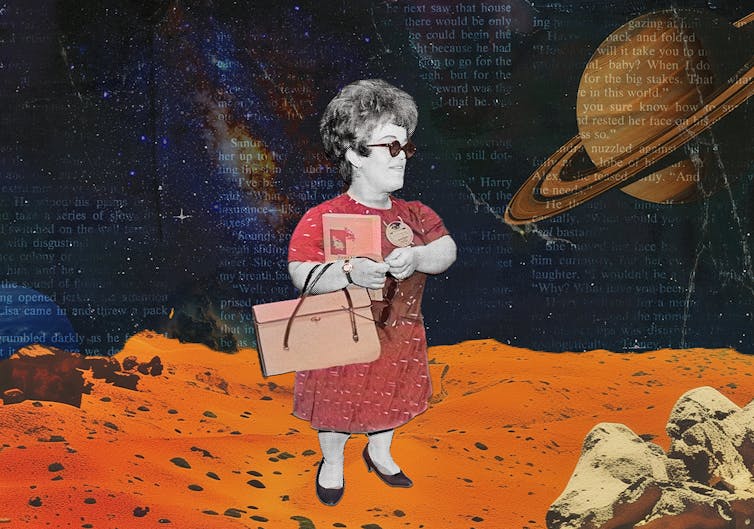
Dorothy Allison, who died on Nov. 5, 2024, published her first novel, “Bastard Out of Carolina,” in 1992, when she was 42 years old.
She mined her own life to craft the semi-autobiographical work, which became a finalist for the National Book Award.
Growing up poor in Greenville, South Carolina, Allison endured abuse of all kinds before becoming the first in her family to finish high school and college. As a lesbian, she faced additional challenges and hurdles. Before she achieved literary fame with her first novel, Allison ran a feminist bookstore and a women’s center. She was broke when she finally sold “Bastard Out of Carolina.”
To me, Allison is a shining exception in a long line of authors who have attempted to write about poverty but fail to accurately capture it.
In my book “Poor Things: How Those with Money Depict Those without It,” I detail the genre of what I call “poornography” – stories written about poor people by people who don’t have firsthand experience being poor themselves.
Most readers are probably familiar with the standard tropes in these works: violence, sexual abuse, addiction, filth and degradation. Allison was decidedly not in that camp.
She broke that mold by finding beauty in her impoverished surroundings and focusing on love, humor and family bonds.
Beauty in a hopeless place
Even though “Bastard out of Carolina” ultimately deals with physical and sexual abuse – which, of course, is not confined to poor people – this merely constitutes one element of a broader emotional and physical landscape.
Allison’s hometown of Greenville is also the setting of the novel – and it’s a place that the novel’s young narrator, Bone, describes as “the most beautiful place in the world.” She adds:
“Black walnut trees dropped their green-black fuzzy bulbs on Aunt Ruth’s matted lawn, past where their knotty roots rose up out of the ground like the elbows and knees of dirty children suntanned dark and covered with scars. Weeping willows marched across the yard, following every wandering stream and ditch, their long whiplike fronds making rents that sheltered sweet-smelling beds of clover.”
Extreme hunger, however, is unique to poverty, and something that poor writers often recall with a kind of vividness that can escape middle-class or wealthy writers.
“Hunger makes you restless,” Allison writes. “You dream about food, magical meals, famous and awe-inspiring, the one piece of meat, the exact taste of buttery corn, tomatoes so ripe they split and sweeten the air, beans so crisp they snap between the teeth, gravy like mother’s milk singing to your bloodstream.”
In “Bastard out of Carolina,” Allison doesn’t celebrate hunger. But she is able to find humor in it and show how laughter can be used as a coping mechanism.
In the novel, when Bone complains about being hungry, her mother recounts her own childhood: Back then, there was “real hunger, hunger of days with no expectation that there would ever be biscuits again.” And during those times she and her siblings would concoct fantastical stories of strange dishes: “Your aunt Ruth always talked about frogs’ tongues with dew berries. … But Raylene won the prize with her recipe for sugar-glazed turtle meat with poison greens and hot piss dressing.”
Humor isn’t used to gloss over the seriousness of poverty. Yet Allison is keen to point out that both can exist: They are all wrapped up in a life lived.
American delusion
I can’t help but compare Allison’s work with that of an author like JD Vance. In his 2016 memoir, “Hillbilly Elegy,” Vance revels in his grandmother’s anger and violence as a sign of her vibrant hillbilly-ness.
On the other hand, in “Bastard out of Carolina,” Bone recalls her mother saying flatly, “Nothing to be proud of in shooting at people for looking at you wrong.”
So many other writers about poverty have characters who pine for the material comforts promised by the American Dream, whether it’s Clyde Griffiths in Theodore Dreiser’s “An American Tragedy” or George and Lennie in John Steinbeck’s “Of Mice and Men.”
Allison’s characters, on the other hand, learn to see through this false promise. In one scene, Bone and her cousin break into the local Woolworth’s.
Previously, she had longingly eyed a brimming glass case of nuts. But once she shatters the display case, she realizes “that the case was a sham. There hadn’t been more than two inches of nuts pressed against the glass front, propped up with cardboard.” Her reaction: “Cheap sons of bitches.”
In a display of class consciousness, Bone eventually detects the false allure of cheap commodities. “I looked … at all the things on display. Junk everywhere: shoes that went to pieces in the rain, clothes that separated at the seams, stale candy, makeup that made your skin break out.”
In contrast, she thinks of the value of the home-canned goods made by her aunt. “That was worth something. All this stuff seemed tawdry and useless.”
‘Jealous of you for what you got’
At one point, Bone articulates the concept of poornography without using that term. She talks about “the mythology” that plagues poor people:
“People from families like mine – southern working poor with high rates of illegitimacy and all too many relatives who have spent time in jail – we are the people who are seen as the class that does not care for their children, for whom rape and abuse and violence are the norm. That such assumptions are false, that the rich are just as likely to abuse their children as the poor, and that southerners do not have a monopoly on either violence or illegitimacy are realities that are difficult to get people to recognize.”
In “Bastard out of Carolina,” Bone resents the rich rather than admiring them. In a conversation with one of her aunts, she says she “hates” them. Interestingly, her aunt provides the poor person’s counterpoint to hate.
“Could be they’re looking at you sitting up here eating blackberries … could be they’re jealous of you for what you got, afraid of what you would do if they stepped in the yard.”
Allison shows readers how class resentment can go both ways, and how for all of the contempt directed at poor people from the rich and powerful, there may also be an element of envy and fear at play.
Lennard J. Davis, Distinguished Professor of English, Disability Studies and Medical Education, University of Illinois Chicago
This article is republished from The Conversation under a Creative Commons license. Read the original article.

STM Daily News is a vibrant news blog dedicated to sharing the brighter side of human experiences. Emphasizing positive, uplifting stories, the site focuses on delivering inspiring, informative, and well-researched content. With a commitment to accurate, fair, and responsible journalism, STM Daily News aims to foster a community of readers passionate about positive change and engaged in meaningful conversations. Join the movement and explore stories that celebrate the positive impacts shaping our world.
Discover more from Daily News
Subscribe to get the latest posts sent to your email.


