

The Bridge
Harriet Tubman led military raids during the Civil War as well as her better-known slave rescues
Harriet Tubman, renowned for her vital role in the Underground Railroad, also served as a Civil War spy and leader, fighting for freedom and equality despite enduring systemic racism and discrimination.


Kate Clifford Larson, Brandeis University
Harriet Tubman was barely 5 feet tall and didn’t have a dime to her name.
What she did have was a deep faith and powerful passion for justice that was fueled by a network of Black and white abolitionists determined to end slavery in America.
“I had reasoned this out in my mind,” Tubman once told an interviewer. “There was one of two things I had a right to, liberty, or death. If I could not have one, I would have the other; for no man should take me alive.”
Though Tubman is most famous for her successes along the Underground Railroad, her activities as a Civil War spy are less well known.
As a biographer of Tubman, I think this is a shame. Her devotion to America and its promise of freedom endured despite suffering decades of enslavement and second class citizenship.
It is only in modern times that her life is receiving the renown it deserves, most notably her likeness appearing on a US$20 bill in 2030. The Harriet Tubman $20 bill will replace the current one featuring a portrait of U.S. President Andrew Jackson.
In another recognition, Tubman was accepted in June 2021 to the United States Army Military Intelligence Corps Hall of Fame at Fort Huachuca, Arizona. She is one of 278 members, 17 of whom are women, honored for their special operations leadership and intelligence work.
Though traditional accolades escaped Tubman for most of her life, she did achieve an honor usually reserved for white officers on the Civil War battlefield.
After she led a successful raid of a Confederate outpost in South Carolina that saw 750 Black people rescued from slavery, a white commanding officer fetched a pitcher of water for Tubman as she remained seated at a table.
A different education
Believed to have been born in March 1822 in Dorchester County, Maryland, Tubman was named Araminta by her enslaved parents, Rit and Ben Ross.
“Minty” was the fifth of nine Ross children. She was frequently separated from her family by her white enslaver, Edward Brodess, who started leasing her to white neighbors when she was just 6 years old.
At their hands, she endured physical abuse, harsh labor, poor nutrition and intense loneliness.
As I learned during my research into Tubman’s life, her education did not happen in a traditional classroom, but instead was crafted from the dirt. She learned to read the natural world – forests and fields, rivers and marshes, the clouds and stars.
She learned to walk silently across fields and through the woods at night with no lights to guide her. She foraged for food and learned a botanist’s and chemist’s knowledge of edible and poisonous plants – and those most useful for ingredients in medical treatments.
She could not swim, and that forced her to learn the ways of rivers and streams – their depths, currents and traps.
She studied people, learned their habits, watched their movements – all without being noticed. Most important, she also figured out how to distinguish character. Her survival depended on her ability to remember every detail.
After a brain injury left her with recurring seizures, she was still able to work at jobs often reserved for men. She toiled on the shipping docks and learned the secret communication and transportation networks of Black mariners.
Known as Black Jacks, these men traveled throughout the Chesapeake Bay and the Atlantic seaboard. With them, she studied the night sky and the placement and movement of the constellations.
She used all those skills to navigate on the water and land.
“… and I prayed to God,” she told one friend, “to make me strong and able to fight, and that’s what I’ve always prayed for ever since.”
Tubman was clear on her mission. “I should fight for my liberty,” she told an admirer, “as long as my strength lasted.”
The Moses of the Underground Railroad
In the fall of 1849, when she was about to be sold away from her family and free husband John Tubman, she fled Maryland to freedom in Philadelphia.
Between 1850 and 1860, she returned to the Eastern Shore of Maryland about 13 times and successfully rescued nearly 70 friends and family members, all of whom were enslaved. It was an extraordinary feat given the perils of the 1850 Slave Fugitive Act, which enabled anyone to capture and return any Black man or woman, regardless of legal status, to slavery.
Those leadership qualities and survival skills earned her the nickname “Moses” because of her work on the Underground Railroad, the interracial network of abolitionists who enabled Black people to escape from slavery in the South to freedom in the North and Canada.
As a result, she attracted influential abolitionists and politicians who were struck by her courage and resolve – men like William Lloyd Garrison, John Brown and Frederick Douglass. Susan B. Anthony, one of the world’s leading activists for women’s equal rights, also knew of Tubman, as did abolitionist Lucretia Mott and women’s rights activist Amy Post.
“I was the conductor of the Underground Railroad for eight years,” Tubman once said. “and I can say what most conductors can’t say; I never ran my train off the track and I never lost a passenger.”
Battlefield soldier
When the Civil War started in the spring of 1861, Tubman put aside her fight against slavery to conduct combat as a soldier and spy for the United States Army. She offered her services to a powerful politician.
Known for his campaign to form the all-Black 54th and 55th regiments, Massachusetts Gov. John Andrew admired Tubman and thought she would be a great intelligence asset for the Union forces.
He arranged for her to go to Beaufort, South Carolina, to work with Army officers in charge of the recently captured Hilton Head District.
There, she provided nursing care to soldiers and hundreds of newly liberated people who crowded Union camps. Tubman’s skill curing soldiers stricken by a variety of diseases became legendary.
But it was her military service of spying and scouting behind Confederate lines that earned her the highest praise.
She recruited eight men and together they skillfully infiltrated enemy territory. Tubman made contact with local enslaved people who secretly shared their knowledge of Confederate movements and plans.
Wary of white Union soldiers, many local African Americans trusted and respected Tubman.
According to George Garrison, a second lieutenant with the 55th Massachusetts Regiment, Tubman secured “more intelligence from them than anybody else.”
In early June 1863, she became the first woman in U.S. history to command an armed military raid when she guided Col. James Montgomery and his 2nd South Carolina Colored Volunteers Regiment along the Combahee River.
While there, they routed Confederate outposts, destroyed stores of cotton, food and weapons – and liberated over 750 enslaved people.
The Union victory was widely celebrated. Newspapers from Boston to Wisconsin reported on the river assault by Montgomery and his Black regiment, noting Tubman’s important role as the “Black she Moses … who led the raid, and under whose inspiration it was originated and conducted.”
Ten days after the successful attack, radical abolitionist and soldier Francis Jackson Merriam witnessed Maj. Gen. David Hunter, commander of the Hilton Head district, “go and fetch a pitcher of water and stand waiting with it in his hand while a black woman drank, as if he had been one of his own servants.”
In that letter to Gov. Andrew, Merriam added, “that woman was Harriet Tubman.”
Lifelong struggle
Despite earning commendations as a valuable scout and soldier, Tubman still faced the racism and sexism of America after the Civil War.
When she sought payment for her service as a spy, the U.S. Congress denied her claim. It paid the eight Black male scouts, but not her.
Unlike the Union officers who knew her, the congressmen did not believe – they could not imagine – that she had served her country like the men under her command, because she was a woman.
Gen. Rufus Saxton wrote that he bore “witness to the value of her services… She was employed in the Hospitals and as a spy [and] made many a raid inside the enemy’s lines displaying remarkable courage, zeal and fidelity.”
Thirty years later, in 1899, Congress awarded her a pension for her service as a Civil War nurse, but not as a soldier spy.
When she died from pneumonia on March 10, 1913, she was believed to have been 91 years old and had been fighting for gender equality and the right to vote as a free Black woman for more than 50 years after her work during the Civil War.
Surrounded by friends and family, the deeply religious Tubman showed one last sign of leadership, telling them: “I go to prepare a place for you.”
Kate Clifford Larson, Professor of History, Brandeis University
This article is republished from The Conversation under a Creative Commons license. Read the original article.

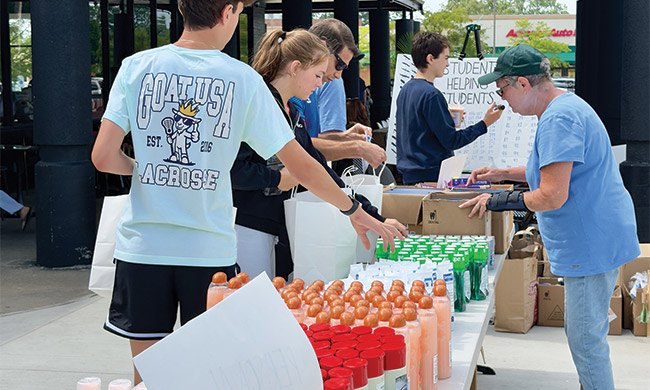
5 Ways to Make a Difference in Your Community
(Feature Impact) Communities are strengthened every day by local organizations working to address challenges close to home, whether that’s helping families access food, supporting students, expanding opportunity or providing essential resources to those who need them most. Often operating with limited resources, these organizations are finding practical solutions that make a meaningful difference in neighborhoods and communities across the country.
Many of these efforts happen quietly, powered by people who volunteer their time, share their expertise, donate resources or simply help spread awareness of causes they care about.
For individuals looking to make a difference where they live, community involvement doesn’t have to start with a large commitment. Consider these five options to get involved.
Give Your Time
Giving your time is one of the most direct ways to support organizations serving your community. Whether it’s packing meals, mentoring young people or participating in neighborhood cleanups, volunteering allows people to contribute directly while gaining a deeper understanding of local needs.
 Share Your Skills
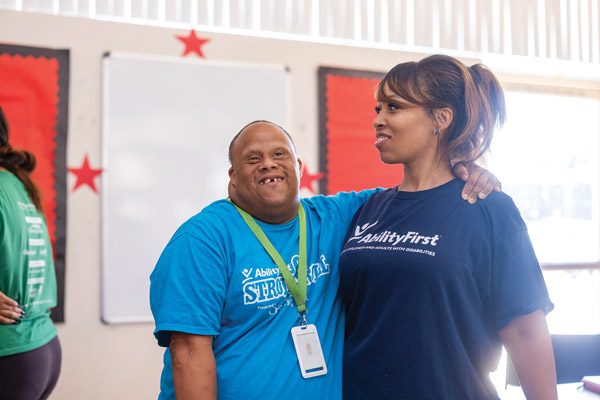
Nonprofits often need specialized skills in addition to hands-on volunteer support. Communications support, technology expertise, event planning, photography, financial guidance and other professional skills can help organizations expand their reach and strengthen their operations. Contributing the skills you’ve developed can often be just as valuable as donating time or resources.
Tap Into Your Workplace
Many employers offer opportunities to support causes that matter to their employees, such as volunteer programs, community grants or other charitable opportunities.
In communities across the country, local nonprofits can receive support through programs like the PepsiCo Foundation’s Community Impact Awards, where employees can nominate nonprofit organizations in their local communities for grant funding. Since 2022, the program has invested more than $3.7 million into organizations working on issues ranging from food access to education and community development.
“Across North America, there are organizations showing up every day for their communities, often without recognition and with limited resources,” said Monica Bauer, SVP of social impact, PepsiCo and president of the PepsiCo Foundation. “The Community Impact Awards help shine a light on organizations that are creating opportunities, solving local challenges and making a real difference in people’s lives. What makes this program special is that the recognition comes from PepsiCo associates who know these organizations firsthand and have seen their impact up close.”
This year, 100 organizations across the U.S. and Canada received $500,000 total in grants and teamed up with their respective nominating employees for volunteer activities supporting their missions, giving employees another opportunity to engage directly.
Give What You Can
Financial contributions are a valuable way to give back, but they aren’t the only option. Many organizations need non-monetary donations such as school supplies, canned goods, clothing, toys and technology. Before collecting items, check with organizations to learn what is most needed and how contributions can make the greatest impact.
Use Your Voice
One person can make a difference. When that person gets a friend or family member involved, more people can discover and support organizations doing important work. Sharing a nonprofit’s mission on social media, inviting others to volunteer or connecting people with causes you care about can help organizations reach new supporters and expand their impact.
Making a difference doesn’t require doing everything at once. Whether you contribute your time, skills, resources or advocacy, small actions can help make a big impact over time.
Across the U.S., nonprofit organizations are helping improve lives, create opportunities and respond to community needs every day. Their work is a reminder that meaningful change often starts locally with people willing to get involved.
Learn more about how individuals and organizations can help address some of the most pressing needs in their communities by visiting PepsiCo.com/about/social-impact.
SOURCE:
PepsiCo

Community
‘Give Like a Kid Again’ for Real-World Impact This Halloween
Costumes. Candy. Jack-o-lanterns glowing on porches. Halloween is filled with moments that spark children’s imaginations. This Halloween, children and families can “Give Like a Kid Again,” turning imagination into kindness and helping children around the world.

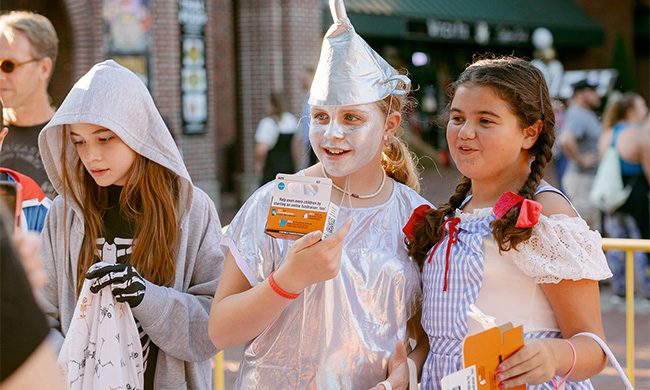
‘Give Like a Kid Again’ for Real-World Impact This Halloween
(Feature Impact)Costumes. Candy. Jack-o-lanterns glowing on porches. Halloween is filled with moments that spark children’s imaginations.
This Halloween, Trick-or-Treat for UNICEF is inviting children and families to “Give Like a Kid Again,” turning imagination into kindness and helping children around the world. For eight decades,the campaign has shown children that even the smallest act of kindness can travel farther than any front porch and shine brighter than any jack-o-lantern. As the longest-running youth engagement campaign in the United States, it has inspired generations of children to discover that when kids help kids, one Halloween tradition can turn into a lifetime of impact.
What started with just $17 in 1950, when a small group of children filled milk cartons with spare change to help children recovering from World War II, has grown into one of America’s most beloved Halloween traditions, raising nearly $200million to help the organization deliver lifesaving support for children around the world. Today, the iconic orange collection box reminds families that small acts of generosity can create lasting change.
“Each Halloween, Trick-or-Treat for UNICEF reminds us that even the smallest acts of generosity can grow into something extraordinary,” said Shelley Diamond, chief marketing officer, UNICEF USA. “For more than 75 years, this campaign has shown generations of children that you are never too young to make a difference and ‘Give Like a Kid Again’ is about passing that belief on to the next generation.”
Beyond supporting programs in more than 190 countries and territories, donations strengthen the organization’s global humanitarian supply network, delivering emergency essentials like therapeutic food, medicine, blankets and safe water to children impacted by conflict, disasters and disease.
- Be a mermaid and help make waves for clean water. Help provide safe water for a child for a year for $5.
- Be a vampire and help scare away preventable diseases. World Polio Day, just a week before Halloween, provides an opportunity to protect 200 children under age 5 from polio with a $43 donation.
- Be a scientist and help uncover lifesaving answers. Provide 25 malaria diagnostic tests for just $8, helping children receive timely treatment.
- Be a teacher and help children write their next chapter. Provide 1,000 pencils to help children put their ideas, lessons and dreams on paper for $30.
- Be a chef and help cook up a healthier future. Over a two-month period, $10 can treat 15 children by providing 450 packets of micronutrient powder.
- Be an astronaut and help a girl reach for the stars. To helpsix girls feel confident in school, $36 can provide reusable menstrual pads.
- Be a snowman and help bundle up a child against the cold. A donation of $50 could provide a child in an emergency setting with winter clothing, including a jacket, hat, scarf, mittens, socks, winter boots, a warm sweater and warm puffball trousers.
- Be a soccer player (or referee) and help kick off playtime. Provide up to four packages of soccer balls for a child-friendly space for $25 to help kids just be kids again.
This October, everyone can “Give Like a Kid Again” through the iconic orange collection box, online fundraising and family-friendly activities. Visit unicefusa.org/TOT2026 to join the tradition and help make a difference for children around the world.
SOURCE:
UNICEF
📰 Enjoying STM Daily News? Join the conversation!
💬 Leave a comment, share your thoughts, and subscribe to our newsletter for the latest stories, updates, and “News You Can Use This Moment!” delivered to your inbox.
Stay connected with STM Daily News!
Community
PenFed Foundation Raises Over $1.2M for Veterans and Military Families at 23rd Annual Military Heroes Golf Classic
The PenFed Foundation says it raised over $1.2 million for veterans and military families at its 23rd annual Military Heroes Golf Classic.

The PenFed Foundation for Military Heroes said it raised more than $1.2 million to support veterans and military families during its 23rd annual Military Heroes Golf Classic, held Monday, Aug. 31, according to a PRNewswire release. The nonprofit, based in the Washington, D.C. region, focuses on helping veterans transition “from service to success” through programs and grants aimed at military-connected communities.
“We are deeply grateful to our partners and supporters whose generosity and dedication make this event—and the Foundation’s work—possible,” said retired Air Force Lt. Gen. Bradford J. “B.J.” Shwedo, president of the PenFed Foundation, in a statement announcing the fundraising total.
At a dinner held the night before the Golf Classic, PenFed Credit Union President/CEO and PenFed Foundation CEO James Schenck recognized Ed Cody for 25 years of service on the foundation’s board of directors. Cody also serves as chairman of the PenFed Credit Union board and was credited with helping guide initiatives including Defender’s Lodge, the Afghan Rescue and Resettlement Program, the Veteran Entrepreneur Program, and grants supporting wounded, ill, and injured service members.
The foundation said it has provided more than $55 million in financial support to veterans, active-duty service members, and military families since it was founded in 2001. It also noted that PenFed Credit Union covers salaries and administrative costs, allowing more donations to go directly to programs.
What to watch for: How the foundation allocates the new $1.2M across its veteran transition and emergency support programs—and whether it announces new grant rounds tied to entrepreneurship and resettlement work.
SOURCE PenFed Foundation
Subscribe to our newsletter STM Morning Brief!





