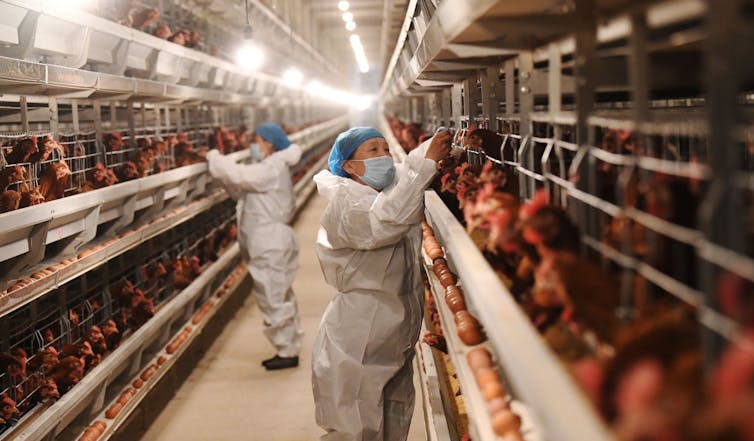
Workers who are in frequent contact with potentially sick animals are at high risk of bird flu infection. Costfoto/NurPhoto via Getty ImagesRon Barrett, Macalester College Disease forecasts are like weather forecasts: We cannot predict the finer details of a particular outbreak or a particular storm, but we can often identify when these threats are emerging and prepare accordingly. The viruses that cause avian influenza are potential threats to global health. Recent animal outbreaks from a subtype called H5N1 have been especially troubling to scientists. Although human infections from H5N1 have been relatively rare, there have been a little more than 900 known cases globally since 2003 – nearly 50% of these cases have been fatal – a mortality rate about 20 times higher than that of the 1918 flu pandemic. If the worst of these rare infections ever became common among people, the results could be devastating. Approaching potential disease threats from an anthropological perspective, my colleagues and I recently published a book called “Emerging Infections: Three Epidemiological Transitions from Prehistory to the Present” to examine the ways human behaviors have shaped the evolution of infectious diseases, beginning with their first major emergence in the Neolithic period and continuing for 10,000 years to the present day. Viewed from this deep time perspective, it becomes evident that H5N1 is displaying a common pattern of stepwise invasion from animal to human populations. Like many emerging viruses, H5N1 is making incremental evolutionary changes that could allow it to transmit between people. The periods between these evolutionary steps present opportunities to slow this process and possibly avert a global disaster.
Spillover and viral chatter
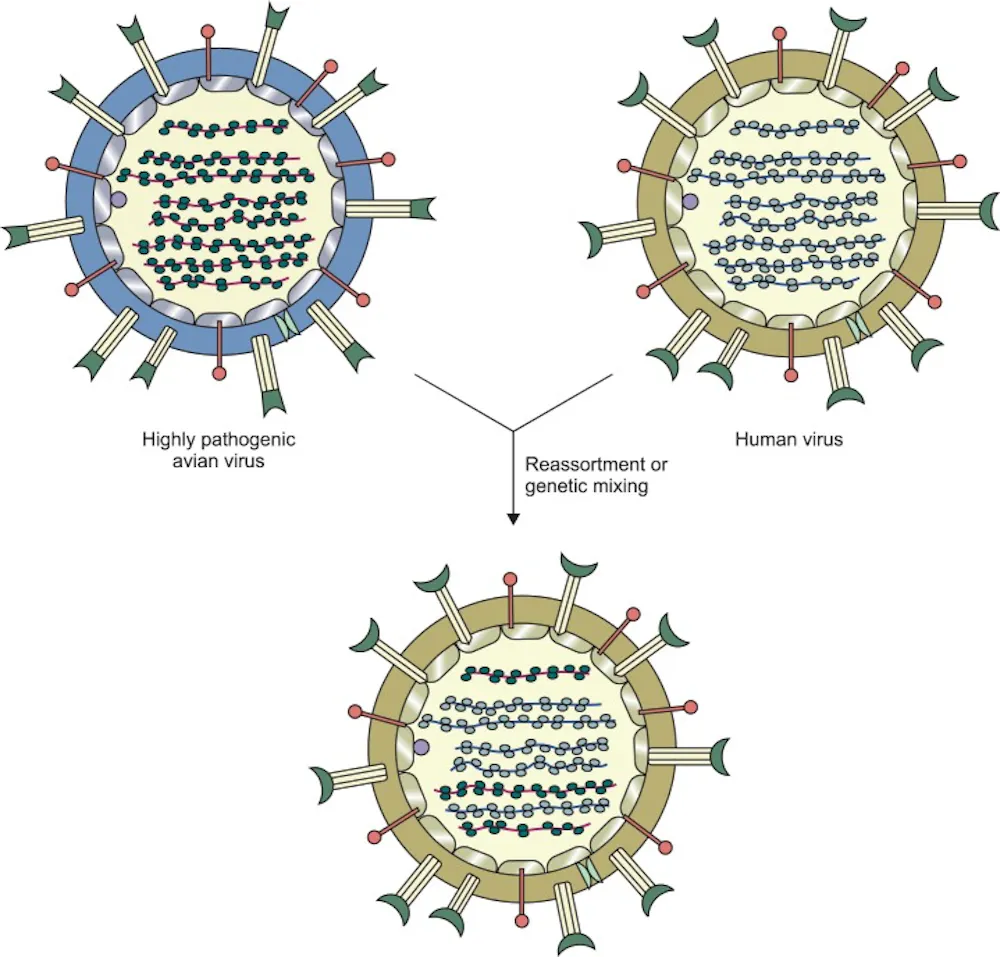
When a disease-causing pathogen such as a flu virus is already adapted to infect a particular animal species, it may eventually evolve the ability to infect a new species, such as humans, through a process called spillover. Spillover is a tricky enterprise. To be successful, the pathogen must have the right set of molecular “keys” compatible with the host’s molecular “locks” so it can break in and out of host cells and hijack their replication machinery. Because these locks often vary between species, the pathogen may have to try many different keys before it can infect an entirely new host species. For instance, the keys a virus successfully uses to infect chickens and ducks may not work on cattle and humans. And because new keys can be made only through random mutation, the odds of obtaining all the right ones are very slim. Given these evolutionary challenges, it is not surprising that pathogens often get stuck partway into the spillover process. A new variant of the pathogen might be transmissible from an animal only to a person who is either more susceptible due to preexisting illness or more likely to be infected because of extended exposure to the pathogen. Even then, the pathogen might not be able to break out of its human host and transmit to another person. This is the current situation with H5N1. For the past year, there have been many animal outbreaks in a variety of wild and domestic animals, especially among birds and cattle. But there have also been a small number of human cases, most of which have occurred among poultry and dairy workers who worked closely with large numbers of infected animals.Pathogen transmission can be modeled in three stages. In Stage 1, the pathogen can be transmitted only between nonhuman animals. In stage 2, the pathogen can also be transmitted to humans, but it is not yet adapted for human-to-human transmission. In Stage 3, the pathogen is fully capable of human-to-human transmission.Ron Barrett, CC BY-SA Epidemiologists call this situation viral chatter: when human infections occur only in small, sporadic outbreaks that appear like the chattering signals of coded radio communications – tiny bursts of unclear information that may add up to a very ominous message. In the case of viral chatter, the message would be a human pandemic. Sporadic, individual cases of H5N1 among people suggest that human-to-human transmission may likely occur at some point. But even so, no one knows how long or how many steps it would take for this to happen. Influenza viruses evolve rapidly. This is partly because two or more flu varieties can infect the same host simultaneously, allowing them to reshuffle their genetic material with one another to produce entirely new varieties.Genetic reshuffling – aka antigenic shift – between a highly pathogenic strain of avian influenza and a strain of human influenza could create a new strain that’s even more infectious among people.Eunsun Yoo/Biomolecules & Therapeutics, CC BY-NC These reshuffling events are more likely to occur when there is a diverse range of host species. So it is particularly concerning that H5N1 is known to have infected at least 450 different animal species. It may not be long before the viral chatter gives way to larger human epidemics.
Reshaping the trajectory
The good news is that people can take basic measures to slow down the evolution of H5N1 and potentially reduce the lethality of avian influenza should it ever become a common human infection. But governments and businesses will need to act. People can start by taking better care of food animals. The total weight of the world’s poultry is greater than all wild bird species combined. So it is not surprising that the geography of most H5N1 outbreaks track more closely with large-scale housing and international transfers of live poultry than with the nesting and migration patterns of wild aquatic birds. Reducing these agricultural practices could help curb the evolution and spread of H5N1.Large-scale commercial transport of domesticated animals is associated with the evolution and spread of new influenza varieties.ben/Flickr, CC BY-SA People can also take better care of themselves. At the individual level, most people can vaccinate against the common, seasonal influenza viruses that circulate every year. At first glance this practice may not seem connected to the emergence of avian influenza. But in addition to preventing seasonal illness, vaccination against common human varieties of the virus will reduce the odds of it mixing with avian varieties and giving them the traits they need for human-to-human transmission. At the population level, societies can work together to improve nutrition and sanitation in the world’s poorest populations. History has shown that better nutrition increases overall resistance to new infections, and better sanitation reduces how much and how often people are exposed to new pathogens. And in today’s interconnected world, the disease problems of any society will eventually spread to every society. For more than 10,000 years, human behaviors have shaped the evolutionary trajectories of infectious diseases. Knowing this, people can reshape these trajectories for the better.Ron Barrett, Professor of Anthropology, Macalester College This article is republished from The Conversation under a Creative Commons license. Read the original article.
Raw Pet Food Recall Raises Health Concerns Nationwide—Here’s What Pet Owners Need to Know
A pet food recall tied to dangerous bacteria is raising concerns beyond the Northeast, highlighting growing risks associated with raw pet diets. The recall involves products from Raaw Energy, LLC, a New Jersey-based company, after testing revealed contamination with multiple harmful pathogens.
According to the U.S. Food and Drug Administration (FDA), affected products tested positive for Salmonella, Listeria monocytogenes, E. coli, and Campylobacter jejuni—all of which can cause serious illness in both pets and humans.
Why This Recall Matters Nationwide
Although the recalled products were primarily distributed across Northeastern states, this story has broader implications for pet owners across the United States, including here in Arizona.
Raw pet food diets have grown in popularity in recent years, often marketed as a more natural alternative to traditional kibble. However, veterinary experts and federal agencies have consistently warned that raw diets carry a higher risk of bacterial contamination.
This recall reinforces those concerns, especially as it involves multiple products and several types of harmful bacteria—suggesting potential issues with handling or production safety.
Health Risks for Pets and Humans
One of the most important takeaways from this recall is that it is not just about pet safety—it’s also a human health issue.
Salmonella and E. coli can cause severe gastrointestinal illness
Listeria can be especially dangerous for pregnant individuals, seniors, and those with weakened immune systems
Campylobacter infections can lead to fever, cramping, and diarrhea
Humans can become infected by handling contaminated pet food, touching contaminated surfaces, or failing to properly wash hands after feeding pets.
Pets May Not Show Immediate Symptoms
Another concern is that pets infected with these bacteria may not show obvious symptoms right away. Even healthy-looking animals can carry and spread bacteria in the home, increasing the risk for owners and family members.
When symptoms do appear, they may include:
Vomiting
Diarrhea
Lethargy
Loss of appetite
Products Included in the Recall
The recall affects multiple raw pet food products, including chicken, beef, turkey, and salmon blends sold in 2-pound and 5-pound tubes with 2025 date codes.
The wide range of affected products suggests this is not an isolated batch issue, but a broader safety concern.
What Pet Owners Should Do Now
If you feed your pet raw food or have purchased products from Raaw Energy, take the following steps immediately:
Check packaging and date codes carefully
Do not feed any recalled products
Wash hands thoroughly after handling pet food
Sanitize pet bowls, utensils, and surfaces
Contact your veterinarian if your pet shows symptoms
An Ongoing Investigation
The FDA has not yet assigned an official classification to this recall, meaning the overall risk level is still under evaluation. Additional updates or expanded recalls could follow as more information becomes available.
For now, experts say this serves as a reminder that while raw pet food diets may appeal to some owners, they come with real and sometimes overlooked risks.
Advertisement
The Bottom Line
This recall is more than a regional issue—it’s part of a growing national conversation about pet food safety. For pet owners, the priority is simple: stay informed, handle pet food safely, and act quickly when recalls are announced.
Why do people get headaches? – Evie V., age 10, Corpus Christi, Texas
Whether sharp and stabbing or dull and throbbing, a headache can ruin your day. But your brain doesn’t actually feel pain. So what is going on when it feels like your head is in a vise or about to explode? I am a child neurologist – that is, a doctor who specializes in diseases of the brain in kids. Most of my patients are kids and adolescents who are struggling with headaches. Head pain is complicated, and there is still a lot to learn about what causes it and how it can be treated. But researchers know there are a few key players that take part in generating pain.
What are headaches?
Nerves communicate information like pain through electrical signals between the body and the brain. While the brain itself doesn’t have any nerve sensors to feel pain, blood vessels in the head and structures that protect and surround the brain do sense pain. When these tissues detect injury or damage, they release chemicals that trigger transmission of electrical signals through nerves to tell the brain the head is hurting. The brain will also use nerves to signal the body to respond to pain with symptoms like feeling tired, teary eyes, runny nose, upset stomach and discomfort in bright or loud environments. It’s not clear why humans evolved to feel these symptoms, but some scientists theorize that this can lead to healthier lifestyle choices to decrease the chance of future headache attacks.Weather changes are one of the most commonly reported migraine triggers. Danielle Wilhour, a neurologist and headache specialist at University of Colorado Anschutz Medical Campus, explains why shifts in weather can bring on migraines — and what you can do to ease the pain.
What causes headaches?
Often, headaches are a sign that the body is under some kind of stress. That stress triggers chemical and physical changes to the nerves and blood vessels around your brain, head and neck that can cause headaches. Many types of stresses can cause headaches, including an infection, allergies, hormone changes during puberty and menstrual cycles, not getting enough sleep, not drinking enough water, skipping meals or drinking too much caffeine or alcohol. Sometimes, headaches happen with emotional stress, like feeling anxious or depressed. Even pressure in your sinuses due to changes in the weather can cause your head to hurt. One in 11 kids have had a type of severe headache called a migraine. They feel like a pulsing and pounding pain in your head and come with other symptoms, including nausea or being sensitive to lights and sounds. During a migraine, it can be hard to do everyday activities because they can make the pain worse. It is also very common to feel unwell or irritable before the head pain starts and after the pain is gone.Migraines and chronic headaches can be debilitating.Viktoriya Skorikova/Moment via Getty Images Migraines occur when the nerves and other structures used in signaling and interpreting pain aren’t working properly, leading to pain and discomfort from stimulation that wouldn’t normally provoke this. There are many environmental and genetic factors that contribute to this dysfunction. Some people are born with a higher risk of developing migraines. Most people with migraines have someone in their family who also experiences them.
What can treat and prevent headaches?
Identifying what type of headache you’re experiencing is crucial to making sure it is treated properly. Because migraines can be severe, they’re the type of headache that most often leads to doctor’s visits for both kids and adults. There are several ways to reduce your chances of having headaches, such as drinking plenty of water and limiting caffeine. Eating, sleeping and exercising regularly are other ways you can help prevent headaches.Sleep deprivation can worsen headaches.DjelicS/iStock via Getty Images Plus While painkillers like ibuprofen are often enough to relieve a headache, prescription medications are sometimes necessary to make head pain more bearable. Some medications can also help control or prevent headache episodes. Physical therapy to exercise the body or behavioral therapy to work on the mind can also help you manage headache pain. There are even electronic devices to treat headaches by stimulating different parts of the nervous system. It is important to talk with a doctor about headaches, especially if it’s a new problem or you experience a change in how they usually feel. Sometimes, brain imaging or blood tests are needed to rule out another health issue. Recognizing a headache problem early will help your doctor get started on helping you figure out the best way to treat it.Hello, curious kids! Do you have a question you’d like an expert to answer? Ask an adult to send your question to CuriousKidsUS@theconversation.com. Please tell us your name, age and the city where you live.And since curiosity has no age limit – adults, let us know what you’re wondering, too. We won’t be able to answer every question, but we will do our best.Katherine Cobb-Pitstick, Assistant Professor of Child Neurology, University of Pittsburgh This article is republished from The Conversation under a Creative Commons license. Read the original article.
4 Tips to Maximize Nutritional Goals While On a GLP-1
GLP-1 medications for weight loss have gained popularity, with new research emphasizing the importance of nutrition and lifestyle. Prioritizing protein and fiber can combat common side effects like nausea and constipation, while staying hydrated and eating smaller meals enhances tolerance. Adopting these habits may improve weight loss results for GLP-1 users.
(Feature Impact) The first GLP-1 (Glucagon-Like Peptide-1) medication was approved for weight loss use more than a decade ago with new more effective versions being approved by the FDA over the past few years. As the use of these medications continues to rise, new research highlights the important role nutrition and lifestyle habits can play in supporting muscle, metabolism and long-term weight loss when using the medication.
Whether you’re new to GLP‑1s or navigating the next phase of your journey, small nutrition shifts powered by protein, fiber and hydration can help you feel strong, confident and supported.
Common side effects experienced by GLP-1 users are often digestive and include nausea, constipation, stomach pain, bloating and more. A pilot clinical trial by Atkins suggests pairing GLP‑1 use with targeted macronutrients, especially protein and fiber, may support healthier body composition and a lower-carb diet with higher protein and fiber intake is well tolerated.
Feast On Fiber Digestive slow‑downs, including constipation, are among the most common GLP‑1 side effects. Prioritizing fiber not only helps food move comfortably through the body, it supports your gut health and steady energy. Many fibers are prebiotics, meaning they promote the growth of beneficial gut bacteria. Prioritize foods like apples, melon, berries, cruciferous vegetables and leafy greens to boost fiber intake.
Prioritize Protein When your appetite changes, structure helps. Anchoring your day with reliable protein sources helps make nutrition easy. Prioritizing protein may help prevent lean muscle loss, and nutrient dense protein sources can help you get enough essential nutrients to support overall health. Supporting a protein- and fiber-rich diet can start with a solution like Atkins High Protein Shakes, which are packed with 30 grams of protein and 7 grams of prebiotic fiber and provide more than 20 essential vitamins and minerals.
Designed to be an ally for your nutritional goals, they’re gluten-free, low-glycemic and keto-friendly with 3 grams of net carbs and 1 gram of sugar per serving. Experts recommend making sure you’re consuming enough protein to help limit lean muscle loss when using a GLP-1 to lose weight.
Hydrate to Help Prevent Side Effects GLP-1 users in particular are encouraged to prioritize fluids. Staying hydrated can help with both constipation and nausea, two common side effects. Drinking water helps support kidney and liver function, which are vital for weight loss and overall health. Adequate fluids help food move through your body, combat fatigue and replenish losses from potential nausea or constipation, preventing complications and improving tolerance to GLP-1s.
Eat Small, Frequent Meals Large meals can feel uncomfortable when digestion slows. Instead, focus on smaller, more frequent eating moments that give your body a steady supply of nutrients without overwhelming your system.
For an easy, GLP‑1‑friendly option, try Atkins High Protein Bars, which are high in protein and fiber while minimizing net carbs. Available in flavors like Cookie Fusion, Chocolate Peanut Butter and Brownie Delight, they’re a satisfying way to stay fueled between meals and a simple solution when appetite cues are muted. The snacks are designed to take the guesswork out of choosing high‑protein, low‑carb options that support your goals.
Living well on a GLP‑1 is about support, confidence and clarity. Consuming adequate amounts of protein and fiber, staying hydrated and maintaining daily structure can help you feel energized and empowered every step of the way. By following nutritional guidelines and making mindful lifestyle choices, GLP-1 users can experience better outcomes on their weight loss journeys.
Advertisement
To explore products that prioritize protein and fiber that can be a part of anyone’s daily diet, visit Atkins.com.
Our Lifestyle section on STM Daily News is a hub of inspiration and practical information, offering a range of articles that touch on various aspects of daily life. From tips on family finances to guides for maintaining health and wellness, we strive to empower our readers with knowledge and resources to enhance their lifestyles. Whether you’re seeking outdoor activity ideas, fashion trends, or travel recommendations, our lifestyle section has got you covered. Visit us today at https://stmdailynews.com/category/lifestyle/ and embark on a journey of discovery and self-improvement.




 Ron Barrett, Professor of Anthropology, Macalester College This article is republished from The Conversation under a Creative Commons license. Read the original article.