

Entertainment
“HIGH CARD”
Anime to Be Released in 2023!
FIVE NEW OLD Will Perform the Opening Theme!

Last Updated on May 25, 2024 by Daily News Staff
| LOS ANGELES, CA — [July 6, 2022] — TMS Entertainment Co., Ltd. announced that their original anime series, HIGH CARD, will air beginning in January 2023. The opening theme will be “Trickster” by FIVE NEW OLD. |
 【First Key Visual and PV】 The key visual was illustrated by the Character Designer and Chief Animation Supervisor, Nozomi Kawano. The poster showcases the two-faced nature of the High Card members, who work dangerous missions using supernatural powers, while moonlighting as employees of a long-established car dealership. The PV reveals the show’s artistic style and features Finn, and the other members of High Card, in exhilarating action scenes. URL: https://youtu.be/f-bAvlTfJI8 |
| 【Opening Theme】 “Trickster” by FIVE NEW OLD, the international rock band, will be the opening theme of HIGH CARD. |
 FIVE NEW OLD Official Website https://fivenewold.com/ Official Twitter @fivenewold FIVE NEW OLD HIROSHI (Vocal, Guitar) / WATARU (Guitar, Keyboards) / SHUN (Bass) / HAYATO (Drums) |
| FIVE NEW OLD is a highly acclaimed international rock band known for their captivating stage presence and bilingual singer HIROSHI’s impressive vocals. 【Additional Character Information】 Additional information on Bernard Symons and Theodore Constantine Pinochle has been released. |
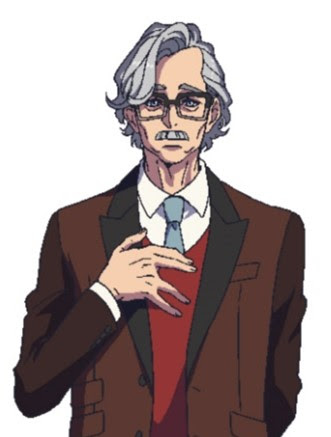 Bernard Symons CV:Kazuhiro Yamaji High Card’s Handler and Administrative Staff at Pinochle’s Old Maid branch. He does everything from making tea, cleaning, performing car maintenance, and relaying information to and from the head office. He is also Leo’s caretaker. |
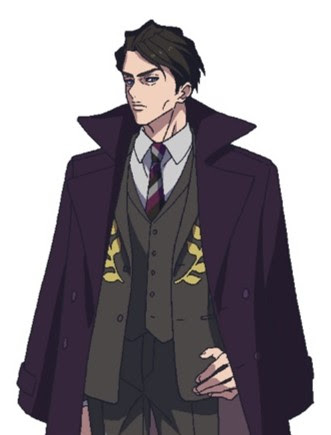 Theodore Constantine Pinochle CV:Daisuke Ono The boss of High Card and the CEO of Pinochle, a company built upon tradition and formalities. His administrative skills are highly trusted by political and business establishments. Being a cool-headed man of few words, even his son Leo knows little about his past. |
【Additional Staff】 The HIGH CARD anime staff will be comprised of talented individuals, with Haruna Nagata (Given) as the Chief Animation Supervisor and Ryo Takahashi (SK8 the Infinity) composing music. ■Staff Original work: TMS, Homura Kawamoto, Hikaru Muno Director: Junichi Wada 【NEW】 Series Composition:Naoki Kuroyanagi Screenplay: Kenichi Yamashita, Kazuhiko Inukai, Shingo Nagai Character draft: Ebimo Character design: Nozomi Kawano 【NEW】 Chief Animation Supervisor:Nozomi Kawano, Haruna Nagata Action animation director / key animator: Shunpei Mochizuki, Junichi Hayama Effect animation director: Takashi Hashimoto Color design: Yumi Nanmoku Art Director: Minoru Onishi, Akira Suzuki Cinematographer: Tomoyuki Kunii CG Director: Masafumi Uchiyama 【NEW】 Editor: Rie Ito Card design: BALCOLONY. Concept art: reoenl (FLAT STUDIO) Sound Director: Shoji Hata 【NEW】 Sound Effects: Hiromune Kurahashi 【NEW】 Music: Ryo Takahashi 【NEW】 Opening song: FIVE NEW OLD “Trickster”(Warner Music Japan) Animation production: STUDIO HIBARI CO., LTD. Produced by: TMS ENTERTAINMENT CO., LTD. About TV anime “HIGH CARD” After discovering that his orphanage was on the brink of closing due to financial stress, Finn, who was living freely on the streets, set out for a casino with the aim of making a fortune. However, nothing could have prepared Finn for the nightmare that was awaiting him. Once there, Finn encountered a car chase and bloody shootout caused by a man’s “lucky” card. Finn will eventually learn what the shootout was about. The world order can be controlled by a set of 52 X-Playing cards with the power to bestow different superhuman powers and abilities to the ones that possess them. With these cards, people can access the hidden power of the “buddy” that can be found within themselves. There is a secret group of players called High Card, who have been directly ordered by the king of Fourland to collect the cards that have been scattered throughout the kingdom, while moonlighting as employees of the long-established car maker Pinochle. Scouted to become the group’s fifth member, Finn soon joins the players on a dangerous mission to find these cards. “All you need in life are manners, dignity, and the will to bet on your own life.” However, Who’s Who, the rival car maker obsessed with defeating Pinochle, and the Klondikes, the infamous Mafia family, stand in the way of the gang. A frenzied battle amongst these card obsessed players, fueled by justice, desire, and revenge, is about to begin! Are you ready? It’s Showdown!! ■Cast Finn Oldman: Gen Sato Chris Redgrave: Toshiki Masuda Leo Constantine Pinochle: Shun Horie Wendy Sato: Haruka Shiraishi Vijay Kumar Singh: Yuichiro Umehara Bernard Symons: Kazuhiro Yamaji Theodore Constantine Pinochle: Daisuke Ono ■Anime Official Twitter @highcard_pj ■Anime official website highcard-anime.jp ■Official website highcard.jp © TMS/HIGH CARD Project |
Source:TMS Entertainment Co.
Embracing the Pickleball Lifestyle After 50: A Conversation with James Main of Seattle United
Author


anime
Bible Anime Series in Development at Texas Studio With Global Faith-Based Ambitions
A Texas animation studio is developing a TV-MA Bible anime series, blending faith-based storytelling with cinematic anime for global streaming audiences.
A Fort Worth animation company is betting that faith-based storytelling and anime can meet in a way that feels cinematic, serious, and built for modern streaming audiences.
History In Motion Studios has announced Shinjitsu Ugoki (Truth Movement), a TV-MA Bible anime series now in development. The Texas-based studio says the project is designed for mature audiences and will present biblical narratives through serialized storytelling, theological research, and character-driven drama.
The announcement places the studio at the intersection of two growing markets: faith-based entertainmentand the global anime industry. Rather than aiming for a traditional family format, the series is being positioned as a more intense, long-form production shaped by conflict, consequence, and spiritual tension.
History In Motion Studios is also using Unreal Engine as part of its production pipeline to support cinematic world-building and high-fidelity environments. Script development, early character design, and broader production planning are underway through 2026.
Founder Edith Alvarado said the studio sees a major opportunity in bringing biblical storytelling into anime.
“As audiences continue to seek meaningful, story-driven content, we believe there is significant opportunity within the anime format to engage biblical narratives with depth and seriousness,” Alvarado said. “The question isn’t whether biblical stories belong in anime, it’s why it took this long. We’re here to change that; Anime will know the story of Jesus.”
The women-led Christian studio operates out of Fort Worth, adding to the growing list of independent creative companies building outside traditional entertainment hubs. As of Q1 2026, the series remains in active development, with more partnership and expansion announcements expected later this year.
Related Links
Source: History In Motion Studios
STM Daily News’ Entertainment section delivers the latest on movies, television, music, pop culture, events, and industry buzz. From breaking news and trending stories to feature coverage and community-centered entertainment reporting, it keeps readers connected to what’s happening on screen, on stage, and beyond.
Community
Viewpoint Hosted by Dennis Quaid Brings Attention to a Little-Understood Condition Affecting Families Nationwide
A new Viewpoint hosted by Dennis Quaid segment with APFED raises awareness of eosinophilic esophagitis, its subtle symptoms, and its impact on families.
For more information, readers can visit viewpointproject.com and apfed.org.

For many families, health conditions do not always begin with a dramatic diagnosis. Sometimes they show up in small, everyday habits that seem easy to explain away. Cutting food into tiny bites. Drinking extra water with every meal. Quietly avoiding certain foods altogether. A new educational segment from Viewpoint hosted by Dennis Quaid is shining a light on those subtle warning signs through a collaboration with the American Partnership for Eosinophilic Disorders, helping more people recognize the realities of living with eosinophilic esophagitis, or EoE.
Viewpoint hosted by Dennis Quaid
The segment, distributed to Public Television stations across the country, focuses on making this chronic inflammatory condition easier for the public to understand. For viewers, that matters because EoE is often misunderstood or overlooked, even as it affects daily routines, family meals, and quality of life. By connecting medical information to real-life experiences, the program gives audiences a more human picture of what people with the condition may be facing.

When everyday habits tell a bigger story
Eosinophilic esophagitis occurs when eosinophils, a type of white blood cell, build up in the esophagus, causing inflammation that can lead to tissue damage and narrowing. But what stands out most in this story is not just the science. It is the way people often adapt without realizing it. Behaviors like chewing excessively, avoiding certain textures, or relying on liquids to help swallow can become so routine that they no longer feel unusual.
That is one reason the segment carries real community value. It encourages people to look more closely at symptoms that may have been normalized for years and to seek evaluation from specialists such as gastroenterologists or allergists. It also raises awareness among parents, caregivers, and primary care providers who may be the first to notice that something is not quite right.
More than awareness
The program also explores the emotional and social side of the condition, especially for people navigating dietary restrictions and the uncertainty of delayed diagnosis. In that sense, this is not only a story about medicine. It is also a story about advocacy, support, and the importance of helping people feel seen.
APFED Executive Director Mary Jo Strobel noted that many people with EoE do not realize they have adapted their lives around a medical condition. That message gives the segment its strongest human element: awareness can change lives, not only by leading to diagnosis, but by helping families better understand experiences that may have felt isolating or confusing.
Originally distributed in January 2025, the documentary will continue to be made available to stations through March 2027, extending its reach to more households nationwide.
Related Coverage
Read more from STM Daily News on community issues, public television, health awareness, and stories that connect national topics to everyday life.
For More Information
- Visit the official Viewpoint hosted by Dennis Quaid website
- Learn more about the American Partnership for Eosinophilic Disorders
STM Daily News is a vibrant news blog dedicated to sharing the brighter side of human experiences. Emphasizing positive, uplifting stories, the site focuses on delivering inspiring, informative, and well-researched content. With a commitment to accurate, fair, and responsible journalism, STM Daily News aims to foster a community of readers passionate about positive change and engaged in meaningful conversations. Join the movement and explore stories that celebrate the positive impacts shaping our world.
Authors


Jay Mohr’s long-running podcast is expanding to FAST television through an exclusive LG Channels launch in the U.S. and Canada.
Cineverse has announced the launch of Mohr Stories, a new free ad-supported streaming television channel built around comedian Jay Mohr’s long-running podcast. Unveiled during LG Electronics and LG Ad Solutions’ 2026 IAB NewFronts presentation, the channel will be available exclusively through LG Channels on LG TVs in the United States and Canada.
The new channel will feature weekly episodes alongside more than 100 hours of library content, giving the show a larger footprint in the growing FAST market. Hosted by Mohr, the series includes conversations with guests from comedy, film, sports, music, and television, including Ron Funches, Jay Leno, Joe Mantegna, Patton Oswalt, Kevin Pollak, Andy Richter, George Wallace, Flavor Flav, Michael Eric Dyson, Seth Rollins, Gene Simmons, Billy Gibbons, Byron Scott, and Jeanie Buss.
The launch is notable not only because of the talent involved, but because it reflects a broader shift in how podcast brands are being distributed. What once lived primarily as an audio product is now being packaged as a 24/7 streaming destination, built for connected TV audiences and ad-supported discovery.
Cineverse said Mohr Stories will continue to be available as a podcast through the WITZ Podcast Network, a partnership between Cineverse and The Stand Group. The company also pointed to strong audience momentum after the show expanded into video, saying consumption hours on Spotify rose 50% month over month and downloads increased 34% quarter over quarter.
That growth aligns with wider audience behavior. In the U.S., more than 150 million people listen to podcasts every month, and an increasing share of those consumers are also watching podcast content on video platforms. As those habits continue to evolve, media companies are looking for ways to extend proven shows beyond their original format.
For LG Channels, the addition of Mohr Stories strengthens a FAST lineup built around free, accessible programming across a wide range of genres. For Cineverse, it underscores a strategy centered on expanding the reach and value of entertainment properties across multiple platforms.
The result is more than a new celebrity-led channel. It is another example of how streaming, podcasting, and digital video are converging into a more flexible content ecosystem—one where recognizable brands can move fluidly from audio feeds to connected television.





