

Lifestyle
Keep Cold and Flu Season at Bay
During cold and flu season, preparation and proper treatment are crucial for recovery, minimizing illness spread, and maintaining overall health.

Last Updated on October 9, 2024 by Rod Washington
(Family Features) It doesn’t take much for cold and flu symptoms to take over. Even a mild case of the sniffles can make it difficult to navigate the demands of everyday life. It’s virtually impossible to avoid germs altogether, but you can make sure you’re ready to fight off an infection, whether it’s a minor cold or a full-blown case of the flu.
Cold and Flu Tips
“I always share a few easy and simple methods with my patients when cold and flu season comes back around to keep them in the best shape,” said Dr. Tim Tiutan, board-certified internal medicine physician. “Not only does getting ahead offer protection, but knowing what to do when symptoms start to come on, and what to have in your medicine cabinet, can help ease the burden of an oncoming illness.”
Preparation and prevention play important roles before a bug hits, but it’s also valuable to know how to effectively treat an illness and keep your loved ones from getting sick.
Prevent
Short of stashing yourself away in a bubble, there aren’t many failsafe ways to fully avoid germs. However, some basic hygiene and preventive care can go a long way toward minimizing your risk. Regularly washing your hands can help get rid of germs before you accidentally introduce them to your eyes, mouth or nose. Be especially diligent after spending time in crowded places.
Maintaining an overall healthy lifestyle also helps ensure you’re in optimal condition if you do get sick. That means eating a nutritious, well-rounded diet and keeping up with your exercise routine. Also be sure to talk to your doctor or pharmacist about getting a flu shot; while it may not fully prevent you from getting sick, in most cases it helps your body fight back and keeps your symptoms manageable.
Prepare
Knowing you can’t completely eliminate your exposure to germs, it’s a good idea to ensure you have everything you need to fight a cold or flu on hand. At least once a year, give your medicine cabinet a thorough cleaning. Discard any expired medications and replace products that have run low, especially those designed to help fight symptoms like pain relievers, fever reducers, decongestants, antihistamines and cough syrups.
It’s also a good time to restock items like tissues, cough drops, hand sanitizer and antibacterial soap. Medical supplies like thermometers and humidifiers also come in handy when you’re under the weather; check to be sure yours are in good working order and consider adding any supplies you don’t already have, such as a blood pressure cuff or home oximeter.
Treat
Once you’re sick, sleep is one of the best remedies. Your body can redirect energy toward healing when you’re sleeping, which helps boost your immune system, so give yourself permission to rest when you’re feeling down.
In addition to getting enough rest, it’s important to treat your symptoms, not just mask them. Because symptoms like fever, runny nose, chest congestion, cough and more can indicate a more serious problem, finding the root cause of the symptoms can be a more effective treatment strategy.
For example, some common remedies for chest congestion only mask the symptoms. Many doctors recommend an option like Mucinex 12-Hour because it treats the cause of chest congestion by thinning and loosening excess mucus. One dose lasts up to 12 hours, helping you clear mucus and relieve chest congestion.
Contain
Getting rest and managing your symptoms are easier when you stay at home, but it’s also the best way to prevent spreading germs to others. It’s not always practical, but if you can, limit yourself to one area of the house, away from family members. Cough into your elbow or a tissue, never your hands. Use antibacterial hand sanitizer and wipe down surfaces to minimize others’ contact with your germs.
Be especially wary of spending time with anyone who has a compromised immune system while you’re contagious, including those with pre-existing conditions, older adults and pregnant women. Take advantage of delivery or curbside services for essentials like groceries and talk with your employer about working remotely or using sick time until you’re feeling better.
Find more advice to help fight this cold and flu season at Mucinex.com. https://www.youtube.com/embed/zUpFn6VhRTM?feature=share/?utm_source=familyfeatures&utm_medium=referral&utm_campaign=#17187-Mucinex
When to Call for Help if You’re Feeling Lousy
If you’re experiencing cold symptoms, you might wonder when it’s appropriate to see a doctor for further evaluation. While most colds resolve on their own within a week or two, there are certain instances when seeking medical attention is advisable.
High Fever: If your fever persists for more than three days or reaches 102 F or higher, consult a health care provider.
Persistent or Severe Headaches: If you experience persistent or severe headaches that are not alleviated by over-the-counter medication, it’s advisable to consult a health care provider, as this could indicate a more serious underlying issue.
Persistent Symptoms: If your symptoms worsen or don’t improve after a week, seek medical advice.
Unusual Symptoms: If you experience uncommon or concerning symptoms during a cold, such as extreme fatigue, confusion, dehydration or a high fever that doesn’t respond to treatment, consult your doctor promptly for a proper diagnosis and treatment plan.
Trouble Breathing: Difficulty breathing, chest pain or wheezing can indicate a more severe respiratory condition and warrant medical attention.
High-Risk Individuals: For individuals at high risk of complications from colds, such as pregnant women, the elderly or individuals with conditions like diabetes or heart disease, it’s important to seek advice early to prevent any potential complications.
Remember, your health care provider can offer guidance tailored to your specific situation, helping you manage your cold effectively and ensure optimal recovery.
Photos courtesy of Shutterstock
SOURCE:
Mucinex
At our core, we at STM Daily News, strive to keep you informed and inspired with the freshest content on all things food and beverage. From mouthwatering recipes to intriguing articles, we’re here to satisfy your appetite for culinary knowledge.
Visit our Food & Drink section to get the latest on Foodie News and recipes, offering a delightful blend of culinary inspiration and gastronomic trends to elevate your dining experience.


home gardening
Cold-Season Container Gardening 101: Adding Color to Fall and Winter
With container gardening, you can create everything from cheerful porch flower displays to miniature winter herb gardens with the flexibility to rearrange your setup as needed. Consider these tips to create a cold-season container garden that’s ready to thrive.
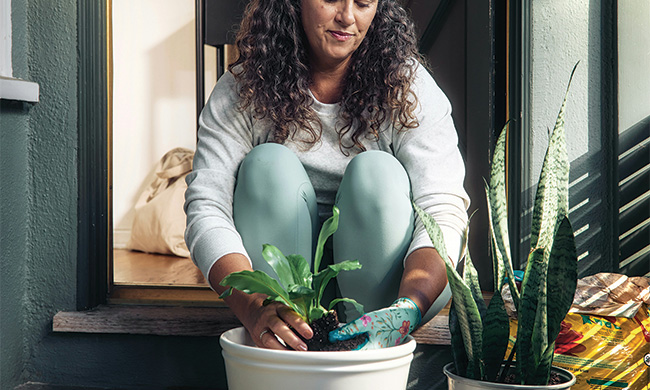
(Feature Impact) Although gardening is typically considered more of a spring or summer activity, fall and winter are excellent opportunities to add some color and freshness to your outdoor spaces. With container gardening, you can create everything from cheerful porch flower displays to miniature winter herb gardens with the flexibility to rearrange your setup as needed.
Consider these tips to create a cold-season container garden that’s ready to thrive.
Choose Hardy Plants and Flowers
Work with the cold, not against it, by looking for fall and winter plants suited to your local climate and hardiness zone. Cold-season flowers like pansies, violets and chrysanthemums can survive light frosts and give you cheerful pops of color to enjoy. Fill out the design by adding ornamental grasses or trailing evergreen foliage like ivy. If you’re hoping to grow vegetables and herbs during the fall and winter, choose tolerant varieties like kale, spinach, chives, rosemary, parsley or thyme.
Get the Right Kinds of Containers
Almost as important as the plants themselves are the pots you decide to plant them in. Look for containers large enough to accommodate growing plants, but small enough that you can move them if necessary. Proper drainage is another important factor, since soil that stays too wet during cold weather can freeze and thaw, which may damage the roots or pots. Choose sturdy materials that can stand up to changing temperatures, like thick plastic, resin or metal, and avoid more fragile materials like terracotta and ceramic.
Consider Location
Placement can determine whether your container garden thrives or struggles. When you’re deciding where to keep your containers, think about sunlight, wind protection and ease of access for watering and maintenance. A spot near a south- or west-facing wall may help keep the soil warmer and the plant more sheltered from gusty autumn and winter days.
Don’t Overwater
If you usually garden during warmer months, you might be accustomed to watering your plants frequently. However, plants generally use less water when temperatures are cool, so if you stick to a summer schedule you could wind up drowning them instead of nurturing them. Water your containers when the soil is dry enough to need it, preferably when temperatures are above freezing so it doesn’t turn to ice around the roots.
Protect Plants from Extreme Weather
A light layer of snow usually isn’t a death sentence, but even cold-resistant plants are bound to struggle during a howling blizzard or a deep freeze. Depending on what kinds of plants and containers you have, follow professional recommendations to move containers into sheltered locations or wrap the pots with insulating materials to keep the roots warmer.
Find more seasonal home and garden tips at eLivingtoday.com.
Photo courtesy of Unsplash
SOURCE:
elivingtoday.com

Community
Mariska Hargitay and Purina Team Up to Help Domestic Violence Survivors Keep Their Pets Safe
Mariska Hargitay and Purina are raising awareness about a heartbreaking reality: Many domestic violence survivors delay escaping abuse because they cannot bring their pets. Discover how the Purple Leash Project is helping families and animals find safety together.

Purple Leash Project takes center stage at U.S. Women’s National Team match, raising awareness about a heartbreaking choice facing abuse survivors and their beloved pets.
By STM Daily News | Lifestyle & Pets | October 12, 2026
WASHINGTON, D.C. — For many people, pets are more than companions. They’re family, providing comfort, unconditional love, and emotional support during life’s most difficult moments. But for survivors of domestic violence, the bond with a beloved pet can create an unexpected obstacle when trying to escape an abusive environment.
Actress and longtime domestic violence advocate Mariska Hargitay joined Purina and the U.S. Women’s National Soccer Team on October 10, 2026, to shine a spotlight on this often-overlooked issue.
During the team’s match against Spain at Audi Field in Washington, D.C., Hargitay served as Purina’s Honorary Captain, helping promote the company’s Purple Leash Project, an initiative designed to help domestic violence survivors find safety without leaving their pets behind.
The appearance was part of Domestic Violence Awareness Month, observed every October.


When Escaping Abuse Means Leaving a Pet Behind
For someone experiencing domestic violence, leaving an abusive relationship can be dangerous and emotionally overwhelming. The situation becomes even more complicated when pets are involved.
According to statistics cited by Purina:
- Only 20% of domestic violence shelters allow pets.
- 48% of survivors delay leaving an abusive situation because they cannot take their pets with them.
These figures illustrate a significant barrier to safety.
For survivors whose pets provide emotional stability and companionship, the possibility of abandoning an animal can be devastating. Some may also fear that an abusive partner will harm a pet left behind.
The Purple Leash Project seeks to eliminate that difficult choice by helping domestic violence shelters become more accommodating to animals.
What Is the Purple Leash Project?
The Purple Leash Project is a partnership between Purina and RedRover, a nonprofit organization dedicated to helping animals and strengthening the human-animal bond.
Through grants and financial assistance, the initiative supports domestic violence shelters and social service organizations by funding:
- Renovations that make shelters pet-friendly.
- On-site and off-site housing for survivors’ pets.
- Essential pet supplies and accommodations.
- Necessary veterinary services for animals entering shelter programs.
According to Purina, the initiative has already provided nearly 70 grants totaling more than $2.2 million across over 30 states.
The company has also established a goal of helping provide one million safe nights for survivors and their pets by the end of 2030.
The ultimate objective is simple: Nobody should have to choose between personal safety and protecting a beloved animal.
Mariska Hargitay Brings the Message to the Soccer Field
Hargitay, widely recognized for portraying Olivia Benson on Law & Order: Special Victims Unit, has spent years advocating for survivors of domestic violence and sexual assault.
Her participation in the U.S. Women’s National Team event brought additional visibility to the Purple Leash Project.
During the pre-match ceremonies, Hargitay participated in the ceremonial coin toss alongside Cassidy, a 75-pound Golden Retriever therapy dog, and Cassidy’s handler, Patrice “Pat” Eller.
Cassidy and Eller are part of a Pet Partners therapy team that helps provide comfort to children who may be required to testify in court.
Their presence illustrated the important role animals can play in helping people cope with traumatic experiences.
“Seeing the Purple Leash Project take the field helped turn the stadium into a powerful show of support for survivors and the pets they love,” Hargitay said in a statement released by Purina.
She also emphasized the importance of reducing the stigma surrounding domestic violence and creating more safe spaces where survivors and their pets can recover together.
A Special Soccer Scarf Supporting Survivors and Pets
To encourage fans to participate in the initiative, Purina and U.S. Soccer introduced a limited-edition Courageous & Comfy Soccer Scarf.
The officially licensed scarf is available through the Purple Leash Project’s online store.
According to Purina, 100% of every scarf purchase is donated to RedRover, supporting the effort to help survivors and their pets remain together.
Fans interested in supporting the initiative can visit:
Purple Leash Project Scarf Store
Additional information about the initiative is available at:
Bringing Pets Into the Soccer Experience
Beyond raising awareness for domestic violence survivors, Purina used the event to highlight the relationship between sports fans and their pets.
At Audi Field, the company introduced the Purina Club, a temporary pet-friendly seating area where fans could attend the match with their dogs.
The initiative reflects Purina’s growing involvement in soccer, including collaborations with U.S. Soccer and pet-centered activities associated with the 2026 FIFA World Cup.
While these efforts celebrate the companionship pets bring to everyday life, the Purple Leash Project addresses a more serious reality: For some individuals, the ability to remain with their animals can influence whether they can safely leave an abusive situation.
Why the Human-Animal Bond Matters
Anyone who has experienced the companionship of a dog, cat, or another beloved pet understands how deeply animals can become part of a family.
Pets offer familiarity, routine, comfort, and emotional connection. During times of uncertainty, those relationships can become especially meaningful.
For survivors of domestic violence, maintaining that bond can provide an important source of reassurance while rebuilding their lives.
The Purple Leash Project recognizes that protecting survivors and protecting their animals are often interconnected needs.
“At Purina, we believe survivor safety shouldn’t require sacrifice,” said Nina Leigh Krueger, CEO of Purina, in the company’s announcement.
That philosophy is at the heart of the initiative’s mission to expand access to safe, pet-friendly shelter accommodations.
How You Can Help
Supporting survivors and their pets doesn’t necessarily require a major financial commitment.
Individuals can learn more about the Purple Leash Project, support participating organizations, share information about pet-friendly domestic violence shelters, or contribute to nonprofit programs that help families and animals in crisis.
Organizations such as RedRover also provide resources designed to strengthen the human-animal bond and assist animals during emergencies.
Learn more at RedRover.org.
For anyone currently experiencing domestic violence in the United States, confidential assistance is available through the National Domestic Violence Hotline at 1-800-799-SAFE (7233) or TheHotline.org. If immediate danger exists, call 911.
A Safer Future for Survivors and Their Pets
The partnership between Purina, Mariska Hargitay, RedRover, and U.S. Soccer demonstrates how public awareness campaigns can help bring attention to problems that often remain unseen.
For survivors of domestic violence, the path to safety should not mean having to abandon a loyal companion.
And for the pets who depend on their families, remaining together can mean everything.
By helping shelters accommodate animals, the Purple Leash Project is working toward a future where survivors and their pets can escape dangerous situations, find stability, and begin healing together.
More Lifestyle & Pet Stories From STM Daily News
At STM Daily News, we believe stories about pets are also stories about people, families, communities, and the powerful connections that make life meaningful.
Explore more stories about animal welfare, pet care, family life, and community initiatives in our Lifestyle section at STM Daily News.
Stay informed. Stay connected. Discover stories that matter.
Sources and Additional Resources
- Purina — Purple Leash Project
- RedRover — Animal Welfare and Crisis Support
- National Domestic Violence Hotline
- U.S. Soccer
Source: Nestlé Purina PetCare press release, October 11, 2026. Statistics and grant figures attributed to Purina.


(Feature Impact) Menopause is a phase of life every woman knows will come eventually yet few are truly prepared for. Beyond stereotypical symptoms like hot flashes and mood swings, the other realities of menopause can be mysterious, taking women by surprise when their experiences differ from expectations.
Rather than being a single event, menopause involves a gradual transition that happens as estrogen production changes – meaning symptoms can appear and evolve unpredictably. According to a survey commissioned by the National Menopause Foundation, 63% of U.S. women ages 35-54 experienced symptoms they believed may be related to perimenopause or menopause, yet nearly half (49%) said they weren’t prepared for the changes beforehand.
When women and their loved ones understand what they’re facing, they can approach this time with patience and compassion, which can make a real difference to the 71% of women who wished the people in their lives understood more about perimenopause or menopause. Consider these five facts to help fill in the menopause knowledge gap.
Perimenopause Can Start Years Before Menopause
The physiological transition to menopause can happen up to 10 years before a woman’s final menstrual period, although the average length of perimenopause is about four years. Symptoms may quietly begin in a woman’s 30s, 40s or 50s, and what might look like an isolated problem at first – like brain fog, a night of insomnia or an irregular monthly cycle – could be connected to broader hormonal changes.
Menopause Is More Than Just “Hot Flashes”
Since more than half of women surveyed were already aware of menopause symptoms like hot flashes, mood changes, anxiety and fatigue, these may not take them by surprise. Little-known symptoms are a different story – the majority of respondents didn’t anticipate menopausal issues like rage, inner-ear itching or reduced joint mobility. According to the National Menopause Foundation, women may also experience sleep disturbances, sweating, changes in libido, vaginal dryness, incontinence, weight changes and more.
Every woman’s experience is unique, so these symptoms could present in different combinations and intensities during menopausal years or may not appear at all.
Talking About Menopause Can Be Difficult
Even as women go through these physical and emotional shifts, many struggle to open up about their experiences. In fact, women rank menopause symptoms (17%) more difficult to discuss than hot-button topics like political views (13%), weight (13%) and religious beliefs (10%).
However, suffering in silence can lead to feelings of isolation, relationship misunderstandings and hesitation to seek help, which is why 66% of women said the lack of open discussion about menopause makes the experience worse.
Menopause Isn’t All Bad News
Although this season of life comes with challenges, there are joys to embrace as well. Women navigating midlife can come out the other side with more resilience, emotional awareness and a stronger sense of self. In fact, 44% of women surveyed said their outlook on life became more positive since their transition.
What Loved Ones Can Actually Do
Menopause is a highly individual experience, but that doesn’t mean women have to navigate it alone. Support from partners, families and friends can lift women up during difficult moments, and it can be as simple as taking the time to ask questions, listen and learn about how menopause is affecting their lives. With 30% of women in the U.S. labor force – approximately 15-16 million – in the age range corresponding to menopausal transition (ages 45-60), workplaces can also take steps to become more menopause friendly.
For more resources to help understand symptoms and discuss the transition with loved ones, visit nationalmenopausefoundation.org.
Photo courtesy of Shutterstock

SOURCE:





