

Entertainment
NICKELODEON KIDS’ CHOICE AWARDS 2024 NOMINATIONS ANNOUNCED WITH OVER 50 FIRST-TIME NODS!

HOLLYWOOD, Calif. /PRNewswire/ — Nickelodeon revealed the nominees for its annual slime-filled Kids’ Choice Awards, with over 50 first-time nominees from across the worlds of film, television, music, sports and more. Hosted by SpongeBob SquarePants (voiced by Tom Kenny) and Patrick Star (voiced by Bill Fagerbakke), Nickelodeon Kids’ Choice Awards 2024 will premiere live from their undersea home of Bikini Bottom on Saturday, July 13, at 8 p.m. (ET/PT).
First-time nominees include Halle Bailey, Austin Butler, Sabrina Carpenter, Kai Cenat, Timothée Chalamet, Luke Combs, Ariana DeBose, Ayo Edebiri, Ryan Gosling, Reneé Rapp, Margot Robbie, Paul Rudd, among others. Leading the pack with six nods is Taylor Swift, followed by Beyoncé, Miley Cyrus, Olivia Rodrigo and Justin Timberlake, with four nominations each. Musical performances and presenters will be announced at a later date.
KCA will continue to put kids and families in control as they are transported to the biggest party of the summer in Bikini Bottom. This year’s show will also feature: enhanced graphics, high-tech motion capture and augmented reality; fun celebrity collaborations and stunts as Nickelodeon celebrates SpongeBob SquarePants’ special birthday; and the net’s signature orange blimp award and epic slimings. Nickelodeon Kids’ Choice Awards 2024 will simulcast across Nickelodeon, TeenNick, Nicktoons, the Nick Jr. channel, TVLand, CMT and MTV2.
Beginning today, fans in the U.S. can cast their votes across 33 categories on the official Kids’ Choice Awards website, KidsChoiceAwards.com. International markets will also open voting today, including additional regional categories.
Media outlets can access photos and video for Nickelodeon Kids’ Choice Awards 2024 as well as request media credentials, by visiting nickkcapress.com.
Nickelodeon Kids’ Choice Awards 2024 nominees are:
*denotes first-time nominee.
TELEVISION:
FAVORITE KIDS TV SHOW
Danger Force
High School Musical: The Musical: The Series
Percy Jackson and the Olympians
Power Rangers Cosmic Fury
Raven’s Home
The Muppets Mayhem
The Really Loud House
Tyler Perry’s Young Dylan
FAVORITE FAMILY TV SHOW
Abbott Elementary
Avatar: The Last Airbender
Goosebumps
iCarly
Loki
Young Sheldon
FAVORITE REALITY SHOW
America’s Funniest Home Videos
America’s Got Talent
American Ninja Warrior
Is It Cake?
Kids Baking Championship
LEGO Masters
FAVORITE CARTOON
Big City Greens
Monster High
SpongeBob SquarePants
Teen Titans Go!
The Loud House
The Simpsons
FAVORITE FEMALE TV STAR (KIDS)
Hunter Deno (Amelia Jones, Power Rangers Cosmic Fury)*
Lilly Singh (Nora Singh, The Muppets Mayhem)
Olivia Rodrigo (Nini, High School Musical: The Musical: The Series)
Raven-Symoné (Raven Baxter, Raven’s Home)
Sofia Wylie (Gina, High School Musical: The Musical: The Series)
Tessa Rao (Izzy Garcia, Power Rangers Cosmic Fury)*
FAVORITE MALE TV STAR (KIDS)
Chance Perez (Javi Garcia, Power Rangers Cosmic Fury)*
Dylan Gilmer (Young Dylan, Tyler Perry’s Young Dylan)
Jahzir Bruno (Clyde McBride, The Really Loud House)*
Joshua Bassett (Ricky, High School Musical: The Musical: The Series)
Walker Scobell (Percy Jackson, Percy Jackson and the Olympians)*
Wolfgang Schaeffer (Lincoln Loud, The Really Loud House)
FAVORITE FEMALE TV STAR (FAMILY)
Janelle James (Ava Coleman, Abbott Elementary)*
Laci Mosley (Harper, iCarly)*
Miranda Cosgrove (Carly, iCarly)
Peyton List (Maddie Nears, School Spirits)
Quinta Brunson (Janine Teagues, Abbott Elementary)*
Rosario Dawson (Ahsoka Tano, Ahsoka)*
FAVORITE MALE TV STAR (FAMILY)
Gordon Cormier (Aang, Avatar: The Last Airbender)*
Iain Armitage (Sheldon Cooper, Young Sheldon)
Jerry Trainor (Spencer Shay, iCarly)
Justin Long (Nathan Bratt, Goosebumps)
Tom Hiddleston (Loki, Loki)
Zack Morris (Isaiah Howard, Goosebumps)*
FILM:
FAVORITE MOVIE
Aquaman and the Lost Kingdom
Barbie
Ghostbusters: Frozen Empire
Guardians of the Galaxy Vol. 3
The Little Mermaid
The Marvels
Transformers: Rise of the Beasts
Wonka
FAVORITE MOVIE ACTOR
Adam Sandler (Danny Friedman, You Are So Not Invited to My Bat Mitzvah)
Chris Pratt (Peter Quill, Guardians of the Galaxy, Vol. 3)
Jason Momoa (Arthur, Aquaman and the Lost Kingdom)
John Cena (Jakob Toretto, Fast X)
Paul Rudd (Gary Grooberson, Ghostbusters: Frozen Empire)*
Ryan Gosling (Ken, Barbie)*
Ryan Reynolds (Cal, IF)
Timothée Chalamet (Willy Wonka, Wonka)*
FAVORITE MOVIE ACTRESS
America Ferrera (Gloria, Barbie)*
Brie Larson (Carol Danvers/Captain Marvel, The Marvels)
Halle Bailey (Ariel, The Little Mermaid)*
Jennifer Garner (Jess, The Family Switch)
Margot Robbie (Barbie, Barbie)*
Melissa McCarthy (Ursula, The Little Mermaid)
Zendaya (Chani, Dune: Part Two)
Zoe Saldana (Gamora, Guardians of the Galaxy: Vol 3)
FAVORITE ANIMATED MOVIE
Elemental
Kung Fu Panda 4
PAW Patrol: The Mighty Movie
Spider-Man: Across the Spider-Verse
Teenage Mutant Ninja Turtles: Mutant Mayhem
The Garfield Movie
The Super Mario Bros. Movie
Trolls Band Together
FAVORITE MALE VOICE FROM AN ANIMATED MOVIE
Adam Sandler (Leo, Leo)
Brady Noon (Raphael, Teenage Mutant Ninja Turtles: Mutant Mayhem)
Chris Pratt (Mario, The Super Mario Bros. Movie)
Jack Black (Bowser, The Super Mario Bros. Movie)
Jack Black (Po, Kung Fu Panda 4)
Jackie Chan (Splinter, Teenage Mutant Ninja Turtles: Mutant Mayhem)
Justin Timberlake (Branch, Trolls Band Together)
Shameik Moore (Miles Morales, Spider-Man: Across the Spider-Verse)
FAVORITE FEMALE VOICE FROM AN ANIMATED MOVIE
Anna Kendrick (Poppy, Trolls Band Together)
Anya Taylor-Joy (Peach, The Super Mario Bros. Movie)*
Ariana DeBose (Asha, Wish)*
Awkwafina (Zhen, Kung Fu Panda 4)
Ayo Edebiri (April, Teenage Mutant Ninja Turtles: Mutant Mayhem)*
Hailee Steinfeld (Gwen Stacy, Spider-Man: Across the Spider-Verse)
Kristen Bell (Janet, PAW Patrol: The Mighty Movie)
McKenna Grace (Skye, PAW Patrol: The Mighty Movie)*
FAVORITE VILLAIN
Amy Schumer (Velvet, Trolls Band Together)*
Austin Butler (Feyd-Rautha Harkonnen, Dune: Part Two)*
Jack Black (Bowser, The Super Mario Bros. Movie)
Keegan-Michael Key (Chief of Police, Wonka)*
Melissa McCarthy (Ursula, The Little Mermaid)
Reneé Rapp (Regina George, Mean Girls)*
MUSIC:
FAVORITE FEMALE ARTIST
Ariana Grande
Beyoncé
Billie Eilish
Cardi B
Miley Cyrus
Olivia Rodrigo
Selena Gomez
Taylor Swift
FAVORITE MALE ARTIST
Bad Bunny
Drake
Ed Sheeran
Justin Timberlake
Post Malone
The Weeknd
Travis Scott
Usher
FAVORITE MUSIC GROUP
Black Eyed Peas
Coldplay
Imagine Dragons
Jonas Brothers
Maroon 5
*NSYNC
FAVORITE SONG
“Dance the Night”- Dua Lipa
“Fast Car”- Luke Combs*
“Flowers”- Miley Cyrus
“Paint The Town Red”- Doja Cat
“Selfish”- Justin Timberlake
“TEXAS HOLD ‘EM”- Beyoncé
“What Was I Made For?”- Billie Eilish
“yes, and?”- Ariana Grande
FAVORITE MUSIC COLLABORATION
“All My Life”- Lil Durk* and J. Cole*
“Baby Don’t Hurt Me”- David Guetta, Anne Marie* and Coi Leray*
“Barbie World”- Nicki Minaj and Ice Spice* with Aqua*
“Doctor (Work it Out)”- Pharrell Williams featuring Miley Cyrus
“Fortnight”- Taylor Swift featuring Post Malone
“Karma (Remix)”- Taylor Swift and Ice Spice*
“SUPPOSED TO BE LOVED”- DJ Khaled featuring Lil Baby,* Future* and Lil Uzi Vert*
“Wild Ones”- Jessie Murph* and Jelly Roll*
FAVORITE BREAKOUT ARTIST
Coco Jones*
Ice Spice*
Jelly Roll*
Reneé Rapp*
Tate McRae*
Teddy Swims*
Tyla*
Victoria Monét*
FAVORITE ALBUM
“Barbie: The Album”
“Cowboy Carter”- Beyoncé
“Endless Summer Vacation”- Miley Cyrus
“GUTS”- Olivia Rodrigo
“THE TORTURED POETS DEPARTMENT: THE ANTHOLOGY”- Taylor Swift
“Whitsitt Chapel”- Jelly Roll*
FAVORITE GLOBAL MUSIC STAR
Africa: Tyla*
Asia: BLACKPINK
Australia/NZ: Troye Sivan
Europe: Zara Larsson
Latin America: Karol G*
North America: Taylor Swift
UK: Dua Lipa
FAVORITE TICKET OF THE YEAR
Bad Bunny: Most Wanted
Beyoncé: Renaissance Tour
BlackPink: BornPink Tour
Olivia Rodrigo: Guts Tour
Sabrina Carpenter: Emails That I Can’t Send Tour*
Taylor Swift: The Eras Tour
FAVORITE VIRAL SONG
“Beautiful Things”- Benson Boone*
“Daylight”- David Kushner*
“Espresso”- Sabrina Carpenter*
“Greedy”- Tate McRae*
“Lil Boo Thang”- Paul Russell*
“Water”- Tyla*
OTHER CATEGORIES:
FAVORITE MALE CREATOR
Dhar Mann*
Mark Rober*
Markiplier
MrBeast
Ryan’s World
Spencer X
FAVORITE FEMALE CREATOR
Charli D’Amelio
Dixie D’Amelio
Emma Chamberlain
Hannah Stocking*
Kids Diana Show
Lexi Rivera
FAVORITE GAMER
Aphmau*
Kai Cenat*
Ninja
Preston
TheBoyDilly*
Unspeakable
FAVORITE SOCIAL MUSIC STAR
Addison Rae
Bella Poarch
David Kushner*
Djo*
Madison Beer*
Paul Russell*
FAVORITE CREATOR FAMILY
FGTeeV
Jordan Matter/Salish Matter*
Ninja Kidz
Royalty Family
The Beverly Halls*
The Herberts*
FAVORITE FEMALE SPORTS STAR
Alex Morgan
Caitlin Clark*
Coco Gauff*
Sha’Carri Richardson*
Simone Biles
Venus Williams
FAVORITE MALE SPORTS STAR
Cristiano Ronaldo
LeBron James
Lionel Messi
Patrick Mahomes
Stephen Curry
Travis Kelce*
FAVORITE VIDEO GAME
Just Dance 2024
Madden NFL 24
Minecraft
Roblox
Super Mario Bros. Wonder
The Legend of Zelda: Tears of the Kingdom
Nickelodeon Kids’ Choice Awards 2024 is produced by Nickelodeon Productions and overseen by: Ashley Kaplan, Executive Vice President, Nickelodeon & Awesomeness Unscripted & Digital Franchise Studio; Paul J Medford, Vice President, Unscripted Current Series; Luke Wahl, Vice President, Unscripted Creative; Jennifer Bryson, Vice President, Production, Tentpoles, Events & Music & Specials; and Ellen Rydzewski, Senior Vice President, Celebrity, Events & Talent Relations. Guy Carrington & Kevin Hermanson of Done and Dusted serve as executive producers, with Rob Paine serving as co-executive producer. The show is directed by James Merryman.
Since its launch July 17, 1999, SpongeBob SquarePants has reigned as the most-watched animated series for 22 consecutive years, while generating a universe of beloved characters, pop culture catchphrases and memes, theatrical releases, consumer products, a Tony award-winning Broadway musical and a global fan base. SpongeBob SquarePants is one of the most widely distributed properties in Paramount history, seen in more than 180 markets, translated in 30+ languages, and averaging more than 90 million total viewers every quarter. SpongeBob SquarePants was created by Stephen Hillenburg and produced by Nickelodeon in Burbank, Calif. The character-driven cartoon chronicles the nautical and sometimes nonsensical adventures of SpongeBob, an incurable optimist and earnest sea sponge, and his undersea friends.
Nickelodeon, now in its 45th year, is the number-one entertainment brand for kids. It has built a diverse, global business by putting kids first in everything it does. The brand includes television programming and production in the United States and around the world, plus consumer products, digital, location-based experiences, publishing and feature films. For more information or artwork, visit http://www.nickpress.com. Nickelodeon is a part of Paramount’s (Nasdaq: PARA, PARAA) global portfolio of multimedia entertainment brands.
SOURCE Nickelodeon
https://stmdailynews.com/category/entertainment
Author

Discover more from Daily News
Subscribe to get the latest posts sent to your email.


Entertainment
Smart Gaming: How Parents Can Keep Kids Safe Online
Parents can enhance kids’ safety during online gaming by using privacy settings, researching games, enabling age checks, keeping personal information private, and utilizing parental controls and security tools.
Last Updated on March 14, 2026 by Daily News Staff
Smart Gaming: How Parents Can Keep Kids Safe Online
(Family Features) Playing video games can be a fun, social experience. However, online gaming also poses real risks, especially for kids. As a parent, you don’t necessarily need to be a gamer yourself to help keep your children safe when the controller is in their hands.
Consider taking proactive steps like these to create a healthy online gaming environment for kids of all ages.
Check System Privacy Settings
As a first line of defense – before your child even starts gaming – spend some time in the device or console privacy settings. Here you can turn off sharing, disable location tracking, limit microphone and camera access and restrict how other users can interact with your child’s profile. Similarly, many games and platforms include built-in privacy settings that can be tailored to your child’s age and online experience. These settings may allow you to limit who can view your child’s profile or send a friend request, message or voice chat.
Research Games
Because not all games are created equal, look up game ratings through a service such as ESRB before buying or downloading to understand the maturity level of the game and determine if it’s appropriate for your child. To take it a step further, read reviews from other parents or watch gameplay videos to see if you deem not only the content but also the social interaction acceptable.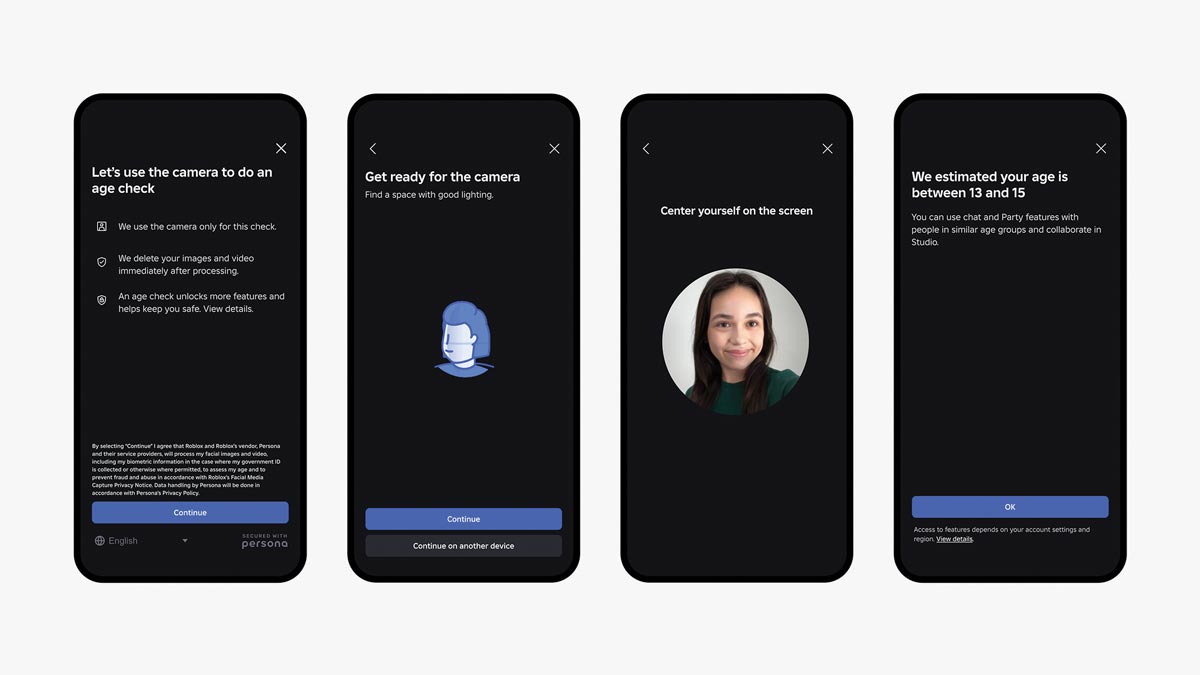
Use Facial Age Estimation
Online platforms are increasingly looking for ways to keep users safe, and that includes added levels of verification. As part of a multilayered approach to safety, Roblox is the first online gaming platform to require age checks for users of all ages to access chat features, enabling age-appropriate communication and limiting conversations between adults and minors. These secure age checks are designed to be fast, easy and secure using Facial Age Estimation technology directly within the app.
“Our commitment to safety is rooted in delivering the highest level of protection for our users,” said Matt Kaufman, chief safety officer at Roblox. “By building proactive, age-based barriers, we can empower users to create and connect in ways that are both safe and appropriate.”
Once age-checked, users are assigned to one of six age groups: under 9, 9-12, 13-15, 16-17, 18-20 or 21 and older, ensuring conversations are safe and age appropriate. Age checks are optional; however, features like chat will not be accessible unless an age check is completed. Chat is also turned off by default for children under age 9, unless a parent provides consent after an age check.
Keep Personal Information Private
It’s seldom a bad idea to be extra cautious when interacting with strangers online, even if they seem friendly enough while playing the game. Teach children what information not to share, including their full name, address, birthday, school name, phone number, email address, passwords or any photos that may contain any personal information (like a house number or school logo) in the background. Also encourage a screen name and generic avatar for added privacy.
Turn on Parental Controls
Designed to allow parents a supervisory role in their child’s online gaming experience, parental controls on many platforms include the ability to set schedules and limit playtime, restrict access to certain content or social features, require a password for purchases or set a spending limit.
Avoid Clicking Unfamiliar Links
Player profiles and in-game chats may include links to external sites, including those promising rewards or cheat codes. Because they can be used to gain access to personal information, remind your children to ask an adult before clicking any unfamiliar links while gaming so they can be verified as trustworthy.
Employ Privacy and Security Tools
While system or console-specific settings allow parents to set content restrictions, approve downloads, manage friends lists and more, additional layers of security are sometimes necessary. Extra safeguards such as antivirus and internet security software, DNS (domain name system) filtering and two-factor authentication can also be enabled to help keep kids safe online.
For more tools to help parents make informed decisions and support their children’s gaming experience, visit corp.roblox.com/safety.
Photo courtesy of Shutterstock (father and daughter playing video game)
SOURCE:
Roblox
Our Lifestyle section on STM Daily News is a hub of inspiration and practical information, offering a range of articles that touch on various aspects of daily life. From tips on family finances to guides for maintaining health and wellness, we strive to empower our readers with knowledge and resources to enhance their lifestyles. Whether you’re seeking outdoor activity ideas, fashion trends, or travel recommendations, our lifestyle section has got you covered. Visit us today at https://stmdailynews.com/category/lifestyle/ and embark on a journey of discovery and self-improvement.
Author
Discover more from Daily News
Subscribe to get the latest posts sent to your email.
documentaries
Former Homeless Veteran’s “The Gutter Gospel” Film Aims to Spotlight Global Mental Health Crisis

A new feature film in development is set to bring The Gutter Gospel—a story rooted in veteran homelessness, survival, and spiritual awakening—to a wider audience.
Announced March 5 via PRNewswire, the project will document the life of a former homeless veteran whose “Gutter Gospel” message has grown from the streets of North Dakota into what the release describes as a global ministry with reach in more than 200 countries. The film is framed as a response to what the announcement calls an “unprecedented mental health epidemic,” with a focus on depression, PTSD, and isolation—issues that continue to affect veterans and civilians alike.

From rock bottom to a “divine setup”
The narrative centers on a biographical turning point: after “hitting rock bottom in the streets of North Dakota,” the film’s subject describes discovering that his lowest point became a catalyst for a broader mission—feeding “the hungry and the hopeless” while sharing a faith-based message aimed at people who feel overlooked.
The release positions the story as both local and universal: Fargo is the backdrop, but the core struggle—searching for purpose in the middle of pain—is presented as a global experience.
Theology as the film’s engine: John 3:16 vs. Luke 16
According to the announcement, the film is built around what it calls a “Gospel of Contrast,” drawing a line between John 3:16 and Luke 16 (the parable of the Rich Man and Lazarus). The project’s messaging emphasizes the tension between hope and warning—an invitation to grace alongside a sobering depiction of spiritual consequence.
“Most people see the gutter as a dead end, but I found it was a sanctuary where God finally got my attention,” the film’s subject says in the release. “We are living in a Luke 16 world where people are chasing comfort while their souls are starving.”
“Forever Damned” chapter described as emotional core
A key segment of the film, titled “Forever Damned,” is described as the project’s emotional and spiritual center. The release says the chapter is designed to depict “the terrifying reality of spiritual isolation,” focusing on the moment when the “great gulf” referenced in Luke 16 becomes personal rather than symbolic.
The intent, according to the announcement, is to create a “power-punch” moment for viewers—pushing them to consider the weight of choices and the idea of urgency before opportunities for change pass.
A film designed to reach beyond traditional audiences
The project is positioned as an outreach effort aimed at meeting “the un-churched” outside of traditional religious settings. The release says the film seeks to:
- Address the mental health crisis by mirroring the experience of people living with “invisible wounds”
- Highlight efforts to feed the hungry through the ministry’s work
- Deliver a “final warning” message tied to the film’s “Forever Damned” segment
More information is available at https://theguttergospel.com/, with donations directed to https://theguttergospel.com/donate.
“The Gutter Gospel” Movie
SOURCE The Gutter Gospel
Looking for an entertainment experience that transcends the ordinary? Look no further than STM Daily News Blog’s vibrant Entertainment section. Immerse yourself in the captivating world of indie films, streaming and podcasts, movie reviews, music, expos, venues, and theme and amusement parks. Discover hidden cinematic gems, binge-worthy series and addictive podcasts, gain insights into the latest releases with our movie reviews, explore the latest trends in music, dive into the vibrant atmosphere of expos, and embark on thrilling adventures in breathtaking venues and theme parks. Join us at STM Entertainment and let your entertainment journey begin! https://stmdailynews.com/category/entertainment/
and let your entertainment journey begin!
Author

Discover more from Daily News
Subscribe to get the latest posts sent to your email.
The Bridge
Scrappy, campy and unabashedly queer, public access TV series of the 1980s and 1990s offered a rare glimpse into LGBTQ+ life

Last Updated on March 10, 2026 by Daily News Staff
“Hello to all you lovely lesbians out there! My name is Debbie, and I’m here to show you a few things about taking care of your vaginal health.”
So opens the first “Lesbian Health” segment on “Dyke TV,” a lesbian feminist television series that aired on New York’s public access stations from 1993 to 2006.
The half-hour program focused on lesbian activism, community issues, art and film, news, health, sports and culture. Created by three artist-activists – Cuban playwright Ana Simo, theater director and producer Linda Chapman and independent filmmaker Mary Patierno – “Dyke TV” was one of the first TV shows made by and for LGBTQ women.
While many people might think LGBTQ+ representation on TV began in the 1990s on shows like “Ellen” and “Will & Grace,” LGBTQ+ people had already been producing their own television programming on local stations in the U.S. and Canada for decades.
In fact my research has identified hundreds of LGBTQ+ public access series produced across the country.
In a media environment historically hostile to LGBTQ+ people and issues, LGBTQ+ people created their own local programming to shine a spotlight on their lives, communities and concerns.
Experimentation and advocacy
On this particular health segment on “Dyke TV,” a woman proceeds to give herself a cervical exam in front of the camera using a mirror, a flashlight and a speculum.
Close-up shots of this woman’s genitalia show her vulva, vagina and cervix as she narrates the exam in a matter-of-fact tone, explaining how viewers can use these tools on their own to check for vaginal abnormalities. Recalling the ethos of the women’s health movement of the 1970s, “Dyke TV” instructs audiences to empower themselves in a world where women’s health care is marginalized.
Because public access TV in New York was relatively unregulated, the show’s hosts could openly discuss sexual health and air segments that would otherwise be censored on broadcast networks.
Like today’s LGBTQ content creators, many of the producers of LGBTQ+ public access series experimented with genre, form and content in entertaining and imaginative ways.
LGBTQ+ actors, entertainers, activists and artists – who often experienced discrimination and tokenism on mainstream media – appeared on these series to publicize and discuss their work. Iconic drag queen RuPaul got his start performing on public access in Atlanta, where “The American Music Show” gave him a platform to promote his burgeoning drag persona in the mid-1980s. https://www.youtube.com/embed/hab5HrnfEZk?wmode=transparent&start=0 RuPaul appears on a 1985 episode of ‘The American Music Show.’
The producers often saw their series as a blend of entertainment, art and media activism.
Shows like “The Gay Dating Game” and “Be My Guest” were tongue-in-cheek satires of 1950s game shows. News programs such as “Gay USA,” which broadcast its first episode in 1985, reported on local and national LGBTQ news and health issues.
Variety shows like “The Emerald City” in the 1970s, “Gay Morning America” in the 1980s, and “Candied Camera” in the 1990s combined interviews, musical performances, comedy skits and news programming. Scripted soap operas, like “Secret Passions,” starred amateur gay actors. And on-the-street interview programs like “The Glennda and Brenda Show” used drag and street theater to spark discussions about LGBTQ issues.
Other programs featured racier content.
In the 1980s and ‘90s, “Men & Films,” “The Closet Case Show” and “Robin Byrd’s Men for Men” incorporated interviews with porn stars, clips from porn videos and footage of sex at nightclubs and parties.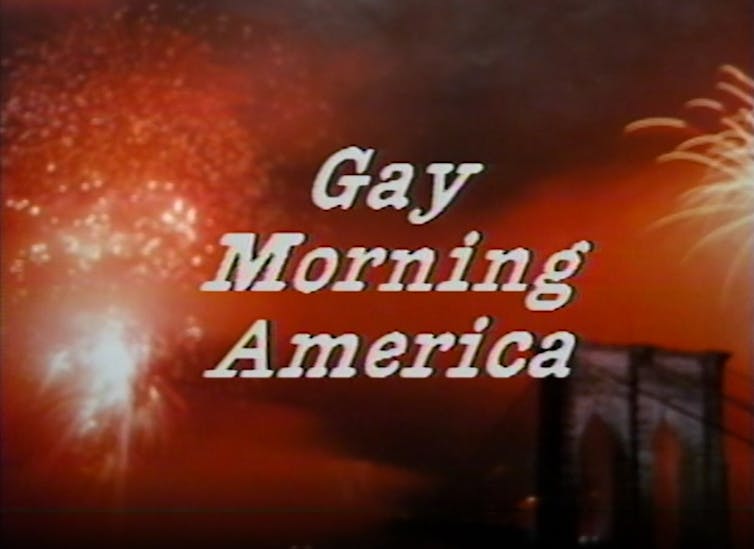
Skirting the censors
The regulation of sex on cable television has long been a political and cultural flashpoint.
But regulatory loopholes inadvertently allowed sexual content on public access. This allowed hosts and guests to talk openly about gay sex and safer sex practices on these shows – and even demonstrate them on camera.
The impetus for public access television was similar to the ethos of public broadcasting, which sought to create noncommercial and educational television programming in the service of the public interest.
In 1972, the Federal Communications Commission issued an order requiring cable television systems in the country’s top 100 markets to offer access channels for public use. The FCC mandated that cable companies make airtime, equipment and studio space to individuals and community groups to use for their own programming on a first-come, first-serve basis.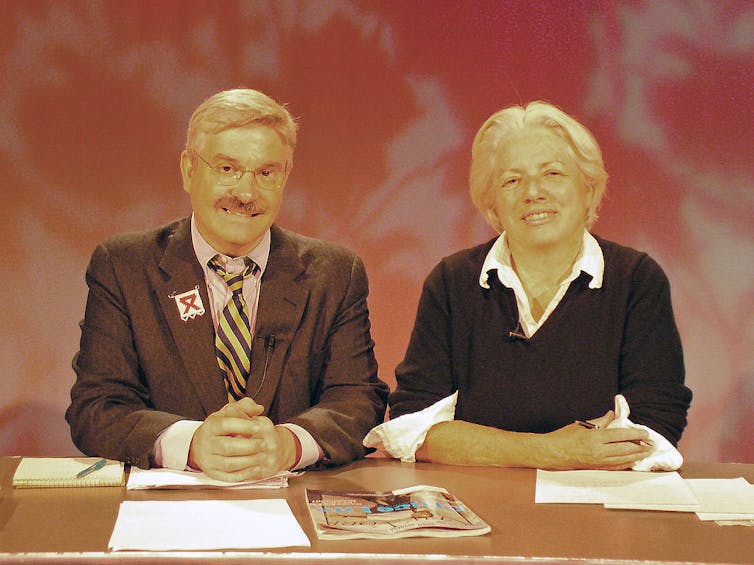
The FCC’s regulatory authority does not extend to editorial control over public access content. For this reason, repeated attempts to block, regulate and censor programming throughout the 1970s, 1980s and 1990s were challenged by cable access producers and civil liberties organizations.
The Supreme Court has continually struck down laws that attempt to censor cable access programming on First Amendment grounds. A cable operator can refuse to air a program that contains “obscenity,” but what counts as obscenity is up for interpretation.
Over the years, producers of LGBTQ-themed shows have fiercely defended their programming from calls for censorship, and the law has consistently been on their side.
Airing the AIDS crisis
As the AIDS crisis began to devastate LGBTQ+ communities in the 1980s, public access television grew increasingly important.
Many of the aforementioned series devoted multiple segments and episodes to discussing the devastating impact of HIV/AIDS on their personal lives, relationships and communities. Series like “Living with AIDS”, “HoMoVISIONES” and “ACT UP Live!” were specifically designed to educate and galvanize viewers around HIV/AIDS activism. With HIV/AIDS receiving minimal coverage on mainstream media outlets – and a lack of political action by local, state and national officials – these programs were some of the few places where LGBTQ+ people could learn the latest information about the epidemic and efforts to combat it.
The long-running program “Gay USA” is one of the few remaining LGBTQ+ public access series; new episodes air locally in New York and nationally via Free Speech TV each week. While public access stations still exist in most cities around the country, production has waned since the advent of cheaper digital media technologies and streaming video services in the mid-2000s.
And yet during this media era – let’s call it “peak public access TV” – these scrappy, experimental, sexual, campy and powerful series offered remarkable glimpses into LGBTQ+ culture, history and activism.
Lauren Herold, Visiting Assistant Professor of Gender & Sexuality Studies, Kenyon College
This article is republished from The Conversation under a Creative Commons license. Read the original article.
The Bridge is a section of the STM Daily News Blog meant for diversity, offering real news stories about bona fide community efforts to perpetuate a greater good. The purpose of The Bridge is to connect the divides that separate us, fostering understanding and empathy among different groups. By highlighting positive initiatives and inspirational actions, The Bridge aims to create a sense of unity and shared purpose. This section brings to light stories of individuals and organizations working tirelessly to promote inclusivity, equality, and mutual respect. Through these narratives, readers are encouraged to appreciate the richness of diverse perspectives and to participate actively in building stronger, more cohesive communities.
https://stmdailynews.com/category/the-bridge
Author

Discover more from Daily News
Subscribe to get the latest posts sent to your email.





