

News
Recharge for Summer Fun with a Sweet Superfood

Last Updated on July 20, 2024 by Daily News Staff

(Family Features) Summer adventures can often take people just about anywhere, from down the street at the neighborhood pool to across the country on a family road trip. Wherever the action takes you this summer, remember to stay refreshed and energized with easy snacks that provide the nutrition you need.
For example, these Sweetpotato Summer Rolls offer a flavorful way to recharge after some time in the sun. Made with peanut butter, celery sticks and North Carolina Sweetpotatoes, they’re ideal for serving your family following a day of fun.
Classified as a “diabetes superfood” by the American Diabetes Association, sweetpotatoes are rich in vitamins, minerals, fiber and antioxidants, all of which are good for overall health. Plus, they offer a natural sweetener without the added sugar.
Consider these additional sweetpotato facts as you prepare for summer excitement.
Versatile
As one of the most versatile vegetables that’s easy to add to a variety of recipes for enhancing flavor and nutrition content, sweetpotatoes can be a key ingredient in both simple or elevated and sweet or savory dishes. They can be cooked and prepared on the stove, baked, microwaved, grilled or slow cooked.
One-Word Spelling
“Sweetpotato” should be spelled as one word, even if you aren’t familiar with that spelling. In fact, the North Carolina Sweetpotato Commission deliberately spells it as one word (a practice adopted by the National Sweetpotato Collaborators in 1989) as a way for shippers, distributors, warehouse workers and consumers to avoid confusion with the equally unique and distinctive white potato or yam.
Shelf Life and Storage
Not only are sweetpotatoes abundant and found in just about any grocery store or farmers market, but they also have a long shelf life – up to 4 weeks if stored properly in a cool, dry, well-ventilated area away from heat sources.
Ideal for Athletes
Due to their high carbohydrate content, sweetpotatoes are solutions for both before and after exercise sessions. With complex carbohydrates that provide sustained energy and antioxidants that help reduce inflammation and aid in muscle repair, sweetpotatoes can elevate both endurance and recovery.
Find more summertime recipe ideas by visiting ncsweetpotatoes.com.
Watch video to see how to make this recipe!

Sweetpotato Summer Rolls
Recipe courtesy of the North Carolina Sweetpotato Commission
Servings: 4
- 2 1/2 cups North Carolina Sweetpotatoes
- 2 tablespoons olive oil
- 2 teaspoons sesame seeds
- 3 tablespoons maple syrup
- salt, to taste
- coarse pepper, to taste
- 4 celery sticks
- 1 red pepper
- 2 tablespoons creamy peanut butter
- 1/3 cup hot water
- 1/4 cup soy cooking cream
- 1 tablespoon soy sauce
- 12 sheets rice paper (22-centimeter diameter)
- 2 tablespoons chopped, roasted peanuts
- Peel sweetpotatoes and cut into 1-centimeter thick strips.
- In skillet, heat olive oil. Fry sweetpotato strips 3-4 minutes, turning occasionally; sprinkle with sesame seeds, deglaze with maple syrup and boil down briefly. Season with salt and pepper, to taste, and let cool.
- Wash celery and red pepper; cut into strips.
- Mix peanut butter with water, cream and soy sauce.
- Let rice paper sheets swell according to package instructions.
- Spread strips of sweetpotato, celery and red pepper on top half of one sheet rice paper. Drizzle with sauce. Fold lower half over strips then edges.
- Repeat with remaining rice paper sheets and ingredients. Sprinkle summer rolls with chopped peanuts. Serve with remaining sauce.
SOURCE:
North Carolina Sweetpotato Commission


Forgotten Genius Fridays
Octavia E. Butler: The Black Woman Who Helped Change Science Fiction
Discover how Octavia E. Butler transformed science fiction, explored Black identity, and helped shape Afrofuturism through her groundbreaking novels.

Forgotten Genius Friday | The Knowledge | STM Daily News
Octavia E. Butler: The Woman Who Reimagined the Future
When we think about science fiction, we often picture spaceships, robots, alien civilizations, and futuristic technology. But what happens when science fiction becomes a way to explore racism, inequality, human survival, and the consequences of our choices?
That is exactly what Octavia E. Butler brought to the genre.
Long before Afrofuturism became a widely recognized cultural movement, Butler was creating extraordinary stories that placed Black characters—especially Black women—at the center of imagined futures.
Her work challenged conventional ideas about who could be a hero, whose experiences mattered, and what science fiction could accomplish.
A Young Girl With a Powerful Imagination
Octavia Estelle Butler was born on June 22, 1947, in Pasadena, California.
Raised primarily by her mother and grandmother after her father’s death, Butler grew up shy and found comfort in books and storytelling.
Her mother worked as a domestic employee, and Butler sometimes accompanied her to work. Those experiences exposed her to the racial and economic inequalities that would later influence her fiction.
As a child, Butler loved science fiction, but she noticed something missing: people who looked like her.
Rather than accepting that absence, she began creating stories of her own.
She would eventually become one of the most influential writers in speculative fiction.
Breaking Barriers in Science Fiction
During the 1970s, mainstream American science fiction was largely associated with white male writers and protagonists.
Butler entered that literary world with a different perspective.
Her first published novel, Patternmaster, appeared in 1976. It introduced readers to a world shaped by extraordinary mental abilities, social hierarchies, and struggles for power.
Butler continued developing complex stories that explored humanity’s relationship with authority, identity, biology, and survival.
In 1979, she published one of her best-known novels, Kindred.
The book follows Dana, a Black woman living in 1970s California who is repeatedly transported back to a Maryland plantation before the Civil War.
Through Dana’s experiences, Butler forced readers to confront the brutality of American slavery and its continuing influence on the present.
Rather than treating history as something safely confined to the past, Kindred makes that history immediate and deeply personal.
Imagining the Future—and Warning Us About It
In 1993, Butler published Parable of the Sower, a novel set in a collapsing American society struggling with economic inequality, environmental destruction, violence, and weakened institutions.
Its central character, Lauren Olamina, is a young Black woman who develops a philosophy called Earthseed while searching for a way to survive and build a community.
The novel takes place beginning in 2024, making its imagined future particularly striking to modern readers.
Butler followed it with Parable of the Talents in 1998, continuing her examination of social instability, religious extremism, authoritarianism, and the struggle to create a better future.
Her novels were not literal predictions. They were works of speculative fiction that used recognizable social trends to ask difficult questions about where humanity might be headed.
Octavia Butler and Afrofuturism
Afrofuturism brings together African and African diasporic experiences with science fiction, technology, history, mythology, and imaginative visions of the future.
While artists such as Sun Ra and George Clinton explored cosmic identity through music, performance, and futuristic imagery, Butler used literature to investigate power, history, and humanity’s possible futures.
Her novels frequently placed Black women in situations where they had to navigate extraordinary challenges and reshape the societies around them.
Butler’s work is widely discussed within Afrofuturist scholarship, although her literary contributions also extend beyond any single cultural label.
She demonstrated that Black people did not have to remain secondary characters in someone else’s vision of the future.
They could be the architects of entirely new worlds.
Recognition and a Lasting Legacy
Butler received some of science fiction’s most significant honors, including Hugo and Nebula Awards.
In 1995, she became the first science-fiction writer to receive a MacArthur Fellowship, often called a genius grant.
Her work also included the Xenogenesis trilogy, later collected as Lilith’s Brood, which explored humanity’s encounter with an extraterrestrial species and raised questions about consent, adaptation, identity, and survival.
Butler died on February 24, 2006, at age 58.
Yet her influence has continued to grow.
Her novels are studied in classrooms, discussed by scholars, and embraced by new generations of readers and creators interested in science fiction, social justice, and Afrofuturism.
A Genius Who Made Us Think Differently About Tomorrow
Octavia E. Butler was more than a science-fiction author.
She was a visionary storyteller who understood that imagining the future also meant examining the past and questioning the present.
Her stories asked readers to consider how power operates, how communities survive, and how human beings might change.
And perhaps her greatest contribution was demonstrating that the future belongs in the imagination of everyone.
Why Octavia E. Butler Belongs in Forgotten Genius Friday
At STM Daily News, our Forgotten Genius Friday series celebrates extraordinary individuals whose ideas, innovations, and accomplishments helped shape our world, even if their stories aren’t widely known. Octavia E. Butler fits that mission perfectly. Although she received prestigious literary awards and recognition during her lifetime, her influence extends far beyond science fiction. Like the inventors, scientists, and trailblazers we’ve featured in this series, Butler challenged barriers, defied expectations, and opened doors for future generations. Through her imagination, she helped redefine who could tell stories about humanity’s future—and who could be at the center of those stories. Her inclusion in Forgotten Genius Friday reminds us that genius isn’t limited to laboratories and inventions. Sometimes, it begins with a pen, a powerful imagination, and the courage to envision a different world.
Sources and fact-checking
The Huntington Library holds Butler’s literary archive and confirms the chronology of her major novels, awards, and career. The MacArthur Foundation independently documents her 1995 fellowship.
- Official Octavia E. Butler biography
- The Huntington — Octavia E. Butler Papers
- MacArthur Foundation — Octavia Butler
- The Huntington — Telling My Stories exhibition
For more stories about overlooked innovators, writers, scientists, and visionaries who changed our world, explore The Knowledge and Forgotten Genius Friday at STM Daily News.

recipes
Cozy Up with Comforting Soups and Stews
Comforting Soups and Stews: As temperatures drop, few meals warm you from the inside out quite like Beef Stew with Rice or Hearty Rice Minestrone Soup. These comforting favorites deliver delicious flavor to the family table, and better yet, they don’t require much time in the kitchen, making them particularly practical for busy weekdays.

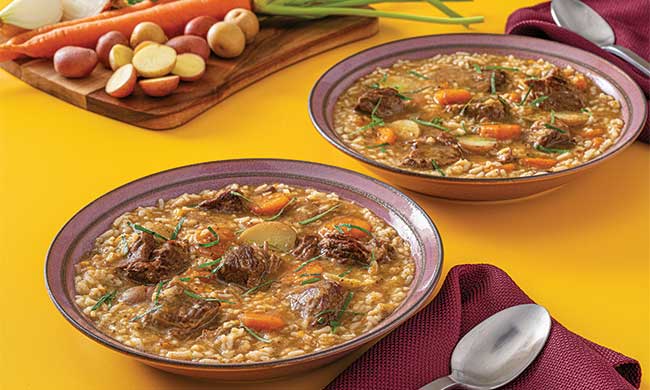
Cozy Up with Comforting Soups and Stews
(Feature Impact) As temperatures drop, few meals warm you from the inside out quite like a hearty bowl of soup or stew. These comforting favorites deliver delicious flavor to the family table, and better yet, they don’t require much time in the kitchen, making them particularly practical for busy weekdays.
With a few convenient staples on hand, like Minute Instant White Rice, you can prepare satisfying meals in a cinch. This rice is known for its light, fluffy texture; short, easy prep; and quick cook time.
It’s made with one simple ingredient – USA-grown rice – then precooked and dried with nothing added but convenience, making it a practical addition to this classic Beef Stew and Rice recipe. Bursting with tender beef and hearty vegetables, this filling stew offers a classic option that’s both quick and comforting, ideal for saving time after school and a day in the office as the pressure cooker does the work for you.
For another cozy meal that’s pressure-cooked to perfection, Hearty Rice Minestrone Soup brings together beans, tomatoes and spices in a rustic Italian-inspired dish. It’s pure comfort and warmth in a bowl, requiring just 30 minutes total for an approachable dinner when you’re in a pinch.
An aromatic touch is added from Minute Instant Jasmine Rice, known for its distinctive scent, perfect texture and delicious taste. Sweet and buttery, it’s fast, fragrant and flavorful to help you on your mission to make quick meals so you can spend less time cooking and more time enjoying with loved ones.
Find more comforting meal ideas by visiting MinuteRice.com.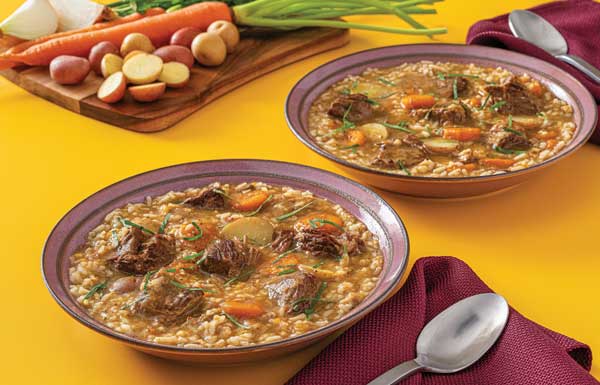
Beef Stew with Rice
Prep time: 10 minutes
Cook time: 40 minutes
Servings: 4
- 1 tablespoon olive oil
- 1 pound beef chuck, cut into 1-inch cubes
- 1 onion, chopped
- 2 cloves garlic, minced
- 2 medium potatoes, diced
- 2 carrots, sliced
- 4 cups beef broth
- 1 teaspoon salt
- 1 teaspoon pepper
- 1 cup Minute Instant White Rice
- fresh parsley, for garnish
- In bottom of pressure cooker, heat oil over medium-high heat. Brown beef cubes on all sides. Remove and set aside.
- In same pot, add onion and garlic. Saute about 2 minutes.
- Return beef to pot. Add potatoes, carrots and beef broth. Season with salt and pepper.
- Close lid and set valve to sealing. Select pressure cook or manual and set timer for 35 minutes. Once cooking time is up, let pressure release naturally about 10 minutes then carefully switch valve to venting to release remaining pressure.
- Prepare rice according to package directions.
- Open lid, stir cooked rice into stew and adjust seasoning, if necessary. Garnish with parsley.

Hearty Rice Minestrone Soup
Prep time: 10 minutes
Cook time: 20 minutes
Servings: 8
- 2 tablespoons olive oil
- 1 carrot, chopped
- 1 stalk celery, chopped
- 1 onion, chopped
- 3 garlic cloves, minced
- 1 tablespoon finely chopped fresh thyme
- 1/2 teaspoon dried oregano
- 1/4 teaspoon salt
- 1/4 teaspoon black pepper
- 5 cups chicken broth
- 1 can (14 ounces) diced tomatoes
- 1 can (19 ounces) cannellini beans, drained and rinsed
- 4 cups chopped kale
- 1 cup Minute Jasmine Rice
- 1/3 cup finely grated Parmesan cheese
- 1/4 cup thinly sliced basil
- 1/4 teaspoon red chili flakes
- Set pressure cooker to saute setting over high heat. Heat oil. Add carrot, celery, onion, garlic, thyme, oregano, salt and pepper; cook 3-5 minutes, or until starting to soften. Stir in broth and tomatoes.
- Lock lid and move pressure valve to sealing. Select pressure cook on high 10 minutes. Once cooking is complete, manually release pressure according to manufacturer’s instructions. Carefully remove lid.
- Set pressure cooker to saute setting over high heat; bring to boil. Stir in beans and kale; cook 2 minutes, or until softened.
- Stir in rice. Set pressure cooker to warm setting. Cover and let stand 5 minutes.
- Stir in Parmesan, basil and red chili flakes.
Substitutions: Use Romano beans for cannellini beans. Make vegetarian by substituting vegetable broth for chicken broth.
SOURCE:

Automotive
The New Tire-Buying Playbook: AI Insights Meet Human Advice
New Tire-Buying Playbook: A tire purchase can start with a familiar moment: a dashboard warning light, a repair shop visit, worn tread or realizing the current set is nearing a mileage milestone. When it’s time to replace tires, drivers have more ways than ever to research options, including classic search engines and AI chatbots.

The New Tire-Buying Playbook: AI Insights Meet Human Advice
(Feature Impact) A tire purchase can start with a familiar moment: a dashboard warning light, a repair shop visit, worn tread or realizing the current set is nearing a mileage milestone. When it’s time to replace tires, drivers have more ways than ever to research options.
New research from Hankook Tire’s Gauge Index Survey found drivers are utilizing multiple methods for research, from search engines and AI assistants to asking someone they trust for advice. Two-thirds of respondents said they always or often research multiple sources before buying tires, suggesting many shoppers want to weigh several opinions before deciding to buy a new set, including turning to fellow drivers.
As tools like classic search engines and AI chatbots continue to evolve, the most useful strategy for tire shopping may be less about choosing between technology and human expertise, and more about knowing how each fits into the research process. Here are a few ways drivers can confidently conduct tire research.
Start broad then narrow the search.
For many drivers, the process begins online. One-quarter of respondents said they typically begin their tire research with a search engine, the most common starting point reported in the survey. Retailer or dealer websites are the next at 16%, followed by recommendations from a mechanic at 15%.
That range of starting points reflects how personal a tire purchase can be. A search engine can help a driver organize initial questions and identify the types of information they want to compare. Retailer and dealer sites offer another place to review available options – and reviews from other drivers. A mechanic can help put the vehicle and driver’s specific needs into context.
Drivers can also use their initial search to create a short list of requirements, such as tire size, type and available warranties.
Use AI as one research tool – but not the only one.
AI is a growing part of any research. About 4 in 10 drivers (42%) said they have used an AI tool to research or compare tires more than once. Another 11% said they have not used one yet but plan to the next time they buy tires.
Conversely, just 5% of respondents said an AI assistant or chatbot would be their typical first stop when researching tires, suggesting many drivers may add AI later in the process to help sort through information or frame comparisons.
AI can help turn a general concern into a clearer list of questions. A driver might use it to identify terms to research, compare categories of information or prepare for a conversation with a retailer, dealer or repair professional.
Keep trusted people in the research loop.
Despite drivers’ increased reliance on digital tools, trusted advice is still important. More than one-quarter of drivers said they would typically begin tire research with a recommendation from a mechanic (15%) or from friends or family (12%).
Friends and family may share firsthand experiences, while a mechanic may help a driver better understand the questions that matter for their vehicle. More than 1 in 5 respondents (21%) list advice from a repair shop among the top three reasons that would prompt them to buy new tires, showing the role professional guidance can play when a purchase becomes necessary.
Find the full survey and approach your next tire research process with clearer questions, more confidence and a better sense of what matters most for the road ahead at HankookTire.com.
Photo courtesy of Shutterstock
SOURCE:




