Connect with us

Science

1 gene, 1 disease no more – acknowledging the full complexity of genetics could improve and personalize medicine

Genetic disease development is influenced by multiple variants, not just a single mutation. Research indicates that primary mutations interact with secondary variants, affecting symptom severity. This complexity necessitates broader genomic understanding for better disease prediction and personalized medical care.

Published

on

Last Updated on October 13, 2025 by Daily News Staff

genetics
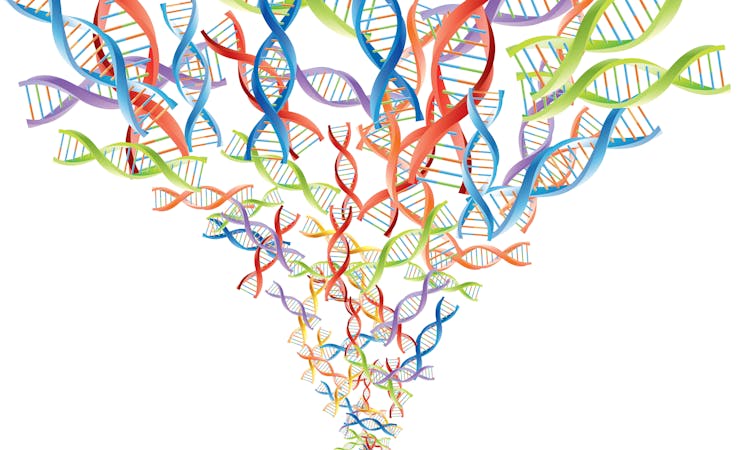
A whole lot more than just one genetic mutation determines whether and how disease develops. lvcandy/DigitalVision Vectors via Getty Images

Santhosh Girirajan, Penn State

Genetic inheritance may sound straightforward: One gene causes one trait or a specific illness. When doctors use genetics, it’s usually to try to identify a disease-causing gene to help guide diagnosis and treatment. But for most health conditions, the genetics is far more complicated than how clinicians are currently looking at it in diagnosis, counseling and treatment.

Your DNA carries millions of genetic variants you inherit from your parents or develop by chance. Some are common variants, shared by many people. Others are rare variants, found in very few people or even unique to a family. Together, these variants shape who you are – from visible traits such as height or eye color to health conditions such as diabetes or heart disease.

In our newly published research in the journal Cell, my team and I found that a genetic mutation involved in neurodevelopmental and psychiatric conditions such as autism and schizophrenia is affected by multiple other genetic variants, changing how these conditions develop. Our findings support the idea that, rather than focusing on single genes, taking the whole genome into account would provide insight into how researchers understand what makes someone genetically predisposed to certain diseases and how those diseases develop.

Primary and secondary variants

Certain rare variants can cause problems on their own, such as the genetic mutations that cause sickle cell anemia and cystic fibrosis. But in many cases, whether someone actually develops symptoms of disease depends on what else is happening across the genome.

While a primary variant might trigger a disease, secondary variants can alter how that disease develops and progresses. Think of it like a song: The melody (primary variant) is the main part of the song, but the bassist and drummer (secondary variants) can change its groove and rhythm.

That’s why two people with the same genetic mutation can seem so different. One person might have severe symptoms, another person mild symptoms, and another none at all. These variations can even occur within the same family. This phenomenon, called variable expressivity, arises from differences in the secondary variants a person has. In most cases, these variants amplify the effects of the primary mutation. A higher number of secondary variants on top of a primary variant generally leads to more severe disease. https://www.youtube.com/embed/D0XYWKm_LoM?wmode=transparent&start=0 Mutations are a source of genetic variation.

Sometimes, a primary variant and a secondary variant together can cause two different disorders in the same person, such as Prader-Willi syndrome and Pitt-Hopkins syndrome. Other times, secondary variants have no obvious effect on their own but together can tip the balance of whether and how a disease will appear, even in the absence of a primary variant. This can be seen in the development of heart disease in children.

Insights from a missing piece of a chromosome

My team and I studied a genetic change known as a 16p12.1 deletion, where a small piece of chromosome 16 is missing. Researchers have linked this mutation to developmental delay, intellectual disability and psychiatric conditions such as schizophrenia. Yet most children inherit this genetic variant from a parent who has milder symptoms, different symptoms or sometimes no symptoms at all.

To understand why this happens, we analyzed 442 individuals from 124 families carrying this genetic mutation. We found that children lacking this piece of chromosome 16 had more secondary variants elsewhere in the genome compared to their carrier parents. These secondary variants took many forms, including both small changes and large deletions, duplications and expansions of their DNA.

Advertisement
Reveal Your Skin's Youthful Radiance with FOREO's LUNA 2 Facial Massager. Shop Now For $199
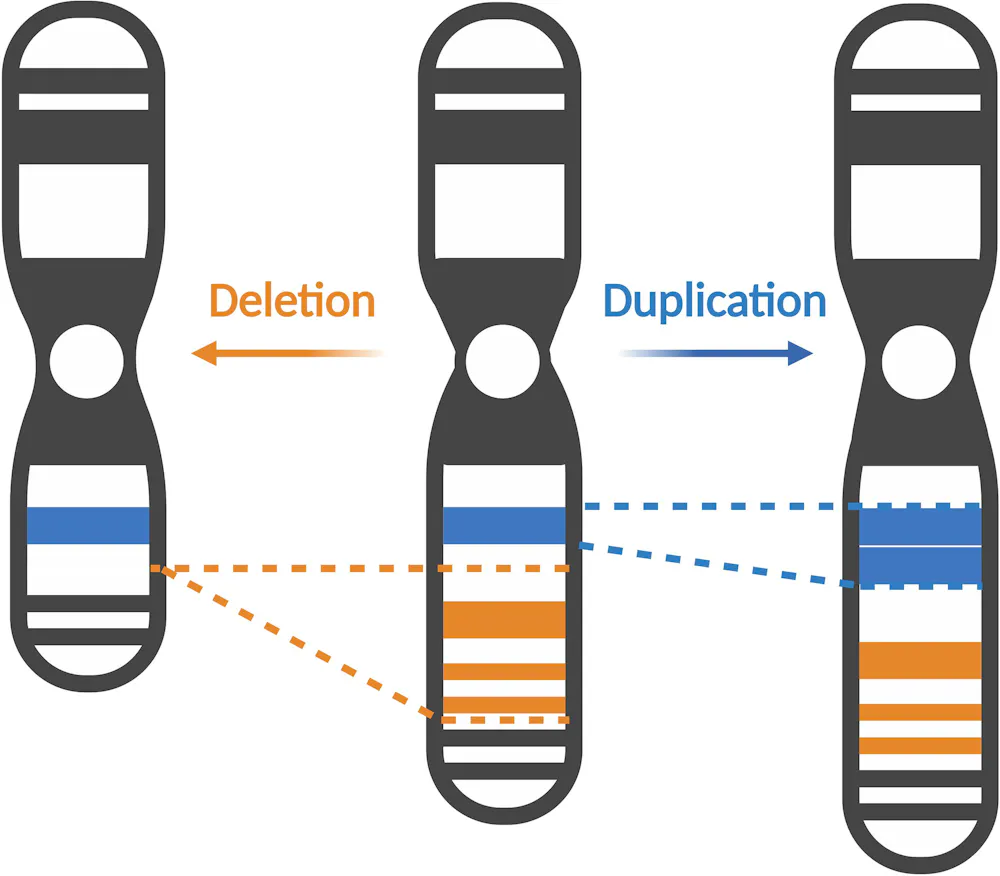
Diagram
Two types of chromosomal mutations include deletion and duplication. Gandawijaya et al./Biorender via Frontiers in Cellular Neuroscience, CC BY-SA

Each type of secondary variant was associated with different health outcomes. Some were linked to smaller head size and reduced cognitive function, while others contributed to higher rates of psychiatric or developmental symptoms. This suggests that while a 16p12.1 deletion makes the genome more sensitive to neurodevelopmental disorders, which symptoms manifest depends on which other variants are present.

The story gets even more complex when considering the fact that children not only inherit a 16p12.1 deletion from one parent but also inherit secondary variants from both parents.

My team and I found that the symptoms of the parent with this genetic mutation often match those of their spouse. For example, a parent with a 16p12.1 deletion who shows signs of anxiety or depression is more likely to have a partner who also has these symptoms. This pattern, called assortative mating, means that when parents with overlapping genetic risks have children, those risks can combine and accumulate.

Over generations, this stacking of secondary variants can lead to children who have more severe symptoms than their parents.

Biases in genetics research

One reason why scientific understanding of secondary variants has lagged is that genetic research often depends on who is recruited to participate in these studies and how researchers recruit them.

Most studies recruit patients affected with a particular disease. Families recruited from genetic clinics typically have children with severe versions of the disease. But if studies focus only on patients with the most acute symptoms, researchers may overestimate the effects of primary variants and miss the subtler role that secondary variants may play in how a disease develops.

But if researchers were to study people drawn from the general population – say, by recruiting people from a large shopping mall – some might carry the same primary variant but have far milder symptoms or none at all. This variability allows researchers to better dissect how different parts of the genome interact with each other and affect how a disease develops.

In our study, for example, we found that people with a 16p12.1 deletion who were recruited from the general population often had milder symptoms and different patterns of secondary variants compared to those who were recruited in a clinic.

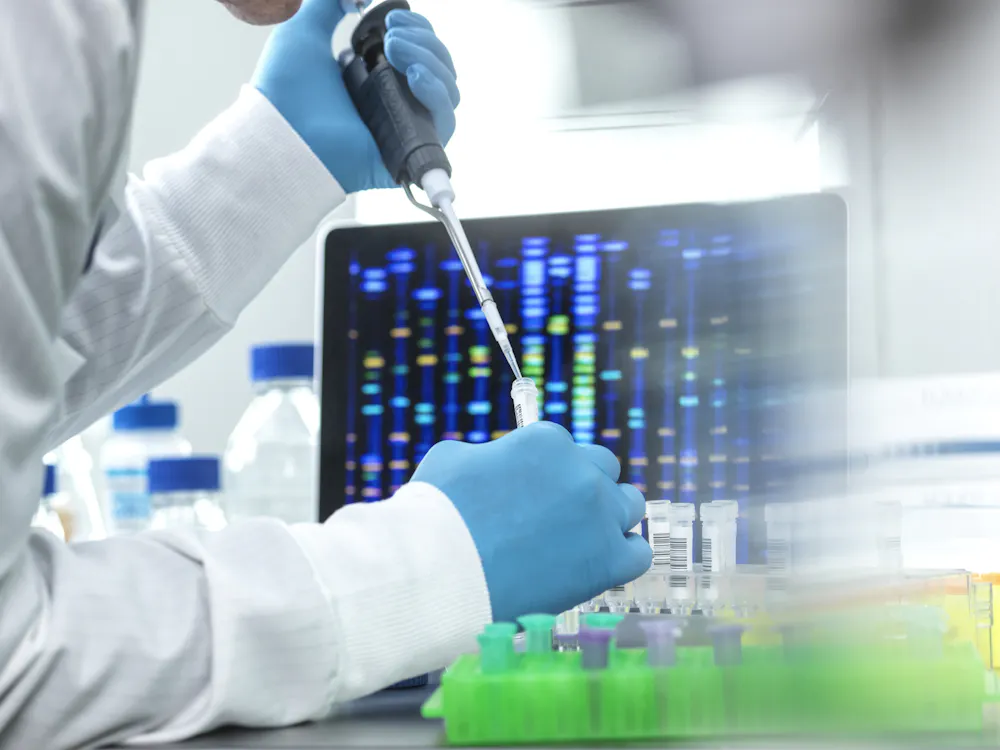
Person in white coat pipetting a sample into a vial, a DNA readout on a screen in the backdrop
Who’s included in genetics research influences how scientists understand disease. Cavan Images/iStock via Getty Images Plus

Embracing complexity in genetics

Instead of a deterministic view where one mutation equals one outcome, a more complex model accounts for the fact that whether and how a disease develops depends on the interplay between different genetic variants and environment. This has implications for how genetics is used in the clinic.

Currently, a child who tests positive for a genetic variant might be diagnosed with a disease tied to that mutation. In the future, doctors might also examine the child’s broader genetic profile to better predict their developmental trajectory, psychiatric risk or response to therapies. Families could be counseled with a more realistic picture of their child’s probability of developing a disease, rather than assuming every person with the same genetic variant will share the same outcome.

The science is still emerging. Larger and more diverse datasets and models that can better capture the subtle effects of genetic variants and environmental factors are still needed. But what’s clear is that secondary variants are not secondary in importance.

By embracing this complexity, I believe genetics can move closer to its ultimate promise: not just explaining why disease happens, but predicting who is most at risk and personalizing care for each individual.

Advertisement
Reveal Your Skin's Youthful Radiance with FOREO's LUNA 2 Facial Massager. Shop Now For $199

Santhosh Girirajan, Professor of Biochemistry, Molecular Biology and Genomics, Penn State

This article is republished from The Conversation under a Creative Commons license. Read the original article.

STM Daily News is a vibrant news blog dedicated to sharing the brighter side of human experiences. Emphasizing positive, uplifting stories, the site focuses on delivering inspiring, informative, and well-researched content. With a commitment to accurate, fair, and responsible journalism, STM Daily News aims to foster a community of readers passionate about positive change and engaged in meaningful conversations. Join the movement and explore stories that celebrate the positive impacts shaping our world. 

https://stmdailynews.com/

View recent photos

Unlock fun facts & lost history—get The Knowledge in your inbox!

We don’t spam! Read our privacy policy for more info.

Breaking News

BREAKING: NASA’s Artemis II Countdown Underway as Moon Mission Launch Window Opens

Published

on

Last Updated on April 1, 2026 by Daily News Staff

Published: April 1, 2026 | By: STM Daily News

Artemis II countdown is underway. Rocket on launch pad ready for launch.

Source: NASA/John Kraus

Artemis II countdown is underway

CAPE CANAVERAL, Fla. — The countdown has officially begun for Artemis II, NASA’s highly anticipated return to crewed lunar missions, marking a historic step toward sending humans back to the Moon for the first time in more than 50 years.

At precisely 4:44 p.m. EDT, the countdown clock started ticking at Kennedy Space Center, targeting a 6:24 p.m. launch on Wednesday, April 1. The mission will be the first crewed flight of NASA’s powerful Space Launch System (SLS) rocket and Orion spacecraft.

🚀 Final Preparations Underway

Inside the Rocco Petrone Launch Control Center, engineers and launch teams are actively powering up flight systems, verifying communications, and preparing for one of the most complex fueling operations ever attempted.

The rocket will be loaded with hundreds of thousands of gallons of super-cooled liquid hydrogen and liquid oxygen, a delicate process requiring precise timing and coordination.

Meanwhile, at Launch Complex 39B, crews are filling the sound suppression system—a massive water tank designed to release a high-volume deluge at liftoff, protecting the rocket from extreme acoustic energy generated during launch.

NHQ202603290006large

Source: NASA / Bill Ingalls

👨‍🚀 Crew in Quarantine Ahead of Launch

The four-person crew remains in quarantine at the Neil A. Armstrong Operations and Checkout Building, undergoing final medical checks and mission briefings.

  • Reid Wiseman – Commander
  • Victor Glover – Pilot
  • Christina Koch – Mission Specialist
  • Jeremy Hansen – Mission Specialist (Canadian Space Agency)

Glover, a Southern California native and Ontario High School graduate, is set to make history as the first Black astronaut to travel to lunar space—bringing a powerful local connection to this global mission.

The crew is following a controlled sleep and nutrition schedule while receiving continuous updates on launch conditions and spacecraft readiness.

🌤️ Weather Conditions 80% Favorable

NASA and U.S. Space Force weather teams are closely monitoring conditions ahead of fueling operations. Current forecasts show an 80% chance of favorable weather, with concerns focused on potential cloud cover and high winds.

Advertisement
Reveal Your Skin's Youthful Radiance with FOREO's LUNA 2 Facial Massager. Shop Now For $199

Weather will continue to be evaluated as the countdown progresses.

📺 How to Watch the Launch Live

NASA will provide live coverage throughout launch day:

  • 7:45 a.m. EDT – Tanking operations coverage begins (NASA YouTube)
  • 12:50 p.m. EDT – Full launch coverage begins on NASA+

Viewers can also follow along via NASA’s official social media platforms for real-time updates.

🚀 Artemis II Mission Snapshot

  • Mission: Artemis II
  • Agency: NASA
  • Launch Vehicle: Space Launch System (SLS)
  • Spacecraft: Orion
  • Launch Site: Kennedy Space Center (LC-39B)
  • Mission Duration: ~10 days
  • Objective: Crewed lunar flyby (no landing)
  • Commander: Reid Wiseman
  • Pilot: Victor Glover
  • Mission Specialists: Christina Koch, Jeremy Hansen

🌕 A Mission Decades in the Making

Artemis II will send astronauts on a 10-day journey around the Moon and back, serving as a critical test flight for future lunar landings under NASA’s Artemis program.

The mission is designed to validate deep space navigation, life support systems, and spacecraft performance—laying the groundwork for Artemis III, which aims to return humans to the lunar surface.

As the countdown continues, all eyes are now on Florida’s Space Coast for what could become one of the most significant spaceflight milestones of the 21st century.

🧾 Sources & References

  • NASA – Artemis II Mission Updates and Press Materials
  • NASA Kennedy Space Center Launch Operations Briefings
  • NASA Artemis Program Overview
  • Official NASA Broadcast and Launch Coverage

For more details on NASA’s Artemis II mission and live launch coverage, explore the official resources below:


🔗 Related External Links & Sources

❓ Frequently Asked Questions

What is Artemis II?

Artemis II is NASA’s first crewed mission in its Artemis program, sending astronauts on a flight around the Moon to test systems for future lunar landings.

When is the Artemis II launch?

The mission is targeting a launch on April 1, 2026, from Kennedy Space Center in Florida.

Will Artemis II land on the Moon?

No, Artemis II is a lunar flyby mission designed to test spacecraft systems before a future landing mission.

Who is Victor Glover?

Victor Glover is a NASA astronaut and Artemis II pilot who will become the first Black astronaut to travel to lunar space.

Advertisement
Reveal Your Skin's Youthful Radiance with FOREO's LUNA 2 Facial Massager. Shop Now For $199

Stay with STM Daily News for continuing coverage of Artemis II and NASA’s return to the Moon.

Stay ahead of the curve with STM Daily News’ Tech section, featuring the latest on innovation, consumer technology, digital trends, startups, AI, and the stories shaping how we live and work.

Continue Reading

Artificial Intelligence

As OpenAI attracts billions in new investment, its goal of balancing profit with purpose is getting more challenging to pull off

Published

on

Last Updated on March 23, 2026 by Daily News Staff

OpenAI
What’s in store for OpenAI is the subject of many anonymously sourced reports. AP Photo/Michael Dwyer

Alnoor Ebrahim, Tufts University

OpenAI, the artificial intelligence company that developed the popular ChatGPT chatbot and the text-to-art program Dall-E, is at a crossroads. On Oct. 2, 2024, it announced that it had obtained US$6.6 billion in new funding from investors and that the business was worth an estimated $157 billion – making it only the second startup ever to be valued at over $100 billion.

Unlike other big tech companies, OpenAI is a nonprofit with a for-profit subsidiary that is overseen by a nonprofit board of directors. Since its founding in 2015, OpenAI’s official mission has been “to build artificial general intelligence (AGI) that is safe and benefits all of humanity.”

By late September 2024, The Associated Press, Reuters, The Wall Street Journal and many other media outlets were reporting that OpenAI plans to discard its nonprofit status and become a for-profit tech company managed by investors. These stories have all cited anonymous sources. The New York Times, referencing documents from the recent funding round, reported that unless this change happens within two years, the $6.6 billion in equity would become debt owed to the investors who provided that funding.

The Conversation U.S. asked Alnoor Ebrahim, a Tufts University management scholar, to explain why OpenAI’s leaders’ reported plans to change its structure would be significant and potentially problematic.

How have its top executives and board members responded?

There has been a lot of leadership turmoil at OpenAI. The disagreements boiled over in November 2023, when its board briefly ousted Sam Altman, its CEO. He got his job back in less than a week, and then three board members resigned. The departing directors were advocates for building stronger guardrails and encouraging regulation to protect humanity from potential harms posed by AI.

Over a dozen senior staff members have quit since then, including several other co-founders and executives responsible for overseeing OpenAI’s safety policies and practices. At least two of them have joined Anthropic, a rival founded by a former OpenAI executive responsible for AI safety. Some of the departing executives say that Altman has pushed the company to launch products prematurely.

Safety “has taken a backseat to shiny products,” said OpenAI’s former safety team leader Jan Leike, who quit in May 2024.

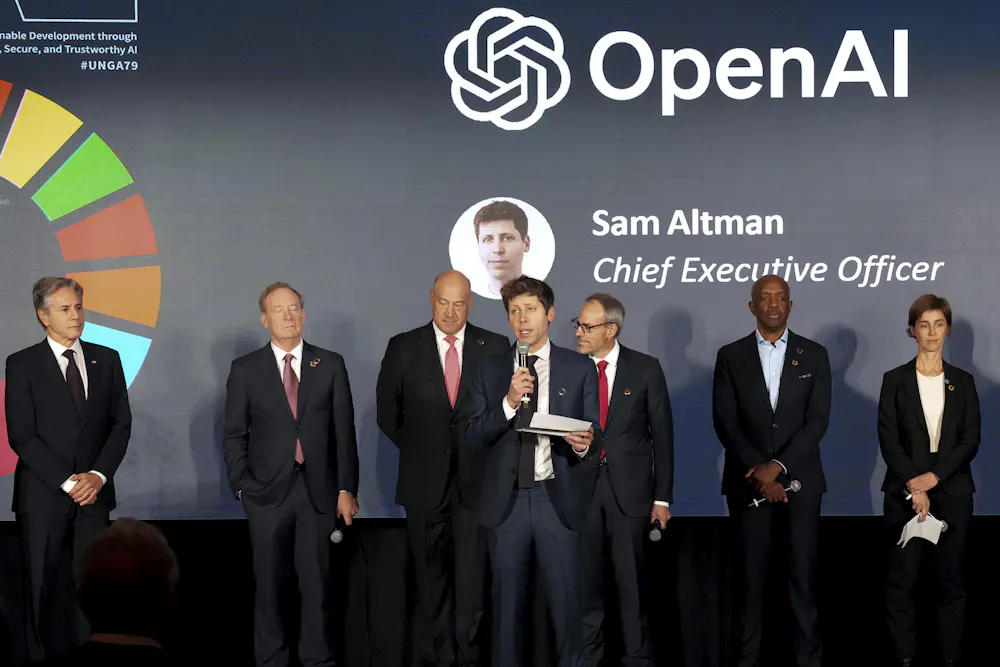
A group of people in suits stand together under the words 'OpenAI' and 'Sam Altman, Chief Executive Officer'
Open AI CEO Sam Altman, center, speaks at an event in September 2024. Bryan R. Smith/Pool Photo via AP

Why would OpenAI’s structure change?

OpenAI’s deep-pocketed investors cannot own shares in the organization under its existing nonprofit governance structure, nor can they get a seat on its board of directors. That’s because OpenAI is incorporated as a nonprofit whose purpose is to benefit society rather than private interests. Until now, all rounds of investments, including a reported total of $13 billion from Microsoft, have been channeled through a for-profit subsidiary that belongs to the nonprofit.

The current structure allows OpenAI to accept money from private investors in exchange for a future portion of its profits. But those investors do not get a voting seat on the board, and their profits are “capped.” According to information previously made public, OpenAI’s original investors can’t earn more than 100 times the money they provided. The goal of this hybrid governance model is to balance profits with OpenAI’s safety-focused mission.

Becoming a for-profit enterprise would make it possible for its investors to acquire ownership stakes in OpenAI and no longer have to face a cap on their potential profits. Down the road, OpenAI could also go public and raise capital on the stock market.

Advertisement
Reveal Your Skin's Youthful Radiance with FOREO's LUNA 2 Facial Massager. Shop Now For $199

Altman reportedly seeks to personally acquire a 7% equity stake in OpenAI, according to a Bloomberg article that cited unnamed sources.

That arrangement is not allowed for nonprofit executives, according to BoardSource, an association of nonprofit board members and executives. Instead, the association explains, nonprofits “must reinvest surpluses back into the organization and its tax-exempt purpose.”

What kind of company might OpenAI become?

The Washington Post and other media outlets have reported, also citing unnamed sources, that OpenAI might become a “public benefit corporation” – a business that aims to benefit society and earn profits.

Examples of businesses with this status, known as B Corps., include outdoor clothing and gear company Patagonia and eyewear maker Warby Parker.

It’s more typical that a for-profit businessnot a nonprofit – becomes a benefit corporation, according to the B Lab, a network that sets standards and offers certification for B Corps. It is unusual for a nonprofit to do this because nonprofit governance already requires those groups to benefit society.

Boards of companies with this legal status are free to consider the interests of society, the environment and people who aren’t its shareholders, but that is not required. The board may still choose to make profits a top priority and can drop its benefit status to satisfy its investors. That is what online craft marketplace Etsy did in 2017, two years after becoming a publicly traded company.

In my view, any attempt to convert a nonprofit into a public benefit corporation is a clear move away from focusing on the nonprofit’s mission. And there will be a risk that becoming a benefit corporation would just be a ploy to mask a shift toward focusing on revenue growth and investors’ profits.

Many legal scholars and other experts are predicting that OpenAI will not do away with its hybrid ownership model entirely because of legal restrictions on the placement of nonprofit assets in private hands.

But I think OpenAI has a possible workaround: It could try to dilute the nonprofit’s control by making it a minority shareholder in a new for-profit structure. This would effectively eliminate the nonprofit board’s power to hold the company accountable. Such a move could lead to an investigation by the office of the relevant state attorney general and potentially by the Internal Revenue Service.

What could happen if OpenAI turns into a for-profit company?

The stakes for society are high.

Advertisement
Reveal Your Skin's Youthful Radiance with FOREO's LUNA 2 Facial Massager. Shop Now For $199

AI’s potential harms are wide-ranging, and some are already apparent, such as deceptive political campaigns and bias in health care.

If OpenAI, an industry leader, begins to focus more on earning profits than ensuring AI’s safety, I believe that these dangers could get worse. Geoffrey Hinton, who won the 2024 Nobel Prize in physics for his artificial intelligence research, has cautioned that AI may exacerbate inequality by replacing “lots of mundane jobs.” He believes that there’s a 50% probability “that we’ll have to confront the problem of AI trying to take over” from humanity.

And even if OpenAI did retain board members for whom safety is a top concern, the only common denominator for the members of its new corporate board would be their obligation to protect the interests of the company’s shareholders, who would expect to earn a profit. While such expectations are common on a for-profit board, they constitute a conflict of interest on a nonprofit board where mission must come first and board members cannot benefit financially from the organization’s work.

The arrangement would, no doubt, please OpenAI’s investors. But would it be good for society? The purpose of nonprofit control over a for-profit subsidiary is to ensure that profit does not interfere with the nonprofit’s mission. Without guardrails to ensure that the board seeks to limit harm to humanity from AI, there would be little reason for it to prevent the company from maximizing profit, even if its chatbots and other AI products endanger society.

Regardless of what OpenAI does, most artificial intelligence companies are already for-profit businesses. So, in my view, the only way to manage the potential harms is through better industry standards and regulations that are starting to take shape.

California’s governor vetoed such a bill in September 2024 on the grounds it would slow innovation – but I believe slowing it down is exactly what is needed, given the dangers AI already poses to society.

Alnoor Ebrahim, Thomas Schmidheiny Professor of International Business, The Fletcher School & Tisch College of Civic Life, Tufts University

This article is republished from The Conversation under a Creative Commons license. Read the original article.

The science section of our news blog STM Daily News provides readers with captivating and up-to-date information on the latest scientific discoveries, breakthroughs, and innovations across various fields. We offer engaging and accessible content, ensuring that readers with different levels of scientific knowledge can stay informed. Whether it’s exploring advancements in medicine, astronomy, technology, or environmental sciences, our science section strives to shed light on the intriguing world of scientific exploration and its profound impact on our daily lives. From thought-provoking articles to informative interviews with experts in the field, STM Daily News Science offers a harmonious blend of factual reporting, analysis, and exploration, making it a go-to source for science enthusiasts and curious minds alike. https://stmdailynews.com/category/science/

Advertisement
Reveal Your Skin's Youthful Radiance with FOREO's LUNA 2 Facial Massager. Shop Now For $199

Continue Reading

health and wellness

Why do people get headaches and migraines? A child neurologist explains the science of head pain and how to treat it

Published

on

Last Updated on March 21, 2026 by Daily News Staff

AdobeStock 290534900

Woman feeling headache holding a glass of water.Adobe Stock

Why do people get headaches and migraines? A child neurologist explains the science of head pain and how to treat it

Katherine Cobb-Pitstick, University of Pittsburgh

Curious Kids is a series for children of all ages. If you have a question you’d like an expert to answer, send it to CuriousKidsUS@theconversation.com.


Why do people get headaches? – Evie V., age 10, Corpus Christi, Texas


Whether sharp and stabbing or dull and throbbing, a headache can ruin your day. But your brain doesn’t actually feel pain. So what is going on when it feels like your head is in a vise or about to explode?

I am a child neurologist – that is, a doctor who specializes in diseases of the brain in kids. Most of my patients are kids and adolescents who are struggling with headaches.

Head pain is complicated, and there is still a lot to learn about what causes it and how it can be treated. But researchers know there are a few key players that take part in generating pain.

What are headaches?

Nerves communicate information like pain through electrical signals between the body and the brain.

While the brain itself doesn’t have any nerve sensors to feel pain, blood vessels in the head and structures that protect and surround the brain do sense pain. When these tissues detect injury or damage, they release chemicals that trigger transmission of electrical signals through nerves to tell the brain the head is hurting.

The brain will also use nerves to signal the body to respond to pain with symptoms like feeling tired, teary eyes, runny nose, upset stomach and discomfort in bright or loud environments. It’s not clear why humans evolved to feel these symptoms, but some scientists theorize that this can lead to healthier lifestyle choices to decrease the chance of future headache attacks.

Weather changes are one of the most commonly reported migraine triggers. Danielle Wilhour, a neurologist and headache specialist at University of Colorado Anschutz Medical Campus, explains why shifts in weather can bring on migraines — and what you can do to ease the pain.

What causes headaches?

Often, headaches are a sign that the body is under some kind of stress. That stress triggers chemical and physical changes to the nerves and blood vessels around your brain, head and neck that can cause headaches.

Many types of stresses can cause headaches, including an infection, allergies, hormone changes during puberty and menstrual cycles, not getting enough sleep, not drinking enough water, skipping meals or drinking too much caffeine or alcohol. Sometimes, headaches happen with emotional stress, like feeling anxious or depressed. Even pressure in your sinuses due to changes in the weather can cause your head to hurt.

One in 11 kids have had a type of severe headache called a migraine. They feel like a pulsing and pounding pain in your head and come with other symptoms, including nausea or being sensitive to lights and sounds. During a migraine, it can be hard to do everyday activities because they can make the pain worse. It is also very common to feel unwell or irritable before the head pain starts and after the pain is gone.

Person curled up on couch beneath a blanket, hand over head
Migraines and chronic headaches can be debilitating.
Viktoriya Skorikova/Moment via Getty Images

Migraines occur when the nerves and other structures used in signaling and interpreting pain aren’t working properly, leading to pain and discomfort from stimulation that wouldn’t normally provoke this. There are many environmental and genetic factors that contribute to this dysfunction. Some people are born with a higher risk of developing migraines. Most people with migraines have someone in their family who also experiences them.

What can treat and prevent headaches?

Identifying what type of headache you’re experiencing is crucial to making sure it is treated properly. Because migraines can be severe, they’re the type of headache that most often leads to doctor’s visits for both kids and adults.

There are several ways to reduce your chances of having headaches, such as drinking plenty of water and limiting caffeine. Eating, sleeping and exercising regularly are other ways you can help prevent headaches.

Person with head resting on forearms on top of a pile of books in a library
Sleep deprivation can worsen headaches.
DjelicS/iStock via Getty Images Plus

While painkillers like ibuprofen are often enough to relieve a headache, prescription medications are sometimes necessary to make head pain more bearable. Some medications can also help control or prevent headache episodes. Physical therapy to exercise the body or behavioral therapy to work on the mind can also help you manage headache pain. There are even electronic devices to treat headaches by stimulating different parts of the nervous system.

It is important to talk with a doctor about headaches, especially if it’s a new problem or you experience a change in how they usually feel. Sometimes, brain imaging or blood tests are needed to rule out another health issue.

Recognizing a headache problem early will help your doctor get started on helping you figure out the best way to treat it.


Hello, curious kids! Do you have a question you’d like an expert to answer? Ask an adult to send your question to CuriousKidsUS@theconversation.com. Please tell us your name, age and the city where you live.

And since curiosity has no age limit – adults, let us know what you’re wondering, too. We won’t be able to answer every question, but we will do our best.

Katherine Cobb-Pitstick, Assistant Professor of Child Neurology, University of Pittsburgh

This article is republished from The Conversation under a Creative Commons license. Read the original article.

📜 Who Created Blogging? A Look Back at the Birth of the Blog

Link: https://stmdailynews.com/%f0%9f%93%9c-who-created-blogging-a-look-back-at-the-birth-of-the-blog/

Continue Reading

Trending

