

Lifestyle
3 pasos hacia un corazón más sano

Last Updated on July 12, 2024 by Daily News Staff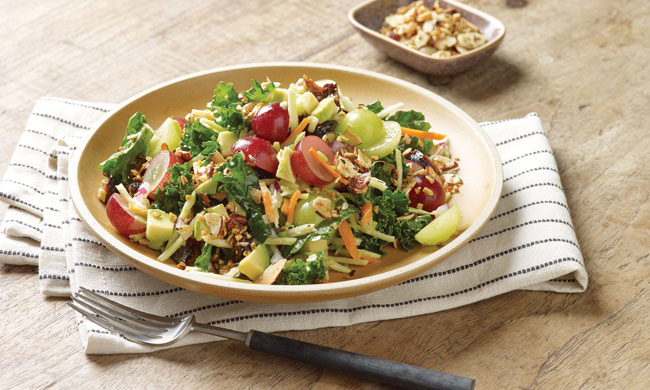
(Family Features) Cuidar el corazón es fundamental para la salud en general, aunque todos los aspectos de la salud son importantes. Las enfermedades cardíacas son la principal causa de muerte entre los estadounidenses, pero no tiene por qué serlo: las elecciones de estilo de vida desempeñan un papel importante para la salud del corazón y nunca es demasiado pronto para adoptar hábitos saludables.
Considere estos sencillos pasos: desde hacer ejercicio y dormir lo suficiente hasta comer saludable, incluyendo refrigerios buenos para el corazón como las uvas.
Comer bien
Adoptar una dieta equilibrada y nutritiva, rica en frutas, verduras, cereales integrales, proteínas magras y grasas saludables puede tener un impacto en la salud del corazón. Una forma de reducir el riesgo de sufrir enfermedades cardíacas es consumir alimentos bajos en grasas saturadas y colesterol, como las uvas.
Como alimento fácil, conveniente y saludable para el corazón, las uvas son el ingrediente perfecto para un plan de alimentación saludable que incluye recetas como ensalada de uvas, brócoli y aguacate con cobertura de avena tostada. La sabrosa ensalada de brócoli se combina perfectamente con la dulce frescura de las jugosas uvas de California, mientras que la cobertura de avena tostada aporta un toque crujiente.
Las uvas son bajas en sodio y una buena fuente de vitamina K, que promueve la salud del corazón, y contienen el 7% de la ingesta diaria recomendada de potasio, un nutriente fundamental para la salud del corazón. Las uvas son una fuente natural de antioxidantes beneficiosos y otros polifenoles y ayudan a mantener una circulación saludable al promover la relajación de los vasos sanguíneos.
De hecho, según un estudio publicado en el “Journal of Nutrition”, (Diario de la nutrición) los hombres con síndrome metabólico que consumían 1 1/2 tazas de uvas al día mostraron una presión arterial más baja, una mejor función de los vasos sanguíneos y una disminución en un marcador clave de inflamación.
Las mujeres que consumieron 1 1/4 tazas de uvas todos los días como parte de un estudio separado publicado en el “Journal of Nutrition” se beneficiaron y mostraron una reducción en los niveles de triglicéridos en la sangre, los niveles de colesterol LDL, las proteínas inflamatorias y otros marcadores de enfermedades cardíacas.
Dormir bien
El sueño también es fundamental para tener un corazón sano. La mayoría de los expertos recomiendan que los adultos duerman entre 7 a 9 horas por noche. Para ayudar a lograr ese objetivo, crea una rutina a la hora de acostarse despertándose y durmiendo a las mismas horas. También asegúrese de tener un espacio cómodo para dormir apagando los dispositivos electrónicos y ajustando el termostato a una temperatura agradable.
Hacer ejercicio
Mantener una rutina de ejercicio de forma regular es bueno para la salud en general. Puede ser especialmente beneficioso para la salud del corazón al reducir la presión arterial, reducir la inflamación y ayudar a mantener un peso saludable. La Asociación Americana del Corazón recomienda al menos 150 minutos por semana de actividad aeróbica de intensidad moderada o 75 minutos de actividad aeróbica vigorosa. Impulse su entrenamiento y recuperación con alimentos hidratantes y saludables para el corazón, como las uvas.
Encuentre más recetas saludables para el corazón en GrapesFromCalifornia.com.
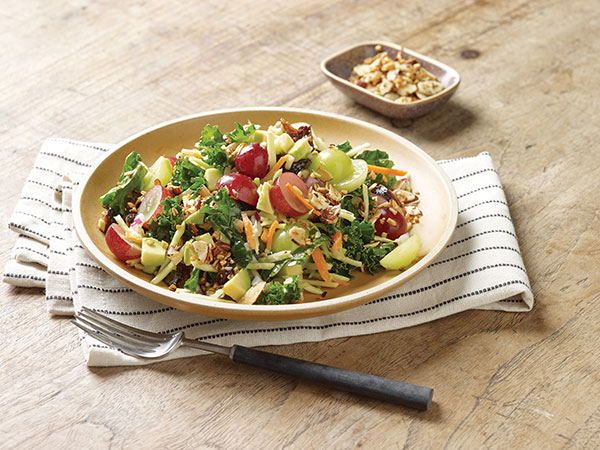
Ensalada de uvas, brócoli y aguacate con cobertura de avena tostada
Tiempo de preparación: 30 minutos
Tiempo de cocción: 5 minutos
Porciones: 6
Cobertura de avena tostada:
- 1/2 cucharada de mantequilla
- 1/3 taza de almendras fileteadas, picadas en trozos grandes
- 3 cucharadas de avena de grano entero cortada
- 1/8 cucharadita de sal sazonada
- 1/4 cucharadita de condimento de hierbas italiano
Aderezo:
- 6 cucharadas de aceite de oliva extra virgen
- 1/3 taza de uvas rojas o verdes de California en cuartos
- 1/4 taza de vinagre de vino
- 1 cucharada de miel de abeja
- 1/4 cucharadita de sal marina
- pimienta recién molida, al gusto
Ensalada:
- 1 bolsa (12 onzas) de ensalada de brócoli finamente picado
- 2 tazas de col rizada desmenuzada, ligeramente compactada
- 1 1/2 tazas de uvas de California partidas a la mitad
- 1/2 taza de cebolla morada finamente picada
- 1/3 taza de higos secos picados
- pimienta recién molida, al gusto
- 1 aguacate grande, firme pero maduro, cortado en cubos
- Para hacer cobertura de avena tostada: En una sartén mediana a fuego medio-bajo, cocine la mantequilla, las almendras, la avena, la sal y el condimento de hierbas italianas por unos 5 minutos, o hasta que estén ligeramente tostados y fragantes, revolviendo con frecuencia.
- Para hacer el aderezo: En una licuadora pequeña, haga puré el aceite de oliva, las uvas, el vinagre de vino, la miel, la sal marina y la pimienta al gusto, hasta que quede de consistencia suave.
- Para hacer la ensalada: En un tazón grande, mezcle la ensalada de brócoli, la col rizada, las uvas, la cebolla morada y los higos; sazone con pimienta al gusto y rocíe con el aderezo; revuelva bien para cubrir. Agregue el aguacate y revuelva ligeramente. Transfiera a seis platos o tazones para servir y espolvoree con cobertura de avena tostada.
Información nutricional por porción: 320 calorías; 5 g de proteína; 29 g de carbohidratos; 22 g de grasa (62% de calorías de grasa); 3.5 g de grasa saturada (10% de calorías de grasa saturada); 5 mg de colesterol; 160 mg de sodio; 7 g de fibra.
SOURCE:
California Table Grape Commission
At our core, we at STM Daily News, strive to keep you informed and inspired with the freshest content on all things food and beverage. From mouthwatering recipes to intriguing articles, we’re here to satisfy your appetite for culinary knowledge.
Visit our Food & Drink section to get the latest on Foodie News and recipes, offering a delightful blend of culinary inspiration and gastronomic trends to elevate your dining experience.
https://stmdailynews.com/category/food-and-beverage
You can also find food and beverage-related videos on our YouTube channel, where we regularly post new content and share tips, recipes, and demonstrations. https://youtube.com/playlist?list=PLEhXBupt8tVynuUhpQZMxQt4lvPmOiAtQ&si=InDwc7YaB0KIwmxy


small business
Navigating the American Dream: How Integrated Financial Tools, Credit and Rewards Can Help Small Businesses Succeed

(Feature Impact) Owning a small business has been a cornerstone of the “American Dream” for generations. It represents the chance to transform a passion into a livelihood and legacy. However, turning dreams into reality is rarely a smooth or easy process and requires more than ambition alone. Today’s business owners need support and access to tools that enable them to overcome challenges and keep growing.
Recent research conducted by the Capital One Insights Center shows 75% of more than 1,000 surveyed small business owners with more than one employee and annual revenues of up to $20 million are confident about the future, and 69% believe their business is actively primed for growth.
While this optimism is promising, 47% of business owners still said their operations either stayed the same or became less efficient over the past year, citing issues like back-office friction and fragmented financial systems that make it difficult to get a clear picture of the health of their businesses.
If you’re a small business owner eager to grow but not sure how to get there, start with this advice from real small business owners and experts at Capital One.
//www.youtube.com/embed/VX48mqEaSnE
Identify Sources of Friction
Before you can pour effort into growth, you must understand what barriers are holding you back. Take time to look under the hood of your business to identify where time and energy is being lost.
For example, you may be among the 78% of small business owners who feel stressed and uncertain about expense management – think hours spent hunting for receipts, manually entering numbers into software and reconciling accounts. Operational challenges aren’t just a hassle; they also pull attention away from important priorities like serving your customers and planning for growth.
“We were focused on making as many candles as possible, especially during the busy season,” said Katie Roering, co-owner of Fontana Candle Co. “A lot of the back-office tasks like procurement, raw material purchasing, forecasting – all the really important things – were done at 3 a.m., 8 p.m. or on Saturday and Sunday, and there really just was not enough time in the day to get everything done that we needed to. We just knew as we continued to grow, we needed to streamline our processes, build out our team and keep moving forward.”
 Use Integrated Tools to Manage Finances
Instead of balancing 10 different tracking and analysis tools, you can turn to one-stop solutions to improve efficiency. Time gets lost when you’re forced to manually gather and interpret relevant data before you’re able to act. You need a platform that handles the busywork for you.
Integrated, or “all-in-one,” financial tools – like accounting and bookkeeping platforms with automation capabilities or business credit cards featuring built-in analytical tools – allow you to easily stay on top of cash flow and day-to-day operations. For small businesses where every hour and dollar makes a difference, consolidating and automating systems can have an immediate impact. In fact, 51% of survey respondents said integrated tools have already fueled their growth.
Leverage Credit Access and Rewards Wisely
Growth requires capital, so access to credit is a game-changer for many business owners, with 77% describing it as a key factor in achieving business resilience. Having funds accessible when you need them makes your business more capable of weathering storms such as equipment failures and seasonal slowdowns. It also puts the power in your hands to act when an exciting opportunity presents itself, like an inventory flash sale or the chance to advertise in a new market.
Access to credit comes with another advantage: rewards. By using credit cards for your daily business expenses, you can earn cash back, points or travel rewards. Whether you redeem these to cover everyday expenses, book business trips or reinvest in the business, they can act as a bonus source of income. Learn to maximize rewards like the 84% of small business cardholders surveyed so you aren’t leaving money on the table.
To learn more about how small business owners can identify obstacles, employ integrated financial tools and use credit as a tool for growth, read the full report at capitalone.com/about/insights-center.
Photos courtesy of Shutterstock
SOURCE:
Food and Beverage
Jack-o’-Lantern Stuffed Peppers Prove Fun Isn’t Just for Pumpkins
These Jack-o’-Lantern Stuffed Peppers give you a Halloween-themed, kid-approved way to put vegetables on the dinner table.
Recipes:
Jack-o’-Lantern Stuffed Peppers
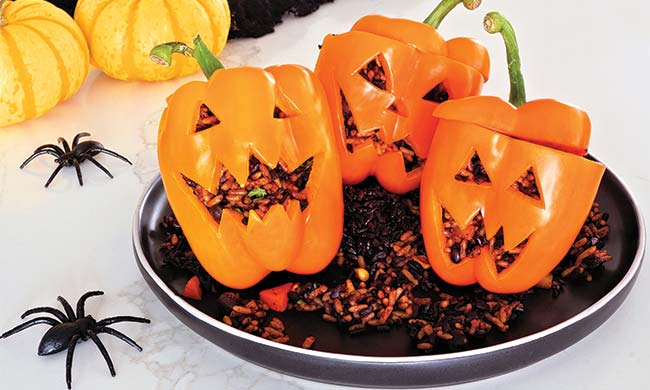
Jack-o’-Lantern Stuffed Peppers Prove Fun Isn’t Just for Pumpkins
(Feature Impact) Jack-o’-lantern carving is a cherished fall tradition – but pumpkins aren’t the only vegetables you can decorate with fun, spooky or scary faces. These Jack-o’-Lantern Stuffed Peppers give you a Halloween-themed, kid-approved way to put vegetables on the dinner table.
Filled with savory ground turkey, brown rice, melty cheese and warm, savory spices, these peppers taste as autumnal as they look. It’s simple to customize the filling to your family’s tastes, and you can even make the meal interactive by inviting kids to choose their own pepper colors and carve their own expressions.
Find more Halloween and seasonal recipes at Culinary.net.

Jack-o’-Lantern Stuffed Peppers
Recipe adapted from AllRecipes
Prep time: 15 minutes
Cook time: 45 minutes
Servings: 4
- 1 teaspoon olive oil
- 1 pound ground turkey
- 3 cloves garlic, minced
- 1/2 medium onion, diced
- 1 teaspoon garlic powder
- 1 teaspoon cumin
- 4 large orange bell peppers
- 1 cup cooked brown rice
- 1 cup grated sharp cheddar cheese
- 2 teaspoons kosher salt
- 1/2 teaspoon ground black pepper
- cayenne pepper, to taste
- cups seasoned tomato sauce, warmed
- Preheat oven to 400 F and coat 9-by-13-inch baking dish with olive oil.
- In skillet, brown ground turkey with minced garlic, onion, garlic powder and cumin until meat is cooked, 4-5 minutes.
- With small knife, cut eyes, nose and mouth into flattest side of each pepper to resemble jack-o’-lantern. Cut around seed pods and remove pepper tops, trimming and discarding any seeds from under stems then setting tops aside. Trim white membranes from inside each pepper and shake out seeds. Place peppers in prepared baking dish.
- In bowl, combine turkey mixture with cooked rice, cheddar cheese, salt, black pepper and cayenne pepper, to taste.
- Divide and stuff mixture into peppers; cover with reserved pepper tops.
- Wrap baking dish loosely with aluminum foil and bake until peppers are tender, about 45 minutes.
- Spoon about 3 tablespoons warm tomato sauce onto each plate; place stuffed peppers on top. Serve remaining sauce on side.
Photo courtesy of Shutterstock

SOURCE:
Lifestyle
How to Manage Symptoms of Heart Failure
Symptoms of Heart Failure: Managing heart failure is a significant expense to the U.S. healthcare system, costing the nation approximately $40 billion in 2020 and expected to increase to approximately $142 billion a year by 2050. If you (or a loved one) are living with the condition, consider these tips to help manage it.

How to Manage Symptoms of Heart Failure
(Feature Impact) Americans are facing a growing health challenge, with 1 in 4 adults at risk of heart failure, according to the Heart Failure Society of America. Additionally, approximately 6.7 million U.S. adults who are 20 years old or older are currently living with heart failure, and that number is projected to reach 8.7 million by 2030.
Managing heart failure is a significant expense to the U.S. healthcare system, costing the nation approximately $40 billion in 2020 and expected to increase to approximately $142 billion a year by 2050.
If you (or a loved one) are living with the condition, consider these tips to help manage it.
Adhere to the Treatment and Follow-Up Plan
Ongoing outpatient care is important when managing heart failure. Understand the treatment plan provided by your healthcare team, make diet and lifestyle changes, take medications as directed and keep recommended follow-up appointments.
Pay attention to changes in symptoms and communicate with your healthcare provider if treatment does not seem to be working as expected. If their conditions are left unmanaged, patients can experience a range of heart-failure-related symptoms such as shortness of breath, fatigue, buildup of fluid and more.
Understand Challenges with Diuretic Treatment
Diuretics help the body remove excess fluid and are commonly used to treat swelling, or edema, associated with heart failure. Your provider may try different diuretics, sometimes referred to as “water pills,” to manage your heart failure symptoms. However, intravenous (IV) diuretic therapy may be required for some patients if symptoms continue.
Ask About Treatment Options Before IV Care Is Needed
For some adults, a healthcare provider may consider recommending an at-home, non-oral diuretic option prior to escalating to IV therapy.
For example, ENBUMYST™ (bumetanide nasal spray) is a prescription diuretic used in adults to treat edema associated with congestive heart failure. It’s administered as a nasal spray for short-term use to manage excess fluid with the goal of transitioning to oral diuretic therapy when appropriate.
Talk with your healthcare provider to learn more and visit enbumyst.com. Read the full Prescribing Information and Patient Information.
Photo courtesy of Shutterstock
Important Safety Information
What is ENBUMYST?
ENBUMYST is a prescription medicine used in adults to treat swelling caused by excess fluid in the body (edema) from congestive heart failure, liver disease, and kidney disease.
What is the most important information I should know about ENBUMYST?
- ENBUMYST is a diuretic that helps your body remove fluid. Losing too much fluid can cause dehydration, low blood volume, and increase the risk of blood clots. Blood abnormalities may include decreased salts (electrolytes), and increased nitrogen, glucose and uric acid. The risk of these abnormalities is higher in elderly people, those using higher doses, or those who do not get enough electrolytes by mouth.
- You should not use ENBUMYST if you have severe electrolyte loss. Tell your healthcare provider if you experience unusual thirst; dizziness or lightheadedness; weakness or tiredness; fast heart rate; dry mouth or tongue; sudden pain; redness or swelling in your joints; pain, swelling, redness, or warmth in your leg; shortness of breath or fast breathing; high blood sugar; dark urine; pale, tight, cool or clammy skin; muscle cramps; confusion.
Do not use ENBUMYST if youhave low or no urine production or are allergic to bumetanide or to any of the ingredients in ENBUMYST.
Before using ENBUMYST, tell your healthcare provider if you have low electrolytes, are on a low-salt diet, have diarrhea, diabetes, nasal problems such as a runny or stuffy nose or polyps, a history of nasal injury or surgery, are or plan to become pregnant, are or plan to breastfeed.
Tell your healthcare provider about all the medicines you take, including prescriptions, over-the-counter medicines, vitamins, and herbal supplements.
ENBUMYST may cause serious side effects, such as worsening kidney function and ringing in the ears or hearing loss.
The most common side effects of ENBUMYST include dehydration, headache, muscle cramps, dizziness, low blood pressure, nausea, and abnormal brain functioning with certain liver problems.
These are not all the possible side effects of ENBUMYST. Talk to your healthcare provider for more information.
Call your healthcare provider for medical advice about side effects. You may report side effects to FDA at 1-800-FDA-1088.
US-ENBU-2600110

SOURCE:
Esperion




