Connect with us

The Bridge

Japanese women have long sacrificed their surnames in marriage − politics and demographics might change that

Published

on

Last Updated on May 14, 2025 by Rod Washington

Japanese women

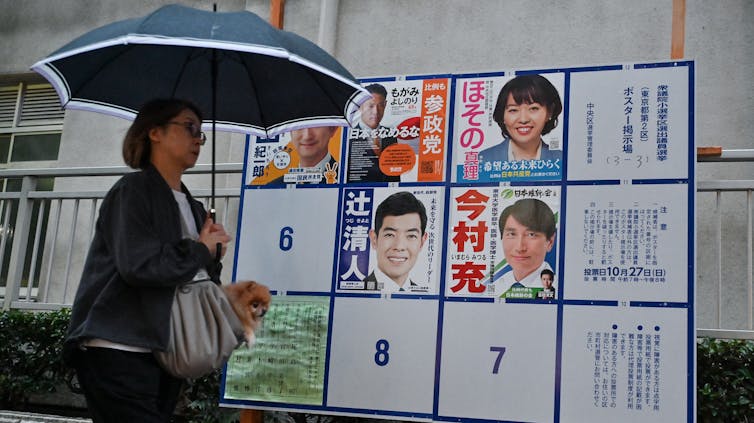
A record number of female candidates stood in the 2024 Japanese election.
Richard A. Brooks/AFP via Getty Images

Linda E. White, Middlebury

For centuries, women entering marriage in Japan have been bound by the Confucian notion of personal sacrifice for the good of the family – and that has extended to their names.

Encouraged by a sexual double standard and shaped by a general perception of Japan as a society made for men, most women abandon their maiden names when tying the knot.

The law doesn’t give them much leeway on the issue. Since 1947, Japanese Civil Code has stipulated that all married couples must share a common surname. Although in theory that name could be that of the husband or wife, in practice it is almost always the man’s. Indeed, around 95% of all marriages in Japan are registered under a husband’s surname.

But there are signs that things could be changing. A 2025 Jiji Press survey found that a rising percentage of lawmakers – about 44% – back a system that would allow for dual surnames. This, along with Prime Minister Shigeru Ishiba’s stated openness to a selective separate surname option, has given fresh hope that married women will be able to keep their names.

As a scholar of gender relations and family law in Japan, I know a change would be welcomed by many across the nation. In interviews carried out during the past 15 years, many women have told me of their strong desire to keep their maiden names.

Barriers to change

Today, around 60% of Japanese people – both men and women alike – approve of a change in the law to allow husbands and wives to have separate surnames.

But to date, lawmakers have failed in their attempts to change a Civil Code that is seemingly at odds with the Constitution, which guarantees equality between men and women and between a husband and wife in marriage. The main barrier has been the conservative Liberal Democratic Party, or LDP, which has been in power for much of the post-World War II era. LDP lawmakers have repeatedly squashed proposals, stating that a legal change would threaten the traditional family structure.

Since Japan’s Supreme Court in a 2015 decision sent the question of separate surnames back to the National Diet, the LDP has prevented legislation from reaching the parliamentary floor.

But despite a largely male and conservative legislature, the government is facing increasing pressure from opposition members in parliament, who argue that separate surnames should be permitted in marriage. In Ishiba, the leader of the Liberal Democratic Party as well as the country’s leader, they finally have a powerful ally on the LDP side of the ledger.

Advertisement
Get More From A Face Cleanser And Spa-like Massage

What’s in a name?

In Japan, a surname links a woman, or a man, to siblings, parents and grandparents, as well as to the places where their ancestors lived and worked. It’s a meaningful part of one’s identity. As a married woman I interviewed told me: “When they call me by my husband’s name at the bank, I feel they are referring to someone else. It doesn’t feel like me.”
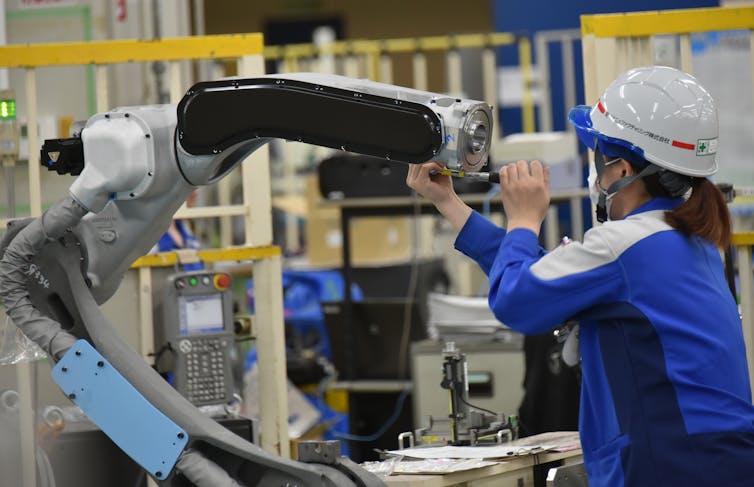
A woman in a hard hat works with a robotic arm.A woman technician checks a robot arm on the assembly line in Kitakyushu, Japan.
Katsumi Kasahara/Gamma-Rapho via Getty ImagesBut beyond the symbolism and sense of identity, changing a surname has broader social consequences, especially in the workplace. The average age at marriage in Japan is 29.7 for women and 31 for men. By the time many women marry, they have been in the workforce for 10 or more years and have developed a professional identity using their maiden names.

In Japan, work relationships are usually conducted using last names. As one interviewee explained to me: “We just don’t use first names at work in Japan.”

Another interviewee said she wanted to have the same ease as her husband after marriage, to continue her profession with her own name. Contacting clients, co-workers, administrators and bosses about a name change draws attention to private matters that would not necessarily be discussed at work, she said.

The concern among some women I spoke with is that once alerted to the change in marital status, bosses and colleagues will no longer take their commitment to the job as seriously as they did when they were single. Such feelings reveal the negative impact that marriage often has on a woman’s career – an effect some hope to avoid by not telling co-workers and clients of their changed status.

Demographic time bomb

Conservative lawmakers decry a change of the surname rule in the Civil Code as an attack on traditional values and tie it to concerns over a looming demographic crisis. They argue that Japan must work to maintain the traditional family system and to encourage more marriages and babies.

Certainly, Japan is facing a demographic crisis. With a fertility rate of around 1.2 babies per woman, Japan has one of the world’s oldest and fastest-shrinking populations.

But Japanese scholars have argued that if women had more equality in the workplace, and at home, they would be more likely to choose to have children and continue working. Sociologist Aya Ezawa noted in 2019 that “a culture of long work hours, combined with a persistent gendered division of labour in the home, and high expectations toward motherhood mean that work and family remain very difficult to combine for women in contemporary Japan.”

Former Prime Minister Shinzo Abe, also a conservative LDP member, encouraged higher employment for women – married or unmarried – to help grow the Japanese economy in the early part of the 21st century. But his “Womenomics” plan bore little fruit.

Without more policies addressing unequal treatment in the workplace, many educated and dedicated female workers will continue to be routed into dead-end jobs as their elder male bosses wait in vain for them to leave the workforce to have children.
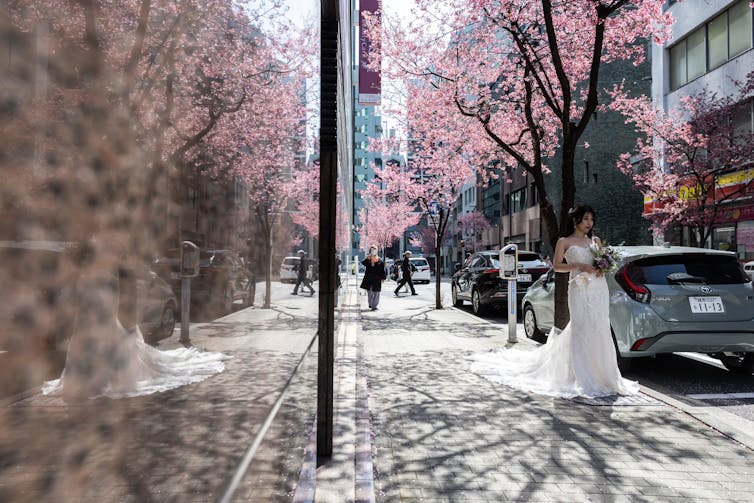
A woman poses for a wedding photo shoot in front of cherry blossom trees.The vast majority of Japanese women give up their surnames upon marriage.
Philip Fong/AFP via Getty Images

Finding a balance

Certainly, changing the surname rule will prove a major turn in Japan’s progress toward gender equality. The Civil Code limiting married couples to one surname is inextricably linked to the 150-year-old “modern” koseki, or household register, system. A single surname for each family is a central pillar of the koseki – recalling an era when a male head of household was responsible for not only key family financial and marital decisions but also the family name.

Advertisement
Get More From A Face Cleanser And Spa-like Massage

For many older Japanese, the koseki stands in for the family itself. If someone is listed in a koseki, through notification of birth, adoption or marriage, they are legally and symbolically part of the family and share a surname.

Invoking this tradition, some conservative lawmakers have argued that a multiple surname system is unworkable. Yet advocates of the change say that modern digitization of all koseki records means that there is no real logistical challenge to having dual surname households.

And, clearly, many in Japan are ready to recognize that a family with two surnames is still a family.

Moreover, many Japanese believe greater gender equality in the workplace will have a positive effect not only on the low birth rate, but on many other aspects of life, too.

At present, elder care, child care and community participation tend to be left to people without jobs or with flexible jobs – in other words, mostly women. And Japanese workplaces have failed to adopt flexible work hours that would allow full-time employees to take on more family and community roles.

More women in parliament

In the end, popular support and political necessity may play a role in changing the surname law. It is clear from the latest surveys that more and more voters in Japan are in favor of loosening the one-surname rule.

And despite still being underrepresented in politics, women are increasingly taking up political positions in Japan – last year’s election saw a record number of female candidates and a record number elected.

Given those currents, Ishiba may need to convince more in his party that the time has come to accept social change and embrace a woman’s choice of surname. If not, his party may lose the dominant position in parliament it has enjoyed for most of the past 70 years.The Conversation

Linda E. White, Professor of Japanese Studies, Middlebury

This article is republished from The Conversation under a Creative Commons license. Read the original article.

Advertisement
Get More From A Face Cleanser And Spa-like Massage

Author

Continue Reading
Advertisement SodaStream USA, inc

Urbanism

LA Metro’s D Line Extension Phase 1 Officially Opens, Bringing Subway Service to Mid-Wilshire and Beverly Hills

LA Metro’s D Line Extension: LA Metro officially opens Phase 1 of the D Line Subway Extension, connecting Downtown Los Angeles, Mid-Wilshire, and Beverly Hills with three new underground stations.

Published

on

The future of transportation in Los Angeles has officially arrived.

LA Metro’s D Line Extension
Image: LA Metro

LA Metro’s D Line Extension Phase 1 Officially Opens

The Los Angeles County Metropolitan Transportation Authority (Metro) officially opened Section 1 of the long-awaited D Line Subway Extension on May 8, 2026, expanding underground rail service westward through the historic Mid-Wilshire corridor and into Beverly Hills.

The 3.92-mile extension is one of Metro’s most ambitious transit infrastructure projects and marks a major milestone in Los Angeles public transportation. The new section extends subway service beyond the current Wilshire/Western station in Koreatown and introduces three new underground stations:

  • Wilshire/La Brea
  • Wilshire/Fairfax
  • Wilshire/La Cienega

The expansion is part of Metro’s larger “Twenty-Eight by ’28” initiative designed to improve mobility across the region ahead of the 2028 Olympic and Paralympic Games.

Downtown Los Angeles to Beverly Hills in About 20 Minutes

With the extension now open, riders can travel from Union Station in Downtown Los Angeles to Beverly Hills in approximately 20 minutes with no transfers required.

The D Line extension is expected to significantly improve travel along the heavily congested Wilshire Boulevard corridor, offering commuters, visitors and residents a faster and more reliable alternative to driving.

“Traveling through Mid-Wilshire to experience the culture, cuisine and commerce across diverse neighborhoods will be easier, faster and more accessible,” said Fernando Dutra, Metro Board Chair and City of Whittier Council Member.

Metro CEO Stephanie Wiggins also highlighted the importance of the project in connecting Angelenos to some of the city’s most iconic destinations.

“Angelenos and visitors alike will love the extended service from Downtown Los Angeles to Beverly Hills, delivering greater access to the iconic and culturally diverse communities, institutions and destinations that define the deep history along Wilshire Boulevard,” Wiggins said.

New Stations Connect Riders to Cultural Landmarks

Wilshire/La Brea Station

Located near Hancock Park and the western edge of Koreatown, the station provides access to cultural and entertainment destinations including:

  • Korean Cultural Center
  • Marciano Art Foundation
  • Ebell Theater
  • Popular restaurants including Republique and Sycamore Kitchen

Wilshire/Fairfax Station

Known as the heart of Museum Row, this station serves some of Los Angeles’ most recognizable cultural institutions and attractions, including:

  • Los Angeles County Museum of Art (LACMA)
  • Academy Museum of Motion Pictures
  • Petersen Automotive Museum
  • La Brea Tar Pits
  • The Grove
  • Original Farmers Market

The station also connects neighborhoods including Little Ethiopia, Park La Brea and the historic Fairfax District.

Wilshire/La Cienega Station

Serving as the eastern gateway to Beverly Hills, the station provides convenient access to Restaurant Row and destinations including the Beverly Center.

A Major Milestone for Los Angeles Transit

The D Line extension has been decades in the making and is widely considered one of the most important transit projects in Los Angeles history.

The project was funded primarily through Measure R, the voter-approved transportation sales tax passed in 2008, along with substantial federal funding support that included:

  • $1.25 billion Full Funding Grant Agreement (FFGA)
  • $66.4 million supplemental New Starts funding
  • $749.3 million TIFIA loan

All three stations feature modern amenities including public artwork, enhanced lighting, cell phone service, bicycle hubs and improved pedestrian access.

Metro officials hope the extension will encourage more residents and visitors to use public transportation while helping reduce roadway congestion ahead of major international events scheduled for Los Angeles later this decade.

Advertisement
Get More From A Face Cleanser And Spa-like Massage

What’s Next for the D Line?

Construction is already underway on future phases of the D Line extension.

Phase 2 will continue west into Beverly Hills and Century City, while Phase 3 will eventually extend subway service to UCLA and the West Los Angeles VA campus.

Once completed, the D Line will provide a direct subway connection between Downtown Los Angeles and the Westside, dramatically reshaping mobility across one of Southern California’s busiest corridors.

Learn More

For official project details and station information, visit:

Metro D Line Opening Information

LA Metro Official Website

Stay connected with STM Daily News for the latest updates on Los Angeles transportation, Metro expansion projects, infrastructure developments, local news, technology, culture, and more. Visit STM Daily News for breaking stories, in-depth coverage, and exclusive content from across Southern California and beyond.

Continue Reading

News

It’s Cinco de Mayo! It’s time to celebrate

Published

on

Last Updated on May 4, 2026 by Daily News Staff

Cinco de Mayo is a holiday that commemorates the Mexican army’s victory over the French Empire at the Battle of Puebla on May 5, 1862. In the United States, the holiday has become a celebration of Mexican-American culture and heritage, often involving parades, parties, and traditional foods such as tacos and margaritas.

How will you celebrate Cinco de Mayo?


https://stmdailynews.com/category/the-bridge/

https://en.wikipedia.org/wiki/Cinco_de_Mayo

Matt Rife Tickets
show?id=CINNdwzUdGE&bids=1179512

Author

Want more stories 👋
“Your morning jolt of Inspiring & Interesting Stories!”

Sign up to receive awesome articles directly to your inbox.

STM Coffee Newsletter 1

We don’t spam! Read our privacy policy for more info.

Continue Reading

The Knowledge

Metrolink Offers Fare-Free Rides for Earth Day 2026 Across Southern California

Metrolink offers fare-free rides for Earth Day 2026 across Southern California, encouraging sustainable travel and reduced emissions.

Published

on

Last Updated on April 21, 2026 by Daily News Staff

Metrolink Offers Fare-Free Rides for Earth Day 2026
Image Credit: Metrolink

Metrolink Offers Fare-Free Rides for Earth Day 2026

LOS ANGELES — April 22, 2026 — In a continued push toward sustainable transportation, Metrolink will once again offer systemwide free rides on Earth Day, inviting commuters and travelers to leave their cars behind and explore a cleaner way to move across the region.

A One-Day Opportunity to Ride Free

On Wednesday, April 22, passengers can board any Metrolink train — including the Arrow service — without purchasing a ticket. The initiative is part of the broader celebration of Earth Day, encouraging environmentally conscious travel choices.

The fare-free program is designed to appeal to both regular riders and first-time users, particularly those navigating Southern California’s persistent traffic congestion and rising fuel costs.

ml earth emailheader eng.jpg
Image Credit: Metrolink

Encouraging Sustainable Travel Habits

“Earth Day is a reminder that small changes, like choosing public transit over driving one day a week, can have a meaningful impact on our environment,” said Doug Chaffee, chair of the Metrolink Board.

With gas prices continuing to strain household budgets, the agency hopes the initiative will inspire more residents to consider rail as part of their regular commute.

Regional Connections Expand Access

Metrolink’s Earth Day promotion aligns with similar efforts by other Southern California transit providers. Riders can seamlessly connect to services operated by: LA Metro and the Orange County Transportation AuthorityRiverside County Transportation CommissionSan Bernardino County Transportation Authority and Ventura County Transportation Commission.

These partnerships extend the reach of fare-free travel across a six-county region, making it easier for riders to explore destinations without relying on personal vehicles.

Service Adjustments and Rider Tips

Passengers should note that trains will operate on a reduced weekday schedule, implemented earlier this spring. Despite the adjustment, all Metrolink lines and station cities remain in service.

For those planning a trip:

  • No ticket is required — simply board the train
  • Bikes are welcome, with capacity ranging from three bikes per standard car to nine in designated bike cars
  • A curated destination guide highlights attractions within walking or biking distance of stations

Environmental and Economic Impact

Metrolink is also promoting its Personal Impact Calculator, a digital tool that allows riders to estimate how switching from driving to rail can reduce greenhouse gas emissions and lower fuel expenses.

A Broader Trend in Public Transit

Fare-free transit days have gained traction nationwide as agencies look to boost ridership and promote sustainability. Southern California’s expansive commuter rail network makes it particularly well-suited for such initiatives, offering a viable alternative to one of the country’s most car-dependent regions.


Bottom Line

Metrolink’s Earth Day promotion is more than a one-day free ride — it’s a strategic effort to shift commuter behavior, reduce environmental impact, and showcase the convenience of regional rail. For Southern Californians, April 22 presents a low-risk opportunity to rethink how they travel.

Advertisement
Get More From A Face Cleanser And Spa-like Massage

Source: Metrolink

https://metrolinktrains.com/news/metrolink-goes-fare-free-for-earth-day-on-april-22

Dive into “The Knowledge,” where curiosity meets clarity. This playlist, in collaboration with STMDailyNews.com, is designed for viewers who value historical accuracy and insightful learning. Our short videos, ranging from 30 seconds to a minute and a half, make complex subjects easy to grasp in no time. Covering everything from historical events to contemporary processes and entertainment, “The Knowledge” bridges the past with the present. In a world where information is abundant yet often misused, our series aims to guide you through the noise, preserving vital knowledge and truths that shape our lives today. Perfect for curious minds eager to discover the ‘why’ and ‘how’ of everything around us. Subscribe and join in as we explore the facts that matter.  https://stmdailynews.com/the-knowledge/

Continue Reading

Trending

