

The Bridge
6 Small, Kind Gestures to Make a Big Impact Each Day

Last Updated on June 28, 2024 by Daily News Staff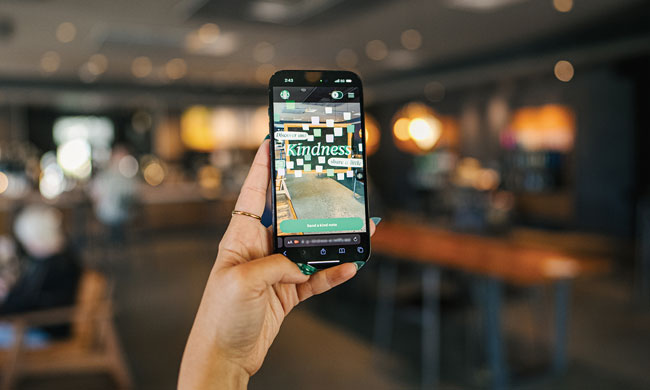
(Family Features) Everywhere you look, you can see moments of kindness. From a friend sending a thoughtful text message to a stranger holding the bus for someone running late or a person paying for someone else’s coffee, acts of kindness happen every day. While these moments can have a monumental impact on the person on the receiving end, they often go unrecognized.
In fact, a study published in the “Journal of Experimental Psychology” found that performing acts of kindness improves individual well-being and leads to more positive moods. At the same time, many people underestimate the impact their kindness may have on themselves and others.
To help foster positive connection among friends, family and communities, which the U.S. Surgeon General’s advisory revealed can help reduce the risk of serious health conditions, people should consider ways to weave moments of kindness into their daily lives.
Here are a few simple ways to show kindness:
Hold the Door for Strangers
It may seem small, but holding the door for someone who is entering or exiting a building after you is a brief way to offer a helping hand and set off a contagious string of goodwill.
Send a Thoughtful Surprise
Sending someone a favorite treat, book or even a photo memory can provide a positive boost to not only the recipient but the sender as well. To take this gesture one step further, have a gift delivered to a person you don’t know but may be in need of a thoughtful gesture – such as a basket to a soldier overseas or senior citizens in local nursing homes or assisted living facilities.
Celebrate and Share Kindness Online
So much of the world is connected via social media. To build positive connections online, seek out digital spaces or services that emphasize and inspire kindness, such as the Starbucks Kindness Mobile AR experience. By combining the real world with augmented reality, the experience invites people to explore and share acts of kindness through notes inspired by real stories of kindness, photos, videos and Kindness Cards that can be shared on social media or by text message.
Look for Volunteer Opportunities
Volunteering time to local organizations, such as nursing homes, homeless shelters or food pantries, is an engaging and personal way to help those in your community.
Be Kind to Your Mind
By practicing gratitude, compassion and kindness toward yourself, you can spark moments of kindness that are more genuine and intentional with others. Meditation practice, such as the free, guided collection from Starbucks and Headspace, invites calm and kindness, opening the door to cultivate a more considerate relationship with mind, body and world.
“Experiencing kindness in the world begins with cultivating kindness toward ourselves,” said Dora Kamau, mindfulness and meditation teacher at Headspace. “This week, try being kind to your mind and notice how this has a ripple effect on others and the world around you.”
Offer Words of Encouragement and Gratitude
Whether it be via a text, note or conversation in-person, words are a direct way to show kindness and help individuals feel seen, appreciated and respected. Depending on what the situation requires, providing a compliment or saying, “thank you,” can make a significant impact on someone’s day.
For more ideas to share a little kindness, visit stories.starbucks.com.
SOURCE:
Starbucks
The Bridge is a section of the STM Daily News Blog meant for diversity, offering real news stories about bona fide community efforts to perpetuate a greater good. The purpose of The Bridge is to connect the divides that separate us, fostering understanding and empathy among different groups. By highlighting positive initiatives and inspirational actions, The Bridge aims to create a sense of unity and shared purpose. This section brings to light stories of individuals and organizations working tirelessly to promote inclusivity, equality, and mutual respect. Through these narratives, readers are encouraged to appreciate the richness of diverse perspectives and to participate actively in building stronger, more cohesive communities.
https://stmdailynews.com/category/the-bridge


Daily News
Major Construction Begins on Metro’s East San Fernando Valley Light Rail Line
LA Metro has moved the East San Fernando Valley Light Rail Transit Project into major construction. The 6.7-mile Van Nuys Boulevard line will add 11 stations, connect with the G Line and regional rail services, and is now targeted for completion in early 2032.

After years of utility relocation and planning, LA Metro is moving into major construction on a new rail line along Van Nuys Boulevard. The milestone also comes with a revised early-2032 completion target.
LA Metro has officially marked the beginning of major construction on the East San Fernando Valley Light Rail Transit Project, moving one of the region’s most important rail projects from preparatory work into full-scale construction.
Metro held a groundbreaking ceremony on October 19, 2026, for the 6.7-mile line, which will run along Van Nuys Boulevard from the G Line busway north to San Fernando Road in Pacoima. The project will add 11 light-rail stations serving Van Nuys, Panorama City, Arleta and Pacoima.
This was not the project’s first groundbreaking. Metro held an earlier ceremony in December 2022 when crews began relocating utility infrastructure. The new milestone is more consequential for riders: the major-construction phase covers the guideway, stations, traction-power substations, rail systems and a maintenance and storage facility.
From utility work to a new rail corridor
The project has spent several years in utility relocation, property acquisition, design and other early work. Metro’s current construction timeline shows major work continuing from 2026 through 2032, with phased traffic changes and K-rail installations expected along Van Nuys Boulevard.
When completed, trains are expected to operate every seven to 10 minutes during peak periods. The line will connect directly with the G Line and provide access to the Van Nuys Metrolink and Amtrak station. It is also expected to become an important transfer point for the future Sepulveda Transit Corridor and a planned Metrolink station in Pacoima.
The corridor already has a substantial transit market. Metro reported that bus Lines 233 and 761, which serve Van Nuys Boulevard, recorded nearly 20,000 boardings in September 2026. The agency also says approximately 19 percent of households in the project area lack access to a car, compared with about 8 percent countywide.
Those figures help explain why this project matters beyond its construction footprint. It is intended to give residents in some of the Valley’s most transit-dependent communities more reliable access to jobs, schools, healthcare and the wider regional transit network.
The opening target has moved to 2032
Metro’s current project page lists an estimated completion date of early 2032. That is later than the 2031 opening forecast the agency publicized when it celebrated an $893-million federal grant in September 2024. Earlier plans were more optimistic still: when utility work began in 2022, Metro said the first segment could open between 2028 and 2030.
The project’s financial scale has also grown clearer. In May 2026, the Metro Board established a life-of-project budget of approximately $3.999 billion and authorized the next phase of its progressive design-build contract with San Fernando Transit Constructors, a joint venture of Skanska and Stacy and Witbeck.
That authorization increased the construction contract’s value to roughly $2.431 billion. Funding for the larger project combines federal, state and local sources, including revenue from Los Angeles County’s Measure M transportation sales tax.
Rail returns to Van Nuys Boulevard
The East San Fernando Valley line will restore passenger rail to Van Nuys Boulevard for the first time since Pacific Electric ended streetcar service there in 1952. It will also become the first major new Metro rail project in the San Fernando Valley since the subway reached North Hollywood in 2000.
The historical parallel is significant. Van Nuys Boulevard once developed around electric railway service before the region shifted heavily toward automobiles and buses. Metro is now rebuilding rail in the same broad corridor, but as part of a modern network designed to connect local riders with bus rapid transit, regional rail and future high-capacity projects.
The current project ends in Pacoima. Metro continues to study a separate 2.5-mile northern extension that would reach the Sylmar/San Fernando Metrolink station. That extension is not included in the segment now entering major construction.
For riders, the October groundbreaking does not mean trains are imminent. Several years of disruptive and technically complex work remain, and the schedule has already moved beyond earlier forecasts. Still, it represents a tangible transition: the East San Fernando Valley line is no longer primarily a planning exercise or utility-relocation program. Metro has begun building the infrastructure that will carry trains.
That makes this a major step in Los Angeles County’s long effort to restore frequent rail transit to communities that lost it generations ago—and another chapter in The Long Track Back.
Primary sources
- LA Metro: Major construction will soon be underway
- LA Metro project page: East San Fernando Valley Light Rail Transit
- LA Metro Board meeting, May 28, 2026 — project budget and contract authorization
- LA Metro: $893 million federal grant announcement, September 6, 2024
- LA Metro: Advanced utility-work groundbreaking, December 2, 2022
This article is part of The Long Track Back, STM Daily News’ continuing coverage of how Los Angeles is rebuilding and expanding a passenger-rail network after decades of automobile-centered grow

STM Blog | Commentary | October 14, 2026
The viral allegations involving Texas Roadhouse and the treatment of Black customers raised an understandably disturbing question: Could diners trust that they were being served safely and respectfully?
After reviewing available coverage again on October 14, STM Daily News did not locate new verified evidence establishing that the alleged food tampering occurred. We also did not locate a publicly released final report from the outside firm the company said it hired.
The central distinction remains unchanged: the allegations have not been substantiated in the reporting reviewed, while Texas Roadhouse says its investigation points to a hoax.
What the available reporting says
In August, social media posts alleged that restaurant workers deliberately tampered with food served to Black customers. The claims circulated widely and prompted calls for a boycott. Texas Roadhouse said it had not identified current or former employees connected to the accusations.
In reporting updated August 26, KTXS noted that the viral post did not identify a particular restaurant location and that there was no verified evidence connecting the claims to a Texas Roadhouse employee.
The company told the outlet it had found no credible evidence of food tampering. It also said the original Facebook post had been deleted, some users had retracted posts amplifying the claims, and an outside firm had been engaged to investigate the accusations’ source and motives. These details come from August coverage, rather than a new October announcement.
What remains unresolved publicly
Our latest review did not locate a final outside investigation report that readers could examine. We therefore cannot describe that investigation as complete or independently assess its findings.
The company’s description of the claims as a hoax should continue to be attributed to Texas Roadhouse. Likewise, the allegations should not be repeated as though they describe a confirmed incident.
Not locating a new public report does not establish whether investigative work has continued privately. It means the public information we found does not support a stronger conclusion.
Why careful wording still matters
For Black diners, allegations of racist mistreatment can strike a painful nerve. Everyone deserves to sit down for a meal without worrying that their race could make them a target.
Taking that concern seriously requires credible complaints to be investigated thoroughly. It also requires care before assigning blame to a restaurant, a location, or its workers.
Social media can spread a warning far beyond its original audience before anyone verifies the underlying claim. Once that happens, a correction or clarification may never reach everyone who saw the accusation.
That makes transparency essential. Restaurants should explain what they have investigated and what they can substantiate. Those sharing accusations should be equally willing to share corrections and acknowledge uncertainty.
For now, the responsible position is to keep the evidence and the allegations separate. If new, verifiable findings become public, they should be assessed on their merits.
Join the conversation: What do you look for before trusting a viral warning about a business? Share your thoughts in the comments, and keep the conversation respectful.
Editor’s note: This is an October 14 status review of previously reported allegations. It does not announce a new investigative finding.
Sources
- KTXS: Viral post alleges Texas Roadhouse mistreated Black customers; company responds — Includes the company’s statement and explains the lack of verified evidence connecting the allegations to an employee or location.
- Houston Chronicle: Texas Roadhouse investigates Facebook hoax alleging racist food tampering — Covers the company’s denial and its decision to hire an outside investigative firm.
- MySA: Texas Roadhouse faces social media backlash over viral allegations — Details how the claims spread and the restaurant chain’s response.
Related reading
- Snopes: Posts claim Texas Roadhouse servers contaminated Black customers’ food — Examines the viral allegations.
- Restaurant Business: Texas Roadhouse says post alleging racist practices was a hoax — Restaurant industry coverage of the controversy.
- Texas Roadhouse official website — Company information and customer contact options.
Food Truths
Soul Food Has African Roots—and a Distinct Black American History
Soul food connects African heritage with generations of Black American creativity and community. Here’s why shared roots and a distinct cultural identity both deserve recognition.
Last Updated on October 15, 2026 by Daily News Staff
Shared ancestry connects the African diaspora. It also makes understanding each community’s food traditions worth the effort.
A debate over who can claim soul food raises a question larger than any social media argument: When does a shared cultural inheritance become a distinct tradition?
People across Africa and the African diaspora have foods that evoke home, family, comfort, and belonging. Recognizing that connection is valuable. But using “soul food” as a general description of comforting food is different from identifying the cuisine historically known by that name.
Soul food is a distinctly African American culinary tradition with African roots, shaped by generations of Black life in the United States. Recognizing its American development does not erase Africa. Recognizing Africa should not erase what Black Americans created.
African Roots, American Development
Enslaved Africans arrived with agricultural knowledge, cooking skills, and food traditions. They adapted those traditions to unfamiliar surroundings and unequal access to food, drawing on available ingredients and encounters with Indigenous and European foodways.
Okra, black-eyed peas, and vegetable-centered cooking offer important connections to African traditions. Corn and cornmeal reflect Indigenous American agriculture. These ingredients and influences became part of an evolving food culture rather than remaining unchanged copies of dishes from another continent. [1]
The distinction is between ancestry and development. A cuisine can descend from older traditions and acquire its own identity through the experiences of the people who preserve and transform it.
More Than a Story About Scraps
Slavery and deprivation belong in this history. Enslaved people supplemented restricted food supplies through gardening and other means, and used small amounts of meat to season vegetables. But telling the entire story as “making something out of scraps” understates their knowledge and creativity.
Black food history also includes seafood work, farming, skilled cooking, and enterprise. The Smithsonian’s account of Black foodways, for example, documents African Americans’ extensive involvement in harvesting, processing, and selling oysters. [2]
These were people with expertise. Their contributions deserve recognition as culinary work and cultural creation.
Why the Name Matters
The food traditions are older than the widespread use of the name “soul food.” The term became prominent during the 1960s, amid movements asserting Black identity and cultural pride. Smithsonian histories describe the soul food movement as celebrating foods that mainstream America had often disparaged. [3]
That context gives the name meaning beyond a meal that tastes good or brings comfort.
For some families, a pot of greens or a pan of cornbread carries memories of relatives, church dinners, holidays, and recipes learned by watching someone cook. Calling those foods “soul food” places them within a particular cultural story.
Southern Roots Traveled
Soul food also developed beyond the South. During the Great Migration, Black Americans carried Southern food traditions into new cities and neighborhoods, preserving familiar dishes while adapting their cooking. Smithsonian programming connects that movement directly to soul food’s development. [4]
That helps explain how a cuisine rooted in the South became part of Black community life across the country.
It also makes geography an imperfect test of authenticity. Soul food cooked in London can still be African American soul food. A cuisine’s cultural origins do not change simply because someone prepares it elsewhere.
Shared Heritage Does Not Mean Identical Cultures
Africa is a continent of many food traditions. The diaspora is similarly diverse. African American, Afro-Caribbean, Afro-Latin American, and Black British identities encompass different histories and relationships to food.
Someone may use “soul food” figuratively to describe a cherished family dish. That emotional use is understandable. The difficulty arises when it becomes a historical claim that all Black cuisines are versions of the same named tradition.
Shared ingredients and ancestry establish connections; they do not make distinct cuisines interchangeable.
A useful conversation would ask which dishes are related, what techniques survived, and how different communities adapted them. That approach gives people more history to appreciate.
Respect Through Recognition
Defending soul food’s African American identity need not become an attack on Africans, Caribbean people, or Black Britons. Equally, celebrating connections across the diaspora should include respect for Black Americans’ particular contributions.
Anyone can cook, enjoy, study, and share soul food. Cultural recognition does not require closing the kitchen door. It requires crediting the people and history behind the cuisine.
Soul food’s African roots and African American identity belong in the same sentence. Both deserve to be remembered.
What dish connects you most strongly to your family’s history—and who taught you to make it? Share your story in the comments.
Explore more food stories and culinary traditions in STM Daily News’ Food & Drink section.
Sources and Further Reading
- African and Native American Foodways and Resilience: From 1619 to COVID-19 — Research on food traditions, adaptation, and cultural resilience.
- Black Foodways and Cuisine — National Museum of African American History and Culture.
- African American History Highlights — National Museum of American History, including the soul food movement.
- Cooking Up History — National Museum of American History programming on migration and soul food.




