(Family Features) After the last present has been gifted and guests have said their farewells, it’s tempting to settle in for some rest to recuperate from the hectic pace of the holidays. However, if you take time to tidy up after all those good tidings, you can relax with a free conscience. One especially daunting aspect of post-holiday cleanup is the wrapping supplies and decor. Consider these tips to stash your holiday goodies safely away until next year:
Take inventory of your wrapping supplies. Note how many boxes, bags and rolls of paper you have. Affix a note to the container where you store these items to give yourself an idea of what you’ll need so you can start stocking up early for anything you depleted this year.
Invest in a gift wrap storage container. They come in many shapes and sizes ranging from hard plastic bins that resemble trash cans to soft-sided bags with zippers and plenty of pockets inside. Look for a model that allows for storing the wrapping materials you favor, be it bags, bows or simply paper. After the holidays, many of these items are steeply discounted, providing an opportunity to stock up for next year.
For your decor, get organized by grouping similar items or collecting all the pieces for a single room. Packing things away with a system in mind can make bringing it all out next year easier and protect your treasured decorations. Remember to label your storage boxes so you know which box contains what next year.
Once you’re done, reward yourself with a cup of hot cocoa and curl up with a new book or movie while enjoying a relaxing end to the merriest of seasons. Find more tips for managing the holiday season at eLivingtoday.com. Photo courtesy of Unsplash SOURCE:Family Features
At our core, we at STM Daily News, strive to keep you informed and inspired with the freshest content on all things food and beverage. From mouthwatering recipes to intriguing articles, we’re here to satisfy your appetite for culinary knowledge.
Visit our Food & Drink section to get the latest on Foodie News and recipes, offering a delightful blend of culinary inspiration and gastronomic trends to elevate your dining experience.
Preparing Students: Automation, AI and societal economic changes are affecting the workforce and making a significant impact on the employment prospects of future generations. Consider this guidance to put students on the path toward greater earning potential and economic mobility in a rapidly changing economy.
(Family Features) Automation, AI and societal economic changes are affecting the workforce and making a significant impact on the employment prospects of future generations. More than one-third of today’s college graduates are “underemployed,” meaning they work jobs that don’t require a college degree and may pay less than a living wage, according to data from the Federal Reserve Bank of New York. At the same time, a World Economic Forum report explored how advances in AI are threatening to negatively impact access to entry-level and even mid-level jobs for millions of Americans. Looking ahead, research by Georgetown University indicates that by 2031, 70% of jobs will require education or training beyond high school. However, data from the National Center for Education Statistics indicate only one-third of high school graduates go on to complete a college degree with many of those being in fields that are not in high-earning, high-growth professions. These challenges are not lost on today’s students. In a survey by Junior Achievement and Citizens, 57% of teens reported AI has negatively impacted their career outlook, raising concerns about job replacement and the need for new skills. What’s more, a strong majority (87%) expect to earn extra income through side hustles, gig work or social media content creation. “To put students on the path toward greater earning potential and economic mobility in a rapidly changing economy, students need proactive education and exposure to transferable skills and competencies, such as creative and critical thinking, financial literacy, problem-solving, collaboration and career planning,” said Jack Harris, CEO, Junior Achievement. This assertion is consistent with findings from the Camber Collective. This social impact consulting group identified four key life experiences students can consider and explore that positively affect lifetime earnings, including:
Completing secondary education
Graduating with a degree in a high-paying field of study
Receiving mentorship during adolescence
Obtaining a first full-time job with opportunity for advancement
Students aiming to equip themselves with the skills and experience necessary for the future workforce can seek:
Learning opportunities that are designed with the future in mind. For example, learning experiences offered through Junior Achievement reflect the skills and competencies needed to promote economic mobility.
Internships or apprenticeships that provide hands-on experience and exposure to a career field that can’t be found in a textbook.
Volunteer or extracurricular roles that develop communication and leadership skills. Virtually every career field requires these soft skills for growth and greater earning potential.
Relationships that provide insight and connection. Networking with individuals who are already excelling in a chosen field, as well as peers who share similar aspirations, offers perspective from those who are where you wish to be and potentially opens future doors for employment.
Courses that offer introductory insight into a chosen career path. Local trade or technical schools and other training organizations may even offer certifications that align with a student’s area of interest.
To learn more about how students can pursue education for what’s next, visit JA.org. SOURCE:
Loving-kindness, the feeling cultivated in metta meditation, is very different from romantic love. Anna Sunderland Engels
What loving-kindness meditation is and how to practice it in the new year
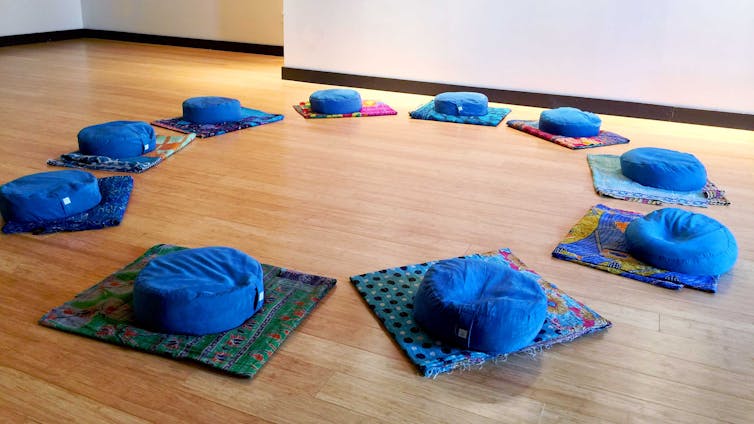
Jeremy David Engels, Penn State A popular New Year’s resolution is to take up meditation – specifically mindfulness meditation. This is a healthy choice. Regular mindfulness practice has been linked to many positive health benefits, including reduced stress and anxiety, better sleep and quicker healing after injury and illness. Mindfulness can help us to be present in a distracted world and to feel more at home in our bodies, and in our lives. There are many different types of meditation. Some mindfulness practices ask meditators simply to sit with whatever thoughts, sensations or emotions arise without immediately reacting to them. Such meditations cultivate focus, while granting more freedom in how we respond to whatever events life throws at us. Other meditations ask practitioners to deliberately focus on one emotion – for example, gratitude or love – to deepen the experience of that emotion. The purpose behind this type of meditation is to bring more gratitude, or more love, into one’s life. The more people meditate on love, the easier it is to experience this emotion even when not meditating. One such meditation is known as “metta,” or loving-kindness. As a scholar of communication and mindfulness, as well as a longtime meditation teacher, I have both studied and practiced metta. Here is what loving-kindness means and how to try it out for yourself:
Unbounded, universal love
Loving-kindness, or metta, is the type of love which is practiced by Buddhists around the world. Like many forms of meditation today, there are both secular and religious forms of the practice. One does not need to be a Buddhist to practice loving-kindness. It is for anyone and everyone who wants to live more lovingly. Loving-kindness, the feeling cultivated in metta meditation, is very different from romantic love. In the ancient Pali language, the word “metta” has two root meanings: The first is “gentle,” in the sense of a gentle spring rain that falls on young plants, nourishing them without discrimination. The second is “friend.” Metta is limitless and unbounded love; it is gentle presence and universal friendliness. Metta practice is meant to grow people’s ability to be present for themselves and others without fail.A guided loving-kindness meditation practice. Metta is not reciprocal or conditional. It does not discriminate between us and them, rich and poor, educated and uneducated, popular or unpopular, worthy and unworthy. To practice metta is to give what I describe in my research as “the rarest and most precious gift” – a gift of love offered without any expectation of it being returned.
How to practice loving-kindness meditation
In the fifth century, a Sri Lankan monk, Buddhaghosa, composed an influential meditation text called the “Visuddhimagga,” or “The Path of Purification.” In this text, Buddhaghosa provides instructions for how to practice loving-kindness meditation. Contemporary teachers tend to adapt and modify his instructions. The practice of loving-kindness often involves quietly reciting to oneself several traditional phrases designed to evoke metta, and visualizing the beings who will receive that loving-kindness. Traditionally, the practice begins by sending loving kindness to ourselves. It is typical during this meditation to say:
May I be filled by loving-kindness
May I be safe from inner and outer dangers
May I be well in body and mind
May I be at ease and happy
After speaking these phrases, and feeling the emotions they evoke, next it’s common to direct loving-kindness toward someone – or something – else: It can be a beloved person, a dear friend, a pet, an animal, a favorite tree. The phrases become:
May you be filled by loving-kindness
May you be safe from inner and outer dangers
May you be well in body and mind
May you be at ease and happy
Next, this loving-kindness is directed to a wider circle of friends and loved ones: “May they …” The final step is to gradually expand the circle of well wishes: including the people in our community and town, people everywhere, animals and all living beings, and the whole Earth. This last round of recitation begins: “May we …” In this way, loving-kindness meditation practice opens the heart further and further into life, beginning with the meditator themselves.
Loving-kindness and mindful democracy
Clinical research shows that loving-kindness meditation has a positive effect on mental health, including lessening anxiety and depression, increasing life satisfaction and improving self-acceptance while reducing self-criticism. There is also evidence that loving-kindness meditation increases a sense of connection with other people. The benefits of loving-kindness meditation are not just for the individual. In my research, I show that there are also tremendous benefits for society as a whole. Indeed, the practice of democracy requires us to work together with friends, strangers and even purported “opponents.” This is difficult to do if our hearts are full of hatred and resentment. Each time meditators open their hearts in metta meditation, they prepare themselves to live more loving lives: for their own selves, and for all living beings. Jeremy David Engels, Liberal Arts Endowed Professor of Communication, Penn State This article is republished from The Conversation under a Creative Commons license. Read the original article.
(Family Features) Urban living and lush gardens aren’t as mutually exclusive as one might assume. In fact, it’s possible to cultivate thriving gardens in even the smallest spaces.
The first step toward creating a successful small garden space is planning. Sketching out your garden area with a clear understanding of the actual dimensions is important. This allows you to allocate adequate growing space for the vegetation you choose and prevent overcrowding.
Part of your planning should also take climate into account. If the sun reaches your garden area, knowing what time the sun typically hits matters. Some plants are poorly equipped to handle the strength of direct afternoon rays.
Other matters to consider are the soil quality and whether it is adequate to nourish vegetation. If not, you may need to excavate and refill your planting areas with nutrient-rich gardening soil. Access to water is also a concern; if you’ll be forced to water by can, avoid choosing plants that would better benefit from a thorough hose soaking.
As you begin planning the actual contents of your garden, don’t hesitate to blend edibles with beauty. Many herbs offer attractive textures and colors that can add variety to a colorful selection of flowering plants. Edible plants such as strawberries offer color from blooms (and later brightly hued fruit), as well as trailing greenery that looks pretty along the edges of potted containers.
If your goal is color, give consideration to the blooming season for your selected plants. Unless you plan to enjoy your garden for just a short season, choose a variety of plants and flowers that bloom throughout your region’s entire growing season.
Especially in the smallest garden spaces, it’s smart to make the most of vertical space. Use a trellis or other structure to encourage vining vegetation to grow upward rather than outward. Hanging baskets or buckets are ideal for inverted growth of plants such as tomatoes or peppers, and shelving or tiered plant stands are handy for creating more plant real estate in smaller garden spaces.
Beautiful gardens need not be limited to those with expansive lawns in rural communities. Though smaller in scale, urban gardens can deliver equal beauty and a surprising volume of edible bounty with proper preparation and design. Find more tips at eLivingtoday.com.