

health and wellness
FDA Provides Update on Agency Response to Monkeypox Outbreak

Last Updated on June 30, 2024 by Daily News Staff
Today, the U.S. Food and Drug Administration is providing an update on its multipronged response to monkeypox in the United States, including its efforts in the areas of diagnostics, vaccines and therapeutics. The agency has also established a dedicated website to provide important information about the FDA’s ongoing regulatory activities related to monkeypox along with frequently asked questions. The FDA will provide updates as developments occur and will continue to work with federal public health partners and industry to ensure timely access to all available medical countermeasures.
“The FDA has been closely tracking reports of monkeypox transmissions in the United States with our federal public health partners and coordinating preparedness efforts accordingly,” said FDA Commissioner Robert M. Califf, M.D. “We understand that while we are still living with COVID-19, an emerging disease may leave people feeling concerned and uncertain, but it’s important to note that we already have medical products in place, specifically an FDA-approved vaccine for the prevention of monkeypox disease and an FDA-cleared diagnostic test. The FDA is using the full breadth of its authorities to make additional diagnostics and treatments available. We will continue to collaborate with our partners across all sectors to expand accessibility to countermeasures and bolster the tools in our arsenal as appropriate.”
The monkeypox virus is part of the same family of viruses as variola virus, the virus that causes smallpox (a virus that has been eradicated globally). Both monkeypox and smallpox fall into the category of “orthopoxviruses.” Monkeypox is generally not fatal and typically resolves on its own without treatment. The current outbreak in the U.S. usually presents as a rash on the body, face or genital area. Although there is a very low risk of dying, there have been reported complications including severe pain, at times requiring hospital admission.
Diagnostics
Since the first case of monkeypox in the U.S. was detected, the FDA has been working with commercial laboratories and manufacturers to make monkeypox tests more readily available to consumers who need them. The Centers for Disease Control and Prevention (CDC) has an FDA-cleared non-variola orthopoxvirus test that can detect monkeypox by a swab from a monkeypox lesion (rash or growth). At this time, this is the only FDA-cleared test. The FDA is not aware of clinical data supporting the use of other sample types, such as blood or saliva, for monkeypox virus testing. In July 2022, the FDA issued a safety communication advising people to use swab samples taken directly from a lesion when testing for the monkeypox virus.
The FDA-cleared monkeypox test is being offered by the CDC and throughout many laboratories that include the CDC’s public health Laboratory Response Network. In addition, federal public health authorities have worked with industry to make the test available through five large commercial laboratories. The agency is working closely with the CDC to increase production of its FDA-cleared test and the FDA has cleared the use of additional reagents and instruments to increase the throughput of the CDC test.
The FDA will continue to work with the diagnostic community to augment access to accurate testing to support the response.
Vaccines
In 2019, the FDA approved the JYNNEOS Vaccine for the prevention of smallpox and monkeypox in adults 18 years of age and older determined to be at high risk of infection. JYNNEOS is the only vaccine approved for the prevention of monkeypox in the United States. Although clinical trials and data are limited because of the small number of cases until now, the immunological response to vaccine administration is consistent with effective prevention of the disease.
Following the emerging public health crisis closely, the FDA was aware that there were close to 800,000 doses of this vaccine pending release this fall following approval of additional manufacturing capabilities at one of the plants where the vaccine is made. With this in mind, the agency worked with HHS partners and expedited the submission of the required application for the company’s manufacturing changes in order to make these doses available to those in need. After accelerating the timeline for an inspection of the plant from fall to earlier this month, the FDA has finished its evaluation of the required information to validate product quality and has determined that the vaccine meets its quality standards.
On July 26, the agency approved a supplement to the biologics license for the JYNNEOS Vaccine, to allow for additional manufacturing capabilities at the facility. Given the emerging public health need, the FDA previously facilitated the shipment of manufactured doses to the U.S. so that they would be ready to be distributed once the manufacturing changes were approved. With the supplement approval, those manufactured doses may now be further distributed and administered. Additional doses manufactured at this plant can help address the need for this vaccine moving forward.
Therapeutics
There is no FDA-approved or authorized medicine for the treatment of monkeypox disease; however, TPOXX (tecovirimat), an antiviral medication, is being made available through the CDC under an FDA authority called Expanded Access or “compassionate use.” The FDA continues to work with the CDC to streamline their Expanded Access Program for monkeypox to facilitate access.
There are currently no human data demonstrating the efficacy of TPOXX for the treatment of monkeypox, or the safety and pharmacokinetic profile (which helps us understand what the human body does to a drug). Although expanded access program is available, conducting randomized, controlled trials to assess TPOXX’s safety and efficacy in humans with monkeypox infections is essential.
The FDA has more information on TPOXX’s approval for smallpox under the “Animal Rule” regulations on its monkeypox webpage.
Source: FDA
https://stmdailynews.com/category/lifestyle/health-and-wellness


Food and Beverage
A Lesson in Kindness, Inclusion and How Kids Eat Differently
Kids Eat Differently: The school year brings new classmates, routines and opportunities for children to learn about people whose experiences may be different from their own. They could include friends who use a wheelchair, carry an inhaler or even receive nutrition through a feeding tube.


A Lesson in Kindness, Inclusion and How Kids Eat Differently
(Feature Impact) The school year brings new classmates, routines and opportunities for children to learn about people whose experiences may be different from their own. They could include friends who use a wheelchair, carry an inhaler or even receive nutrition through a feeding tube.
Watch this video to learn more
For families who rely on tube feeding, it is an essential part of daily life but is often understood only by those who experience it. That limited awareness can leave children who are tube fed and their families feeling isolated or unseen, according to Gerard Minor, a pediatric gastroenterology and hepatology specialist.
Parents can use everyday questions as opportunities to help children understand there are many ways people receive nourishment. Teachers, classmates, caregivers and communities can also help make tube feeding part of the everyday conversation around childhood rather than something that separates children from it.
“Helping children understand those differences early can encourage curiosity, kindness and inclusion,” Minor said.
To help bring greater awareness, understanding and representation to children and families who experience tube feeding every day, Compleat, a leader in tube feeding formulas, launched “What Is Better Than How,” featuring “Sesame Street’s” Elmo and his signature warmth and curiosity. The original song celebrates the many ways people eat. Some people eat with a fork, some use a spoon and some use a tube, reinforcing a simple message: What matters is not how you eat. What matters is that you are nourished, loved and included.
To hear the song, create a personalized version and learn more about the campaign, visit Compleat.com/WhatIsBetterThanHow.

SOURCE:

Health and Life Insurance
Lessons in Life Insurance: 4 Reasons Getting It May Be Easier Than You Think
Life is the most valuable thing you have – and like all valuable things, it should be insured. Even thinking about life insurance can be stressful, so it’s one of those things that’s easy to put off and tell yourself you’ll do another day. Consider these four ways to make getting life insurance simpler than you thought.

Lessons in Life Insurance: 4 Reasons Getting It May Be Easier Than You Think
(Feature Impact) Life is the most valuable thing you have – and like all valuable things, it should be insured. Even thinking about life insurance can be stressful, so it’s one of those things that’s easy to put off and tell yourself you’ll do another day.
If that’s how you feel, you aren’t alone. According to the 2026 Life Happens Life Insurance Survey, nearly half (46%) of U.S. adults have getting life insurance on their to-do list but plan to deal with it later or not at all. Confusion, procrastination and cost concerns are among the main reasons people kick this can down the road, according to 45% of respondents.
Yet the survey also uncovered an interesting disconnect: 69% of Americans said they personally know someone who had life insurance or whose family used a life insurance policy, most often a parent or parent figure (33%), but still haven’t made getting coverage a priority.
“Life insurance isn’t unfamiliar to most Americans,” Life Happens Executive Director Brian Steiner said. “The challenge is turning that awareness into action. People may think life insurance is something they can deal with later, but waiting can leave the people they love financially vulnerable. Getting started doesn’t have to be complicated, and professional guidance can help you find protection that fits your needs and budget.”
Consider these four ways to make getting life insurance simpler than you thought.
Watch this video to learn more
1. Find a policy that’s a fit.
Roughly 4 in 10 survey respondents reported feeling overwhelmed, anxious or some combination of both about planning for life insurance, with 12% citing thinking it’ll be too expensive as a reason they’ve delayed looking into, buying or updating life insurance.
The good news: There’s a policy that’s right for your current needs. It may be term life insurance, which provides protection for a specific period of time, like to cover a mortgage or tuition for children. There’s also permanent life insurance, which offers lifelong protection, as long as you pay the premiums.
2. Take advantage of digital tools
One-quarter of respondents said they’d be more likely to look into life insurance if they learned it was easier to get than they thought, and digital tools can help make that demand a reality.
It can take as little as two minutes to find out how much you need, for example, with the life insurance needs calculator from the nonprofit Life Happens. Just answer a few simple questions to estimate the amount of life insurance coverage you may need to take care of your family.
3. It’s about protection, not perfection.
Part of the anxiety around life insurance may be the perception that it should be perfect. For more than 1 in 5 survey participants, the plan is to seriously look at it when they feel more financially stable, and another 12% simply said they’ll do it when they’re older.
However, life insurance doesn’t have to check all the boxes for every stage of your life – you can find what works for your family right now then adjust as things change over time.
4. Professional help is available.
Perhaps the biggest hurdle to tackling life insurance is the feeling that you’re in it alone. Overall, 55% of respondents said if they learned life insurance may be easier to get than they expected, they’d be more likely to start the process.
With professional help only a few clicks away, you can rest assured you’re on the path to a life insurance fit that’s right for you by visiting findapro.lifehappens.org.
Photo courtesy of Shutterstock

SOURCE:
Child Health
Changing the Landscape of Childhood Cancer Survivorship
Childhood Cancer: hile “cancer” is a term no family wants to hear, especially when it comes to their children, there is reason for hope. Today, 85% of children diagnosed with cancer survive at least five years. Survival is only part of the journey, however.
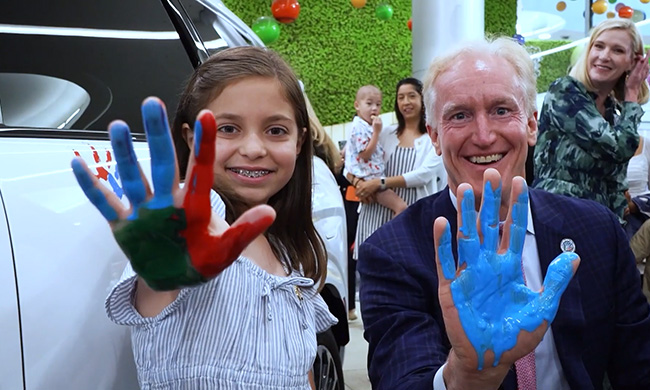
Changing the Landscape of Childhood Cancer Survivorship
(Feature Impact) While “cancer” is a term no family wants to hear, especially when it comes to their children, there is reason for hope. Today, 85% of children diagnosed with cancer survive at least five years, according to the National Cancer Institute, up from 75% three decades ago.
Watch this video to learn more
“This progress is driven in large part by dedicated research,” Hyundai Hope on Wheels Board Member Kevin Reilly said. “Over the last 28 years, Hyundai Hope on Wheels has committed over $300 million in pediatric cancer research and program grants, awarding more than 1,600 grants to 210 medical institutions nationwide, impacting thousands of young lives each year.”
Survival is only part of the journey, however. Nearly half (46%) of U.S. adults believe a child ringing the hospital bell after cancer treatment means the child is cancer-free and their medical journey is largely over, according to a survey conducted by Atomik Research on behalf of Hyundai Hope on Wheels. For the children and families living through a diagnosis, the reality is far more complex.
“The reality is that healing continues long after treatment, which is why sustained investment in survivorship care is a priority for us,” said John Guastaferro, executive director of Hyundai Hope on Wheels.
Isabella Franco-Capps, 11, understands that journey firsthand. Diagnosed with B-cell acute lymphoblastic leukemia at age 5, her journey took two years before she could say she’s “a cancer survivor.”
“I was diagnosed with b-cell acute lymphoblastic leukemia,” she said. “This began my two-year-long journey of scans, pokes, chemotherapy and hospital stays. And now I’m a cancer survivor.”
Fellow Hyundai Hope on Wheels National Youth Ambassador, Jackson Trihn, 12, is using his voice to call for continued research and to bring hope to others.
“The role … is being able to share my story,” he said. “Not just to spread awareness but to spread hope to kids that need it. And awareness is so important because people don’t understand how hard pediatric cancer can be.”
Continued progress can help ensure more children ring the bell and receive the care and support they need long after they’ve had the opportunity to do so. To learn more about these efforts and how you can help, visit HyundaiHopeOnWheels.org.

SOURCE:
💪 Your health journey starts here! Explore the latest health news, fitness tips, wellness trends, and healthy living advice. Share your thoughts in the comments and subscribe to the STM Daily News newsletter to stay informed and inspired every day.





