

The Knowledge
Brightline West Nears Final Environmental Clearance Milestone
Brightline West’s final environmental assessment is 99% complete, clearing a major hurdle for the high-speed rail line connecting Southern California and Las Vegas.

Last Updated on March 1, 2026 by Daily News Staff
The long-awaited high-speed rail connection between Southern California and Las Vegas just hit a major milestone.
According to recent reports, the final environmental assessment for Brightline West is now 99% complete — signaling that one of the most critical regulatory hurdles for the project is nearly finished.
For a project that has been discussed for over a decade, this is significant progress.
What “99% Complete” Really Means
Before major infrastructure projects like high-speed rail can move into full construction, they must go through extensive federal environmental review under the National Environmental Policy Act (NEPA).
For Brightline West, this includes:
- Environmental impact evaluations
- Wildlife and habitat assessments
- Air quality studies
- Noise and vibration analysis
- Cultural and tribal consultations
- Traffic and community impact reviews
Reaching 99% completion means the overwhelming majority of those studies, revisions, and agency approvals are essentially done. In practical terms, the project is nearly clear of its final federal environmental review requirements.
That’s a huge step toward full-scale construction.
The Route: Southern California to Las Vegas
Brightline West will run approximately 218 miles largely within the median of Interstate 15, connecting:
- Las Vegas
- Apple Valley
- Hesperia
- Rancho Cucamonga (with connections to Metrolink toward Los Angeles)
Trains are designed to reach speeds up to 200 mph, cutting travel time between Southern California and Las Vegas to roughly 2 hours.
Instead of battling I-15 weekend traffic, travelers could board a train in Rancho Cucamonga and arrive on the Las Vegas Strip in about the time it currently takes just to get through the Cajon Pass on a busy Friday.
Construction Status
The project officially broke ground in 2024, and early work has included:
- Geotechnical testing
- Land surveying
- Utility relocation
- Pre-construction corridor preparation
While heavy civil construction has not yet fully ramped up across the entire route, completing environmental clearance removes one of the last major barriers before large-scale building accelerates.
Timeline Update
The original goal was to open before the 2028 Los Angeles Olympics. That timeline has shifted.
Current projections place passenger service around late 2029, depending on construction pace and financing milestones.
Why This Milestone Matters
High-speed rail projects in the United States often stall due to environmental review delays, funding gaps, or regulatory challenges.
Getting to 99% completion on final environmental assessment means:
- Federal review is nearly wrapped
- Legal vulnerability is reduced
- Major construction can proceed with more certainty
- Investor confidence improves
For Southern California and Nevada, it represents real forward momentum.
The Bigger Picture
Brightline West is privately developed, separate from California’s state high-speed rail system. If completed as planned, it would become one of the first true high-speed rail lines operating in the western United States.
The I-15 corridor between Los Angeles and Las Vegas is one of the most heavily traveled leisure routes in the country. A successful rail alternative could significantly reshape travel patterns between the two regions.
Final Take
The headline may sound small — “99% complete” — but in infrastructure terms, it’s a major breakthrough.
With environmental review nearly finished, Brightline West is closer than ever to turning renderings into reality.
Now the question shifts from if the train gets built… to how fast construction can move from here.
Further Reading & Outside Coverage
- Brightline West Official Project Website
- Federal Railroad Administration (FRA)
- Las Vegas Review-Journal – Brightline West Coverage
- Los Angeles Times – Transportation & Infrastructure
- Progressive Railroading – Industry Updates
- Trains Magazine – Rail Industry News
- U.S. Department of Transportation
Dive into “The Knowledge,” where curiosity meets clarity. This playlist, in collaboration with STMDailyNews.com, is designed for viewers who value historical accuracy and insightful learning. Our short videos, ranging from 30 seconds to a minute and a half, make complex subjects easy to grasp in no time. Covering everything from historical events to contemporary processes and entertainment, “The Knowledge” bridges the past with the present. In a world where information is abundant yet often misused, our series aims to guide you through the noise, preserving vital knowledge and truths that shape our lives today. Perfect for curious minds eager to discover the ‘why’ and ‘how’ of everything around us. Subscribe and join in as we explore the facts that matter. https://stmdailynews.com/the-knowledge/
Author


Last Updated on April 11, 2026 by Daily News Staff
April 10, 2026 — NASA’s Artemis II crew has safely returned to Earth, marking the successful completion of the first crewed mission to the Moon’s vicinity in more than 50 years.
Credit: NASA/Joel Kowsky
The Orion spacecraft splashed down in the Pacific Ocean off the coast of California at 5:07 p.m. PDT, carrying NASA astronauts Reid Wiseman, Victor Glover, Christina Koch, and Canadian astronaut Jeremy Hansen back home after a nearly 10-day journey through deep space.
🚀 A Mission for the Record Books
During the mission, the crew traveled a total of 694,481 miles, reaching a maximum distance of 252,756 miles from Earth—farther than any humans have ever gone, surpassing the Apollo 13 record set in 1970.
Launched on April 1 aboard NASA’s powerful Space Launch System (SLS) rocket, Artemis II tested critical systems needed for future missions, including life support, navigation, and deep space communication.
🌕 Science, Exploration, and Stunning Views
While orbiting the Moon, the astronauts captured more than 7,000 images, including views of the lunar far side, a rare solar eclipse, and detailed observations of craters, lava flows, and surface features.
The mission also included scientific experiments to better understand how the human body responds to deep space conditions, helping prepare for longer missions to the Moon and Mars.
🛰️ Safe Return and Recovery
Following splashdown, recovery teams quickly reached the spacecraft and transported the crew by helicopter to the USS John P. Murtha for initial medical evaluations. The astronauts are expected to return to NASA’s Johnson Space Center for further assessments.
🌍 What Comes Next
With Artemis II complete, NASA is now turning its focus to Artemis III, the next mission aimed at landing astronauts on the Moon and establishing a long-term human presence.
The success of Artemis II marks a major step forward in humanity’s return to deep space—and the beginning of a new era of exploration.
For more information on NASA’s Artemis program, visit the official NASA website.
🔗 Source & Further Reading
- NASA Blog: Artemis II Flight Day 10 – Re-entry Live Updates
- NASA Artemis II Mission Overview
- NASA Artemis Program – Return to the Moon
- Orion Spacecraft Details and Technology
- NASA Image and Video Library (Artemis II Photos & Media)
Dive into “The Knowledge,” where curiosity meets clarity. This playlist, in collaboration with STMDailyNews.com, is designed for viewers who value historical accuracy and insightful learning. Our short videos, ranging from 30 seconds to a minute and a half, make complex subjects easy to grasp in no time. Covering everything from historical events to contemporary processes and entertainment, “The Knowledge” bridges the past with the present. In a world where information is abundant yet often misused, our series aims to guide you through the noise, preserving vital knowledge and truths that shape our lives today. Perfect for curious minds eager to discover the ‘why’ and ‘how’ of everything around us. Subscribe and join in as we explore the facts that matter. https://stmdailynews.com/the-knowledge/
The Knowledge
Artemis II’s long countdown – a space historian explains why it has taken over 50 years to return to the Moon
Why has it taken 50+ years to return to the Moon? A space historian explains the technical, political, and financial complexities behind Artemis II’s long journey.

Last Updated on April 10, 2026 by Daily News Staff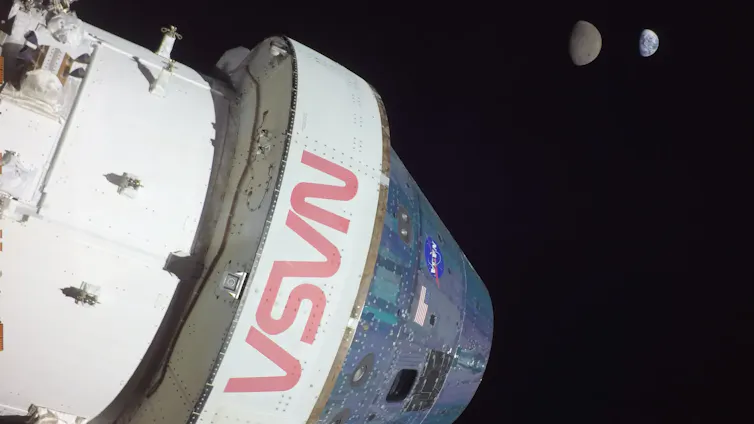
Emily A. Margolis, Smithsonian Institution
While I was leading a tour of the National Air and Space Museum in January 2026, a visitor posed this insightful question: “Why has it taken so long to return to the Moon?”
After all, NASA had the know-how and technology to send humans to the lunar surface more than 50 years ago as part of the Apollo program. And, as another tour guest reminded us, computers today can do so much more than they could back then, as evidenced by the smartphones most of us carry in our pockets. Shouldn’t it be easier to get to the Moon than ever before?
The truth is that sending humans into space safely continues to be difficult, especially as missions increase in complexity.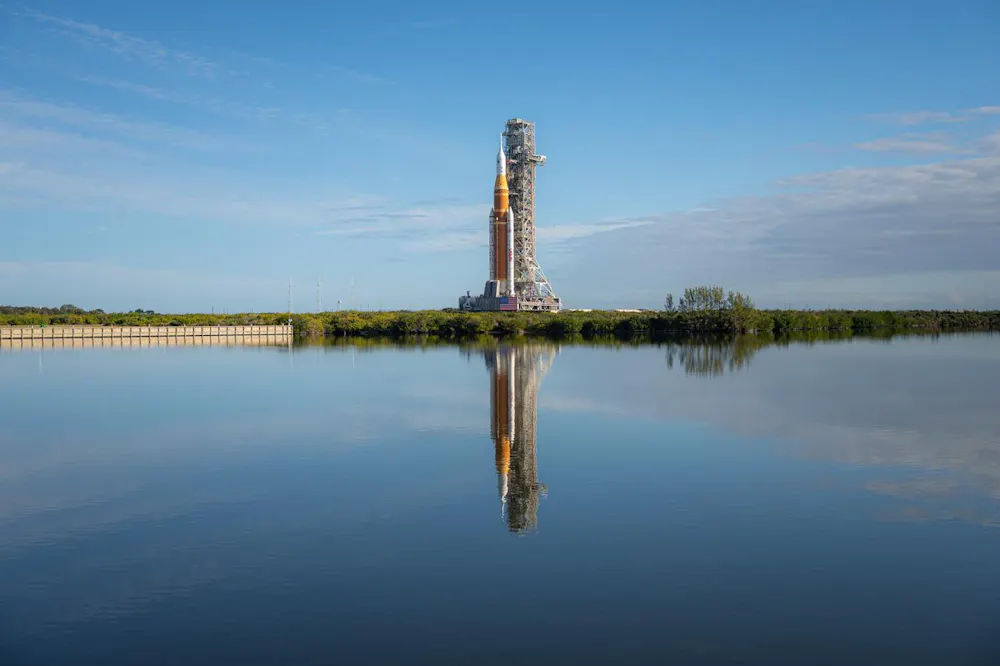
New technologies require years of study, development and testing before they can be certified for flight. And even then, systems and materials can behave in ways that surprise and worry engineers and mission planners; look no further than Boeing’s Starliner CFT mission or the performance of the Orion heat shield on Artemis I.
Issues with Starliner’s thrusters led NASA to return the spacecraft from the International Space Station without its crew. Unanticipated chipping of the Orion heat shield resulted in years of research, culminating in NASA altering the atmospheric reentry plans for the Artemis II mission.
NASA’s programs also require sustained political will and financial support across multiple presidential administrations, Congresses and fiscal years. As a historian of human spaceflight, I have studied the space agency’s efforts to engage the broader public to convince American taxpayers that their programs hold value for the nation.
NASA is now on the eve of the first crewed flight to the Moon since the Apollo era: Artemis II. A crew of four will conduct a lunar flyby, laying the groundwork, the agency hopes, for a landing on the Artemis IV mission.
The story of NASA’s effort to return humans to the Moon is long and winding, demonstrating the complexities of turning grand ambitions into real missions.
Post-Apollo
In early 1970, with two successful Moon landings on the books, President Richard Nixon sought to reduce NASA’s budget to better align with his administration’s priorities. This decision put the space agency in a difficult position, which ultimately led to the cancellation of three planned Apollo missions to conserve funding for its plans for long-term human activity in low Earth orbit.
NASA repurposed the third stage of a Saturn V rocket to create the first U.S. space station, Skylab, which operated from 1973 to 1974. The space agency used leftover Saturn IB rockets and Apollo command and service modules to send crews to the station.
Over the next three decades, NASA developed and operated the space shuttle. The fleet of space shuttle orbiters supported satellite deployment and microgravity research on orbital missions of up to 17 days. This work was meant to enable future long-duration human missions and provide benefits to people on Earth. For example, data from protein crystal growth experiments have informed the development of medicines.
The space shuttle program facilitated the construction, maintenance and staffing of a continuously inhabited research platform in orbit, the International Space Station. The first modules launched in late 1998.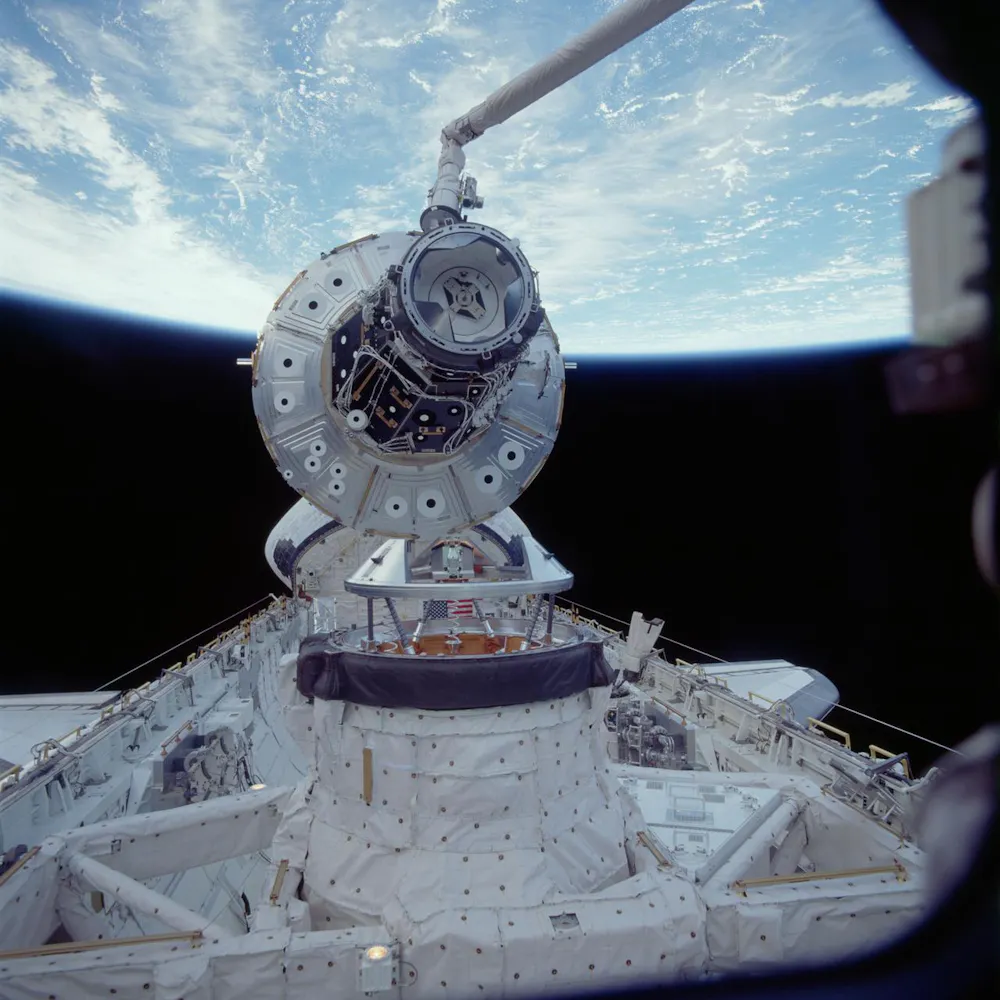
Where to next?
As the new millennium approached, the Clinton administration tasked NASA to think beyond the space station. What could robots and humans do next in space? And where could they do it? Notably, the White House expressed an interest in locations beyond low Earth orbit.
NASA, it turned out, was well positioned to meet the administration’s request. NASA Administrator Daniel Goldin was already thinking about preparing proposals for the next presidential administration and had recently sponsored a human lunar return study. In 1999, he established a team to investigate new technologies, missions and destinations for the 21st century.
This work took on new significance following the tragic loss of the space shuttle Columbia crew in February 2003. Many people, including those in the new George W. Bush White House, wondered whether the human spaceflight program should continue – and, if so, how.
Administration discussions culminated in Bush’s Vision for Space Exploration in 2004, which directed NASA to retire the space shuttle after the completion of the space station. It called for returning humans to the Moon on a crew exploration vehicle designed for destinations beyond low Earth orbit.
It also called for continuing robotic exploration of Mars and engaging companies and international partners in space. Fifteen years earlier, President George H. W. Bush had also announced a Moon and Mars exploration program, but congressional concerns about cost kept space travelers close to home.
The Constellation program’s legacy
In December 2004, NASA began the process of finding a manufacturer for the crew exploration vehicle. By August 2006, the space agency awarded Lockheed Martin the contract to build the capsule, which it had named Orion – the same Orion planned to carry Artemis astronauts to the Moon.
Years of research, development and testing followed for Orion as well as the Ares I crew and Ares V cargo launch vehicles. Together, these technologies made up the Constellation program.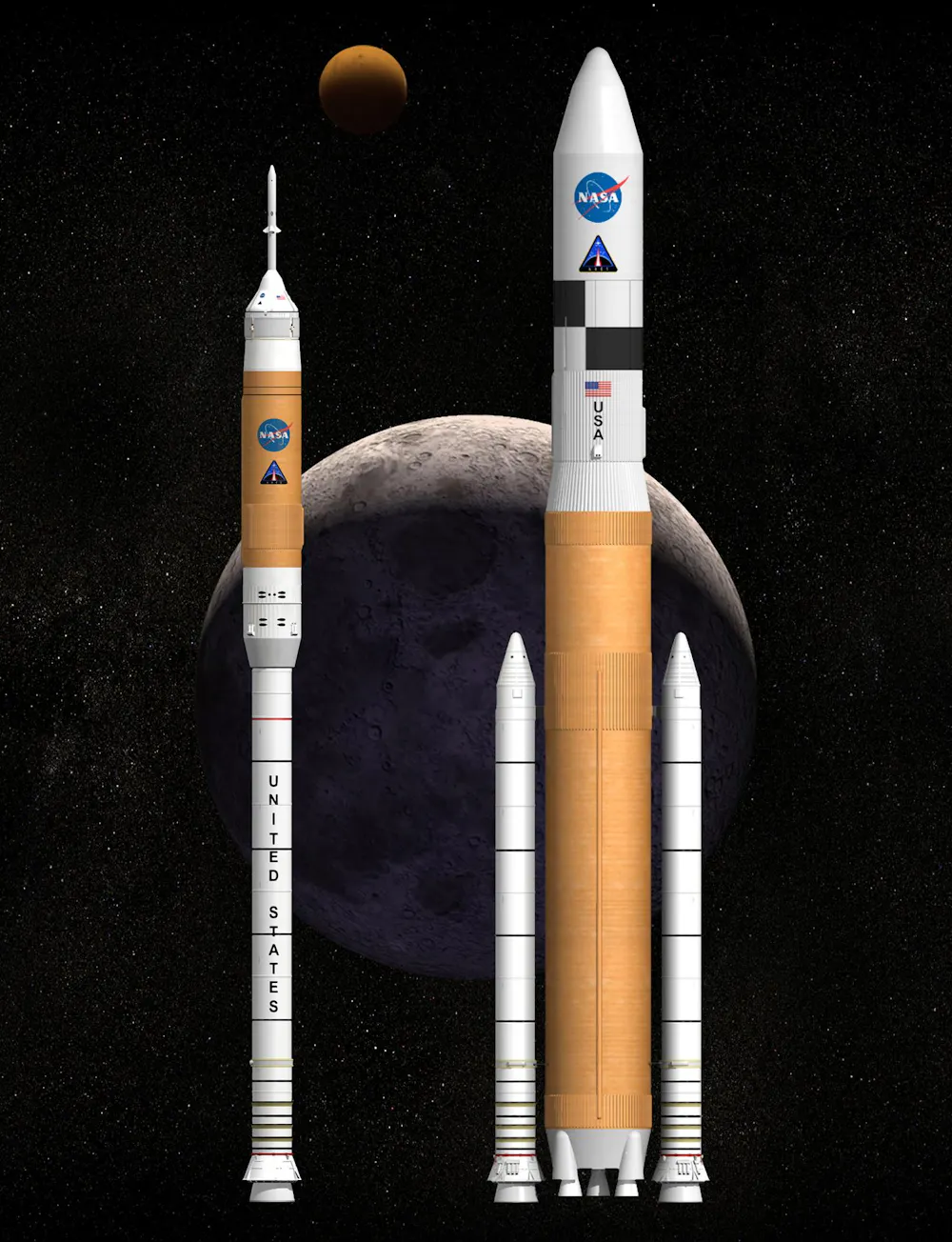
Constellation had two primary objectives: in the near term, to help transport crew to and from the space station after the space shuttle program ended; in the long term, to enable human lunar exploration.
Building systems that could work in both Earth orbit and around the Moon was supposed to save the time and cost of developing two vehicles. Similarly, adapting space shuttle program hardware could supposedly cut costs.
During the first months of Barack Obama’s presidency in 2009, the administration initiated an independent review of NASA’s human spaceflight plans. The Augustine Committee, chaired by retired aerospace executive Norman Augustine, found that the agency’s ambitions outstripped its limited budget, leading to significant delays. The first Orion spacecraft was likely to arrive after the space station ceased operations.
The committee proposed several paths forward at the current funding level, which prioritized space shuttle and space station programs. An additional annual investment of US$3 billion would allow for human exploration beyond low Earth orbit.
Ultimately, the Obama administration canceled Constellation, but two of its technologies lived on, thanks to U.S. senators from states that would have been affected by cuts.
The NASA Authorization Act of 2010 funded Orion’s continued development, shifting responsibility for space station crew transportation to commercial vehicles. It also directed NASA to develop the space launch system, a redesigned Ares V heavy booster, to send Orion to the Moon. The technical strategy had political benefits, too, preserving jobs in numerous congressional districts by providing continuity for aerospace contractors.
In December 2014, a Delta IV heavy rocket launched the first Orion capsule on a test flight, providing engineers with data on spacecraft systems and the heat shield. By October 2015, the space launch system had completed a critical design review, the last step before manufacturing could begin.
Introducing Artemis
In December 2017, the new Trump administration issued a policy directive shifting the focus of NASA’s human spaceflight program back to the Moon. The space agency would use Orion and the space launch system in a race to meet an ambitious 2024 landing date. NASA officially named the program Artemis in May 2019.
The 25-day Artemis I mission, launched in November 2022, was a major milestone for the program. This uncrewed flight was the first flight of the space launch system and the first to integrate SLS and Orion. It laid the groundwork for Artemis II, which will be the first crewed flight of the SLS.
Over more than 50 years, each new presidential administration has reassessed the place of spaceflight among its priorities, either encouraging or curtailing NASA’s efforts to return humans to the lunar surface.
Each crewed flight requires the alignment of technical expertise, political will and financial support over years if not decades. For the space fans who plan to watch the Artemis II launch, the wait for countdown may feel long. But it’s just a blink in NASA’s long journey back to the Moon.
Emily A. Margolis, Curator of Contemporary Spaceflight, National Air and Space Museum, Smithsonian Institution
This article is republished from The Conversation under a Creative Commons license. Read the original article.
Dive into “The Knowledge,” where curiosity meets clarity. This playlist, in collaboration with STMDailyNews.com, is designed for viewers who value historical accuracy and insightful learning. Our short videos, ranging from 30 seconds to a minute and a half, make complex subjects easy to grasp in no time. Covering everything from historical events to contemporary processes and entertainment, “The Knowledge” bridges the past with the present. In a world where information is abundant yet often misused, our series aims to guide you through the noise, preserving vital knowledge and truths that shape our lives today. Perfect for curious minds eager to discover the ‘why’ and ‘how’ of everything around us. Subscribe and join in as we explore the facts that matter. https://stmdailynews.com/the-knowledge/

Artemis II Astronauts Capture First Moon Flyby Images from Lunar Far Side
April 7, 2026 — NASA has released the first breathtaking images from the historic Artemis II mission, offering humanity a rare look at the Moon’s far side—including views never before seen by human eyes.
Captured during a seven-hour lunar flyby on April 6, the images were taken by astronauts aboard the Orion spacecraft as part of NASA’s first crewed mission to the Moon in more than 50 years.
🌕 A Historic View of the Moon
The newly released images reveal stunning details of the lunar surface, including impact craters, ancient lava flows, and fractured terrain that scientists will use to better understand the Moon’s geologic history.
Among the most remarkable visuals is a rare solar eclipse seen from space, where the Moon passes in front of the Sun, revealing the Sun’s outer corona. The images also captured an “earthset” and “earthrise”—moments where Earth appears to set and rise over the Moon’s horizon.
In one striking image, the Moon is backlit by the Sun, with Earth glowing at its edge, while distant planets like Saturn and Mars appear as bright points in the background.
📸 Thousands of Images, New Discoveries
The Artemis II crew—Reid Wiseman, Victor Glover, Christina Koch, and Canadian astronaut Jeremy Hansen—used a range of cameras to capture thousands of high-resolution images during the flyby.
In addition to photography, the astronauts reported observing six meteoroid impact flashes on the Moon’s surface, offering scientists a rare opportunity to study active lunar events in real time.
Researchers are now analyzing the images, audio, and telemetry data to refine their understanding of the Moon’s surface and compare findings with observations from Earth-based astronomers.
🔬 Science That Shapes the Future
According to NASA officials, the data collected during Artemis II will play a critical role in shaping future missions, including plans to establish a long-term human presence on the Moon.
“These images are not only visually stunning, but they are brimming with scientific value that will inspire generations to come,” said Dr. Nicky Fox, associate administrator for NASA’s Science Mission Directorate.
The mission also provides astronauts with a unique advantage—human observation. With four trained sets of eyes, the crew is able to analyze subtle differences in color, brightness, and texture across the lunar surface in ways robotic systems cannot.
🚀 More Than Halfway Home
Now more than halfway through its 10-day journey, Artemis II is heading back toward Earth. NASA is targeting a splashdown at 8:07 p.m. EDT on April 10 off the coast of San Diego.
Live coverage of the return will begin at 6:30 p.m. EDT on NASA+, with recovery teams ready to retrieve the crew and spacecraft following reentry.
🌍 A New Era of Exploration
The Artemis II mission marks a major step forward in NASA’s long-term vision of returning humans to the Moon and eventually sending astronauts to Mars.
With each image and data point sent back to Earth, the mission is not only rewriting the record books—but also expanding humanity’s understanding of our closest celestial neighbor.
Official Artemis II images are available through NASA’s digital platforms, including the Artemis Image Gallery and NASA Image and Video Library.
🔗 Related External Links
Explore official NASA resources and view the latest Artemis II Moon flyby images:
- NASA: Artemis II Mission Overview
- NASA Artemis Program (Return to the Moon)
- NASA Image and Video Library (Artemis II Photos)
- Artemis Image Gallery
- Orion Spacecraft Details
- Apollo 13 Mission History (Previous Distance Record)
Source: NASA Official Release – Artemis II Moon Flyby Images
Dive into “The Knowledge,” where curiosity meets clarity. This playlist, in collaboration with STMDailyNews.com, is designed for viewers who value historical accuracy and insightful learning. Our short videos, ranging from 30 seconds to a minute and a half, make complex subjects easy to grasp in no time. Covering everything from historical events to contemporary processes and entertainment, “The Knowledge” bridges the past with the present. In a world where information is abundant yet often misused, our series aims to guide you through the noise, preserving vital knowledge and truths that shape our lives today. Perfect for curious minds eager to discover the ‘why’ and ‘how’ of everything around us. Subscribe and join in as we explore the facts that matter. https://stmdailynews.com/the-knowledge/





