Brigitte Bardot defined the modern woman and defied social norms
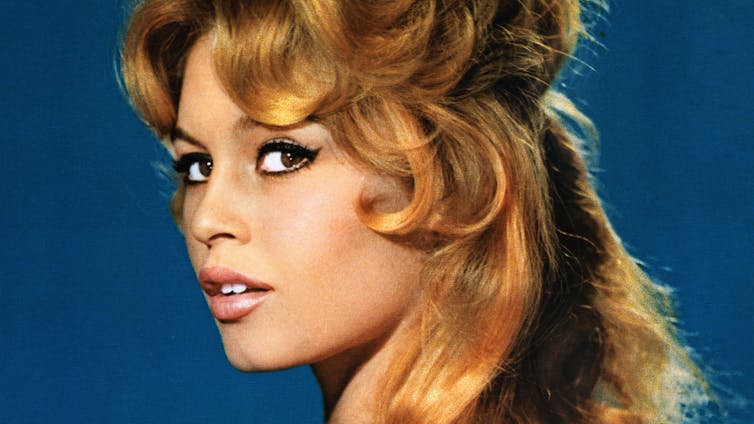
Ben McCann, University of Adelaide Brigitte Bardot’s death, at the age of 91, brings to a close one of the most extraordinary careers in post-war French cultural life. Best known as an actress, she was also a singer, a fashion icon, an animal rights activist and a symbol of France’s sexual liberation. Famous enough to be known by her initials, B.B. symbolised a certain vision of French femininity – rebellious and sensual, yet vulnerable. Her impact on beauty standards and French national identity was profound. At her peak, she rivalled Marilyn Monroe in global fame and recognition. Simone de Beauvoir, France’s leading feminist writer, famously wrote in 1959 that Bardot “appears as a force of nature, dangerous so long as she remains untamed”.
A star is born
Bardot was born in 1934 to a well-off Parisian family. Raised in a strict Catholic household, she studied ballet at the Conservatoire de Paris with hopes of becoming a professional dancer.Brigitte Bardot, pictured here in 1946, studied ballet as a child.Roger Viollet via Getty Images Her striking looks led her to modelling. By 14, she was appearing in Elle magazine, catching the eye of director Roger Vadim, whom she married in 1952. She began acting in the early 1950s and her appearance as Juliette in Vadim’s And God Created Woman (Et Dieu… créa la femme, 1956) put her on the map. Bardot was instantly catapulted to international stardom. Vadim presented his wife as the ultimate expression of youthful, erotic freedom that both shocked and captivated French audiences. Watching this relatively tame film today, it’s difficult to imagine just how taboo-breaking Bardot’s performance was. But in sleepy Catholic, conservative 1950s France, it set new norms for on-screen sexuality. The film became a global phenomenon. Critics loved it, but censors and religious groups grew nervous.
An 60s icon
Bardot’s lack of formal training as an actress paradoxically became part of her appeal: she adopted a spontaneous acting approach, as much physical as verbal. She was stunning in Contempt (Le Mépris, 1963), Jean-Luc Godard’s masterpiece about a crumbling marriage. Godard used her beauty and fame both as spectacle and critique. The film’s most famous sequence was a 31-minute conversation between Bardot and her co-star Michel Piccoli. Bardot was never better. In Henri-Georges Clouzot’s intense courtroom drama The Truth (La Vérité, 1960), she showcased her dramatic range playing a young woman on trial for the murder of her lover.Bardot in a poster for The Truth, 1960.LMPC via Getty Images In 1965, she co-starred with Jeanne Moreau in Louis Malle’s Long Live Maria (Viva Maria), a rare female buddy film that blended comedy and political satire. Bardot’s anarchic energy remains a dazzling feat. A Very Private Affair (Vie privée, 1962) saw her portray a woman consumed by fame and chased by the media. The plotline was eerily predictive of Bardot’s own future. She popularised fashion trends like the choucroute hairstyle and ballet flats. The Bardot neckline – off-the-shoulder tops and dresses – was named after her. She even wore pink gingham at her 1959 wedding.
Allure and provocation
Bardot’s star appeal lay in her contradictions. She appeared simultaneously natural and provocative, spontaneous and calculated. Her dishevelled glamour and effortless sexuality helped construct the archetype of the modern “sex kitten”. She famously said “it is better to be unfaithful than to be faithful without wanting to be”. Throwing off the shackles of bourgeois morality, Bardot epitomised a commitment to emotional and sexual freedom. Her turbulent love life was a case in point. She was married four times, with dozens of stormy relationships and extra-marital affairs along the way. Forever immortalised as a free-spirited ingénue, Bardot was a muse for filmmakers, artists and musicians, from Andy Warhol to Serge Gainsbourg. Later on, Kate Moss, Amy Winehouse and Elle Fanning mentioned Bardot as an inspiration. Famously, Bardot never succumbed to cosmetic surgery. As she once noted:
Women should embrace ageing because, at the end of the day, it’s much more beautiful to have a grandmother with white hair who looks like an elderly lady than to have a grandmother who’s bleached, dyed, and […] who looks much older but also really unhappy.
Life after the movies
Bardot retired from acting in 1973, aged only 39, citing disillusionment with fame. “It suffocated and destroyed me”, she said, about the film industry. She shifted her attention to animal rights, founding the Brigitte Bardot Foundation in 1986. She became an uncompromising, vocal activist, campaigning against animal cruelty, fur farming, whaling and bullfighting. But Bardot courted controversy from the mid-1990s for her far-right political views, remarks about Islam and immigration and repeated convictions for inciting racial hatred. She publicly defended disgraced actor Gérard Depardieu and pushed back on the #MeToo movement in France. Such statements damaged her reputation, especially outside France, and created a troubling image: the once-liberating sex symbol now associated with nationalist conservatism. While she never identified as a feminist, her unapologetic autonomy, early retirement and outspoken views led some to re-evaluate her as a figure of proto-feminist rebellion. France gradually began to turn against Bardot, bothered by her outspoken views. But some applauded her couldn’t-care-less attitude and unwillingness to play by the rules. Ultimately, by rejecting fame on her own terms, she parlayed her 50s free-spiritedness into a bold stand against conformity and societal norms. Late in life, she told Danièle Thompson, the writer-director of the 2023 mini-series about her career, “I don’t understand why the whole world is still talking about me”. The answer is simple – Bardot continues to fascinate us, flaws and all. Ben McCann, Associate Professor of French Studies, University of Adelaide This article is republished from The Conversation under a Creative Commons license. Read the original article.
Philly theaters unite to stage 3 plays by Pulitzer-winning playwright James Ijames
James Ijames, 2022 Pulitzer Prize winner for “Fat Ham,” is celebrated with a Citywide Pass in Philadelphia, offering access to three of his plays across different theaters. This initiative fosters collaboration among local theaters and showcases Ijames’ unique ability to create nuanced, character-driven narratives that explore complex queer and Black identities.
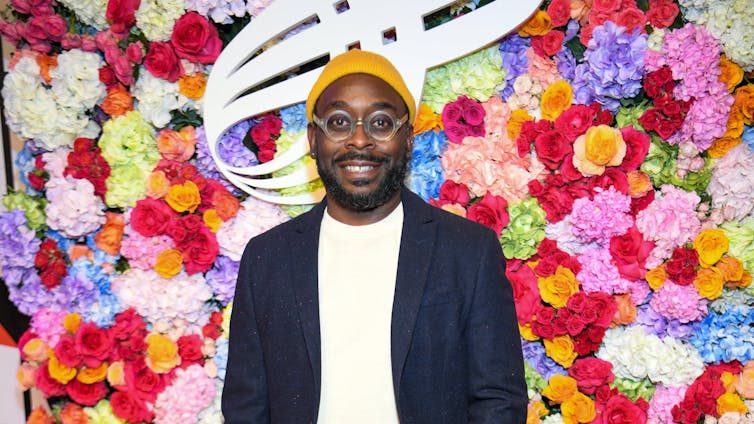
Most theater subscriptions offer a patron access to a single theater’s season. But Philadelphia’s new Citywide James Ijames Pass provides tickets to three James Ijames – pronounced EYE-ms, rhymes with “chimes” – plays at three theaters in Philadelphia. Subscribers will also get one mustard-colored beanie, one of Ijames’ signature accessories.
The full pass, which costs US$130, includes tickets for the Arden Theatre’s “Good Bones,” which premiered Jan. 22 and runs through March 22, the Wilma Theater’s “The Most Spectacularly Lamentable Trial of Miz Martha Washington,” which runs March 17 to April 5, and the Philadelphia Theatre Company’s “Wilderness Generation,” a world premiere that runs April 10 to May 3. There is also a two-show pass for $90 without “Good Bones.”
I’m a theater theorist, historian and practitioner who has written about Ijames’ work before and after his 2022 Pulitzer Prize. I believe this landmark collaboration between three important Philadelphia theaters is a fitting celebration of a multi-hyphenate theater artist who continues to champion his longtime artistic home.
Actor, playwright, director
Ijames, 46, was born in North Carolina and attended Morehouse College in Atlanta, Georgia. He earned his Master of Fine Arts degree at Temple University and stayed in Philadelphia after graduating.
Notably, this playwright’s MFA is in the study of acting. Ijames is also a talented director, and he performed and directed at multiple theaters around Philadelphia before starting to work as a playwright. He was also a tenured professor of theater at Villanova University, where I had the privilege to work with him and watch his creative process before he moved to New York City in 2025 to run the playwriting concentration at Columbia University.
Ijames was already a local celebrity in Philly before winning the Pulitzer Prize for drama for “Fat Ham,” his Hamlet adaptation centered on a queer Black Hamlet named Juicy and the legacy of his father’s barbecue joint. The New York theater scene took notice of him when the National Black Theatre staged “Kill Move Paradise” in 2017. This haunting piece is set in limbo, where unarmed Black men who have been killed by police examine how they have come to this place and how society continues to enable this pattern.
Other Ijames plays include “White,” a satire of the art world that tells the story of a gay white male artist who hires a Black woman actor to pretend to have done his work to see if that makes a difference in how his art is viewed. “TJ Loves Sally 4Ever” sets Thomas Jefferson and Sally Hemings’ relationship on a college campus where “TJ” is a dean and Sally is a student. And “Reverie” is a chamber play, which is an intimate meditation with an earnest and somber tone. In it, the father of a recently deceased Black gay man comes to meet the man he believed was his son’s partner.
Most recently, in 2025, Ijames partnered with the Australian pop singer Sia on a musical called “Saturday Church.” It is a story about reconciling queer community and Christian faith, and relying on the support of family, both biological and chosen.The cast and crew of ‘Fat Ham’ during the opening night curtain call at the Roundabout American Airlines Theatre on Broadway on April 12, 2023. Bruce Glikas/WireImage via Getty Images
Charting new dramatic territory
Although his theatrical styles and genres vary, at his core, Ijames writes nuanced, character-driven works that revolve around interpersonal relationships. His plays are playgrounds for performers, particularly due to his ability to write complex queer Black characters.
Influential American playwright Suzan-Lori Parks notes in her 1994 essay “Elements of Style” that the conflict between Black people and white people is the default trope of how Black people have been represented onstage – by almost exclusively white playwrights – for most of U.S. theater history. Parks posits that a way to avoid this centering of white conflict in Black lives comes from new dramatic territory that depicts conflicts between Black people and anything else.
Ijames never sets his Black characters in opposition to white society alone. He also refuses to take up the tropes of LGBTQ identity as incompatible with religion, or the idea that characters can be only gay or straight. Instead, Ijames creates narratives with queer religious people and pansexual men whose identities are not sources of conflict.
Advertisement
The citywide pass
The plays in the citywide pass offer an exciting cross section of what makes Ijames’s work so vibrant.
“Good Bones” is the story of a now-affluent Black woman, Aisha, who moves back to her blue-collar hometown. Aisha might be from this working-class neighborhood, but her elaborate renovations and white-collar sensibilities make her return seem more like gentrification than homecoming, at least as far as her local contractor can see.
“Miz Martha” follows the titular Martha Washington through a fever-dream-inspired trial in her final moments, as enslaved people care for her while knowing her death means their freedom.
And “Wilderness Generation” follows five cousins reunited in the U.S. South after many years apart, ready to talk about the secrets from their pasts.
With theater’s ever-changing and unstable financial landscape, I believe the Citywide James Ijames Pass is an exciting new subscriber model. The collaboration highlights Philadelphia’s theatrical talent and banks on local theaters working together to build audiences instead of treating each other as competition – a new development that could change how regional theater scenes operate.
Looking for an entertainment experience that transcends the ordinary? Look no further than STM Daily News Blog’s vibrant Entertainment section. Immerse yourself in the captivating world of indie films, streaming and podcasts, movie reviews, music, expos, venues, and theme and amusement parks. Discover hidden cinematic gems, binge-worthy series and addictive podcasts, gain insights into the latest releases with our movie reviews, explore the latest trends in music, dive into the vibrant atmosphere of expos, and embark on thrilling adventures in breathtaking venues and theme parks. Join us at STM Entertainment and let your entertainment journey begin! https://stmdailynews.com/category/entertainment/
Jurassic Quest Brings Life-Size Dinosaurs to Phoenix in February 2026
Jurassic Quest is roaring back into Phoenix in February 2026 with towering life-size dinosaurs, interactive exhibits, and hands-on activities for kids and families at the Arizona State Fairgrounds.
Phoenix, AZ — Jurassic Quest, billed as North America’s largest traveling dinosaur experience, is set to return to Arizona with a limited engagement at the Arizona State Fairgrounds from February 6–8, 2026.
The family-friendly attraction features life-size animatronic dinosaurs, immersive walk-through exhibits, and hands-on activities designed to blend entertainment with education. Guests will encounter towering recreations of iconic species such as Tyrannosaurus rex and Spinosaurus, along with interactive fossil digs, dinosaur rides, inflatables, and meet-and-greet opportunities with baby dinosaurs.
Jurassic Quest has become a popular touring event across the United States, particularly among families with young children. The experience combines museum-style displays with high-energy attractions, allowing visitors to explore at their own pace. Most attendees spend one to two hours navigating the exhibit.
The event will take place at the Arizona State Fairgrounds, located at 1826 W. McDowell Road in Phoenix, with multiple daily sessions scheduled throughout the weekend.
Tickets and additional event details are available through the official Jurassic Quest website.
Bad Bunny’s Super Bowl Halftime Show Fits the NFL’s Long Game to Win Latin America
The NFL aims to expand its reach into Latin America through strategic marketing and high-profile performers like Bad Bunny at the Super Bowl halftime show. While the choice has sparked controversy, particularly among conservatives, the league sees it as a business move to attract more fans, particularly in Mexico and Brazil.
Bad Bunny’s Super Bowl show is part of long play drawn up by NFL to score with Latin America
Donald Trump, it is fair to assume, will be switching channels during this year’s Super Bowl halftime show.
The U.S. president has already said that he won’t be attending Super Bowl LX in person, suggesting that the venue, Levi’s Stadium in Santa Clara, California, was “just too far away.” But the choice of celebrity entertainment planned for the main break – Puerto Rican reggaeton star Bad Bunny and recently announced pregame addition Green Day – didn’t appeal. “I’m anti-them. I think it’s a terrible choice. All it does is sow hatred. Terrible,” Trump told the New York Post.
National Football League Commissioner Roger Goodell likely didn’t have the sensibilities of the U.S. president in mind when the choice of Bad Bunny was made.
But for the NFL hierarchy, this was likely a business decision, not a political one. The league has its eyes on expansion into Latin America; Bad Bunny, they hope, will be a ratings-winning means to an end. It has made such bets in the past. In 2020, Shakira and Jennifer Lopez were chosen to perform, with Bad Bunny making an appearance. The choice then, too, was seen as controversial.Shakira and Bad Bunny perform during the Pepsi Super Bowl LIV Halftime Show on Feb. 2, 2020, in Miami, Fla. Al Bello/Getty Images
Some, like the National Basketball Association, are at an advantage. The sport is played around the globe and has large support bases in Asia – notably in the Philippines and China – as well as in Europe, Australia and Canada.
The league has opted for a multiprong approach to attracting international fans, including lobbying to get flag football into the 2028 Olympics in Los Angeles.
Playing the field
When it comes to the traditional tackle game, the NFL has held global aspirations for over three-quarters of a century. Between 1950-1961, before they merged, the NFL and American Football League played seven games against teams in Canada’s CFL to strengthen the relationship between the two nations’ leagues.
Advertisement
Developing a fan base south of the border has long been part of the plan.
The first international exhibition game between two NFL teams was supposed to take place in Mexico City in 1968. But Mexican protest over the economy and cost of staging the Olympics that year led the game, between the Detroit Lions and Philadelphia Eagles, to be canceled.
Instead, it was Montreal that staged the first international exhibition match the following year.
In 1986, the NFL added an annual international preseason game, the “American Bowl,” to reach international fans, including several games in Mexico City and one in Monterrey.
But the more concerted effort was to grow football in the potentially lucrative, and familiar, European market.
After several attempts by the NFL and other entities in the 1970s and ’80s to establish an international football league, the NFL-backed World League of Football launched in 1991. Featuring six teams from the United States, one from Canada and three from Europe, the spring league lost money but provided evidence that there was a market for American football in Europe, leading to the establishment of NFL Europe.
But NFL bosses have long had wider ambitions. The league staged 13 games in Tokyo, beginning in 1976, and planned exhibitions for 2007 and 2009 in China that were ultimately canceled. These attempts did not have the same success as in Europe.
Beyond exhibitions
The NFL’s outreach in Latin America has been decades in the making. After six exhibition matches in Mexico between 1978 and 2001, the NFL chose Mexico City as the venue of its first regular season game outside the United States.
In 2005, it pitted the Arizona Cardinals against the San Francisco 49ers at Estadio Azteca in Mexico City. Marketed as “Fútbol Americano,” it drew the largest attendance in NFL history, with over 103,000 spectators.
The following year, Goodell was named commissioner and announced that the NFL would focus future international efforts on regular-season games.
Advertisement
The U.K. was a safe bet due to the established stadium infrastructure and the country’s small but passionate fan base. The NFL International Series was played exclusively in London between 2007 and 2016.
But in 2016, the NFL finally returned to Mexico City, staging a regular-season game between the Oakland – now Las Vegas – Raiders and Houston Texans.
And after the completion of upgrades to Latin America’s largest stadium, Estadio Azteca, the NFL will return to Mexico City in 2026, along with games in Munich, Berlin and London. Future plans include expanding the series to include Sydney, Australia, and Rio de Janeiro, Brazil, in 2026.
Although this represents a fraction of the overall sports fans in each nation, the raw numbers match the overall Latino fan base in the United States. In recent years the NFL has celebrated Latino Heritage Month through its Por La Cultura campaign, highlighting Latino players past and present.
Latin America also offers practical advantages. Mexico has long had access to NFL games as the southern neighbor to the United States, with the Dallas Cowboys among the most popular teams in Mexico.
For broadcasters, Central and South America offer less disruption in regards to time zones. Games in Europe start as early as 6:30 a.m. for West Coast fans, whereas Mexico City follows Central time, and Brasilia time is only one to two hours ahead of Eastern time.Bad Bunny poses with the Album of the Year, Best Música Urbana Album and Best Global Music Performance awards during the 68th Grammy Awards on Feb. 1, 2026, in Los Angeles. Matt Winkelmeyer/Getty Images for The Recording Academy
For sure, the choice of Bad Bunny as the halftime pick is controversial, given the current political climate around immigration. The artist removed tour dates on the U.S. mainland in 2025 due to concerns about ICE targeting fans at his concerts, a concern reinforced by threats from the Department of Homeland Security that they would do just that at the Super Bowl.
But in sticking with Bad Bunny, the NFL is showing it is willing to face down a section of its traditional support and bet instead on Latin American fans not just tuning in for the halftime show but for the whole game – and falling in love with football, too.