

Entertainment
Philly theaters unite to stage 3 plays by Pulitzer-winning playwright James Ijames
James Ijames, 2022 Pulitzer Prize winner for “Fat Ham,” is celebrated with a Citywide Pass in Philadelphia, offering access to three of his plays across different theaters. This initiative fosters collaboration among local theaters and showcases Ijames’ unique ability to create nuanced, character-driven narratives that explore complex queer and Black identities.

Bess Rowen, Villanova University
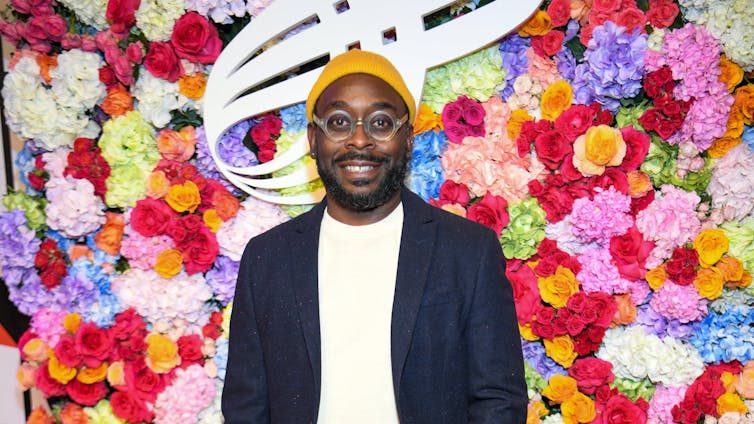
Most theater subscriptions offer a patron access to a single theater’s season. But Philadelphia’s new Citywide James Ijames Pass provides tickets to three James Ijames – pronounced EYE-ms, rhymes with “chimes” – plays at three theaters in Philadelphia. Subscribers will also get one mustard-colored beanie, one of Ijames’ signature accessories.
The full pass, which costs US$130, includes tickets for the Arden Theatre’s “Good Bones,” which premiered Jan. 22 and runs through March 22, the Wilma Theater’s “The Most Spectacularly Lamentable Trial of Miz Martha Washington,” which runs March 17 to April 5, and the Philadelphia Theatre Company’s “Wilderness Generation,” a world premiere that runs April 10 to May 3. There is also a two-show pass for $90 without “Good Bones.”
I’m a theater theorist, historian and practitioner who has written about Ijames’ work before and after his 2022 Pulitzer Prize. I believe this landmark collaboration between three important Philadelphia theaters is a fitting celebration of a multi-hyphenate theater artist who continues to champion his longtime artistic home.
Actor, playwright, director
Ijames, 46, was born in North Carolina and attended Morehouse College in Atlanta, Georgia. He earned his Master of Fine Arts degree at Temple University and stayed in Philadelphia after graduating.
Notably, this playwright’s MFA is in the study of acting. Ijames is also a talented director, and he performed and directed at multiple theaters around Philadelphia before starting to work as a playwright. He was also a tenured professor of theater at Villanova University, where I had the privilege to work with him and watch his creative process before he moved to New York City in 2025 to run the playwriting concentration at Columbia University.
Ijames was already a local celebrity in Philly before winning the Pulitzer Prize for drama for “Fat Ham,” his Hamlet adaptation centered on a queer Black Hamlet named Juicy and the legacy of his father’s barbecue joint. The New York theater scene took notice of him when the National Black Theatre staged “Kill Move Paradise” in 2017. This haunting piece is set in limbo, where unarmed Black men who have been killed by police examine how they have come to this place and how society continues to enable this pattern.
Other Ijames plays include “White,” a satire of the art world that tells the story of a gay white male artist who hires a Black woman actor to pretend to have done his work to see if that makes a difference in how his art is viewed. “TJ Loves Sally 4Ever” sets Thomas Jefferson and Sally Hemings’ relationship on a college campus where “TJ” is a dean and Sally is a student. And “Reverie” is a chamber play, which is an intimate meditation with an earnest and somber tone. In it, the father of a recently deceased Black gay man comes to meet the man he believed was his son’s partner.
Most recently, in 2025, Ijames partnered with the Australian pop singer Sia on a musical called “Saturday Church.” It is a story about reconciling queer community and Christian faith, and relying on the support of family, both biological and chosen.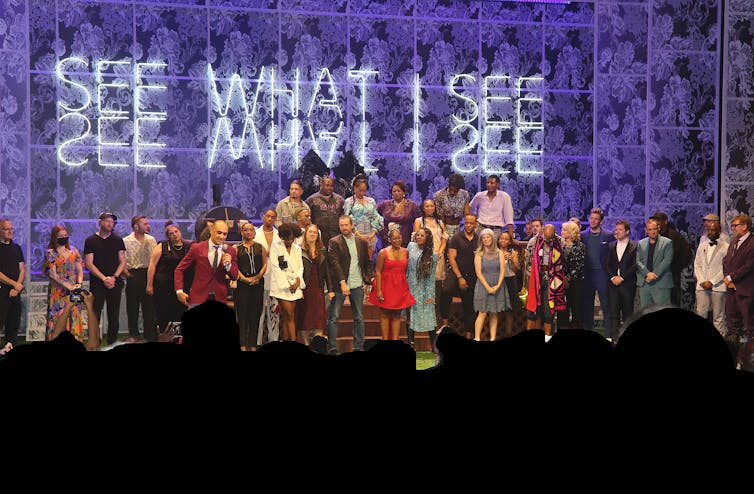
Charting new dramatic territory
Although his theatrical styles and genres vary, at his core, Ijames writes nuanced, character-driven works that revolve around interpersonal relationships. His plays are playgrounds for performers, particularly due to his ability to write complex queer Black characters.
Influential American playwright Suzan-Lori Parks notes in her 1994 essay “Elements of Style” that the conflict between Black people and white people is the default trope of how Black people have been represented onstage – by almost exclusively white playwrights – for most of U.S. theater history. Parks posits that a way to avoid this centering of white conflict in Black lives comes from new dramatic territory that depicts conflicts between Black people and anything else.
Ijames never sets his Black characters in opposition to white society alone. He also refuses to take up the tropes of LGBTQ identity as incompatible with religion, or the idea that characters can be only gay or straight. Instead, Ijames creates narratives with queer religious people and pansexual men whose identities are not sources of conflict.
The citywide pass
The plays in the citywide pass offer an exciting cross section of what makes Ijames’s work so vibrant.
“Good Bones” is the story of a now-affluent Black woman, Aisha, who moves back to her blue-collar hometown. Aisha might be from this working-class neighborhood, but her elaborate renovations and white-collar sensibilities make her return seem more like gentrification than homecoming, at least as far as her local contractor can see.
“Miz Martha” follows the titular Martha Washington through a fever-dream-inspired trial in her final moments, as enslaved people care for her while knowing her death means their freedom.
And “Wilderness Generation” follows five cousins reunited in the U.S. South after many years apart, ready to talk about the secrets from their pasts.
With theater’s ever-changing and unstable financial landscape, I believe the Citywide James Ijames Pass is an exciting new subscriber model. The collaboration highlights Philadelphia’s theatrical talent and banks on local theaters working together to build audiences instead of treating each other as competition – a new development that could change how regional theater scenes operate.
Bess Rowen, Assistant Professor of Theatre, Villanova University
This article is republished from The Conversation under a Creative Commons license. Read the original article.
Looking for an entertainment experience that transcends the ordinary? Look no further than STM Daily News Blog’s vibrant Entertainment section. Immerse yourself in the captivating world of indie films, streaming and podcasts, movie reviews, music, expos, venues, and theme and amusement parks. Discover hidden cinematic gems, binge-worthy series and addictive podcasts, gain insights into the latest releases with our movie reviews, explore the latest trends in music, dive into the vibrant atmosphere of expos, and embark on thrilling adventures in breathtaking venues and theme parks. Join us at STM Entertainment and let your entertainment journey begin! https://stmdailynews.com/category/entertainment/
and let your entertainment journey begin!


Forgotten Genius Fridays
Octavia E. Butler: The Black Woman Who Helped Change Science Fiction
Discover how Octavia E. Butler transformed science fiction, explored Black identity, and helped shape Afrofuturism through her groundbreaking novels.

Forgotten Genius Friday | The Knowledge | STM Daily News
Octavia E. Butler: The Woman Who Reimagined the Future
When we think about science fiction, we often picture spaceships, robots, alien civilizations, and futuristic technology. But what happens when science fiction becomes a way to explore racism, inequality, human survival, and the consequences of our choices?
That is exactly what Octavia E. Butler brought to the genre.
Long before Afrofuturism became a widely recognized cultural movement, Butler was creating extraordinary stories that placed Black characters—especially Black women—at the center of imagined futures.
Her work challenged conventional ideas about who could be a hero, whose experiences mattered, and what science fiction could accomplish.
A Young Girl With a Powerful Imagination
Octavia Estelle Butler was born on June 22, 1947, in Pasadena, California.
Raised primarily by her mother and grandmother after her father’s death, Butler grew up shy and found comfort in books and storytelling.
Her mother worked as a domestic employee, and Butler sometimes accompanied her to work. Those experiences exposed her to the racial and economic inequalities that would later influence her fiction.
As a child, Butler loved science fiction, but she noticed something missing: people who looked like her.
Rather than accepting that absence, she began creating stories of her own.
She would eventually become one of the most influential writers in speculative fiction.
Breaking Barriers in Science Fiction
During the 1970s, mainstream American science fiction was largely associated with white male writers and protagonists.
Butler entered that literary world with a different perspective.
Her first published novel, Patternmaster, appeared in 1976. It introduced readers to a world shaped by extraordinary mental abilities, social hierarchies, and struggles for power.
Butler continued developing complex stories that explored humanity’s relationship with authority, identity, biology, and survival.
In 1979, she published one of her best-known novels, Kindred.
The book follows Dana, a Black woman living in 1970s California who is repeatedly transported back to a Maryland plantation before the Civil War.
Through Dana’s experiences, Butler forced readers to confront the brutality of American slavery and its continuing influence on the present.
Rather than treating history as something safely confined to the past, Kindred makes that history immediate and deeply personal.
Imagining the Future—and Warning Us About It
In 1993, Butler published Parable of the Sower, a novel set in a collapsing American society struggling with economic inequality, environmental destruction, violence, and weakened institutions.
Its central character, Lauren Olamina, is a young Black woman who develops a philosophy called Earthseed while searching for a way to survive and build a community.
The novel takes place beginning in 2024, making its imagined future particularly striking to modern readers.
Butler followed it with Parable of the Talents in 1998, continuing her examination of social instability, religious extremism, authoritarianism, and the struggle to create a better future.
Her novels were not literal predictions. They were works of speculative fiction that used recognizable social trends to ask difficult questions about where humanity might be headed.
Octavia Butler and Afrofuturism
Afrofuturism brings together African and African diasporic experiences with science fiction, technology, history, mythology, and imaginative visions of the future.
While artists such as Sun Ra and George Clinton explored cosmic identity through music, performance, and futuristic imagery, Butler used literature to investigate power, history, and humanity’s possible futures.
Her novels frequently placed Black women in situations where they had to navigate extraordinary challenges and reshape the societies around them.
Butler’s work is widely discussed within Afrofuturist scholarship, although her literary contributions also extend beyond any single cultural label.
She demonstrated that Black people did not have to remain secondary characters in someone else’s vision of the future.
They could be the architects of entirely new worlds.
Recognition and a Lasting Legacy
Butler received some of science fiction’s most significant honors, including Hugo and Nebula Awards.
In 1995, she became the first science-fiction writer to receive a MacArthur Fellowship, often called a genius grant.
Her work also included the Xenogenesis trilogy, later collected as Lilith’s Brood, which explored humanity’s encounter with an extraterrestrial species and raised questions about consent, adaptation, identity, and survival.
Butler died on February 24, 2006, at age 58.
Yet her influence has continued to grow.
Her novels are studied in classrooms, discussed by scholars, and embraced by new generations of readers and creators interested in science fiction, social justice, and Afrofuturism.
A Genius Who Made Us Think Differently About Tomorrow
Octavia E. Butler was more than a science-fiction author.
She was a visionary storyteller who understood that imagining the future also meant examining the past and questioning the present.
Her stories asked readers to consider how power operates, how communities survive, and how human beings might change.
And perhaps her greatest contribution was demonstrating that the future belongs in the imagination of everyone.
Why Octavia E. Butler Belongs in Forgotten Genius Friday
At STM Daily News, our Forgotten Genius Friday series celebrates extraordinary individuals whose ideas, innovations, and accomplishments helped shape our world, even if their stories aren’t widely known. Octavia E. Butler fits that mission perfectly. Although she received prestigious literary awards and recognition during her lifetime, her influence extends far beyond science fiction. Like the inventors, scientists, and trailblazers we’ve featured in this series, Butler challenged barriers, defied expectations, and opened doors for future generations. Through her imagination, she helped redefine who could tell stories about humanity’s future—and who could be at the center of those stories. Her inclusion in Forgotten Genius Friday reminds us that genius isn’t limited to laboratories and inventions. Sometimes, it begins with a pen, a powerful imagination, and the courage to envision a different world.
Sources and fact-checking
The Huntington Library holds Butler’s literary archive and confirms the chronology of her major novels, awards, and career. The MacArthur Foundation independently documents her 1995 fellowship.
- Official Octavia E. Butler biography
- The Huntington — Octavia E. Butler Papers
- MacArthur Foundation — Octavia Butler
- The Huntington — Telling My Stories exhibition
For more stories about overlooked innovators, writers, scientists, and visionaries who changed our world, explore The Knowledge and Forgotten Genius Friday at STM Daily News.

Entertainment
Lights, Camera, Snackers: How Aspiring Filmmakers Can Enter to Win $25,000
The director’s chair is open and the opportunity to create the next great snack-sized movie could be yours. Aspiring filmmakers and creators have the chance to turn a prewritten script into an original short film for a $25,000 prize.


Lights, Camera, Snackers: How Aspiring Filmmakers Can Enter to Win $25,000
(Feature Impact) The director’s chair is open and the opportunity to create the next great snack-sized movie could be yours.
For the second year, Bumble Bee is bringing back its Tuna “Cans”Film Festival, giving aspiring filmmakers and creators the chance to turn a script written by comedian and actress, Grace Reiter, into an original short film starring its deliciously convenient tuna Snackers.
Watch the video to learn more!
“I love a chance to support those starting out in the film industry – and this time, I’m partnering with Bumble Bee for the Tuna Cans Film Festival to do it,” Reiter said. “Plus, I’m making it easy: I already wrote the script.”
Using Reiter’s scripted lines, creators can make the story entirely their own, bringing their vision to life through original characters, settings, music, editing and creative flair.
The creative brief is simple: The finished film must be 60 seconds or less and Bumble Bee Snackers™ need to get their moment in the spotlight.
Plus, the stakes are bigger than ever: The winning filmmaker will take home a $25,000 grand prize to help make their filmmaking dreams a reality.
Creators can submit their original short film by Oct. 23, 2026, at 11:59 p.m. PT.
The film can be funny, dramatic, unexpected or all three. The lines are already written but the order, arrangement and any additions are open to creative interpretation. Now it’s time to see what you can do with it.
Visit tunacansfilmfest.com, where you can find Reiter’s original script, submission instructions and complete contest details, to get started.
SOURCE:
Bumble Bee

Last Updated on October 9, 2026 by Daily News Staff
From haunted mazes after dark to daytime trick-or-treating with Snoopy, Knott’s offers two ways to celebrate Halloween in 2026.
BUENA PARK, Calif. — Halloween season is underway at Knott’s Berry Farm, where visitors can choose between the nighttime frights of Knott’s Scary Farm and the playful daytime activities of Knott’s Spooky Farm.
For readers planning a Southern California outing this October, the two celebrations offer different ways to get into the Halloween spirit.
Scary Farm brings new nightmares after dark
Knott’s Scary Farm runs on select nights through October 31, 2026, transforming the park with haunted mazes, scare zones, shows, and more than 1,000 creatures, according to Knott’s.
Two new mazes join this year’s lineup. Inked turns a cartoonist’s creations into a nightmare, while Unearthed sends visitors into an excavation where an ancient evil has awakened.
Also new for 2026 is Color Collect, an activity in which guests use an interactive lantern to activate pillars around the park and collect six colors.
Scary Farm requires its own paid event admission. As of October 4, online single-night tickets are advertised from $65, with taxes potentially additional. Knott’s does not recommend the event for children under 13.
Spooky Farm offers daytime Halloween fun
For families seeking a gentler celebration, Knott’s Spooky Farm takes place Thursdays through Sundays, September 24–October 31, plus October 12, according to the park’s events calendar, which lists the additional date as Columbus Day.
Children can trick-or-treat through Ghost Town, enjoy games and spooky stories with Snoopy and the Peanuts characters, and show off their Halloween outfits at Snoopy’s Spooktacular Costume Party.
Other activities include the Creepy Critters of Calico, cookie decorating in the pumpkin patch, and performances by the Bob Baker Marionette Theater. Cookie decorating carries an additional fee.
The daytime celebration gives families a chance to enjoy Halloween decorations, treats, and entertainment together before the nighttime haunt begins.
Planning your visit
Knott’s Berry Farm is located at 8039 Beach Boulevard in Buena Park, California. Before heading out, check the park’s official calendar for your chosen date, operating hours, admission options, and event policies.
Whether your Halloween plans call for a bag of candy or a trip through a haunted maze, Knott’s has a seasonal celebration to match.
Keep the fun going: Visit STM Daily News for more entertainment news, theme park updates, and stories worth sharing.
Official sources
- Knott’s Scary Farm: attractions and tickets
- Knott’s Spooky Farm: activities and entertainment
- Knott’s Berry Farm: seasonal event dates
Information checked October 4, 2026. Event schedules, offerings, and ticket prices may change.






