

Lifestyle
Even 1 drink a day elevates your cancer risk – an expert on how alcohol affects the body breaks down a new government report


Many people use the new year to reflect on their relationship with alcohol. Just-released government guidelines are giving Americans another reason to consider a “dry January.”
Over the past few decades, mounting scientific evidence has shown that as little as 1-2 alcoholic drinks per day can lead to increases in the likelihood of several cancers. This prompted the U.S. surgeon general, Dr. Vivek Murthy, to release a new Surgeon General Advisory on Jan. 3, 2025, warning about the link between alcohol and cancer. This report highlighted the evidence and included a call for new cancer warning labels on alcoholic beverages.
The association between alcohol and cancer isn’t new news – scientists have been trying to determine the link for decades – yet most people aren’t aware of the risks and may only associate drinking with liver disease like cirrhosis. In a 2019 survey from the American Institute for Cancer Research, less than half of Americans identified alcohol as a risk factor for cancer.
Alcohol is the third-most preventable cause of cancer in the U.S, putting it just behind tobacco and obesity. As the surgeon general’s report highlights, alcohol is associated with approximately 100,000 cancer cases and 20,000 cancer deaths every year, playing a role in breast, liver, colorectal, mouth, throat, esophagus and voice box cancer cases. Alcohol-induced cancer deaths outnumber alcohol-associated traffic crash fatalities every year.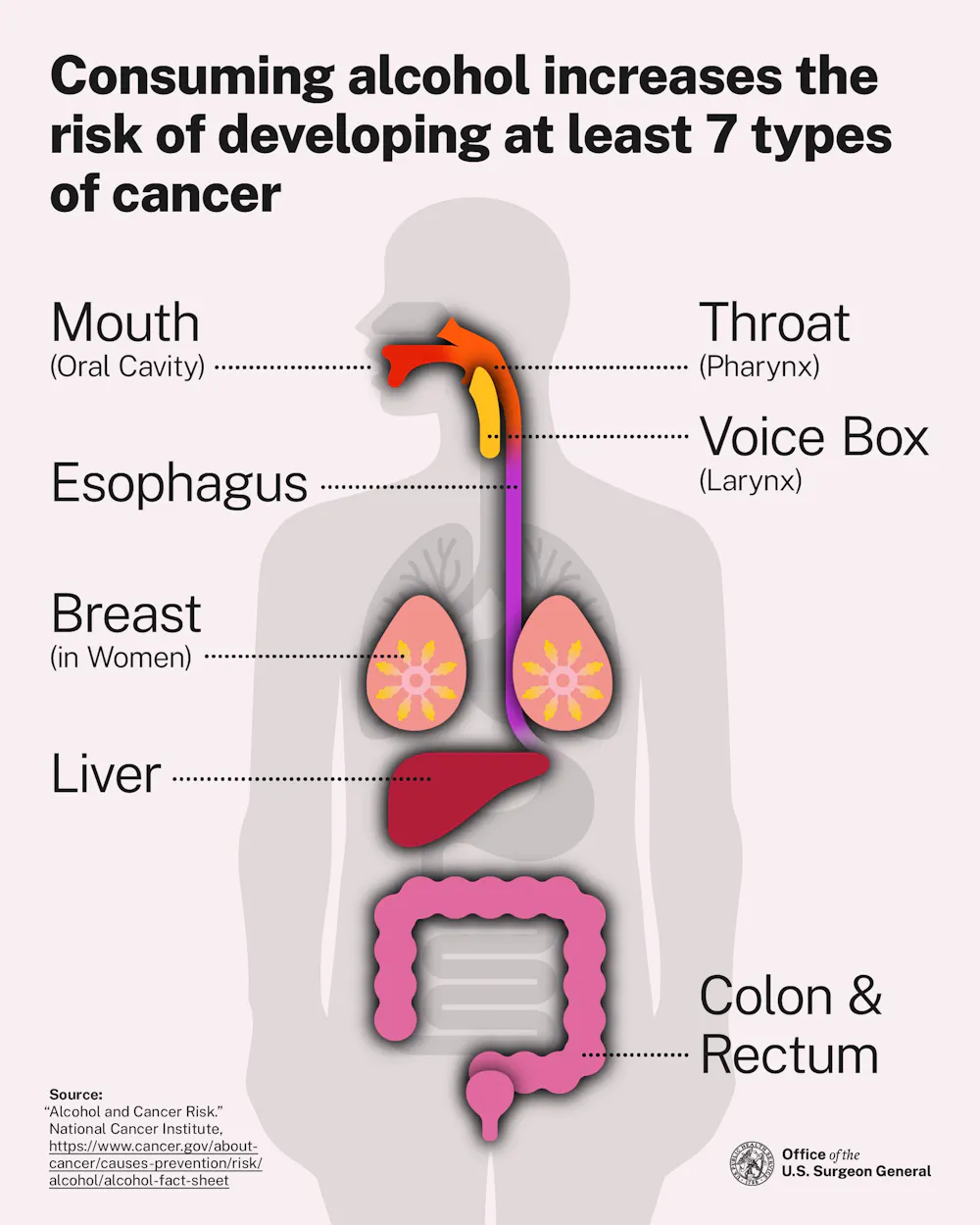
The report included the suggestion to add warning labels to alcohol similar to what is already required for tobacco products – another substance of abuse known to cause cancer.
As a neuroscientist specializing in the neurobiological effects of alcohol use and binge drinking, I am glad to see the call to action for reducing alcohol consumption in the United States.
Key takeaways of the report
With so few people aware of the links between alcohol consumption and various cancers – and the fact that the vast majority of people consume some alcohol every week – it’s easy to see why the surgeon general is calling for greater awareness. The 22-page report highlights what scientists know about the relationship between alcohol and cancer, and suggests actions for moving forward. Those include label changes on alcohol, which have not been updated since they were created in 1988.
Somewhat strikingly, breast cancer carries a large portion of this risk – making it particularly worrisome in the face of increased alcohol use among women.
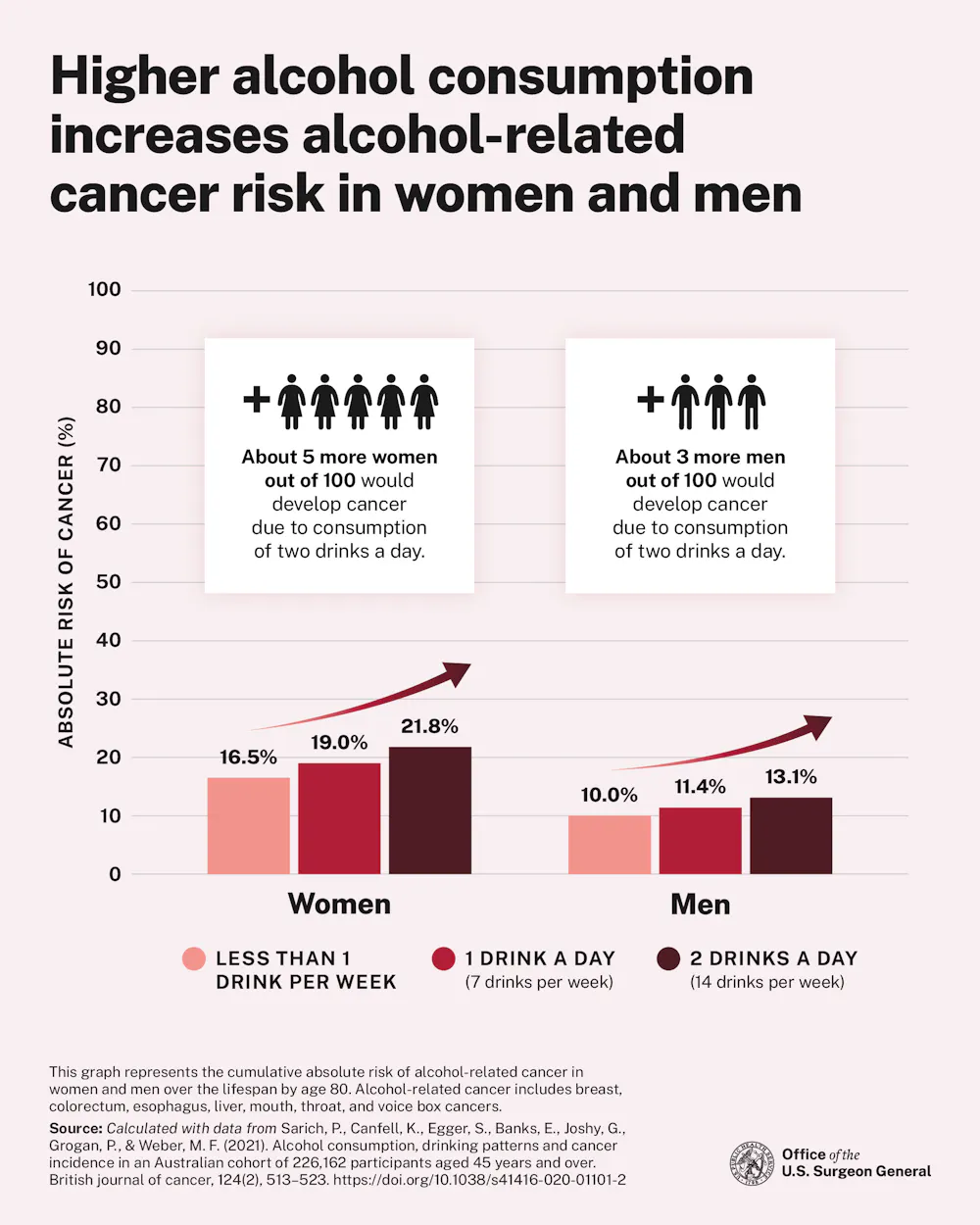
These numbers don’t only apply to heavy alcohol drinkers. While less alcohol is better, 25% of these cancer cases were in people classified as moderate drinkers – consuming, on average, fewer than two drinks per day. This means that anyone regularly drinking alcohol, even small amounts, should know about and understand the risks.
Surgeon general’s advisories are the primary way that the Department of Health and Human Services, where the Office of the Surgeon General resides, communicate health issues of great importance to the public. Surgeon general’s advisories are not necessarily breaking news, but they take the opportunity to bring public awareness to science surrounding big public health issues.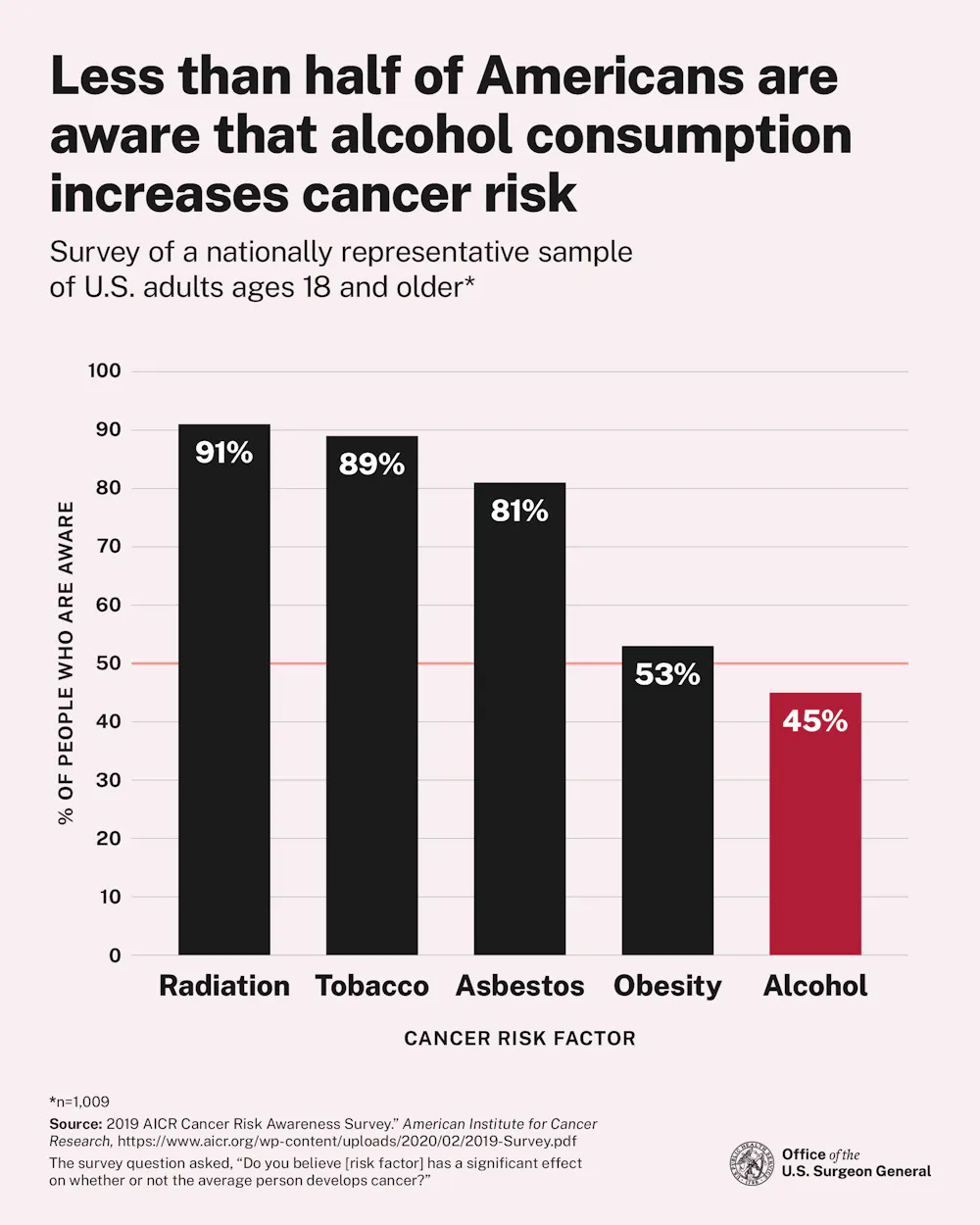
The science behind the link between alcohol and cancer
The relationship between alcohol and cancer has been clear to scientists for decades. In fact, it was highlighted in a 2016 surgeon general’s report as well, which focused on addiction more broadly.
The new report outlines the different types of evidence supporting this link. One way is through epidemiological science, which tries to understand patterns and relationships between the rates of cancer and how much alcohol people consumed. Another is through experimental animal studies, which allow scientists to understand the mechanism and causality of these connections as they apply to specific cancers. Together, studies conclusively show a link and pathway between alcohol consumption and cancer.
The surgeon general’s report highlights four key pathways through which alcohol can cause cancer. These largely focus on the ways alcohol can negatively affect your DNA, the building blocks of cells. While the healthy cells in your body divide all the time, their abnormal growth can be driven by aberrant factors like alcohol-induced DNA damage.
This DNA damage leads to uncontrollable growth of tissue instead of healthy, normal tissue growth. This abnormal tissue growth is cancer. The four pathways through which alcohol can lead to cancer highlighted in the report are:
- The body naturally breaks alcohol down into acetaldehyde. Acetaldehyde can damage and break DNA, leading to chromosomal rearrangements and tumors. This link is so strong that acetaldehyde has been classified as a carcinogen since 1999.
- Alcohol creates reactive oxygen species. Reactive oxygen species, sometimes called “free radicals,” are unstable molecules that contain oxygen and can further damage DNA, proteins and fats.
- Alcohol can influence hormones, like estrogen. Alcohol can raise the amount of estrogen in the body, which may explain its link to breast cancer. This increased estrogen can influence breast tissue by causing – you guessed it – DNA damage.
- Alcohol is a solvent, which means other things can dissolve in it. This makes it easier for carcinogens from other sources – like cigarettes and e-vapes – to be absorbed by the body when the two are consumed together.
Is any amount of alcohol safe?
The biggest question on people’s minds right now is likely “how much alcohol can I safely drink?” and the answer to that might disappoint you – probably none.
Alcohol use remains one of the most preventable risk factors for cancer. And even moderate alcohol consumption – one or fewer drinks per day – may elevate cancer risk for some types, such as breast, throat and mouth cancers.
But none of these studies can tell you what your individual risk for cancer is. The relationship between alcohol and cancer can be influenced by your genes, such as those that control the enzymes that metabolize alcohol, and other lifestyle factors that influence the rates of cancer broadly, like diet and inflammation. All of these lifestyle and personal health factors can influence how risky alcohol consumption is for you.
The Centers for Disease Control and Prevention notes that if you choose to drink, consider sticking to less than one, for women, or two, for men, standard servings of alcohol per day – which might be smaller than you think, and don’t binge drink alcohol at all. The surgeon general is also suggesting a rethinking of these guidelines to include updated limits on daily alcohol consumption and greater educational efforts around the link between alcohol and cancer.
The National Institute on Alcohol Abuse and Alcoholism has similar recommendations around limiting alcohol consumption and advises that for people who choose to drink alcohol, “the less, the better.”
The institute offers tips on its website for managing your alcohol consumption or abstaining from alcohol consumption altogether, including finding alternative hobbies and activities, identifying what leads to your urges to drink and having a plan to handle urges, and identifying a strategy for saying “no” to an alcoholic beverage in social settings.
Nikki Crowley, Assistant Professor of Biology, Biomedical Engineering and Pharmacology, Penn State
This article is republished from The Conversation under a Creative Commons license. Read the original article.
Our Lifestyle section on STM Daily News is a hub of inspiration and practical information, offering a range of articles that touch on various aspects of daily life. From tips on family finances to guides for maintaining health and wellness, we strive to empower our readers with knowledge and resources to enhance their lifestyles. Whether you’re seeking outdoor activity ideas, fashion trends, or travel recommendations, our lifestyle section has got you covered. Visit us today at https://stmdailynews.com/category/lifestyle/ and embark on a journey of discovery and self-improvement.


small business
Navigating the American Dream: How Integrated Financial Tools, Credit and Rewards Can Help Small Businesses Succeed


(Feature Impact) Owning a small business has been a cornerstone of the “American Dream” for generations. It represents the chance to transform a passion into a livelihood and legacy. However, turning dreams into reality is rarely a smooth or easy process and requires more than ambition alone. Today’s business owners need support and access to tools that enable them to overcome challenges and keep growing.
Recent research conducted by the Capital One Insights Center shows 75% of more than 1,000 surveyed small business owners with more than one employee and annual revenues of up to $20 million are confident about the future, and 69% believe their business is actively primed for growth.
While this optimism is promising, 47% of business owners still said their operations either stayed the same or became less efficient over the past year, citing issues like back-office friction and fragmented financial systems that make it difficult to get a clear picture of the health of their businesses.
If you’re a small business owner eager to grow but not sure how to get there, start with this advice from real small business owners and experts at Capital One.
//www.youtube.com/embed/VX48mqEaSnE
Identify Sources of Friction
Before you can pour effort into growth, you must understand what barriers are holding you back. Take time to look under the hood of your business to identify where time and energy is being lost.
For example, you may be among the 78% of small business owners who feel stressed and uncertain about expense management – think hours spent hunting for receipts, manually entering numbers into software and reconciling accounts. Operational challenges aren’t just a hassle; they also pull attention away from important priorities like serving your customers and planning for growth.
“We were focused on making as many candles as possible, especially during the busy season,” said Katie Roering, co-owner of Fontana Candle Co. “A lot of the back-office tasks like procurement, raw material purchasing, forecasting – all the really important things – were done at 3 a.m., 8 p.m. or on Saturday and Sunday, and there really just was not enough time in the day to get everything done that we needed to. We just knew as we continued to grow, we needed to streamline our processes, build out our team and keep moving forward.”
 Use Integrated Tools to Manage Finances
Instead of balancing 10 different tracking and analysis tools, you can turn to one-stop solutions to improve efficiency. Time gets lost when you’re forced to manually gather and interpret relevant data before you’re able to act. You need a platform that handles the busywork for you.
Integrated, or “all-in-one,” financial tools – like accounting and bookkeeping platforms with automation capabilities or business credit cards featuring built-in analytical tools – allow you to easily stay on top of cash flow and day-to-day operations. For small businesses where every hour and dollar makes a difference, consolidating and automating systems can have an immediate impact. In fact, 51% of survey respondents said integrated tools have already fueled their growth.
Leverage Credit Access and Rewards Wisely
Growth requires capital, so access to credit is a game-changer for many business owners, with 77% describing it as a key factor in achieving business resilience. Having funds accessible when you need them makes your business more capable of weathering storms such as equipment failures and seasonal slowdowns. It also puts the power in your hands to act when an exciting opportunity presents itself, like an inventory flash sale or the chance to advertise in a new market.
Access to credit comes with another advantage: rewards. By using credit cards for your daily business expenses, you can earn cash back, points or travel rewards. Whether you redeem these to cover everyday expenses, book business trips or reinvest in the business, they can act as a bonus source of income. Learn to maximize rewards like the 84% of small business cardholders surveyed so you aren’t leaving money on the table.
To learn more about how small business owners can identify obstacles, employ integrated financial tools and use credit as a tool for growth, read the full report at capitalone.com/about/insights-center.
Photos courtesy of Shutterstock
SOURCE:

Food and Beverage
Jack-o’-Lantern Stuffed Peppers Prove Fun Isn’t Just for Pumpkins
These Jack-o’-Lantern Stuffed Peppers give you a Halloween-themed, kid-approved way to put vegetables on the dinner table.
Recipes:
Jack-o’-Lantern Stuffed Peppers

Jack-o’-Lantern Stuffed Peppers Prove Fun Isn’t Just for Pumpkins
(Feature Impact) Jack-o’-lantern carving is a cherished fall tradition – but pumpkins aren’t the only vegetables you can decorate with fun, spooky or scary faces. These Jack-o’-Lantern Stuffed Peppers give you a Halloween-themed, kid-approved way to put vegetables on the dinner table.
Filled with savory ground turkey, brown rice, melty cheese and warm, savory spices, these peppers taste as autumnal as they look. It’s simple to customize the filling to your family’s tastes, and you can even make the meal interactive by inviting kids to choose their own pepper colors and carve their own expressions.
Find more Halloween and seasonal recipes at Culinary.net.
Jack-o’-Lantern Stuffed Peppers
Recipe adapted from AllRecipes
Prep time: 15 minutes
Cook time: 45 minutes
Servings: 4
- 1 teaspoon olive oil
- 1 pound ground turkey
- 3 cloves garlic, minced
- 1/2 medium onion, diced
- 1 teaspoon garlic powder
- 1 teaspoon cumin
- 4 large orange bell peppers
- 1 cup cooked brown rice
- 1 cup grated sharp cheddar cheese
- 2 teaspoons kosher salt
- 1/2 teaspoon ground black pepper
- cayenne pepper, to taste
- cups seasoned tomato sauce, warmed
- Preheat oven to 400 F and coat 9-by-13-inch baking dish with olive oil.
- In skillet, brown ground turkey with minced garlic, onion, garlic powder and cumin until meat is cooked, 4-5 minutes.
- With small knife, cut eyes, nose and mouth into flattest side of each pepper to resemble jack-o’-lantern. Cut around seed pods and remove pepper tops, trimming and discarding any seeds from under stems then setting tops aside. Trim white membranes from inside each pepper and shake out seeds. Place peppers in prepared baking dish.
- In bowl, combine turkey mixture with cooked rice, cheddar cheese, salt, black pepper and cayenne pepper, to taste.
- Divide and stuff mixture into peppers; cover with reserved pepper tops.
- Wrap baking dish loosely with aluminum foil and bake until peppers are tender, about 45 minutes.
- Spoon about 3 tablespoons warm tomato sauce onto each plate; place stuffed peppers on top. Serve remaining sauce on side.
Photo courtesy of Shutterstock
SOURCE:
Lifestyle
How to Manage Symptoms of Heart Failure
Symptoms of Heart Failure: Managing heart failure is a significant expense to the U.S. healthcare system, costing the nation approximately $40 billion in 2020 and expected to increase to approximately $142 billion a year by 2050. If you (or a loved one) are living with the condition, consider these tips to help manage it.

How to Manage Symptoms of Heart Failure
(Feature Impact) Americans are facing a growing health challenge, with 1 in 4 adults at risk of heart failure, according to the Heart Failure Society of America. Additionally, approximately 6.7 million U.S. adults who are 20 years old or older are currently living with heart failure, and that number is projected to reach 8.7 million by 2030.
Managing heart failure is a significant expense to the U.S. healthcare system, costing the nation approximately $40 billion in 2020 and expected to increase to approximately $142 billion a year by 2050.
If you (or a loved one) are living with the condition, consider these tips to help manage it.
Adhere to the Treatment and Follow-Up Plan
Ongoing outpatient care is important when managing heart failure. Understand the treatment plan provided by your healthcare team, make diet and lifestyle changes, take medications as directed and keep recommended follow-up appointments.
Pay attention to changes in symptoms and communicate with your healthcare provider if treatment does not seem to be working as expected. If their conditions are left unmanaged, patients can experience a range of heart-failure-related symptoms such as shortness of breath, fatigue, buildup of fluid and more.
Understand Challenges with Diuretic Treatment
Diuretics help the body remove excess fluid and are commonly used to treat swelling, or edema, associated with heart failure. Your provider may try different diuretics, sometimes referred to as “water pills,” to manage your heart failure symptoms. However, intravenous (IV) diuretic therapy may be required for some patients if symptoms continue.
Ask About Treatment Options Before IV Care Is Needed
For some adults, a healthcare provider may consider recommending an at-home, non-oral diuretic option prior to escalating to IV therapy.
For example, ENBUMYST™ (bumetanide nasal spray) is a prescription diuretic used in adults to treat edema associated with congestive heart failure. It’s administered as a nasal spray for short-term use to manage excess fluid with the goal of transitioning to oral diuretic therapy when appropriate.
Talk with your healthcare provider to learn more and visit enbumyst.com. Read the full Prescribing Information and Patient Information.
Photo courtesy of Shutterstock
Important Safety Information
What is ENBUMYST?
ENBUMYST is a prescription medicine used in adults to treat swelling caused by excess fluid in the body (edema) from congestive heart failure, liver disease, and kidney disease.
What is the most important information I should know about ENBUMYST?
- ENBUMYST is a diuretic that helps your body remove fluid. Losing too much fluid can cause dehydration, low blood volume, and increase the risk of blood clots. Blood abnormalities may include decreased salts (electrolytes), and increased nitrogen, glucose and uric acid. The risk of these abnormalities is higher in elderly people, those using higher doses, or those who do not get enough electrolytes by mouth.
- You should not use ENBUMYST if you have severe electrolyte loss. Tell your healthcare provider if you experience unusual thirst; dizziness or lightheadedness; weakness or tiredness; fast heart rate; dry mouth or tongue; sudden pain; redness or swelling in your joints; pain, swelling, redness, or warmth in your leg; shortness of breath or fast breathing; high blood sugar; dark urine; pale, tight, cool or clammy skin; muscle cramps; confusion.
Do not use ENBUMYST if youhave low or no urine production or are allergic to bumetanide or to any of the ingredients in ENBUMYST.
Before using ENBUMYST, tell your healthcare provider if you have low electrolytes, are on a low-salt diet, have diarrhea, diabetes, nasal problems such as a runny or stuffy nose or polyps, a history of nasal injury or surgery, are or plan to become pregnant, are or plan to breastfeed.
Tell your healthcare provider about all the medicines you take, including prescriptions, over-the-counter medicines, vitamins, and herbal supplements.
ENBUMYST may cause serious side effects, such as worsening kidney function and ringing in the ears or hearing loss.
The most common side effects of ENBUMYST include dehydration, headache, muscle cramps, dizziness, low blood pressure, nausea, and abnormal brain functioning with certain liver problems.
These are not all the possible side effects of ENBUMYST. Talk to your healthcare provider for more information.
Call your healthcare provider for medical advice about side effects. You may report side effects to FDA at 1-800-FDA-1088.
US-ENBU-2600110

SOURCE:
Esperion




