

Lifestyle
Get chronic UTIs? Future treatments may add more bacteria to your bladder to beat back harmful microbes
Researchers developed a biomaterial releasing beneficial E. coli to combat urinary tract infections by outcompeting harmful bacteria, aiming to reduce antibiotic resistance and manage chronic UTIs effectively.


Sarguru Subash, Texas A&M University
Millions of people in the U.S. and around the world suffer from urinary tract infections every year. Some groups are especially prone to chronic UTIs, including women, older adults and some veterans.
These infections are typically treated with antibiotics, but overusing these drugs can make the microbes they target become resistant and reduce the medicines’ effectiveness.
To solve this problem of chronic UTIs and antibiotic resistance, we combined our expertise in microbiology and engineering to create a living material that houses a specific strain of beneficial E. coli. Our research shows that the “good” bacteria released from this biomaterial can compete with “bad” bacteria for nutrients and win, dramatically reducing the number of disease-causing microbes.
With further development, we believe this technique could help manage recurring UTIs that do not respond to antibiotics.
Bringing bacteria to the bladder
For the microbes living in people, nutrients are limited their presence varies between different parts of the body. Bacteria have to compete with other microbes and the host to acquire essential nutrients. By taking up available nutrients, beneficial bacteria can stop or slow the growth of harmful bacteria. When harmful bacteria are starved of important nutrients, they aren’t able to reach high enough numbers to cause disease.
Delivering beneficial bacteria to the bladder to prevent UTIs in challenging, though. For one, these helpful bacteria can naturally colonize only in people who are unable to fully empty their bladder, a condition called urinary retention. Even among these patients, how long these bacteria can colonize their bladders varies widely.
Current methods to deliver bacteria to the bladder are invasive and require repeated catheter insertion. Even when bacteria are successfully released into the bladder, urine will flush out these microbes because they cannot stick to the bladder wall.
Biomaterials to treat UTIs
Since beneficial bacteria cannot attach to and survive in the bladder for long, we developed a biomaterial that could slowly release bacteria in the bladder over time.
Our biomaterial is composed of living E. coli embedded in a matrix structure made of gel. It resembles a piece of jelly about 500 times smaller than a drop of water and can release bacteria for up to two weeks in the bladder. By delivering the bacteria via biomaterial, we overcome the need for the bacteria to attach to the bladder to persist in the organ.
We tested our biomaterial by placing it in human urine in petri dishes and exposing it to bacterial pathogens that cause UTIs. Our results showed that when mixed in a 50:50 ratio, the E. coli outcompeted the UTI-causing bacteria by increasing to around 85% of the total population. When we added more E. coli than UTI-causing bacteria, which is what we envision for future development and testing, the proportion of E. coli increased to over 99% of the population, essentially wiping out the UTI-causing bacteria. Moreoever, the biomaterial continued releasing E. coli for up to two weeks in human urine.
Our findings suggest that E.coli could stick around and survive in the bladder for extended periods of time and successfully decrease the growth of many types of bacteria that cause UTIs.

Improving biomaterials
Our findings show that E. coli can not only control harmful bacteria it’s closely related to but also a broad range of disease-causing bacteria in humans and animals. This means scientists might not need to identify different types of beneficial bacteria to control each pathogen – and there are many – that can cause a UTI.
Our team is currently evaluating how effectively our biomaterial can cure UTIs in mice. We are also working to identify the specific nutrients that beneficial and harmful bacteria compete over and what factors may help beneficial bacteria win. We could add these nutrients to our biomaterial to be released or withheld.
This research is still at an early stage, and clinical uses are not in development yet, so if it does reach patients it will be well in the future. We hope that our technology could be refined and applied to control other bacterial infections and some cancers caused by bacteria.
Sarguru Subash, Assistant Professor of Veterinary Pathobiology, Texas A&M University
This article is republished from The Conversation under a Creative Commons license. Read the original article.
Our Lifestyle section on STM Daily News is a hub of inspiration and practical information, offering a range of articles that touch on various aspects of daily life. From tips on family finances to guides for maintaining health and wellness, we strive to empower our readers with knowledge and resources to enhance their lifestyles. Whether you’re seeking outdoor activity ideas, fashion trends, or travel recommendations, our lifestyle section has got you covered. Visit us today at https://stmdailynews.com/category/lifestyle/ and embark on a journey of discovery and self-improvement.
Discover more from Daily News
Subscribe to get the latest posts sent to your email.





Entertainment
Smart Gaming: How Parents Can Keep Kids Safe Online
Parents can enhance kids’ safety during online gaming by using privacy settings, researching games, enabling age checks, keeping personal information private, and utilizing parental controls and security tools.

Last Updated on March 14, 2026 by Daily News Staff
Smart Gaming: How Parents Can Keep Kids Safe Online
(Family Features) Playing video games can be a fun, social experience. However, online gaming also poses real risks, especially for kids. As a parent, you don’t necessarily need to be a gamer yourself to help keep your children safe when the controller is in their hands.
Consider taking proactive steps like these to create a healthy online gaming environment for kids of all ages.
Check System Privacy Settings
As a first line of defense – before your child even starts gaming – spend some time in the device or console privacy settings. Here you can turn off sharing, disable location tracking, limit microphone and camera access and restrict how other users can interact with your child’s profile. Similarly, many games and platforms include built-in privacy settings that can be tailored to your child’s age and online experience. These settings may allow you to limit who can view your child’s profile or send a friend request, message or voice chat.
Research Games
Because not all games are created equal, look up game ratings through a service such as ESRB before buying or downloading to understand the maturity level of the game and determine if it’s appropriate for your child. To take it a step further, read reviews from other parents or watch gameplay videos to see if you deem not only the content but also the social interaction acceptable.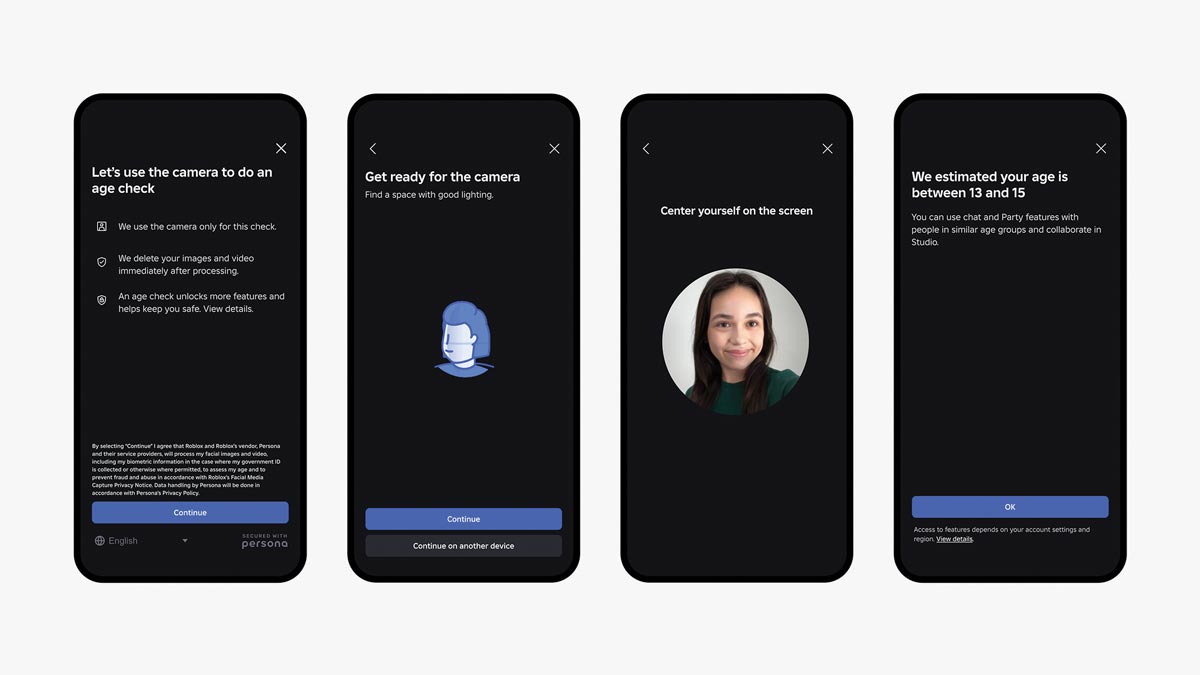
Use Facial Age Estimation
Online platforms are increasingly looking for ways to keep users safe, and that includes added levels of verification. As part of a multilayered approach to safety, Roblox is the first online gaming platform to require age checks for users of all ages to access chat features, enabling age-appropriate communication and limiting conversations between adults and minors. These secure age checks are designed to be fast, easy and secure using Facial Age Estimation technology directly within the app.
“Our commitment to safety is rooted in delivering the highest level of protection for our users,” said Matt Kaufman, chief safety officer at Roblox. “By building proactive, age-based barriers, we can empower users to create and connect in ways that are both safe and appropriate.”
Once age-checked, users are assigned to one of six age groups: under 9, 9-12, 13-15, 16-17, 18-20 or 21 and older, ensuring conversations are safe and age appropriate. Age checks are optional; however, features like chat will not be accessible unless an age check is completed. Chat is also turned off by default for children under age 9, unless a parent provides consent after an age check.
Keep Personal Information Private
It’s seldom a bad idea to be extra cautious when interacting with strangers online, even if they seem friendly enough while playing the game. Teach children what information not to share, including their full name, address, birthday, school name, phone number, email address, passwords or any photos that may contain any personal information (like a house number or school logo) in the background. Also encourage a screen name and generic avatar for added privacy.
Turn on Parental Controls
Designed to allow parents a supervisory role in their child’s online gaming experience, parental controls on many platforms include the ability to set schedules and limit playtime, restrict access to certain content or social features, require a password for purchases or set a spending limit.
Avoid Clicking Unfamiliar Links
Player profiles and in-game chats may include links to external sites, including those promising rewards or cheat codes. Because they can be used to gain access to personal information, remind your children to ask an adult before clicking any unfamiliar links while gaming so they can be verified as trustworthy.
Employ Privacy and Security Tools
While system or console-specific settings allow parents to set content restrictions, approve downloads, manage friends lists and more, additional layers of security are sometimes necessary. Extra safeguards such as antivirus and internet security software, DNS (domain name system) filtering and two-factor authentication can also be enabled to help keep kids safe online.
For more tools to help parents make informed decisions and support their children’s gaming experience, visit corp.roblox.com/safety.
Photo courtesy of Shutterstock (father and daughter playing video game)
SOURCE:
Roblox
Our Lifestyle section on STM Daily News is a hub of inspiration and practical information, offering a range of articles that touch on various aspects of daily life. From tips on family finances to guides for maintaining health and wellness, we strive to empower our readers with knowledge and resources to enhance their lifestyles. Whether you’re seeking outdoor activity ideas, fashion trends, or travel recommendations, our lifestyle section has got you covered. Visit us today at https://stmdailynews.com/category/lifestyle/ and embark on a journey of discovery and self-improvement.
Author

Discover more from Daily News
Subscribe to get the latest posts sent to your email.
Lifestyle
Why the First Year Behind the Wheel is the Most Dangerous: Data Shows Teen Drivers 3 Times More Likely to be in Fatal Crash
Teen drivers are significantly at risk of fatal crashes, with those aged 16-19 being nearly three times more likely to be involved in accidents than older drivers. The first year of driving presents heightened dangers, but with proper preparation, including coaching, technology, and smart insurance, families can mitigate these risks and promote safety.

Why the First Year Behind the Wheel is the Most Dangerous: Data Shows Teen Drivers 3 Times More Likely to be in Fatal Crash
(Feature Impact) The driver’s license photo may be slightly awkward, but the milestone is unforgettable. For families, a newly licensed teen means independence, busy schedules and a new set of responsibilities.
Motor vehicle crashes remain one of the leading causes of death for U.S. teens, according to the Centers for Disease Control and Prevention (CDC). Data from the National Highway Traffic Safety Administration shows drivers ages 16-19 are nearly three times more likely to be involved in a fatal crash than drivers 20 and older, per mile driven.
The statistics are serious, but they’re also manageable.
“With the right preparation, teen driving doesn’t have to feel overwhelming,” said Susan Irace, manager, divisional claims at Mercury Insurance. “Experience is what young drivers are building. Parents can help shorten that learning curve with structure, technology and smart coverage decisions.”
Why the First Year Matters
Federal safety data shows crash risk is highest in a teen’s first year of independent driving. Night driving, teen passengers and distracted driving increase that risk – while seat belts, graduated licensing laws and supervised practice significantly reduce it.
In 2023, more than 2,800 teens ages 13-19 were killed in motor vehicle crashes nationwide, according to the CDC. However, teen crash rates have declined over time thanks to safer vehicles, graduated driver licensing programs and greater awareness of distracted driving.
Ways to Reduce Teen Driving Risk

The experts at Mercury Insurance encourage families to focus on preparation rather than panic.
1. Coach Early and Often
- Log supervised driving time in different conditions – highways, rain, nighttime
- Create a simple written driving agreement outlining expectations
- Limit teen passengers during the first year
- Make seatbelts non-negotiable
2. Let Technology Help
- Choose vehicles with safety features like automatic emergency braking and blind-spot monitoring
- Use telematics or safe-driving feedback tools to reinforce good habits
- Activate smartphone “Do Not Disturb While Driving” settings
3. Review Insurance Before the Keys Change Hands
- Add teens to your insurance policy promptly
- Revisit liability limits to protect family assets
- Ask about good student and driver training discounts
“Insurance is about preparation, not fear,” Irace said. “When families combine active coaching with the right coverage, they’re setting their teen up for safer miles ahead.”
Preparation Turns Risks into Confidence
The first solo drive is a milestone, but preparation determines what comes next. By pairing common-sense coaching with today’s vehicle safety technology and thoughtful insurance planning, families can support independence while managing risk responsibly.
For more teen driver safety tips and coverage guidance, visit MercuryInsurance.com/resources.
Photos courtesy of Shutterstock

SOURCE:
Our Lifestyle section on STM Daily News is a hub of inspiration and practical information, offering a range of articles that touch on various aspects of daily life. From tips on family finances to guides for maintaining health and wellness, we strive to empower our readers with knowledge and resources to enhance their lifestyles. Whether you’re seeking outdoor activity ideas, fashion trends, or travel recommendations, our lifestyle section has got you covered. Visit us today at https://stmdailynews.com/category/lifestyle/ and embark on a journey of discovery and self-improvement.
Author
Discover more from Daily News
Subscribe to get the latest posts sent to your email.
Last Updated on March 13, 2026 by Daily News Staff
(Feature Impact) To add charm to your yard, encourage local wildlife and give you a front-row seat to nature, building a birdhouse is a simple weekend project that checks all of those boxes.
Building a Birdhouse
Seasoned DIYers and first-timers alike can follow this step-by-step guide to create a functional, welcoming birdhouse.
Step 1: Choose the Right Design
Start by deciding what type of birds you’d like to attract. Different birds prefer different house sizes and entrance types. A simple, classic birdhouse design makes the project beginner-friendly and works well for common backyard birds like wrens, chickadees and bluebirds. In general, plan for at least a 1-1 2/2-inch entrance hole, a 5-by-5-inch interior space and 2 inches or more of roof overhang.
Step 2: Gather Materials and Tools
Most DIY birdhouses can be built with basic materials and tools you may already have at home, including untreated cedar or pine wood, screws or nails, wood glue, sandpaper and exterior-safe paint as well as a measuring tape, pencil, saw and drill.
Step 3: Measure and Cut Wood
Measure and cut wood to make the front panel, back panel, two side panels, floor and roof. Then sand all edges for smooth assembly.
Step 4: Drill Holes
Using a hole-saw bit, drill the entrance hole into the front panel. Position it a few inches below the roofline to keep predators out. Next, drill 2-3 small drainage holes in the floor piece to prevent water buildup and help keep the birdhouse dry.
Step 5: Assemble the Birdhouse
Attach the side panels to the back panel using screws or nails. Add the front panel then secure the floor piece, slightly recessed, so rainwater can drain. Attach the roof last, making sure it slopes slightly to allow water to run off.
Step 6: Paint the Exterior
If you plan to paint your birdhouse, stick to neutral, nature-inspired colors. Light browns, soft greens or white help regulate temperature and blend into the environment.
Step 7: Mount Your Birdhouse
Once dry, place your birdhouse in a quiet, sheltered spot away from heavy foot traffic. Mount or hang it 5-10 feet off the ground, facing away from prevailing winds.
Visit eLivingtoday.com for more DIY project inspiration.
Photo courtesy of Shutterstock
SOURCE:

Our Lifestyle section on STM Daily News is a hub of inspiration and practical information, offering a range of articles that touch on various aspects of daily life. From tips on family finances to guides for maintaining health and wellness, we strive to empower our readers with knowledge and resources to enhance their lifestyles. Whether you’re seeking outdoor activity ideas, fashion trends, or travel recommendations, our lifestyle section has got you covered. Visit us today at https://stmdailynews.com/category/lifestyle/ and embark on a journey of discovery and self-improvement.
Discover more from Daily News
Subscribe to get the latest posts sent to your email.





