Connect with us

News

Grand Canyon’s Dragon Bravo megafire shows the growing wildfire threat to water systems

Published

on

Last Updated on August 31, 2025 by Daily News Staff

Dragon Bravo Fire
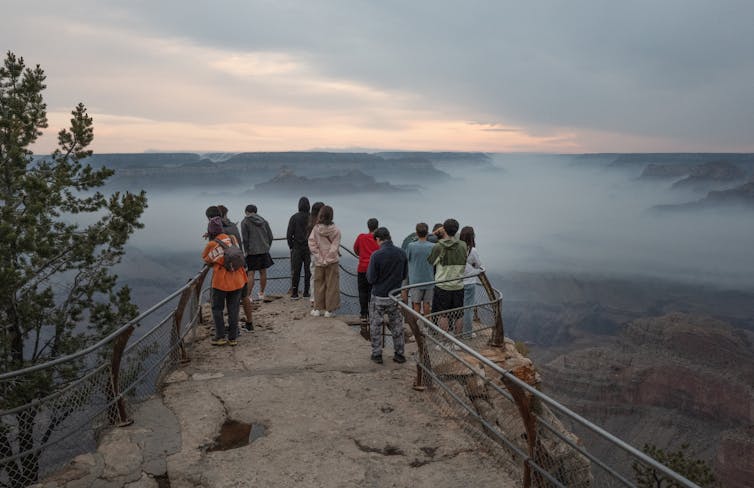
Tourists watch smoke from the Dragon Bravo wildfire float through the Grand Canyon.
Scott Olson/Getty Images

Grand Canyon’s Dragon Bravo megafire shows the growing wildfire threat to water systems

Faith Kearns, Arizona State University

As wildfire crews battled the Dragon Bravo Fire on the Grand Canyon’s North Rim in July 2025, the air turned toxic.

A chlorine gas leak had erupted from the park’s water treatment facility as the building burned, forcing firefighters to pull back. The water treatment facility is part of a system that draws water from a fragile spring. It’s the only water source and system for the park facilities on both rims, including visitor lodging and park service housing.

The fire also damaged some of the area’s water pipes and equipment, leaving fire crews to rely on a fleet of large water trucks to haul in water and raising concerns about contamination risks to the water system itself.

By mid-August, Dragon Bravo was a “megafire,” having burned over 140,000 acres, and was one of the largest fires in Arizona history. It had destroyed more than 70 structures, including the iconic Grand Canyon Lodge, and sent smoke across the region.

A worker in a hard hat picks his way carefully over wet rocks below a split in an exposed water line. Dragon Bravo Fire.
A National Park Service worker assesses a split in an exposed section of the Grand Canyon’s fragile water lines in 2014. The water pipeline, installed in the mid-1960s, feeds water from Roaring Springs, located approximately 3,500 feet below the North Rim.
Grand Canyon National Park via Flickr

Wildfires like this are increasingly affecting water supplies across the U.S. and creating a compounding crisis that experts in water, utilities and emergency management are only beginning to wrestle with.

A pattern across the West

Before 2017, when the Tubbs Fire burned through neighborhoods on the edge of Santa Rosa, California, most research on the nexus of wildfire and water had focused on issues such as drought and how climate change effects ecosystems.

The Tubbs Fire destroyed thousands of buildings and also melted plastic water pipes. After the fire, a resident’s complaint about the taste and odor of tap water led to the discovery that the fire’s damage had introduced contaminants including benzene, a carcinogen, into parts of the public water system.

It quickly became obvious that the damage discovered at the Tubbs Fire was not unique.

Similar damage and pollutants were discovered in another California water system after the 2018 Camp Fire destroyed much of Paradise, a town of over 25,000 people.

The list of incidents goes on.

Advertisement
Get More From A Face Cleanser And Spa-like Massage

In southern Oregon, the 2020 Almeda Fire damaged water pipes in buildings, leaving water to flow freely. That contributed to low system pressure just when people fighting the fire needed the water.

A fire melted the plastic cover of a water meter
Water meters and pipes are vulnerable to damage during a fire.
Andrew Whelton/Purdue University, CC BY

In Colorado, the 2021 Marshall Fire burned through urban water lines, damaging six public drinking-water systems along with more than 1,000 structures in the Boulder suburbs. All six systems lost power, which in some cases led to a loss of water pressure, hampering firefighting.

As firefighters worked on the Marshall Fire, water system operators raced to keep water flowing and contaminants from being transported into the water systems. But tests still detected chemical contamination, including benzene, in parts of the systems a few weeks later.

Then, in January 2025, the Los Angeles fires supercharged concerns about water and wildfire. As firefighters raced to put out multiple fires, hydrants ran dry in some parts of the region, while others at higher elevations depressurized. Ultimately, over 16,000 structures were damaged, leading to insured losses estimated to be as high as US$45 billion.
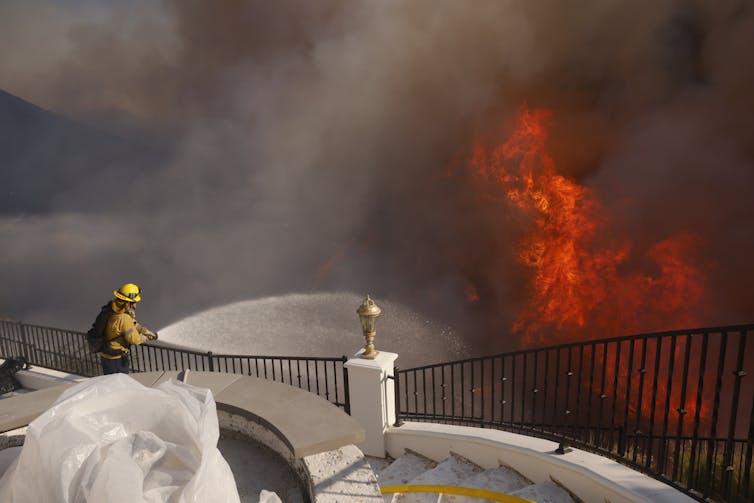
A firefighter sprays water from a hose on flames in a canyon area below a porch.
Water supplies are crucial to fighting fires. In cities, fire crews like this one battling the Palisades Fire in Los Angeles in January 2025 can often rely on hydrants. But water systems can lose pressure and potentially the power to run their pumps during fires.
AP Photo/Etienne Laurent

Water infrastructure is not merely collateral damage during wildfires – it is now a central concern.

It also raises the question: What can residents, first responders and decision-makers reasonably expect from water systems that weren’t designed with today’s disasters in mind?

Addressing the growing fire and water challenge

While no two water systems or fires are the same, nearly every water system component, ranging from storage tanks to pipelines to treatment plants, is susceptible to damage.

The Grand Canyon’s Roaring Springs system exemplifies the complexity and fragility of older systems. It supplies water to both rims of the park through a decades-old network of gravity-fed pipes and tunnels and includes the water treatment facility where firefighters were forced to retreat because of the chlorine leak.

Many water systems have vulnerable points within or near flammable wildlands, such as exposed pump houses that are crucial for pulling water from lower elevations to where it is needed.

A burned area with a blackened pipe.
A stand pipe at Zorthian Ranch in Altadena, Calif., failed during the January 2025 fire there, making it even more difficult for Alan Zorthian to fight the flames sweeping across his property. He used a pump drawing water from a swimming pool to try to fight the flames, but numerous structures were destroyed.
Myung J. Chun/Los Angeles Times via Getty Images

In addition, hazardous materials such as chlorine or ammonia may be stored on-site and require special considerations in high fire risk areas. Staff capacity is often limited; some small utilities depend on a single operator, and budgets may be too constrained to modernize aging infrastructure or implement fire mitigation measures.

As climate change intensifies wildfire seasons, these vulnerabilities can become disaster risks that require making water infrastructure a more integral part of fighting and preparing for wildfires.

Ways to help everyone prepare

As a researcher with Arizona State University’s Julie Ann Wrigley Global Futures Laboratory, I have been working with colleagues and fire and water systems experts on strategies to help communities and fire and water managers prepare.

Here are a few important lessons:

Advertisement
Get More From A Face Cleanser And Spa-like Massage
  • Prioritizing fire-resistant construction, better shielding of chemicals and, in some cases, decentralizing water systems can help protect critical facilities, particularly in high-risk zones. Having backup power supplies, mobile treatment systems and alternate water sources are essential to provide more security in the face of a wildfire.
  • Emergency command protocols and interagency coordination are most effective when they include water utilities as essential partners in all phases of emergency response, from planning to response to recovery. Fire crews and water operators can also benefit from joint training in emergency response, especially when system failure could hinder firefighting itself.
  • Longer term, protecting upstream watersheds from severe fire by thinning forests and using controlled burns, along with erosion control measures, can help maintain water quality and reduce water pollution in the aftermath of fires.
  • Smaller and more isolated systems, particularly in tribal or low-income communities, often need assistance to plan or implement new measures. These systems may require technical assistance, and regional support hubs could support communities with additional resources, including personnel and equipment, so they can respond quickly when crises strike.

Looking ahead

The Dragon Bravo Fire isn’t just a wildfire story, it’s also a water story, and it signals a larger, emerging challenge across the West. As fire seasons expand in size and complexity, the overlap between fire and water will only grow.

The Grand Canyon fire offers a stark illustration of how wildfire can escalate into a multifaceted infrastructure crisis: Fire can damage water infrastructure, which in turn limits firefighting capabilities and stresses water supplies.

The question is not whether this will happen again. It’s how prepared communities will be when it does.

Faith Kearns, Scientist and Director of Research Communication for the Arizona Water Innovation Initiative, Arizona State University

This article is republished from The Conversation under a Creative Commons license. Read the original article.

Continue Reading
Advertisement SodaStream USA, inc

The Knowledge

Metrolink Offers Fare-Free Rides for Earth Day 2026 Across Southern California

Metrolink offers fare-free rides for Earth Day 2026 across Southern California, encouraging sustainable travel and reduced emissions.

Published

on

Last Updated on April 21, 2026 by Daily News Staff

Metrolink Offers Fare-Free Rides for Earth Day 2026
Image Credit: Metrolink

Metrolink Offers Fare-Free Rides for Earth Day 2026

LOS ANGELES — April 22, 2026 — In a continued push toward sustainable transportation, Metrolink will once again offer systemwide free rides on Earth Day, inviting commuters and travelers to leave their cars behind and explore a cleaner way to move across the region.

A One-Day Opportunity to Ride Free

On Wednesday, April 22, passengers can board any Metrolink train — including the Arrow service — without purchasing a ticket. The initiative is part of the broader celebration of Earth Day, encouraging environmentally conscious travel choices.

The fare-free program is designed to appeal to both regular riders and first-time users, particularly those navigating Southern California’s persistent traffic congestion and rising fuel costs.

ml earth emailheader eng.jpg
Image Credit: Metrolink

Encouraging Sustainable Travel Habits

“Earth Day is a reminder that small changes, like choosing public transit over driving one day a week, can have a meaningful impact on our environment,” said Doug Chaffee, chair of the Metrolink Board.

With gas prices continuing to strain household budgets, the agency hopes the initiative will inspire more residents to consider rail as part of their regular commute.

Regional Connections Expand Access

Metrolink’s Earth Day promotion aligns with similar efforts by other Southern California transit providers. Riders can seamlessly connect to services operated by: LA Metro and the Orange County Transportation AuthorityRiverside County Transportation CommissionSan Bernardino County Transportation Authority and Ventura County Transportation Commission.

These partnerships extend the reach of fare-free travel across a six-county region, making it easier for riders to explore destinations without relying on personal vehicles.

Service Adjustments and Rider Tips

Passengers should note that trains will operate on a reduced weekday schedule, implemented earlier this spring. Despite the adjustment, all Metrolink lines and station cities remain in service.

For those planning a trip:

  • No ticket is required — simply board the train
  • Bikes are welcome, with capacity ranging from three bikes per standard car to nine in designated bike cars
  • A curated destination guide highlights attractions within walking or biking distance of stations

Environmental and Economic Impact

Metrolink is also promoting its Personal Impact Calculator, a digital tool that allows riders to estimate how switching from driving to rail can reduce greenhouse gas emissions and lower fuel expenses.

A Broader Trend in Public Transit

Fare-free transit days have gained traction nationwide as agencies look to boost ridership and promote sustainability. Southern California’s expansive commuter rail network makes it particularly well-suited for such initiatives, offering a viable alternative to one of the country’s most car-dependent regions.


Bottom Line

Metrolink’s Earth Day promotion is more than a one-day free ride — it’s a strategic effort to shift commuter behavior, reduce environmental impact, and showcase the convenience of regional rail. For Southern Californians, April 22 presents a low-risk opportunity to rethink how they travel.

Advertisement
Get More From A Face Cleanser And Spa-like Massage

Source: Metrolink

https://metrolinktrains.com/news/metrolink-goes-fare-free-for-earth-day-on-april-22

Dive into “The Knowledge,” where curiosity meets clarity. This playlist, in collaboration with STMDailyNews.com, is designed for viewers who value historical accuracy and insightful learning. Our short videos, ranging from 30 seconds to a minute and a half, make complex subjects easy to grasp in no time. Covering everything from historical events to contemporary processes and entertainment, “The Knowledge” bridges the past with the present. In a world where information is abundant yet often misused, our series aims to guide you through the noise, preserving vital knowledge and truths that shape our lives today. Perfect for curious minds eager to discover the ‘why’ and ‘how’ of everything around us. Subscribe and join in as we explore the facts that matter.  https://stmdailynews.com/the-knowledge/

View recent photos

Unlock fun facts & lost history—get The Knowledge in your inbox!

We don’t spam! Read our privacy policy for more info.

Continue Reading

News

Money Management: The Importance of Financial Literacy

You may have mastered the core subjects like math and grammar in school, but financial literacy – or understanding the basics of money management in order to help you make better financial decisions – often goes overlooked before adulthood. It’s not so much a course of study as it is a plan of action. When you understand how to earn, save, spend and invest wisely, you aren’t just building a stable future for yourself, but your family and community as well.

Published

on

You may have mastered the core subjects like math and grammar in school, but financial literacy – or understanding the basics of money management in order to help you make better financial decisions – often goes overlooked before adulthood. It’s not so much a course of study as it is a plan of action. When you understand how to earn, save, spend and invest wisely, you aren’t just building a stable future for yourself, but your family and community as well.

(Feature Impact) You may have mastered the core subjects like math and grammar in school, but financial literacy – or understanding the basics of money management in order to help you make better financial decisions – often goes overlooked before adulthood. It’s not so much a course of study as it is a plan of action.

Financial literacy in the United States has remained stagnant at generally low levels for several years, according to research from TIAA Institute and the Global Financial Literacy Excellence Center, with even lower levels among Gen Z. Yet greater financial literacy – including key aspects such as goal-setting, budgeting, saving, credit management and investing – is strongly linked to better financial outcomes, including lower rates of debt constraint and financial fragility.

While emboldening yourself to understand financial terms can be a little overwhelming at first, once you have a grasp of basic concepts you can begin to get a handle on your money and make better financial decisions. Simply put: When you understand how to earn, save, spend and invest wisely, you aren’t just building a stable future for yourself, but your family and community as well.

From nonprofit partnerships to volunteer-led programs and fee online resources, Schwab and its employees help millions of people every year build the knowledge and confidence to take charge of their financial futures by serving as board members, mentors, role models and educators.

Because financial health is a lifelong journey, the earlier people learn vital money skills, the better. That’s why the financial advisory services provider develops education programs geared toward kids that continue into adulthood, helping people no matter where they are on their journeys.

Talk Money

It’s never too early to start a conversation about financial literacy. Having teens identify goals that are important to them – such as concert tickets or a first car – can kickstart coversations about money. Working with your child (and a financial advisor, if necessary) on a plan for saving to realize those goals can serve as a jumping off point. After achieving some success, their enthusiasm may grow, which is a powerful motivator to keep saving.

Support School Initiatives and Programs

Outreach programs that empower young people to make smart financial decisions is key to a bright future. Programs like Money Matters – Schwab’s flagship financial education program utilized by the Boys & Girls Clubs of America – gives young people hands-on experience with all aspects of money and investing.

This example, and others, don’t just include program funding – they build partnerships that create impact and opportunity with national collaborations that reach more than 17 million youth annually, empowering young people with the tools and confidence to make smart financial decisions for life.

Spread the Financial Love

Championing financial literacy empowers everyone – individuals, families and communities. By serving as a board member, mentor, role model or educator to help bring financial literacy to others in your community, you can supply the tools and knowledge to lead programs that focus on giving back, empowering future generations in countless ways.

To learn more about financial literacy and find resources to empower your local community, visit SchwabMoneywise.com.

Photo courtesy of Shutterstock

Advertisement
Get More From A Face Cleanser And Spa-like Massage
    collect?v=1&tid=UA 482330 7&cid=1955551e 1975 5e52 0cdb 8516071094cd&sc=start&t=pageview&dl=http%3A%2F%2Ftrack.familyfeatures
track

SOURCE:

Charles Schwab

Our Lifestyle section on STM Daily News is a hub of inspiration and practical information, offering a range of articles that touch on various aspects of daily life. From tips on family finances to guides for maintaining health and wellness, we strive to empower our readers with knowledge and resources to enhance their lifestyles. Whether you’re seeking outdoor activity ideas, fashion trends, or travel recommendations, our lifestyle section has got you covered. Visit us today at https://stmdailynews.com/category/lifestyle/ and embark on a journey of discovery and self-improvement.

Continue Reading

Automotive

SUVs and EVs Take Center Stage at the 2026 New York International Auto Show

Published

on

Kia. 2026 New York International Auto Show

SUVs and EVs Take Center Stage at the 2026 New York International Auto Show

(Feature Impact) The 2026 New York International Auto Show is shining a spotlight on the latest in automotive innovation, from advanced technology to the growing shift toward electric vehicles. One automaker, Kia, is using the show to highlight two versatile SUVs designed to offer more space, capability and flexibility for modern drivers.

Watch this video to learn more

The all-new 2027 Kia Seltos has grown in size, offering a roomier interior with additional legroom, headroom and cargo space. It also adds a hybrid powertrain, making it the only vehicle in its class with three powertrain options. The SUV comes packed with advanced safety features, a more capable all-wheel-drive system and premium interior touches, including dual 12.3-inch display screens and an available panoramic sunroof.

The automaker is also showcasing the all-electric EV3, a compact SUV designed to make electric vehicle ownership more practical. With an estimated range of up to 320 miles, fast-charging capability and optional all-wheel drive, it balances performance, technology and everyday usability. Its intuitive features and flexible design make transitioning to electric simpler for a wider range of drivers.

Both models represent Kia’s commitment to providing options that blend capability, innovation and style. To learn more, visit Kia.com.

   collect?v=1&tid=UA 482330 7&cid=1955551e 1975 5e52 0cdb 8516071094cd&sc=start&t=pageview&dl=http%3A%2F%2Ftrack.familyfeatures
track

SOURCE:

Kia Motors America

Welcome to the Consumer Corner section of STM Daily News, your ultimate destination for savvy shopping and informed decision-making! Dive into a treasure trove of insights and reviews covering everything from the hottest toys that spark joy in your little ones to the latest electronic gadgets that simplify your life. Explore our comprehensive guides on stylish home furnishings, discover smart tips for buying a home or enhancing your living space with creative improvement ideas, and get the lowdown on the best cars through our detailed auto reviews. Whether you’re making a major purchase or simply seeking inspiration, the Consumer Corner is here to empower you every step of the way—unlock the keys to becoming a smarter consumer today!

https://stmdailynews.com/category/consumer-corner

Continue Reading

Trending

