

Food and Beverage
Handy Hacks to Take the Stress Out of Holiday Hosting


(Family Features) Hosting is a big responsibility, especially during the holidays when the pressure is on to create a magical and memorable experience. Planning a menu and decorating for the occasion is just the start.
Hosting also means ensuring all dishes are cooked to perfection and kept warm until serving time, guests’ dietary needs are considered and table conversation topics are ready. Then, of course, there’s the post-dinner cleanup.
This holiday season, consider these tips to help tackle your hosting duties with grace and create an event you can enjoy, too.
Request RSVPs
Planning a party is even more complicated when you don’t know how many guests you’ll be entertaining. If you create a guest list and ask invitees to let you know their plans, you’ll have a better idea whether you should double your favorite dishes. You’ll also know who has special dietary needs and be able to plan a seating chart that puts everyone at ease. Be sure to include a date that gives guests a specific RSVP deadline and plenty of time for you to adjust your plans before the big day.
Meal Prep as Much as Possible
Get as much of the food preparation out of the way ahead of time as you can. Some dishes can be prepared and even cooked ahead of time so you’re just reheating, but you can also save a lot of time by organizing ingredients for the dishes that must be prepared the day of the event. A good rule of thumb: If it doesn’t have to wait until the day of the party, do it before. That frees up your time so you can handle any unexpected hiccups that arise without piling on more stress.
Simplify the Cleanup Situation
Rely on tried-and-true products that do the heavy lifting for you when it’s time to clean up after the meal. An option like Finish Ultimate Dishwashing Detergent cleans dishes in tough conditions, even without pre-rinsing, so you can focus on what matters during this time of year: spending more time with your loved ones. It removes tough stains like grease and cheese, as well as common holiday dishes like apple pie and mac and cheese. An added bonus: Since you don’t need to pre-rinse, you’ll save up to 20 gallons of water per dishwasher load.
Create Designated Spaces
Guests are likely to arrive with items in hand that need a place to go, like coats, shoes, handbags and gifts. Avoid clutter by determining ahead of time where you want to put these items. If you have a coat closet with space, that’s a good solution, but a nearby bedroom may also be an option. Especially if you’re hosting a potluck meal, be sure to plan ahead for where each course should go, with appetizer bars, dessert tables and a countertop with protective pads for warm foods.
Send Guests Off with a Parting Gift
A memorable event can be made even more so when guests have a token to take with them. Send everyone home on a happy note with a simple gift like a prewrapped holiday treat. Be sure to tuck these away someplace near the door so they’re a pleasant surprise you can access easily when guests begin to make their exits.
Find more ways to tackle holiday messes and make hosting duties a breeze by visiting finishdishwashing.com.
Post-Party Cleaning Tips
- Don’t be afraid to ask for help, especially from your partner or children.
- Prep your table the night before. Get sparkling dishes and glassware by using a product such as Finish Jet-Dry Rinse Aid, which assists in drying and helping your dishes shine when used in the rinse cycle.
- Start by collecting trash and clutter. Throw trash away and create piles of items that need returned to their proper places. Remember that taking a few extra minutes to organize things like seasonal decor as you go can help make next year’s event easier.
- Complete each job before moving to the next. Some prefer to tackle a room at a time while others prefer to finish a specific chore, like sweeping the floors throughout the house, before moving on.
Be realistic about what must be done before you sleep. Some tasks really do need immediate attention, like collecting and emptying glasses that could be spilled and safely storing leftover food. The rest can likely wait until after you get some rest.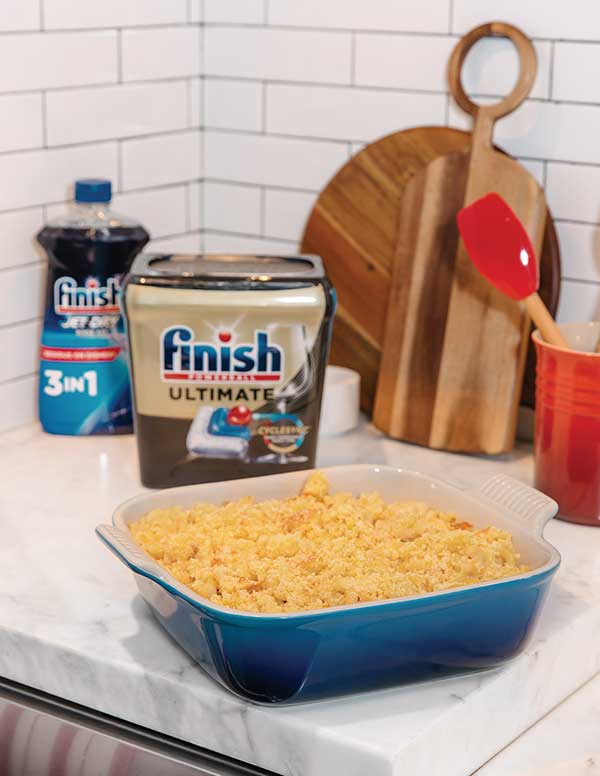
Jalapeno Cornbread Mac and Cheese
Jalapeno Cornbread:
- 1/2 cup butter, melted, plus additional for greasing pan
- 1 cup medium grind cornmeal
- 1 cup flour
- 1 teaspoon baking powder
- 1/2 teaspoon baking soda
- 3/4 teaspoon salt
- 1 cup buttermilk
- 2 eggs
- 1 cup corn
- 1/2 cup chopped jalapeno (about 2 large jalapenos)
Mac and Cheese:
- 1/2 pound dry macaroni
- 2 tablespoons butter, plus additional for greasing pan
- 3 tablespoons flour
- 2 cups milk
- 2 teaspoons Dijon mustard
- 12 ounces shredded cheese
- 1/4 teaspoon salt
- pepper, to taste
- To make jalapeno cornbread: Preheat oven to 400 F. Butter 8-by-8-inch baking pan.
- In mixing bowl, combine cornmeal, flour, baking powder, baking soda and salt.
- In another bowl, whisk buttermilk, eggs, 1/2 cup melted butter, corn and jalapeno.
- Add half the liquid ingredients to dry mixture, stirring just until blended. Add rest of liquid and stir until just blended. Pour batter into prepared pan and bake 30-35 minutes, or until knife inserted in center comes out clean. Set aside to cool.
- To make mac and cheese: Bring large pot of water to boil. Add macaroni and cook according to package directions. Drain under cold water and set aside.
- Preheat oven to 350 F. Butter 9-by-9-inch square baking dish.
- In heavy saucepan, melt 2 tablespoons butter. Add flour and whisk over low heat 3-5 minutes, making sure not to brown.
- Whisk in milk and cook over medium heat, whisking often until mixture thickens, about 5 minutes.
- Stir in mustard and cheese. Add salt and pepper, to taste. Add macaroni and stir until noodles are coated with cheese mixture. Pour mixture into prepared pan. Use back of spoon or spatula to even out mixture in pan.
- Bake 25 minutes until mixture is bubbly.
- Remove from oven, turn oven to broil and place rack on second from top. Break up about 1/3-1/2 of the cornbread into small pieces; place even layer of broken-up cornbread over top of mac and cheese. Put mac and cheese under broiler until lightly browned. Serve immediately with remaining cornbread or make ahead and warm before serving.
Tip: For spicier cornbread, keep some jalapeno seeds intact
Photos courtesy of Shutterstock (woman serving meal and family dining together)
SOURCE:
Finish
At our core, we at STM Daily News, strive to keep you informed and inspired with the freshest content on all things food and beverage. From mouthwatering recipes to intriguing articles, we’re here to satisfy your appetite for culinary knowledge.
Visit our Food & Drink section to get the latest on Foodie News and recipes, offering a delightful blend of culinary inspiration and gastronomic trends to elevate your dining experience.




Food and Beverage
Survey Finds Cooking Oil Now Influences Where Many Americans Choose to Eat
A new survey suggests cooking oil is no longer just a kitchen detail. Coast Packing found that 43% of Americans say a restaurant’s cooking oil influences where they choose to eat.

Last Updated on April 2, 2026 by Daily News Staff

New national survey data suggests cooking oil is becoming a visible factor in restaurant selection, with younger diners showing the strongest preferences.
A new national survey suggests that cooking oil is no longer just a back-of-house decision for restaurants. It is increasingly becoming part of how consumers decide where to eat.
According to new data released by Coast Packing Company, 43% of Americans say a restaurant’s cooking oil influences their dining choice. The survey, based on responses from 1,005 U.S. consumers, points to a clear shift in how ingredient decisions are perceived by the public.
The strongest signal comes from younger diners. Among adults ages 18 to 34, 52% say knowing whether a restaurant uses Beef Tallow or seed oils affects where they choose to eat. Among consumers 55 and older, that number falls to 33%.
The preference gap also shows up when diners are asked to choose between two otherwise identical restaurants. In that scenario, 31% of adults ages 18 to 34 say they would choose the restaurant using Beef Tallow, compared with 19% of adults 55 and older.
The survey also found that 24.7% of diners prefer restaurants to use traditional animal fats such as butter or Beef Tallow, while 15.6% prefer seed or vegetable oils. That suggests ingredient choices once treated mainly as operational decisions may now be influencing brand perception, menu appeal, and customer loyalty.
For restaurant operators, the findings point to a broader change in consumer behavior. Diners, especially younger ones, appear increasingly interested in how food is prepared and what ingredients are used behind the scenes. That shift aligns with wider food industry trends that emphasize transparency, flavor, and traditional preparation methods.
Coast Packing says the data builds on years of tracking consumer attitudes toward animal fats. Earlier research showed growing openness to ingredients such as Lard and Beef Tallow, particularly among younger consumers who associate them with flavor and old-school cooking. This latest survey goes a step further by suggesting those views are now influencing actual dining behavior.
The findings also match broader market signals. Whole Foods Market’s 2026 food trend forecast identified Beef Tallow as an emerging ingredient gaining visibility, while analysts continue to project growth in the global tallow sector through 2030.
Restaurants are unlikely to overhaul kitchen practices overnight. Still, the survey suggests cooking oil is becoming more than a technical ingredient choice. For a growing share of consumers, it is part of the dining experience itself.
For more information, visit Coast Packing Company.
External Links
- Back to Flavor, Back to Tallow white paper
- Email to request the full survey results
- Coast Packing Company official website
- Coast Packing TasteMap
- Healthy Fats Coalition
Visit the Food and Drink section on STM Daily News for the latest food news, beverage trends, restaurant stories, seasonal recipes, culinary events, and community-driven lifestyle coverage.
Food and Beverage
Purely Elizabeth Launches Purely Glow Granola, Its First Beauty-Inspired Limited Edition
Purely Elizabeth debuts Purely Glow Salted Vanilla Pistachio Granola, a limited-edition, beauty-inspired blend with collagen peptides and biotin, timed to New York Fashion Week.
Last Updated on April 1, 2026 by Daily News Staff
Purely Elizabeth is stepping beyond the breakfast bowl and into the “glow-from-within” conversation.
The Boulder-based natural foods brand announced the launch of Purely Glow Salted Vanilla Pistachio Granola, a limited-edition flavor that blends its signature crunchy clusters with beauty-inspired functional ingredients—including collagen peptides and biotin. The drop is timed to New York Fashion Week, signaling how quickly wellness brands are borrowing cues from beauty culture: trend-driven, ritual-focused, and built for social.
Why a “beauty granola” now?
If you’ve spent any time on TikTok lately, you’ve seen the shift: wellness content is increasingly framed like skincare—daily routines, “non-negotiables,” and ingredients people swear by.
Purely Elizabeth points to that momentum in the announcement, noting that TikTok posts featuring collagen increased by 70% over the past year compared to the previous two years. At the same time, pistachio has had its own breakout moment, with 55,000 pistachio-related TikTok posts in the most recent year—a 104% increase over the prior 24 months.
Translation: consumers aren’t just shopping for flavor anymore. They’re shopping for function, aesthetic, and ritual.
What’s inside Purely Glow Salted Vanilla Pistachio Granola
On the flavor side, Purely Glow is positioned as an elevated, dessert-leaning blend built around a salty-sweet profile:
- Organic oats
- Roasted pistachios
- Real vanilla bean
- A hint of sea salt
From a nutrition and formulation standpoint, the granola is:
- Gluten-free
- Sweetened with coconut sugar
- Baked with coconut oil
- A good source of fiber
- Enriched with collagen peptides, coconut water powder, and biotin
Founder and CEO Elizabeth Stein says the concept comes from a personal place—bringing together “nourishing food and daily beauty rituals,” and leaning into the idea that what you eat can be part of how you care for yourself.
A collab that takes it beyond the grocery aisle
To push the launch into lifestyle territory, Purely Elizabeth is partnering with Cha Cha Matcha for a limited-time “Purely Glow” menu at all locations.
The menu includes:
- Pistachio Matcha Lattes (hot or iced)
- A Purely Glow Yogurt Parfait layered with coconut yogurt, matcha chia pudding, and topped with Purely Glow Granola
The brand is also hosting “Glow Up” pop-up events to bring the product to life:
- Cha Cha Matcha Flatiron (NYC): February 12, 1:00 p.m. to 5:00 p.m., plus the weekend
- Cha Cha Matcha Beverly Hills: February 20–22
Availability and price
Purely Glow Granola launches February 12 for $7.99 and will be sold until it sells out. It’s available exclusively via:
- PurelyElizabeth.com
- TikTok Shop
- Cha Cha Matcha locations
A brand move that fits the moment
Purely Elizabeth has been around for 16 years and says it has remained the #1 granola brand in the natural channel for more than eight consecutive years—so this isn’t a reinvention as much as a strategic expansion.
The bigger takeaway: food brands are increasingly marketing like beauty brands. Limited editions. Ingredient storytelling. Collabs. Pop-ups. Social-first launches.
Purely Glow is a clean example of that playbook—built around a trending flavor (pistachio), a trending function (collagen/biotin), and a cultural moment (NYFW) that makes the product feel like more than breakfast.
For more details, visit purelyelizabeth.com.
Food and Beverage
Easy, Approachable Solutions for At-Home Lenten Meals
At-Home Lenten Meals: Lent is an opportunity for families to explore new seafood flavors, making mealtime enjoyable. Simple recipes, like One-Pot Creamy Shrimp Scampi, encourage kids to confidently try seafood, enhancing family meals.
Last Updated on April 1, 2026 by Daily News Staff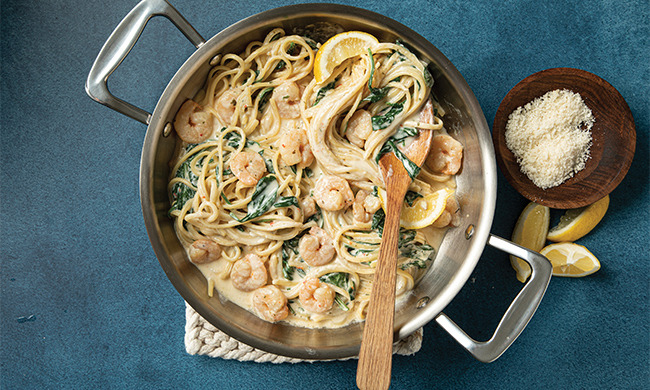
Easy, Approachable Solutions for At-Home Lenten Meals
(Feature Impact) Lent has long been a season of tradition and reflection, and it can also be an opportunity to introduce your family to exciting new flavors that may become staples in your kitchen.
If preparing seafood feels intimidating, try starting with dishes that are easy, familiar and approachable. For example, One-Pot Creamy Shrimp Scampi features a velvety sauce, earthy spinach and buttery, delicious shrimp – a recognizable and approachable recipe that can be a gateway to discovery.
Made with SeaPak frozen shrimp, you can help picky eaters in your home feel more confident in saying “yes” to something new. Frozen seafood is a perfect partner for familiar favorites like pasta, making it a playful, stress-free solution for encouraging exploration at mealtime.
“For many families, Lent often brings a shift at the dinner table – and this year, parents are turning it into an opportunity to try something new,” said Diana Rice, child nutritionist and registered dietitian. “When food feels approachable, it lowers stress for everyone. Familiar flavors help kids say ‘yes’ more often, and those positive moments can make seafood a feel-good part of family meals during Lent and beyond.”
When kids see foods that look and taste familiar – like the crunch of crispy fried shrimp – they may feel more comfortable giving it a try. That’s why discovery can extend beyond the dinner table to snack time, too.
Give kiddos the energy they need for homework assignments with Butterfly Shimp Bruschetta, a quick solution for after-school or weekend snacking. As your pickier loved ones dive in for something new, those small wins can build confidence to try new things – one bite at a time.
This Lent, swap “giving up” for “try this” with more approachable frozen seafood solutions and family-friendly recipes at SeaPak.com.
//www.youtube.com/embed/006rXnSXZGY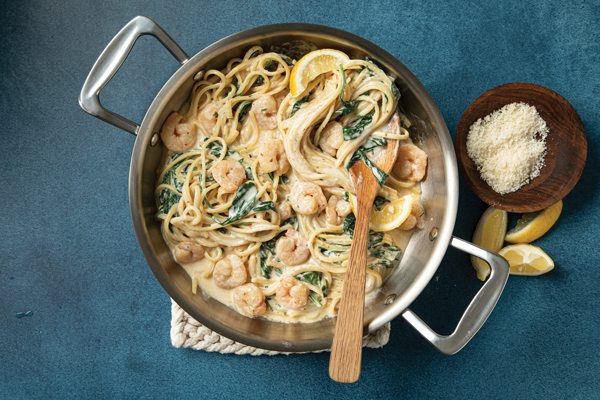
One-Pot Creamy Shrimp Scampi
Prep time: 5 minutes
Cook time: 25 minutes
Servings: 4
- 1 package (12 ounces) SeaPak Shrimp Scampi
- 1 1/4 cups half-and-half or milk
- 1 1/4 cups chicken stock
- 8 ounces linguine noodles
- 6 cups fresh spinach
- 1/4 cup grated Parmesan cheese
- 4 lemon wedges
- In large, high-sided saute pan, add shrimp and cook according to package directions. Remove shrimp to bowl and keep warm.
- In same pan with scampi sauce, stir in half-and-half and stock. Bring to low boil. Add pasta. Cook, stirring occasionally, until pasta is cooked al dente, 8-10 minutes.
- Stir in spinach and cook just until beginning to wilt. Stir reserved shrimp into pan.
- To serve, divide shrimp scampi between four bowls and top each with grated Parmesan. Serve with lemon wedges.
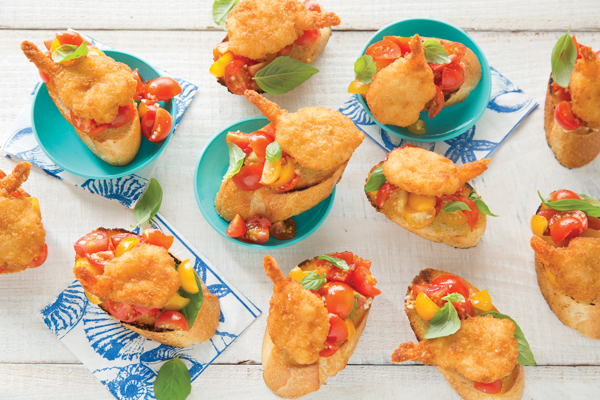
Butterfly Shrimp Bruschetta
Prep time: 15 minutes
Cook time: 15 minutes
Servings: 6
- 1 package (9 ounces) SeaPak Jumbo Butterfly Shrimp
- 1 baguette
- 3 garlic cloves, divided
- 6 tablespoons olive oil, divided
- 3 cups grape or cherry tomatoes, seeded and finely diced
- 1/3 cup chopped basil, plus additional for garnish
- salt, to taste
- pepper, to taste
- Preheat oven to 425 F. Bake shrimp according to package directions and keep warm.
- Slice baguette to match number of shrimp. Rub one garlic clove over one side of each slice of bread. Brush garlic-rubbed sides with 3 tablespoons olive oil. Set aside.
- Finely dice remaining garlic.
- In medium mixing bowl, stir tomatoes, remaining olive oil, diced garlic and 1/3 cup chopped basil. Season with salt and pepper, to taste, and set aside.
- In large, hot skillet, working in batches, add baguette slices oil sides down and cook until browned around edges. Remove from pan.
- Top each baguette slice with small spoonful of tomato mixture and one shrimp. Garnish with basil leaf.

SOURCE:
At our core, we at STM Daily News, strive to keep you informed and inspired with the freshest content on all things food and beverage. From mouthwatering recipes to intriguing articles, we’re here to satisfy your appetite for culinary knowledge.
Visit our Food & Drink section to get the latest on Foodie News and recipes, offering a delightful blend of culinary inspiration and gastronomic trends to elevate your dining experience. https://stmdailynews.com/food-and-drink/






