

Lifestyle
How the Interest Rate Hike is Impacting Personal Loan Borrowers

Last Updated on November 15, 2024 by Daily News Staff
NEW YORK (Newswire.com) – Credello: To combat inflation, the Federal Reserve (“The Fed”) has raised its benchmark interest rates to levels not seen since the Great Recession. While these hikes are great for savings accounts and CDs, those considering getting a new personal loan are experiencing sticker shock at the new rates.
I already have a personal loan, is my interest rate increasing?
It depends on the type of loan you have.
Most unsecured loans that are already active and fixed-rate will not incur any interest rate changes. This goes for personal loans, consolidation loans, signature loans, etc. However, missing payments or defaulting on a signature loan or other unsecured loan could make you incur new interest rates as a penalty for the duration of the loan or until you’re back in good standing. Check your loan’s terms and conditions for details on what you should expect if you fall behind on payments.
Secured, fixed-rate loans like mortgages also shouldn’t see any change to their interest rates. Again, this is only if you stay in good standing with the lender so it’s critical you know the terms you’ve agreed to for your loan regarding when you could expect a change in your rate.
Variable-rate loans, both secured and unsecured, are loans that have fluctuating rates based on The Fed’s benchmark rate. These are the loans that will most likely be affected by the increases made by The Fed.
How can I tell what type of loan I have?
Knowing the type of loan you have is critical for determining not only how much you’ll pay in interest but how your loan is affected by market conditions. The easiest way to determine which type of personal loan you have, or are applying for, is to check the terms. However, there are a few quick ways to determine which loan you have (or could get):
1. Do you have to put any collateral up to get the loan? These are considered secured loans. The most popular types of secured loans are auto loans and mortgages. Unsecured loans don’t require any kind of collateral and are often what you’ll see for personal loans, signature loans, etc.
However, don’t group all unsecured loans together as there are some significant differences between signature loans and personal loans you need to be aware of before applying.
2. Do you only see one interest rate listed? Typically, this means your loan is (or will be) a fixed-rate loan. However, check to see if there are any asterisks or fine print that specifies whether this could change.
3. Is it a credit card? Credit cards are unsecured, variable-rate ways to borrow money and will be affected by Fed rate hikes. There are some secured credit cards, too, and are also variable-rate.
A few tips to avoid interest rate increases
1. Look for promotional consolidation offers. Many lenders offer promotional rates that last for a limited time. Consolidating your debt into one loan can lower your interest rate, too.
2. Shop around. Rates can vary significantly from lender to lender, so compare rates before settling on a plan.
3. Make a payment plan. If you’re not able to pay off your entire balance each month, making payments on time will help keep your interest rate lower and extend the life of your loan.
4. Pay more than your minimum payment every month. Even an additional $5 payment will help you avoid getting hit with higher rates that take longer to pay off.
The bottom line
Knowing your personal loan type and interest rate is key in determining how your loan will be affected by The Fed’s interest rate hikes. Stay up to date on the terms of your loan to ensure you’re not hit with unforeseen penalties or rates.
About Credello
Credello is a financial tech company offering a personal finance tool that simplifies financial decisions through personalized, on-demand recommendations — so users can borrow, save, or invest with confidence. Credello believes that finding the right financial product should be as easy and interactive as online shopping, and we are on a mission to make that possible. For more information, please visit https://www.credello.com.
Source: Credello
Our Lifestyle section on STM Daily News is a hub of inspiration and practical information, offering a range of articles that touch on various aspects of daily life. From tips on family finances to guides for maintaining health and wellness, we strive to empower our readers with knowledge and resources to enhance their lifestyles. Whether you’re seeking outdoor activity ideas, fashion trends, or travel recommendations, our lifestyle section has got you covered. Visit us today at https://stmdailynews.com/category/lifestyle/ and embark on a journey of discovery and self-improvement.


Health
When Vision Changes: 5 Ways to Navigate What Comes Next
Whether sight changes suddenly or gradually, a question often follows: “Now what?” There is no single way to adjust to vision loss, and the questions can change over time. These five starting points can help you identify what matters most now and where to find support.

(Feature Impact) A change in vision can turn ordinary routines into unfamiliar challenges. A favorite book becomes harder to read. Walking through a familiar neighborhood feels different. A family member offers help, but you may not know how to ask for what you need. Whether sight changes suddenly or gradually, a question often follows: “Now what?”
Medical care is essential, but many people encounter a Grand Canyon-sized gap between clinical care and everyday life with vision loss. Questions arise around getting around safely, continuing to do things you love, talking to family about what is changing and more. The answers take more than information; they require practical guidance, emotional support and connection with people who understand.
“The medical conversation rarely has room for what people are actually grappling with: fear, grief and the very practical question of how to keep living the lives they want,” said Johnjoe Farragher, CEO of Hadley, a nonprofit dedicated to helping adults with vision loss. “Those ‘now what?’ moments are where people need a clear place to begin.”
There is no single way to adjust to vision loss, and the questions can change over time. These five starting points can help you identify what matters most now and where to find support.
Take One Step at a Time
You don’t have to solve every challenge at once. Ask your vision care team about your diagnosis and treatment then think about what is most difficult in daily life right now. It could be reading email, moving safely through your home or using your phone. Choose one concern to address first. A small, useful change can make the next step feel more manageable.
 Make Room for the Emotional Side
Vision loss may bring grief, frustration, fear or a change in how you see yourself. Those feelings don’t have to be brushed aside before you can move forward. Share those feelings with someone you trust and seek professional support if you need it. Hearing how others navigated similar changes can help you feel less alone and identify possibilities you may not have imagined.
Find a Trusted Place to Begin
Ask your vision care team about support available in your community. If you’re unsure what to ask for, start with a specific daily challenge on your mind. Offering on-demand guidance, practical tools and opportunities to connect with others living with vision loss, Hadley focuses on life with vision loss beyond the doctor’s office. Its expert-informed guidance and community members address both practical problems and the emotions that come with them, shaped by lived experience. Support is available without cost or waitlists, whether you’re living with vision loss or helping someone you love.
Define Independence on Your Terms
Independence doesn’t have to mean doing everything alone. It may mean finding a new way to do something, choosing a tool that helps or telling family and friends exactly what assistance is useful. Think about a goal that matters to you, whether it’s getting around your home with more confidence or staying involved in a favorite activity, and build from there.
Keep Doing What Matters to You
A change in sight can change how you do things without ending your connection to the people and activities you love. The right adaptations depend on your vision, your interests and your goals.
For instance, when reading gets hard, magnifiers, enlarging fonts, access to free audiobooks and learning braille can make a difference. Passionate home chefs may use tactile or high-contrast labels, well-placed lighting, consistent organization or adaptive tools and techniques to keep cooking with confidence. Assistive technology, low-vision tools and simple adaptations can make everyday routines more accessible and help people stay connected to the activities and relationships that matter most.
When a new “now what?” question comes up, HadleyHelps.org offers a trusted place to start and a path forward.
Photos courtesy of Shutterstock
SOURCE:
home gardening
Cold-Season Container Gardening 101: Adding Color to Fall and Winter
With container gardening, you can create everything from cheerful porch flower displays to miniature winter herb gardens with the flexibility to rearrange your setup as needed. Consider these tips to create a cold-season container garden that’s ready to thrive.
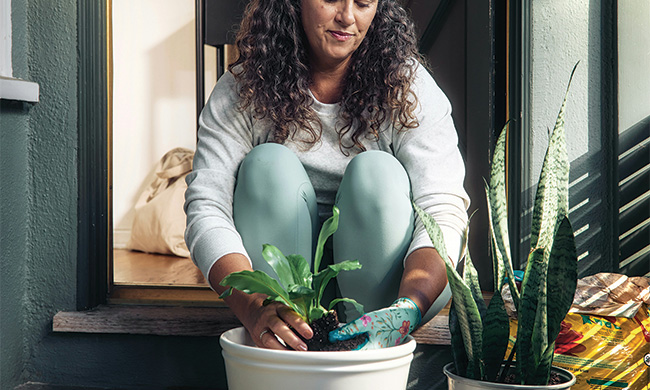
(Feature Impact) Although gardening is typically considered more of a spring or summer activity, fall and winter are excellent opportunities to add some color and freshness to your outdoor spaces. With container gardening, you can create everything from cheerful porch flower displays to miniature winter herb gardens with the flexibility to rearrange your setup as needed.
Consider these tips to create a cold-season container garden that’s ready to thrive.
Choose Hardy Plants and Flowers
Work with the cold, not against it, by looking for fall and winter plants suited to your local climate and hardiness zone. Cold-season flowers like pansies, violets and chrysanthemums can survive light frosts and give you cheerful pops of color to enjoy. Fill out the design by adding ornamental grasses or trailing evergreen foliage like ivy. If you’re hoping to grow vegetables and herbs during the fall and winter, choose tolerant varieties like kale, spinach, chives, rosemary, parsley or thyme.
Get the Right Kinds of Containers
Almost as important as the plants themselves are the pots you decide to plant them in. Look for containers large enough to accommodate growing plants, but small enough that you can move them if necessary. Proper drainage is another important factor, since soil that stays too wet during cold weather can freeze and thaw, which may damage the roots or pots. Choose sturdy materials that can stand up to changing temperatures, like thick plastic, resin or metal, and avoid more fragile materials like terracotta and ceramic.
Consider Location
Placement can determine whether your container garden thrives or struggles. When you’re deciding where to keep your containers, think about sunlight, wind protection and ease of access for watering and maintenance. A spot near a south- or west-facing wall may help keep the soil warmer and the plant more sheltered from gusty autumn and winter days.
Don’t Overwater
If you usually garden during warmer months, you might be accustomed to watering your plants frequently. However, plants generally use less water when temperatures are cool, so if you stick to a summer schedule you could wind up drowning them instead of nurturing them. Water your containers when the soil is dry enough to need it, preferably when temperatures are above freezing so it doesn’t turn to ice around the roots.
Protect Plants from Extreme Weather
A light layer of snow usually isn’t a death sentence, but even cold-resistant plants are bound to struggle during a howling blizzard or a deep freeze. Depending on what kinds of plants and containers you have, follow professional recommendations to move containers into sheltered locations or wrap the pots with insulating materials to keep the roots warmer.
Find more seasonal home and garden tips at eLivingtoday.com.
Photo courtesy of Unsplash
SOURCE:
elivingtoday.com
Community
Mariska Hargitay and Purina Team Up to Help Domestic Violence Survivors Keep Their Pets Safe
Mariska Hargitay and Purina are raising awareness about a heartbreaking reality: Many domestic violence survivors delay escaping abuse because they cannot bring their pets. Discover how the Purple Leash Project is helping families and animals find safety together.

Purple Leash Project takes center stage at U.S. Women’s National Team match, raising awareness about a heartbreaking choice facing abuse survivors and their beloved pets.
By STM Daily News | Lifestyle & Pets | October 12, 2026
WASHINGTON, D.C. — For many people, pets are more than companions. They’re family, providing comfort, unconditional love, and emotional support during life’s most difficult moments. But for survivors of domestic violence, the bond with a beloved pet can create an unexpected obstacle when trying to escape an abusive environment.
Actress and longtime domestic violence advocate Mariska Hargitay joined Purina and the U.S. Women’s National Soccer Team on October 10, 2026, to shine a spotlight on this often-overlooked issue.
During the team’s match against Spain at Audi Field in Washington, D.C., Hargitay served as Purina’s Honorary Captain, helping promote the company’s Purple Leash Project, an initiative designed to help domestic violence survivors find safety without leaving their pets behind.
The appearance was part of Domestic Violence Awareness Month, observed every October.


When Escaping Abuse Means Leaving a Pet Behind
For someone experiencing domestic violence, leaving an abusive relationship can be dangerous and emotionally overwhelming. The situation becomes even more complicated when pets are involved.
According to statistics cited by Purina:
- Only 20% of domestic violence shelters allow pets.
- 48% of survivors delay leaving an abusive situation because they cannot take their pets with them.
These figures illustrate a significant barrier to safety.
For survivors whose pets provide emotional stability and companionship, the possibility of abandoning an animal can be devastating. Some may also fear that an abusive partner will harm a pet left behind.
The Purple Leash Project seeks to eliminate that difficult choice by helping domestic violence shelters become more accommodating to animals.
What Is the Purple Leash Project?
The Purple Leash Project is a partnership between Purina and RedRover, a nonprofit organization dedicated to helping animals and strengthening the human-animal bond.
Through grants and financial assistance, the initiative supports domestic violence shelters and social service organizations by funding:
- Renovations that make shelters pet-friendly.
- On-site and off-site housing for survivors’ pets.
- Essential pet supplies and accommodations.
- Necessary veterinary services for animals entering shelter programs.
According to Purina, the initiative has already provided nearly 70 grants totaling more than $2.2 million across over 30 states.
The company has also established a goal of helping provide one million safe nights for survivors and their pets by the end of 2030.
The ultimate objective is simple: Nobody should have to choose between personal safety and protecting a beloved animal.
Mariska Hargitay Brings the Message to the Soccer Field
Hargitay, widely recognized for portraying Olivia Benson on Law & Order: Special Victims Unit, has spent years advocating for survivors of domestic violence and sexual assault.
Her participation in the U.S. Women’s National Team event brought additional visibility to the Purple Leash Project.
During the pre-match ceremonies, Hargitay participated in the ceremonial coin toss alongside Cassidy, a 75-pound Golden Retriever therapy dog, and Cassidy’s handler, Patrice “Pat” Eller.
Cassidy and Eller are part of a Pet Partners therapy team that helps provide comfort to children who may be required to testify in court.
Their presence illustrated the important role animals can play in helping people cope with traumatic experiences.
“Seeing the Purple Leash Project take the field helped turn the stadium into a powerful show of support for survivors and the pets they love,” Hargitay said in a statement released by Purina.
She also emphasized the importance of reducing the stigma surrounding domestic violence and creating more safe spaces where survivors and their pets can recover together.
A Special Soccer Scarf Supporting Survivors and Pets
To encourage fans to participate in the initiative, Purina and U.S. Soccer introduced a limited-edition Courageous & Comfy Soccer Scarf.
The officially licensed scarf is available through the Purple Leash Project’s online store.
According to Purina, 100% of every scarf purchase is donated to RedRover, supporting the effort to help survivors and their pets remain together.
Fans interested in supporting the initiative can visit:
Purple Leash Project Scarf Store
Additional information about the initiative is available at:
Bringing Pets Into the Soccer Experience
Beyond raising awareness for domestic violence survivors, Purina used the event to highlight the relationship between sports fans and their pets.
At Audi Field, the company introduced the Purina Club, a temporary pet-friendly seating area where fans could attend the match with their dogs.
The initiative reflects Purina’s growing involvement in soccer, including collaborations with U.S. Soccer and pet-centered activities associated with the 2026 FIFA World Cup.
While these efforts celebrate the companionship pets bring to everyday life, the Purple Leash Project addresses a more serious reality: For some individuals, the ability to remain with their animals can influence whether they can safely leave an abusive situation.
Why the Human-Animal Bond Matters
Anyone who has experienced the companionship of a dog, cat, or another beloved pet understands how deeply animals can become part of a family.
Pets offer familiarity, routine, comfort, and emotional connection. During times of uncertainty, those relationships can become especially meaningful.
For survivors of domestic violence, maintaining that bond can provide an important source of reassurance while rebuilding their lives.
The Purple Leash Project recognizes that protecting survivors and protecting their animals are often interconnected needs.
“At Purina, we believe survivor safety shouldn’t require sacrifice,” said Nina Leigh Krueger, CEO of Purina, in the company’s announcement.
That philosophy is at the heart of the initiative’s mission to expand access to safe, pet-friendly shelter accommodations.
How You Can Help
Supporting survivors and their pets doesn’t necessarily require a major financial commitment.
Individuals can learn more about the Purple Leash Project, support participating organizations, share information about pet-friendly domestic violence shelters, or contribute to nonprofit programs that help families and animals in crisis.
Organizations such as RedRover also provide resources designed to strengthen the human-animal bond and assist animals during emergencies.
Learn more at RedRover.org.
For anyone currently experiencing domestic violence in the United States, confidential assistance is available through the National Domestic Violence Hotline at 1-800-799-SAFE (7233) or TheHotline.org. If immediate danger exists, call 911.
A Safer Future for Survivors and Their Pets
The partnership between Purina, Mariska Hargitay, RedRover, and U.S. Soccer demonstrates how public awareness campaigns can help bring attention to problems that often remain unseen.
For survivors of domestic violence, the path to safety should not mean having to abandon a loyal companion.
And for the pets who depend on their families, remaining together can mean everything.
By helping shelters accommodate animals, the Purple Leash Project is working toward a future where survivors and their pets can escape dangerous situations, find stability, and begin healing together.
More Lifestyle & Pet Stories From STM Daily News
At STM Daily News, we believe stories about pets are also stories about people, families, communities, and the powerful connections that make life meaningful.
Explore more stories about animal welfare, pet care, family life, and community initiatives in our Lifestyle section at STM Daily News.
Stay informed. Stay connected. Discover stories that matter.
Sources and Additional Resources
- Purina — Purple Leash Project
- RedRover — Animal Welfare and Crisis Support
- National Domestic Violence Hotline
- U.S. Soccer
Source: Nestlé Purina PetCare press release, October 11, 2026. Statistics and grant figures attributed to Purina.






