Connect with us

Health

How to keep dementia from robbing your loved ones of their sense of personhood – tips for caregivers

Learn evidence-based communication strategies to preserve your loved one’s sense of self through dementia’s progression. Discover how to adjust conversations for early, middle, and late-stage dementia while maintaining meaningful connection and dignity.

Published

on

How to keep dementia from robbing your loved ones of their sense of personhood – tips for caregivers
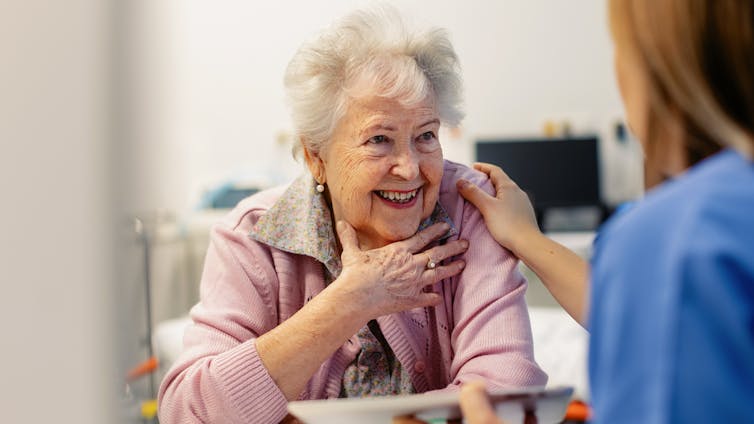
Different communication styles are needed for the progressive phases of dementia.
Halfpoint Images/Moment via Getty Images

How to keep dementia from robbing your loved ones of their sense of personhood – tips for caregivers

R. Amanda Cooper, University of Connecticut

Every three seconds, someone in the world develops dementia. There are over 6 million people living with dementia in the U.S. and 57 million globally.

These figures will only increase in the coming years, as rates of dementia are predicted to double by 2060. If you don’t know someone affected by dementia, you probably will at some point.

Dementia is incredibly difficult both for the person experiencing it and for their loved ones, not only because of the symptoms of the disease but also because of the social stigma associated with cognitive decline. Experiencing stigma makes it difficult for people with dementia to ask for help, increases anxiety and depression, and ultimately leads to social isolation.

Dementia-related stigma is perpetuated through media messages that portray people with dementia as mindless and incapable, as well as through daily interactions in which others dismiss and dehumanize the person living with dementia.

These forms of invalidation – usually unintentional – accelerate and intensify the loss of self-worth and identity that dementia patients are already experiencing.

Fortunately, educating and spreading awareness can help reduce behaviors that propagate stigma and dehumanizing treatment of people with dementia.

As a social scientist and researcher in interpersonal communication and family caregiving, I explore the social and relational side of dementia. Through my work with these patients and families, I’ve learned that reducing stigma and supporting self-worth for people who have dementia is often done through daily conversations.

Back shot of two seniors sitting on edge of bed in front of window, speaking to one another.
People living with dementia can continue to have fulfilling interactions when caregivers carry out person-centered care.
Jessie Casson/DigitalVision via Getty Images

How is dementia defined?

Dementia is an umbrella term that refers to a family of cognitive conditions involving memory loss, difficulty thinking or processing information, changes in ability to communicate and challenges with managing daily tasks.

The most common form of dementia is Alzheimer’s disease, but there are several other forms of dementia that can severely affect a person’s quality of life and that of their loved ones.

Most forms of dementia are progressive, meaning that the symptoms of the disease get steadily worse over time. A person with dementia can live with the disease for several years, and their symptoms will shift as the disease progresses.

People in the early stages of dementia, including mild cognitive impairment, continue to engage socially and participate in many of the activities they have always done. In the middle stage of the disease, people often need more help from others to complete daily tasks and may have more difficulty holding conversations. In the late stage, people with dementia are dependent on others and often lose the ability to communicate verbally.

Advertisement
Get More From A Face Cleanser And Spa-like Massage

Despite the cognitive declines that come with dementia, people living with dementia can maintain many of their former abilities as the disease progresses. Even in the late stages, research shows that people with dementia can understand tone of voice and nonverbal communication such as body language, facial expressions and gentle touch.

This makes it clear that people with dementia can continue having meaningful social connections and a sense of self-worth even as their disease progresses.

Senior man with dementia sitting at table with smiling young girl and colored pencils.
Engaging in meaningful activities that are appropriate to the person’s stage of dementia can help foster a sense of self.
Jessie Casson/DigitalVision

Focusing care around the person

In the 1990s, psychologist Tom Kitwood, who studied dementia patients in long-term care settings, introduced the notion of “personhood.” Personhood is a recognition of a person’s unique experiences and individual worth. He had observed that residents with dementia were sometimes treated as objects rather than people and were dismissed as being “no longer there” mentally. In response, Kitwood advocated for a new model of person-centered care.

In contrast to the medical model of care that was standard at the time, person-centered care aims to provide people with dementia comfort, attachment, inclusion, occupation and identity.

Comfort includes both physical and psychological comfort, ensuring that the person with dementia feels safe and is as pain-free as possible. Attachment and inclusion have to do with supporting a person with dementia’s closest relationships and making sure they feel included in social activities.

Occupation is about giving the person meaningful activities that are suited to their abilities, while identity is about preserving their unique sense of self. According to Kitwood, each of these elements of personhood can be upheld or threatened through a person’s interactions with others.

I find Kitwood’s work particularly important because it suggests that communication is at the heart of personhood.

Communicating to support personhood

So how can family members and friends communicate with their loved one with dementia to help preserve their sense of self?

Researchers have identified several evidence-based communication strategies that support person-centered care both in long-term care settings and within the family.

These include:

Communication shifts as the disease progresses

Supporting personhood requires adjusting to the communication abilities of the person with dementia. Some communication strategies are helpful in one stage of the disease but not in others.

In a recent study, my team and I found that asking the person with dementia to recall the past was affirming for those who were early in the disease and who could still recall the past. But for people who were in later stages of the disease, asking them “Do you remember?” was received more like a test of memory and led to frustration or confusion. Similarly, we found that suggesting words to prompt recall was helpful later in the disease but demeaning for people who were in earlier stages of the disease who could still find their words without help.

Advertisement
Get More From A Face Cleanser And Spa-like Massage

Providing more help in conversation than is needed can lead people with dementia to withdraw, whereas appropriately adjusting to a person’s communication abilities can empower them to continue to engage socially.

Ultimately, supporting a person with dementia’s sense of self and self-worth in conversations is about finding a communication sweet spot – in other words, matching your approach to their current capabilities.

Changing your default approach to conversations can be challenging, but making simple communication changes can make all the difference. Meaningful conversations are the key to helping your loved one live their days to the fullest, with a sense of personal worth and a feeling of meaningful connection with others.

R. Amanda Cooper, Assistant Professor of Communication, University of Connecticut

This article is republished from The Conversation under a Creative Commons license. Read the original article.

STM Daily News is a multifaceted podcast that explores a wide range of topics, from life and consumer issues to the latest in food and beverage trends. Our discussions dive into the realms of science, covering everything from space and Earth to nature, artificial intelligence, and astronomy. We also celebrate the amateur sports scene, highlighting local athletes and events, including our special segment on senior Pickleball, where we report on the latest happenings in this exciting community. With our diverse content, STM Daily News aims to inform, entertain, and engage listeners, providing a comprehensive look at the issues that matter most in our daily lives. https://stories-this-moment.castos.com/


Discover more from Daily News

Subscribe to get the latest posts sent to your email.

Continue Reading
Advertisement Sports Research
Click to comment

Leave a Reply

Your email address will not be published. Required fields are marked *

health and wellness

Why do people get headaches and migraines? A child neurologist explains the science of head pain and how to treat it

Published

on

Why do people get headaches and migraines? A child neurologist explains the science of head pain and how to treat it
There are steps you can take to relieve headache pain and prevent future attacks. Thai Liang Lim/E+ via Getty Images

Why do people get headaches and migraines? A child neurologist explains the science of head pain and how to treat it

Katherine Cobb-Pitstick, University of Pittsburgh Curious Kids is a series for children of all ages. If you have a question you’d like an expert to answer, send it to CuriousKidsUS@theconversation.com.
Why do people get headaches? – Evie V., age 10, Corpus Christi, Texas

Whether sharp and stabbing or dull and throbbing, a headache can ruin your day. But your brain doesn’t actually feel pain. So what is going on when it feels like your head is in a vise or about to explode? I am a child neurologist – that is, a doctor who specializes in diseases of the brain in kids. Most of my patients are kids and adolescents who are struggling with headaches. Head pain is complicated, and there is still a lot to learn about what causes it and how it can be treated. But researchers know there are a few key players that take part in generating pain.

What are headaches?

Nerves communicate information like pain through electrical signals between the body and the brain. While the brain itself doesn’t have any nerve sensors to feel pain, blood vessels in the head and structures that protect and surround the brain do sense pain. When these tissues detect injury or damage, they release chemicals that trigger transmission of electrical signals through nerves to tell the brain the head is hurting. The brain will also use nerves to signal the body to respond to pain with symptoms like feeling tired, teary eyes, runny nose, upset stomach and discomfort in bright or loud environments. It’s not clear why humans evolved to feel these symptoms, but some scientists theorize that this can lead to healthier lifestyle choices to decrease the chance of future headache attacks.
Weather changes are one of the most commonly reported migraine triggers. Danielle Wilhour, a neurologist and headache specialist at University of Colorado Anschutz Medical Campus, explains why shifts in weather can bring on migraines — and what you can do to ease the pain.

What causes headaches?

Often, headaches are a sign that the body is under some kind of stress. That stress triggers chemical and physical changes to the nerves and blood vessels around your brain, head and neck that can cause headaches. Many types of stresses can cause headaches, including an infection, allergies, hormone changes during puberty and menstrual cycles, not getting enough sleep, not drinking enough water, skipping meals or drinking too much caffeine or alcohol. Sometimes, headaches happen with emotional stress, like feeling anxious or depressed. Even pressure in your sinuses due to changes in the weather can cause your head to hurt. One in 11 kids have had a type of severe headache called a migraine. They feel like a pulsing and pounding pain in your head and come with other symptoms, including nausea or being sensitive to lights and sounds. During a migraine, it can be hard to do everyday activities because they can make the pain worse. It is also very common to feel unwell or irritable before the head pain starts and after the pain is gone.
Person curled up on couch beneath a blanket, hand over head
Migraines and chronic headaches can be debilitating. Viktoriya Skorikova/Moment via Getty Images
Migraines occur when the nerves and other structures used in signaling and interpreting pain aren’t working properly, leading to pain and discomfort from stimulation that wouldn’t normally provoke this. There are many environmental and genetic factors that contribute to this dysfunction. Some people are born with a higher risk of developing migraines. Most people with migraines have someone in their family who also experiences them.

What can treat and prevent headaches?

Identifying what type of headache you’re experiencing is crucial to making sure it is treated properly. Because migraines can be severe, they’re the type of headache that most often leads to doctor’s visits for both kids and adults. There are several ways to reduce your chances of having headaches, such as drinking plenty of water and limiting caffeine. Eating, sleeping and exercising regularly are other ways you can help prevent headaches.
Person with head resting on forearms on top of a pile of books in a library
Sleep deprivation can worsen headaches. DjelicS/iStock via Getty Images Plus
While painkillers like ibuprofen are often enough to relieve a headache, prescription medications are sometimes necessary to make head pain more bearable. Some medications can also help control or prevent headache episodes. Physical therapy to exercise the body or behavioral therapy to work on the mind can also help you manage headache pain. There are even electronic devices to treat headaches by stimulating different parts of the nervous system. It is important to talk with a doctor about headaches, especially if it’s a new problem or you experience a change in how they usually feel. Sometimes, brain imaging or blood tests are needed to rule out another health issue. Recognizing a headache problem early will help your doctor get started on helping you figure out the best way to treat it.
Hello, curious kids! Do you have a question you’d like an expert to answer? Ask an adult to send your question to CuriousKidsUS@theconversation.com. Please tell us your name, age and the city where you live. And since curiosity has no age limit – adults, let us know what you’re wondering, too. We won’t be able to answer every question, but we will do our best. Katherine Cobb-Pitstick, Assistant Professor of Child Neurology, University of Pittsburgh This article is republished from The Conversation under a Creative Commons license. Read the original article.
📜 Who Created Blogging? A Look Back at the Birth of the Blog
Link: https://stmdailynews.com/%f0%9f%93%9c-who-created-blogging-a-look-back-at-the-birth-of-the-blog/
View recent photos

Unlock fun facts & lost history—get The Knowledge in your inbox!

We don’t spam! Read our privacy policy for more info.


Discover more from Daily News

Subscribe to get the latest posts sent to your email.

Continue Reading

health and wellness

Fact Check: Test What You Know About Heart Health

High cholesterol and age are two significant risk factors for heart disease, which is the leading cause of death in the United States. Test your heart health knowledge and learn more about managing your risk factors, including high cholesterol, with this quick quiz.

Published

on

Last Updated on December 29, 2025 by Daily News Staff

High cholesterol and age are two significant risk factors for heart disease, which is the leading cause of death in the United States. Test your heart health knowledge and learn more about managing your risk factors, including high cholesterol, with this quick quiz.

Fact Check: Test What You Know About Heart Health

(Family Features) As you age, your doctor’s interest in your cholesterol level is likely to increase. That’s no coincidence. High cholesterol and age are two significant risk factors for heart disease, which is the leading cause of death in the United States. You may not be able to slow the hands of time, but elevated low-density lipoprotein (LDL) cholesterol, also known as “bad” cholesterol, is one of the most significant addressable risk factors for the development of cardiovascular disease. Uncontrolled high LDL-C can lead to death, heart attack, stroke or the need for a coronary revascularization. While statins are considered first-line treatment for people with high LDL cholesterol, an estimated 29% of patients stop taking their statin within the first year, based on findings published in the “American Journal of Cardiology.” Up to 30% of people have some degree of statin intolerance, according to research published in the “Journal of Clinical Lipidology.” Test your heart health knowledge and learn more about managing your risk factors, including high cholesterol, with this quick quiz:
1. Do cardiovascular diseases, including heart disease and stroke, claim more lives in the U.S. than all forms of cancer and accidental deaths (the Nos. 2 and 3 causes of death, respectively) combined?

Yes. Cardiovascular disease is the No. 1 killer of men and women in America and worldwide, killing more people than both cancer and accidents each year.

2. According to the American Heart Association, which of the following are true?
  • Men are more likely to have heart attacks at a younger age than women.
  • Women experience different symptoms indicating potential heart disease.
  • Women have a higher risk of fatality because their symptoms are frequently misunderstood or misdiagnosed, leading to delayed treatment.

All are True. While many factors are at play, one major underlying issue is historically, women simply haven’t been well represented in clinical trials of heart-related conditions. However, Harvard Health reports that culture is slowly changing and some of the gaps are starting to close.

17682 detail embed23. Does statin intolerance mean statins are not effective?

 No. On the contrary, statins are the standard of care to lower LDL cholesterol. However, some people cannot take statins at any dose because of statin intolerance symptoms such as muscle pain, while others may have their LDL cholesterol remain uncontrolled because they are not able to take higher doses.

4. Are women more likely to be statin intolerant than men?

 Yes. According to the National Institutes of Health, being female is a risk factor for statin intolerance.

5. If a person is statin intolerant, are there other treatments available to help lower their uncontrolled LDL-C?

 Yes. Alternative treatments are available for people with statin intolerance. A health care provider can help explain what options are available if you experience potential statin-associated side effects.

6. Are muscle-related symptoms typically the most common side effect of statins?

 Yes. Muscle pains or cramps (myalgias) are the most common symptoms people experience. Your health care provider may run tests or change your medication to address these symptoms.

For more information on statin intolerance, talk with your health care provider or visit statinalternatives.info.  
How to Lower Bad Cholesterol
LDL cholesterol, commonly referred to as “bad” cholesterol, leads to plaque in your arteries, reducing blood flow and potentially damaging your cardiovascular system. If your bloodwork shows elevated LDL cholesterol levels, you can take steps to reduce it.
  1. Eat a healthy diet low in saturated and trans fats and high in fiber, with an emphasis on fruits, vegetables and whole grains.
  2. Get at least 30 minutes of exercise daily, and if you carry extra weight, work to lose it.
  3. Talk to your health care provider about cholesterol-lowering medications, which can help lower bad cholesterol and reduce the risks associated with heart disease.
  Photos courtesy of Shutterstock collect?v=1&tid=UA 482330 7&cid=1955551e 1975 5e52 0cdb 8516071094cd&sc=start&t=pageview&dl=http%3A%2F%2Ftrack.familyfeatures SOURCE: Esperion
Culver’s Thank You Farmers® Project Hits $8 Million Donation Milestone
Like: https://stmdailynews.com/culvers-thank-you-farmers-project-hits-8-million-donation-milestone/

Discover more from Daily News

Subscribe to get the latest posts sent to your email.

Continue Reading

Lifestyle

Lone Star Botanicals’ Mushroom Powders Aim to Support Health During the Holiday Rush

Cold and flu season peaks during the holidays. Lone Star Botanicals spotlights organic mushroom extract powders designed to support immune and digestive health.

Published

on

Cold and flu season peaks during the holidays. Lone Star Botanicals spotlights organic mushroom extract powders designed to support immune and digestive health. Cold weather, packed calendars, and crowded gatherings can make the final weeks of the year feel like a perfect storm for sniffles. With cold and flu season ramping up, Texas-based wellness brand Lone Star Botanicals is highlighting its line of clean, organic mushroom extract powders as a natural way to support immune health and overall wellness during the holidays.

Why the holidays can be tough on your immune system

The brand points to a familiar seasonal reality: people travel more, spend more time indoors, and come into closer contact with others—conditions that can make it easier for viruses to spread. “Sickness can spike in November and December,” said Jeremy Dixon, VP of Operations at Lone Star Botanicals. “It makes sense. As everyone travels more and gathers indoors, it’s easier to catch a cold. Our mushroom supplements are a great way to fortify your immune system throughout those busy holiday social seasons.” Lone Star Botanicals also notes that flu activity often peaks in the winter months. Citing long-term analysis from the CDC, the company says December is historically the second most likely month for flu cases to peak. Add in the travel surge—AAA forecasts nearly 82 million Americans will travel over Thanksgiving alone in 2025—and it’s easy to see why many families focus on preventative wellness habits this time of year.

A natural wellness tool: mushroom extract powders

Lone Star Botanicals positions its mushroom powders as a simple addition to daily routines, especially for those looking to support the body’s natural defenses during a high-exposure season. The company also points out that holiday eating can throw off digestion, and that certain supplements may help support digestive comfort when routines and menus change.

What’s in the lineup

Lone Star Botanicals’ mushroom selection includes several popular functional varieties, each marketed for different wellness goals:
  • Cordyceps Mushroom Extract Powder: Highlighted for potential immune and respiratory support, along with support for energy levels.
  • Chaga Mushroom Extract Powder: Positioned for immune support, plus energy, stamina, and digestive health.
  • Lion’s Mane Mushroom Extract Powder: Marketed for digestive support and energy.
The brand emphasizes quality and transparency across the line, stating that its mushroom products are potent, organic, and third-party tested, with 100% pure ingredients and clear labeling.

About Lone Star Botanicals

Founded in 2017, Lone Star Botanicals is a Texas-based, family-operated health and wellness company offering herbs, spices, teas, seasoning blends, and superfood powders. The company describes itself as woman-owned, veteran-owned, and Texas-proud, with products made in the U.S.A. Its stated mission is to simplify wellness with accessible, responsibly sourced ingredients produced and packaged in-house. To learn more, visit lonestarbotanicals.com.

Our Lifestyle section on STM Daily News is a hub of inspiration and practical information, offering a range of articles that touch on various aspects of daily life. From tips on family finances to guides for maintaining health and wellness, we strive to empower our readers with knowledge and resources to enhance their lifestyles. Whether you’re seeking outdoor activity ideas, fashion trends, or travel recommendations, our lifestyle section has got you covered. Visit us today at https://stmdailynews.com/category/lifestyle/ and embark on a journey of discovery and self-improvement.

STM Daily News is a multifaceted podcast that explores a wide range of topics, from life and consumer issues to the latest in food and beverage trends. Our discussions dive into the realms of science, covering everything from space and Earth to nature, artificial intelligence, and astronomy. We also celebrate the amateur sports scene, highlighting local athletes and events, including our special segment on senior Pickleball, where we report on the latest happenings in this exciting community. With our diverse content, STM Daily News aims to inform, entertain, and engage listeners, providing a comprehensive look at the issues that matter most in our daily lives. https://stories-this-moment.castos.com/

Author

  • Rod Washington

    Rod: A creative force, blending words, images, and flavors. Blogger, writer, filmmaker, and photographer. Cooking enthusiast with a sci-fi vision. Passionate about his upcoming series and dedicated to TNC Network. Partnered with Rebecca Washington for a shared journey of love and art.

    View all posts

Discover more from Daily News

Subscribe to get the latest posts sent to your email.

Continue Reading

Trending