Concerns that ingredients used by food manufacturers can contribute to chronic illness first emerged in the 1970s and 1980s, when research began linking processed food consumption to increasing rates of obesity, type 2 diabetes and cardiovascular disease. The term “ultraprocessed food” dates back to the 1980s and was used to describe convenience foods and snacks that contained high amounts of additives and had low nutritional value. As research on the health effects of ultraprocessed foods began to build, experts in public health and the food industry have debated the meaning of the term. Increasingly, researchers are settling on defining ultraprocessed foods based on a
framework called the Nova Food Classification System, created in 2009 by nutrition researchers in Brazil. The framework assigns foods to one of four groups based on the level of processing they undergo:
Group 1 – Unprocessed or minimally processed foods: This category includes raw fruits, vegetables and meats that may be cleaned, frozen or fermented but remain close to their natural state.
Group 2 – Processed culinary ingredients: Think salt, sugar, oils and other ingredients extracted from nature and used to cook and flavor foods.
Group 3 – Processed foods: Foods in this category are made by adding ingredients like salt or sugar to Group 1 items — for example, canned vegetables or cheese.
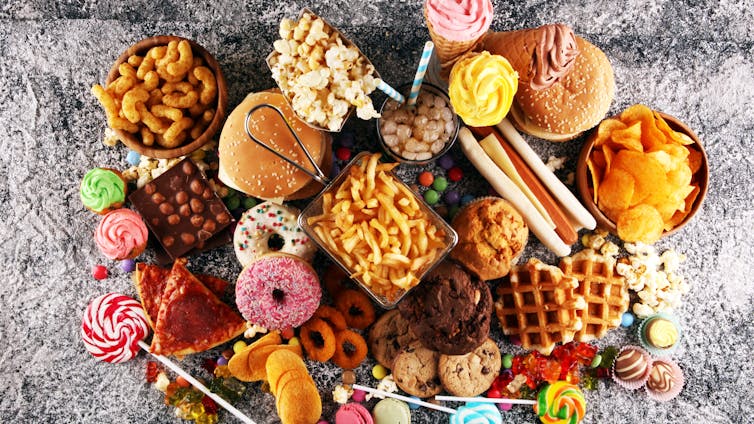
Group 4 – Ultraprocessed foods: These are mostly foods that contain ingredients not found in a typical kitchen, such as hydrogenated oils, modified starches, flavor enhancers, color additives and preservatives. Examples include chips, sodas, candy bars and many frozen meals, which are designed to be hyper-palatable and often nutrient-poor.
What does research say about ultraprocessed foods?
How does the MAHA report fit with current dietary guidelines?
The report echoes key themes of the 2020–2025 Dietary Guidelines for Americans, a document jointly published by the Departments of Agriculture and Health and Human Services every five years.
Both the MAHA report and the federal guidelines encourage the consumption of nutrient-dense, whole foods. One critical difference between them is that the 2020-2025 dietary guidelines make no mention of ultraprocessed foods. Some public health experts have noted that this omission may reflect food industry influence.
What happens next?
Kennedy has stated that a follow-up report outlining a strategy and potential policy reforms for addressing childhood chronic illness will be released in mid-August 2025. However, change is unlikely to be straightforward. Ultraprocessed foods represent a significant industry, and policies that challenge their prominence may encounter resistance from influential commercial interests. For decades, U.S. agricultural subsidies, food policy and consumers have supported the mass production and consumption of ultraprocessed foods. Reversing their overconsumption will require structural shifts in how food is produced, distributed and consumed in the U.S.Paul Dawson, Professor of Food Science, Clemson University This article is republished from The Conversation under a Creative Commons license. Read the original article.
STM Daily News is a vibrant news blog dedicated to sharing the brighter side of human experiences. Emphasizing positive, uplifting stories, the site focuses on delivering inspiring, informative, and well-researched content. With a commitment to accurate, fair, and responsible journalism, STM Daily News aims to foster a community of readers passionate about positive change and engaged in meaningful conversations. Join the movement and explore stories that celebrate the positive impacts shaping our world.
How Pecans Became a Holiday Staple: 8,000 Years of American Pecan History
Pecan History? Discover the 8,000-year history of pecans—America’s only native major nut crop. Learn how pecans evolved from wild, overlooked trees to a beloved holiday staple found in pies, pralines, and more.
How Pecans Became a Holiday Staple: 8,000 Years of American Pecan History
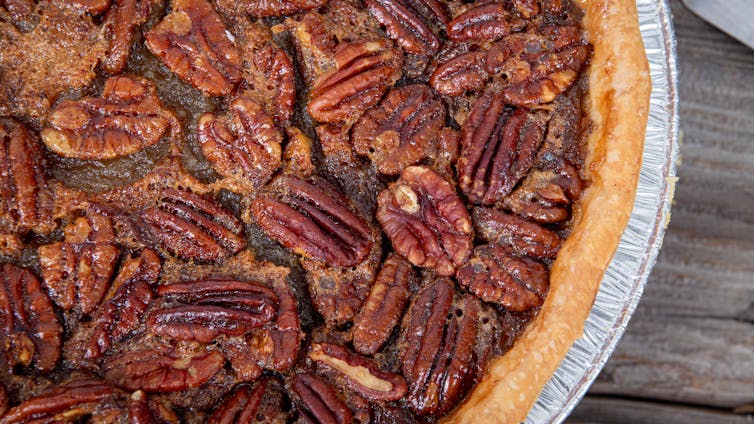
Shelley Mitchell, Oklahoma State University Pecans have a storied history in the United States. Today, American trees produce hundreds of million of pounds of pecans – 80% of the world’s pecan crop. Most of that crop stays here. Pecans are used to produce pecan milk, butter and oil, but many of the nuts end up in pecan pies. Throughout history, pecans have been overlooked, poached, cultivated and improved. As they have spread throughout the United States, they have been eaten raw and in recipes. Pecans have grown more popular over the decades, and you will probably encounter them in some form this holiday season. I’m an extension specialist in Oklahoma, a state consistently ranked fifth in pecan production, behind Georgia, New Mexico, Arizona and Texas. I’ll admit that I am not a fan of the taste of pecans, which leaves more for the squirrels, crows and enthusiastic pecan lovers.
The spread of pecans
The pecan is a nut related to the hickory. Actually, though we call them nuts, pecans are actually a type of fruit called a drupe. Drupes have pits, like the peach and cherry.Three pecan fruits, which ripen and split open to release pecan nuts, clustered on a pecan tree.IAISI/Moment via Getty Images The pecan nuts that look like little brown footballs are actually the seed that starts inside the pecan fruit – until the fruit ripens and splits open to release the pecan. They are usually the size of your thumb, and you may need a nutcracker to open them. You can eat them raw or as part of a cooked dish. The pecan derives its name from the Algonquin “pakani,” which means “a nut too hard to crack by hand.” Rich in fat and easy to transport, pecans traveled with Native Americans throughout what is now the southern United States. They were used for food, medicine and trade as early as 8,000 years ago.Pecans are native to the southern United States.Elbert L. Little Jr. of the U.S. Department of Agriculture, Forest Service Pecans are native to the southern United States, and while they had previously spread along travel and trade routes, the first documented purposeful planting of a pecan tree was in New York in 1722. Three years later, George Washington’s estate, Mount Vernon, had some planted pecans. Washington loved pecans, and Revolutionary War soldiers said he was constantly eating them. Meanwhile, no one needed to plant pecans in the South, since they naturally grew along riverbanks and in groves. Pecan trees are alternate bearing: They will have a very large crop one year, followed by one or two very small crops. But because they naturally produced a harvest with no input from farmers, people did not need to actively cultivate them. Locals would harvest nuts for themselves but otherwise ignored the self-sufficient trees. It wasn’t until the late 1800s that people in the pecan’s native range realized the pecan’s potential worth for income and trade. Harvesting pecans became competitive, and young boys would climb onto precarious tree branches. One girl was lifted by a hot air balloon so she could beat on the upper branches of trees and let them fall to collectors below. Pecan poaching was a problem in natural groves on private property.
Pecan cultivation begins
Even with so obvious a demand, cultivated orchards in the South were still rare into the 1900s. Pecan trees don’t produce nuts for several years after planting, so their future quality is unknown.An orchard of pecan trees.Jon Frederick/iStock via Getty Images To guarantee quality nuts, farmers began using a technique called grafting; they’d join branches from quality trees to another pecan tree’s trunk. The first attempt at grafting pecans was in 1822, but the attempts weren’t very successful. Grafting pecans became popular after an enslaved man named Antoine who lived on a Louisiana plantation successfully produced large pecans with tender shells by grafting, around 1846. His pecans became the first widely available improved pecan variety.Grafting is a technique that involves connecting the branch of one tree to the trunk of another.Orest Lyzhechka/iStock via Getty Images The variety was named Centennial because it was introduced to the public 30 years later at the Philadelphia Centennial Expedition in 1876, alongside the telephone, Heinz ketchup and the right arm of the Statue of Liberty. This technique also sped up the production process. To keep pecan quality up and produce consistent annual harvests, today’s pecan growers shake the trees while the nuts are still growing, until about half of the pecans fall off. This reduces the number of nuts so that the tree can put more energy into fewer pecans, which leads to better quality. Shaking also evens out the yield, so that the alternate-bearing characteristic doesn’t create a boom-bust cycle.
US pecan consumption
The French brought praline dessert with them when they immigrated to Louisiana in the early 1700s. A praline is a flat, creamy candy made with nuts, sugar, butter and cream. Their original recipe used almonds, but at the time, the only nut available in America was the pecan, so pecan pralines were born.Pralines were originally a French dessert, but Americans began making them with pecans.Jupiterimages/The Image Bank via Getty Images During the Civil War and world wars, Americans consumed pecans in large quantities because they were a protein-packed alternative when meat was expensive and scarce. One cup of pecan halves has about 9 grams of protein. After the wars, pecan demand declined, resulting in millions of excess pounds at harvest. One effort to increase demand was a national pecan recipe contest in 1924. Over 21,000 submissions came from over 5,000 cooks, with 800 of them published in a book. Pecan consumption went up with the inclusion of pecans in commercially prepared foods and the start of the mail-order industry in the 1870s, as pecans can be shipped and stored at room temperature. That characteristic also put them on some Apollo missions. Small amounts of pecans contain many vitamins and minerals. They became commonplace in cereals, which touted their health benefits. In 1938, the federal government published the pamphlet Nuts and How to Use Them, which touted pecans’ nutritional value and came with recipes. Food writers suggested using pecans as shortening because they are composed mostly of fat. The government even put a price ceiling on pecans to encourage consumption, but consumers weren’t buying them. The government ended up buying the surplus pecans and integrating them into the National School Lunch Program.Today, pecan producers use machines called tree shakers to shake pecans out of the trees.Christine_Kohler/iStock via Getty Images While you are sitting around the Thanksgiving table this year, you can discuss one of the biggest controversies in the pecan industry: Are they PEE-cans or puh-KAHNS? Editor’s note: This article was updated to include the amount of protein in a cup of pecans.Shelley Mitchell, Senior Extension Specialist in Horticulture and Landscape Architecture, Oklahoma State University This article is republished from The Conversation under a Creative Commons license. Read the original article.
Unwrap the Holidays: Whataburger Launches 12 Days of Whatacheer With Daily App Deals
Celebrate the holidays with Whataburger’s 12 Days of Whatacheer! Discover daily in-app deals, exclusive to Rewards members, from December 12–23. Unwrap new menu favorites, BOGO offers, and festive savings—only on the Whataburger App.
As the holiday lights go up and the year winds down, Whataburger is serving up more than just its signature burgers—it’s delivering a sleigh-full of savings and cheer to its loyal fans. For Rewards members, the season just got a whole lot tastier.
12 Days of Whatacheer: Festive Deals for Rewards Members
From December 12 through December 23, Whataburger is rolling out a new holiday tradition: the 12 Days of Whatacheer. Each day, Rewards members can unlock a fresh, exclusive deal in the Whataburger App—think crave-worthy classics, “buy one, get one” surprises, and complimentary add-ons that make every meal feel like a celebration.
Whether you’re craving a hot Honey Butter Chicken Biscuit to start your morning, a classic Whataburger for lunch, or a sweet Strawberry Shake to cap off your evening, there’s a daily treat waiting to be unwrapped. Just sign in to your Rewards account, check the app, and claim your deal to add a little extra joy to your holiday routine.
How It Works
Who: Whataburger Rewards members (sign up in the app if you’re not already!)
When: December 12–23, with a new offer every day
How: Open the Whataburger App, claim the day’s deal, and enjoy with your next order
A new reward pops up each morning—so there’s always a reason to check in, tap, and treat yourself. According to Scott Hudler, Whataburger’s Chief Marketing Officer, “12 Days of Whatacheer is Whataburger’s way of celebrating the season with a bit of holiday magic and special savings just for our Rewards members.”
Holiday-themed graphic reading ‘12 Days of WhataCheer’ on a red background with white dots. Below the text are images of Whataburger menu items: a Cinnamon Roll, Onion Rings, a Whataburger, a Whatafresher, a Honey Butter Chicken Biscuit, and a Strawberry Shake.
Why Join the Whataburger Rewards Fun?
It’s not just about the deals (though those are pretty great). It’s about celebrating the season with a brand that’s been a community favorite for 76 years. With over 1,100 locations across 17 states, Whataburger’s family members serve up more than just food—they deliver hospitality and hometown spirit.
Plus, the Whataburger App makes it easy to order, customize, and save—right from your phone. If you haven’t joined the Rewards program yet, now’s the perfect time to start.
Get Started
Ready to add some Whatacheer to your holiday countdown? Download the Whataburger App on iOS or Android, create your Rewards account, and get set to unwrap a new deal every day. For more details, visit Whataburger.com.
Wishing you a season of flavor, fun, and festive deals—see you in the drive-thru!
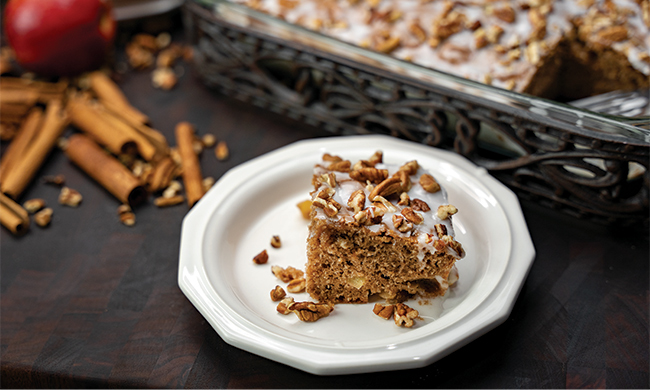
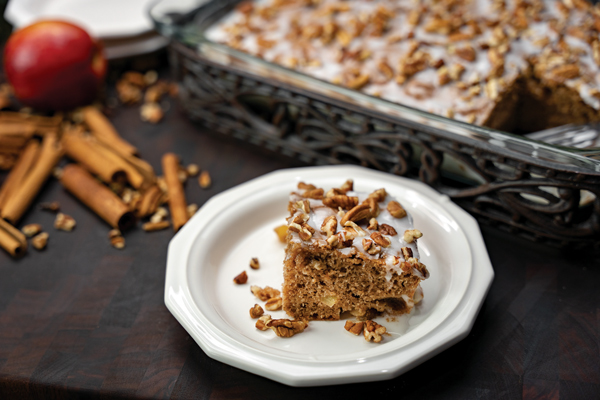
Pumpkin spice may be all the rage this time of year, but don’t forget another fruit that’s sure to please: sweet, delicious apples. For an ooey-gooey breakfast, office snack or potluck dessert, turn to this Apple Spice Cake.
(Family Features) Pumpkin spice may be all the rage this time of year, but don’t forget another fruit that’s sure to please: sweet, delicious apples. For an ooey-gooey breakfast, office snack or potluck dessert, turn to this Apple Spice Cake that looks and tastes like it’s made for the season. Visit Culinary.net to discover more recipe inspiration.
Peel, core and chop apples into bite-sized pieces. In bowl, mix apples with brown sugar, cinnamon and flour, if desired, which helps keep apples from sinking to bottom. Set aside.
In large mixing bowl, mix spice cake mix, butter, eggs and milk. Mix in apples and pour into 9-by-13-inch pan. Bake 30-35 minutes, or until toothpick inserted in center comes out clean.
Let cool.
To make glaze: Mix powdered sugar and milk; pour over cooled cake.
Pickleball Kingdom is opening a 14-court indoor facility in Port Richey, FL in early 2026. Discover what Jerry Campbell and Dr. Brian Dahmer are bringing to Pasco County’s pickleball community.


 Paul Dawson, Professor of Food Science, Clemson University This article is republished from The Conversation under a Creative Commons license. Read the original article.