

News
METROLINK COMMEMORATES CALIFORNIA CLEAN AIR DAY WITH FREE RIDES SYSTEMWIDE
LA Metro and a number of other regional transportation agencies will also waive fares Oct. 4, and Metrolink riders can connect at no cost to a variety of additional local transit options with their free round-trip ticket.

Last Updated on July 4, 2024 by Daily News Staff
Employees combat air pollution by taking part in “smog-eating” mural painting at UC Riverside

LOS ANGELES – To encourage Southern Californians to leave their vehicles at home and opt for a more sustainable alternative, Metrolink offered free rides across its entire system Wednesday for California Clean Air Day. LA Metro and a number of other regional transportation agencies will also waive fares Oct. 4, and Metrolink riders can connect at no cost to a variety of additional local transit options with their free round-trip ticket.
“Taking cars off the road is one of the best and easiest ways to combat air pollution, and we’re proud to offer Southern Californians an alternate method of transportation they can feel good about,” said Metrolink CEO Darren Kettle. “Metrolink trains use renewable, petroleum-free fuel made from recycled natural oils, and we were the first passenger railroad in the nation to make this transition, which reduces greenhouse gas emissions by up to 80%. Offering free rides on California Clean Air Day is just one of the ways we’re working to create cleaner, healthier communities across the region.”
In addition to providing free rides on Oct. 4, Metrolink has engaged in education and community development activities to help spread the California Clean Air Day message. In partnership with the City of Riverside’s Department of Arts and Cultural Affairs and UC Riverside’s Office of Sustainability, Metrolink team members gathered Tuesday to paint a smog-eating mural at UCR’s R’Garden. Working with UCR students, California Air Resources Board staff and community volunteers, the group brought to life an original work by local artist Ekaterina Orlovie using an air-purifying paint additive from manufacturer Photio that will actively clean the air around the mural. Metrolink also partnered with Los Angeles-based nonprofit Create Now to support a free multi-themed art program focused on teaching youth about air quality and environmentally healthy steps Californians can take to support clean air initiatives and improve public health.
Southern Californians who are ready to answer the call and leave their cars at home on Oct. 4 in honor of California Clean Air Day can redeem their free roundtrip ticket at any Metrolink ticket machine using the promo code “CLEANAIR23.” A complimentary digital ticket was automatically sent to registered Metrolink mobile app user wallets, which must be activated before boarding.
Source: Metrolink
https://stmdailynews.com/category/the-bridge/urbanism
Author

Discover more from Daily News
Subscribe to get the latest posts sent to your email.


Downtown Phoenix experienced the thunder of Formula 1 engines once again on Saturday, March 14, 2026, when the Red Bull Showrun transformed East Jefferson Street into a temporary motorsports stage. The free public event drew large crowds eager to see a real Formula 1 car perform high-speed demonstrations through the heart of the city.
The star of the event was the legendary Red Bull RB7, one of the most dominant machines in modern Formula 1 history. Fans watched as the car blasted down the temporary street course performing burnouts, donuts, and acceleration runs that echoed between downtown buildings.
A Championship Machine on City Streets
Originally driven to the 2011 Formula 1 World Championship by Sebastian Vettel, the RB7 represents a golden era for Red Bull Racing. The car is known for its aerodynamic design and remarkable performance during the 2011 season.
During the Phoenix showrun, the car was piloted by Scott Speed, a former Formula 1 competitor and experienced motorsports driver. He was joined by Nikola Tsolov, a rising talent in Red Bull’s junior driver development program.
Together, the drivers delivered a high-energy demonstration that gave spectators a rare opportunity to witness the power and precision of Formula 1 machinery up close.
A Tribute to Phoenix’s Formula 1 Legacy
The event also served as a reminder of Phoenix’s unique place in Formula 1 history. The city previously hosted the United States Grand Prix (Phoenix street circuit), which ran through downtown streets from 1989 through 1991.
During those races, fans watched legendary drivers such as Ayrton Senna compete on the challenging desert street circuit.
Although the Grand Prix eventually moved to other locations, the Red Bull Showrun brought the spirit of Formula 1 back to Phoenix for a new generation of motorsports fans.
Formula 1’s Growing U.S. Momentum
The Phoenix showrun comes at a time when Formula One is experiencing unprecedented growth in the United States. The sport now hosts three annual races in Austin, Miami, and Las Vegas.
Promotional events like the Red Bull Showrun help introduce the sport to new audiences and reconnect cities with their racing heritage.
For longtime Phoenix residents, the sound of a Formula 1 engine echoing through downtown streets was more than just a spectacle—it was a powerful reminder of the city’s motorsports past and the growing popularity of Formula 1 across America. 🏎️🔥
Related External Coverage
- Official Red Bull Showrun Phoenix Event Page
- Arizona’s Family (3TV / CBS 5): Coverage of the Red Bull Showrun in Downtown Phoenix
- Formula 1 Official Website – Learn More About the Sport
- City of Phoenix – Downtown Events and Street Closures
- History of the Phoenix Street Circuit and the U.S. Grand Prix (1989–1991)
Stay updated with the latest automotive news, vehicle technology, industry trends, and transportation innovations. The STM Daily News Automotive section explores how cars, electric vehicles, and mobility solutions are shaping the future of the road.
Discover more from Daily News
Subscribe to get the latest posts sent to your email.
Science
First contact with aliens could end in colonization and genocide if we don’t learn from history

Last Updated on March 15, 2026 by Daily News Staff
First contact with aliens could end in colonization and genocide if we don’t learn from history
David Delgado Shorter, University of California, Los Angeles; Kim TallBear, University of Alberta, and William Lempert, Bowdoin College
We’re only halfway through 2023, and it feels already like the year of alien contact.
In February, President Joe Biden gave orders to shoot down three unidentified aerial phenomena – NASA’s title for UFOs. Then, the alleged leaked footage from a Navy pilot of a UFO, and then news of a whistleblower’s report on a possible U.S. government cover-up about UFO research. Most recently, an independent analysis published in June suggests that UFOs might have been collected by a clandestine agency of the U.S. government.
If any actual evidence of extraterrestrial life emerges, whether from whistleblower testimony or an admission of a cover-up, humans would face a historic paradigm shift.
As members of an Indigenous studies working group who were asked to lend our disciplinary expertise to a workshop affiliated with the Berkeley SETI Research Center, we have studied centuries of culture contacts and their outcomes from around the globe. Our collaborative preparations for the workshop drew from transdisciplinary research in Australia, New Zealand, Africa and across the Americas.
In its final form, our group statement illustrated the need for diverse perspectives on the ethics of listening for alien life and a broadening of what defines “intelligence” and “life.” Based on our findings, we consider first contact less as an event and more as a long process that has already begun.
Who’s in charge of first contact
The question of who is “in charge” of preparing for contact with alien life immediately comes to mind. The communities – and their interpretive lenses – most likely to engage in any contact scenario would be military, corporate and scientific.
By giving Americans the legal right to profit from space tourism and planetary resource extraction, the Commercial Space Launch Competitiveness Act of 2015 could mean that corporations will be the first to find signs of extraterrestrial societies. Otherwise, while detecting unidentified aerial phenomena is usually a military matter, and NASA takes the lead on sending messages from Earth, most activities around extraterrestrial communications and evidence fall to a program called SETI, or the search for extraterrestrial intelligence.
SETI is a collection of scientists with a variety of research endeavors, including Breakthrough Listen, which listens for “technosignatures,” or markers, like pollutants, of a designed technology.
SETI investigators are virtually always STEM – science, technology, engineering and math – scholars. Few in the social science and humanities fields have been afforded opportunities to contribute to concepts of and preparations for contact.
In a promising act of disciplinary inclusion, the Berkeley SETI Research Center in 2018 invited working groups – including our Indigenous studies working group – from outside STEM fields to craft perspective papers for SETI scientists to consider.
Ethics of listening
Neither Breakthough Listen nor SETI’s site features a current statement of ethics beyond a commitment to transparency. Our working group was not the first to raise this issue. And while the SETI Institute and certain research centers have included ethics in their event programming, it seems relevant to ask who NASA and SETI answer to, and what ethical guidelines they’re following for a potential first contact scenario.
SETI’s Post-Detection Hub – another rare exception to SETI’s STEM-centrism – seems the most likely to develop a range of contact scenarios. The possible circumstances imagined include finding ET artifacts, detecting signals from thousands of light years away, dealing with linguistic incompatibility, finding microbial organisms in space or on other planets, and biological contamination of either their or our species. Whether the U.S. government or heads of military would heed these scenarios is another matter.
SETI-affiliated scholars tend to reassure critics that the intentions of those listening for technosignatures are benevolent, since “what harm could come from simply listening?” The chair emeritus of SETI Research, Jill Tarter, defended listening because any ET civilization would perceive our listening techniques as immature or elementary.
But our working group drew upon the history of colonial contacts to show the dangers of thinking that whole civilizations are comparatively advanced or intelligent. For example, when Christopher Columbus and other European explorers came to the Americas, those relationships were shaped by the preconceived notion that the “Indians” were less advanced due to their lack of writing. This led to decades of Indigenous servitude in the Americas.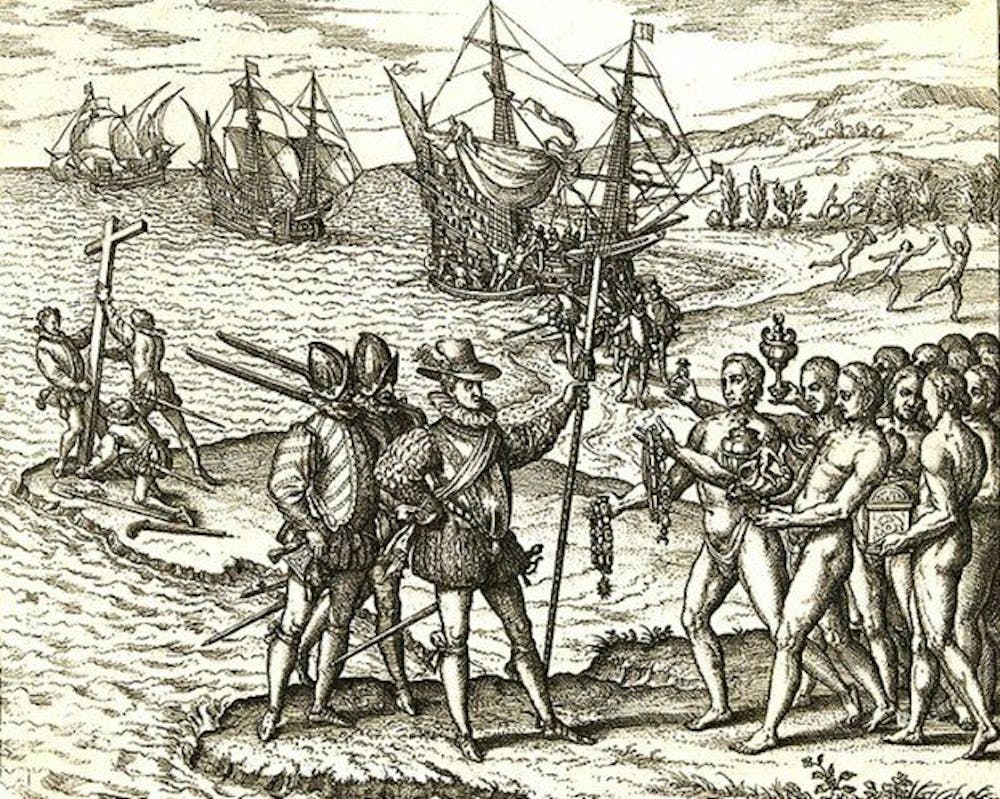
The working group statement also suggested that the act of listening is itself already within a “phase of contact.” Like colonialism itself, contact might best be thought of as a series of events that starts with planning, rather than a singular event. Seen this way, isn’t listening potentially without permission just another form of surveillance? To listen intently but indiscriminately seemed to our working group like a type of eavesdropping.
It seems contradictory that we begin our relations with aliens by listening in without their permission while actively working to stop other countries from listening to certain U.S. communications. If humans are initially perceived as disrespectful or careless, ET contact could more likely lead to their colonization of us.
Histories of contact
Throughout histories of Western colonization, even in those few cases when contactees were intended to be protected, contact has led to brutal violence, pandemics, enslavement and genocide.
James Cook’s 1768 voyage on the HMS Endeavor was initiated by the Royal Society. This prestigious British academic society charged him with calculating the solar distance between the Earth and the Sun by measuring the visible movement of Venus across the Sun from Tahiti. The society strictly forbade him from any colonial engagements.
Though he achieved his scientific goals, Cook also received orders from the Crown to map and claim as much territory as possible on the return voyage. Cook’s actions put into motion wide-scale colonization and Indigenous dispossession across Oceania, including the violent conquests of Australia and New Zealand.
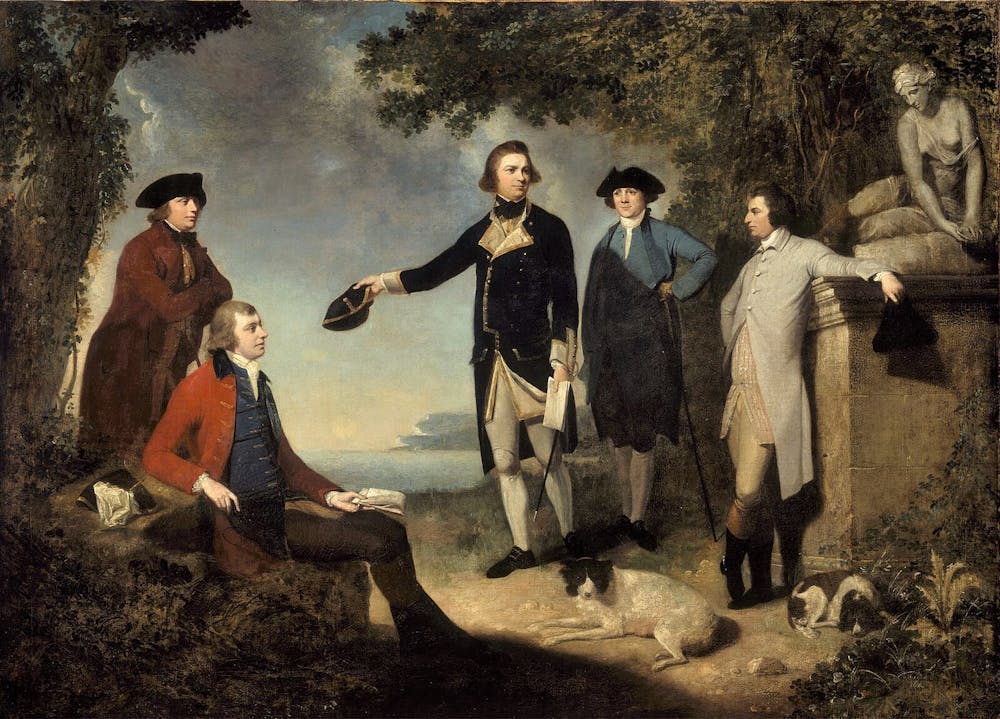
The Royal Society gave Cook a “prime directive” of doing no harm and to only conduct research that would broadly benefit humanity. However, explorers are rarely independent from their funders, and their explorations reflect the political contexts of their time.
As scholars attuned to both research ethics and histories of colonialism, we wrote about Cook in our working group statement to showcase why SETI might want to explicitly disentangle their intentions from those of corporations, the military and the government.
Although separated by vast time and space, both Cook’s voyage and SETI share key qualities, including their appeal to celestial science in the service of all humanity. They also share a mismatch between their ethical protocols and the likely long-term impacts of their success. https://www.youtube.com/embed/5gZwLGrJQrM?wmode=transparent&start=0 This BBC video describes the modern ramifications of Captain James Cook’s colonial legacy in New Zealand.
The initial domino of a public ET message, or recovered bodies or ships, could initiate cascading events, including military actions, corporate resource mining and perhaps even geopolitical reorganizing. The history of imperialism and colonialism on Earth illustrates that not everyone benefits from colonization. No one can know for sure how engagement with extraterrestrials would go, though it’s better to consider cautionary tales from Earth’s own history sooner rather than later.
This article has been updated to correct the date of James Cook’s voyage.
David Delgado Shorter, Professor of World Arts and Cultures/Dance, University of California, Los Angeles; Kim TallBear, Professor of Native Studies, University of Alberta, and William Lempert, Assistant Professor of Anthropology, Bowdoin College
This article is republished from The Conversation under a Creative Commons license. Read the original article.
The science section of our news blog STM Daily News provides readers with captivating and up-to-date information on the latest scientific discoveries, breakthroughs, and innovations across various fields. We offer engaging and accessible content, ensuring that readers with different levels of scientific knowledge can stay informed. Whether it’s exploring advancements in medicine, astronomy, technology, or environmental sciences, our science section strives to shed light on the intriguing world of scientific exploration and its profound impact on our daily lives. From thought-provoking articles to informative interviews with experts in the field, STM Daily News Science offers a harmonious blend of factual reporting, analysis, and exploration, making it a go-to source for science enthusiasts and curious minds alike. https://stmdailynews.com/category/science/
Discover more from Daily News
Subscribe to get the latest posts sent to your email.
Science
Saltwater flooding is a serious fire threat for EVs and other devices with lithium-ion batteries
Last Updated on March 15, 2026 by Daily News Staff
Xinyu Huang, University of South Carolina
Flooding from hurricanes Helene and Milton inflicted billions of dollars in damage across the Southeast in September and October 2024, pushing buildings off their foundations and undercutting roads and bridges. It also caused dozens of electric vehicles and other battery-powered objects, such as scooters and golf carts, to catch fire.
According to one tally, 11 electric cars and 48 lithium-ion batteries caught fire after exposure to salty floodwater from Helene. In some cases, these fires spread to homes.
When a lithium-ion battery pack bursts into flames, it releases toxic fumes, burns violently and is extremely hard to put out. Frequently, firefighters’ only option is to let it burn out by itself.
Particularly when these batteries are soaked in saltwater, they can become “ticking time bombs,” in the words of Florida State Fire Marshall Jimmy Patronis. That’s because the fire doesn’t always occur immediately when the battery is flooded. According to the National Highway Traffic Safety Administration, about 36 EVs flooded by Hurricane Ian in Florida in 2022 caught fire, including several that were being towed after the storm on flatbed trailers.
Many consumers are unaware of this risk, and lithium-ion batteries are widely used in EVs and hybrid cars, e-bikes and scooters, electric lawnmowers and cordless power tools.
I’m a mechanical engineer and am working to help solve battery safety issues for our increasingly electrified society. Here’s what all owners should know about water and the risk of battery fires: https://www.youtube.com/embed/gWkEGEbpqFc?wmode=transparent&start=10 Emergency responders handle EVs that were immersed in saltwater during Hurricane Ian in Florida in 2022, including some that ignited.
The threat of saltwater
The trigger for lithium-ion battery fires is a process called thermal runaway – a cascading sequence of heat-releasing reactions inside the battery cell.
Under normal operating conditions, the probability of a lithium-ion cell going into thermal runaway is less than 1 in 10 million. But it increases sharply if the cell is subjected to electrical, thermal or mechanical stress, such as short-circuiting, overheating or puncture.
Saltwater is a particular problem for batteries because salt dissolved in water is conductive, which means that electric current readily flows through it. Pure water is not very conductive, but the electrical conductivity of seawater can be more than a thousand times higher than that of fresh water.
All EV battery pack enclosures use gaskets to seal off their internal space from the elements outside. Typically, they have waterproof ratings of IP66 or IP67. While these ratings are high, they do not guarantee that a battery will be watertight when it is immersed for a long period of time – say, over 30 minutes.
Battery packs also have various ports to equalize pressure inside the battery and move electrical power in and out. These can be potential pathways for water to leak into the pack enclosure. Inadequate seal ratings and manufacturing defects can also enable water to find its way into the battery pack if it is immersed.
How water leads to fire
All batteries have two terminals: One is marked positive (+), and the other is marked negative (-). When the terminals are connected to a device that uses electricity to do work, such as a light bulb, chemical reactions occur inside the battery that cause electrons to flow from the negative to the positive terminal. This creates an electric current and releases the energy stored in the battery.
Electrons flow between a battery’s terminals because the chemical reactions inside the battery create different electrical potentials between the two terminals. This difference is also known as voltage. When saltwater comes into contact with metal battery terminals with different electrical potentials, the battery can short-circuit, inducing rapid corrosion and electric arcing, and generating excessive current and heat. The more conductive the liquid is that penetrates the battery pack, the higher the shorting current and rate of corrosion.
Rapid corrosion reactions within the battery pack produce hydrogen and oxygen, corroding away materials from metallic terminals on the positive side of the battery and depositing them onto the negative side. Even after the water drains away, these deposited materials can form solid shorting bridges that remain inside the battery pack, causing a delayed thermal runaway. A fire can start days after the battery is flooded.
Even a battery pack that is fully discharged isn’t necessarily safe during flooding. A lithium-ion cell, even at 0% state of charge, still has about a three-volt potential difference between its positive and negative terminals, so some current can flow between them. For a battery string with many cells in a series – a typical configuration in electric cars – residual voltage can still be high enough to drive these reactions.
Many scientists, including me and my colleagues, are working to understand the exact sequence of events that can occur in a battery pack after it is exposed to saltwater and lead to thermal runaway. We also are looking for ways to help reduce fire risks from flooded battery packs.
These could include finding better ways to seal the battery packs; using alternative, more corrosion-resistant materials for the battery terminals; and applying waterproof coatings to exposed terminals inside the battery pack.
What EV owners should know
Electric cars are still very safe to drive and own in most circumstances. However, during extreme situations like hurricanes and flooding, it is very important to keep EV battery packs from becoming submerged in water, particularly saltwater. The same is true for other products that contain lithium-ion batteries.
For EVs, this means evacuating cars out of the affected zone or parking them on high ground before flooding occurs. Smaller objects, like e-bikes and power tools, can be moved to upper floors of buildings or stored on high shelves.
If you own an EV that has been submerged in water for hours to days, particularly in saltwater, public safety experts recommend treating it as a fire hazard and placing it on open ground away from other valuable property. Do not attempt to charge or operate it. Contact the manufacturer for an inspection to assess battery damage.
Often, a flooded electric vehicle will need to be towed away for further inspection. However, since thermal runaway can occur well after submersion, the car should not be moved until it has been professionally assessed.
Xinyu Huang, Associate Professor of Mechanical Engineering, University of South Carolina
This article is republished from The Conversation under a Creative Commons license. Read the original article.
The science section of our news blog STM Daily News provides readers with captivating and up-to-date information on the latest scientific discoveries, breakthroughs, and innovations across various fields. We offer engaging and accessible content, ensuring that readers with different levels of scientific knowledge can stay informed. Whether it’s exploring advancements in medicine, astronomy, technology, or environmental sciences, our science section strives to shed light on the intriguing world of scientific exploration and its profound impact on our daily lives. From thought-provoking articles to informative interviews with experts in the field, STM Daily News Science offers a harmonious blend of factual reporting, analysis, and exploration, making it a go-to source for science enthusiasts and curious minds alike. https://stmdailynews.com/category/science/
Discover more from Daily News
Subscribe to get the latest posts sent to your email.





