

Entertainment
Muppets at 50: How Jim Henson’s Felt Icons Became a Billion-Dollar Franchise That Still Prints Money
The Muppets, created by Jim Henson, have thrived for over 50 years, starting with “Sam and Friends” in 1955 and gaining fame through “The Muppet Show” and various films. Despite challenges, including Henson’s passing in 1990 and subsequent ownership changes, The Muppets remain culturally significant, entertaining generations globally.


It’s easy making green: Muppets continue to make a profit 50 years into their run
Jared Bahir Browsh, University of Colorado Boulder
A variety show that’s still revered for its absurdist, slapstick humor debuted 50 years ago. It starred an irreverent band of characters made of foam and fleece.
Long after “The Muppet Show”‘s original 120-episode run ended in 1981, the legend and legacy of Miss Piggy, Fozzie Bear, Gonzo and other creations concocted by puppeteer and TV producer Jim Henson have kept on growing. Thanks to the Muppets’ film franchise and the wonders of YouTube, the wacky gang is still delighting, and expanding, its fan base.
As a scholar of popular culture, I believe that the Muppets’ reign, which began in the 1950s, has helped shape global culture, including educational television. Along the way, the puppets and the people who bring them to life have earned billions in revenue.
Johnny Carson interviews Muppet creator Jim Henson, Kermit and other Muppets on the ‘Tonight Show’ in 1975, ahead of one of an early ‘The Muppet Show’ pilot.
Kermit’s origin story
Muppets, a portmanteau of marionette and puppet, first appeared on TV in the Washington, D.C., region in 1955, when Henson created a short sketch show called “Sam and Friends” with his future wife, Jane Nebel.
Their motley cast of puppets, including a lizardlike character named Kermit, sang parody songs and performed comedy sketches.
Henson’s creations were soon popping up in segments on other TV shows, including “Today” and late-night programs. Rowlf the Dog appeared in Canadian dog food commercials before joining “The Jimmy Dean Show” as the host’s sidekick.
After that show ended, Rowlf and Dean performed on the “Ed Sullivan Show,” where Kermit had occasionally appeared since 1961.
Rowlf the Dog and Jimmy Dean reprise their schtick on the ‘Ed Sullivan Show’ in 1967.
From ‘Sesame Street’ to ‘SNL’
As Rowlf and Kermit made the rounds on variety shows, journalist Joan Ganz Cooney and psychologist Lloyd Morrisett were creating a new educational program. They invited Henson to provide a Muppet ensemble for the show.
Henson waived his performance fee to maintain rights over the characters who became the most famous residents of “Sesame Street.” The likes of Oscar the Grouch, Cookie Monster and Big Bird were joined by Kermit who, by the time the show premiered in 1969, was identified as a frog.
When “Sesame Street” became a hit, Henson worried that his Muppets would be typecast as children’s entertainment. Another groundbreaking show, aimed at young adults, offered him a chance to avoid that.
“Saturday Night Live’s” debut on NBC in 1975 – when the show was called “Saturday Night” – included a segment called “The Land of Gorch,” in which Henson’s grotesque creatures drank, smoked and cracked crass jokes.
“The Land of Gorch” segments ended after “Saturday Night Live’s” first season. ‘Saturday Night Live’s’ first season included ‘Land of Gorch’ sketches that starred creatures Jim Henson made to entertain grown-ups.
Miss Piggy gets her closeup
“The Muppet Show” was years in the making. ABC eventually aired two TV specials in 1974 and 1975 that were meant to be pilots for a U.S.-produced “Muppet Show.”
After no American network picked up his quirky series, Henson partnered with British entertainment entrepreneur Lew Grade to produce a series for ATV, a British network, that featured Kermit and other Muppets. The new ensemble included Fozzie Bear, Animal and Miss Piggy – Muppets originally performed by frequent Henson collaborator Frank Oz.
“The Muppet Show” parodied variety shows on which Henson had appeared. Connections he’d made along the way paid off: Many celebrities he met on those shows’ sets would guest star on “The Muppet Show,” including everyone from Rita Moreno and Lena Horne to Joan Baez and Johnny Cash.
“The Muppet Show,” which was staged and shot at a studio near London, debuted on Sept. 5, 1976, in the U.K, before airing in syndication in the United States on stations like New York’s WCBS.
As the show’s opening and closing theme songs changed over time, they retained a Vaudeville vibe despite the house band’s preference for rock and jazz.
The Muppets hit the big screen
“The Muppet Show” was a hit, amassing a global audience of over 200 million. It won many awards, including a Primetime Emmy for outstanding comedy-variety or music series – for which it beat “Saturday Night Live” – in 1978.
While his TV show was on the air, Henson worked on the franchise’s first film, “The Muppet Movie.” The road film, released in 1979, was another hit: It earned more than US$76 million at the box office.
“The Muppet Movie” garnered two Academy Award nominations for its music, including best song for “Rainbow Connection.” It won a Grammy for best album for children.
The next two films, “The Great Muppet Caper,” which premiered in 1981, and “The Muppets Take Manhattan,” released in 1984, also garnered Oscar nominations for their music.
As ‘The Muppet Movie’ opens, Statler and Waldorf tell a security guard of their heckling plans.
‘Fraggle Rock’ and the Disney deal
The cast of “The Muppet Show” and the three films took a break from Hollywood while Henson focused on “Fraggle Rock,” a TV show for kids that aired from 1983-1987 on HBO.
Like Henson’s other productions, “Fraggle Rock” featured absurdist humor – but its puppets aren’t considered part of the standard Muppets gang. This co-production between Henson, Canadian Broadcast Corporation and British producers was aimed at international markets.
The quickly conglomerating media industry led Henson to consider corporate partnerships to assist with his goal of further expanding the Muppet media universe.
In August 1989, he negotiated a deal with Michael Eisner of Disney who announced at Disney-MGM Studios an agreement in principle to acquire The Muppets, with Henson maintaining ownership of the “Sesame Street” characters.
The announcement also included plans to open Muppet-themed attractions at Disney parks.
But less than a year later, on May 16, 1990, Henson died from a rare and serious bacterial infection. He was 53.
At the end of ‘Fraggle Rock’s’ run, its characters look for new gigs.
Of Muppets and mergers
Henson’s death led to the Disney deal’s collapse. But the company did license The Muppets to Disney, which co-produced “The Muppet Christmas Carol” in 1992 and “Muppet Treasure Island” in 1996 with Jim Henson Productions, which was then run by Jim’s son, Brian Henson.
In 2000, the Henson family sold the Muppet properties to German media company EM.TV & Merchandising AG for $680 million. That company ran into financial trouble soon after, then sold the Sesame Street characters to Sesame Workshop for $180 million in late 2000. The Jim Henson Company bought back the remaining Muppet properties for $84 million in 2003.
In 2004, Disney finally acquired The Muppets and most of the media library associated with the characters.
Disney continued to produce Muppet content, including “The Muppet’s Wizard of Oz” in 2005. Its biggest success came with the 2011 film “The Muppets,” which earned over $165 million at the box office and won the Oscar for best original song “Man or Muppet.”
“Muppets Most Wanted,” released in 2014, earned another $80 million worldwide, bringing total global box office receipts to over $458 million across eight theatrical Muppets movies.
The ‘Muppet Show’ goes on
The Muppets continue to expand their fandom across generations and genres by performing at live concerts and appearing in several series and films.
Through these many hits and occasional bombs, and the Jim Henson Company’s personnel changes, the Muppets have adapted to changes in technology and tastes, making it possible for them to remain relevant to new generations.
That cast of characters made of felt and foam continue to entertain fans of all ages. Although many people remain nostalgic over “The Muppet Show,” two prior efforts to reboot the show proved short-lived.
But when Disney airs its “The Muppet Show” anniversary special on Feb. 4, 2026, maybe more people will get hooked as Disney looks to reboot the series
‘The Muppet Show’ will be back – for at least one episode – on Feb. 4, 2026.
Jared Bahir Browsh, Assistant Teaching Professor of Critical Sports Studies, University of Colorado Boulder
This article is republished from The Conversation under a Creative Commons license. Read the original article.





MINNEAPOLIS — The powerful new documentary Come Talk to ME is set to make its big-screen debut at the Minneapolis–Saint Paul International Film Festival (MSPIFF), marking a significant milestone for the independently produced film centered on Parkinson’s disease, communication, and human connection.
The 2026 festival, running April 8–19, will feature more than 200 films from around the world. Come Talk to ME is scheduled for two screenings, including a meaningful premiere on April 11—World Parkinson’s Day—followed by a second showing on April 14. Both screenings will take place at the Main Cinema at Saint Anthony Main in Minneapolis.
A Story About Communication and Connection
Directed by Deacon Warner and produced by Jackie Hunt Christensen, the documentary follows Christensen, her husband Paul, and a close-knit group of friends living with Parkinson’s disease.
The film explores how communication evolves as the disease progresses, highlighting the creative and deeply human ways individuals maintain relationships—with family, friends, and healthcare providers—even as traditional speech becomes more challenging.
Christensen, diagnosed with Parkinson’s at just 34, emphasizes that the film is ultimately about preserving connection:
“Having Parkinson’s does not mean that you stop loving, caring, and feeling… communication is everything.”
Innovative Use of AI Voice Technology
One of the film’s most groundbreaking elements is its use of AI-generated narration powered by ElevenLabs.
The filmmakers recreated Christensen’s voice using archival audio recorded shortly after her diagnosis in 2000. This AI-generated voice—nicknamed “JHC2K”—serves as the primary narrator, allowing Christensen to “speak” throughout the film in a way that would otherwise be difficult due to the progression of Parkinson’s.
Director Warner called the experience both innovative and deeply personal:
“To be part of [MSPIFF’s] rich history… while also utilizing cutting-edge AI technology to set us apart from other films is incredible.”
Festival Screenings and Accessibility
Come Talk to ME will screen twice during the festival:
- Saturday, April 11 (World Parkinson’s Day) – Early afternoon (time TBD)
- Tuesday, April 14 – Late afternoon (time TBD)
Ticket pricing:
- MSP Film Society Members: $11
- General Admission: $17 (+ online fee)
- Students: $10 (with ID)
In a move aligned with the film’s mission, the April 11 screening will offer free admission (donation-based) for individuals affected by Parkinson’s disease.
The venue also provides limited wheelchair seating on a first-come, first-served basis.
A Film Seeking Broader Impact
Beyond its festival debut, Come Talk to ME is actively seeking sponsors to expand its reach and impact. The filmmakers hope to bring the documentary to wider audiences, particularly within communities affected by Parkinson’s disease.
At its core, the film delivers a powerful message: even as physical abilities change, the need for connection—and the human drive to communicate—remains constant.
Why This Film Matters
As awareness of Parkinson’s disease continues to grow, Come Talk to ME stands out as both an emotional narrative and a technological milestone. By combining personal storytelling with AI innovation, the film offers a new way to understand life with Parkinson’s—and the enduring importance of being heard.
Source and Related Links
- Minneapolis–Saint Paul International Film Festival (MSPIFF) Official Site
- MSP Film Society Official Website
- World Parkinson’s Day – Official Information
- Parkinson’s Foundation – Resources & Support
- The Michael J. Fox Foundation for Parkinson’s Research
- ElevenLabs – AI Voice Technology Platform
STM Daily News’ Entertainment section delivers the latest on movies, television, music, pop culture, events, and industry buzz. From breaking news and trending stories to feature coverage and community-centered entertainment reporting, it keeps readers connected to what’s happening on screen, on stage, and beyond.
Entertainment
‘Project Hail Mary’ demonstrates how intellectual humility can be a guiding force for scientists and astronauts

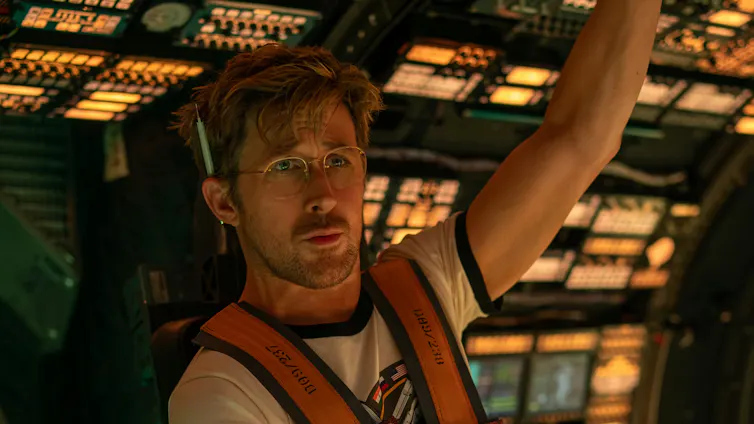
‘Project Hail Mary’ demonstrates how intellectual humility can be a guiding force for scientists and astronauts
Deana L. Weibel, Grand Valley State University
Early in Phil Lord and Christopher Miller’s science fiction blockbuster “Project Hail Mary,” middle school teacher Ryland Grace, played by Ryan Gosling, is tasked by an international coalition to uncover the biology of a strange microbe known as an “astrophage” that has been absorbing energy from an ever-dimming Sun.
Grace is a molecular biologist by training, but his controversial ideas and overconfident attitude have kept him out of academia. The viewer will see through flashbacks that as he’s matured, he’s developed a vital skill for solving the astrophage crisis: intellectual humility.
I’m an anthropologist who studies astronauts and space professionals to understand what space symbolizes to the people who experience it firsthand. Grace’s character in “Project Hail Mary” developed several of the traits that I’ve observed in the astronauts I’ve interviewed. These characteristics prove essential to success in high-stakes, uncertain situations. Warning: some plot points will be revealed ahead.
‘Project Hail Mary’ follows a middle school science teacher tasked with saving Earth from star-eating microbes.
Grace has been chosen as one of the first to study astrophage because of his Ph.D. dissertation on whether life can exist without water, a hot take in the world of science that, along with his rude response to peer reviewers, has gotten him banned from polite science conferences. The solar microbes eating the Sun seem to live without water, so Grace is the acknowledged expert.
Unfortunately, Grace can’t see into the mysterious, opaque little organisms until a dead one becomes translucent. Finally, Grace can see inside the microbe to study it, and he believes his hypothesis about life not needing water will be proven. However, chemical analysis reveals astrophage is made up of mostly water.
In a moment that undercuts both his expertise and his expectations, Grace is wrong. Crushed, he throws a tantrum, observed by a bemused assembly of international leaders.
What actually matters isn’t that Grace is wrong but what he does next. Only after Grace overcomes his frustration and need to be right is he able to move forward, returning to the problem with curiosity rather than defensiveness and the resolve to learn enough about astrophage to make saving the world a possibility.
Admitting what you don’t know
Perhaps the real hero of the story is not Ryland Grace himself but his intellectual humility. Intellectual humility, the admission of your own limited knowledge and a willingness to learn from others, sometimes seems to be undervalued, particularly by those in leadership positions.
People who are intellectually humble will say things like, “Tell me more,” or “I wish I had thought of that.” They don’t feel threatened when admitting vulnerability.
Some people, however, do feel threatened by the thought of admitting incomplete knowledge or appearing to have limitations. Instead of confessing what they don’t know, they may claim a kind of certainty that goes beyond their true expertise, shutting down further questioning. Intellectual humility, in contrast, encourages someone to remain engaged by highlighting how much they still have to learn.
Being contradicted by the facts can produce diverse reactions. For someone without intellectual humility, not knowing can feel like failure. It can lead to defensiveness, denial or a refusal to engage. With humility, however, not knowing is more interesting than scary. The defensiveness is gone, replaced by curiosity.
When Grace realizes his expectations about astrophage aren’t supported by scientific evidence, he goes from feeling sure to feeling unsure. Reality itself hasn’t changed, but Grace’s sense of reality shifts in an important way. He realizes that there is a great deal he still needs to learn about these microbes, without assumptions blocking new knowledge. His intellectual humility gives him a path forward, a way to reset and take in new information without shutting down.
Intellectual humility as a method
Ryland Grace is willing to learn, and this serves him well throughout the movie. His intellectual humility operates as a method, guiding how he approaches problems step by step.
For instance, once he realizes, to his dismay, that astrophage is made of water, Grace acknowledges this new truth. He doesn’t like it, but he accepts it. Moving forward, he avoids making assumptions about astrophage. Instead, he tests hypotheses using simple tools that have been cobbled together from items available in a big-box store.
His partner in this experiment is Carl, played by Lionel Boyce, who is there as a sort of half-“babysitter,” half-security guard, keeping an eye on Grace but also being irresistibly pulled into his scientific orbit.
Grace’s intellectual humility transforms Carl from a minder into a partner. Even though Carl isn’t a scientist himself, when Grace has to figure out how to make the lab’s astrophage experiment replicate the conditions causing the crisis in our solar system, it is Carl who suggests a solution.
Instead of being bothered that a nonscientist knew better than he did, Grace acknowledges the solution’s value, thanks Carl and uses Carl’s idea to reach a crucial discovery, proving himself to be open to ideas and feedback from others.
When Grace’s experiments struggle, he moves forward without defensiveness and instead displays increasing curiosity. His method of intellectual humility is to admit ignorance, test variables and revise working hypotheses based on new data, staying open to suggestions from others the whole time. To borrow a phrase from a different space story, “this is the way.”
Science fiction to real space exploration
Although “Project Hail Mary” is fictional, the attitude displayed by Ryland Grace is something I have seen in ethnographic interviews with astronauts and other space professionals, including engineers, astronomers and flight surgeons. Ethnography is a method of research, usually done in the long term, that combines interviews and participant observation.
When confronted with the reality of the universe – an enormous starry void we humans are only beginning to understand – scientists and space explorers are often stunned and humbled by the extent of their own ignorance. Although there are, without a doubt, less-than-humble people building rockets or going into space, intellectual humility is often a guiding force among many successful space researchers.

In my book, “The Ultraview Effect,” I trace the way a sense of cosmic awe can provoke feelings of humility and openness, which serve as catalysts for curiosity. This pattern, which I began to notice after an astronaut told me how seeing billions of stars with his own eyes made him realize how little he actually knew, is very similar to what Grace experiences in the movie.
Being open to awe and willing to be humbled by it isn’t weakness but strength. And in his embrace of intellectual humility, Grace lives up to his name.
Deana L. Weibel, Professor of Anthropology, Grand Valley State University
This article is republished from The Conversation under a Creative Commons license. Read the original article.
Looking for an entertainment experience that transcends the ordinary? Look no further than STM Daily News Blog’s vibrant Entertainment section. Immerse yourself in the captivating world of indie films, streaming and podcasts, movie reviews, music, expos, venues, and theme and amusement parks. Discover hidden cinematic gems, binge-worthy series and addictive podcasts, gain insights into the latest releases with our movie reviews, explore the latest trends in music, dive into the vibrant atmosphere of expos, and embark on thrilling adventures in breathtaking venues and theme parks. Join us at STM Entertainment and let your entertainment journey begin! https://stmdailynews.com/category/entertainment/
and let your entertainment journey begin!
Author


As the United States moves toward the 250th anniversary of its independence, a new public storytelling project is asking Americans to answer a big question: what does the American Dream mean today?
McCourt Entertainment has launched America-Dreams.com at SXSW as a digital platform designed to collect video submissions from people across the country. The goal is ambitious: gather one million voices reflecting on hope, opportunity, and what Americans want the future of the country to look like.
The initiative is tied to AMERIGO, an upcoming documentary presented by South Florida PBS and distributed by American Public Television. The film, which will be available to PBS stations nationwide beginning in June as part of 2026 programming tied to the nation’s 250th anniversary, explores the past, present, and future of the American Dream through conversations with people across the United States.
According to the project team, selected user-submitted videos may become part of the broader AMERIGOstorytelling effort, turning the campaign into more than a promotional rollout. Instead, it is being framed as a living archive of public voices gathered during a milestone moment in American history.
South Florida PBS President and CEO Dolores Fernandez Alonso said the goal is to make the anniversary feel inclusive and participatory.
“To celebrate the 250th anniversary of America’s independence, we wanted to do something truly remarkable and invite all Americans to share their hope for the American Dream at America-Dreams.com,” Alonso said. “We are extremely proud of the cross-section of voices from across our nation and we want to capture these stories, experiences and perspectives so that people feel included in this historic national conversation.”
Emmy Award-winning producer David McCourt said the project builds on the documentary team’s nationwide reporting.
“As the United States approaches its 250th anniversary, this project asks a simple but powerful question: ‘What is your hope for the American Dream?’” McCourt said. “We want to hear directly from people across the country.”
The campaign arrives at a moment when interactive documentary projects and audience participation are becoming a larger part of public media storytelling. With AMERIGO, the combination of a PBS documentary and a nationwide video submission initiative gives the project a broader cultural footprint than a traditional film release.
Submissions are now open at America-Dreams.com. A trailer for AMERIGO is also available on Vimeo.
For entertainment audiences, the project stands out less as a conventional documentary launch and more as a large-scale invitation to participate in a national media moment ahead of America’s semiquincentennial.
Catch the latest in movies, TV, music, pop culture, and live events in STM Daily News’ Entertainment section.
Related Links
Source Link






