New Orleans attacker’s apparent loyalty to Islamic State group highlights persistent threat of lone wolf terrorism
On January 1, 2025, Shamsud-Din Jabbar, a U.S. Army veteran, drove his truck into a crowd in New Orleans, killing 15, highlighting ongoing risks from lone actors inspired by extremist groups.
Last Updated on January 5, 2025 by Daily News StaffShamsud-Din Jabbar drove a white Ford F-150 pickup truck into a crowd of New Year’s revelers in the French Quarter of New Orleans. Matthew Hinton/AFP via Getty Images
While the investigation is still ongoing, some details about the suspect have been released. Authorities say Shamsud-Din Jabbar, a U.S. Army veteran, was behind the assault in which a truck was driven into a dense crowd in New Orleans’ French Quarter a few hours after midnight, killing at least 15 people and injuring dozens more. Jabbar, who died in a shoot-out with police, had pledged loyalty to the Islamic State group in online videos posted on Dec. 31, according to the FBI.
It represents the first major assault on an American city by an individual purportedly influenced by the Islamic State group, or one of its affiliates, since a 2017 truck assault in New York City that killed eight.
The New Orleans attack, like that earlier incident, underscores an important point: While the Islamic State group’s territorial caliphate – the area in Syria and Iraq in which it assumed both political and religious authority and sought to enforce its interpretation of Islamic law – has been dismantled, the group’s ability to inspire acts of terror on U.S. soil through online propaganda and ideological influence remains alarmingly potent.
As a terrorism expert and a scholar specializing in radical Islamist militant groups, I believe the case of Jabbar – an American soldier who was radicalized in the U.S. – echoes similar lone wolf attacks in the West over the past decade.
With lost territory in the Middle East, the Islamic State group has sought to exploit personal grievances, mental health struggles and ideological vulnerabilities, transforming isolated individuals in the West into deadly instruments of violence.
An attack inspired by the Islamic State
The New Year’s Day attack took place in New Orleans’ famous French Quarter. At about 3:15 a.m., Jabbar plowed his truck into a dense crowd along the popular Bourbon Street.
In the immediate aftermath, investigators discovered a black banner in his vehicle – the flag used by many Islamist militant groups, including the Islamic State.
While the Islamic State has not yet officially claimed the attack on any of its social media platforms, subsequent reviews of Jabbar’s online activity revealed videos posted just hours before the incident, in which he pledged allegiance to the group. On Jan. 2, Christopher Raia of the FBI’s counterterrorism division said Jabbar was “100% inspired by ISIS,” using an alternative name for the group.
Advertisement
New Orleans attack suspect Shamsud-Din Jabbar had pledged loyalty to the Islamic State group. FBI/AFP via Getty Images
Jabbar’s background adds complexity to the narrative. A 42-year-old veteran, he had no prior known links to extremist networks, according to the FBI, underscoring the challenge posed by self-radicalized individuals who operate outside the scope of traditional terrorist cells.
At this early stage of the investigation, it appears the attack was planned independently, driven by an ideological alignment with the Islamic State group rather than at the direction of any of its leaders. This highlights the decentralized and unpredictable nature of the current terrorist threat landscape.
The growing threat of lone actor attacks
At the height of its power in 2014-2015, the Islamic State group controlled significant territory across Syria and Iraq, establishing a self-declared caliphate. While this physical caliphate was dismantled by 2019, following sustained efforts by the U.S.-led Global Coalition to Defeat the Islamic State, the group continues to operate, conduct and inspire attacks.
Lone wolf attacks, inspired by Islamic State group propaganda but lacking direct operational support, have become the hallmark of the post-caliphate era.
By inspiring individuals to carry out attacks independently, the Islamic State group aims to create an atmosphere of fear and instability, demonstrating its global influence despite lacking a physical caliphate.
It has actively sought to radicalize and mobilize individuals in the U.S. through digital platforms, spreading violent narratives and offering tactical guidance to potential attackers.
This strategy allows the group to maintain relevance and project strength despite its physical losses in the Middle East.
The New Orleans incident follows a pattern seen in previous attacks in the West — such as the 2016 Nice truck attack in France, the 2016 Berlin Christmas market attack and the 2017 London Bridge attack. In each case, individuals were motivated by the Islamic State group’s call to action, using readily available means – vehicles, knives or firearms – to inflict mass casualties.
A critical component of the Islamic State group’s continued influence is its sophisticated use of online platforms to spread propaganda.
Even after significant efforts by social media companies to dismantle extremist content, the Islamic State group, al-Qaida and their affiliates have adapted by migrating to encrypted messaging services, dark web forums and niche platforms.
Jabbar’s apparent radicalization is, I believe, likely to have been driven by such online materials – more will be known when the FBI is through investigating the many phones and laptops agents retrieved after the attack.
Such online propaganda frequently blends religious rhetoric with narratives of personal empowerment and martyrdom. The psychological appeal of Islamic State group propaganda lies in its ability to offer disenfranchised individuals a sense of purpose, framing violence as a form of spiritual fulfillment and resistance against perceived oppression.
The case of Jabbar also raises broader questions about domestic radicalization within the United States.
Individuals like Jabbar – who are not part of any terrorist cell and seemingly have no prior known links to extremism – are often able to operate undetected until they commit acts of violence.Police say the driver who plowed into a crowded street in New Orleans acted alone but was inspired by the Islamic State group. Michael DeMocker/Getty Images
Islamist militant groups’ Western strategy
The Islamic State group’s broader strategy in inspiring lone actor attacks extends beyond mere acts of violence.
By inciting terror in Western nations, the group aims to polarize societies, foster anti-Muslim sentiment and provoke overreactions from governments – conditions that can fuel further radicalization and recruitment.
This cycle of violence and social division serves not just the Islamic State group, but other Islamist militant groups’ long-term objective of destabilizing the West and reinforcing its narrative of a civilizational clash between Islam and the West.
Attacks such as that in New Orleans serve as powerful propaganda tools, demonstrating that the Islamic State group’s ideology remains alive despite its territorial losses. Each successful attack amplifies the perception of the Islamic State group’s resolve, bolstering the morale of supporters and attracting new recruits.
The New Orleans attack is a sobering reminder that the influence of extremist Islamist groups extends far beyond the borders of the Middle East. As the Islamic State group and other radical militant groups evolve and adapt, the threat of lone wolf attacks looms over the U.S. and other nations.
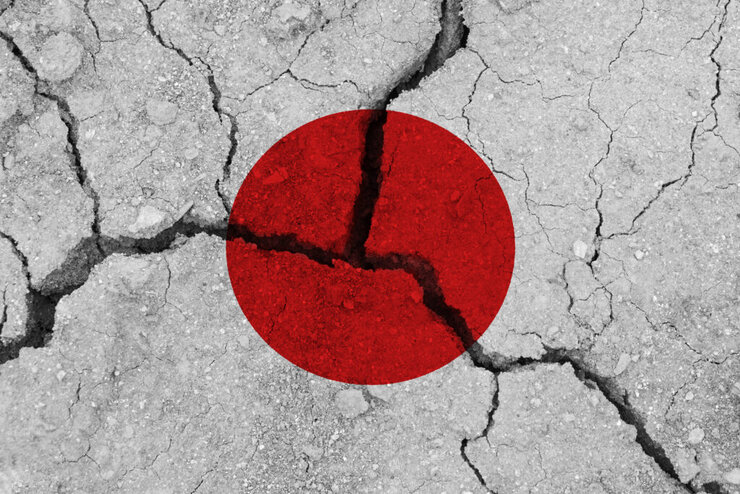
🇯🇵 Japan Earthquake Update — What You Need to Know (December 2025)
Japan Earthquake Update — A powerful magnitude 7.5 earthquake struck off the coast of Aomori, Japan, triggering tsunami warnings and a rare megaquake advisory. Here are the latest updates on damage, aftershocks, government response, and ongoing seismic risks as of December 2025.
🇯🇵 Japan Earthquake Update — What You Need to Know (December 2025)
On December 8, 2025, a powerful earthquake — measured at magnitude 7.5 (7.6 by the U.S. Geological Survey) — struck offshore of Aomori Prefecture in northern Japan around 11:15 p.m. JST. The quake was deep enough (about 44 km) to be felt over a wide area, with intense shaking registering across northern Honshu and parts of Hokkaido.
🌊 Immediate Impact — Tsunami & Injuries
Tsunami Warnings were promptly issued along the Pacific coasts of Hokkaido, Aomori and Iwate. Authorities initially feared waves up to ~3 meters high, prompting evacuations. In the end, only small tsunami waves — up to about 70 cm — were observed, and all warnings were lifted by early Tuesday morning. At least 50 plus people have been injured, mostly lightly, due to falling objects and minor structural impacts from the shaking.
Across the affected prefectures, emergency crews continue damage assessments and are checking roads, buildings, utilities and other infrastructure for safety concerns. Some power outages and transport disruptions (train suspensions) were reported in the aftermath.
🧠 Rare “Megaquake Advisory” Issued
Japan’s meteorological authority, the Japan Meteorological Agency (JMA), has issued a megaquake advisory following the M 7.5 quake — a rare alert indicating elevated seismic risk. This advisory:
Does not predict when (or if) a larger earthquake will occur. Signals that the probability of a more powerful quake (M 8.0+) has increased temporarily for the next several days or week. Specifically, a formerly tiny ~0.1% weekly chance has risen to roughly ~1 %. Applies along a long stretch of Japan’s Pacific coast — from Chiba Prefecture in the south up through Hokkaido in the north — where the Pacific tectonic plate is actively subducting beneath Japan.
Officials emphasize that this is an advisory, not a prediction, and it’s issued to encourage preparedness: securing furniture, reviewing evacuation plans, and keeping emergency kits ready.
🌏 Aftershocks and Continued Seismic Activity
Even after the main quake, strong aftershocks have been recorded in the region — including quakes in the magnitude 5–6 range. This ongoing activity is consistent with a typical aftershock sequence but reinforces the public safety message to stay alert.
Later smaller tremors — including a reported M 6.0 event — have been felt near Aomori and Hokkaido, though none have triggered additional tsunami warnings.
🛡 Government Response & Public Safety
The Japanese government has mobilized an emergency task force to:
Advertisement
Assess damage and coordinate response efforts across affected regions. Monitor infrastructure — including roads, utilities, and nuclear facilities — for any damage or safety issues. Keep the public informed and ready for possible aftershocks or other quakes.
Schools, businesses and local municipalities continue to evaluate safety conditions and may adjust operations accordingly.
📌 What This Means for Residents & Visitors
✔ Immediate tsunami danger has passed, but vigilance is still needed due to aftershocks.
✔ Preparedness is crucial, especially in coastal and northern regions that felt the quake strongest.
✔ If you’re in Japan or planning travel, follow JMA updates and local government advisories for current regional guidance.
🧭 In Summary
Japan is dealing with the impacts of a major offshore earthquake that shook the northern Pacific coast and prompted widespread alerts. Although immediate tsunami threats were limited and damage appears relatively light so far, a rare megaquake advisory remains in effect — not as a definitive forecast, but as a cautionary alert to stay prepared in the coming days.
Despite this elevated alert level, experts stress that while seismic risk is higher than normal, a massive quake is not imminent and the advisory’s purpose is to keep people ready rather than alarmed.
Links open in a new tab. Please follow official JMA updates for real-time alerts.
STM Daily News is a vibrant news blog dedicated to sharing the brighter side of human experiences. Emphasizing positive, uplifting stories, the site focuses on delivering inspiring, informative, and well-researched content. With a commitment to accurate, fair, and responsible journalism, STM Daily News aims to foster a community of readers passionate about positive change and engaged in meaningful conversations. Join the movement and explore stories that celebrate the positive impacts shaping our world.
Hal Machina is a passionate writer, blogger, and self-proclaimed journalist who explores the intersection of science, tech, and futurism. Join him on a journey into innovative ideas and groundbreaking discoveries! View all postsjournalist
How China cleaned up its air pollution – and what that meant for the climate
How China cleaned up its air pollution: Beijing’s air quality went from hazardous to good while Delhi and Lahore still struggle. Discover how China dramatically reduced pollution since 2013—and why cleaner air may have unintended consequences for global warming and climate change.
Delhi: 442. Lahore: 334. Beijing: 16. These are the levels of PM 2.5, one of the principle measures for air pollution, on November 19. As Pakistanis and Indians struggle with hazardous air quality, in Beijing – a city once notorious for its smog – the air quality is currently rated as good. Ahead of the 2008 Beijing Olympics, the Chinese government was so concerned about pollution that it introduced temporary restrictions on cars, shut down factories and stopped work on some construction sites. The measures worked and one study later found that levels of air pollution were down 30% during the period when the temporary Olympic restrictions were in place. It would take a few more years before the Chinese government implemented a clean air action plan in 2013. Since then, China has achieved a dramatic improvement in its air quality. In this episode of The Conversation Weekly podcast, we speak to Laura Wilcox, a professor at the National Centre for Atmospheric Science at the University of Reading in the UK, to understand how China managed to clean up its air pollution. But Wilcox’s recent research uncovered some unintended consequences from this cleaner air for the global climate: the pollution was actually helping to cool the atmosphere and by taking it away, it may have accelerated global warming. Wilcox explains:
What we’re seeing is a removing of cooling that’s revealing warming that’s already there. So the air pollution isn’t the cause of the warming. It’s just letting us see stuff that we’ve already done.
Dive into “The Knowledge,” where curiosity meets clarity. This playlist, in collaboration with STMDailyNews.com, is designed for viewers who value historical accuracy and insightful learning. Our short videos, ranging from 30 seconds to a minute and a half, make complex subjects easy to grasp in no time. Covering everything from historical events to contemporary processes and entertainment, “The Knowledge” bridges the past with the present. In a world where information is abundant yet often misused, our series aims to guide you through the noise, preserving vital knowledge and truths that shape our lives today. Perfect for curious minds eager to discover the ‘why’ and ‘how’ of everything around us. Subscribe and join in as we explore the facts that matter. https://stmdailynews.com/the-knowledge/




 Gemma Ware, Host, The Conversation Weekly Podcast, The Conversation This article is republished from The Conversation under a Creative Commons license. Read the original article.




