

News
TENNESSEE STATE UNIVERSITY TO MARK HISTORIC MILESTONE AS FIRST HBCU TO INTRODUCE COLLEGIATE ICE HOCKEY

Last Updated on September 1, 2025 by Daily News Staff
NASHVILLE, Tenn., June 28, 2023 /PRNewswire/ — Tennessee State University is set to make history by becoming the first historically black college or university (HBCU) to offer men’s ice hockey at the collegiate level. TSU will make this groundbreaking announcement at Bridgestone Arena prior to the 2023 NHL Draft. The addition of ice hockey highlights the University’s dedication to fostering diversity, inclusion, and expanding athletic opportunities for students.

“Bringing ice hockey to Tennessee State University is a part of our continued commitment to provide our students with new opportunities and to broaden new interests in areas where they have traditionally had limited or no access,” said TSU President Glenda Glover.
Tennessee State University launching historic HBCU hockey team
TSU Hockey will commence its inaugural season in 2024, signaling a new era for the university. The team will begin as a club-level program but aspires to NCAA Division I status for both men’s and women’s sides in the near future. While no specific timeline exists for achieving varsity NCAA status, TSU is committed to building a solid foundation for long-term success.
“Today is a historic day as Tennessee State University, a prestigious HBCU, collaborates with the National Hockey League (NHL, NHLPA) and the Nashville Predators in an unprecedented partnership,” stated Dr. Mikki Allen, TSU Director of Athletics.
TSU is currently in the process of hiring a Director of Hockey Operations. In the interim, Assistant AD Nick Guerriero will handle all inquiries related to Hockey.
“I am thrilled to embark on this exciting journey with Dr. Allen to promote diversity and excellence in collegiate hockey,” said Guerriero.
The foray into collegiate ice hockey represents a significant milestone for Tennessee State University and the broader HBCU community. By breaking barriers and creating fresh opportunities, TSU Hockey aims to establish a lasting legacy of inclusion, excellence, and athletic accomplishment.
“Together, we celebrate the power of collaboration as we dismantle barriers, diversify the game, and propel hockey into a new era of inclusivity,” Allen remarked. “
To support this initiative, the NHL, NHLPA, Nashville Predators, and College Hockey Inc. will play integral roles in the announcement. College Hockey Inc. conducted a feasibility study in 2021, emphasizing the significance of introducing ice hockey at an HBCU to promote diversity and inclusion in sports.
SOURCE Tennessee State University


Space and Tech
Jupiter’s moons hide giant subsurface oceans − Europa Clipper is one of 2 missions on their way to see if these moons could support life
NASA’s Europa Clipper and ESA’s JUICE missions aim to explore Jupiter’s icy moons, focusing on the potential habitability of their underground oceans, particularly Europa’s, by gathering vital scientific data.

Last Updated on April 11, 2026 by Daily News Staff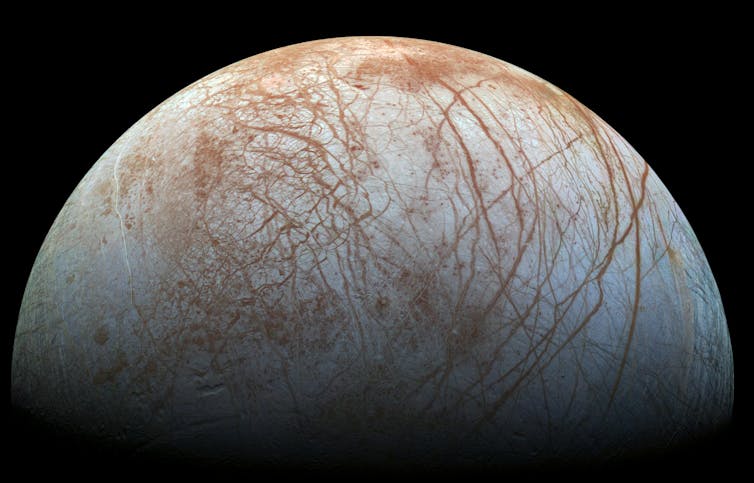
On Oct. 14, 2024, NASA launched a robotic spacecraft named Europa Clipper to Jupiter’s moons. Clipper will reach the ice-covered Jovian moon Europa in 2030 and spend several years collecting and sending valuable data on the moon’s potential habitability back to Earth.
Clipper isn’t the only mission highlighting researchers’ interest in Jupiter and its moons.
On April 13, 2023, the European Space Agency launched a rocket carrying a spacecraft destined for Jupiter. The Jupiter Icy Moons Explorer – or JUICE – will spend at least three years on Jupiter’s moons after it arrives in 2031.
I’m a planetary scientist who studies the structure and evolution of solid planets and moons in the solar system.
There are many reasons my colleagues and I are looking forward to getting the data that Europa Clipper and JUICE will hopefully be sending back to Earth in the 2030s. But perhaps the most exciting information will have to do with water. Three of Jupiter’s moons – Europa, Ganymede and Callisto – are home to large, underground oceans of liquid water that could support life.
Meet Io, Europa, Ganymede and Callisto
Jupiter has dozens of moons. Four of them in particular are of interest to planetary scientists.
Io, Europa, Ganymede and Callisto are, like Earth’s Moon, relatively large, spherical complex worlds. Two previous NASA missions have sent spacecraft to orbit the Jupiter system and collected data on these moons. The Galileo mission orbited Jupiter from 1995 to 2003 and led to geological discoveries on all four large moons. The Juno mission is still orbiting Jupiter today and has provided scientists with an unprecedented view into Jupiter’s composition, structure and space environment.
These missions and other observations revealed that Io, the closest of the four to its host planet, is abuzz with geological activity, including lava lakes, volcanic eruptions and tectonically formed mountains. But it is not home to large amounts of water.
Europa, Ganymede and Callisto, in contrast, have icy landscapes. Europa’s surface is a frozen wonderland with a young but complex history, possibly including icy analogs of plate tectonics and volcanoes. Ganymede, the largest moon in the entire solar system, is bigger than Mercury and has its own magnetic field generated internally from a liquid metal core. Callisto appears somewhat inert compared to the others, but serves as a valuable time capsule of an ancient past that is no longer accessible on the youthful surfaces of Europa and Io.
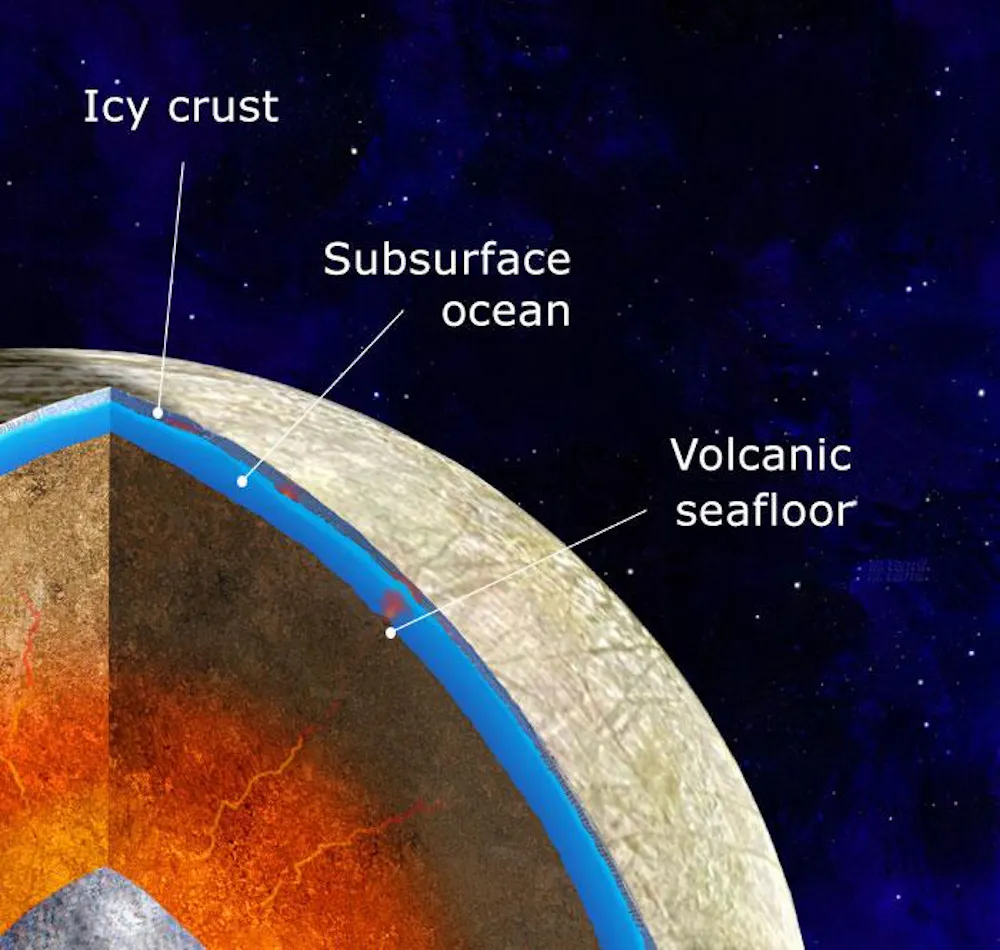
Most exciting of all: Europa, Ganymede and Callisto all almost certainly possess underground oceans of liquid water.
Ocean worlds
Europa, Ganymede and Callisto have chilly surfaces that are hundreds of degrees below zero. At these temperatures, ice behaves like solid rock.
But just like Earth, the deeper underground you go on these moons, the hotter it gets. Go down far enough and you eventually reach the temperature where ice melts into water. Exactly how far down this transition occurs on each of the moons is a subject of debate that scientists hope to resolve with JUICE and Europa Clipper. While the exact depths are still uncertain, scientists are confident that these oceans exist.
The best evidence of these oceans comes from Jupiter’s magnetic field. Saltwater is electrically conductive. So as these moons travel through Jupiter’s magnetic field, they generate a secondary, smaller magnetic field that signals to researchers the presence of an underground ocean. Using this technique, planetary scientists have been able to show that the three moons contain underground oceans. And these oceans are not small – Europa’s ocean alone might have more than double the water of all of Earth’s oceans combined.
An obvious and tantalizing next question is whether these oceans can support extraterrestrial life. Liquid water is an important piece of what makes for a habitable world, but far from the only requirement for life. Life also needs energy and certain chemical compounds in addition to water to flourish. Because these oceans are hidden beneath miles of solid ice, sunlight and photosynthesis are out. But it’s possible other sources could provide the needed ingredients.
On Europa, for example, the liquid water ocean overlays a rocky interior. That rocky seafloor could provide energy and chemicals through underwater volcanoes that could make Europa’s ocean habitable. But it is also possible that Europa’s ocean is a sterile, inhospitable place – scientists need more data to answer these questions.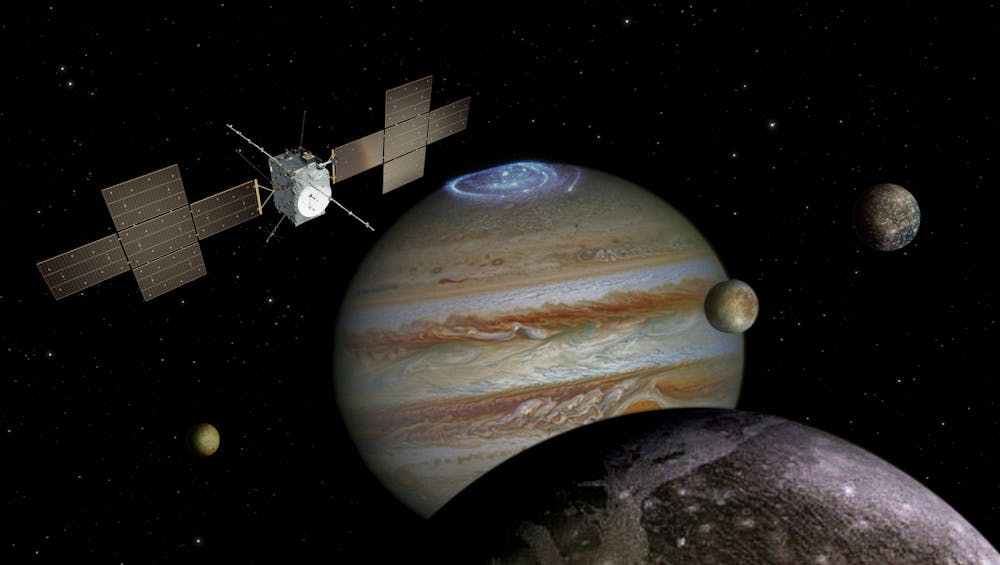
Upcoming missions from ESA and NASA
Europa Clipper and JUICE are set up to give scientists game-changing information about the potential habitability of Jupiter’s moons. While both missions will gather data on multiple moons, JUICE will spend time orbiting and focusing on Ganymede, and Europa Clipper will make dozens of close flybys of Europa.
Both of the spacecraft will carry a suite of scientific instruments built specifically to investigate the oceans. Onboard radar will allow Europa Clipper and JUICE to probe into the moons’ outer layers of solid ice. Radar could reveal any small pockets of liquid water in the ice, or, in the case of Europa, which has a thinner outer ice layer than Ganymede and Callisto, hopefully detect the larger ocean.
Magnetometers will also be on both missions. These tools will give scientists the opportunity to study the secondary magnetic fields produced by the interaction of conductive oceans with Jupiter’s field in great detail and will hopefully give researchers clues to salinity and volumes of the oceans.
Scientists will also observe small variations in the moons’ gravitational pulls by tracking subtle movements in both spacecrafts’ orbits, which could help determine if Europa’s seafloor has volcanoes that provide the needed energy and chemistry for the ocean to support life.
Finally, both craft will carry a host of cameras and light sensors that will provide unprecedented images of the geology and composition of the moons’ icy surfaces.
Maybe one day, a spacecraft will be able to drill through the miles of solid ice on Europa, Ganymede or Callisto and explore oceans directly. Until then, observations from spacecraft like Europa Clipper and JUICE are scientists’ best bet for learning about these ocean worlds.
When Galileo discovered these moons in 1609, they were the first objects known to directly orbit another planet. Their discovery was the final nail in the coffin of the theory that Earth – and humanity – resides at the center of the universe. Maybe these worlds have another humbling surprise in store.
This article, originally published April 10, 2023, has been updated with details about the Europa Clipper launch.
Mike Sori, Assistant Professor of Planetary Science, Purdue University
This article is republished from The Conversation under a Creative Commons license. Read the original article.
The science section of our news blog STM Daily News provides readers with captivating and up-to-date information on the latest scientific discoveries, breakthroughs, and innovations across various fields. We offer engaging and accessible content, ensuring that readers with different levels of scientific knowledge can stay informed. Whether it’s exploring advancements in medicine, astronomy, technology, or environmental sciences, our science section strives to shed light on the intriguing world of scientific exploration and its profound impact on our daily lives. From thought-provoking articles to informative interviews with experts in the field, STM Daily News Science offers a harmonious blend of factual reporting, analysis, and exploration, making it a go-to source for science enthusiasts and curious minds alike. https://stmdailynews.com/category/science/
Author


Last Updated on April 11, 2026 by Daily News Staff
April 10, 2026 — NASA’s Artemis II crew has safely returned to Earth, marking the successful completion of the first crewed mission to the Moon’s vicinity in more than 50 years.
Credit: NASA/Joel Kowsky
The Orion spacecraft splashed down in the Pacific Ocean off the coast of California at 5:07 p.m. PDT, carrying NASA astronauts Reid Wiseman, Victor Glover, Christina Koch, and Canadian astronaut Jeremy Hansen back home after a nearly 10-day journey through deep space.
🚀 A Mission for the Record Books
During the mission, the crew traveled a total of 694,481 miles, reaching a maximum distance of 252,756 miles from Earth—farther than any humans have ever gone, surpassing the Apollo 13 record set in 1970.
Launched on April 1 aboard NASA’s powerful Space Launch System (SLS) rocket, Artemis II tested critical systems needed for future missions, including life support, navigation, and deep space communication.
🌕 Science, Exploration, and Stunning Views
While orbiting the Moon, the astronauts captured more than 7,000 images, including views of the lunar far side, a rare solar eclipse, and detailed observations of craters, lava flows, and surface features.
The mission also included scientific experiments to better understand how the human body responds to deep space conditions, helping prepare for longer missions to the Moon and Mars.
🛰️ Safe Return and Recovery
Following splashdown, recovery teams quickly reached the spacecraft and transported the crew by helicopter to the USS John P. Murtha for initial medical evaluations. The astronauts are expected to return to NASA’s Johnson Space Center for further assessments.
🌍 What Comes Next
With Artemis II complete, NASA is now turning its focus to Artemis III, the next mission aimed at landing astronauts on the Moon and establishing a long-term human presence.
The success of Artemis II marks a major step forward in humanity’s return to deep space—and the beginning of a new era of exploration.
For more information on NASA’s Artemis program, visit the official NASA website.
🔗 Source & Further Reading
- NASA Blog: Artemis II Flight Day 10 – Re-entry Live Updates
- NASA Artemis II Mission Overview
- NASA Artemis Program – Return to the Moon
- Orion Spacecraft Details and Technology
- NASA Image and Video Library (Artemis II Photos & Media)
Dive into “The Knowledge,” where curiosity meets clarity. This playlist, in collaboration with STMDailyNews.com, is designed for viewers who value historical accuracy and insightful learning. Our short videos, ranging from 30 seconds to a minute and a half, make complex subjects easy to grasp in no time. Covering everything from historical events to contemporary processes and entertainment, “The Knowledge” bridges the past with the present. In a world where information is abundant yet often misused, our series aims to guide you through the noise, preserving vital knowledge and truths that shape our lives today. Perfect for curious minds eager to discover the ‘why’ and ‘how’ of everything around us. Subscribe and join in as we explore the facts that matter. https://stmdailynews.com/the-knowledge/
The Knowledge
Artemis II’s long countdown – a space historian explains why it has taken over 50 years to return to the Moon
Why has it taken 50+ years to return to the Moon? A space historian explains the technical, political, and financial complexities behind Artemis II’s long journey.
Last Updated on April 10, 2026 by Daily News Staff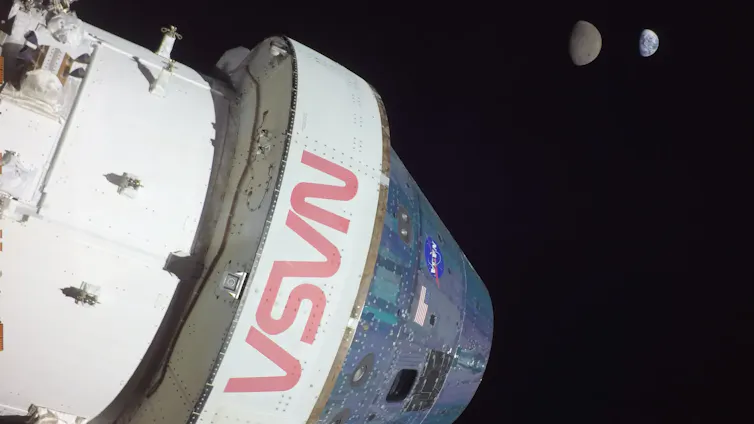
Emily A. Margolis, Smithsonian Institution
While I was leading a tour of the National Air and Space Museum in January 2026, a visitor posed this insightful question: “Why has it taken so long to return to the Moon?”
After all, NASA had the know-how and technology to send humans to the lunar surface more than 50 years ago as part of the Apollo program. And, as another tour guest reminded us, computers today can do so much more than they could back then, as evidenced by the smartphones most of us carry in our pockets. Shouldn’t it be easier to get to the Moon than ever before?
The truth is that sending humans into space safely continues to be difficult, especially as missions increase in complexity.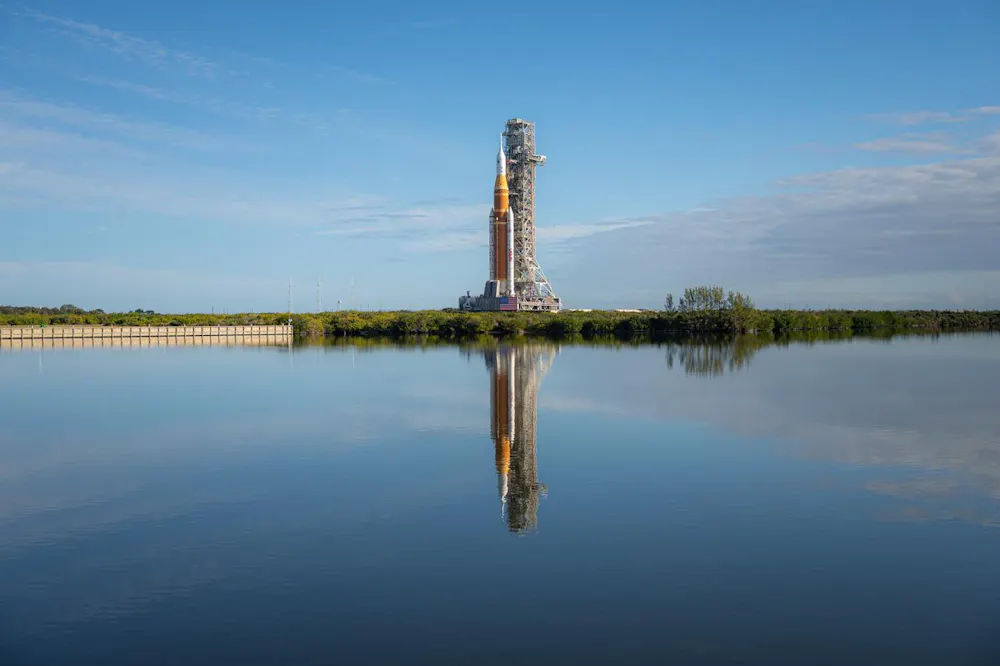
New technologies require years of study, development and testing before they can be certified for flight. And even then, systems and materials can behave in ways that surprise and worry engineers and mission planners; look no further than Boeing’s Starliner CFT mission or the performance of the Orion heat shield on Artemis I.
Issues with Starliner’s thrusters led NASA to return the spacecraft from the International Space Station without its crew. Unanticipated chipping of the Orion heat shield resulted in years of research, culminating in NASA altering the atmospheric reentry plans for the Artemis II mission.
NASA’s programs also require sustained political will and financial support across multiple presidential administrations, Congresses and fiscal years. As a historian of human spaceflight, I have studied the space agency’s efforts to engage the broader public to convince American taxpayers that their programs hold value for the nation.
NASA is now on the eve of the first crewed flight to the Moon since the Apollo era: Artemis II. A crew of four will conduct a lunar flyby, laying the groundwork, the agency hopes, for a landing on the Artemis IV mission.
The story of NASA’s effort to return humans to the Moon is long and winding, demonstrating the complexities of turning grand ambitions into real missions.
Post-Apollo
In early 1970, with two successful Moon landings on the books, President Richard Nixon sought to reduce NASA’s budget to better align with his administration’s priorities. This decision put the space agency in a difficult position, which ultimately led to the cancellation of three planned Apollo missions to conserve funding for its plans for long-term human activity in low Earth orbit.
NASA repurposed the third stage of a Saturn V rocket to create the first U.S. space station, Skylab, which operated from 1973 to 1974. The space agency used leftover Saturn IB rockets and Apollo command and service modules to send crews to the station.
Over the next three decades, NASA developed and operated the space shuttle. The fleet of space shuttle orbiters supported satellite deployment and microgravity research on orbital missions of up to 17 days. This work was meant to enable future long-duration human missions and provide benefits to people on Earth. For example, data from protein crystal growth experiments have informed the development of medicines.
The space shuttle program facilitated the construction, maintenance and staffing of a continuously inhabited research platform in orbit, the International Space Station. The first modules launched in late 1998.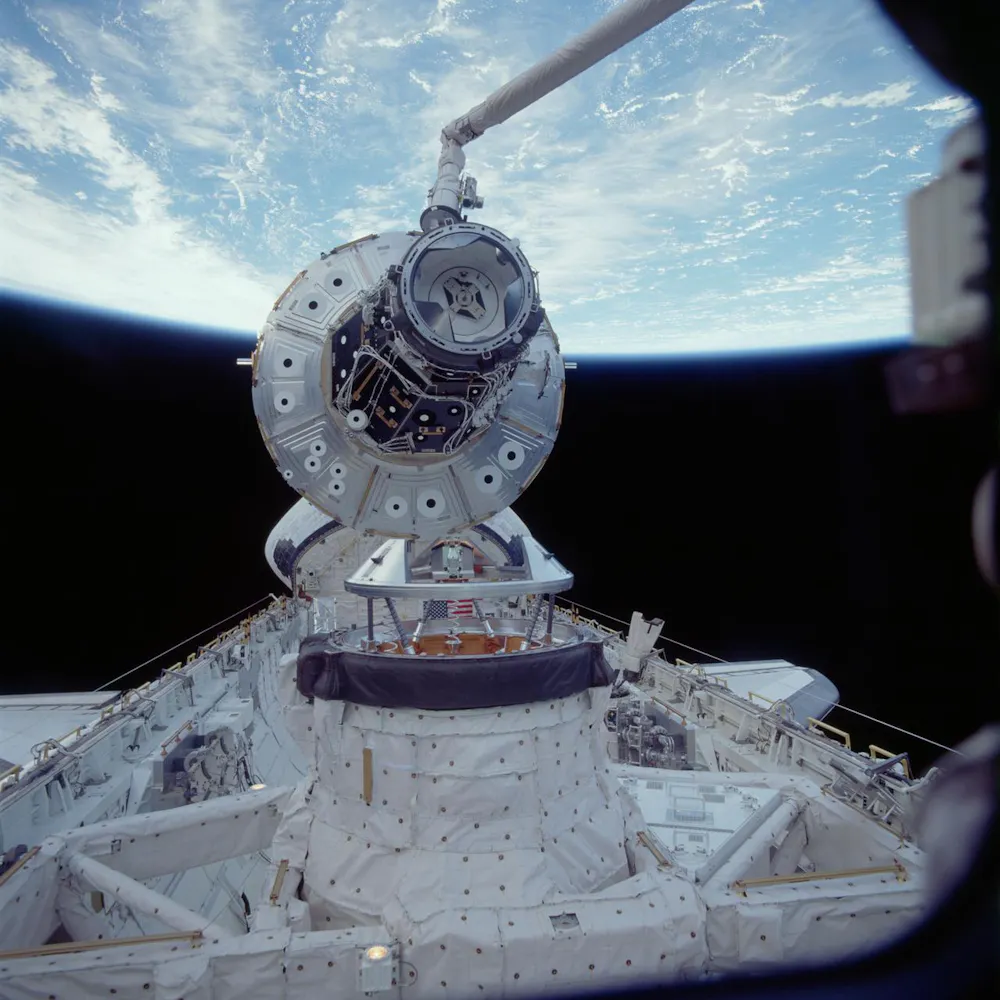
Where to next?
As the new millennium approached, the Clinton administration tasked NASA to think beyond the space station. What could robots and humans do next in space? And where could they do it? Notably, the White House expressed an interest in locations beyond low Earth orbit.
NASA, it turned out, was well positioned to meet the administration’s request. NASA Administrator Daniel Goldin was already thinking about preparing proposals for the next presidential administration and had recently sponsored a human lunar return study. In 1999, he established a team to investigate new technologies, missions and destinations for the 21st century.
This work took on new significance following the tragic loss of the space shuttle Columbia crew in February 2003. Many people, including those in the new George W. Bush White House, wondered whether the human spaceflight program should continue – and, if so, how.
Administration discussions culminated in Bush’s Vision for Space Exploration in 2004, which directed NASA to retire the space shuttle after the completion of the space station. It called for returning humans to the Moon on a crew exploration vehicle designed for destinations beyond low Earth orbit.
It also called for continuing robotic exploration of Mars and engaging companies and international partners in space. Fifteen years earlier, President George H. W. Bush had also announced a Moon and Mars exploration program, but congressional concerns about cost kept space travelers close to home.
The Constellation program’s legacy
In December 2004, NASA began the process of finding a manufacturer for the crew exploration vehicle. By August 2006, the space agency awarded Lockheed Martin the contract to build the capsule, which it had named Orion – the same Orion planned to carry Artemis astronauts to the Moon.
Years of research, development and testing followed for Orion as well as the Ares I crew and Ares V cargo launch vehicles. Together, these technologies made up the Constellation program.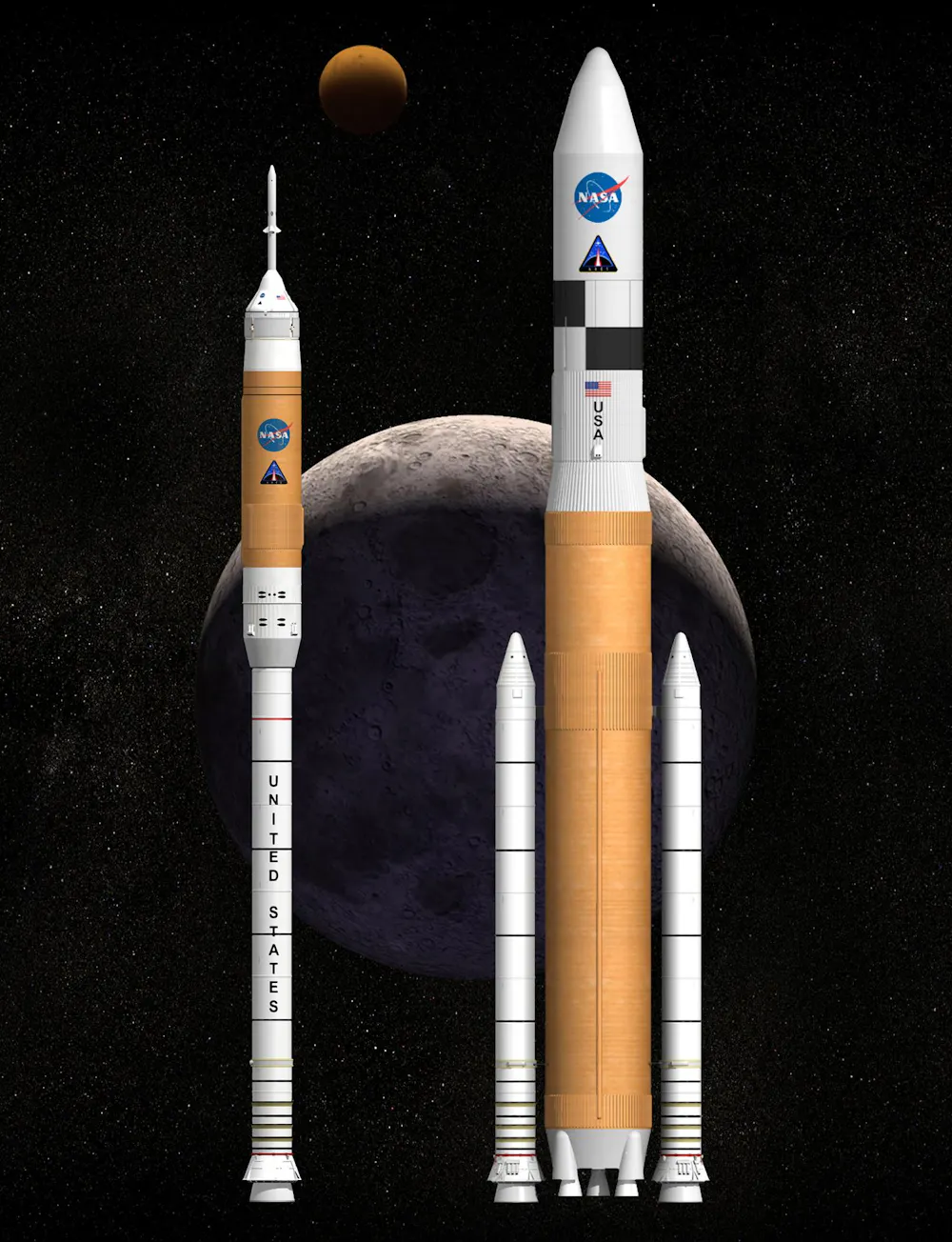
Constellation had two primary objectives: in the near term, to help transport crew to and from the space station after the space shuttle program ended; in the long term, to enable human lunar exploration.
Building systems that could work in both Earth orbit and around the Moon was supposed to save the time and cost of developing two vehicles. Similarly, adapting space shuttle program hardware could supposedly cut costs.
During the first months of Barack Obama’s presidency in 2009, the administration initiated an independent review of NASA’s human spaceflight plans. The Augustine Committee, chaired by retired aerospace executive Norman Augustine, found that the agency’s ambitions outstripped its limited budget, leading to significant delays. The first Orion spacecraft was likely to arrive after the space station ceased operations.
The committee proposed several paths forward at the current funding level, which prioritized space shuttle and space station programs. An additional annual investment of US$3 billion would allow for human exploration beyond low Earth orbit.
Ultimately, the Obama administration canceled Constellation, but two of its technologies lived on, thanks to U.S. senators from states that would have been affected by cuts.
The NASA Authorization Act of 2010 funded Orion’s continued development, shifting responsibility for space station crew transportation to commercial vehicles. It also directed NASA to develop the space launch system, a redesigned Ares V heavy booster, to send Orion to the Moon. The technical strategy had political benefits, too, preserving jobs in numerous congressional districts by providing continuity for aerospace contractors.
In December 2014, a Delta IV heavy rocket launched the first Orion capsule on a test flight, providing engineers with data on spacecraft systems and the heat shield. By October 2015, the space launch system had completed a critical design review, the last step before manufacturing could begin.
Introducing Artemis
In December 2017, the new Trump administration issued a policy directive shifting the focus of NASA’s human spaceflight program back to the Moon. The space agency would use Orion and the space launch system in a race to meet an ambitious 2024 landing date. NASA officially named the program Artemis in May 2019.
The 25-day Artemis I mission, launched in November 2022, was a major milestone for the program. This uncrewed flight was the first flight of the space launch system and the first to integrate SLS and Orion. It laid the groundwork for Artemis II, which will be the first crewed flight of the SLS.
Over more than 50 years, each new presidential administration has reassessed the place of spaceflight among its priorities, either encouraging or curtailing NASA’s efforts to return humans to the lunar surface.
Each crewed flight requires the alignment of technical expertise, political will and financial support over years if not decades. For the space fans who plan to watch the Artemis II launch, the wait for countdown may feel long. But it’s just a blink in NASA’s long journey back to the Moon.
Emily A. Margolis, Curator of Contemporary Spaceflight, National Air and Space Museum, Smithsonian Institution
This article is republished from The Conversation under a Creative Commons license. Read the original article.
Dive into “The Knowledge,” where curiosity meets clarity. This playlist, in collaboration with STMDailyNews.com, is designed for viewers who value historical accuracy and insightful learning. Our short videos, ranging from 30 seconds to a minute and a half, make complex subjects easy to grasp in no time. Covering everything from historical events to contemporary processes and entertainment, “The Knowledge” bridges the past with the present. In a world where information is abundant yet often misused, our series aims to guide you through the noise, preserving vital knowledge and truths that shape our lives today. Perfect for curious minds eager to discover the ‘why’ and ‘how’ of everything around us. Subscribe and join in as we explore the facts that matter. https://stmdailynews.com/the-knowledge/





