

infrastructure
Geotechnical Fieldwork: Unveiling the Earth Beneath for Sustainable Mass Transit Projects
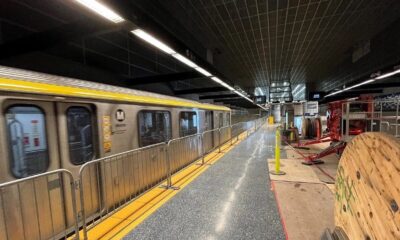
Geotechnical fieldwork: Assessing ground conditions for sustainable LA METRO mass transit projects.

Last Updated on December 28, 2024 by Daily News Staff
As Los Angeles continues to expand its mass transit infrastructure, environmental impact reports play a crucial role in ensuring sustainable development. A vital component of these reports is geotechnical fieldwork, which investigates the geological and geotechnical aspects of the project site. By assessing the ground conditions, this fieldwork helps engineers and planners make informed decisions about the feasibility, design, and construction of future LA METRO mass transit projects. Let’s delve deeper into the significance of geotechnical fieldwork and its relationship to environmental impact reports.

Understanding Geotechnical Fieldwork:
Geotechnical fieldwork involves a range of activities conducted on-site to examine the properties and behavior of soil, rock, and groundwater. These investigations provide valuable information about the stability, load-bearing capacity, and potential risks associated with the project site. Various techniques like drilling, sampling, testing, and monitoring are employed to gather data, ensuring a comprehensive understanding of the subsurface conditions.
Environmental Impact Reports and Geotechnical Fieldwork:
In the context of LA METRO mass transit projects, environmental impact reports evaluate the potential environmental, economic, and social consequences of proposed developments. Geotechnical fieldwork contributes significantly to these reports by addressing geotechnical and geological concerns. It helps identify potential hazards such as landslides, liquefaction, or groundwater contamination, which might impact the project’s environmental sustainability.
The information obtained from geotechnical fieldwork assists in designing appropriate foundation systems, ensuring stability and minimizing environmental risks. It aids in determining suitable construction methods, such as tunneling or elevated structures, that minimize disruption to sensitive ecosystems. Additionally, geotechnical data guides the selection of materials and construction techniques that promote long-term durability and resilience
Geotechnical fieldwork is a critical component of environmental impact reports for future LA METRO mass transit projects. By providing valuable insights into the geological and geotechnical conditions of the project site, this fieldwork enables engineers and planners to make informed decisions, ensuring sustainable and resilient infrastructure development. Through comprehensive investigations, potential hazards are identified, appropriate design measures are implemented, and environmental risks are minimized. Geotechnical fieldwork serves as the foundation for creating a mass transit network that not only enhances transportation efficiency but also preserves and protects the environment for generations to come.
Visit LA Metro for more information: https://www.metro.net/
STM Daily News is a multifaceted podcast that explores a wide range of topics, from life and consumer issues to the latest in food and beverage trends. Our discussions dive into the realms of science, covering everything from space and Earth to nature, artificial intelligence, and astronomy. We also celebrate the amateur sports scene, highlighting local athletes and events, including our special segment on senior Pickleball, where we report on the latest happenings in this exciting community. With our diverse content, STM Daily News aims to inform, entertain, and engage listeners, providing a comprehensive look at the issues that matter most in our daily lives. https://stories-this-moment.castos.com/
STM Daily News is a vibrant news blog dedicated to sharing the brighter side of human experiences. Emphasizing positive, uplifting stories, the site focuses on delivering inspiring, informative, and well-researched content. With a commitment to accurate, fair, and responsible journalism, STM Daily News aims to foster a community of readers passionate about positive change and engaged in meaningful conversations. Join the movement and explore stories that celebrate the positive impacts shaping our world.
The science section of our news blog STM Daily News provides readers with captivating and up-to-date information on the latest scientific discoveries, breakthroughs, and innovations across various fields. We offer engaging and accessible content, ensuring that readers with different levels of scientific knowledge can stay informed. Whether it’s exploring advancements in medicine, astronomy, technology, or environmental sciences, our science section strives to shed light on the intriguing world of scientific exploration and its profound impact on our daily lives. From thought-provoking articles to informative interviews with experts in the field, STM Daily News Science offers a harmonious blend of factual reporting, analysis, and exploration, making it a go-to source for science enthusiasts and curious minds alike. https://stmdailynews.com/category/science/



STM Blog
From Hand Signals to Smart Crosswalks: The Evolution of the Modern Pedestrian Signal
Discover the history of the modern pedestrian signal, from Garrett A. Morgan’s groundbreaking traffic signal to today’s smart, accessible crosswalks.
Last Updated on July 12, 2026 by Daily News Staff
Every day, millions of people rely on pedestrian signals to cross busy street safely. A glowing white walking figure, an orange-red hand, and a countdown timer have become familiar sights around the world. While these signals may seem like simple pieces of infrastructure, they are the result of more than a century of innovation, engineering, and public safety improvements.
The modern pedestrian signal did not appear overnight. Instead, it evolved through the contributions of inventors, engineers, city planners, and transportation officials who continually refined traffic control systems as cities grew and automobiles became more common.
The Early Days of Traffic Control
Before electric traffic signals, intersections were controlled by police officers, railway-style semaphores, or even hand signals. As horse-drawn wagons gave way to automobiles in the early 1900s, traffic congestion and accidents increased dramatically, creating an urgent need for better traffic management.
One of the earliest electric traffic lights was installed in Cleveland, Ohio, in 1914. It used red and green lights and was manually operated. While it improved vehicle movement, pedestrians still had to judge for themselves when it was safe to cross.
Garrett A. Morgan’s Breakthrough
One of the most important milestones came in 1923 when inventor and entrepreneur Garrett Augustus Morgan received U.S. Patent No. 1,475,024 for an improved traffic signal.
Morgan’s design introduced a third position in addition to “Stop” and “Go.” This intermediate phase temporarily stopped traffic in every direction before allowing vehicles to proceed. The brief pause reduced confusion at intersections and provided additional time for pedestrians to cross safely.
Morgan reportedly developed his design after witnessing a serious traffic accident. His invention demonstrated how thoughtful engineering could improve public safety while making increasingly busy streets more efficient.
Although Morgan did not invent the illuminated “WALK” and “DON’T WALK” pedestrian signal used today, his three-position signal became a foundational step in the evolution of modern traffic control.
The Birth of Dedicated Pedestrian Signals
As cities expanded after World War II, pedestrian safety became an even greater concern. More people were walking in increasingly crowded downtown districts, and separating pedestrian movements from vehicle traffic became a priority.
During the early 1950s, several American cities began experimenting with dedicated pedestrian signals. New York City became one of the first major municipalities to install illuminated “WALK” and “DON’T WALK” signs at busy intersections.
These early systems gave pedestrians their own designated crossing phase, reducing conflicts with turning vehicles and improving safety at some of the nation’s busiest intersections.
Standardization Across America
By the 1960s and 1970s, traffic engineers recognized the importance of creating consistent traffic control devices nationwide.
The Manual on Uniform Traffic Control Devices (MUTCD) established national standards for traffic signs, pavement markings, and pedestrian signals. Standardized designs helped ensure that pedestrians could understand crossing signals regardless of where they traveled in the United States.
Eventually, words gave way to internationally recognized symbols—a walking person to indicate it was safe to cross and an upraised hand to indicate pedestrians should wait. These symbols transcended language barriers and improved accessibility for visitors and non-English speakers.
The Countdown Era
One of the most significant modern improvements arrived with pedestrian countdown timers.
Rather than simply flashing a warning, countdown displays show exactly how many seconds remain before the crossing phase ends. Research has shown that countdown timers help pedestrians make better crossing decisions and improve compliance with traffic signals.
Today, countdown timers have become standard equipment at intersections across much of the United States.
Accessibility Takes Center Stage
Modern pedestrian signals are designed to serve everyone.
Accessible Pedestrian Signals (APS) now provide audible tones, spoken messages, vibrating push buttons, and locator sounds that assist pedestrians who are blind or have low vision. These features allow more people to navigate intersections independently and safely.
The continued development of accessible technology reflects a broader commitment to making transportation systems inclusive for all users.
The Future of Pedestrian Safety
Pedestrian signals continue to evolve.
Many cities now use smart traffic systems that detect pedestrians waiting to cross, automatically adjust signal timing based on traffic conditions, and prioritize people walking during busy periods.
Researchers are exploring artificial intelligence, connected vehicle technology, and sensor-based systems capable of communicating directly with autonomous vehicles. Future pedestrian crossings may adapt in real time to weather conditions, crowd sizes, emergency vehicles, and even the needs of older adults or individuals with disabilities.
A Legacy Built by Many Innovators
The pedestrian signal we know today is the product of more than a century of collaboration and innovation.
Early traffic engineers created the first electric traffic lights. Garrett A. Morgan improved intersection safety with his groundbreaking three-position traffic signal. Transportation agencies standardized traffic control devices, while engineers continued refining pedestrian technology through countdown timers, accessible features, and intelligent traffic systems.
Every safe crossing today reflects the work of countless inventors, planners, researchers, and public officials dedicated to protecting lives.
As cities continue to grow and transportation technology advances, the humble pedestrian signal remains one of the most effective—and often overlooked—public safety innovations ever developed.
At STM Daily News, we celebrate the inventors, engineers, and visionaries whose everyday innovations quietly improve life for millions of people. Sometimes the most important inventions aren’t the ones that grab headlines—they’re the ones we depend on every single day without giving them a second thought.
Related Reading
- Federal Highway Administration – Manual on Uniform Traffic Control Devices (MUTCD)
- National Museum of African American History and Culture – Garrett Augustus Morgan
- United States Patent and Trademark Office
- Federal Highway Administration – Accessible Pedestrian Signals
- National Highway Traffic Safety Administration (NHTSA)
🧠 Discover the remarkable innovators, inventors, and trailblazers who helped shape our world but rarely receive the recognition they deserve. Share your thoughts in the comments and subscribe to the STM Daily News newsletter to catch every new Forgotten Genius Friday feature and more inspiring stories delivered to your inbox.

The Knowledge
Beneath the Waves: The Global Push to Build Undersea Railways
Undersea railways are transforming transportation, turning oceans from barriers into gateways. Proven by tunnels like the Channel and Seikan, these innovations offer cleaner, reliable connections for passengers and freight. Ongoing projects in China and Europe, alongside future proposals, signal a new era of global mobility beneath the waves.

For most of modern history, oceans have acted as natural barriers—dividing nations, slowing trade, and shaping how cities grow. But beneath the waves, a quiet transportation revolution is underway. Infrastructure once limited by geography is now being reimagined through undersea railways.
Undersea rail tunnels—like the Channel Tunnel and Japan’s Seikan Tunnel—proved decades ago that trains could reliably travel beneath the ocean floor. Today, new projects are expanding that vision even further.
Around the world, engineers and governments are investing in undersea railways—tunnels that allow high-speed trains to travel beneath oceans and seas. Once considered science fiction, these projects are now operational, under construction, or actively being planned.

Undersea Rail Is Already a Reality
Japan’s Seikan Tunnel and the Channel Tunnel between the United Kingdom and France proved decades ago that undersea railways are not only possible, but reliable. These tunnels carry passengers and freight beneath the sea every day, reshaping regional connectivity.
Undersea railways are cleaner than short-haul flights, more resilient than bridges, and capable of lasting more than a century. As climate pressures and congestion increase, rail beneath the sea is emerging as a practical solution for future mobility.
What’s Being Built Right Now
China is currently constructing the Jintang Undersea Railway Tunnel as part of the Ningbo–Zhoushan high-speed rail line, while Europe’s Fehmarnbelt Fixed Link will soon connect Denmark and Germany beneath the Baltic Sea. These projects highlight how transportation and technology are converging to solve modern mobility challenges.
The Mega-Projects Still on the Drawing Board
Looking ahead, proposals such as the Helsinki–Tallinn Tunnel and the long-studied Strait of Gibraltar rail tunnel could reshape global affairs by linking regions—and even continents—once separated by water.
Why Undersea Rail Matters
The future of transportation may not rise above the ocean—but run quietly beneath it.
Blog
The Dodger Gondola Project: A High-Flying Transit Idea Facing Heavy Headwinds
The Dodger Gondola Project, a proposed aerial transit line between Union Station and Dodger Stadium, faces major political, legal, and community opposition in 2025. Here’s where the controversial project stands now.

Dodger Gondola Project Faces Major Setbacks as L.A. Leaders and Residents Push Back
For years, the Los Angeles Aerial Rapid Transit (LA ART) — better known as the Dodger Gondola Project — has been pitched as a bold, futuristic connection between Union Station and Dodger Stadium, whisking riders above traffic in a six-minute aerial trip. Supporters call it L.A.’s chance to build a cleaner, faster, iconic transit link. But as 2025 winds toward its close, the project faces more turbulence than ever.
A Quick Refresher: What the Gondola Would Be
The proposed gondola line would travel about 1.2 miles, with stations at Union Station, a stop near L.A. State Historic Park, and Dodger Stadium. Private backers connected to former Dodgers owner Frank McCourt have promoted it as a zero-emission way to move more than 5,000 passengers per hour on game days — and potentially daily for tourists, residents, and park visitors.
Why the Dream Is Stalling
In November 2025, the Los Angeles City Council voted 12–1 to formally oppose the project, urging Metro to abandon it. While the vote isn’t legally binding, it signaled a major political shift. Councilmember Eunisses Hernandez, who introduced the resolution, cited environmental and community concerns — especially the impact on Chinatown, Solano Canyon, and L.A. State Historic Park.
A California Court of Appeals ruling earlier in the year also struck down Metro’s original environmental review, forcing a supplemental EIR that reopened debates about tree removal, tower placement, noise, and neighborhood impacts. The city has additionally ordered a comprehensive traffic study, pausing key permits until it’s complete.
Communities Speak Out
Local opposition has been strong and well-organized. Residents warn the gondola would remove mature trees, alter the character of the State Historic Park, and intrude over communities that have already shouldered decades of infrastructure burdens. Advocacy groups say the project favors private interests over public need, pointing to the lack of a clear long-term funding or maintenance plan.
Not Dead — But Deeply Uncertain
Despite mounting challenges, the gondola isn’t entirely grounded. Metro is still reviewing public comments on the supplemental environmental report, and state lawmakers are debating legislation that could streamline some project requirements. Whether those efforts succeed — or whether political pressure ultimately stalls the gondola indefinitely — remains to be seen.
The Big Picture
The Dodger Gondola Project sits at the intersection of transit innovation, environmental justice, and the future of Los Angeles mobility. For supporters, it represents a chance to modernize travel to one of the nation’s most visited stadiums. For opponents, it’s an unnecessary experiment that risks community space and public resources.
Either way, the next year will be pivotal — and L.A.’s debate over the gondola is far from over.
Sources and links for further information
Associated Press: “Los Angeles officials seek to halt proposed Dodger Stadium gondola” — apnews.com
Los Angeles Times: “Los Angeles City Council votes 12-1 to urge Metro to halt Dodgers gondola project” — latimes.com
NBC Los Angeles: “Dodger Stadium gondola should be a no-go, LA City Council says” — nbclosangeles.com
PR Newswire (project press release): “LA ART Gondola Project Takes Next Step Forward … with Release of Draft Supplemental Environmental Report” — prnewswire.com
LAist: “Controversial Dodger Stadium gondola project gets new environmental report. Here’s how you can weigh in” — laist.com
Official Metro page: “Los Angeles Aerial Rapid Transit (LA ART)” — metro.net
Site for public comment: “Stop The Gondola – Public Comment” — stopthegondola.org
CEQA Notice of Availability: “Draft Supplemental Environmental Impact Report – LA ART Project” — ceqanet.lci.ca.gov




