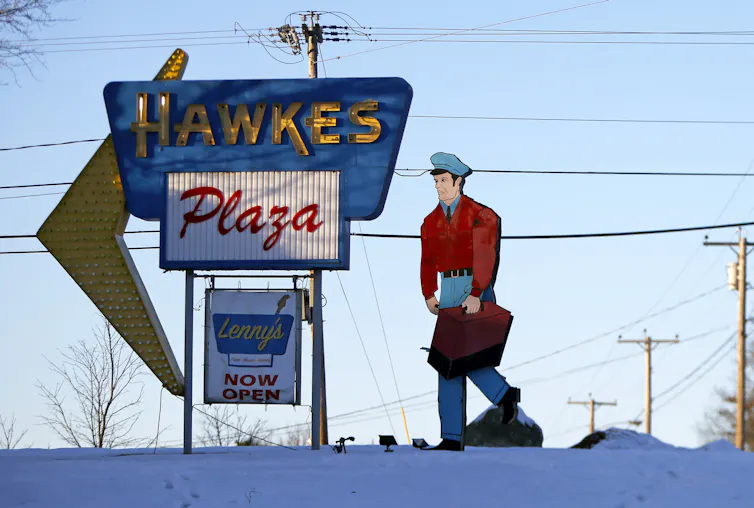
The iconic ‘Walking Man’ Hawkes sign in Westbrook, Maine, was added to the National Register of Historic Places in 2019. Ben McCanna/Portland Portland Press Herald via Getty ImagesMichael R. Allen, West Virginia University President Donald Trump’s proposed fiscal year 2026 discretionary budget is called a “skinny budget” because it’s short on line-by-line details. But historic preservation efforts in the U.S. did get a mention – and they might as well be skinned to the bone. Trump has proposed to slash funding for the federal Historic Preservation Fund to only $11 million, which is $158 million less than the fund’s previous reauthorization in 2024. The presidential discretionary budget, however, always heads to Congress for appropriation. And Congress always makes changes. That said, the Trump administration hasn’t even released the $188 million that Congress appropriated for the fund for the 2025 fiscal year, essentially impounding the funding stream that Congress created in 1976 for historic preservation activities across the nation. I’m a scholar of historic preservation who’s worked to secure historic designations for buildings and entire neighborhoods. I’ve worked on projects that range from making distressed neighborhoods in St. Louis eligible for historic tax credits to surveying Cold War-era hangars and buildings on seven U.S. Air Force bases. I’ve seen the ways in which the Historic Preservation Fund helps local communities maintain and rehabilitate their rich architectural history, sparing it from deterioration, the wrecking ball or the pressures of the private market.
A rare, deficit-neutral funding model
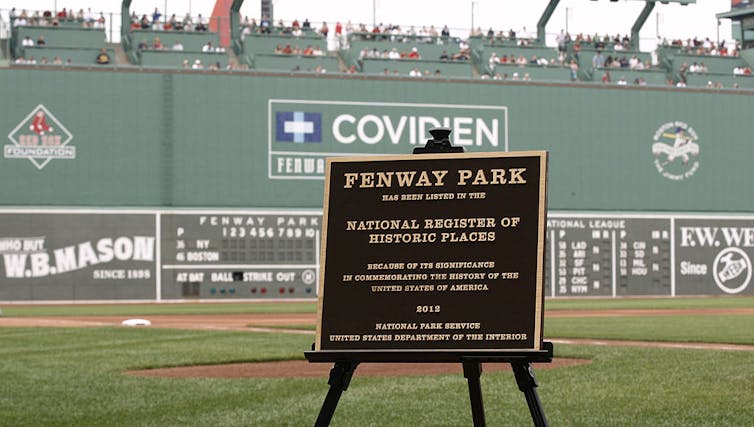
Most Americans probably don’t realize that the task of historic preservation largely falls to individual states and Native American tribes. The National Historic Preservation Act that President Lyndon B. Johnson signed into law in 1966 requires states and tribes to handle everything from identifying potential historic sites to reviewing the impact of interstate highway projects on archaeological sites and historic buildings. States and tribes are also responsible for reviewing nominations of sites in the National Register of Historic Places, the nation’s official list of properties deemed worthy of preservation. However, many states and tribes didn’t have the capacity to adequately tackle the mandates of the 1966 act. So the Historic Preservation Fund was formed a decade later to alleviate these costs by funneling federal resources into these efforts. The fund is actually the product of a conservative, limited-government approach. Created during Gerald Ford’s administration, it has a revenue-neutral model, meaning that no tax dollars pay for the program. Instead, it’s funded by private lease royalties from the Outer Continental Shelf oil and gas reserves. Most of these reserves are located in federal waters in the Gulf of Mexico and off the coast of Alaska. Private companies that receive a permit to extract from them must agree to a lease with the federal government. Royalties from their oil and gas sales accrue in federally controlled accounts under the terms of these leases. The Office of Natural Resources Revenue then directs 1.5% of the total royalties to the Historic Preservation Fund. Congress must continually reauthorize the amount of funding reserved for the Historic Preservation Fund, or it goes unfunded.Boston’s Fenway Park was added to the National Register of Historic Places in 2012, making it eligible for preservation grants and federal tax incentives.Winslow Townson/Getty Images Despite bipartisan support, the fund has been threatened in the past. President Ronald Reagan attempted to do exactly what Trump is doing now by making no request for funding at all in his 1983 budget. Yet the fund has nonetheless been reauthorized six times since its inception, with terms ranging from five to 10 years. The program is a crucial source of funding, particularly in small towns and rural America, where privately raised cultural heritage funds are harder to come by. It provides grants for the preservation of buildings and geographical areas that hold historical, cultural or spiritual significance in underrepresented communities. And it’s even involved in projects tied to the nation’s 250th birthday in 2026, such as the rehabilitation of the home in New Jersey where George Washington was stationed during the winter of 1778-79 and the restoration of Rhode Island’s Old State House.
Filling financial gaps
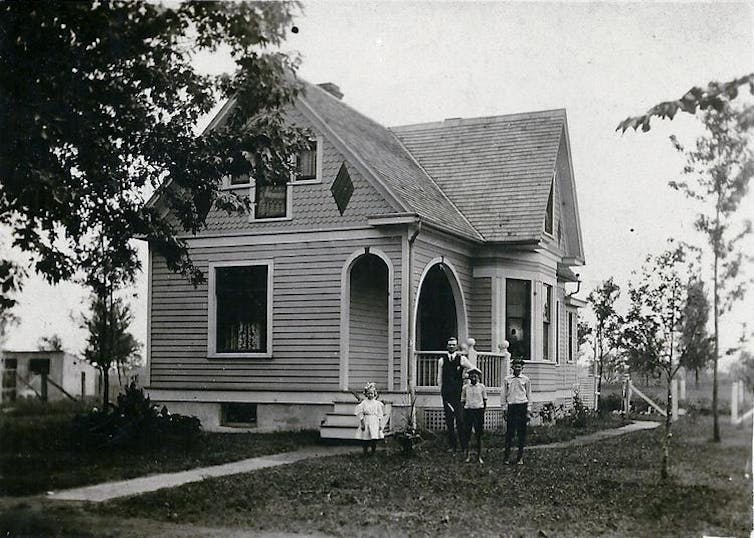
I’ve witnessed the fund’s impact firsthand in small communities across the nation. Edwardsville, Illinois, a suburb of St. Louis, is home to the Leclaire Historic District. In the 1970s, it was added to the National Register of Historic Places. The national designation recognized the historic significance of the district, protecting it against any adverse impacts from federal infrastructure funding. It also made tax credits available to the town. Edwardsville then designated LeClaire a local historic district so that it could legally protect the indelible architectural features of its homes, from original decorative details to the layouts of front porches. Despite the designation, however, there was no clear inventory of the hundreds of houses in the district. A few paid staffers and a volunteer citizen commission not only had to review proposed renovations and demolitions, but they also had to figure out which buildings even contributed to LeClaire’s significance and which ones did not – and thus did not need to be tied up in red tape.The Allen House is one of approximately 415 single-family homes in the Leclaire neighborhood in Edwardsville, Ill.Friends of Leclaire Edwardsville was able to secure a grant through the Illinois State Historic Preservation Office thanks to a funding match enabled by money disbursed to Illinois via the Historic Preservation Fund. In 2013, my team created an updated inventory of the historic district, making it easier for the local commission to determine which houses should be reviewed carefully and which ones don’t need to be reviewed at all.
Oil money better than no money
The historic preservation field, not surprisingly, has come out strongly against Trump’s proposal to defund the Historic Preservation Fund. Nonetheless, there have been debates within the field over the fund’s dependence on the fossil fuel industry, which was the trade-off that preservationists made decades ago when they crafted the funding model. In the 1970s, amid the national energy crisis, conservation of existing buildings was seen as a worthy ecological goal, since demolition and new construction required fossil fuels. To preservationists, diverting federal carbon royalties seemed like a power play. But with the effects of climate change becoming impossible to ignore, some preservationists are starting to more openly critique both the ethics and the wisdom of tapping into a pool of money created through the profits of the oil and gas industry. I’ve recently wondered myself if continued depletion of fossil fuels means that preservationists won’t be able to count on the Historic Preservation Fund as a long-term source of funding. That said, you’d be hard-pressed to find a preservationist who thinks that destroying the Historic Preservation Fund would be a good first step in shaping a more visionary policy. For now, Trump’s administration has only sown chaos in the field of historic preservation. Already, Ohio has laid off one-third of the staffers in its State Historic Preservation Office due to the impoundment of federal funds. More state preservation offices may follow suit. The National Council of State Historic Preservation Officers predicts that states soon could be unable to perform their federally mandated duties. Unfortunately, many people advocating for places important to their towns and neighborhoods may end up learning the hard way just what the Historic Preservation Fund does. Michael R. Allen, Visiting Assistant Professor of History, West Virginia University This article is republished from The Conversation under a Creative Commons license. Read the original article.
Metrolink will offer special 3 a.m. San Bernardino Line trains on March 28 and 29 for Beyond Wonderland Southern California attendees traveling home from the NOS Events Center in San Bernardino.
Image Credit: Metrolink
The late-night trains will stop at Fontana, Rancho Cucamonga, Upland, Montclair, Claremont, Pomona-North, Covina, El Monte, Cal State LA and LA Union Station.
Festivalgoers heading to the event can ride any regularly scheduled San Bernardino Line train to San Bernardino-Downtown Station, which is about a mile from the venue.
Riders must buy a $25 Insomniac Events Beyond Wonderland Special Train ticket through the Metrolink Mobile App. The ticket works as a multi-day pass starting Friday, March 27, and includes unlimited rides on Metrolink along with access to the special 3 a.m. return service.
To purchase in the app, riders should tap Buy Tickets, select their origin station, choose San Bernardino-Downtown as the destination, then select Insomniac Events as the ticket type.
Metrolink said the special Insomniac Events ticket is required to board the 3 a.m. trains. Monthly passes, 5-Day Flex Passes and standard discount programs will not be accepted for this service.
Chuck Norris Dies at 86: Chuck Norris, legendary martial artist and star of Walker, Texas Ranger, has died at age 86 following a reported medical emergency.
Legendary martial artist and actor Chuck Norris has died at the age of 86, according to statements released by his family on Friday.
Chuck Norris’ star on the Hollywood Walk of Fame. Image Credit: Like_the_Grand_Canyon/ Wikipedia
Norris reportedly passed away peacefully while surrounded by loved ones. The news comes shortly after reports surfaced that he had been hospitalized in Hawaii following a medical emergency. Details regarding the cause of death have not yet been publicly disclosed.
Best known for his role in the long-running television series Walker, Texas Ranger, Norris became a global icon through his martial arts expertise and action film career. His influence extended beyond Hollywood, shaping pop culture and inspiring generations of fans worldwide.
Over a career spanning decades, Norris starred in numerous action films and television projects, building a reputation as one of the most recognizable figures in the genre.
This is a developing story. STM Daily News will continue to provide updates as more information becomes available.
Note: This is a developing story. Source details and confirmations may be updated as more information becomes available.
Note: This is a developing story. Source details and confirmations may be updated as more information becomes available.
STM Daily News delivers timely breaking news coverage that keeps readers informed on the stories shaping their communities and the wider world. From local developments and national headlines to business, technology, entertainment, and public interest reporting, STM Daily News provides fast, accessible coverage with a clear focus on relevance, accuracy, and impact.
Live Updates
March 20, 2026 – 7:00 AM (PT): Initial reports confirm the death of Chuck Norris at age 86, according to family statements.
Advertisement
Earlier: Reports indicated Norris had been hospitalized in Hawaii following a medical emergency. Additional details are still emerging.
This live blog will be updated as new information becomes available.
How extraterrestrial tales of aliens gain traction
The narrative explores humanity’s intrigue with extraterrestrial entities, juxtaposing evolutionary processes with claims of alien interventions, ultimately emphasizing the need for scientific evidence over fantastical stories. Aliens!
One night, upon returning to the cave that his tribe calls home, the monkey-humanoid Moon-Watcher finds a strange crystal object, a kind of monolith that fascinates him at first, but then quickly loses his interest when he discovers that it is not edible. Soon after, the true purpose of the monolith is revealed to be none other than penetrating the minds of our ancestors to induce new abilities that, over time, will cause the development of an intelligence capable of creating new technology.
Many readers will recognise this scene from the novel 2001, A Space Odyssey, by Arthur C. Clarke, and the film of the same name, directed by Stanley Kubrick. It almost goes without saying that the crystal monolith in question is the work of an extraterrestrial civilisation that observes life on other planets and “experiments” on them to encourage the development of intelligence in as many parts of the cosmos as possible.
Seeking simple answers to complex questions
Understanding how we, as a species, came to be intelligent is one of the great enigmas of evolutionary study. Small mutations, followed by a process of natural selection to choose the most advantageous, seems too slow a process for structures as complex as the human nervous system or brain to emerge. It is this very complexity that allows millions of neurons to communicate with each other, resulting in the emergence of qualities such as the ability to respond voluntarily to environmental stimuli, or to ask questions about the very nature of humankind and the universe.
This has always been the case, in all human cultures. A classic example would be attributing atmospheric events – thunder, lightning, floods – to the wrath of God. These ideas came about before humans had ever left the ground, so it is no surprise that we turned our eyes even higher – to extraterrestrials – to explain other phenomena that we could only observe once travelling at high altitudes became part of our daily lives.
The allure of the unknown
The possibility that we might have been visited by beings from other worlds has always fascinated us. The element of mystery, of the unknown, only makes it more interesting.
Any phenomenon is made all the more enticing when it seems it is being covered up or hidden for secretive reasons. The attractiveness of conspiracies often leads people towards ideas which have no scientific basis, such as the belief that the Earth is flat, that humans never set foot on the Moon, or that vaccines can control our behaviour.
Even though these ideas have repeatedly been shown to be untrue, their rapid dissemination through social media, using simple, blunt language that appeals to emotion over logic, makes them very powerful weapons.
The supposed “proof” of alien visits to our planet ranges from specific Bible passages to ancient stone carvings portraying creatures or objects that may appear to be aliens or spacecraft. The latter often take the form of flying saucers.
However, we cannot forget that humans have always created imaginary creatures that resemble them and attributed them with magical powers. When imagining Gods, humans have given them a human appearance, and almost always imagined them as living in the sky.
Advertisement
When we look at these representations through modern eyes, we associate them with extraterrestrial beings or structures, when in fact they could be referring to a range of different things.
What we can be certain of is that the more we explore our skies, the more likely it is that we will encounter phenomena that we cannot explain. However, this does not mean that they are extraterrestrial. Past experience has shown us that most of these events can be attributed to optical illusions, spy or weather balloons, space junk, or even satellites that we ourselves have made.
In Spain, UFOs were a hot topic between the 1960s and the 1980s. In this era, everyone knew someone who was convinced that they had seen a UFO. This even reached the point where an exoplanet, called Ummo, was made up. It was populated by a more advanced civilisation than ours who made contact with people on Earth. In the letters these aliens supposedly sent, the ‘Ummites’ explained concepts such as genetics and cell structure.
The Ummo hoax was even linked to the creation of a paedophile ring, which should make us reflect on the harmful consequences that the spread of fabricated news stories can have.
Can we deny the possibility that intelligent alien civilisations exist?
The answer, of course, is no. The universe is immense, and it is more than likely that circumstances similar to those which led to the appearance of life on Earth have been repeated on other planets. But there is a huge distance (literally and figuratively) between acknowledging the existence of these creatures and considering the possibility that they might have visited us.
Exoplanets, also known as extrasolar planets, are extremely far away, and we are limited by the speed of light which, as proven by Einstein, is the maximum possible speed at which anything can travel. Therefore, the journey to even a “nearby” exoplanet would take thousands of years. Maybe a civilisation more advanced than ours could find a way to do it faster, but not to the point of it being something easy or commonplace.
In any case, if the remains of alien life or spacecraft are stored away somewhere, why are they not being shown to us? Scientists would jump at the chance to analyse this organic matter to find out how it is structured, how it metabolises energy, or what molecules it uses to store genetic information.
Until there is proof, this is not a question of science, but rather, of stories. Stories can be very entertaining, but these kinds of stories do not help us to build a more accurate or helpful view of the world.
The science section of our news blog STM Daily News provides readers with captivating and up-to-date information on the latest scientific discoveries, breakthroughs, and innovations across various fields. We offer engaging and accessible content, ensuring that readers with different levels of scientific knowledge can stay informed. Whether it’s exploring advancements in medicine, astronomy, technology, or environmental sciences, our science section strives to shed light on the intriguing world of scientific exploration and its profound impact on our daily lives. From thought-provoking articles to informative interviews with experts in the field, STM Daily News Science offers a harmonious blend of factual reporting, analysis, and exploration, making it a go-to source for science enthusiasts and curious minds alike. https://stmdailynews.com/category/science/