

health and wellness
What parents need to know about Tylenol, autism and the difference between finding a link and finding a cause in scientific research
The article discusses the ongoing debate regarding the potential link between prenatal acetaminophen (Tylenol) use and autism. While some studies show weak associations, establishing causation remains challenging. Factors like dosage response and sibling outcome comparisons are critical for understanding this complex issue, highlighting the need for more thorough research and consulting healthcare professionals.

What parents need to know about Tylenol, autism and the difference between finding a link and finding a cause in scientific research
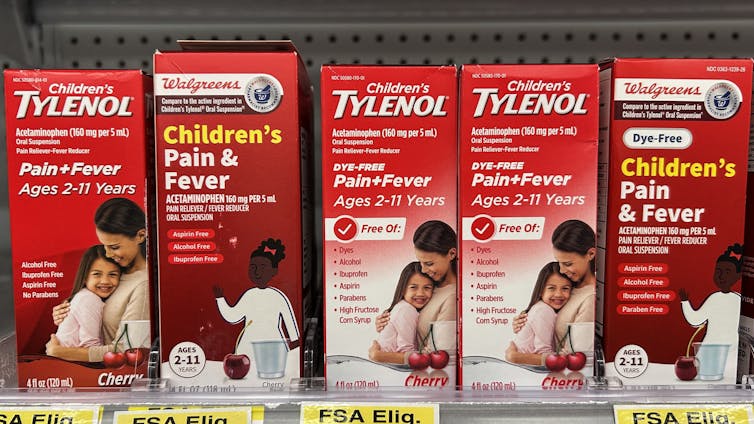
Claims from the Trump White House about links between use of the painkiller acetaminophen – often sold under the brand name Tylenol in the U.S. – during pregnancy and development of autism have set off a deluge of responses across the medical, scientific and public health communities.
As a father of a child with level 2 autism – meaning autism that requires substantial support – and a statistician who works with such tools as those used in the association studies cited by the White House, I find it useful to think about the nuances of association versus causation in observational studies. I hope that this explanation is helpful to parents and expecting parents who, like me, are deeply invested in the well-being of their children.
Association is not causation, but …
Most people have heard this before, but it bears repeating: Association does not imply causation.
An often-cited example is that there is a very strong association between ice cream sales and incidents of shark attacks. Of course, it goes without saying that shark attacks aren’t caused by ice cream sales. Rather, in the summertime, hot weather drives more appetite for ice cream and beach time. The increased number of people at the beach does, in turn, cause the likelihood of shark attacks to increase.
Yet pointing this out on its own is neither intellectually satisfying nor emotionally appeasing when it comes to real-life medical concerns, since an association does suggest potential for a causal relationship.
In other words, some associations do end up being convincingly causal. In fact, some of the most consequential discoveries of the past century in public health, like the links between smoking and lung cancer or the human papillomavirus (HPV) and cervical cancer, started out as findings of very strong association.
So when it comes to the issue of prenatal acetaminophen use and autism development, it is important to consider how strong the association found is, as well as the extent to which such an association could be considered causal.
Establishing causal association
So how do scientists determine if an observed association is actually causal?
The gold standard for doing so is conducting what are called randomized, controlled experiments. In these studies, participants are randomly assigned to receive treatment or not, and the environment where they are observed is controlled so that the only external element that differs among participants is whether they received treatment or not.
In doing this, researchers reasonably ensure that any difference in the outcomes of the participants can be directly attributed as being caused by whether they received the treatment. That is, any association between treatment and outcome can be considered causal.
Yet oftentimes, conducting such an experiment is impossible, unethical or both. For instance, it would be highly difficult to gather a cohort of pregnant women for an experiment and extremely unethical to randomly assign half of them to take acetaminophen, or any other medication for no particular reason, and the other half not to.
So when experiments are simply infeasible, an alternative is to make some reasonable assumptions on how observational data would behave if the association was causal and then see if the data aligns with these causal assumptions. This can very broadly be referred to as observational causal inference.
Parsing what the studies mean
So how does this apply to the current controversy over the potential for acetaminophen use during pregnancy to affect the fetus in a way that could result in a condition like autism?
Researchers who try to understand causal roles and links between one variable and potential health outcomes do so by considering: 1) the size and consistency of the association across multiple attempts to estimate it, and 2) the extent to which such association has been established under observational causal inference frameworks.
As early as 1987, researchers have been working to measure possible associations between acetaminophen use during pregnancy and autism. A number of these studies, including multiple large systematic reviews, have found evidence of such associations.
For instance, a 2025 review of 46 studies that examined association between acetaminophen use and an array of neurodevelopmental disorders, including autism, identified papers with five positive associations between acetaminophen and autism.
In one of those studies, which examined 73,881 births, the researchers found that children who were exposed to acetaminophen prenatally were 20% more likely to develop borderline or clinical autism spectrum conditions. Another examined 2.48 million births and reported an estimated association of only 5%.
Both of those are weak associations. For context, estimations of increased lung cancer risk from smoking in the 1950s were between 900% to 1,900%. That is, a smoker is 10 to 20 times more likely than a nonsmoker to develop lung cancer. By comparison, in the two autism studies above, a pregnant woman who takes acetaminophen is 1.05 to 1.20 times more likely than one who does not take the drug to have a child who would be later diagnosed with autism.
It’s also important to keep in mind that many factors can affect how well a study is able to estimate an association. In general, larger sample sizes provide both greater power to detect an association if one does exist, as well as improved precision over estimating the value of the association. This does not mean that studies with smaller sample sizes are not valid, only that from a statistical perspective, researchers like me place greater confidence in an association drawn from a larger sample size.
Once an association – even a small one – is established, researchers then must consider the extent to which causation can be claimed. One way to do this is through what’s called dose-response. This means looking at whether the association is higher among women who took higher doses of acetaminophen during pregnancy.
The study mentioned above that looked at 2.48 million births shows an example of dose-response. It found that pregnant women who reported taking higher doses have higher autism risk.
Another way to examine possible causality in this context is to analyze sibling outcomes, which that same paper did. Researchers looked at whether associations between acetaminophen and autism persisted within families with more than one child.
For example, in a family with two children, if the mother used acetaminophen during one pregnancy and that child was later diagnosed with autism, but she did not use it during the other pregnancy and that child was not diagnosed, then this strengthens the causal claim. Conversely, if acetaminophen was used during the pregnancy of the child who was not diagnosed with autism and not used during the pregnancy of the child who was, then that weakens the causal claim. When this was included in the analysis, the dose-response disappeared, and in fact the overall 5% increased risk mentioned before likewise disappeared. This weakens the claim of a causal relationship.
Consult your doctor
At present, there is clearly not enough evidence to establish a causal association between prenatal acetaminophen use and autism.
Yet as a parent who wonders if my daughter will ever be able to write her name, or hold a job or raise kids of her own, I understand that such explanations may not appease the fears or concerns of an expecting mother who is suffering from a fever.
Naturally, all of us want absolute certainty.
But that’s not possible when it comes to acetaminophen use, at least not at this time.
Your doctor will be able to provide you with much sounder advice than any existing study on this topic. Your OB-GYNs are very likely aware of these studies and have much better judgment as to how these results should be considered in the context of your personal medical history and needs.
Researchers, meanwhile, will continue to dig deeper into the science of this critically important issue and, hopefully, provide greater clarity in the years to come.
Mark Louie Ramos, Assistant Research Professor of Health Policy and Administration, Penn State
This article is republished from The Conversation under a Creative Commons license. Read the original article.
Dive into “The Knowledge,” where curiosity meets clarity. This playlist, in collaboration with STMDailyNews.com, is designed for viewers who value historical accuracy and insightful learning. Our short videos, ranging from 30 seconds to a minute and a half, make complex subjects easy to grasp in no time. Covering everything from historical events to contemporary processes and entertainment, “The Knowledge” bridges the past with the present. In a world where information is abundant yet often misused, our series aims to guide you through the noise, preserving vital knowledge and truths that shape our lives today. Perfect for curious minds eager to discover the ‘why’ and ‘how’ of everything around us. Subscribe and join in as we explore the facts that matter. https://stmdailynews.com/the-knowledge/


health and wellness
Progress, Not Perfection: How Healthy Habits Can Stack Up One Step at a Time
The article emphasizes that achieving better health relies on progress, not perfection. It advocates for realistic goals and highlights tools like My Life Check for personalized health assessments. Small, manageable changes in diet, exercise, sleep, and stress management can significantly impact overall well-being, making healthy habits more attainable and sustainable.

Last Updated on April 1, 2026 by Daily News Staff
Progress, Not Perfection: How Healthy Habits Can Stack Up One Step at a Time
(Feature Impact) Despite the best of intentions, it’s common for plans to build healthier habits to fall flat. Often, the culprit isn’t a lack of motivation or discipline; rather, it’s unrealistic expectations.
Overhauling your lifestyle requires a level of commitment that isn’t always practical. Understanding your personal health needs and the challenges you need to overcome can help give you a more realistic roadmap toward better health.
Tools to Guide You
Every plan needs a starting point and there are many reputable sources that can help guide you toward a plan that addresses your personal health needs.
For example, the American Heart Association introduced My Life Check, a simple, free tool to help individuals understand their heart health and what’s driving it. Users answer simple questions about their daily habits and health factors to get a personalized Heart Health Score in minutes.
The results are private and downloadable, giving you full control of your information. The tool turns big goals into small, specific actions you can start right away. Knowing your numbers relative to your heart health (and where you are in comparison to target ranges for optimal health) can help you decide how to build a better map to get you where you want to be.
While the report is customized to each individual, no personal data is stored and answers are only used to calculate health scores and provide personalized recommendations and practical steps to improve your health, so you can use your results to focus on what matters most to you. Every small step you take, such as moving more, eating smarter, sleeping better or managing stress, can add up over time.

Finding Your Path
Once you’re armed with data and know where you stand on your heart health numbers, small steps become clearer and more manageable. That knowledge makes it easier to choose one area to focus on, such as getting more sleep, taking daily walks or adding more color to your meals.
Healthy changes don’t need to be expensive or complicated. The best habits are ones that fit real life when every action you take moves you closer to your goals.
Staying motivated and on track is also easier when you can check back in, see your progress and realize the steps you’re taking are making an impact. Checking in every few months to see how you can grow gives you the chance to celebrate your progress, learn from challenges and keep building lasting habits that feel good.
To get started with personalized tips to set your own health goals, visit heart.org/mylifecheck.
Healthy Habits for Everyday Life
Eat Smart
Choose foods that help you feel your best, one meal at a time. Add more color to your plate and focus on balance, not restriction. Simple, affordable swaps can make a real difference.
Smart Tip: Aim for an overall healthy eating pattern that includes whole foods, fruits and vegetables, lean protein, nuts, seeds and cooking in non-tropical oils such as olive and canola.
Move More
Find movement that fits your life, such as a walk, a stretch or dancing while you cook. Every bit of activity counts and it all supports your heart and mind. Move for joy, not just for results.
Smart Tip:Adults should get 150 minutes of moderate physical activity (or 75 minutes of vigorous activity) per week. Kids should aim for 60 minutes every day, including play and structured activities.
Sleep Well
Rest is a foundation of good health, not a reward. Protect your bedtime routine and give your body the recovery it deserves. Notice how good sleep makes everything else easier.
Smart Tip: Most adults need 7-9 hours of sleep each night. Children require more. Adequate sleep promotes healing, improves brain function and reduces the risk for chronic diseases.
Manage Stress
Check in with yourself regularly, both mentally and emotionally. Create simple moments to pause, breathe, laugh or step outside. Connection, kindness and calm all support a healthy heart.
Smart Tip:The first step to stress management is awareness. Step “away from yourself” for a moment. Objectively ask yourself, “Is my stress level too high?” If so, look at what might be causing that stress.
Ideas for Incremental Changes
- Dedicate 15 minutes at the beginning or end of the day to focus on self-care, whether it’s unwinding with some music, writing down your goals or reflecting on the highlights of the day.
- Aim to add an extra serving of fruits or veggies each day, such as creating a savory veggie omelet or exploring new smoothie blends that let you pack in the produce on the go.
- Give your cabinets a quick update and put the smaller plates front and center. When you use a smaller plate, you can fill it while still sticking to recommended serving sizes.
- If you’re not a fan of the gym, think about how your hobbies can play a role in your physical activity. Even gardening counts as physical activity, so get creative to get moving with an activity you truly enjoy.
- Establish a bedtime routine that allows you to ease into sleep more easily. Once you feel the impact of better-quality rest, you may find yourself more motivated to make a regular bedtime a priority.
Photos courtesy of Shutterstock
https://erp.featureimpact.com/api/v1/tracking/17763/10235/track.js
(function () {
var image = new Image(1, 1);
image.src = ‘https://erp.featureimpact.com/api/v1/tracking/17763/10235/track.gif?referrer=’ + window.location.href;
image.id = ‘feature-impact-content-tracking-pixel’;
image.style.position = ‘absolute’;
image.style.top = 0;
image.style.left = 0;
document.body.appendChild(image);
})();
SOURCE:
Lifestyle
How to Practice Thoughtful Grief Etiquette Online
Grief experts advise caution in sharing condolences and loss-related information on social media, emphasizing the importance of prioritizing the grieving family’s needs. Thoughtful posting practices include waiting for family approval, reaching out privately first, and avoiding speculation about the cause of death. Compassionate communication is essential in these sensitive situations.
Last Updated on March 31, 2026 by Daily News Staff
(Feature Impact) News of a death can spread online in seconds – often before families have notified close family members privately. That’s why grief experts urge people to rethink how they share condolences, tributes and loss-related information on social media, particularly during the winter months when grief can feel especially isolating.
“Grief etiquette is about putting the needs of the grieving family first, not our urge to say something publicly,” said Dr. Camelia L. Clarke, National Funeral Directors Association (NFDA) spokesperson, funeral director and grief educator with nearly 30 years of experience. “Just because information can be shared instantly doesn’t mean it should be.”
Social media has become a common place for sharing condolences, tributes and memories. However, grief experts caution that, without thoughtful consideration, online posts can unintentionally cause harm. Knowing when to post, what to say and when to remain silent can make a meaningful difference for families experiencing loss.
Consider this advice from the experts at the NFDA.
Grief Etiquette in the Digital Age
Grief etiquette refers to the unspoken guidelines for how individuals acknowledge death, loss and mourning, particularly online.
According to Clarke, one of the most important principles is restraint.
“When a death is shared online too quickly, families can feel exposed and overwhelmed at a moment when they’re still processing the loss themselves,” she said. “Waiting is an act of compassion.”
Best Practices for Posting About Loss Online
As social media continues to play a role in modern mourning, grief professionals encourage users to pause before posting and consider a few key guidelines:
- Let the family lead. Don’t post about a death until the immediate family has made it public.
- Ask permission. Obtain consent before sharing photos, stories or tributes.
- Reach out privately first. A direct message, call or handwritten note can be more meaningful than a public comment.
- Avoid speculation. Don’t ask about or share details regarding the cause of death.
- Offer ongoing support. Grief extends far beyond the first days or weeks after a loss.
What to Say (and Avoid)
When expressing condolences online, experts recommend simplicity, sincerity and sensitivity. Messages that acknowledge loss without attempting to explain or minimize it are often the most supportive.
Helpful phrases include:
- “I’m sorry for your loss.”
- “Thinking of you and your family.”
- “I’m here if you want to talk or need anything.”
By contrast, well-meaning cliches can unintentionally cause harm. Phrases such as “They’re in a better place” or “Everything happens for a reason” may reflect the speaker’s beliefs, but they can feel dismissive to someone grieving.
“Grieving people don’t need answers – they need presence,” Clarke said. “Listening matters more than saying the perfect thing.”
Resources for Families and Friends
As digital spaces continue to shape how people communicate during life’s most difficult moments, experts agree empathy, patience and respect remain timeless.
“Grief is deeply personal,” Clarke said. “When we slow down and lead with compassion, we honor both the person who has died and those who are left to grieve.”
To learn more about how to support a grieving person and access free, expert-reviewed resources for navigating grief, expressing condolences and supporting loved ones before, during and after a loss, visit RememberingALife.com, an initiative of the NFDA.
Photo courtesy of Shutterstock
<img src="https://ssl.google-analytics.com/collect?v=1&tid=UA-482330-7&cid=1955551e-1975-5e52-0cdb-8516071094cd&sc=start&t=pageview&dl=http%3A%2F%2Ftrack.familyfeatures.com%2F17832%2F10240&dt=HOW-TO-PRACTICE-THOUGHTFUL-GRIEF-ETIQUETTE-ONLINE" />
<img src="https://erp.featureimpact.com/api/v1/tracking/17832/10240/track.gif" />SOURCE:

Last Updated on March 27, 2026 by Daily News Staff
4 Simple Ways to Keep Allergy Season at Bay
(Family Features) With warmer outdoor temperatures, many homeowners suffer through longer allergy seasons. In fact, allergy days have increased by 20 days, according to a study conducted by the National Academy of Sciences.
Being aware of air quality indexes and limiting time outdoors can lessen exposure to airborne pollutants, but indoor air quality is also a concern. In a report from the U.S. Environmental Protection Agency, levels of indoor pollutants can be 2-5 times higher than outdoor air.
People spend nearly two-thirds of their lives at home, according to Carrier, which developed its Healthy Homes Program to help homeowners create indoor environments that optimize health and wellness. Consider these ways you can combat pollutants where it matters most: your home’s indoor air quality.
Reduce Indoor Pollutants
Your home has multiple sources of indoor air pollutants. While avoiding these pollutants altogether is often the best solution, it’s not always possible. However, there are a few ways you can reduce exposure in your home: ban indoor smoking; turn on exhaust fans when cooking; minimize or remove “soft” pollutant gathering surfaces such as decorative pillows, stuffed animals and decorative throws; and regularly clean all heating and air conditioner filters as required or according to manufacturer specifications.
Add Air Purifiers to Your HVAC Unit
While air purifiers don’t treat allergies, they can help filter out allergens that can cause allergy symptoms. Homeowners might consider purifiers that are highly effective at capturing particulate. For example, the Carrier Infinity air purifier is a whole-home heating and cooling system. It not only captures 95% of particles in micron size range 1.0-3.0, but also inactivates 99% of select airborne germs and viruses that flow through the HVAC system and become trapped in the MERV 15 filter. The purifier has also demonstrated effectiveness against the murine coronavirus – similar to the human novel coronavirus (SARS-CoV-2) that causes COVID-19 – based on third-party testing, as well as the type of viruses that cause the common cold, streptococcus pyogenes and influenza.
Control Humidity
Many people know high humidity can cause discomfort in hot temperatures, but there are other potentially negative impacts. According to the Centers for Disease Control and Prevention, dust mites thrive in 70-80% humidity and temperatures between 75-85 F. Additionally, high humidity can provide an environment conducive to mold growth, which is why maintaining relative indoor humidity between 40-60% is recommended to keep dust mites and mold at bay. To help control humidity, run the air conditioner when it’s hot and humid and consider using whole-home humidifiers and dehumidifiers that allow for specific settings for moisture control.
Consider Room Air Purifiers for Individual Spaces
Room air purifiers are portable and highly efficient solutions for smaller spaces such as nurseries, bedrooms, home gyms and added rooms. One example is the Carrier Smart Room Air Purifier with a built-in indoor air quality monitor that includes three levels of filtration, including an activated carbon filter to capture odors. The attached, color-coded air quality monitor measures and displays pollutant levels so homeowners can be informed and aware of the quality of their indoor air, giving them the ability to maintain next-level comfort while breathing cleaner air.
Creating your ideal home environment is more than just controlling the temperature. Your home’s air should be filtered and pollutants limited to minimize allergy triggers and promote good indoor air quality.
To learn more and get an estimate on a solution that’s right for you, visit carrier.com/residential.
SOURCE:
Carrier
https://stmdailynews.com/category/lifestyle/






