Young food entrepreneurs are changing the face of rural America
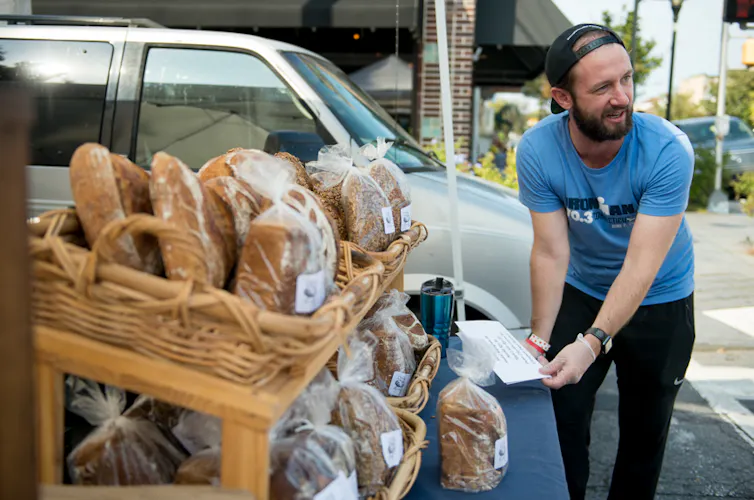
Visit just about any downtown on a weekend and you will likely happen upon a farmers market. Or, you might grab lunch from a food truck outside a local brewpub or winery. Very likely, there is a community-shared kitchen or food entrepreneur incubator initiative behind the scenes to support this growing foodie ecosystem. As rural America gains younger residents, and grows more diverse and increasingly digitally connected, these dynamics are driving a renaissance in craft foods. One food entrepreneur incubator, Hope & Main Kitchen, operates out of a school that sat vacant for over 10 years in the small Rhode Island town of Warren. Its business incubation program, with over 300 graduates to date, gives food and beverage entrepreneurs a way to test, scale and develop their products before investing in their own facilities. Its markets also give entrepreneurs a place to test their products on the public and buyers for stores, while providing the community with local goods. Food has been central to culture, community and social connections for millennia. But food channels, social media food influencers and craft brews have paved the way for a renaissance of regional beverage and food industry startups across America. In my work in agriculture economics, I see connections between this boom in food and agriculture innovation and the inflow of young residents who are helping revitalize rural America and reinvigorate its Main Streets.
Why entrepreneurs are embracing rural life
An analysis of 2023 U.S. Census Bureau data found that more people have been moving to small towns and rural counties in recent years, and that the bulk of that population growth is driven by 25- to 44-year-olds. This represents a stark contrast to the 2000s, when 90% of the growth for younger demographics was concentrated in the largest metro areas. The COVID-19 pandemic and the shift to remote work options it created, along with rising housing prices, were catalysts for the change, but other interesting dynamics may also be at play. One is social connectedness. Sociologists have long believed that the community fabric of rural America contributes to economic efficiency, productive business activity, growth of communities and population health. Maps show that rural areas of the U.S. with higher social capital – those with strong networks and relationships among residents – are some of the strongest draws for younger households today. Another important dynamic for both rural communities and their new young residents is entrepreneurship, including food entrepreneurship. Rural food startups may be leveraging the social capital aligned with the legacy of agriculture in rural America, resulting in a renewed interest in craft and local foods. This includes a renaissance in foods made with local ingredients or linked to regional cultures and tastes. According to data from the National Agricultural Statistics Service, U.S. local sales of edible farm products increased 33% from 2017 to 2022, reaching $14.2 billion.
The new ‘AgriCulture’
A 2020 study I was involved in, led by agriculture economist Sarah Low, found a positive relationship between the availability of farm-based local and organic foods and complementary food startups. The study termed this new dynamic “AgriCulture.” We found a tendency for these dynamics to occur in areas with higher natural amenities, such as hiking trails and streams, along with transportation and broadband infrastructure attractive to digital natives. The same dynamic drawing young people to the outdoors offers digital natives a way to experience far-reaching regions of the country and, in some cases, move there. A thriving food and beverage scene can be a pull for those who want to live in a vibrant community, or the new settlers and their diverse tastes may be what get food entrepreneurs started. Many urban necessities, such as shopping, can be done online, but eating and food shopping are local daily necessities.
Governments can help rural food havens thrive
When my colleagues and I talk to community leaders interested in attracting new industries and young families, or who seek to build community through revitalized downtowns and public spaces, the topic of food commonly arises. We encourage them to think about ways they can help draw food entrepreneurs: Can they increase local growers’ and producers’ access to food markets? Would creating shared kitchens help support food trucks and small businesses? Does their area have a local advantage, such as a seashore, hiking trails or cultural heritage, that they can market in connection with local food?The farm store at Harley Farm Goat Dairy in Pescadero, Calif., draws people headed for hiking trails or the coast in the Santa Cruz Mountains.Smith Collection/Gado/Getty Images Several federal, state and local economic development programs are framing strategies to bolster any momentum occurring at the crossroads of rural, social connections, resiliency, food and entrepreneurship. For example, a recent study from a collaboration of shared kitchen experts found that there were over 600 shared-use food facilities across the U.S. in 2020, and over 20% were in rural areas. In a survey of owners, the report found that 50% of respondents identified assisting early-growth businesses as their primary goal. The USDA Regional Food Business Centers, one of which I am fortunate to co-lead, have been bolstering the networking and technical assistance to support these types of rural food economy efforts. Many rural counties are still facing shrinking workforces, commonly because of lagging legacy industries with declining employment, such as mining. However, recent data and studies suggest that in rural areas with strong social capital, community support and outdoor opportunities, younger populations are growing, and their food interests are helping boost rural economies. Dawn Thilmany, Professor of Agricultural Economics, Colorado State University This article is republished from The Conversation under a Creative Commons license. Read the original article.
Each year on January 31st, National Hot Chocolate Day warms up people across the country by celebrating the timeless cold-weather beverage.
National Hot Chocolate Day
Hot chocolate, also known as hot cocoa or drinking chocolate, is a heated drink consisting of shaved chocolate, melted chocolate or cocoa powder, heated milk or water, and usually a sweetener like whipped cream or marshmallows. Hot chocolate made with melted chocolate is sometimes called drinking chocolate, characterized by less sweetness and a thicker consistency.
The first chocolate drink is believed to have been created by the Maya around 2,500–3,000 years ago, and a cocoa drink was an essential part of Aztec culture by 1400 AD, by which they referred to as xocōlātl.[2] The drink became popular in Europe after being introduced from Mexico in the New World and has undergone multiple changes since then. Until the 19th century, hot chocolate was used medicinally to treat ailments such as liver and stomach diseases.
Hot chocolate is consumed throughout the world and comes in multiple variations, including the spiced chocolate para mesa of Latin America, the very thick cioccolata calda served in Italy and chocolate a la taza served in Spain, and the thinner hot cocoa consumed in the United States. Prepared hot chocolate can be purchased from a range of establishments, including cafeterias, fast food restaurants, coffeehouses and teahouses. Powdered hot chocolate mixes, which can be added to boiling water or hot milk to make the drink at home, are sold at grocery stores and online. (wikipedia)
Rod: A creative force, blending words, images, and flavors. Blogger, writer, filmmaker, and photographer. Cooking enthusiast with a sci-fi vision. Passionate about his upcoming series and dedicated to TNC Network. Partnered with Rebecca Washington for a shared journey of love and art. View all posts
Game day hosts can elevate their celebrations with a 7-Layer Game Day Dip. This easy recipe combines refried beans, mashed avocados, seasoned sour cream, cheese, tomatoes, scallions, and olives for a delicious spread. Perfect with tortilla chips, it’s an ideal snack for enjoying during the big game. For more recipes, visit Culinary.net.
(Family Features) From the pregame party to kickoff and the final whistle, game day hosts know savory snacks are the key to victory. Celebrate the big game this season with a simple yet tasty spin on a football staple with this 7-Layer Game Day Dip. Featuring layers of refried beans, mashed avocados and seasoned sour cream topped with cheese, tomatoes, scallions and black olives, you can tackle a winning spread in next to no time.
Visit Culinary.net to find more strategies for serving victorious game day recipes.
1 can (2 1/4 ounces) sliced black olives, drained (optional)
tortilla chips, for serving
In medium bowl, stir refried beans and 1/2 cup salsa. In separate medium bowl, mash avocados with remaining salsa. Add bell peppers and lime juice; stir to combine. In third medium bowl, stir sour cream and taco seasoning.
To assemble, spread refried bean mixture in bottom of baking dish. Spread avocado mixture evenly on top then spread sour cream mixture. Sprinkle with cheddar cheese then top with diced tomatoes.
Top dish with scallions and black olives, if desired. Serve with tortilla chips.
Long before pizza delivery apps, stuffed-crust gimmicks, and national chains on every corner, there was Straw Hat Pizza — a family-friendly, California-born pizza chain that helped define what “going out for pizza” meant for generations.
For many Californians, Straw Hat Pizza wasn’t just dinner. It was birthday parties, Little League celebrations, arcade games, salad bars, and the hum of a busy dining room packed with families. While the brand is far smaller today, its place in American food history is secure.
Humble Beginnings: A California Pizza Story
Straw Hat Pizza was founded in 1959 by Charlie Olson and Bill Henderlong. The first location opened in San Leandro, California, during a period when pizza was still becoming a mainstream American favorite.
The name came from the straw hats worn by pizza makers at early California pizzerias — a visual shortcut that told customers exactly what kind of place they were entering. Casual. Friendly. Pizza-focused.
Straw Hat Pizza 1977 TV commercial – robatsea2009 Channel
The Golden Years: 1960s Through the Early 1980s
Through the 1960s and 1970s, Straw Hat Pizza expanded rapidly across California and Nevada. By 1980, the chain reportedly operated more than 200 locations, becoming a staple in suburban shopping centers and family neighborhoods.
Large dining rooms built for families and groups
Arcade games and coin-operated attractions
Salad bars — a defining feature of the era
Party rooms for birthdays and team celebrations
The pizza leaned toward what we now call California-style: thin, layered crusts, generous toppings, and a menu designed for sharing. It was food meant to be eaten at a table, not rushed out the door.
Corporate Consolidation and Decline
In 1969, Straw Hat Pizza was sold to Saga Corporation, which later became part of Marriott Corporation. As restaurant consolidation accelerated in the 1980s, Straw Hat became caught in a wave of mergers and acquisitions.
By the late 1980s, many Straw Hat locations were sold to or converted by Pizza Hut. Franchise owners fought back, eventually retaining rights to the Straw Hat name and continuing operations independently — but the brand’s footprint was permanently reduced.
How Straw Hat Pizza Survived
Unlike many mid-century restaurant chains, Straw Hat Pizza never fully disappeared. Independent franchise owners reorganized, preserving the brand, recipes, and name. Today, a limited number of Straw Hat Pizza locations continue operating — primarily in California.
It is no longer a national competitor, but rather a regional legacy brand, sustained by nostalgia and loyal local customers.
Why Straw Hat Pizza Still Matters
Straw Hat Pizza represents an era when pizza parlors were community spaces — places to linger, celebrate, and connect. Its story mirrors the rise of suburban America and the transformation of pizza from novelty to cultural staple.
For many, the memory of Straw Hat Pizza is inseparable from childhood — the smell of baked dough, the sound of arcade machines, and the excitement of a shared pie arriving at the table.
Advertisement
The Nostalgia Revival
Vintage menus, matchbooks, and advertisements from Straw Hat Pizza frequently surface online, part of a broader resurgence of interest in retro restaurants. These artifacts remind us that regional chains once played a major role in shaping American food culture.
Straw Hat Pizza may no longer dominate California strip malls, but its legacy lives on — in memories, collectibles, and the handful of locations still serving slices under that iconic name.
STM Daily News continues to explore the food history that shaped our communities — from vanished chains to local favorites that still define how we eat and gather.
Rod: A creative force, blending words, images, and flavors. Blogger, writer, filmmaker, and photographer. Cooking enthusiast with a sci-fi vision. Passionate about his upcoming series and dedicated to TNC Network. Partnered with Rebecca Washington for a shared journey of love and art. View all posts