

Sports
2025 US Open Squash Championships returns to Philly, considered the birthplace of squash in America
The 2025 U.S. Open Squash Championships will take place in Philadelphia, the sport’s American birthplace, showcasing top professional players. Squash, now an Olympic sport for 2028, emphasizes athleticism, mindfulness, and fairness. Local stars Olivia Weaver and Amanda Sobhy will compete in this prestigious event.

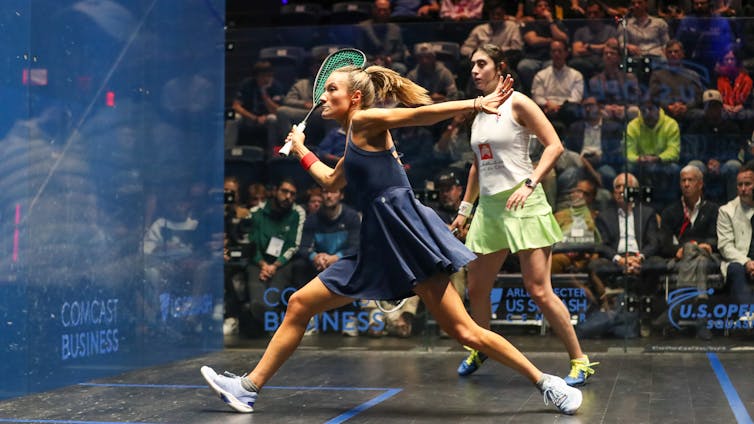
2025 US Open Squash Championships returns to Philly, considered the birthplace of squash in America
Eric Zillmer, Drexel University
The world’s best professional squash players will be in Philadelphia for the U.S. Open Squash Championships at the Arlen Specter US Squash Center in University City from Oct. 19-25, 2025.
Squash, for the first time an Olympic sport at the 2028 Los Angeles Games, has its U.S. epicenter in Philadelphia, which is also considered the birthplace of squash in America. The sport was introduced to the U.S. at the Racquet Club of Philadelphia in 1900, where the first squash doubles court was later established.
James Zug, the preeminent historian of the game, writes about how, in the winter of 1901, 32 men competed at the club in the first squash tournament on American soil. Many other Philadelphia clubs followed, leading to a local squash culture that spread to high schools and colleges.
The United States Squash Racquets Association, now US Squash, was founded in Philadelphia in 1904, later moved to New York City, and in 2021 relocated its offices back to Philly.
I’m a sports psychologist who works with elite professional squash athletes and also writes about the game. As the former athletic director at Drexel University, I helped introduce varsity squash to the school and also assisted in starting a nonprofit community program called SquashSmarts for Philly public school students.
I believe squash is one of Philly’s best-kept secrets, as many Philadelphians do not know that our city is host to an Olympic training high-performance center, the U.S. Squash Hall of Fame and youth development programs known as urban squash.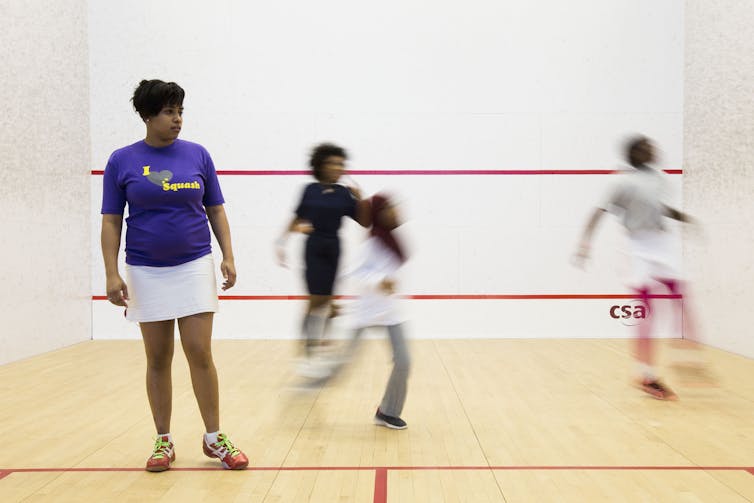
A feast for the brain
Squash originated from the older game of racquets, which was played in London’s prisons during the 19th century.
The vulcanization of rubber by Charles Goodyear in 1839 enabled the creation of a squeezable rubber ball that maintained its original shape after being “squashed” against the wall. The British Commonwealth, through its worldwide military, social and political influence, promoted and grew the game internationally and set standardized rules and courts.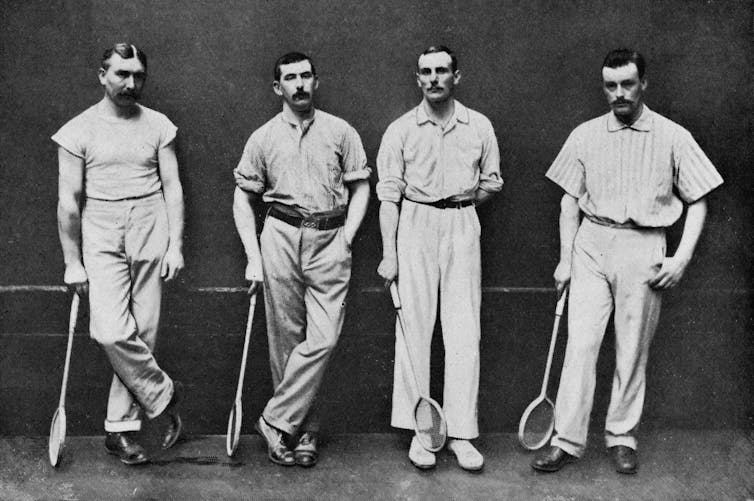
Watching professional squash today feels like being in gym class and science class at the same time: The sport showcases incredible athleticism and celebrates the laws of mathematics.
Squash is best understood in terms of its form and its essence.
The form of squash includes the ancient proportions of the cella of the Parthenon, which held the sacred statue of Athena holding Nike, the goddess of victory. An international squash court is 32 feet by 21 feet, and this ratio of approximately 1 to 1.5 establishes a sense of geometric order. With all walls and angles in play, and emphasizing elements such as time, velocity and space, squash allows for an amazing spectacle of creativity, elegance and speed. It is a feast for the brain. https://www.youtube.com/embed/nTcvGK3k1IQ?wmode=transparent&start=0
Mental aspects of the game
But the essence of squash is mental, and the three aspects I find especially intriguing are mindfulness, playfulness and fairness.
Mindfulness: Mindfulness involves not dwelling on the past or worrying about the future. This is easier said than done, especially when a player is exhausted and struggling. The competitive squash player must focus on the moment and anticipate the next. This requires processing information in real time and practicing mindfulness to avoid distractions.
Playfulness: When I was a young athlete, I gave a B effort in practice and an A effort during competition. I had it all wrong.
I now understand that intense, disciplined practices are the foundation for tomorrow’s world-class athlete. There are no shortcuts. Psychologist Angela Duckworth advocates that excellence is 66% grit – which she describes as a combination of passion, effort and perseverance – with the other 34% being innate talent.
For high-performance athletes, it is beneficial to be a neurotic perfectionist in practice, but not during competition, when they need to be situationally aware. Performance coach Brian Levenson writes about the pro athlete being the opposite of a perfectionist when competing, shifting to being playful, intuitive, confident and adaptable instead.
In other words, practice like a pro, play like a kid.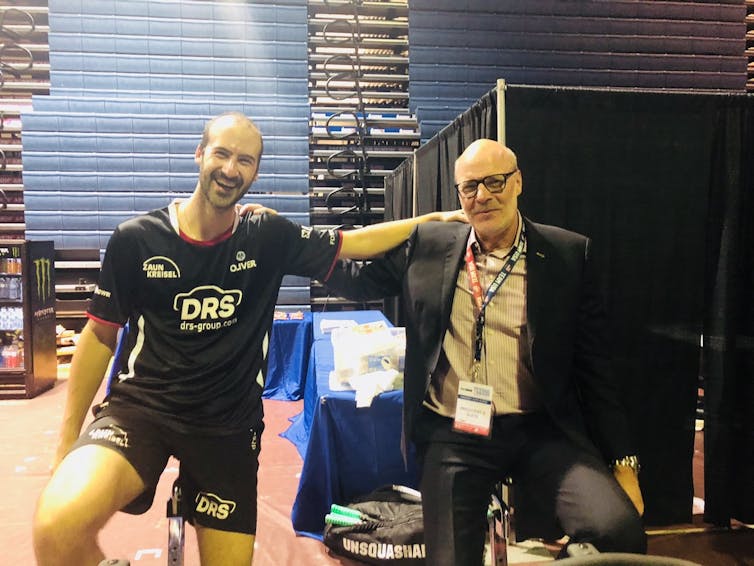
Fairness: One intriguing aspect of squash is the two competitors share the same space. This requires respect for your opponent as well as the game.
At its best, squash resembles a dance between two foes, with the winner graciously allowing their opponent to leave the court first.
US Squash has made sportsmanship and character a key initiative as the sport grows in popularity at all levels of play. While the art of deception, such as head fakes or varying your swing timing, is a valued tactical skill, blocking the opponent, whether subtle or overt, is not. In Philly, the U.S. Open Squash Championships will have officials and a public video assistant referee, or VAR, system to sort things out.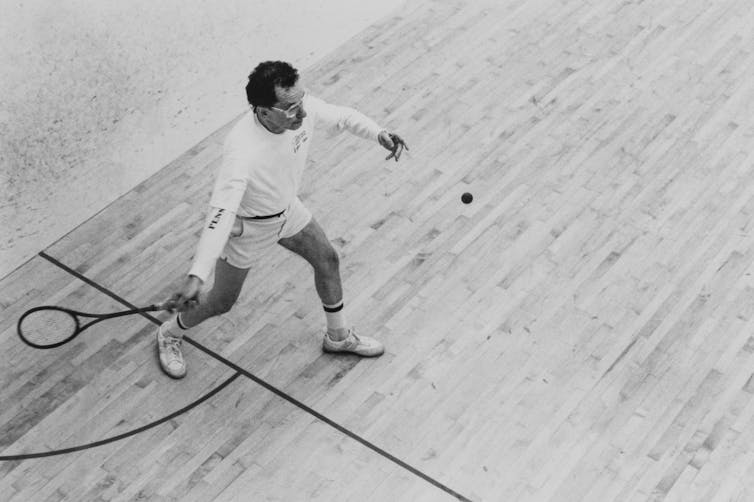
Philly’s Olympic center
One of Philadelphia’s most passionate amateur players was the longtime U.S. Sen. Arlen Specter. In 2021, the Arlen Specter US Squash Center, located on the campus of Drexel University, opened and was named in his honor.
The Specter Center is a state-of-the-art training facility that is not just the home of the U.S. Open and Team USA but also the administrative center for US Squash, and a hub for the U.S. junior and senior national teams, as well as urban squash.
The inclusion of squash in the 2028 Olympics is a milestone for the increasingly international sport. Currently, eight nationalities are represented among the top 10 male and female pro players, although in recent years Egypt has dominated both the men’s and women’s game.
Two U.S. women who are ranked in the world Top 10 are Team USA’s best chances to win gold: Amanda Sobhy, who went undefeated at Harvard, and Philly’s own Olivia Weaver.
If you want to catch them in action before the 2028 games, both will compete at the U.S. Open Squash Championships. Weaver will play Farida Mohamed from Egypt on Oct. 19 at 1:30 p.m., and Sobhy will face Melissa Alves from France the same day at 2:15 p.m. Both matches will be played on the center glasswall courts.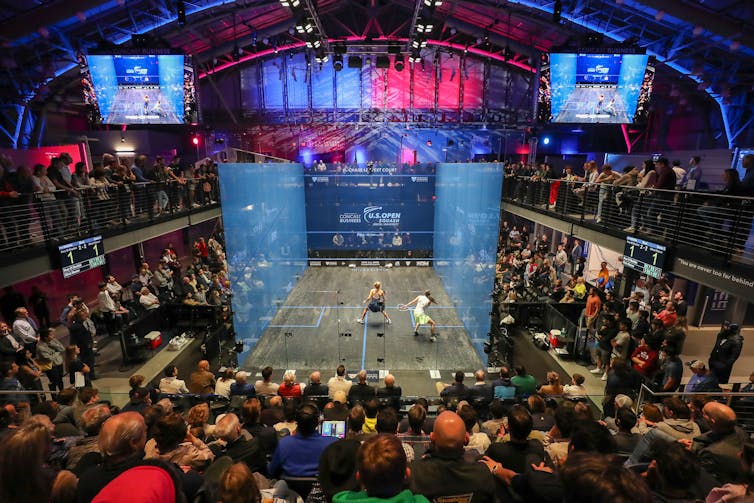
This story was updated on Oct. 16, 2025, to include details of the U.S. Open Squash Championships.
Read more of our stories about Philadelphia, or sign up for our Philadelphia newsletter on Substack.
Eric Zillmer, Professor of Neuropsychology, Drexel University
This article is republished from The Conversation under a Creative Commons license. Read the original article.
The Sports section of STM Daily News is your ultimate destination for all things sports, catering to everyday fans and dedicated enthusiasts alike. We cover a wide range of topics, from the thrill of amateur competitions to the excitement of semi-professional and professional leagues. Our content delves into physical and mental fitness, providing insights and tips that help individuals elevate their performance, whether on the field or in their personal wellness journeys. Stay informed and inspired as we explore the dynamic world of sports, celebrating both the passion of the players and the joy of the fans.


Sports
Sports Facilities Companies Acquires RCI Sports Management
The Sports Facilities Companies has acquired RCI Sports Management, enhancing its national presence and services in sports tourism and venue operations. This acquisition adds properties in Texas and Kansas, focusing on improving facility performance and revenue generation through integrated marketing and standardized systems, reflecting a trend in consolidating sports facility services.

The Sports Facilities Companies has acquired Texas-based RCI Sports Management, a move that expands its national footprint while strengthening its position in sports tourism, venue operations, and economic impact services for municipalities and private owners.

The deal adds RCI-managed properties in Texas and Kansas to the SF Network, including The Refinery Fieldhouse in Garden City, Amarillo Netplex in Amarillo, and Travis Fields at Midtown Park in Bryan. Together, the facilities broaden SFC’s reach in mid-market communities where youth sports, tournaments, and event programming are increasingly tied to hotel stays, visitor spending, and local business activity.
SFC said the acquisition will help accelerate facility performance through integrated marketing, sponsorship sales, standardized operating systems, and expanded event and tourism pipelines. That makes this more than a management deal — it reflects the continued consolidation of sports facility services as operators look to scale revenue generation, improve efficiency, and deliver stronger returns for public and private partners.
Related Links
Source
Source: The Sports Facilities Companies via PR Newswire
The Sports section of STM Daily News is your ultimate destination for all things sports, catering to everyday fans and dedicated enthusiasts alike. We cover a wide range of topics, from the thrill of amateur competitions to the excitement of semi-professional and professional leagues. Our content delves into physical and mental fitness, providing insights and tips that help individuals elevate their performance, whether on the field or in their personal wellness journeys. Stay informed and inspired as we explore the dynamic world of sports, celebrating both the passion of the players and the joy of the fans.
Sports
The U.S. Army Names Soldier-Athletes Headed to the 2026 Winter Games in Italy
The U.S. Army says nine WCAP Soldier-athletes and coaches will compete at the 2026 Winter Games in Italy in bobsled, biathlon, Nordic combined and figure skating—showcasing elite fitness, discipline and performance.

The U.S. Army is sending a new group of Soldier-athletes to one of the biggest stages in international sports.
In a Jan. 29, 2026 announcement, the Army said nine Soldier-athletes and coaches will represent the United States at the 2026 Winter Games in Italy, with two additional Soldiers traveling as alternates. The group will compete across bobsled, biathlon, Nordic combined, and pairs figure skating—sports that demand equal parts endurance, precision, and mental toughness.
Who’s representing the Army at the 2026 Winter Games
According to the release, the Army’s lineup of Soldier-athletes and coaches includes:
Competing and coaching in Italy
- Lt. Col. Chris Fogt (Bobsled Head Coach)
- Lt. Col. Garrett Hines (Bobsled Coach)
- Sgt. 1st Class Shauna Rohbock (Bobsled Coach)
- Sgt. Frank Del Duca (Bobsled)
- Spc. Azaria Hill (Bobsled)
- Staff Sgt. Deedra Irwin (Biathlon)
- Spc. Sean Doherty (Biathlon)
- Sgt. Ben Loomis (Nordic Combined)
- Pvt. Spencer Howe (Pairs Figure Skating)
Alternates
- Cpl. Hakeem Abdul-Saboor (Bobsled Alternate)
- Spc. Dana Kellogg (Luge Doubles Alternate)
Soldier first, athlete always
The Army emphasized that WCAP athletes remain full-time Soldiers while training and competing at the elite level. Brig. Gen. Matthew Braman, the Army’s Chief Marketing Officer, said the same traits built through military service—discipline, mental agility, teamwork, and readiness—translate directly into high-level athletic performance.
“Even when competing at the highest level, these athletes are U.S. Army Soldiers first,” Braman said in the release, adding that they’re trained to be “tactically and technically proficient” and prepared to perform in any environment.
What is the World Class Athlete Program (WCAP)?
The Soldier-athletes train and serve through the U.S. Army World Class Athlete Program (WCAP), which supports top-ranked Soldiers competing at the international level. WCAP provides coaching, facilities, and training resources while ensuring Soldiers maintain their readiness and complete mandatory Army requirements.
While WCAP was officially established in 1997, the Army says it has been training Soldier-athletes for more than 75 years. Over that span, the Army has sent more than 600 Soldier-athletes to compete on the world stage, earning more than 120 medals across summer and winter sports.
Italy adds a layer of Army history
This year’s Winter Games location also carries historical meaning for the Army. The release points to World War II, when the 10th Mountain Division—an elite unit trained for mountain warfare—climbed Riva Ridge in northern Italy in a mission that helped shift momentum in the war.
After returning home, many Soldiers from the 10th Mountain Division helped build the foundation of the American ski industry by establishing ski resorts and ski schools across the U.S.—a legacy that still shows up in winter sports culture today.
Braman called the upcoming Games “a unique moment” to honor both the Army’s history in alpine terrain and its long-standing presence in elite athletics.
What to Watch For
- Biathlon conditioning: How Soldier-athletes balance endurance output with shooting precision under fatigue.
- Bobsled power and speed: Starts win races—watch for explosive sprint mechanics and teamwork on push phases.
- Nordic combined workload: One of the toughest mixes in sport; look for training insights on strength-to-weight and aerobic capacity.
- Recovery and readiness: How WCAP athletes manage sleep, mobility, and injury prevention while staying Soldier-ready.
- Italy’s alpine backdrop: The region’s mountain history adds context—and pressure—for performance in cold, high-demand environments.
Learn more
For more information about the U.S. Army and opportunities like WCAP, the release directs readers to GoArmy.com, including GoArmy.com/world-class-athlete-program.
Source: U.S. Army (PRNewswire), Jan. 29, 2026
Related External Links
- U.S. Army World Class Athlete Program (WCAP) – Overview of how Soldier-athletes train and compete at the elite level.
- GoArmy.com – Learn more about U.S. Army opportunities and careers.
- Team USA – Athlete news, sport profiles, and updates across Olympic and Paralympic disciplines.
- Olympics.com – Official Winter Games coverage, schedules, and sport explainers.
- International Ski and Snowboard Federation (FIS) – Rules, rankings, and event info for Nordic disciplines, including Nordic combined.
- International Bobsleigh & Skeleton Federation (IBSF) – Bobsled and skeleton sport info, events, and athlete resources.
- International Biathlon Union (IBU) – Biathlon news, event calendars, and performance insights.
Stay Updated with STM Daily News Sports
Want more sports and fitness coverage that’s worth your time—athlete training, performance trends, major events, and the stories behind the grind? Keep up with our latest at STM Daily News – Sports .
Author

Sports
CourtsApp Launches as “The Healthiest App in the World,” Turning Screen Time Into Play Time
CourtsApp, branded as “the healthiest app in the world,” aims to reduce screen time by encouraging users to engage in racquet sports like tennis and pickleball. The platform facilitates easy court bookings without membership fees, promoting movement and social interaction. Expansion plans cover various U.S. regions, maximizing accessibility for players.

If your New Year’s reset includes less scrolling and more moving, CourtsApp is trying to make that switch ridiculously easy.
CourtsApp has officially launched with a bold claim—calling itself “the healthiest app in the world”—and the positioning is clear: it’s not another wellness app asking for more screen time. It’s a tool designed to get you off your phone and onto a court.
What CourtsApp is (and why it’s different)
CourtsApp is an AI-powered marketing and booking platform that helps players instantly find and book open courts for tennis, pickleball, padel, and other racquet sports—often at discounted prices. The key point: no membership fees are required.
That matters because “friction” is one of the biggest reasons people don’t play as often as they want to. If booking a court means juggling memberships, phone calls, limited availability, or confusing club policies, most people default to the easier option: staying home.
CourtsApp’s pitch is simple: open the app, find a court, book it, and go play.
Turning screen time into play time
Most apps compete for attention. CourtsApp is leaning into the opposite idea—convert screen time into movement.
The average adult now spends more than seven hours a day looking at screens, a trend that’s often linked with rising rates of obesity, heart disease, anxiety, and social isolation. CourtsApp is positioning itself as a healthier relationship with your phone: use it briefly, then put it away and get outside.
Instead of tracking steps or pushing workouts through a screen, the app is built around real-world activity—full-body movement, outdoor play, and social connection.
Why racquet sports are having a moment
CourtsApp’s launch also taps into a bigger trend: racquet sports are booming, and not just because they’re fun.
Founder and CEO Daren Hornig argues that sports like tennis and pickleball can be a stronger path to fitness and longevity than the typical “10,000 steps” mindset.
“CourtsApp turns your phone into a gateway to real-world health,” Hornig said. “For years, we’ve been told that you can stay fit and lose weight by walking 10,000 steps a day, taking a Peloton class online or going to a gym. However, sports like tennis and pickleball give you a greater chance to achieve your health and fitness goals and live a longer and healthier life. And there’s no better time to start than the New Year.”
The company also points to research published in the British Journal of Sports Medicine, citing long-term data following more than 80,000 adults over nearly a decade. According to the release, participants in racquet sports saw a 47% lower risk of death from any cause and up to a 56% lower risk of cardiovascular-related death compared to non-participants.
Where CourtsApp is live now—and what’s next
CourtsApp is currently live for players across:
- New York
- New Jersey
- Connecticut
The platform already lists more than 1,500 courts across 150+ facilities in those markets.
Next up: expansion from Maine to Florida by Q1 2026, followed by market-by-market growth as club density increases. The release also calls out additional play-in markets including:
- Southern California
- Texas
- Pacific Northwest
Flexible pricing, more access, fewer barriers
One of the most practical angles here is affordability and access.
CourtsApp highlights discounted pricing during quieter hours—helping players turn a random free afternoon into court time without committing to a membership or paying peak-hour rates.
For clubs, the platform doubles as a marketing and booking engine. For players, it’s a shortcut to the thing they actually want: a court that’s open right now.
The bigger takeaway
CourtsApp is betting on a simple truth: people don’t need more motivation apps—they need fewer obstacles.
If the app delivers on its promise (fast booking, real inventory, and meaningful discounts), it could become a go-to tool for anyone trying to make movement a habit—especially in sports like pickleball and tennis where access and scheduling can make or break consistency.
Players and clubs can learn more or join the platform at CourtsApp.com.
Here’s a clean Related Links block you can paste into WordPress (HTML view). Swap in your actual URLs/titles where needed:
Related Links
- CourtsApp (Official Site)
- More Sports + Wellness Coverage on STM Daily News
- Pickleball News & Updates
- Tennis News & Court Culture
“`
Get the latest updates and information on the rapidly growing sport of pickleball, specifically designed for the senior community aged 50+. Check out Sleeve’s Senior Pickleball Report on YouTube to stay informed and up-to-date with the ever-changing world of pickleball. Join the community and stay ahead of the game. https://stmdailynews.com/sleeves-senior-pickleball-report/







