Connect with us

STM Blog

10-Year-Old to Hold Rock Painting Fundraiser & Auction for Preschool for Ugandan Refugees

At Back-to-School Brunch on the Chef Point patio, participants will be able to buy and decorate kindness rocks for $5 that will be gifted to local classroom teachers.

Published

on

Last Updated on July 5, 2024 by Daily News Staff

FORT WORTH, TX /24-7PressRelease/ — Paisley Elliot knows a lot about helping others and having fun. The fifth grader from Grapevine, Texas, has the big ambition of helping to build a Montessori-inspired preschool for Ugandan refugees at the Rwamwanja Refugee Settlement in Southwestern Uganda.

She has begun raising the $35,000 that the project will require. To continue on her path and get others in on the fun for a good cause, she is holding a rock painting fundraiser and auction at Chef Point Bar & Restaurant in Colleyville, TX, on Saturday, August 19, 2023, from noon to 2 pm.

press release distribution 0503097 194230

Participants will be able to buy kindness rocks for $5 and paint them at the Back-to-School Brunch. Acrylic paints and brushes will be supplied. The event will also feature door prizes and a not-so-silent auction to raise money for the preschool. The kindness rocks will be gifted to local classroom teachers.

“It’s going to be fun, going to be a nice way to thank local teachers and going to help get us closer to our goal of fully funding PeaceMaker Preschool,” said Paisley.

“Paisley is a doer. We’re pleased to host the event and to help her reach her ambitious goal,” said Chef Point owner Paula Nwaeze.

About Paisley’s Pals
Started in 2018, Paisley’s Pals is a registered 501(c)3. It has as its mission to empower the next generation of global citizens through quality education aimed at developing innovative world leaders and compassionate social activists. Learn more by visiting https://paisleyspals.org/.

About Chef Point Bar and Restaurant
Chef Point Bar & Restaurant has been featured on Guy Fieri’s Triple DDD. Started in April of 2003, Chef Point is well known for its delicious brunch menu, tasty cocktails, and for being dog friendly.

Source: Chef Point Bar & Restaurant

https://www.24-7pressrelease.com/press-release/10yearold-paisley-elliot-of-paisleys-pals-to-hold-rock-painting-fundraiser-auction-for-preschool-for-ugandan-refugees-at-chef-point-bar-restaurant-on-sat-august-19-2023-from-12-pm-to-2-pm-503097.php

The Bridge is a section of the STM Daily News Blog meant for diversity, offering real news stories about bona fide community efforts to perpetuate a greater good. The purpose of The Bridge is to connect the divides that separate us, fostering understanding and empathy among different groups. By highlighting positive initiatives and inspirational actions, The Bridge aims to create a sense of unity and shared purpose. This section brings to light stories of individuals and organizations working tirelessly to promote inclusivity, equality, and mutual respect. Through these narratives, readers are encouraged to appreciate the richness of diverse perspectives and to participate actively in building stronger, more cohesive communities.

Advertisement
Get More From A Face Cleanser And Spa-like Massage

https://stmdailynews.com/category/the-bridge

Author


Discover more from Daily News

Subscribe to get the latest posts sent to your email.

Continue Reading
Advertisement Tool Tickets

STM Blog

What makes a true Santa is inside – and comes with the red suit

Research on 849 professional Santas reveals three types: prototypical, semi-prototypical, and nonprototypical. Discover how diverse Santas navigate stereotypes and why many see the red suit as a calling, not just a job.

Published

on

Last Updated on December 19, 2025 by Daily News Staff

What makes a true Santa is inside
Members of the Fraternal Order of Real Bearded Santas meet at Pink’s restaurant at Knott’s Berry Farm before the holiday rush in 2009. Business Wire via AP

What makes a true Santa is inside – and comes with the red suit

Christina Hymer, University of Tennessee When you picture Santa Claus, a white, bearded, overweight and jolly man who dashes around delivering gifts to children during the Christmas season probably comes to mind. Yet, not everyone who dons the red suit fits this stereotype. That’s what Bethany Cockburn, Borbala Csillag and I learned when we teamed up to study professional Santas. For our study, we looked into how these professional Santas were able to “be” Santa, even if they didn’t fully fit the image. As we explained in a forthcoming article in the Academy of Management Journal, many who do this work don’t see it as just a job – it’s a calling. For some professional Santas, it’s especially important that they look and feel like Santa to experience that sense of purpose in their work. We surveyed 849 professional Santas who live across the U.S. and interviewed 53 of them, collecting data between 2018 and 2021. We identified three types of professional Santas: prototypical (64%), semi-prototypical (23%) and nonprototypical (13%). Prototypical Santas look the part. They are white and overweight, have real beards and express confidence that they are the right fit. Semi-prototypical Santas looked the part, too, but felt like they weren’t quite suitable for a range of reasons. They might be introverted or use a fake beard. Nonprototypical Santas had characteristics at odds with the stereotype. They might be nonwhite, female or gay, or have a physical disability.
Man dressed as Santa holds a dog on his lap.
Many Santas see their work, whether paid or volunteer, as a calling. Photo by Gwyn Sussman
Whereas prototypical Santas could easily slide into the Santa role, the process was more complex for the others. Semi-prototypical Santas did things like come up with stories they’d tell themselves or share with children to explain away their fake beards. Nonprototypical Santas had values aligned with the Santa image, such as being peaceful, loving and kind. But they still made a big effort to look like what people expect when they visit a Santa. “Should it be a difference if you’re a Jewish Santa Claus or a Catholic Santa Claus?” asked an atheist professional Santa we called “Santa Aquila.” “No. You’re Santa Claus. What do you do? You’re not even supposed to preach anything.” Another Santa whom we called “Santa Lynx” hid that she was female in part by flattening her chest.

Why it matters

While anyone can take a turn being their neighborhood potluck’s Santa, the one you meet at the mall probably attended some combination of Santa schools, webinars and training. For instance, the Charles W. Howard Santa Claus School was founded in 1937 and conducts an annual Santa training each year. National networks also exist, such as the Fraternal Order of Real Bearded Santas, which says it has 1,000 members, – and the IBRBS, formerly known as the International Brotherhood of Real Bearded Santas, offering meetups and professional support.
A man dressed as Santa in a gray beard smiles festively.
Actor B.J. Averell, dressed as Santa Claus, attends a toy drive for struggling Bay Area families in Burlingame, Calif., in December 2024. Tayfun Coskun/Anadolu via Getty Images
There are also local organizations, such as the Lone Star Santas network in Texas. Although most professional Santas are paid for their work, many do this voluntarily. It’s not uncommon for there to be some sort of expectation around who should have a particular occupation. Pilots tend to be male, most schoolteachers are female, and salespeople are often seen as extroverted. But that doesn’t mean that women can’t be pilots, men can’t be teachers or that introverts can’t work in sales.

What’s next

I’m now looking at how broader institutional environments, current events and social movements can shape how people experience their callings and find meaning at work. The Research Brief is a short take on interesting academic work.The Conversation Christina Hymer, Assistant Professor of Management and Entrepreneurship, University of Tennessee This article is republished from The Conversation under a Creative Commons license. Read the original article.

Dive into “The Knowledge,” where curiosity meets clarity. This playlist, in collaboration with STMDailyNews.com, is designed for viewers who value historical accuracy and insightful learning. Our short videos, ranging from 30 seconds to a minute and a half, make complex subjects easy to grasp in no time. Covering everything from historical events to contemporary processes and entertainment, “The Knowledge” bridges the past with the present. In a world where information is abundant yet often misused, our series aims to guide you through the noise, preserving vital knowledge and truths that shape our lives today. Perfect for curious minds eager to discover the ‘why’ and ‘how’ of everything around us. Subscribe and join in as we explore the facts that matter.  https://stmdailynews.com/the-knowledge/


Discover more from Daily News

Subscribe to get the latest posts sent to your email.

Continue Reading

Blog

NASA Astronaut Jonny Kim to Share Insights from Eight-Month Space Station Mission

NASA astronaut Jonny Kim will discuss his eight-month International Space Station mission during a live news conference on Dec. 19. Discover the science, technology, and teamwork behind his groundbreaking journey, streaming live via NASA and covered by STM Daily News.

Published

on

Last Updated on December 19, 2025 by Daily News Staff

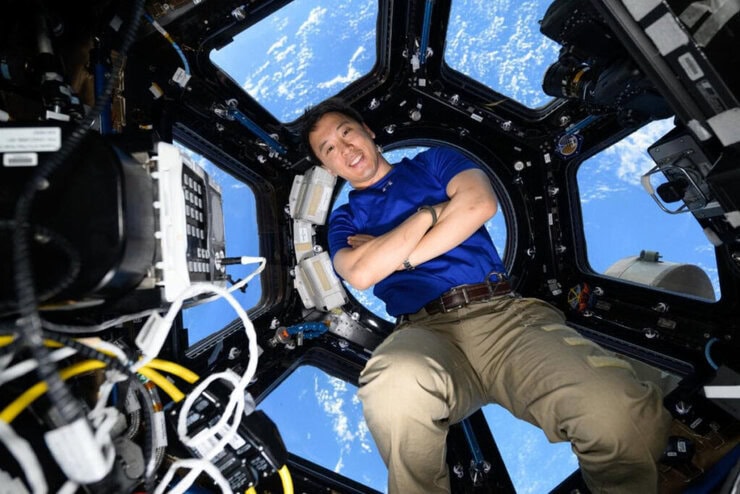
NASA astronaut Jonny Kim inside the International Space Station’s cupola, orbiting above the Indian Ocean near Madagascar.

NASA astronaut Jonny Kim poses inside the International Space Station’s cupola as it orbits 265 miles above the Indian Ocean near Madagascar. Credit: NASA


NASA Astronaut Jonny Kim Recaps Eight-Month International Space Station Mission in Live News Conference

Space exploration continues to push the boundaries of science and human achievement. This month, NASA astronaut Jonny Kim returns from an extraordinary eight-month mission aboard the International Space Station (ISS)—and he’s ready to share his story.
Event Details:
  • What: Jonny Kim’s ISS Mission Recap News Conference
  • When: Friday, Dec. 19, 3:30 p.m. EST
  • Where: NASA’s YouTube channel (also available on other NASA streaming platforms)

A Mission Marked by Discovery

Returning to Earth on Dec. 9 with Roscosmos cosmonauts Sergey Ryzhikov and Alexey Zubritsky, Kim logged an impressive 245 days in space as a flight engineer for Expeditions 72/73. The crew completed a staggering 3,920 orbits—covering nearly 104 million miles—and managed the arrival and departure of multiple spacecraft.
But it’s the science behind the mission that stands out:

Advancing Medicine and Technology

  • Bioprinted Tissues in Microgravity: Kim helped study the behavior of bioprinted tissues containing blood vessels, a step forward in space-based tissue production that could one day revolutionize patient care on Earth.
  • Remote Robotics Operations: Through the Surface Avatar study, Kim tested the remote command of multiple robots in space—work that could lead to more advanced robotic assistants for future missions to the Moon, Mars, and beyond.
  • Nanomaterials for Medicine: Kim contributed to the development of DNA-mimicking nanomaterials, opening doors for improved drug delivery and regenerative medicine both in space and at home.

How to Watch and Participate

NASA invites the public and media to join the news conference. For those interested in direct participation, media accreditation is required (details available via NASA’s newsroom). For everyone else, the event will be streamed live—no registration needed.
Learn more about International Space Station research and ongoing missions: NASA’s ISS Page

Why This Matters

Jonny Kim’s journey is a testament to the power of international collaboration and the relentless pursuit of knowledge. His work aboard the ISS is already shaping the future of medicine, robotics, and exploration—impacting lives both in space and right here on Earth.
Stay tuned to STM Daily News for more updates on science, innovation, and the stories that connect our community to the world beyond.

Want more space and science coverage? Visit STM Daily News for the latest updates, features, and community stories.
View recent photos

Unlock fun facts & lost history—get The Knowledge in your inbox!

We don’t spam! Read our privacy policy for more info.


Discover more from Daily News

Subscribe to get the latest posts sent to your email.

Continue Reading

STM Blog

Why people trust influencers more than brands – and what that means for the future of marketing

Why people trust influencers? Discover why people trust influencers over traditional brands and what it means for marketing’s future. Learn about parasocial relationships, the 5 types of value influencers provide, and why microinfluencers often outperform mega-creators.

Published

on

Last Updated on December 16, 2025 by Daily News Staff

Why people trust influencers more than brands – and what that means for the future of marketing

Why people trust influencers more than brands – and what that means for the future of marketing

Kelley Cours Anderson, College of Charleston Not long ago, the idea of getting paid to share your morning routine online would have sounded absurd. Yet today, influencers are big business: The global market is expected to surpass US$32 billion by the end of 2025. Rooted in celebrity culture but driven by digital platforms, the influencer economy represents a powerful force in both commerce and culture. I’m an expert on digital consumer research, and I see the rise of influencers as an important evolution in the relationship between companies, consumers and creators. Historically, brands leaned on traditional celebrities like musicians, athletes and actors to endorse their products. However, by the late 2000s, social media platforms opened the door for everyday people to build audiences. Initially, influencers were viewed as a low-cost marketing tactic. Soon, however, they became a central part of marketing strategies. In the 2010s, influencer marketing matured into a global industry. Agencies and digital marketplaces emerged to professionalize influencer-brand matchmaking, and regulators like the Federal Trade Commission started paying more attention to sponsored content. The rise of video and short-form content like TikTok and Reels in the mid-2010s and 2020s added authenticity and emotional immediacy. These dynamics deepened influencer-follower relations in ways that brands couldn’t easily replicate. Influencers are now recognized as not only content creators, but also as entrepreneurs and cultural producers.

Why people trust influencers

Social media influencers often foster what researchers call “parasocial relationships” – one-sided bonds where followers feel as if they personally know the influencer. While the concept has roots in traditional celebrity culture, influencers amplify it through consistent, seemingly authentic content. This perceived intimacy helps explain why consumers often trust influencers more than brands. Though the parasocial relationship isn’t mutual, it feels real. That emotional closeness cultivates trust, a scarce but powerful currency in today’s economy. The goal for many influencers may be financial independence, but the path begins with social and cultural capital, acquired through community connection, relatability and niche expertise. As an influencer’s following grows, so does their perceived legitimacy. Brands, in turn, recognize and tap into that legitimacy. Although risks exist, like algorithmic incentives and commercial partnerships that undercut authenticity, many influencers successfully navigate this tension to preserve their community’s trust.

The many ways creators add value

Like any economy, the influencer economy revolves around value exchange. Followers spend their valuable resources – time and attention – in return for something meaningful. Researchers have identified several forms of value that influencers’ content can take:
  • Connection, or what researchers call “social value”: Influencers often build tight-knit communities around shared interests. Through live chats, comments and relatable storytelling, they offer a sense of belonging.
  • Fun, or “hedonic value”: Many influencers provide enjoyment using entertainment, humor and a touch of allure in their content. Think cat videos, TikTok dances and random acts of kindness that deliver joy and distraction from the day-to-day.
  • Knowledge, or “epistemic value”: Creators offer informational or educational content to feed consumer curiosity. This can be through tutorials, product reviews or deep dives into niche topics.
  • Usefulness, or “utilitarian value”: From life hacks to product roundups, like “Amazon must-haves,” influencers provide utilitarian or practical value to help simplify consumer decisions and solve everyday problems.
  • Money, or “financial value”: People love finding a bargain. Discounts, affiliate links and deal alerts offer direct economic benefit to followers. Some influencers even launch their own products or digital courses, delivering long-term value through entrepreneurial spinoffs.
These forms of value often overlap, reinforcing trust, and can pay off financially for influencers. In fact, consumers are significantly more likely to trust user-generated content like influencer posts over brand-generated advertising.

Lessons for brands

First, there’s evidence that smaller is often stronger. Marketing researchers categorize influencers based on how many followers they have, and nano- and microinfluencers – defined as those with fewer than 10,000 and 100,000 followers, respectively – often generate stronger engagement than mega-influencers with more than 1 million. Influencers with smaller followings can interact with their communities more closely, making their endorsements feel more credible. This has driven brands to focus on mid-tier and microinfluencers, where return on investment is often stronger. As a result, influencer agencies, brokers, platforms and trade associations have sprung up to facilitate these partnerships. Second, brands should remember that influencers’ role in the market comes with new challenges. As the field continues to become more professionalized, it’s also become more complex. Like other entrepreneurs, influencers must keep up with shifting regulations – namely, FTC sponsorship guidelines – which can lead to hefty fines if violated. Many struggle to identify how to best file their taxes when they receive freebies they are expected to build content around. It can also be a challenge for influencers to keep up with continued algorithm tweaks from the multiple social media platforms where they publish. Influencers manage more than content creation. Their role includes quickly responding to followers’ comments and managing communities, as well as handling trolls, all of which is stressful. Personal brand management adds another layer of pressure. As influencers gain more brand partnerships, they run the risk of being seen as “selling out.” Because parasocial trust depends on being viewed as authentic, aligning with the wrong brand or being too promotional can damage the very connection that built an influencer’s following. A single misstep can trigger public backlash. While growing a following can bring brand recognition and financial independence, some influencers even fear that they will lose their own identity. Influencers can struggle with work-life balance, as this is not a nine-to-five job. It requires being “always on” and the constant blurred lines. Their lives become their livelihoods, with little separation between personal and professional identity. In short, when engaging with influencers, strategic brands will recognize that they operate within an intense, high-pressure environment. Organizations such as the American Influencer Council offer support and advocacy, but industry-wide protections are lacking. Influencers have earned a central place in consumer culture not just by selling products, but by offering emotional proximity, cultural relevance and value. They’re not just marketers – they’re creators, community leaders and entrepreneurs. As the creator economy continues to grow, trust will remain its cornerstone. However, the next chapter will require thoughtful navigation of issues like regulation, platform ethics and creator well-being. Understanding influencers means recognizing both their creative work and the evolving market that now depends on them. Kelley Cours Anderson, Assistant Professor of Marketing, College of Charleston This article is republished from The Conversation under a Creative Commons license. Read the original article.

Dive into “The Knowledge,” where curiosity meets clarity. This playlist, in collaboration with STMDailyNews.com, is designed for viewers who value historical accuracy and insightful learning. Our short videos, ranging from 30 seconds to a minute and a half, make complex subjects easy to grasp in no time. Covering everything from historical events to contemporary processes and entertainment, “The Knowledge” bridges the past with the present. In a world where information is abundant yet often misused, our series aims to guide you through the noise, preserving vital knowledge and truths that shape our lives today. Perfect for curious minds eager to discover the ‘why’ and ‘how’ of everything around us. Subscribe and join in as we explore the facts that matter.  https://stmdailynews.com/the-knowledge/


Discover more from Daily News

Subscribe to get the latest posts sent to your email.

Continue Reading

Trending