

Health
Daylight saving time and early school start times cost billions in lost productivity and health care expenses
Daylight saving time disrupts sleep, leading to increased heart attacks, accidents, and mental health issues. Advocating for permanent standard time and later school start times could significantly enhance public health and reduce economic costs.

Last Updated on March 8, 2025 by Rod Washington
Joanna Fong-Isariyawongse, University of Pittsburgh
Investigations into the 1986 Space Shuttle Challenger disaster revealed that key decision-makers worked on little sleep, raising concerns that fatigue impaired their judgment. Similarly, in 1989, the Exxon Valdez oil spill resulted in a massive environmental catastrophe. The official investigation revealed the third mate, in charge of steering the ship, was running on too little sleep, among other problems.
While these specific disasters were not caused by daylight saving time, they are conclusively linked to fatigue, based on postaccident investigations and reports. They underscore the well-documented dangers of sleep deprivation and fatigue-related errors. Yet a vast body of research shows that every year, the shift to daylight saving time needlessly exacerbates these risks, disrupting millions of Americans’ sleep and increasing the likelihood of accidents, health issues and fatal errors.
Imagine a world where one simple decision – keeping our clocks aligned with the natural cycle of the Sun – could save lives, prevent accidents and improve mental well-being. It’s not just about an hour of lost sleep; it’s about how small disruptions ripple through our health, our workplaces and even our children’s futures.
I’m a neurologist who specializes in sleep health. I’ve seen firsthand the negative impacts of poor sleep; it has enormous personal and economic consequences.
Yet despite overwhelming research supporting better sleep policies – such as delaying school start times to align with adolescent biology and the adoption of permanent standard time – these issues remain largely overlooked in public policy discussions.
Sleep deprivation comes with real costs
Chronic sleep deprivation does more than leave people tired. It costs an estimated US$411 billion annually in lost productivity and health care costs. Poor sleep leads to workplace mistakes, car accidents and long-term health issues that strain businesses, families and the economy as a whole.
Fortunately, there’s a fix. Smarter sleep policies – such as permanent standard time and later school start times – can boost efficiency, improve health and save lives.
Up before dawn
Teenagers are the most sleep-deprived age group in the U.S. Multiple studies and surveys show that anywhere from 71% to 84% of high school students report getting insufficient sleep.
This is largely due to early school start times, which force teens to wake up before their biological clocks are ready. If you have a teenager, you probably see it every day: The teen struggling to wake up before sunrise, rushing out the door without breakfast, then waiting in the dark for the school bus.
More than 80% of public middle and high schools in the U.S. start before 8:30 a.m., with 42% starting before 8 a.m. and 10% before 7:30 a.m. As a result, some districts have bus pickups as early as 5 a.m.
Teenagers are going through a natural shift in their circadian rhythms by about two hours. This shift, driven by hormones and biology, makes it hard for them to fall asleep before around 11 p.m. The bodies of teens aren’t wired for these schedules, yet schools and society have designed a system that forces them to function at their worst.
Declining scores, drowsy driving and depression
Sleep-deprived teens have lower grades and test scores, more car crashes caused by drowsy driving, more alcohol and drug use and higher rates of depression, anxiety suicide and aggressive behavior, including carrying weapons.
Along with the health benefits, studies have found that moving school start times to 8:30 am or later could add $8.6 billion to the economy within two years, partly by increased graduation rates.
While concerns about increased transportation costs exist, such as the need for additional buses or drivers due to staggered school start times, some districts have found that optimizing bus routes can offset expenses, making the change cost-neutral or even cost-saving. For instance, a study in Boston found that reorganizing bus schedules using advanced algorithms reduced the number of buses needed and improved efficiency, which allowed high school students to start later and better align with their natural sleep cycles. This change not only supported adolescent sleep health but also saved the district $5 million annually. https://www.youtube.com/embed/OR6il9otpqM?wmode=transparent&start=0 Studies show that daylight saving time does not reduce energy use.
More heart attacks, car wrecks and suicide
Every March, most Americans shift their clocks forward for daylight saving time. Studies show this change disrupts sleep and leads to measurable adverse outcomes, including a significant increase in heart attacks. These effects linger for days after the shift, as sleep-deprived workers struggle to adjust.
The mental health impact is also severe. Suicide rates increase in the weeks following the switch, particularly for those already vulnerable to depression.
Unlike daylight saving time, standard time follows the body’s natural circadian rhythm, which is primarily regulated by exposure to sunlight. Our internal clocks are most stable when morning light exposure occurs early in the day, signaling the body to wake up and regulate key biological functions such as hormone production, alertness and metabolism. In contrast, daylight saving time artificially extends evening light, delaying the body’s release of melatonin and making it harder to fall asleep at a biologically appropriate time.
Studies have found that adopting permanent standard time could prevent up to 5,000 suicides annually by reducing seasonal depression, decrease errors, injuries and absenteeism in the workplace and make roads safer, potentially preventing 1,300 traffic deaths each year.
Times are changing
The U.S. tried permanent daylight saving time in 1974. It was so unpopular that Congress repealed it within nine months.
Russia tried it too, in 2011, but switched back three years later. The United Kingdom dropped permanent daylight saving time in 1971 after three years, and Portugal in 1996 after four. All of these countries found that the switch caused widespread public dissatisfaction, health concerns, more morning car accidents and disrupted work schedules. No country is currently on year-round daylight saving time.
These examples provide real-world evidence that permanent DST is undesirable due to public dissatisfaction, safety concerns and negative health effects – all three countries attempted it and ultimately reversed course. Since 2022, there has been renewed debate, largely driven by former U.S. Sen. Marco Rubio’s Sunshine Protection Act, which aims to make DST permanent.
However, the name is misleading because it doesn’t “protect” sunshine but rather eliminates critical morning light, which is essential for regulating circadian rhythms. Major health organizations, along with the National Safety Council, strongly oppose permanent DST due to its well-documented risks.
There are signs that suggest the U.S. is finally waking up to these problems. Out of 13,000 school districts, 1,000 have independently adopted later school start times. California and Florida have enacted laws requiring high schools to start no earlier than 8:30 a.m. California’s mandate went into effect in 2022, and Florida’s is set to begin in 2026.
Permanent standard time and later school start times are not radical ideas. They’re practical, evidence-based solutions based on human biology. Implementing these changes nationally would require congressional action. However, current federal law already allows states to adopt permanent standard time, as Arizona and Hawaii have done, setting a precedent for the rest of the country.
Joanna Fong-Isariyawongse, Associate Professor of Neurology, University of Pittsburgh
This article is republished from The Conversation under a Creative Commons license. Read the original article.


Child Health
Changing the Landscape of Childhood Cancer Survivorship
Childhood Cancer: hile “cancer” is a term no family wants to hear, especially when it comes to their children, there is reason for hope. Today, 85% of children diagnosed with cancer survive at least five years. Survival is only part of the journey, however.


Changing the Landscape of Childhood Cancer Survivorship
(Feature Impact) While “cancer” is a term no family wants to hear, especially when it comes to their children, there is reason for hope. Today, 85% of children diagnosed with cancer survive at least five years, according to the National Cancer Institute, up from 75% three decades ago.
Watch this video to learn more
“This progress is driven in large part by dedicated research,” Hyundai Hope on Wheels Board Member Kevin Reilly said. “Over the last 28 years, Hyundai Hope on Wheels has committed over $300 million in pediatric cancer research and program grants, awarding more than 1,600 grants to 210 medical institutions nationwide, impacting thousands of young lives each year.”
Survival is only part of the journey, however. Nearly half (46%) of U.S. adults believe a child ringing the hospital bell after cancer treatment means the child is cancer-free and their medical journey is largely over, according to a survey conducted by Atomik Research on behalf of Hyundai Hope on Wheels. For the children and families living through a diagnosis, the reality is far more complex.
“The reality is that healing continues long after treatment, which is why sustained investment in survivorship care is a priority for us,” said John Guastaferro, executive director of Hyundai Hope on Wheels.
Isabella Franco-Capps, 11, understands that journey firsthand. Diagnosed with B-cell acute lymphoblastic leukemia at age 5, her journey took two years before she could say she’s “a cancer survivor.”
“I was diagnosed with b-cell acute lymphoblastic leukemia,” she said. “This began my two-year-long journey of scans, pokes, chemotherapy and hospital stays. And now I’m a cancer survivor.”
Fellow Hyundai Hope on Wheels National Youth Ambassador, Jackson Trihn, 12, is using his voice to call for continued research and to bring hope to others.
“The role … is being able to share my story,” he said. “Not just to spread awareness but to spread hope to kids that need it. And awareness is so important because people don’t understand how hard pediatric cancer can be.”
Continued progress can help ensure more children ring the bell and receive the care and support they need long after they’ve had the opportunity to do so. To learn more about these efforts and how you can help, visit HyundaiHopeOnWheels.org.

SOURCE:
💪 Your health journey starts here! Explore the latest health news, fitness tips, wellness trends, and healthy living advice. Share your thoughts in the comments and subscribe to the STM Daily News newsletter to stay informed and inspired every day.

(Feature Impact) Driven by rising rates of obesity, diabetes, high blood pressure and other risk factors,cardiovascular disease has surpassed cancer as the leading cause of death among Hispanic adults in the United States.
Hispanic people represent nearly 1 in 5 of the U.S. population and are the nation’s largest ethnic minority group, yet many continue to face barriers to achieving heart health and accessing high-quality healthcare. A new scientific statement published in the American Heart Association’s flagship journal, “Circulation,” revealed how social, economic, cultural and environmental factors contribute to persistent disparities in cardiovascular health, calling for culturally tailored prevention strategies, equitable access to care and greater representation of Hispanic populations in cardiovascular research.
“Hispanic populations in the U.S. are incredibly diverse even within their own communities with differences in genetic ancestry, language, cultural traditions and social experiences that can significantly influence cardiovascular health,” said Johanna Contreras, M.D., M.Sc., FAHA, director of the Division of Heart Failure and medical director of the Hispanic Heart Center within the Mount Sinai Health System. “Yet Hispanic people remain underrepresented overall in the research that guides prevention and treatment strategies… Without better representation and more detailed data, we risk overlooking important differences that can help us improve care and save lives.”
Hispanic Cardiovascular Health by the Numbers
Cardiovascular risk factors – obesity (nearly 46%), type 2 diabetes (15.5%) and high blood pressure (approximately 44%) – are prevalent among Hispanic adults and often emerge at younger ages and occur more frequently among Hispanic adults compared with white adults.
According to the report, only about 1 in 5 Hispanic adults achieves ideal cardiovascular health as defined by the American Heart Association’s original Life’s Simple 7 metrics. Updated analyses using the Life’s Essential 8 framework demonstrated persistent disparities for heart and brain health, as well as suboptimal dietary quality, sleep patterns and levels of physical activity.
Social and Economic Barriers Matter
Biology alone does not explain cardiovascular health disparities. The environments where people live, work and age, along with social and economic challenges, impact heart health. In fact, approximately 17% of Hispanics live below the federal poverty threshold, compared with 8.2% of white adults.
“Many Hispanic adults face obstacles that extend far beyond the doctor’s office,” Contreras said. “Limited health insurance coverage, language differences, food insecurity, environmental exposures and concerns related to immigration status can make it more difficult to prevent disease, manage chronic conditions and receive timely treatment.”
Contreras emphasized the cultural values and practices of Hispanic people also influence how they perceive their health and healthcare options.
“Family plays a central role in many Hispanic communities and can be an extraordinary source of strength, support and resilience,” Contreras said. “At the same time, family members are often called upon to translate medical information, navigate health systems and help make healthcare decisions for loved ones. Those responsibilities can shape how health information is understood and acted upon.”
An Action Plan for Improving Hispanic Health
There are practical opportunities to achieve equitable cardiovascular health and reduce disparities through community engagement, culturally responsive care, inclusive research and policies that address the underlying drivers of health.
“Reducing cardiovascular disease among Hispanic populations demands action at every level,” Contreras said, “from improving access to culturally responsive care and expanding research participation to addressing the social and environmental conditions that shape health.”
By addressing both medical risk factors and the social conditions that shape health, experts believe there is an important opportunity to reduce disparities and help more people live longer, healthier lives. Learn more at Heart.org.
Photo courtesy of Shutterstock

SOURCE:
Subscribe to our news letter STM Daily News

Food and Beverage
Beyond Protein: 2 Nutrients Your Plate Might Be Missing
Nutrients: Everyone is talking about protein these days whether watching their weight or managing a disease like type 2 diabetes. However, fiber and healthy fats are nutrients many people are overlooking. One food that makes it easier to invest in your health, according to nutrition experts: avocados.
Beyond Protein: 2 Nutrients Your Plate Might Be Missing
(Feature Impact) Everyone is talking about protein these days whether watching their weight or managing a disease like type 2 diabetes. However, fiber and healthy fats are nutrients many people are overlooking. The latest reports show most Americans already meet or exceed recommendations for protein while nearly all (about 95%) do not eat enough fiber, and many people consume too much saturated fat versus unsaturated fat, according to the 2025 Dietary Guidelines Advisory Committee. Prioritizing ways to get more fiber and healthy fats on your plate could be key to managing weight and type 2 diabetes goals this summer.
One food that makes it easier to invest in your health, according to nutrition experts: avocados.
A growing body of research and materials from Avocados – Love One Today, a science-based resource, suggests fresh avocados offer weight management benefits, help with type 2 diabetes management and are good for blood sugar management.
 According to a study* of more than 27,000 adults published in the journal “Internal Medicine Review,” people who ate just over half of an avocado per day weighed 7.5 pounds less, had smaller waist sizes and tended to have healthier overall eating habits, including higher intakes of fiber and healthy fats, compared to people who didn’t eat avocados. Among the list of benefits, this delicious and healthy fruit uniquely contains fiber and healthy fats in each nutrient-dense bite which slows digestion, helping you feel satisfied and fuller longer which can help you consume fewer calories overall. In fact, if you’re using a GLP-1, avocados are one of the foods to add to your menu to make small meals feel more filling and satisfying while supporting nutrient needs.
Scientists also recently took a second look at the largest study* about avocado consumption to-date involving close to 1,000 adults, per the journal “Current Developments in Nutrition,” and found that consistently eating one avocado every day for six months (no other diet changes required) significantly reduced dietary glycemic load (GL) by nearly 14 points, a metric that evaluates how what you are eating is affecting your blood sugar levels. GL may be an important consideration in the management of chronic diseases like type 2 diabetes. By slowing digestion, fiber and healthy fats also support stable blood sugar levels.
There are many ways to enjoy avocados, including chopped, sliced, mashed, blended, in baked goods or even frozen. Avocados add flavor, variety and nutrition across the day.
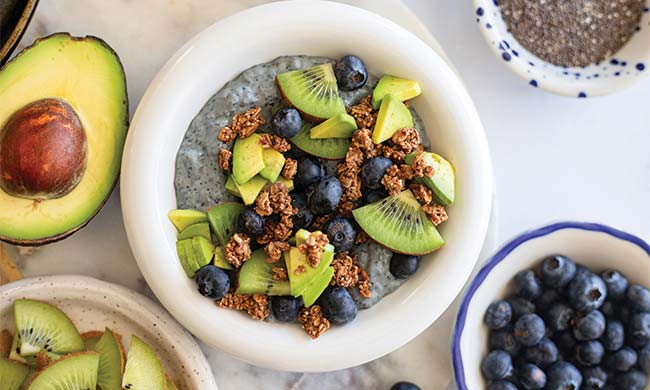
Try these recipes for Avocado and Blueberry Chia Pudding, Avocado Breakfast Bowl with Leafy Greens for your next breakfast or snack.
*Remember: Small, consistent food choices can add up over time. Research suggests regularly eating avocados may support weight management and blood sugar targets while providing the fiber and healthy fats that many Americans are overlooking. These studies were supported by the Avocado Nutrition Center. While these findings are encouraging, the studies highlighted show an association, not cause and effect, and thus more research is needed to confirm these findings in other populations.
To explore evidence-based avocado nutrition information, along with practical tips and easy recipes, visit Avocados – Love One Today, a leading resource for avocado nutrition information.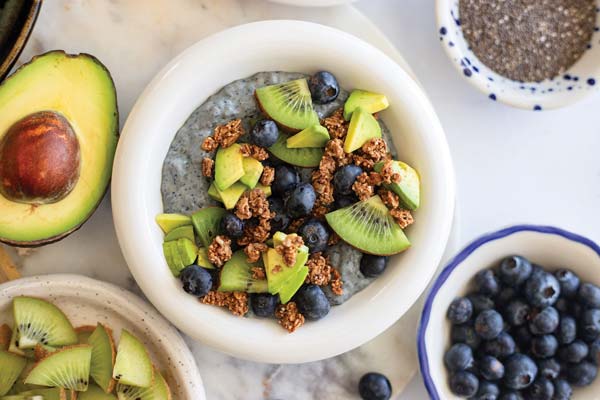
Avocado and Blueberry Chia Pudding
- 1 1/2 cups plain, unsweetened soy milk (or milk of choice)
- 1 ripe, fresh avocado, halved, pitted and peeled
- 3/4 cup frozen blueberries
- 1/2 cup unsweetened vanilla Greek yogurt
- 1 tablespoon maple syrup
- 1/3 cup chia seeds
To Serve:
- 1/3 cup granola
- 1/3 cup fresh blueberries
- 1 kiwi, chopped
- 1/2 fresh, ripe avocado, halved, pitted, peeled and chopped
- In blender, puree soy milk, avocado, blueberries, yogurt and maple syrup until smooth. Pour mixture into storage container or bowl and add chia seeds. Whisk well to combine. Cover with lid or plastic wrap and refrigerate 4 hours or overnight, until thickened.
- To serve, divide into bowls and top with granola, fresh blueberries, kiwi and avocado.
- Notes: Use any milk (dairy or non-dairy) that you prefer in pudding. Use fresh blueberries or conventional frozen blueberries. Other topping options include: nuts, seeds, hemp hearts, sliced banana or strawberries, or nut butter.

Avocado Breakfast Bowl with Leafy Greens
Bowl:
- 1 medium sweet potato, chopped (about 1 3/4 cup)
- nonstick cooking spray
- 1/4 teaspoon smoked paprika
- 1/4 teaspoon garlic powder
- 1/4 teaspoon salt
- 1/2 cup quinoa
- 1 cup water, plus additional for boiling eggs, divided
- 2 eggs
- 2 cups arugula
- 1 ripe, fresh avocado, halved, pitted, peeled and chopped
- 1/4 cup pickled red onions
Avocado Tahini Dressing:
- 1/2 large avocado
- 1/4 cup tahini
- 1 lemon, juice only (2 tablespoons)
- 3/4 cup water
- 1 tablespoon fresh chives
- salt, to taste
- pepper, to taste
- Preheat oven to 400 F. Add chopped sweet potato to baking sheet. Spray with cooking oil then add smoked paprika, garlic powder and salt. Toss to coat in spices. Bake 22-25 minutes, or until tender.
- In medium saucepan, add quinoa and water. Bring to simmer and cover, cooking 12-15 minutes, or until quinoa is tender and fluffy.
- Fill small saucepan with water and bring to boil. Use slotted spoon to lower eggs into water. Cook 8 minutes then transfer eggs to bowl of ice water to cool before peeling.
- To make dressing: In small blender, puree avocado, tahini, lemon juice, water and fresh chives until smooth. Add more water, 1 tablespoon at a time, if needed, to thin until pourable. Season with salt and pepper, to taste.
- Assemble bowls, each with 1/2 sweet potato, 1/2 cup quinoa, 1 egg, 1 cup arugula, 1/2 avocado, 2 tablespoons pickled red onion and 3 tablespoons dressing. Reserve remaining dressing in refrigerator.
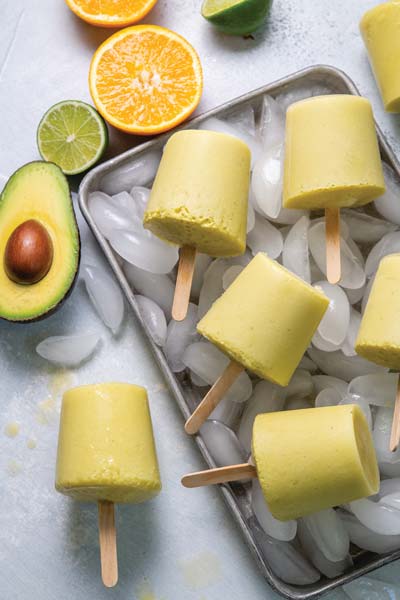
Heart-Healthy Frozen Avocado Banana Paleta
- 1 ripe, fresh avocado, halved, pitted, peeled and diced
- 4 cups orange juice
- 2 medium bananas, peeled and sliced
- 1 tablespoon lime juice
- 8 paper cups (5 ounces)
- 8 wooden craft sticks
- In blender, blend avocado, orange juice, bananas and lime juice on high until smooth. Divide into paper cups. Cover cups with aluminum foil. Insert one stick through center of each foil. Freeze 4 hours until firm.

SOURCE:
🍴 What’s your favorite food, recipe, or dining spot? Tell us in the comments! Then subscribe to the STM Daily News newsletter for fresh recipes, restaurant news, food trends, and delicious stories delivered straight to your inbox. Join our growing community of food lovers today!





