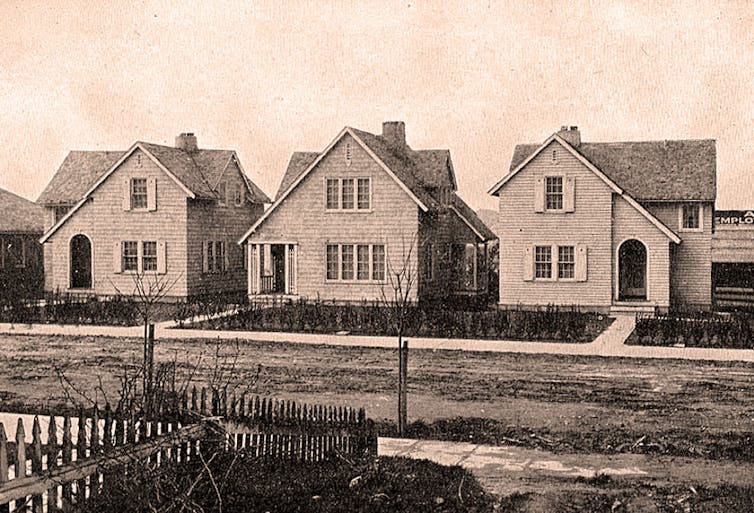
The U.S. Housing Corporation built nearly 300 homes in Bremerton, Wash., during World War I. National Archives
Believe it or not, there was a time when the US government built beautiful homes for working-class Americans to deal with a housing shortage
Eran Ben-Joseph, Massachusetts Institute of Technology (MIT) In 1918, as World War I intensified overseas, the U.S. government embarked on a radical experiment: It quietly became the nation’s largest housing developer, designing and constructing more than 80 new communities across 26 states in just two years. These weren’t hastily erected barracks or rows of identical homes. They were thoughtfully designed neighborhoods, complete with parks, schools, shops and sewer systems. In just two years, this federal initiative provided housing for almost 100,000 people. Few Americans are aware that such an ambitious and comprehensive public housing effort ever took place. Many of the homes are still standing today. But as an urban planning scholar, I believe that this brief historic moment – spearheaded by a shuttered agency called the United States Housing Corporation – offers a revealing lesson on what government-led planning can achieve during a time of national need.
Government mobilization
When the U.S. declared war against Germany in April 1917, federal authorities immediately realized that ship, vehicle and arms manufacturing would be at the heart of the war effort. To meet demand, there needed to be sufficient worker housing near shipyards, munitions plants and steel factories. So on May 16, 1918, Congress authorized President Woodrow Wilson to provide housing and infrastructure for industrial workers vital to national defense. By July, it had appropriated US$100 million – approximately $2.3 billion today – for the effort, with Secretary of Labor William B. Wilson tasked with overseeing it via the U.S. Housing Corporation. Over the course of two years, the agency designed and planned over 80 housing projects. Some developments were small, consisting of a few dozen dwellings. Others approached the size of entire new towns. For example, Cradock, near Norfolk, Virginia, was planned on a 310-acre site, with more than 800 detached homes developed on just 100 of those acres. In Dayton, Ohio, the agency created a 107-acre community that included 175 detached homes and a mix of over 600 semidetached homes and row houses, along with schools, shops, a community center and a park.
Designing ideal communities
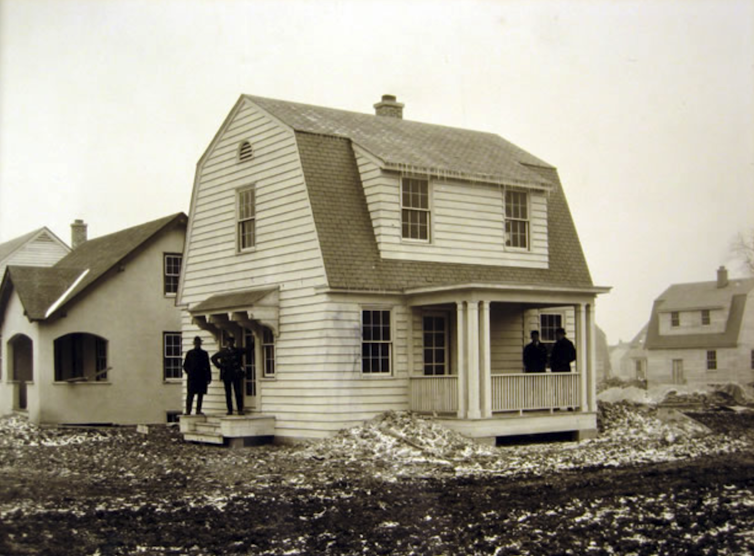
Notably, the Housing Corporation was not simply committed to offering shelter. Its architects, planners and engineers aimed to create communities that were not only functional but also livable and beautiful. They drew heavily from Britain’s late-19th century Garden City movement, a planning philosophy that emphasized low-density housing, the integration of open spaces and a balance between built and natural environments.Milton Hill, a neighborhood designed and developed by the United States Housing Corporation in Alton, Ill.National Archives Importantly, instead of simply creating complexes of apartment units, akin to the public housing projects that most Americans associate with government-funded housing, the agency focused on the construction of single-family and small multifamily residential buildings that workers and their families could eventually own. This approach reflected a belief by the policymakers that property ownership could strengthen community responsibility and social stability. During the war, the federal government rented these homes to workers at regulated rates designed to be fair, while covering maintenance costs. After the war, the government began selling the homes – often to the tenants living in them – through affordable installment plans that provided a practical path to ownership.A single-family home in Davenport, Iowa, built by the U.S. Housing Corporation.National Archives Though the scope of the Housing Corporation’s work was national, each planned community took into account regional growth and local architectural styles. Engineers often built streets that adapted to the natural landscape. They spaced houses apart to maximize light, air and privacy, with landscaped yards. No resident lived far from greenery. In Quincy, Massachusetts, for example, the agency built a 22-acre neighborhood with 236 homes designed mostly in a Colonial Revival style to serve the nearby Fore River Shipyard. The development was laid out to maximize views, green space and access to the waterfront, while maintaining density through compact street and lot design. At Mare Island, California, developers located the housing site on a steep hillside near a naval base. Rather than flatten the land, designers worked with the slope, creating winding roads and terraced lots that preserved views and minimized erosion. The result was a 52-acre community with over 200 homes, many of which were designed in the Craftsman style. There was also a school, stores, parks and community centers.
Infrastructure and innovation
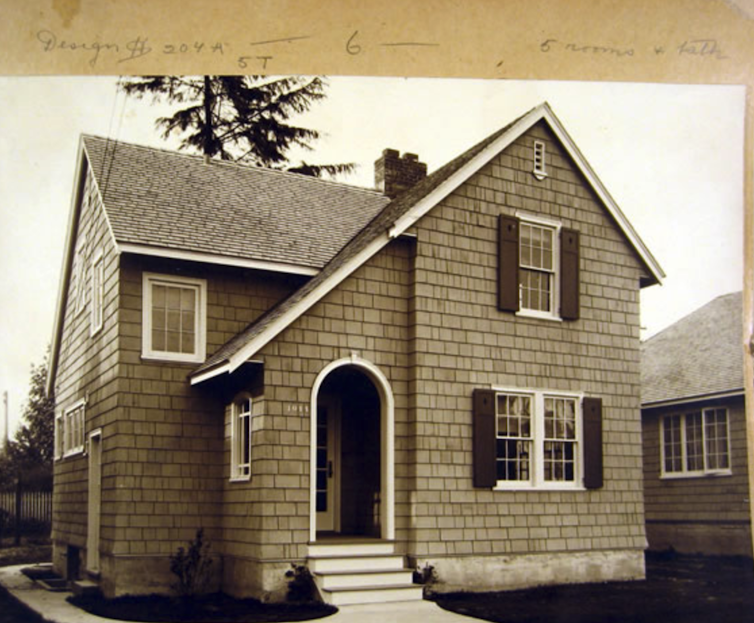
Alongside housing construction, the Housing Corporation invested in critical infrastructure. Engineers installed over 649,000 feet of modern sewer and water systems, ensuring that these new communities set a high standard for sanitation and public health. Attention to detail extended inside the homes. Architects experimented with efficient interior layouts and space-saving furnishings, including foldaway beds and built-in kitchenettes. Some of these innovations came from private companies that saw the program as a platform to demonstrate new housing technologies. One company, for example, designed fully furnished studio apartments with furniture that could be rotated or hidden, transforming a space from living room to bedroom to dining room throughout the day. To manage the large scale of this effort, the agency developed and published a set of planning and design standards − the first of their kind in the United States. These manuals covered everything from block configurations and road widths to lighting fixtures and tree-planting guidelines.A single-family home in Bremerton, Wash., built by the U.S. Housing Corporation.National Archives The standards emphasized functionality, aesthetics and long-term livability. Architects and planners who worked for the Housing Corporation carried these ideas into private practice, academia and housing initiatives. Many of the planning norms still used today, such as street hierarchies, lot setbacks and mixed-use zoning, were first tested in these wartime communities. And many of the planners involved in experimental New Deal community projects, such as Greenbelt, Maryland, had worked for or alongside Housing Corporation designers and planners. Their influence is apparent in the layout and design of these communities.
A brief but lasting legacy
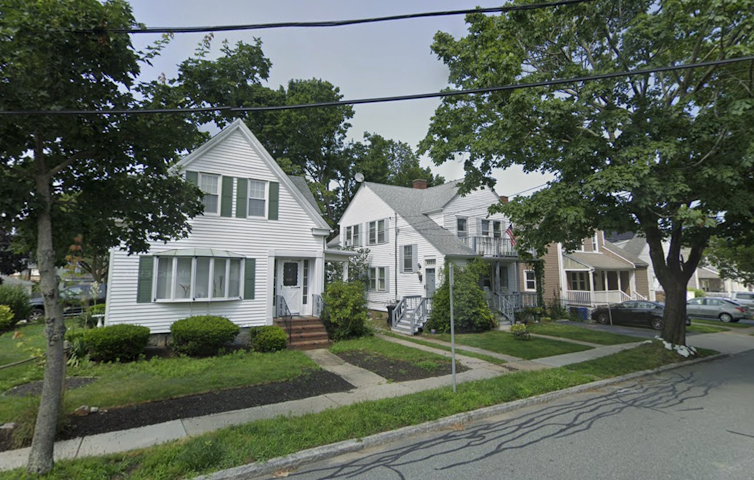
With the end of World War I, the political support for federal housing initiatives quickly waned. The Housing Corporation was dissolved by Congress, and many planned projects were never completed. Others were incorporated into existing towns and cities. Yet, many of the neighborhoods built during this period still exist today, integrated in the fabric of the country’s cities and suburbs. Residents in places such as Aberdeen, Maryland; Bremerton, Washington; Bethlehem, Pennsylvania; Watertown, New York; and New Orleans may not even realize that many of the homes in their communities originated from a bold federal housing experiment.Homes on Lawn Avenue in Quincy, Mass., that were built by the U.S. Housing Corporation.Google Street View The Housing Corporation’s efforts, though brief, showed that large-scale public housing could be thoughtfully designed, community oriented and quickly executed. For a short time, in response to extraordinary circumstances, the U.S. government succeeded in building more than just houses. It constructed entire communities, demonstrating that government has a major role and can lead in finding appropriate, innovative solutions to complex challenges. At a moment when the U.S. once again faces a housing crisis, the legacy of the U.S. Housing Corporation serves as a reminder that bold public action can meet urgent needs. This article is part of a series centered on envisioning ways to deal with the housing crisis.Eran Ben-Joseph, Professor of Landscape Architecture and Urban Planning, Massachusetts Institute of Technology (MIT) This article is republished from The Conversation under a Creative Commons license. Read the original article.
Why Phoenix’s Skyline Has Stayed Low — And How It Compares to Los Angeles
Discover why Phoenix’s skyline lacks supertall skyscrapers, from FAA flight path limits near Phoenix Sky Harbor International Airport to how it compares with Los Angeles’s skyline growth.
Phoenix is the fifth-largest city in the United States, yet its skyline doesn’t resemble other major metros like Los Angeles, Chicago, or Dallas. Despite rapid population and economic growth, downtown Phoenix has long lacked supertall skyscrapers — and until recently, didn’t even have a building tall enough to qualify as a true “skyscraper” under standard definitions.
The Basics: Phoenix’s Height Reality
The tallest structure in Phoenix for decades has been Chase Tower, rising to about 483 feet. Under the Council on Tall Buildings and Urban Habitat definition, a skyscraper reaches at least 492 feet — which means Phoenix has technically lacked one — despite its size and population.
Why doesn’t Phoenix have super tall skyscrapers? 🤔🌵 It’s not what you think… ✈️ From FAA flight paths over Phoenix Sky Harbor International Airport to the city’s sprawling growth, there’s a hidden reason the skyline stayed low for decades. But that might be changing… 👀🏙️ Phoenix Arizona CityFacts UrbanPlanning Skyline DidYouKnow Infrastructure RealEstate USCities #STMdailynews♬ original sound – STMDailyNews – STMDailyNews
A new project, the Astra Tower, is planned to rise around 540+ feet when it breaks ground, potentially giving Phoenix its first true skyscraper.
Airport Proximity: The FAA’s Height Grid
FAA Obstacle Evaluation & Downtown Limits
Phoenix’s skyline constraints are rooted in aviation safety.
📍 Phoenix Sky Harbor International Airport sits just a few miles from downtown.
The Federal Aviation Administration (FAA) regulates building heights near airports so they don’t obstruct flight paths, require planes to alter approaches, or interfere with climb-out safety.
In Phoenix, this results in a layered set of height limits that vary by location and elevation above sea level — often measured in feet above mean sea level (MSL) rather than simply building height from ground.
The city’s zoning code divides downtown into multiple contour zones with distinct maximum elevation values (e.g., 1,275 ft, 1,525 ft, 1,700 ft MSL), each tied to how close it sits under airport flight paths.
That means in some blocks you can’t build above a specific elevation even if ground levels are lower — a regulatory “roof” that varies across downtown.
City zoning also explicitly states that no building can exceed the FAA’s airport height limits, even if other bonuses or zoning allowances exist.
Phoenix vs. Los Angeles: A Quick Comparison
Los Angeles: Higher Limits, Different Constraints
Cities like Los Angeles also have nearby airports (e.g., Los Angeles International Airport), but their key business districts aren’t directly under major flight corridors.
LA’s downtown has:
Taller office and residential towers
A financial core with dense development
Fewer FAA-driven overlays because the flight paths stretch past the downtown edge
Los Angeles’s tallest buildings — including Wilshire Grand Center (~1,100 ft) and U.S. Bank Tower (~1,018 ft) — were built where FAA restrictions don’t force low ceilings. FAA evaluations were conducted but didn’t cut as deeply into downtown zoning compared to Phoenix.
Phoenix, by contrast, sits right under approach and departure corridors — leading to consistent FAA involvement in almost every proposed mid- or high-rise downtown.
Economic and Planning Philosophies
Beyond FAA rules:
Advertisement
Phoenix developed in the automobile era, with vast inexpensive land encouraging horizontal growth.
Los Angeles grew earlier with heavier investment in centralized neighborhoods and higher density.
Phoenix’s village plan long encouraged multiple smaller hubs instead of concentrating all growth in one downtown core.
These historical differences mean Phoenix didn’t have the same economic “pressure” to build up — even with zoning that allows significant height if FAA permits are met.
What This Means for Phoenix’s Future
Phoenix still has room to grow vertically — but:
FAA height contours will remain the ceiling unless flight paths change
Developers must secure determinations of no hazard from the FAA before going taller
New projects like Astra show demand for taller buildings is rising
As Phoenix’s urban core densifies and land becomes scarcer, its skyline may yet reach higher — but always within the invisible grid drawn by aviation safety.
Dive into “The Knowledge,” where curiosity meets clarity. This playlist, in collaboration with STMDailyNews.com, is designed for viewers who value historical accuracy and insightful learning. Our short videos, ranging from 30 seconds to a minute and a half, make complex subjects easy to grasp in no time. Covering everything from historical events to contemporary processes and entertainment, “The Knowledge” bridges the past with the present. In a world where information is abundant yet often misused, our series aims to guide you through the noise, preserving vital knowledge and truths that shape our lives today. Perfect for curious minds eager to discover the ‘why’ and ‘how’ of everything around us. Subscribe and join in as we explore the facts that matter. https://stmdailynews.com/the-knowledge/
Meet Irene Curie, the Nobel-winning atomic physicist who changed the course of modern cancer treatment
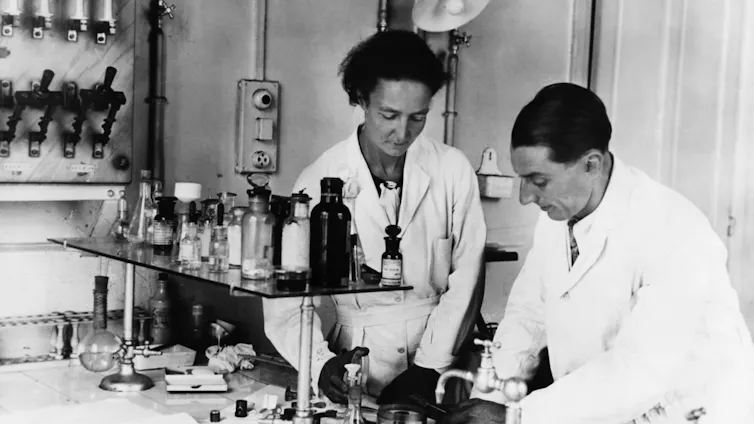
Artemis Spyrou, Michigan State University and Andrea Richard, Ohio University The adage goes “like mother like daughter,” and in the case of Irene Joliot-Curie, truer words were never spoken. She was the daughter of two Nobel Prize laureates, Marie Curie and Pierre Curie, and was herself awarded the Nobel Prize in chemistry in 1935 together with her husband, Frederic Joliot. While her parents received the prize for the discovery of natural radioactivity, Irene’s prize was for the synthesis of artificial radioactivity. This discovery changed many fields of science and many aspects of our everyday lives. Artificial radioactivity is used today in medicine, agriculture, energy production, food sterilization, industrial quality control and more.Frederic Joliot and Irene Joliot-Curie.Wellcome Collection, CC BY We are two nuclear physicistswho perform experiments at different accelerator facilities around the world. Irene’s discovery laid the foundation for our experimental studies, which use artificial radioactivity to understand questions related to astrophysics, energy, medicine and more.
Early years and battlefield training
Irene Curie was born in Paris, France, in 1897. In an unusual schooling setup, Irene was one of a group of children taught by their academic parents, including her own by then famous mother, Marie Curie.Marie Curie and her daughter Irene were both scientists studying radioactivity.Wellcome Collection, CC BY World War I started in 1914, when Irene was only 17, and she interrupted her studies to help her mother find fragments of bombs in wounded soldiers using portable X-ray machines. She soon became an expert in these wartime radiology techniques, and on top of performing the measurements herself, she also spent time training nurses to use the X-ray machines. After the war, Irene went back to her studies in her mother’s lab at the Radium Institute. This is where she met fellow researcher Frederic Joliot, whom she later married. The two worked together on many projects, which led them to their major breakthrough in 1934.
A radioactive discovery
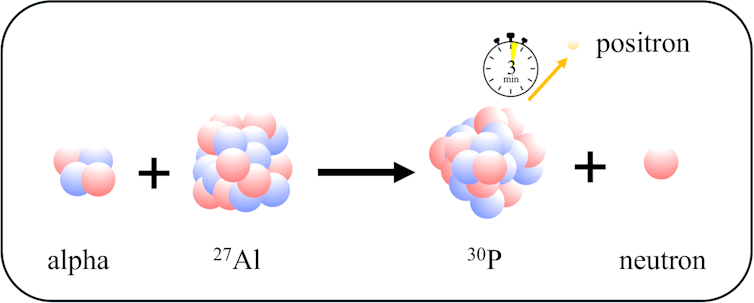
Isotopes are variations of a particular element that have the same number of protons – positively charged particles – and different numbers of neutrons, which are particles with no charge. While some isotopes are stable, the majority are radioactive and called radioisotopes. These radioisotopes spontaneously transform into different elements and release radiation – energetic particles or light – in a process called radioactive decay. At the time of Irene and Frederic’s discovery, the only known radioactive isotopes came from natural ores, through a costly and extremely time-consuming process. Marie and Pierre Curie had spent years studying the natural radioactivity in tons of uranium ores. In Irene and Frederic’s experiments, they bombarded aluminum samples with alpha particles, which consist of two protons and two neutrons bound together – they are atomic nuclei of the isotope helium-4. In previous studies, they had observed the different types of radiation their samples emitted while being bombarded. The radiation would cease when they took away the source of alpha particles. In the aluminum experiment, however, they noticed that even after they removed the alpha source, they could still detect radiation. The amount of radiation decreased by half every three minutes, and they concluded that the radiation came from the decay of a radioisotope of the element phosphorus. Phosphorus has two additional protons compared to aluminum and was formed when the alpha particles fused with the aluminum nuclei. This was the first identification of an artificially made radioisotope, phosphorus-30. Because phosphorus-30 was created after bombarding aluminum with alpha particles – rather than occurring in its natural state – Irene and Frederic induced the radioactivity. So, it is called artificial radioactivity.In Irene and Frederic’s experiments, an isotope of aluminum was hit with an alpha particle (two neutrons and two protons bound together). The collision resulted in two protons and a neutron from the alpha particle binding to the aluminum, making it an isotope of phosphorus, which decayed, releasing a particle called a positron.Artemis Spyrou After her major discovery, Irene stayed active not only in research but in activism and politics as well. In 1936, almost a decade before women gained the right to vote in France, she was appointed under secretary of state for scientific research. In this position, she laid the foundations for what would become the National Centre for Scientific Research, which is the French equivalent of the U.S. National Science Foundation or National Institutes of Health. She co-created the French Atomic Energy Commission in 1945 and held a six-year term, promoting nuclear research and development of the first French nuclear reactor. She later became director of the Curie Laboratory at the Radium Institute and a professor at the Faculty of Science in Paris.
Medical uses of artificial radioactivity
The Joliot-Curie discovery opened the road to the extensive use of radioisotopes in medical applications. Today, radioactive iodine is used regularly to treat thyroid diseases. Radioisotopes that emit positrons – the positive equivalent of the electron – are used in medical PET scans to image and diagnose cancer, and others are used for cancer therapy. To diagnose cancer, practitioners can inject a small amount of the radioisotope into the body, where it accumulates at specific organs. Specialized devices such as a PET scanner can then detect the radioactivity from the outside. This way, doctors can visualize how these organs are working without the need for surgery. To then treat cancer, practitioners use large amounts of radiation to kill the cancer cells. They try to localize the application of the radioisotope to just where the cancer is so that they’re only minimally affecting healthy tissue.
An enduring legacy
In the 90 years since the Joliot-Curie discovery of the first artificial radioisotope, the field of nuclear science has expanded its reach to roughly 3,000 artificial radioisotopes, from hydrogen to the heaviest known element, oganesson. However, nuclear theories predict that up to 7,000 artificial radioisotopes are possible. As physicists, we work with data from a new facility at Michigan State University, the Facility for Rare Isotope Beams, which is expected to discover up to 1,000 new radioisotopes.Scientists graph the known isotopes in the chart of nuclei. They have discovered roughly 3,000 radioisotopes (shown with cyan boxes) and predict the existence of another 4,000 radioisotopes (shown with gray boxes).Facility for Rare Isotope Beams While the Joliot-Curies were bombarding their samples with alpha particles at relatively low speeds, the Michigan State facility can accelerate stable isotopes up to half the speed of light and smash them on a target to produce new radioisotopes. Scientists using the facility have already discovered five new radioisotopes since it began operating in 2022, and the search continues. Each of the thousands of available radioisotopes has a different set of properties. They live for different amounts of time and emit different types of radiation and amounts of energy. This variability allows scientists to choose the right isotope for the right application. Iodine, for example, has more than 40 known radioisotopes. A main characteristic of radioisotopes is their half-life, meaning the amount of time it takes for half of the isotopes in the sample to transform into a new element. Iodine radioisotopes have half-lives that span from a tenth of a second to 16 million years. But not all of them are useful, practical or safe for thyroid treatment.The iodine radioisotope used in cancer therapy has a half-life of eight days. Eight days is long enough to kill cancer cells in the body, but not so long that the radioactivity poses a long-term threat to the patient and those around them.Artemis Spyrou Radioisotopes that live for a few seconds don’t exist long enough to perform medical procedures, and radioisotopes that live for years would harm the patient and their family. Because it lives for a few days, iodine-131 is the preferred medical radioisotope. Artificial radioactivity can also help scientists study the universe’s mysteries. For example, stars are fueled by nuclear reactions and radioactive decay in their cores. In violent stellar events, such as when a star explodes at the end of its life, they produce thousands of different radioisotopes that can drive the explosion. For this reason, scientists, including the two of us. produce and study in the lab the radioisotopes found in stars. With the advent of the Facility for Rare Isotope Beams and other accelerator facilities, the search for new radioisotopes will continue opening doors to a world of possibilities. Artemis Spyrou, Professor of Nuclear Physics, Michigan State University and Andrea Richard, Assistant Professor of Physics and Astronomy, Ohio University This article is republished from The Conversation under a Creative Commons license. Read the original article.
A Short-Form Series from The Knowledge by STM Daily News
Every Friday, STM Daily News shines a light on brilliant minds history overlooked.
Forgotten Genius Fridays is a weekly collection of short videos and articles dedicated to inventors, innovators, scientists, and creators whose impact changed the world—but whose names were often left out of the textbooks.
From life-saving inventions and cultural breakthroughs to game-changing ideas buried by bias, our series digs up the truth behind the minds that mattered.
Each episode of The Knowledge runs 30–90 seconds, designed for curious minds on the go—perfect for YouTube Shorts, TikTok, Reels, and quick reads.
Because remembering these stories isn’t just about the past—it’s about restoring credit where it’s long overdue.
How Water Towers Work: The Simple System That Keeps Water Flowing in American Cities
Learn how water towers work in the United States, why they are so tall, and how gravity helps cities maintain water pressure and emergency water supplies.
Water towers are one of the most recognizable pieces of infrastructure across the United States. Rising above towns, suburbs, and cities, these elevated tanks quietly perform a vital function every day: maintaining water pressure and storing emergency water for local communities.
Although they may look simple, water towers are an essential part of modern municipal water systems and remain one of the most reliable ways to deliver water to homes and businesses.
The Basic Science Behind Water Towers
Water towers work using a simple principle of physics: gravity.
Water from treatment plants or underground wells is pumped into a storage tank located high above the ground—typically between 100 and 200 feet tall. Because the tank is elevated, gravity naturally pushes the water downward through the city’s pipeline network.
This gravitational force creates the water pressure needed to supply homes, businesses, irrigation systems, and fire hydrants throughout the community.
Most residential plumbing systems in the United States operate best at 40 to 60 PSI (pounds per square inch), which water towers can easily provide through elevation alone.
Ever wondered why cities build giant water towers? 💧 It’s all about gravity. Water is pumped up into the tower and gravity pushes it through city pipes, creating the pressure that delivers water to homes, businesses, and fire hydrants. Simple engineering that keeps entire towns running. Now you know. Hashtags NowYouKnow WaterTower Infrastructure EngineeringExplained HowItWorks DidYouKnow CityInfrastructure UrbanEngineering STMDailyNews EducationalContent ♬ original sound – STMDailyNews – STMDailyNews
Why Water Towers Are Built So Tall
The height of a water tower determines how much pressure it can create. Engineers use a common rule:
For example, a water tower standing 120 feet tall can generate roughly 50 PSI of pressure—perfect for delivering water throughout a residential neighborhood.
Why Cities Still Use Water Towers
While modern pumping systems could theoretically move water through pipes continuously, water towers provide several major advantages that make them a preferred design in many municipal systems.
Stable Water Pressure – Water towers maintain consistent pressure even during peak usage times.
Energy Efficiency – Pumps can refill towers overnight when electricity demand is lower.
Emergency Water Supply – If power fails, gravity can continue delivering water.
Fire Protection – Fire hydrants depend on strong, immediate water pressure.
The Daily Fill-and-Use Cycle
Water towers typically operate on a daily cycle based on community demand.
Night: Pumps refill the tower while water demand is low.
Morning: Water levels drop as residents shower and prepare for the day.
Daytime: Businesses and homes continue drawing water from the tower.
Evening: The system begins refilling the tank for the next day.
How Much Water Can a Tower Store?
Water towers come in many sizes depending on the population they serve.
Small towns: 50,000–300,000 gallons
Suburban communities: 500,000–1 million gallons
Larger urban systems: up to 2 million gallons or more
Even a single tower holding one million gallons can supply thousands of homes for several hours during peak demand or emergencies.
Modern Technology Inside Water Towers
Today’s water towers are equipped with advanced monitoring systems that help utilities maintain safe and reliable water supplies.
Advertisement
Digital water level sensors
Automated pump controls
Water quality monitoring
Protective interior coatings
Regular inspections and maintenance
Landmarks in the American Skyline
Many cities turn their water towers into local landmarks by painting them with city names, mascots, or community slogans. Some towns even design towers shaped like giant objects such as fruit, coffee cups, or sports balls.
Despite their distinctive appearance, water towers remain one of the simplest and most reliable engineering solutions for delivering clean water to millions of Americans every day.
Next time you see a water tower rising above a town skyline, remember: it’s not just a landmark—it’s the gravity-powered system that keeps water flowing.
Related External Coverage
For more information about how water towers and municipal water systems work, explore the following resources:
Dive into “The Knowledge,” where curiosity meets clarity. This playlist, in collaboration with STMDailyNews.com, is designed for viewers who value historical accuracy and insightful learning. Our short videos, ranging from 30 seconds to a minute and a half, make complex subjects easy to grasp in no time. Covering everything from historical events to contemporary processes and entertainment, “The Knowledge” bridges the past with the present. In a world where information is abundant yet often misused, our series aims to guide you through the noise, preserving vital knowledge and truths that shape our lives today. Perfect for curious minds eager to discover the ‘why’ and ‘how’ of everything around us. Subscribe and join in as we explore the facts that matter. https://stmdailynews.com/the-knowledge/
Rod: A creative force, blending words, images, and flavors. Blogger, writer, filmmaker, and photographer. Cooking enthusiast with a sci-fi vision. Passionate about his upcoming series and dedicated to TNC Network. Partnered with Rebecca Washington for a shared journey of love and art.