Connect with us

Blog

Believe it or not, there was a time when the US government built beautiful homes for working-class Americans to deal with a housing shortage

Published

on

US government built beautiful homes
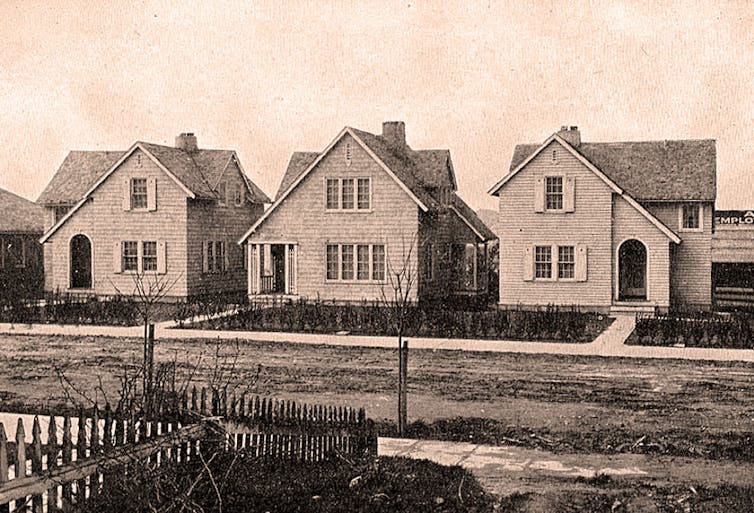
The U.S. Housing Corporation built nearly 300 homes in Bremerton, Wash., during World War I.
National Archives

Believe it or not, there was a time when the US government built beautiful homes for working-class Americans to deal with a housing shortage

Eran Ben-Joseph, Massachusetts Institute of Technology (MIT)

In 1918, as World War I intensified overseas, the U.S. government embarked on a radical experiment: It quietly became the nation’s largest housing developer, designing and constructing more than 80 new communities across 26 states in just two years.

These weren’t hastily erected barracks or rows of identical homes. They were thoughtfully designed neighborhoods, complete with parks, schools, shops and sewer systems.

In just two years, this federal initiative provided housing for almost 100,000 people.

Few Americans are aware that such an ambitious and comprehensive public housing effort ever took place. Many of the homes are still standing today.

But as an urban planning scholar, I believe that this brief historic moment – spearheaded by a shuttered agency called the United States Housing Corporation – offers a revealing lesson on what government-led planning can achieve during a time of national need.

Government mobilization

When the U.S. declared war against Germany in April 1917, federal authorities immediately realized that ship, vehicle and arms manufacturing would be at the heart of the war effort. To meet demand, there needed to be sufficient worker housing near shipyards, munitions plants and steel factories.

So on May 16, 1918, Congress authorized President Woodrow Wilson to provide housing and infrastructure for industrial workers vital to national defense. By July, it had appropriated US$100 million – approximately $2.3 billion today – for the effort, with Secretary of Labor William B. Wilson tasked with overseeing it via the U.S. Housing Corporation.

Over the course of two years, the agency designed and planned over 80 housing projects. Some developments were small, consisting of a few dozen dwellings. Others approached the size of entire new towns.

For example, Cradock, near Norfolk, Virginia, was planned on a 310-acre site, with more than 800 detached homes developed on just 100 of those acres. In Dayton, Ohio, the agency created a 107-acre community that included 175 detached homes and a mix of over 600 semidetached homes and row houses, along with schools, shops, a community center and a park.

Designing ideal communities

Notably, the Housing Corporation was not simply committed to offering shelter.

Advertisement
Get More From A Face Cleanser And Spa-like Massage

Its architects, planners and engineers aimed to create communities that were not only functional but also livable and beautiful. They drew heavily from Britain’s late-19th century Garden City movement, a planning philosophy that emphasized low-density housing, the integration of open spaces and a balance between built and natural environments.

Black and white map featuring winding streets and little black squares representing homes.
Milton Hill, a neighborhood designed and developed by the United States Housing Corporation in Alton, Ill.
National Archives

Importantly, instead of simply creating complexes of apartment units, akin to the public housing projects that most Americans associate with government-funded housing, the agency focused on the construction of single-family and small multifamily residential buildings that workers and their families could eventually own.

This approach reflected a belief by the policymakers that property ownership could strengthen community responsibility and social stability. During the war, the federal government rented these homes to workers at regulated rates designed to be fair, while covering maintenance costs. After the war, the government began selling the homes – often to the tenants living in them – through affordable installment plans that provided a practical path to ownership.
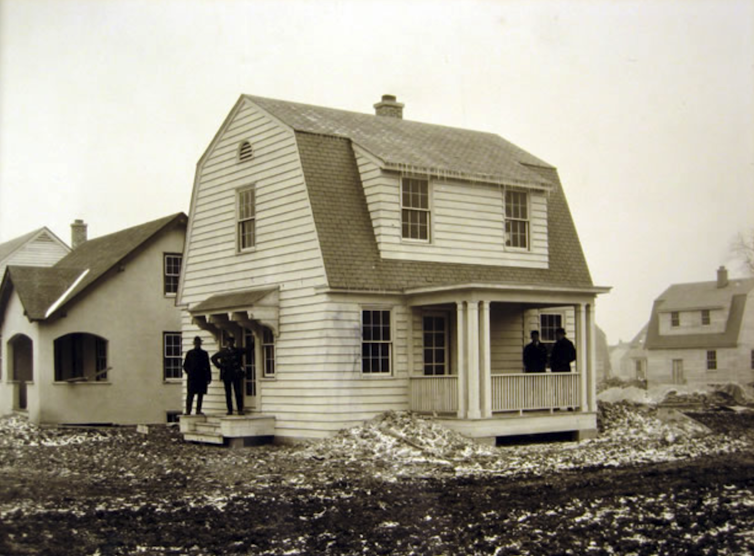
Sepia-toned photograph of a group of men standing in front of a newly-built house.
A single-family home in Davenport, Iowa, built by the U.S. Housing Corporation.
National Archives

Though the scope of the Housing Corporation’s work was national, each planned community took into account regional growth and local architectural styles. Engineers often built streets that adapted to the natural landscape. They spaced houses apart to maximize light, air and privacy, with landscaped yards. No resident lived far from greenery.

In Quincy, Massachusetts, for example, the agency built a 22-acre neighborhood with 236 homes designed mostly in a Colonial Revival style to serve the nearby Fore River Shipyard. The development was laid out to maximize views, green space and access to the waterfront, while maintaining density through compact street and lot design.

At Mare Island, California, developers located the housing site on a steep hillside near a naval base. Rather than flatten the land, designers worked with the slope, creating winding roads and terraced lots that preserved views and minimized erosion. The result was a 52-acre community with over 200 homes, many of which were designed in the Craftsman style. There was also a school, stores, parks and community centers.

Infrastructure and innovation

Alongside housing construction, the Housing Corporation invested in critical infrastructure. Engineers installed over 649,000 feet of modern sewer and water systems, ensuring that these new communities set a high standard for sanitation and public health.

Attention to detail extended inside the homes. Architects experimented with efficient interior layouts and space-saving furnishings, including foldaway beds and built-in kitchenettes. Some of these innovations came from private companies that saw the program as a platform to demonstrate new housing technologies.

One company, for example, designed fully furnished studio apartments with furniture that could be rotated or hidden, transforming a space from living room to bedroom to dining room throughout the day.

To manage the large scale of this effort, the agency developed and published a set of planning and design standards − the first of their kind in the United States. These manuals covered everything from block configurations and road widths to lighting fixtures and tree-planting guidelines.
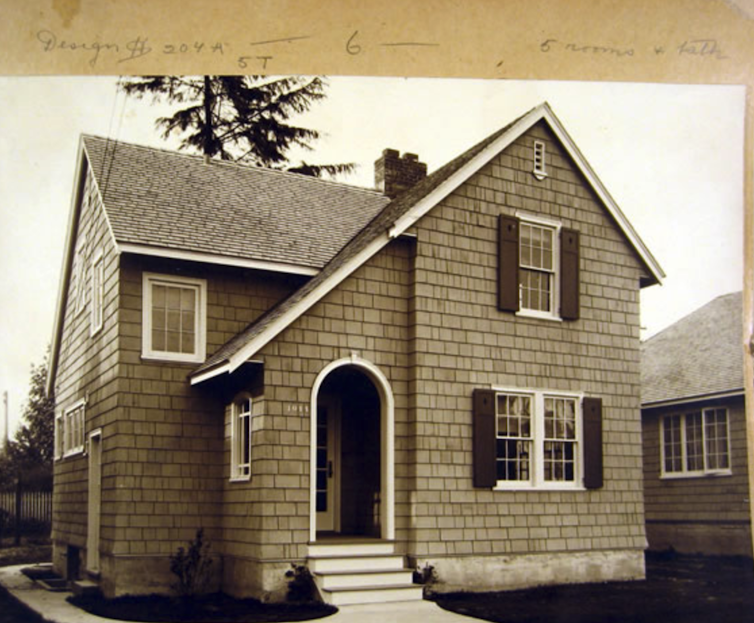
A sepia-toned photograph of a newly-built single-family house.
A single-family home in Bremerton, Wash., built by the U.S. Housing Corporation.
National Archives

The standards emphasized functionality, aesthetics and long-term livability.

Architects and planners who worked for the Housing Corporation carried these ideas into private practice, academia and housing initiatives. Many of the planning norms still used today, such as street hierarchies, lot setbacks and mixed-use zoning, were first tested in these wartime communities.

And many of the planners involved in experimental New Deal community projects, such as Greenbelt, Maryland, had worked for or alongside Housing Corporation designers and planners. Their influence is apparent in the layout and design of these communities.

Advertisement
Get More From A Face Cleanser And Spa-like Massage

A brief but lasting legacy

With the end of World War I, the political support for federal housing initiatives quickly waned. The Housing Corporation was dissolved by Congress, and many planned projects were never completed. Others were incorporated into existing towns and cities.

Yet, many of the neighborhoods built during this period still exist today, integrated in the fabric of the country’s cities and suburbs. Residents in places such as Aberdeen, Maryland; Bremerton, Washington; Bethlehem, Pennsylvania; Watertown, New York; and New Orleans may not even realize that many of the homes in their communities originated from a bold federal housing experiment.
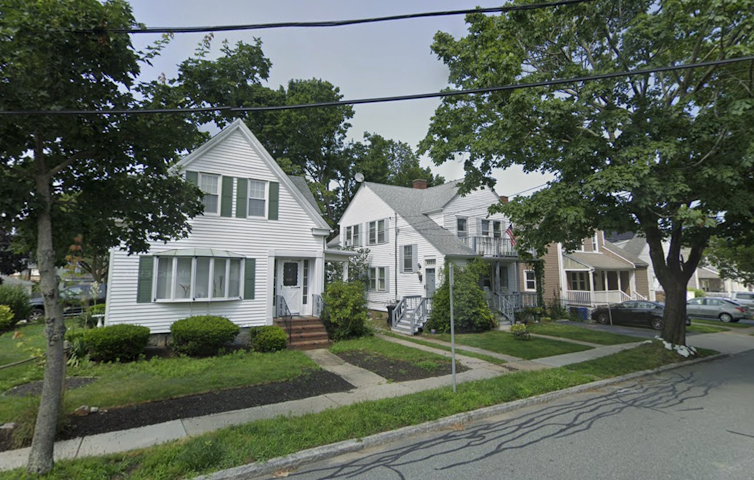
Three homes side by side on a leafy suburban street.
Homes on Lawn Avenue in Quincy, Mass., that were built by the U.S. Housing Corporation.
Google Street View

The Housing Corporation’s efforts, though brief, showed that large-scale public housing could be thoughtfully designed, community oriented and quickly executed. For a short time, in response to extraordinary circumstances, the U.S. government succeeded in building more than just houses. It constructed entire communities, demonstrating that government has a major role and can lead in finding appropriate, innovative solutions to complex challenges.

At a moment when the U.S. once again faces a housing crisis, the legacy of the U.S. Housing Corporation serves as a reminder that bold public action can meet urgent needs.

This article is part of a series centered on envisioning ways to deal with the housing crisis.

Eran Ben-Joseph, Professor of Landscape Architecture and Urban Planning, Massachusetts Institute of Technology (MIT)

This article is republished from The Conversation under a Creative Commons license. Read the original article.

Continue Reading
Advertisement SodaStream USA, inc

The Knowledge

So, Here’s the Story of Mound Bayou, Mississippi

Discover the inspiring history of Mound Bayou, Mississippi — one of America’s most successful Black-founded towns and a symbol of resilience, freedom, and progress.

Published

on

Last Updated on June 9, 2026 by Daily News Staff

Discover the inspiring history of Mound Bayou, Mississippi — one of America’s most successful Black-founded towns and a symbol of resilience, freedom, and progress.
Mound Bayou welcome sign in 2020. Image Credit: Chillin662

Did you know there was once a thriving Black-founded town in the Mississippi Delta built on the dream of freedom, self-reliance, and opportunity?

Mound Bayou

Founded in 1887 by Isaiah T. Montgomery and Benjamin T. Green, Mound Bayou, Mississippi became one of the most successful all-Black communities in American history. Established just decades after the Civil War, the town represented hope during a time when racial segregation and violence dominated much of the South.

Mound Bayou quickly grew into a center of Black business, education, healthcare, and agriculture. Residents built schools, churches, newspapers, banks, and medical facilities, proving that economic independence and community leadership could flourish despite enormous challenges.

Isaiah Thornton Montgomery House West Main Street Mound Bayou Bolivar County Mississippi
Mound Bayou, Black History, Mississippi History, Civil Rights Movement, Forgotten History. Wikipedia

The city even gained national attention from leaders like Booker T. Washington and President Theodore Roosevelt, who recognized Mound Bayou as a symbol of progress and determination.

During the Civil Rights era, the town also played a role in the fight for justice, particularly through the work of Dr. T.R.M. Howard following the murder of Emmett Till.

Today, Mound Bayou stands as a powerful reminder of resilience, entrepreneurship, and a chapter of American history that deserves far more recognition.

Now you know.

Here are some related article links you can include at the bottom of your STM Daily News post for further reading:

Related Articles & Further Reading

• The Official History of Mound Bayou
https://www.cityofmoundbayou.com/our-history

• Mound Bayou: The Historic Black Community in Mississippi
https://en.wikipedia.org/wiki/Mound_Bayou,_Mississippi

• The Historic Bank of Mound Bayou
https://en.wikipedia.org/wiki/Bank_of_Mound_Bayou

Advertisement
Get More From A Face Cleanser And Spa-like Massage

• The Legacy of Dr. T.R.M. Howard and Civil Rights Activism
https://www.cityofmoundbayou.com/our-history

• How Mound Bayou Became Known as “The Jewel of the Delta”
https://cityofmoundbayou.com/

How Little Mound Bayou Became a Powerful Engine for African American Civil Rights and Economic Advancement

• Community Discussion About Mound Bayou’s History
https://www.reddit.com/r/BlackHistoryPhotos/comments/1ta0r2e/famous_allblack_american_cities_towns_mound_bayou/

Dive into “The Knowledge,” where curiosity meets clarity. This playlist, in collaboration with STMDailyNews.com, is designed for viewers who value historical accuracy and insightful learning. Our short videos, ranging from 30 seconds to a minute and a half, make complex subjects easy to grasp in no time. Covering everything from historical events to contemporary processes and entertainment, “The Knowledge” bridges the past with the present. In a world where information is abundant yet often misused, our series aims to guide you through the noise, preserving vital knowledge and truths that shape our lives today. Perfect for curious minds eager to discover the ‘why’ and ‘how’ of everything around us. Subscribe and join in as we explore the facts that matter.  https://stmdailynews.com/the-knowledge/

Continue Reading

Entertainment

Life isn’t all diamonds – money and fame don’t shield the many ‘Real Housewives’ facing criminal charges

“The Real Housewives” is more than messy drama—it’s a crash course in real-world crime, as cast members face charges from DUIs and theft to fraud, assault, and federal prison.

Published

on

The Real Housewives
Jen Shah, a cast member of the “Real Housewives” series, leaves a Manhattan federal court in January 2023 after receiving a 6½-year sentence for conspiracy to commit wire fraud. Gotham/GC Images

C. Clare Strange, Drexel University

“The Real Housewives” reality TV series, which showcases the lives of a rotating cast of wealthy women in 11 cities in the U.S. and places in several other countries, is famous for its characters’ over-the-top drama and messy personal antics.

But there are also useful lessons that the characters’ lives and frequent run-ins with the law offer to casual observers and criminology students alike.

I developed the idea for The Real Housewives of Criminology course when I heard a story on NPR in 2023 about how the Bravo Network franchise was becoming more like a true-crime TV series.

Jen Shah, a cast member from “The Real Housewives of Salt Lake City,” had recently been sentenced to six years in federal prison for her role in a nationwide telemarketing scheme – but she wasn’t the only one on the show who met such a fate.

Many people who appear on “Housewives” share a real-life penchant for crime – from driving-under-the-influence charges and theft to fraud and assault.

During any given episode, viewers may find “Housewives” stars and their families navigating the fallout – from court dates to public shaming.

I realized that these scenes illustrate core concepts from criminal justice theory and practice as well as any textbook.

A window into the course

The course examines the criminal cases of the “Housewives” and compares them to those of the general public.

Students discuss how factors such as social class, age and race can impact people’s experiences with the justice system. At the same time, they come to understand that factors such as how serious a crime is, a person’s criminal history and the harm done to victims tend to drive case outcomes more than any other factor.

I believe that this course is especially relevant now, because it is increasingly common for undergraduate students to consume news about crime and punishment from streaming platforms and social media.

Advertisement
Get More From A Face Cleanser And Spa-like Massage

It seems there is a new “Housewife” arrest every several months, which brings with it new circumstances and a new case study to dissect.

Critical lessons

One key takeaway from the course is that there are many meaningful differences – and similarities – between the criminal cases shown in “Housewives” and those of most people.

While money and power can often go a long way in fighting a criminal conviction, sometimes they fall short when the harm to victims or society is too great, or the pattern of behavior is too obvious.

Many “Housewives” stars and their families have learned this lesson the hard way.

Read along

This course requires students to view footage from “The Real Housewives,” read peer-reviewed criminological research, and listen to podcast episodes from “The Bravo Docket.”

We even read book chapters straight from some of the Housewives’ memoirs. All of this culminates in a “Final Reunion,” meaning a final verbal exam for students, in which they embody one of the “Housewives” cast members and answer questions from me – dressed as host Andy Cohen – about their criminal cases.

A group of five women dressed in formal wear pose and stand in front of a backdrop that says 'Bravo.'
Teresa Giudice, right, poses with others in ‘The Real Housewives of New Jersey’ cast in April 2013. She is among the cast members who have faced criminal charges. Taylor Hill/FilmMagic

Real takeaways

While the court of public opinion tends to quickly draw conclusions from limited information, my honors students learn that there is more than meets the eye when it comes to the U.S. justice system.

The Real Housewives of Criminology helps them to navigate the nuance beneath the headlines about popular crime news stories, in and beyond the “Bravosphere.”

C. Clare Strange, Assistant Research Professor of Criminology and Justice Studies, Drexel University

This article is republished from The Conversation under a Creative Commons license. Read the original article.

Advertisement
Get More From A Face Cleanser And Spa-like Massage

Looking for an entertainment experience that transcends the ordinary? Look no further than STM Daily News Blog’s vibrant Entertainment section. Immerse yourself in the captivating world of indie films, streaming and podcasts, movie reviews, music, expos, venues, and theme and amusement parks. Discover hidden cinematic gems, binge-worthy series and addictive podcasts, gain insights into the latest releases with our movie reviews, explore the latest trends in music, dive into the vibrant atmosphere of expos, and embark on thrilling adventures in breathtaking venues and theme parks. Join us at STM Entertainment and let your entertainment journey begin! https://stmdailynews.com/category/entertainment/
and let your entertainment journey begin!

Continue Reading

Blog

The Substitute Teacher Who Wanted Blueprints of Our House

A fifth-grade assignment took a strange turn when a substitute teacher asked students to draw schematics of their homes. What followed — a wildly fictional floor plan and a priceless reaction from my mom — turned into one of my funniest childhood memories.

Published

on

Last Updated on June 4, 2026 by Daily News Staff

Comedic illustration of a 1970s–1980s elementary school classroom with a substitute teacher holding a blueprint while confused fifth graders draw exaggerated house schematics, including a two-story doghouse.


The Substitute Teacher Who Wanted Blueprints of Our House

Elementary school memories tend to blend together — cafeteria pizza, playground arguments, the eternal struggle of times tables — but every once in a while, something happens that sticks with you for life. For me, that moment came in the fifth grade during a week when our regular teacher was out, and we cycled through substitute teachers like we were testing models for durability.

By midweek, in walked a substitute with a mysterious, slightly intense energy — the kind of vibe that suggested he either meditated at dawn or worked a graveyard shift doing something he couldn’t talk about. We settled into our seats, expecting worksheets or quiet reading time.

But nope.

He had other plans.

“Today,” he announced, “we’re going to draw schematics of our houses.”

Schematics. Not drawings. Not little houses with smoke coming out of the chimney. Actual blueprint-style schematics. He wanted the layout of our bedrooms, our parents’ rooms, and where the pets slept. Every detail.

Now, to be fair, Highlights Magazine did have a feature that month teaching kids how to draw floor plans. So maybe he was just a bit overenthusiastic about cross-curricular learning. Or maybe — and this is my completely rhetorical adult theory — he worked the graveyard shift as a cat burglar gathering intel between heists. Just moonlighting between blueprints.

While the rest of the class tried their best to recreate their actual homes, my imagination sprinted in a totally different direction. The house I drew had:

  • A massive master bedroom with an oversized bathroom for my parents
  • Separate bedrooms for us kids on the opposite side of the house
  • A kitchen placed right in the center like a command center
  • And the dog — the true VIP — had a luxurious two-story doghouse

I had basically created a dream home designed by a 10-year-old watching too much Fantasy Homes by the Yard.

A young African American boy shows his mother an exaggerated, hand-drawn house schematic with unrealistic room layouts and a two-story doghouse, while she reacts with a mix of concern, confusion, and relief in a cozy 1970s–1980s living room.

Later that day, my mom asked the usual question: “So, what did you guys do today?”

“We drew schematics of our house,” I said casually.

The look on her face was instant and intense. She wasn’t panicked, but there was definitely a “Why does a substitute teacher need to know the exact layout of my home?” expression happening. Parental instincts activated.

But then I showed her my diagram.

She stared at it. Blinked. Then sighed with massive relief.

“This isn’t our house,” she said.

“Nope! I made it up,” I replied proudly.

Her shoulders relaxed so much she probably lost five pounds of tension in one instant. If the substitute was secretly planning a heist, my masterpiece of misinformation would have sent him to the wrong house entirely.

Looking back, the whole moment feels like a sitcom setup — a mysterious substitute collecting “house schematics,” me creating a completely fictional piece of architecture, and my mom going on a full emotional journey in under 30 seconds.

Maybe he was just excited about the Highlights Magazine floor-plan activity. Or maybe — just maybe — he moonlighted in cat burglary. We’ll never know.

But if he was, I like to think I threw him completely off the scent.


Enjoy this story?

Check out more nostalgic and humorous stories on STM Daily News and be sure to sign up for our newsletter!

Our Lifestyle section on STM Daily News is a hub of inspiration and practical information, offering a range of articles that touch on various aspects of daily life. From tips on family finances to guides for maintaining health and wellness, we strive to empower our readers with knowledge and resources to enhance their lifestyles. Whether you’re seeking outdoor activity ideas, fashion trends, or travel recommendations, our lifestyle section has got you covered. Visit us today at https://stmdailynews.com/category/lifestyle/ and embark on a journey of discovery and self-improvement.

Continue Reading

Trending

