Connect with us

STM Blog

TikTok sale puts app’s algorithm in the spotlight – a social media expert explains how the For You Page works and what changes are in store

Published

on

TikTok
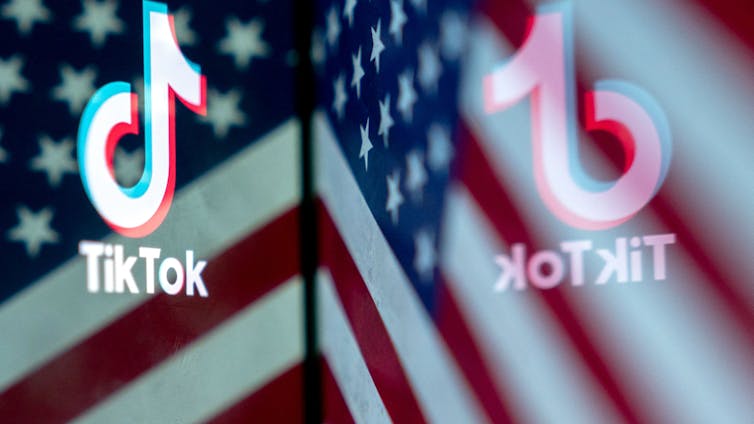
TikTok appears to be changing hands, but what that means for users is up in the air. Stefani Reynolds/AFP via Getty Images
Kelley Cotter, Penn State President Donald Trump announced on Sept. 19, 2025, a preliminary agreement for the sale of a majority stake in TikTok from Chinese tech giant ByteDance to a group of U.S. investors following Trump’s negotiation with Chinese leader Xi Jinping. The deal would create a new U.S.-only version of the app, bringing it into compliance with a law signed by former President Joe Biden on April 23, 2024, and upheld by the Supreme Court on Jan. 17, 2025. Specifics of the deal remain to be hammered out, but some details are emerging. These include what will happen to the video-sharing app’s core algorithm – and what that means for TikTok’s millions of U.S. users. The Chinese government has indicated it will not permit ByteDance to sell the algorithm, because it is classified as a controlled technology export, per Chinese law. Meanwhile, U.S. tech industry executives and some lawmakers say compliance with the law requires the algorithm to be under American control. The deal as proposed includes licensing the algorithm so that it remains Chinese intellectual property while the U.S. version of the app continues to use the technology. TikTok’s For You Page algorithm is widely considered the most important part of the app. As one analyst put it: “Buying TikTok without the algorithm would be like buying a Ferrari without the engine.” The algorithm’s value lies in its uncanny capacity to anticipate users’ content preferences. Many users claim it knows them better than they know themselves — a sentiment that has evolved into a curious mix of spiritual belief and conspiracy theorizing, as my colleagues and I have documented. Other scholars have similarly noted that users feel more intimately seen and known by TikTok’s algorithm than those powering other popular platforms. I have studied social media algorithms for nearly a decade, exploring how our relationships with them have evolved as they become increasingly entwined with daily life. As both a social media scholar and TikTok devotee, I want to shed some light on how the algorithm works and how the app is likely to change in the wake of its sale.

How the TikTok algorithm works

In some ways, the TikTok algorithm does not differ significantly from other social media algorithms. At their core, algorithms are merely a series of steps used to accomplish a specific goal. They perform mathematical computations to optimize output in service of that goal. There are two layers to the TikTok algorithm. First, there is the abstract layer that defines the outcome developers wish to accomplish. An internal document shared with The New York Times specified that TikTok’s algorithm optimizes for four goals: “user value,” “long-term user value,” “creator value” and “platform value.” But how do you turn these goals into math? What does an abstract concept like “user value” even mean? It’s not practical to ask users whether they value their experience every time they visit the site. Instead, TikTok relies on proxy signals that translate abstract outcomes into quantifiable measures — specifically, likes, comments, shares, follows, time spent on a given video and other user-behavior data. These signals then become part of an equation to predict two key concrete outcomes: “retention,” or the likelihood that a user will return to the site, and “time spent” on the app. The TikTok For You Page algorithm relies on machine learning for predicting retention and time spent. Machine learning is a computational process in which an algorithm learns patterns in a dataset, with little or no human guidance, to produce the best equation to predict an outcome. Through learning patterns, the algorithm determines how much individual data signals matter for coming up with a precise prediction. A Wall Street Journal investigation found that the amount of time users spend watching each video plays a large role in how the algorithm chooses videos it suggests to users. Using the equation it has generated to predict retention and time spent, the algorithm assigns a score to each video and ranks possible videos that could be shown to the user by this score. The higher the score for an individual user, the more likely the video will appear in their feed. Of course, content characteristics and other users additionally inform recommendations, and there are other subprocesses folded into the equation. This step is where algorithmic moderation usually comes in. If a video looks like engagement bait or has excessive gore, for example, the content’s score will be penalized.
Here are the basics of how TikTok’s algorithm works.

What’s likely to change for US users

The sale has not been finalized, but the algorithm’s fate is coming into focus. According to reports, the United States-only version of the algorithm will be retrained on only U.S. users’ data. Users won’t need to download a new version of the app for the changed algorithm to work. Even though the algorithm itself is the same as before, it’s fairly certain that TikTok will change. I see two key reasons for change. First, the proposed app’s U.S.-only user population will alter the makeup of the underlying dataset informing algorithmic recommendations on an ongoing basis. As the kinds of content come to reflect American cultural preferences, values and behaviors, the algorithm may be slightly different as it “learns” new patterns. Though users are more likely to stick with the app because they don’t need to download a new version, not all users will choose to, especially if it is seen as under the control of Trump’s allies. **Under the current deal, Oracle Corp. and the U.S. government would oversee the algorithm’s retraining. This arrangement suggests that the U.S. government may have significant influence over how the app works. The deal would give an 80% share to U.S. investors, including 50% to new investors Oracle, Silver Lake and Andreessen Horowitz. These investors have connections to Trump, and an apparent provision of the deal allows the U.S. government to select one board member. These influences raise the possibility of a boycott from left-leaning users and creators similar to earlier boycotts of Target for rolling back DEI measures and Disney after the since-reversed suspension of Jimmy Kimmel. This may result in a user population – and data – reflective of a narrower realm of interests and ideologies. Second, it’s possible that the majority shareowners of the new app will decide to adjust the algorithm, particularly when it comes to content moderation. The new owners may wish to modify TikTok’s Community Guidelines according to their view of acceptable and unacceptable speech. For example, TikTok’s current Community Guidelines prohibit misinformation and work with independent fact-checkers to assess the accuracy of content. While Meta used to follow a similar approach for Instagram and Facebook, in January 2025 Meta announced that it would end its relationships with independent fact-checkers and loosen content restrictions. YouTube has similarly relaxed its content moderation this year. With reports that the U.S. government would oversee retraining the algorithm, there’s a possibility that not only the new investors but also the government itself could influence how content is prioritized and moderated. The bottom line is algorithms are highly sensitive to context. They reflect the interests, values and worldviews of the people who build them, the preferences and behaviors of people whose data informs their models and the legal and economic contexts they operate within. This means that while it’s difficult to predict exactly what a U.S.-only TikTok will be like, it’s safe to assume it will not be a perfect mirror image of the current app. This story was updated on Sept. 23, 2025, to include new details about TikTok’s sale. Kelley Cotter, Assistant Professor of Information Sciences and Technology, Penn State This article is republished from The Conversation under a Creative Commons license. Read the original article.

STM Daily News is a vibrant news blog dedicated to sharing the brighter side of human experiences. Emphasizing positive, uplifting stories, the site focuses on delivering inspiring, informative, and well-researched content. With a commitment to accurate, fair, and responsible journalism, STM Daily News aims to foster a community of readers passionate about positive change and engaged in meaningful conversations. Join the movement and explore stories that celebrate the positive impacts shaping our world.

https://stmdailynews.com/


Discover more from Daily News

Subscribe to get the latest posts sent to your email.

Continue Reading
Advertisement Sports Research

Community

PG&E Donates $1 Million to Local Food Banks to Help Feed Families

PG&E donates $1 million to local food banks across Northern and Central California—equivalent to about 3 million meals—supporting 38 food banks serving 47 counties.

Published

on

 PG&E donates $1 million to local food banks across Northern and Central California—enough for about 3 million meals—supporting 38 food banks serving 47 counties.

Just in time for the holidays, Pacific Gas and Electric Company (PG&E) announced a $1 million donation to local food banks across Northern and Central California—support aimed at meeting a surge in demand as more families and seniors struggle to put food on the table. According to PG&E, the contribution is expected to provide the equivalent of roughly 3 million meals and will support 38 food banks serving 47 counties within PG&E’s service territory.

A third major food-bank contribution since September

The $1 million gift marks the third food-bank-focused contribution since September from PG&E or The PG&E Corporation Foundation (the PG&E Foundation). Combined, those efforts bring PG&E’s total community food support in 2025 to $2.37 million. PG&E emphasized that the funding for these charitable contributions comes from PG&E shareholders—not customers.

Food banks facing record-breaking demand

Food banks across California are reporting pressure levels not seen since the pandemic. Officials with the California Association of Food Banks say demand has reached record highs, driven in part by an unexpected surge during the federal government shutdown this fall. “California food banks experienced an unexpected surge with the [federal government] shutdown this fall. So, we reached out for help on their behalf and PG&E responded,” said Stacia Levenfeld, Chief Executive Officer of the California Association of Food Banks. “Their $1 million gift to food banks throughout Northern and Central California will have a meaningful impact on the lives of millions of people this holiday season and help food banks continue their critical work in our communities.” PG&E leaders framed the donation as an extension of a longstanding partnership with food bank networks. “We are grateful to help local food banks fulfill their mission during this time of increasing demand, especially as more families and seniors are struggling through the holiday season,” said Carla Peterman, Executive Vice President, Corporate Affairs, PG&E Corporation and Chair of The PG&E Corporation Foundation Board. “Our longstanding partnership with the California Association of Food Banks supports the safety net that is our local food banks.”

Where the 2025 food support has gone

PG&E outlined additional contributions made earlier in the year:
  • September: The PG&E Foundation awarded $1.12 million to support local food banks, tribal food banks, and senior meal programs.
  • November: The PG&E Foundation donated $250,000 to the California Association of Food Banks’ Emergency Response Fund.

Equity-focused grant distribution

The California Association of Food Banks notes that while California produces nearly half of the nation’s fruits and vegetables, more than one in five residents still don’t know where their next meal will come from. Food insecurity rates are even higher in many communities of color. PG&E said grant amounts awarded to local organizations will account for county poverty and unemployment levels, using a formula from the California Department of Social Services. The goal: promote equity by directing more support to counties with higher need.

About the PG&E Corporation Foundation and PG&E

The PG&E Corporation Foundation is an independent 501(c)(3) nonprofit organization, separate from PG&E and sponsored by PG&E Corporation. PG&E is a combined natural gas and electric utility serving more than 16 million people across 70,000 square miles in Northern and Central California. More information is available at pge.com and pge.com/news.

Why this matters

As food banks brace for sustained demand beyond the holiday season, large-scale donations like PG&E’s can help stabilize local supply—especially when distributed with an equity lens that targets the counties facing the steepest economic pressures. For families, seniors, and individuals navigating rising costs, the impact is immediate: more meals available now, and stronger community support systems heading into the new year. Community links:
High Demand Marks “Veggies for Veterans” Event Amid SNAP Delays
Link: https://stmdailynews.com/high-demand-marks-veggies-for-veterans-event-amid-snap-delays/

Author


Discover more from Daily News

Subscribe to get the latest posts sent to your email.

Continue Reading

Blog

The Empty Promise: Lynwood’s Lost Downtown Dream

In the 1970s, Lynwood, CA, dreamed of a downtown mall anchored by Montgomery Ward. Decades later, the empty lots told a story of ambition, delay, and renewal.

Published

on

In the 1970s, Lynwood, CA, dreamed of a downtown mall anchored by Montgomery Ward. Decades later, the empty lots told a story of ambition, delay, and renewal.

Artistic Image: R Washington and AI

In the early 1970s, Lynwood, California, dreamed big.

City leaders envisioned a new, modern downtown — a sprawling shopping and auto mall that would bring jobs, shoppers, and a sense of pride back to this small but growing city in the southeast corner of Los Angeles County. At the heart of the plan stood a gleaming new Montgomery Ward department store, which opened around 1973 and promised to anchor a larger commercial center that never fully came.

But for those of us who grew up in Lynwood during that time, the promise never quite materialized.

Instead, we remember acres of empty lots, chain-link fences, and faded “Coming Soon” signs that sat for decades — silent witnesses to a dream deferred.

The Vision That Stalled

In 1973, Lynwood’s Redevelopment Agency launched what it called Project Area A — an ambitious plan to clear and rebuild much of the city’s downtown core. Small businesses and homes were bought out, land was assembled, and the city floated bonds to support new construction.

For a brief moment, it looked as if the plan might work. Montgomery Ward opened its doors, serving as a retail beacon for the area. Yet the rest of the mall — the shops, restaurants, and auto dealerships — never came.

By the mid-1970s, much of downtown had been bulldozed, but little replaced it. And by the time Ward closed its Lynwood location in 1986, the vast lots surrounding it had become symbols of frustration and unfulfilled potential.

What Happened?

Some longtime residents whispered about corruption or backroom deals — the kind of speculation that grows when visible progress stalls.

But newspaper archives and redevelopment records tell a more complex story.

Lynwood’s plans collided with a series of hard realities:

The construction of the Century Freeway (I-105) disrupted neighborhoods and depressed land values. Environmental cleanup and ownership disputes slowed development. Economic shifts in retail — as malls in nearby Downey, South Gate, and Paramount attracted anchor stores — drained the local market. And later, political infighting among city officials made sustained redevelopment almost impossible.

Advertisement
Get More From A Face Cleanser And Spa-like Massage

To this day, there’s no public record of proven corruption directly tied to the 1970s mall plan. What did exist was a tangle of bureaucracy, economic change, and missed opportunity — a perfect storm that left Lynwood’s heart half-built and half-forgotten.

Growing Up Among the Vacant Lots

For those of us who were kids in Lynwood during that era, the story is more personal.

We remember the sight of the Montgomery Ward building — modern and hopeful at first, then shuttered and fading by the mid-1980s.

We remember riding bikes past the empty dirt fields that were supposed to become shopping plazas. And we remember the quiet frustration of adults who had believed the city’s promises.

Those empty blocks became our playgrounds — but they also became symbols of the gap between what Lynwood was and what it wanted to be.

A New Chapter: Plaza México and Beyond

By the late 1990s and early 2000s, the dream finally resurfaced in a new form.

Developers transformed the long-idle site into Plaza México, a vibrant commercial and cultural hub that celebrates Mexican and Latin American heritage.

It took nearly 30 years for Lynwood’s downtown to come alive again.

The result is beautiful — but it’s also bittersweet for those who remember how long the land sat empty, and how many local businesses and residents were displaced in pursuit of a dream that took a generation to fulfill.

Advertisement
Get More From A Face Cleanser And Spa-like Massage

Looking Back

The story of Lynwood’s lost mall isn’t just about urban planning.

It’s about hope, change, and resilience. It’s about how a community tried to reinvent itself — and how the children who grew up watching that effort still carry its memory.

Sometimes, when I drive through that stretch of Imperial Highway and Long Beach Boulevard, I still imagine what might have been: the bustling mall that never was, and the voices of a neighborhood caught between ambition and uncertainty.

📚 Further Reading

  • Montgomery Ward will close its Lynwood store. (Jan 3 1986) — Los Angeles Times. 

    Read it here

  • Montgomery Ward Won’t Confirm Deal: Lynwood Council Says Retailer to Stay Open. (Jan 16 1986) — Los Angeles Times. 

    Read it here

  • “Las Plazas of South LA” — academic paper by J.N. Leal (2012), discussing retail and redevelopment challenges in the region including Lynwood. 

    Read the PDF

  • Proposed Lynwood Development Draws Support and Criticism. (2007) — Los Angeles Sentinel. 

    Read it here

  • Wikipedia page: Lynwood, California — overview of the city including mention of Plaza México redevelopment. 

    Read it here

Dive into “The Knowledge,” where curiosity meets clarity. This playlist, in collaboration with STMDailyNews.com, is designed for viewers who value historical accuracy and insightful learning. Our short videos, ranging from 30 seconds to a minute and a half, make complex subjects easy to grasp in no time. Covering everything from historical events to contemporary processes and entertainment, “The Knowledge” bridges the past with the present. In a world where information is abundant yet often misused, our series aims to guide you through the noise, preserving vital knowledge and truths that shape our lives today. Perfect for curious minds eager to discover the ‘why’ and ‘how’ of everything around us. Subscribe and join in as we explore the facts that matter.  https://stmdailynews.com/the-knowledge/


Advertisement
Get More From A Face Cleanser And Spa-like Massage

Discover more from Daily News

Subscribe to get the latest posts sent to your email.

Continue Reading

Entertainment

The dystopian Pottersville in ‘It’s a Wonderful Life’ is starting to feel less like fiction

A fresh look at It’s a Wonderful Life through the film’s darkest detour—Pottersville—and why its greed, corruption, and desensitization to cruelty feels uncomfortably familiar in America today.

Published

on

file 20251209 56 ruqe19.png?ixlib=rb 4.1
To many Americans, George Bailey’s dystopian nightmare is disquietingly familiar. Paramount

The dystopian Pottersville in ‘It’s a Wonderful Life’ is starting to feel less like fiction

Nora Gilbert, University of North Texas Along with millions of others, I’ll soon be taking 2 hours and 10 minutes out of my busy holiday schedule to sit down and watch a movie I’ve seen countless times before: Frank Capra’sIt’s a Wonderful Life,” which tells the story of a man’s existential crisis one Christmas Eve in the fictional town of Bedford Falls. There are lots of reasons why this eight-decade-old film still resonates, from its nostalgic pleasures to its cultural critiques. But when I watch it this year, the sequence where Bedford Falls transforms into the dark and dystopian “Pottersville” will resonate the most. In the film, protagonist George Bailey, who’s played by Jimmy Stewart, is on the brink of suicide. He seems to have achieved the hallmarks of the American dream: He’s taken over his father’s loan business, married the love of his life and fathered four excessively adorable children. But George feels stifled and beaten down. His Uncle Billy has misplaced US$8,000 of the company’s money, and the town’s resident tyrant, Mr. Potter, is using the mishap to try to ruin George, who’s his last remaining business competitor. An angel named Clarence is tasked with pulling George back from the brink. To stop him from attempting suicide, Clarence decides to show George what life would have been like if he’d never been born. In this alternate reality, Bedford Falls is called Pottersville, a place Mr. Potter runs as a ruthless banker and slumlord.
Movie still of young man walking through a dark, snowy town and passing by a bright sign reading 'Pottersville.'
Pottersville, the dark, dystopian version of Bedford Falls, is a place characterized by vice and moral decay. Paramount
Having previously written about “It’s a Wonderful Life” in my book on literary and film censorship, I can’t help but see parallels between Pottersville and the U.S. today. Think about it: In Pottersville, one man hoards all the financial profits and political power. In Pottersville, greed, corruption and cynicism reign supreme. In Pottersville, hard-working immigrants like Giuseppe Martini who were able to build a life and run a business in Bedford Falls have vanished. In Pottersville, homeless addicts like Mr. Gower and nonconformist “pixies” like Clarence are scorned and ostracized, then booted out of the local watering hole. In Pottersville, cops arrest people like Violet Bick while they’re at work and haul them away, kicking and screaming.
Black-and-white movie still of a young women being dragged away by the police as a worried young man looks on.
Violet Bick gets dragged away by the Pottersville police as George looks on. Paramount
But what horrifies George the most about Pottersville is how desensitized the people living in it seem to be to its harshness and cruelty – how they treat him like he’s the crazy, deranged one for wanting and expecting things to be different and better. This is what the current political moment feels like to me. There are days when the latest headlines feel so jarringly unprecedented that I find myself thinking, “Can this be happening? Can this be real?” If you think these comparisons are a bit of a stretch, consider when “It’s a Wonderful Life” was made, and the frame of mind Capra was in when he made it.

Frank Capra, anti-fascist

In 1946, Capra was just returning to Hollywood filmmaking after serving for four years in the U.S. Army, where the Office of War Information had tasked him with producing a series of documentary films about World War II and the lead-up to it. Even though Capra hadn’t been on the front lines, he’d been immersed in the sounds and images of war for years on end, and he had become acutely familiar with Germany, Italy and Japan’s respective rises to fascism.
Young man posing and smiling while wearing a military uniform.
Frank Capra served in the U.S. Army during World War II. Keystone/Hulton Archive via Getty Images
When deciding on his first postwar film, Capra recalled in his autobiography that he specifically “knew one thing – it would not be about war.” Instead, he chose to adapt a short story by Philip Van Doren Stern, “The Greatest Gift,” that Stern had originally sent to friends and family as a Christmas card in 1943. Stern’s story is certainly not about war. But it’s not exactly about Christmas, either. As Stern writes in his opening lines:
“The little town straggling up the hill was bright with colored Christmas lights. But George Pratt did not see them. He was leaning over the railing of the iron bridge, staring down moodily at the black water.”
The protagonist contemplates suicide because he’s “sick of everything” in the small-town “mudhole” he’s stuck in – until, that is, a “strange little man” gives him the chance to see what life would be like if he’d never been born. It was Capra and his team of screenwriters who added the sinister Henry F. Potter to Stern’s short, simple tale. The Potter subplot encapsulates the film’s most trenchant, still-resonant themes: the unfairness of socioeconomic injustices; the pervasiveness of corporate and political corruption; the threat of monopolized power; the need for affordable housing. These themes had, of course, run through many of Capra’s prewar films as well: “Mr. Deeds Goes to Town,” “You Can’t Take It with You,” “Meet John Doe” and “Mr. Smith Goes to Washington,” the last of which also starred Jimmy Stewart. But they take on a different kind of weight in “It’s a Wonderful Life” – a weight that’s especially visible on the weathered face of Stewart, who himself had just returned from a harrowing four-year tour of duty as a bomber pilot in Europe. The idealistic vigor with which Stewart had fought crooked politicians and oligarchs as Mr. Smith is replaced by the bitterness, exhaustion, frustration and desperation with which he battles against Mr. Potter as George Bailey.
Black-and-white movie still of a distraught man with snow on his jacket.
George Bailey feels helpless in the face of corruption and cruelty. Paramount

Life after Pottersville

By the time George has begged and pleaded his way out of Pottersville, the lost $8,000 is no longer top of mind. He’s mainly just relieved to find Bedford Falls as he had left it, warts and all. And yet, the Bedford Falls that George returns to isn’t quite the same as the one he left behind. In this Bedford Falls, the community rallies together to figure out a way to recoup George’s missing money. Their pre-digital version of a GoFundMe page saves George from what he’d feared most: bankruptcy, scandal and prison. And even though his wife, Mary, tries to attribute this sudden wave of collectivist, activist energy to some sort of divine intervention – “George, it’s a miracle; it’s a miracle!” – Uncle Billy points out that it really came about through more earthly organizing means: “Mary did it, George; Mary did it! She told some people you were in trouble, and they scattered all over town collecting money!”
A group of smiling people dump a large basket of cash on a desk.
The residents of Bedford Falls come together to save George from financial ruin. Paramount
But the question of whether George actually wins his battle against Potter is a murky one. While the typical Capra protagonist triumphs by defeating vice and exposing subterfuge, George never even realizes that Potter is the one who got hold of his money and tried to ruin his life. Potter is never held accountable for his crimes. On the other hand, George is able to learn, from his time in Pottersville, what a crucial role he plays in his community. George’s victory over Potter, then, lies not in some grand final act of retribution, but in the incremental ways he has stood up to Potter throughout his life: not capitulating to Potter’s bullying or intimidation tactics; speaking truth to power; and running a community-centered business rather than one guided by greed and exploitation. In recent months, there have been similar acts of protest, large and small, in the form of rallies, boycotts, immigrant aid efforts, subscription cancellations, food bank donations and more. That doesn’t mean the U.S. has made it out of Pottersville, however. Each day, more head-spinning headlines appear, whether they’re about masked agents terrorizing immigrant communities, the dismantling of anti-corruption oversights, the consolidation of executive power or the naked display of political grift. Zuzu’s petals are still missing. Clarence still hasn’t gotten his wings. But this holiday season, I’m hoping it will feel helpfully cathartic to go with George Bailey, for the umpteenth time, through the dark abyss of his dystopian nightmare – and come out with him, stronger and wiser, on the other side. Nora Gilbert, Professor of Literary and Film Studies, University of North Texas This article is republished from The Conversation under a Creative Commons license. Read the original article.
Dreambreaker: A Pickleball Story — A Closer Look at the Documentary and Its Uncredited Voice
Link: https://stmdailynews.com/dreambreaker-a-pickleball-story-a-closer-look-at-the-documentary-and-its-uncredited-voice/

Discover more from Daily News

Subscribe to get the latest posts sent to your email.

Continue Reading

Trending


