

News
How AI can improve storm surge forecasts to help save lives
storm surge forecasts: Hurricanes cause significant damage due to storm surge, which is influenced by wind and pressure. AI can enhance storm surge predictions, providing faster, more accurate information to aid evacuations and preparedness for coastal communities at risk.


Navid Tahvildari, Florida International University
Hurricanes are America’s most destructive natural hazards, causing more deaths and property damage than any other type of disaster. Since 1980, these powerful tropical storms have done more than US$1.5 trillion in damage and killed more than 7,000 people.
The No. 1 cause of the damages and deaths from hurricanes is storm surge.
Storm surge is the rise in the ocean’s water level, caused by a combination of powerful winds pushing water toward the coastline and reduced air pressure within the hurricane compared to the pressure outside of it. In addition to these factors, waves breaking close to the coast causes sea level to increase near the coastline, a phenomenon we call wave setup, which can be an important component of storm surge.
Accurate storm surge predictions are critical for giving coastal residents time to evacuate and giving emergency responders time to prepare. But storm surge forecasts at high resolution can be slow.
As a coastal engineer, I study how storm surge and waves interact with natural and human-made features on the ocean floor and coast and ways to mitigate their impact. I have used physics-based models for coastal flooding and have recently been exploring ways that artificial intelligence can improve the speed of storm surge forecasting.
How storm surge is forecast today
Today, operational storm surge forecasts rely on hydrodynamic models, which are based on the physics of water flow.
These models use current environmental conditions – such as how fast the storm is moving toward shore, its wind speed and direction, the timing of the tide, and the shape of the seafloor and the landscape – to compute the projected surge height and determine which locations are most at risk.
Hydrodynamic models have substantially improved in recent decades, and computers have become significantly more powerful, such that rapid low-resolution simulations are possible over very large areas. However, high-resolution simulation that provide neighborhood-level detail can take several hours to run.
Those hours can be critical for communities at risk to evacuate safely and for emergency responders to prepare adequately.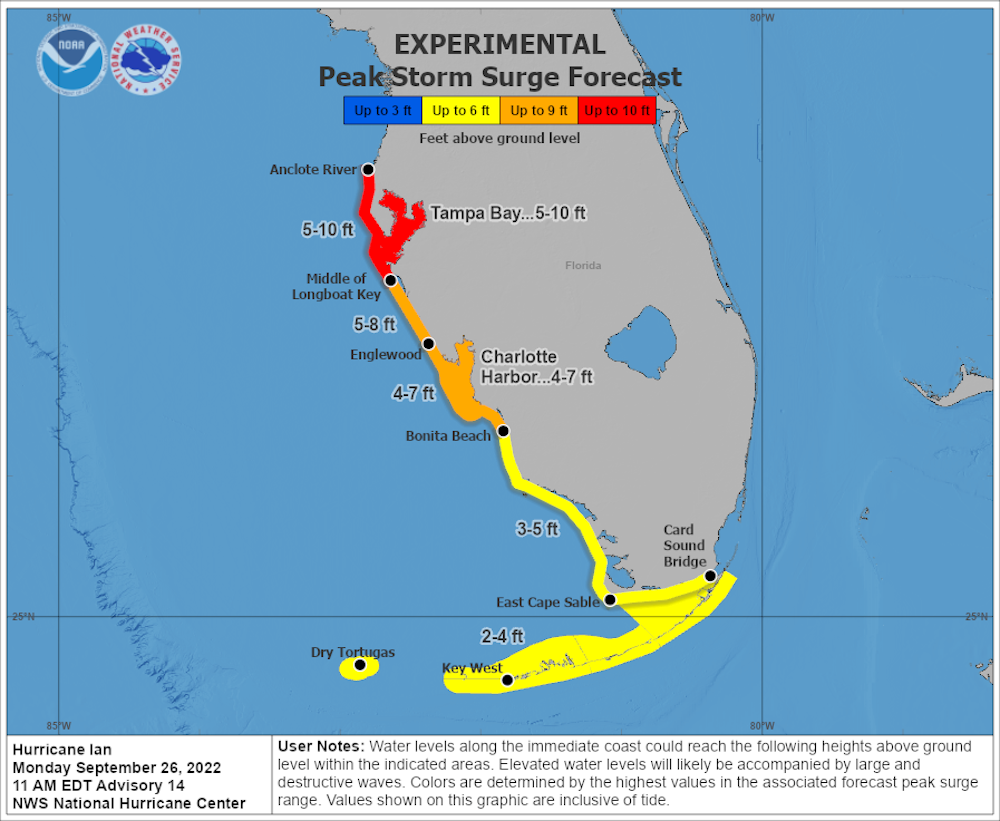
To forecast storm surge across a wide area, modelers break up the target area into many small pieces that together form a computational grid or mesh. Picture pixels in an image. The smaller the grid pieces, or cells, the higher the resolution and the more accurate the forecast. However, creating many small cells across a large area requires greater computing power, so forecasting storm surge takes longer as a result.
Forecasters can use low-resolution computer grids to speed up the process, but that reduces accuracy, leaving communities with more uncertainty about their flood risk.
AI can help speed that up.
How AI can create better forecasts
There are two main sources of uncertainty in storm surge predictions.
One involves the data fed into the computer model. A hurricane’s storm track and wind field, which determine where it will make landfall and how intense the surge will be, are still hard to forecast accurately more than a few days in advance. Changes to the coast and sea floor, such as from channel dredging or loss of salt marshes, mangroves or sand dunes, can affect the resistance that storm surge will face.
The second uncertainty involves the resolution of the computational grid, over which the mathematical equations of the surge and wave motion are solved. The resolution determines how well the model sees changes in landscape elevation and land cover and accounts for them, and at how much granularity the physics of hurricane surge and waves is solved.

AI models can produce detailed predictions faster. For example, engineers and scientists have developed AI models based on deep neural networks that can predict water levels along the coastline quickly and accurately by using data about the wind field. In some cases, these models have been more accurate than traditional hydrodynamic models.
AI can also develop forecasts for areas with little historic data, or be used to understand extreme conditions that may not have occurred there before.
For these forecasts, physics-based models can be used to generate synthetic data to train the AI on scenarios that might be possible but haven’t actually happened. Once an AI model is trained on both the historic and synthetic data, it can quickly generate surge forecasts using details about the wind and atmospheric pressure.
Training the AI on data from hydrodynamic models can also improve its ability to quickly generate inundation risk maps showing which streets or houses are likely to flood in extreme events that may not have a historical precedent but could happen in the future.
The future of AI for hurricane forecasting
AI is already being used in operational storm surge forecasts in a limited way, mainly to augment the commonly used physics-based models.
In addition to improving those methods, my team and other researchers have been developing ways to use AI for storm surge prediction using observed data, assessing the damage after hurricanes and processing camera images to deduce flood intensity. That can fill a critical gap in the data needed for validating storm surge models at granular levels.
As artificial intelligence models rapidly spread through every aspect of our lives and more data becomes available for training them, the technology offers potential to improve hurricane and storm surge forecasting in the future, giving coastal communities faster and more detailed warnings about the risks on the way.
Navid Tahvildari, Associate Professor of Civil and Environmental Engineering, Florida International University
This article is republished from The Conversation under a Creative Commons license. Read the original article.
STM Daily News is a vibrant news blog dedicated to sharing the brighter side of human experiences. Emphasizing positive, uplifting stories, the site focuses on delivering inspiring, informative, and well-researched content. With a commitment to accurate, fair, and responsible journalism, STM Daily News aims to foster a community of readers passionate about positive change and engaged in meaningful conversations. Join the movement and explore stories that celebrate the positive impacts shaping our world.

health and wellness
Zepbound Linked to Lower Healthcare Costs in Adults 55+ With Obesity, Real-World Study Suggests


A new real-world study of adults over age 55 with overweight or obesity found that sustained use of Zepbound (tirzepatide) for weight management was associated with lower healthcare costs over time compared with similar adults who were not treated. Eli Lilly and Company said the findings were driven in part by lower rates of hospital admissions and emergency department visits, and were published in Diabetes, Obesity and Metabolism.
What the study found
According to Lilly, researchers estimated healthcare cost differences over time (excluding the cost of Zepbound itself) using two established analytic methods. Across both approaches, monthly healthcare costs were lower, on average, among older adults who stayed on Zepbound.
Key estimates reported in the release include:
- At six months: costs were up to 15% lower (up to $181 per patient, per month).
- At 12 months: the estimated difference widened to as much as $607 per patient, per month, reflecting up to 38% lower costs than those not treated (estimates varied by model).
In the primary analysis, adults over 55 treated with Zepbound had lower rates of hospital admissions and emergency department visits across every follow-up period, along with numerically higher rates of routine outpatient and office visitsa pattern the company said was consistent with greater engagement in routine care.
Why Medicare is part of the conversation
Lilly said the cost findings may be relevant for older adults, including those in Medicares GLP-1 Bridge program. The company noted that beginning at six months, estimated healthcare savings nearly covered the programs monthly treatment cost of $195 per patient, per month, and by 12 months the estimated savings exceeded the reported monthly treatment cost.
Its important to note the release also emphasizes a limitation: claims data do not capture Zepbounds net price, and the study excluded the cost of Zepbound from total treatment costs. That means the reported differences reflect potential savings elsewhere in care that could offset treatment costs, not the full net cost impact.
Who was included in the analysis
The retrospective observational cohort study used Komodos Healthcare Map, a database of de-identified claims data from more than 330 million individuals enrolled in U.S. healthcare plans. The analysis included 15,843 adults over age 55 (mean age 64.5) with obesity or overweight plus at least one obesity-related complication who initiated Zepbound between November 2023 and September 2025. Each Zepbound user was matched 1:1 with a control participant who met the same eligibility criteria but did not initiate GLP-1 or GIP/GLP-1 receptor agonist medication.
What Zepbound is
Zepbound (tirzepatide) is a dual GIP and GLP-1 receptor agonist indicated for adults with obesity, or some adults with overweight who also have at least one weight-related medical problem, to lose weight and keep it off. Lilly also noted Zepbound is FDA-approved to treat adults with moderate-to-severe obstructive sleep apnea and obesity, and should be used alongside a reduced-calorie diet and increased physical activity.
Safety summary (high level)
The release includes an indications and safety summary with warnings. Among other risks, Lilly notes Zepbound carries a warning about thyroid tumors, including thyroid cancer, and may cause serious side effects such as severe stomach problems, dehydration leading to kidney problems, gallbladder problems, pancreatitis, serious allergic reactions, and low blood sugar (especially when used with certain diabetes medicines). Patients should talk with a healthcare provider about risks and whether the medication is appropriate for them.
Related Links
- Zepbound (official product site): https://zepbound.lilly.com/
- Lilly newsroom: https://www.lilly.com/news
- Journal page (publisher hub): https://dom-pubs.onlinelibrary.wiley.com/journal/14631326
- Medicare (official): https://www.medicare.gov/
- FDA MedWatch (side effect reporting): https://www.fda.gov/medwatch
Source
- PRNewswire / Eli Lilly and Company press release (Aug. 26, 2026): Zepbound linked to lower healthcare costs in adults over age 55 with obesity according to a real-world study
💪 Your health journey starts here! Explore the latest health news, fitness tips, wellness trends, and healthy living advice. Share your thoughts in the comments and subscribe to the STM Daily News newsletter to stay informed and inspired every day.
Economy
U.S. Consumer Confidence Slips as Americans Grow More Cautious About the Future
U.S. consumer confidence edged lower in August as Americans became more pessimistic about jobs, income and business conditions over the next six months, despite improved views of the current economy.

NEW YORK — U.S. consumer confidence edged lower in August as Americans expressed greater concern about future business conditions, jobs and household income, even as their assessment of the current economy improved.
The Conference Board reported that its Consumer Confidence Index fell 0.8 points to 89.4 in August, down from 90.2 in July.
The relatively small decline, however, masks a widening gap between how consumers view conditions today and what they expect in the months ahead.
The Present Situation Index, which measures consumers’ assessment of current business and labor market conditions, climbed 6.8 points to 121.2, reversing three consecutive months of declines.
Meanwhile, the Expectations Index, which measures the short-term outlook for income, business and employment conditions, dropped 5.8 points to 68.2.
“Consumer confidence moderated slightly in August for a second consecutive month,” Dana M. Peterson, chief economist at The Conference Board, said in the organization’s Aug. 25 release.
Jobs Look Better Today — But Consumers Worry About Tomorrow
Americans’ perceptions of the current labor market improved considerably during August. About 27% said jobs were plentiful, up from 24.4% in July, while 19.5% said jobs were hard to get, down from 21.7%.
The outlook for the next six months was considerably weaker.
Only 14.6% expected more jobs to become available, compared with 16.4% in July. At the same time, 26.1% expected fewer jobs.
Consumers were also less optimistic about their incomes. About 17.6% expected their income to increase, down from 19.5% in July, while 13.8% expected their income to decline.
Prices Remain on Consumers’ Minds
Inflation continues to influence how Americans feel about the economy. According to The Conference Board, consumers’ written responses frequently mentioned prices, oil and gasoline, food and groceries, trade, jobs, and war or conflict.
Average and median expectations for inflation over the next 12 months also increased slightly.
Interest rates remain another concern. More than six in 10 consumers — 61.3% — expected interest rates to rise over the next year, although that was slightly lower than the 62% recorded in July.
Consumers Are Still Planning to Spend
The softer outlook hasn’t eliminated Americans’ willingness to make purchases.
Auto-buying expectations remained strong on a six-month moving-average basis, while homebuying expectations declined slightly in August but remained on a longer-term upward trend after hitting decade lows in early 2024.
Restaurants, bars and takeout; utilities; and streaming, internet and mobile services ranked among consumers’ leading planned service expenses.
Consumers were less enthusiastic about discretionary activities including movies, personal-travel hotels, airfare, amusement parks, museums and historical sites.
Why It Matters
The August numbers paint a mixed picture of the American consumer.
People are seeing some improvement in the economy they are experiencing today, particularly in the labor market. But their expectations for the next six months are becoming noticeably more cautious.
That divide matters because consumer spending represents a major part of U.S. economic activity. If concerns about employment, inflation and household income begin translating into reduced spending, weakening confidence could eventually become more significant for the broader economy.
For now, the August survey suggests Americans haven’t stopped spending — but they’re increasingly keeping an eye on what may be coming next.
The preliminary August Consumer Confidence Survey was conducted online for The Conference Board by Toluna. The survey period was Aug. 3–16, 2026.
Source: The Conference Board, August 2026 Consumer Confidence Survey®, released Aug. 25, 2026.
STM Daily News Economy News Brief
Sources
- The Conference Board — U.S. Consumer Confidence, August 2026 — Primary source for the August Consumer Confidence Index, Present Situation Index and Expectations Index.
- The Conference Board — Consumer Confidence Survey & Data — Consumer confidence survey information, methodology and release schedule.
Related Economic Data
- Bureau of Economic Analysis — Consumer Spending — Official U.S. data tracking personal consumption expenditures. Consumer spending increased 0.2% in July 2026.
- BEA — Personal Income and Outlays, July 2026 — Tracks household income, disposable income, consumer spending and saving.
- Bureau of Labor Statistics — Consumer Price Index — Official inflation data. The July 2026 CPI was up 3.4% from a year earlier; August CPI is scheduled for release September 11.
- Federal Reserve — Consumer Credit — Federal Reserve data covering revolving and nonrevolving consumer credit.
Lifestyle
California and Minnesota Face $1B Medicaid Funding Hold
The Trump administration is withholding more than $1 billion in Medicaid funding from California and Minnesota over disputed medical claims. A social-policy historian examines how concerns about fraud have historically been used to justify funding cuts and undermine public confidence in Medicaid.

Ben Zdencanovic, University of Cambridge
California and Minnesota Face $1B Medicaid Funding Hold
The Trump administration announced on July 21, 2026, that it’s withholding US$867 million in federal healthcare funding for California and $200 million for Minnesota – a total of more than $1 billion.
Federal officials said the two states had failed to provide sufficient evidence that a number of disputed medical claims were legitimate. These include bills for in-home care and other services covered by the two states’ Medicaid programs for low-income residents.
Medicaid administrators say the funds can be recovered if the states supply the requested documentation. But the action is highly unusual: Typically, Medicaid officials partner with states to conduct an audit when they suspect fraud, a careful process that often takes years.
It’s the second time in 2026 that the Trump administration has withheld or deferred federal Medicaid funds for several states, including California and Minnesota, because of alleged fraud and abuse. The Democratic governors of those states have called the decision a politically motivated attack on their constituents.
I’m a historian of social policy who led the first comprehensive historical overview of Medi-Cal, California’s statewide Medicaid system. I’ve found that U.S. leaders have long used the language of fraud and abuse to blur the line between correcting very real failures within Medicaid and – as I believe the Trump administration is currently doing – discrediting and defunding the program itself.
Slashing the safety net
The Medicaid restrictions are part of the Trump administration’s overall efforts to slash federal funding for the safety net.
The large tax-and-spending bill that Trump signed into law in July 2025 as the cornerstone of his second-term agenda pared eligibility for Medicaid by introducing work requirements for some adults. It is cutting close to $1 trillion in federal spending on the program over the next decade.
Researchers estimate that almost 12 million people, on top of the estimated 28 million without health insurance in 2025, could become uninsured by 2034 due to these changes. By mid-2026, more than 3 million people had already lost their insurance coverage due to Republican changes to the Affordable Care Act.
‘Padlocking’ the ‘cookie jar’
In February 2026, Vice President JD Vance, Health Secretary Robert F. Kennedy Jr. and Dr. Mehmet Oz, the administrator of the Centers for Medicare & Medicaid Services, or CMS, announced a new anti-fraud initiative called Comprehensive Regulations to Uncover Suspicious Healthcare.
Also known by its rather unsubtle acronym, CRUSH, this initiative is taking unprecedented steps to withhold and defer funds in response to suspected fraud. “CMS is done trying to catch fraudsters with their hands in the cookie jar,” Oz said in announcing CRUSH’s formation. “Instead, we’re padlocking the jar and letting them starve.”
To be sure, Medicaid fraud, waste and abuse – such as providers billing Medicaid for services that are unnecessary or never rendered – are very real problems that cost taxpayers billions of dollars annually. They do divert funds from the low-income and disabled Americans enrolled in the program.
But the Trump administration’s latest moves are part of a much broader history of weaponizing Medicaid fraud and abuse – both real and imagined. I see them as a politicized attempt to prove that Medicaid itself is wasteful, that state governments cannot be trusted to administer federal money, and that public benefits inevitably invite dishonesty.
Providing little oversight at the start
Medicaid was established, along with Medicare for older adults, in 1965 as part of President Lyndon B. Johnson’s “Great Society” reforms. Despite providing millions of Americans with health insurance coverage for the first time, these programs had few centralized mechanisms for the kind of federal oversight that could prevent and catch fraud and abuse.
And the sheer scale and complexity of the Medicaid system – joint federal-state funding, varying eligibility requirements, millions of enrollees and thousands of providers – created opportunities for questionable billing practices among providers.
The 1970s saw a number of highly publicized Medicaid scandals involving nursing homes, laboratories, pharmacies and so-called “Medicaid mills” – healthcare providers that sought to bill the government for large numbers of Medicaid patients for shoddy and often fraudulent care.
A series of high-profile congressional investigations spurred demand for stronger Medicaid oversight and enforcement. That led to the Medicare-Medicaid Anti-Fraud and Abuse Amendments of 1977, which established the national Medicaid Fraud Control Units program.
The state-run Medicaid Fraud Control Units received generous federal matching funds to investigate and prosecute fraud.
The most serious Medicaid fraud was generally committed by healthcare providers and contractors, not patients. Medicaid Fraud Control Units were principally responsible for investigating providers, while also prosecuting the abuse and neglect of patients whose care was billed to Medicaid.
At the same time, however, Medicaid was becoming entangled in a broader political debate over social spending, whether many Americans were becoming too dependent on government benefits, and the alleged use of benefits by people who should not have received them. In the 1980s and 1990s, widely circulated stories about Medicaid exposed fraud and malfeasance by providers.
But disproportionately, they also highlighted the comparatively few instances of fraud by people enrolled in the program, such as cases where they submitted false receipts for covered medically related travel or sold drugs they obtained through Medicaid for free or at low cost.
Using Medicare fraud to justify spending cuts
The distinction between Medicaid and cash assistance programs, such as the Aid to Families with Dependent Children “welfare” program, frequently disappeared in political rhetoric. False or exaggerated stories that portrayed African American single mothers living extravagantly while fraudulently claiming welfare benefits became potent symbols of supposed government failure.
While campaigning as a presidential candidate, Ronald Reagan seized on this trope of the “welfare queen” in his attacks on social spending.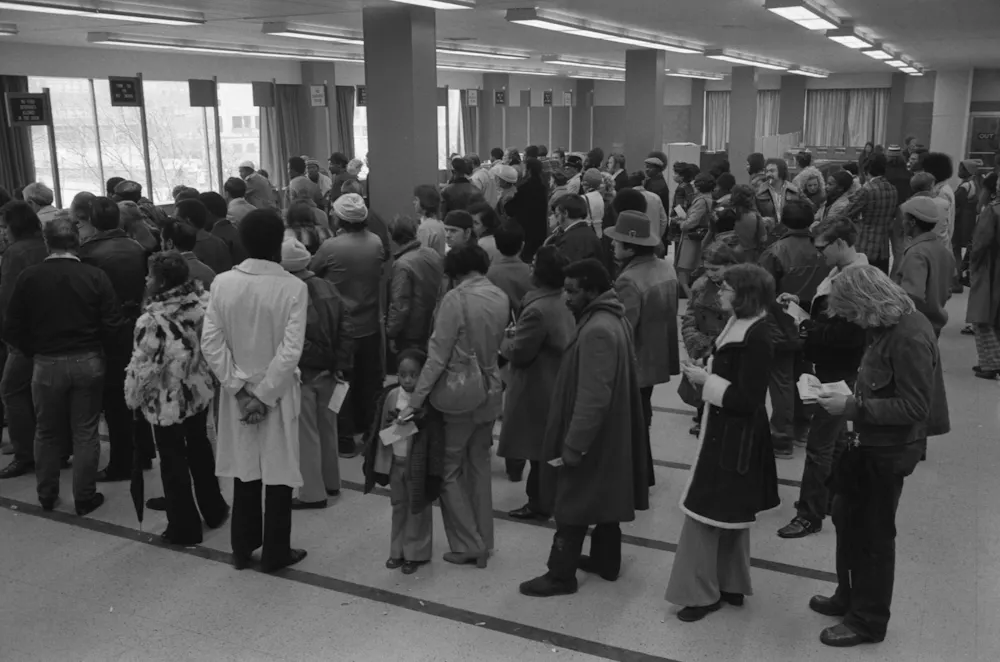
By the mid-1990s, opposition to welfare programs had become increasingly bipartisan. Politicians in both parties often used tales of Medicaid fraud on the part of providers and recipients to justify tighter eligibility rules and spending cuts.
Federal oversight expanded further with the Deficit Reduction Act of 2005, which created the Medicaid Integrity Program and strengthened federal oversight of state programs. The Affordable Care Act, the landmark healthcare legislation Congress passed in 2010, added new measures to screen providers and verify billing.
Concerns about Medicaid’s “integrity” became highly politicized in the debates surrounding the ACA. Critics of Medicaid expansion argued that increasing the number of people who could get health insurance through the program would increase fraud and improper enrollment. Supporters of expanding Medicaid to help more Americans gain health insurance maintained that anti-fraud rhetoric often disguised ideological opposition to the program’s expansion.
Blurring distinctions then and now
For the six decades that this program has helped millions of low-income Americans get healthcare, politicians have blurred the distinction between protecting Medicaid from abuse and using abuse to discredit Medicaid itself.
In my view, the Trump administration’s campaigns against California and Minnesota continue that pattern. It is using real weaknesses within Medicaid to advance much broader political arguments: that Democratic states cannot be trusted, that public benefits naturally invite abuse, and that withholding funds is itself a form of reform.
The result will no doubt be that fewer low-income Americans will be able to get the healthcare they need.
Ben Zdencanovic, Assistant Professor of U.S. History, University of Cambridge
This article is republished from The Conversation under a Creative Commons license. Read the original article.
💪 Your health journey starts here! Explore the latest health news, fitness tips, wellness trends, and healthy living advice. Share your thoughts in the comments and subscribe to the STM Daily News newsletter to stay informed and inspired every day.





