

animation
Ariel Award-Winning Animated Short ‘SHIMMER’ Makes Its Digital Debut on Short of the Week
Ariel Award-winning animated short SHIMMER by director Andrés Palma premieres on Short of the Week. A stunning exploration of fatherhood and regret created with Unreal Engine 5. Watch now.

Last Updated on December 9, 2025 by Daily News Staff

Ariel Award-Winning Animated Short ‘SHIMMER’ Makes Its Digital Debut on Short of the Week
A haunting tale of fatherhood, obsession, and redemption comes to life through groundbreaking animation technology
The world of independent animation just got a stunning new addition. Director Andrés Palma’s SHIMMER, an Ariel Award-winning animated short film, premiered December 8th on Short of the Week, the premier destination for curated short film content reaching millions of viewers worldwide.
A Father’s Dream, A Daughter’s Pain
Set against a desolate shoreline littered with the skeletal remains of forgotten shipwrecks, SHIMMER tells the emotionally charged story of Ricardo, a father whose single-minded obsession with building a towering lighthouse blinds him to the emotional wreckage he’s creating within his own family. As he chases what he believes will be salvation, his eldest daughter Lucía grows increasingly resentful—until her choices force Ricardo to face the devastating consequences of his dreams.
“Every project that matters to me comes from a place of unresolved emotion,” Palma explains. “Art is how I process pain and transform it into something meaningful. I trust the audience will resonate with that.”
This isn’t just animation—it’s personal healing rendered in light and shadow.
Link to related article: https://stmdailynews.com/gizmodo-premieres-award-winning-animated-short-shimmer/
Technical Brilliance Meets Emotional Depth
Short of the Week’s managing editor Rob Munday didn’t hold back in his praise: “A genuinely compelling, high-quality piece of 3D animation, marked by beautiful design work, strong character rigging, and impressive world-building. There’s tremendous potential here – it’s an exciting calling card for its creators.”
What sets SHIMMER apart technically is its innovative use of Unreal Engine 5, blending retro-futuristic aesthetics with cutting-edge visual design. The film’s most striking visual element—ethereal fish that shimmer across the night sky—was created using the Niagara particle system, merging procedural motion with hand-crafted animation cycles to achieve something that feels both organic and otherworldly.
A Collaborative Vision
Marking Palma’s directorial debut, SHIMMER benefits from powerhouse executive producers including celebrated Mexican animator Jorge R. Gutiérrez (The Book of Life, Maya and the Three) and Andrés Buzo. The film was developed through a groundbreaking collaboration between professionals and students at Mexico City’s Escena Animation Studio, the project-based learning arm of Escena Animation School.
The creative team includes associate producer Karla Vazquez, co-writer Santiago Maza Stern, and composer Alex Otaola—a collective effort that proves the power of mentorship and collaborative storytelling.

Why This Matters for Independent Animation
SHIMMER represents more than just another festival darling. It’s proof that independent creators with vision, backed by the right collaborators and technology, can produce work that rivals major studio productions. The film is currently being considered for FYC (For Your Consideration) in the Best Animated Short Film category—and based on its technical achievement and emotional resonance, it’s easy to see why.
For audiences hungry for animation that dares to explore complex emotional territory while pushing visual boundaries, SHIMMER delivers on both fronts. It’s a meditation on the cost of obsession, the weight of parental expectations, and the possibility of redemption—all wrapped in visuals that haunt long after the credits roll.
Watch Now
SHIMMER is now streaming exclusively on Short of the Week at ShortOfTheWeek.com/2025/12/08/shimmer
For more information about the film and its creators:
- Official Film Website: ShimmerShort.com
- Director’s Website: AndresPalma.com
- Follow the journey: @ShimmerShort, @Andres.Palma.c, @EscuelaEscena
For publicity inquiries, contact Patricia at info@ChicArt.world
PR coordination: Sophia at pr@chicart.world
Website: www.ChicArt.world



child education
Toy Story 5’s ‘Lilypad’ is an indictment of the world that birthed the ‘iPad Kid’
Toy Story 5 introduces “Lilypad,” a kid-friendly tablet that sidelines Woody and Buzz—and spotlights how the “iPad kid” debate is less about bad parenting and more about work, childcare costs, and a broken social safety net.

Aarushi Bhandari, Davidson College
In the trailer for “Toy Story 5,” a little girl named Bonnie is playing with her toys when a package arrives in the mail.
She opens it to find Lilypad, a tablet for children.
The iconic toys from the series – Woody, Buzz Lightyear, the Potato Heads, Forky and Slinky Dog – then watch in dismay as Bonnie casts them all aside in favor of the bright tablet screen. Rex the dinosaur exclaims, “What? Extinction? Not again!”
The film zeros in on a uniquely 21st-century phenomenon: the “iPad kid,” a term used – often disparagingly – to describe a generation of children who grew up enchanted by screens.
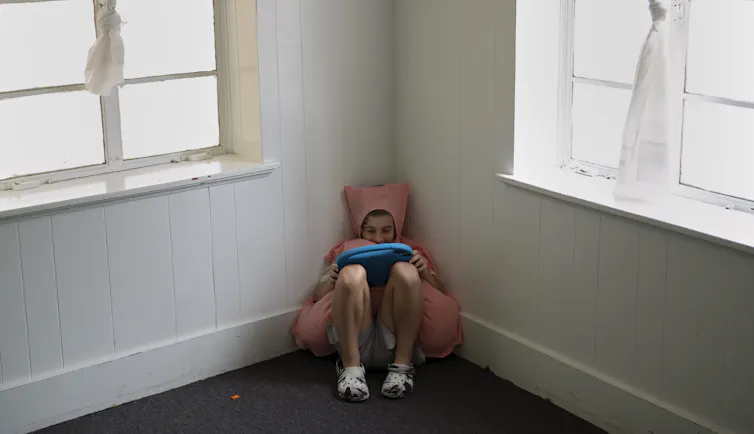
A lot of the discussion around tablet use among kids shames parents, framing it as an example of lazy or bad parenting. Yet factors such as long working hours and lack of access to affordable childcare compel many parents to rely on tablets.
As a scholar of the attention economy – and also as a mom to a 4-year-old – I’ve noticed a disconnect between the resources U.S. society offers parents versus what’s expected of them in the digital age.
’ Woody, Buzz and the gang must prove that traditional toys still matter when Bonnie becomes captivated by a high-tech tablet named Lilypad.
The pandemic and the ‘square au pair’
When the first “Toy Story” came out in 1995, many single-income families could still afford to comfortably raise multiple kids. It was more common for new parents to live near their extended families, such as grandparents, to provide childcare support. Federal policies provided some low-income families with cash assistance that helped ease the cost of transition to parenthood.
Since then, parenting has become a lot more challenging. Single-income households with kids under 18 have steadily declined as wages have stagnated, forcing both parents into the workforce. At the same time, it’s harder to qualify for government benefits.
And even when moms do earn a paycheck, working moms experience what sociologists call the “motherhood penalty” – career disadvantages, such as lower wages and promotion barriers, due to childbirth – even as U.S. parental leave policies remain weak.
So it’s hardly a surprise that fewer Americans are choosing to become parents under these conditions. But those who did have kids in the years leading up to 2020 ran smack into the COVID-19 pandemic.
The lockdown that started in March 2020 following the outbreak of the pandemic led to closures of schools and many workplaces. Many parents either worked from home or provided critical work in grocery stores and hospitals. Kids stayed home and schools transitioned to remote-learning models.
It’s important to remember that many institutions with social legitimacy and authority encouraged the use of tablets during the COVID-19 pandemic lockdowns.
School systems around the world normalized their use for remote learning. Children as young as 4 were given tablets, which gave their parents space to complete their own remote work and other household tasks, with some moms referring to it as “the square au pair.”
In this sense, the tablet became a form of school-sanctioned childcare.
Economic activity was minimally disrupted. Productivity hummed along. And the kids? Comfortably distracted.
For some households, there’s little choice
When lockdowns ended, tablets remained integrated into the education system. In 2021, 4 in 5 U.S. households with children had a tablet. Beyond schoolwork, kids also use tablets for activities, such as video games and watching TV.
The adverse impacts of excessive screen time in general has been well documented for decades. But scholars have only recently unpacked the specific harms of interactive tablet use among young children.
Children who use tablets are more likely to experience emotional dysregulation and dependency on screens. Researchers have also found tablet use among kids to be significantly associated with ADHD diagnoses.
At the same time, research shows screen time use among children is tied to social class.
Parents from working- and middle-class households are more likely to rely on screens compared to high-income parents, who can hire childcare services, such as full-time nannies.
Parental education is also a factor. Americans generally have little grasp of digital hygiene – knowledge about best practices to minimize negative effects of screens. But households with parents who didn’t graduate from college are even more in the dark.
And while schools hand out tablets, most of them fail to provide students and families with a comprehensive education on the adverse impacts of excessive screen time.
In other words, this isn’t a Generation Alpha problem. Most people – adults included, with or without children – aren’t properly educated and informed about their choices around technology use. Yet adults continue to be shamed if they hand their kid a tablet. All the while, parents navigate the added burdens of challenging the educational status quo around tablets.
Frankenstein’s village
When work is the only sturdy pillar in a society where government benefits for low-income people, family ties and community institutions have eroded, tablets replace the metaphorical village – the web of social support that helps families thrive.
In pursuit of jobs or affordable housing, many young parents move farther from their extended families and the communities where they grew up. The working parents who are forced to rely on daycare – sending kids as young as a few weeks old – end up spending an exorbitant amount of money on the service.
Meanwhile, the persistence of traditional gender roles ensures that many moms still go home to a second shift: Working women continue to disproportionately cook, clean and care for children. No matter how overworked or exhausted some parents are, they cannot afford to hire help as the inflation and cost-of-living crises hit historic highs.
Big Tech takes advantage of this crisis with a “solution” that ultimately treats children as products, manipulating their emotions and mining their data. As I argue in my book, “Attention and Alienation,” children’s dependency on screens is a key component of the attention economy.
The earlier a life is monetized, the longer it is profitable.
“Toy Story 5” and its critical take on the tablet may be helpful. But it will take more than a blockbuster movie to protect small kids from the harms of too much screen time. Instead, I think it will require strong parental leave policies, expansive and affordable childcare access, fair wages and shared household labor.
In other words, there needs to be a full rehabilitation of the village.
Aarushi Bhandari, Assistant Professor of Sociology, Davidson College
This article is republished from The Conversation under a Creative Commons license. Read the original article.
📰 Enjoying STM Daily News? Join the conversation!
💬 Leave a comment, share your thoughts, and subscribe to our newsletter for the latest stories, updates, and “News You Can Use This Moment!” delivered to your inbox.
Stay connected with STM Daily News!

Entertainment
Sharpie and Elmer’s Go “To Infinity and Beyond” With a Limited-Edition Toy Story 5 Collection
Sharpie and Elmer’s unveil a limited-edition Toy Story 5 collection—markers, S-Note highlighters, glue sticks, and slime kits—ahead of the film’s June 19 debut.


Sharpie and Elmer’s Launch Limited-Edition Toy Story 5 Collection
If your summer plans include crafts at the kitchen table, labeling school supplies before the first bell, or simply chasing a hit of nostalgia, Sharpie® and Elmer’s® just dropped something that checks every box. Ahead of Disney and Pixar’s Toy Story 5 theatrical debut on June 19, 2026, the Newell Brands staples are launching a limited-edition lineup inspired by the film’s iconic characters, colors, and “let’s make something” energy.
The idea is simple: take the everyday tools people already trust—markers, highlighters, glue sticks, and slime kits—and give them a Toy Story glow-up that feels equally giftable and useful. It’s designed for kids discovering the franchise for the first time and adults who grew up with Woody, Buzz, and Jessie.
What’s in the limited-edition collection?
The collection is rolling out nationwide at major retailers including Amazon, Walmart, and Target, timed for peak summer crafting and back-to-school shopping.
The Sharpie side
- Sharpie Disney and Pixar’s Toy Story 5 Permanent Markers Collectible packs featuring Toy Story 5character artwork and limited-edition barrel designs with the official film logo printed on each marker. The set leans into bold, film-inspired colors—think Buzz Lightyear greens and purples—built for everything from labeling supplies to character-inspired doodles.
- Sharpie Disney and Pixar’s Toy Story 5 S-Note Creative Highlighters A vivid, high-contrast set with a versatile chisel tip for both highlighting and creative lettering. It’s the kind of tool that makes note-taking feel less like a chore and more like a mini design project.

The Elmer’s side
- Elmer’s Disney and Pixar’s Toy Story 5 Glue Sticks The classic disappearing purple formula—teacher-trusted, kid-safe, and now wrapped in Toy Story 5 character designs for a little extra fun in the supply bin.
- Elmer’s Disney and Pixar’s Toy Story 5 Slime Kits DIY slime kits with themed glue colors, activators, and “out-of-this-world” textures and scents. Each kit is built to be an all-in-one experience: mix, customize, and take your slime creations “to infinity and beyond.”
Why this collab makes sense (and why it’ll sell)
Sharpie and Elmer’s are already part of the creative routine for a lot of households—school projects, office organization, crafts, and rainy-day activities. Newell Brands’ Kris Malkoski framed the partnership as a way to celebrate creativity in a moment that feels “nostalgic and fresh,” especially as families shift into summer mode and start prepping for the school year.
Disney echoed that creative angle too, with Lylle Breier (EVP, Partnerships Promotions and Special Events) calling Toy Story 5 a celebration of storytelling—and positioning the collection as a way for fans to express their imagination through hands-on making.
A :30 spot ties it into the movie’s marketing push
This isn’t just packaging and product placement. Sharpie and Elmer’s also collaborated with Disney and Pixar on a bespoke 30-second ad showing the collection in use, created to support the film’s theatrical marketing campaign. Translation: expect to see this collaboration show up where Toy Story 5 hype already lives.
Availability and pricing snapshot
The collection will be available in multiple pack sizes for different needs in and out of the classroom:
- Sharpie Toy Story 5 Fine Permanent Markers: 5ct (coming soon to Target.com); 12ct (coming soon to Walmart); 24ct (available now on Amazon) — MSRP: $4.99–$19.99
- Sharpie Toy Story 5 S-Note Highlighters: 12ct, 24ct — MSRP: $9.99–$19.99
- Elmer’s Toy Story 5 Glue Sticks: 4ct, 12ct — MSRP: $3.47–$7.49
- Elmer’s Toy Story 5 Slime Kits: 4pc, 10pc — MSRP: $19.99–$29.99
For shoppers, the timing is the point: the products are positioned as easy add-ons for summer gifting, creative downtime, and back-to-school lists—right before the movie hits theaters.
Quick Toy Story 5 refresher: “Toy meets Tech”
Disney and Pixar’s Toy Story 5 brings the gang back with a new twist: “Toy meets Tech.” Woody (Tom Hanks), Buzz Lightyear (Tim Allen), Jessie (Joan Cusack), and friends face a new challenge when Bonnie gets Lilypad, a tablet device voiced by Greta Lee, with her own ideas about what playtime should look like.
The film is directed by Andrew Stanton, co-directed by Kenna Harris, produced by Lindsey Collins, and written by Stanton and Harris. Randy Newman returns with an original score—his fifth Toy Story feature.
The takeaway
Whether you’re a parent building a summer activity stash, a teacher restocking for fall, or a longtime fan who wants a small collectible piece of the franchise, the Sharpie and Elmer’s Toy Story 5 collection is built to be both practical and fun. It’s a smart, seasonal collaboration that turns routine supplies into something you’ll actually want to pick up—and maybe even keep.
If you’re shopping, look for the limited-edition collection at Amazon, Walmart, and Target ahead of Toy Story 5’s June 19, 2026 release.
Related Links
- Amazon (search/product landing for the collection): https://www.amazon.com
- Walmart (search/product landing for the collection): https://www.walmart.com
- Target (search/product landing for the collection): https://www.target.com
Brand / official info links
- Newell Brands (company info / press): https://www.newellbrands.com
- Elmer’s official site: https://www.elmers.com
About the Movie
- Disney (official studio hub): https://www.disney.com
- Pixar (official studio hub): https://www.pixar.com
STM Daily News’ Entertainment section delivers the latest on movies, television, music, pop culture, events, and industry buzz. From breaking news and trending stories to feature coverage and community-centered entertainment reporting, it keeps readers connected to what’s happening on screen, on stage, and beyond.
anime
Bible Anime Series in Development at Texas Studio With Global Faith-Based Ambitions
A Texas animation studio is developing a TV-MA Bible anime series, blending faith-based storytelling with cinematic anime for global streaming audiences.

Last Updated on April 10, 2026 by Daily News Staff
A Fort Worth animation company is betting that faith-based storytelling and anime can meet in a way that feels cinematic, serious, and built for modern streaming audiences.
History In Motion Studios has announced Shinjitsu Ugoki (Truth Movement), a TV-MA Bible anime series now in development. The Texas-based studio says the project is designed for mature audiences and will present biblical narratives through serialized storytelling, theological research, and character-driven drama.
The announcement places the studio at the intersection of two growing markets: faith-based entertainmentand the global anime industry. Rather than aiming for a traditional family format, the series is being positioned as a more intense, long-form production shaped by conflict, consequence, and spiritual tension.
History In Motion Studios is also using Unreal Engine as part of its production pipeline to support cinematic world-building and high-fidelity environments. Script development, early character design, and broader production planning are underway through 2026.
Founder Edith Alvarado said the studio sees a major opportunity in bringing biblical storytelling into anime.
“As audiences continue to seek meaningful, story-driven content, we believe there is significant opportunity within the anime format to engage biblical narratives with depth and seriousness,” Alvarado said. “The question isn’t whether biblical stories belong in anime, it’s why it took this long. We’re here to change that; Anime will know the story of Jesus.”
The women-led Christian studio operates out of Fort Worth, adding to the growing list of independent creative companies building outside traditional entertainment hubs. As of Q1 2026, the series remains in active development, with more partnership and expansion announcements expected later this year.
Related Links
Source: History In Motion Studios
STM Daily News’ Entertainment section delivers the latest on movies, television, music, pop culture, events, and industry buzz. From breaking news and trending stories to feature coverage and community-centered entertainment reporting, it keeps readers connected to what’s happening on screen, on stage, and beyond.





