Connect with us

art, culture and humanities

Australia’s Prestigious Darwin Aboriginal Art Fair returns Online for its 18th Year

Published

on

Last Updated on August 9, 2024 by Daily News Staff

DARWIN, Australia /PRNewswire/ — The world-renowned Darwin Aboriginal Art Fair (DAAF) returns to Larrakia Country in Darwin, Australia, and is online from August 9 to 11 (2024), celebrating Aboriginal and Torres Strait Islander art, design and culture.

Darwin Aboriginal Art Fair

The largest event of its kind, DAAF Online is a global mecca for art and culture enthusiasts, gallerists, collectors, and first time buyers, seeking a truly unique shopping experience.


Hosting works from more that 40 Aboriginal and Torres Strait Islander Art Centres, DAAF Online invites guests to immerse in the rich and diverse contemporary creations of the world’s oldest living cultures. Importantly, DAAF Foundation also ensures the ability to ethically acquire exquisite artworks, with 100 percent of sales made going back to artists and their communities. 

For its third year in a hybrid model, DAAF Online offers Art Centres from across the most remote regions of Australia, the opportunity for a global platform. This year features a breadth of coveted works by emerging and established artists from internationally renowned Art Centres.

From the prolific paintings, ḻarrakitj (memorial poles), ṉuwayak (bark paintings), and yiḏaki (didgeridoo) from Northeast Arnhem Land’s Buku Larrŋgay Mulka, through to the vibrant large scale paintings Iwantja Arts, hailing from the rocky, desert Country on the Anangu Pitjantjatjara Yankunytjatjara (APY) Lands in the remote north-west of South Australia.

Exclusively only joining the online platform this year are Hermannsburg Potters, based at the remote foothills of the MacDonnell Ranges in Australia’s Northern Territory. Hermannsburg Potters bring the vibrant landscape and spirit of Central Australia to life with their hand-crafted terracotta and underglaze pots. The three founding artists celebrated their 30-year anniversary in 2023 and continue practicing and passing their technical skills and cultural knowledge onto the next generation.

DAAF Foundation’s executive director, Claire Summers, said “the Darwin Aboriginal Art Fair will return this August, allowing visitors to purchase and immerse themselves into the art of over 1,500 Indigenous artists and designers.

“We feel privileged to provide this global stage. It’s inspiring to witness the market growth and appreciation for Aboriginal and Torres Strait Islander art and design since the Fair began 18 years ago.

“Art fairs have a critical role to play in helping artists connect to both domestic and international markets. DAAF is unique in that it provides a platform for artists to showcase their work, putting Indigenous agency and their culture at the forefront.

Advertisement
Get More From A Face Cleanser And Spa-like Massage
Darwin Aboriginal Art Fair
Image Credit: Darwin Aboriginal Art Fair


“We look forward to welcoming guests from around the globe to buy directly from our Art Centres through our online component of the Fair,” she said.

DAAF Online can be accessed via the following links:

https://daaf.com.au

https://2024.daaf.com.au

Further Event Information

18th Darwin Aboriginal Art Fair (DAAF) | 8-11 August:

Including the Opening Ceremony, Public Program and DAAF Online 

The only national event of its kind, DAAF has secured a reputation as one of the country’s most significant and internationally recognised arts events, creating a unique opportunity to connect with, and ethically purchase art directly from Art Centres, while meeting artists and learning firsthand about their cultural heritage, stories, history and traditional artistic practices through a range of masterclasses, talks and demonstrations.

DAAF is proudly supported by the Tim Fairfax Family Foundation, Australian Government Indigenous Visual Arts Industry Support, Australian Government Visual Arts and Craft Strategy, Northern Territory Government, Northern Territory Major Events Company, Place for Indigenous Art & Culture, University of Melbourne, and City of Darwin.

Those unable to make the journey to the Top End of Australia and DAAF at the Convention Centre in person are invited to experience DAAF Online 2024. Free to access, the online platform will be open from 10am Friday 9 August, to 9pm Sunday 11 August, 2024 (Australian Central Standard Time).

Advertisement
Get More From A Face Cleanser And Spa-like Massage

Information & tickets: www.daaf.com.au

About the Darwin Aboriginal Art Fair Foundation (DAAF Foundation) 

The Darwin Aboriginal Art Fair (DAAF) Foundation is a not-for-profit, Indigenous organization, which is owned and governed by the 80+ Australian Aboriginal and Torres Strait Islander Art Centres and Peak Bodies it represents. DAAF Foundation celebrates the rich cultural and artistic diversity of Australia’s Aboriginal and Torres Strait Islander Art Centres. DAAF Foundation’s vision is to provide vibrant and exciting platforms for First Nations art, design, and culture with a reputation for innovation, diversity and cultural integrity. Its keystone event is the renowned Darwin Aboriginal Art Fair. More here:

https://daaf.com.au/foundation

Instagram: @darwinartfair Facebook: @DarwinAboriginalArtFair 

SOURCE Darwin Aboriginal Art Fair Foundation

The Bridge is a section of the STM Daily News Blog meant for diversity, offering real news stories about bona fide community efforts to perpetuate a greater good. The purpose of The Bridge is to connect the divides that separate us, fostering understanding and empathy among different groups. By highlighting positive initiatives and inspirational actions, The Bridge aims to create a sense of unity and shared purpose. This section brings to light stories of individuals and organizations working tirelessly to promote inclusivity, equality, and mutual respect. Through these narratives, readers are encouraged to appreciate the richness of diverse perspectives and to participate actively in building stronger, more cohesive communities.

https://stmdailynews.com/category/the-bridge

Author


Discover more from Daily News

Subscribe to get the latest posts sent to your email.

Continue Reading
Advertisement Sports Research

Entertainment

Philly theaters unite to stage 3 plays by Pulitzer-winning playwright James Ijames

James Ijames, 2022 Pulitzer Prize winner for “Fat Ham,” is celebrated with a Citywide Pass in Philadelphia, offering access to three of his plays across different theaters. This initiative fosters collaboration among local theaters and showcases Ijames’ unique ability to create nuanced, character-driven narratives that explore complex queer and Black identities.

Published

on

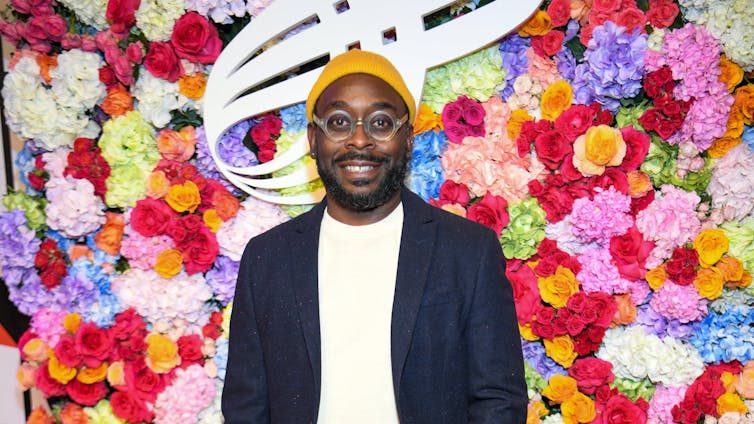
James Ijames in front of floral backdrop.
James Ijames won the 2022 Pulitzer Prize for drama for his play ‘Fat Ham.’ Here he’s shown at the Obie Awards in New York City in February 2023. Jenny Anderson/Getty Images for American Theatre Wing

Bess Rowen, Villanova University

Most theater subscriptions offer a patron access to a single theater’s season. But Philadelphia’s new Citywide James Ijames Pass provides tickets to three James Ijames – pronounced EYE-ms, rhymes with “chimes” – plays at three theaters in Philadelphia. Subscribers will also get one mustard-colored beanie, one of Ijames’ signature accessories.

The full pass, which costs US$130, includes tickets for the Arden Theatre’s “Good Bones,” which premiered Jan. 22 and runs through March 22, the Wilma Theater’s “The Most Spectacularly Lamentable Trial of Miz Martha Washington,” which runs March 17 to April 5, and the Philadelphia Theatre Company’s “Wilderness Generation,” a world premiere that runs April 10 to May 3. There is also a two-show pass for $90 without “Good Bones.”

I’m a theater theorist, historian and practitioner who has written about Ijames’ work before and after his 2022 Pulitzer Prize. I believe this landmark collaboration between three important Philadelphia theaters is a fitting celebration of a multi-hyphenate theater artist who continues to champion his longtime artistic home.

Actor, playwright, director

Ijames, 46, was born in North Carolina and attended Morehouse College in Atlanta, Georgia. He earned his Master of Fine Arts degree at Temple University and stayed in Philadelphia after graduating.

Notably, this playwright’s MFA is in the study of acting. Ijames is also a talented director, and he performed and directed at multiple theaters around Philadelphia before starting to work as a playwright. He was also a tenured professor of theater at Villanova University, where I had the privilege to work with him and watch his creative process before he moved to New York City in 2025 to run the playwriting concentration at Columbia University.

Ijames was already a local celebrity in Philly before winning the Pulitzer Prize for drama for “Fat Ham,” his Hamlet adaptation centered on a queer Black Hamlet named Juicy and the legacy of his father’s barbecue joint. The New York theater scene took notice of him when the National Black Theatre staged “Kill Move Paradise” in 2017. This haunting piece is set in limbo, where unarmed Black men who have been killed by police examine how they have come to this place and how society continues to enable this pattern.

Other Ijames plays include “White,” a satire of the art world that tells the story of a gay white male artist who hires a Black woman actor to pretend to have done his work to see if that makes a difference in how his art is viewed. “TJ Loves Sally 4Ever” sets Thomas Jefferson and Sally Hemings’ relationship on a college campus where “TJ” is a dean and Sally is a student. And “Reverie” is a chamber play, which is an intimate meditation with an earnest and somber tone. In it, the father of a recently deceased Black gay man comes to meet the man he believed was his son’s partner.

Most recently, in 2025, Ijames partnered with the Australian pop singer Sia on a musical called “Saturday Church.” It is a story about reconciling queer community and Christian faith, and relying on the support of family, both biological and chosen.

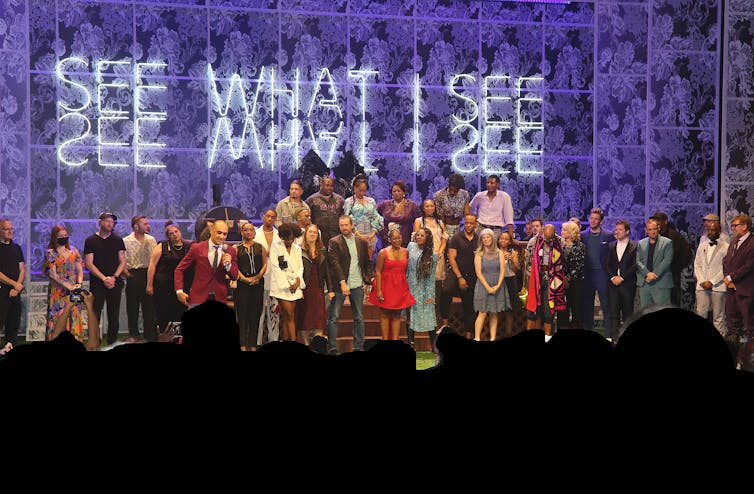
A large crowd of people onstage with a sign behind them that reads 'See What I See'
The cast and crew of ‘Fat Ham’ during the opening night curtain call at the Roundabout American Airlines Theatre on Broadway on April 12, 2023. Bruce Glikas/WireImage via Getty Images

Charting new dramatic territory

Although his theatrical styles and genres vary, at his core, Ijames writes nuanced, character-driven works that revolve around interpersonal relationships. His plays are playgrounds for performers, particularly due to his ability to write complex queer Black characters.

Influential American playwright Suzan-Lori Parks notes in her 1994 essay “Elements of Style” that the conflict between Black people and white people is the default trope of how Black people have been represented onstage – by almost exclusively white playwrights – for most of U.S. theater history. Parks posits that a way to avoid this centering of white conflict in Black lives comes from new dramatic territory that depicts conflicts between Black people and anything else.

Ijames never sets his Black characters in opposition to white society alone. He also refuses to take up the tropes of LGBTQ identity as incompatible with religion, or the idea that characters can be only gay or straight. Instead, Ijames creates narratives with queer religious people and pansexual men whose identities are not sources of conflict.

Advertisement
Get More From A Face Cleanser And Spa-like Massage

The citywide pass

The plays in the citywide pass offer an exciting cross section of what makes Ijames’s work so vibrant.

“Good Bones” is the story of a now-affluent Black woman, Aisha, who moves back to her blue-collar hometown. Aisha might be from this working-class neighborhood, but her elaborate renovations and white-collar sensibilities make her return seem more like gentrification than homecoming, at least as far as her local contractor can see.

“Miz Martha” follows the titular Martha Washington through a fever-dream-inspired trial in her final moments, as enslaved people care for her while knowing her death means their freedom.

And “Wilderness Generation” follows five cousins reunited in the U.S. South after many years apart, ready to talk about the secrets from their pasts.

With theater’s ever-changing and unstable financial landscape, I believe the Citywide James Ijames Pass is an exciting new subscriber model. The collaboration highlights Philadelphia’s theatrical talent and banks on local theaters working together to build audiences instead of treating each other as competition – a new development that could change how regional theater scenes operate.

Bess Rowen, Assistant Professor of Theatre, Villanova University

This article is republished from The Conversation under a Creative Commons license. Read the original article.

Looking for an entertainment experience that transcends the ordinary? Look no further than STM Daily News Blog’s vibrant Entertainment section. Immerse yourself in the captivating world of indie films, streaming and podcasts, movie reviews, music, expos, venues, and theme and amusement parks. Discover hidden cinematic gems, binge-worthy series and addictive podcasts, gain insights into the latest releases with our movie reviews, explore the latest trends in music, dive into the vibrant atmosphere of expos, and embark on thrilling adventures in breathtaking venues and theme parks. Join us at STM Entertainment and let your entertainment journey begin! https://stmdailynews.com/category/entertainment/

and let your entertainment journey begin!

Advertisement
Get More From A Face Cleanser And Spa-like Massage

Author


Discover more from Daily News

Subscribe to get the latest posts sent to your email.

Continue Reading

STM Blog

‘I were but little happy, if I could say how much’: Shakespeare’s insights on happiness have held up for more than 400 years

The World Happiness Report indicates the U.S. ranks 24th in global happiness, emphasizing that joy arises from societal relationships and care. Shakespeare’s works explore happiness’ duality—both fortune and contentment—highlighting cultural influences that affect individuals’ experiences. Understanding happiness requires recognizing social inequalities, community support, and shared cultural beliefs.

Published

on

Last Updated on May 31, 2025 by Daily News Staff

Shakespeare
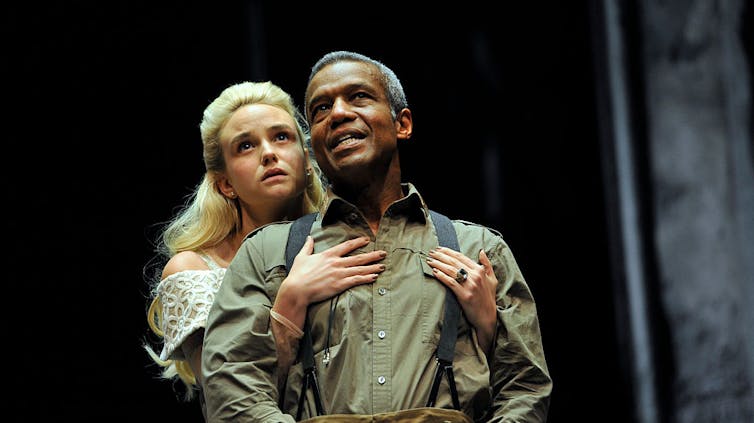
Joanna Vanderham as Desdemona and Hugh Quarshie as the title character in a Royal Shakespeare Company production of ‘Othello.’
Robbie Jack/Corbis via Getty Images

Cora Fox, Arizona State University

What is “happiness” – and who gets to be happy?

Since 2012, the World Happiness Report has measured and compared data from 167 countries. The United States currently ranks 24th, between the U.K. and Belize – its lowest position since the report was first issued. But the 2025 edition – released on March 20, the United Nations’ annual “International Day of Happiness” – starts off not with numbers, but with Shakespeare.

“In this year’s issue, we focus on the impact of caring and sharing on people’s happiness,” the authors explain. “Like ‘mercy’ in Shakespeare’s ‘Merchant of Venice,’ caring is ‘twice-blessed’ – it blesses those who give and those who receive.”

Shakespeare’s plays offer many reflections on happiness itself. They are a record of how people in early modern England experienced and thought about joy and satisfaction, and they offer a complex look at just how happiness, like mercy, lives in relationships and the caring exchanges between people.

Contrary to how we might think about happiness in our everyday lives, it is more than the surge of positive feelings after a great meal, or a workout, or even a great date. The experience of emotions is grounded in both the body and the mind, influenced by human physiology and culture in ways that change depending on time and place. What makes a person happy, therefore, depends on who that person is, as well as where and when they belong – or don’t belong.

Happiness has a history. I study emotions and early modern literature, so I spend a lot of my time thinking about what Shakespeare has to say about what makes people happy, in his own time and in our own. And also, of course, what makes people unhappy.

From fortune to joy

A timber home with lush gardens.
Shakespeare’s birthplace in Stratford-upon-Avon, England.
Tony Hisgett/Flickr via Wikimedia Commons, CC BY-SA

“Happiness” derives from the Old Norse word “hap,” which meant “fortune” or “luck,” as historians Phil Withington and Darrin McMahon explain. This earlier sense is found throughout Shakespeare’s works. Today, it survives in the modern word “happenstance” and the expression that something is a “happy accident.”

But in modern English usage, “happy” as “fortunate” has been almost entirely replaced by a notion of happiness as “joy,” or the more long-term sense of life satisfaction called “well-being.” The term “well-being,” in fact, was introduced into English from the Italian “benessere” around the time of Shakespeare’s birth.

The word and the concept of happiness were transforming during Shakespeare’s lifetime, and his use of the word in his plays mingles both senses: “fortunate” and “joyful.” That transitional ambiguity emphasizes happiness’ origins in ideas about luck and fate, and it reminds readers and playgoers that happiness is a contingent, fragile thing – something not just individuals, but societies need to carefully cultivate and support.

For instance, early in “Othello,” the Venetian senator Brabantio describes his daughter Desdemona as “tender, fair, and happy / So opposite to marriage that she shunned / The wealthy, curled darlings of our nation.” Before she elopes with Othello she is “happy” in the sense of “fortunate,” due to her privileged position on the marriage market.

Advertisement
Get More From A Face Cleanser And Spa-like Massage

Later in the same play, though, Othello reunites with his new wife in Cyprus and describes his feelings of joy using this same term:

…If it were now to die,
‘Twere now to be most happy, for I fear
My soul hath her content so absolute
That not another comfort like to this
Succeeds in unknown fate.

Desdemona responds,

The heavens forbid
But that our loves and comforts should increase
Even as our days do grow!

They both understand “happy” to mean not just lucky, but “content” and “comfortable,” a more modern understanding. But they also recognize that their comforts depend on “the heavens,” and that happiness is enabled by being fortunate.

“Othello” is a tragedy, so in the end, the couple will not prove “happy” in either sense. The foreign general is tricked into believing his young wife has been unfaithful. He murders her, then takes his own life.

The seeds of jealousy are planted and expertly exploited by Othello’s subordinate, Iago, who catalyzes the racial prejudice and misogyny underlying Venetian values to enact his sinister and cruel revenge.

A man and woman hold hands, looking upset, as they sit on a cushion on stage.
James Earl Jones playing the title role and Jill Clayburgh as Desdemona in a 1971 production of ‘Othello.’
Kathleen Ballard/Los Angeles Times/UCLA Library via Wikimedia Commons, CC BY-SA

Happy insiders and outsiders

“Othello” sheds light on happiness’s history – but also on its politics.

While happiness is often upheld as a common good, it is also dependent on cultural forces that make it harder for some individuals to experience. Shared cultural fantasies about happiness tend to create what theorist Sara Ahmed calls “affect aliens”: individuals who, by nature of who they are and how they are treated, experience a disconnect between what their culture conditions them to think should make them happy and their disappointment or exclusion from those positive feelings. Othello, for example, rightly worries that he is somehow foreign to the domestic happiness Desdemona describes, excluded from the joy of Venetian marriage. It turns out he is right.

Because Othello is foreign and Black and Desdemona is Venetian and white, their marriage does not conform to their society’s expectations for happiness, and that makes them vulnerable to Iago’s deceit.

Similarly, “The Merchant of Venice” examines the potential for happiness to include or exclude, to build or break communities. Take the quote about mercy that opens the World Happiness Report.

The phrase appears in a famous courtroom scene, as Portia attempts to persuade a Jewish lender, Shylock, to take pity on Antonio, a Christian man who cannot pay his debts. In their contract, Shylock has stipulated that if Antonio defaults on the loan, the fee will be a “pound of flesh.”

“The quality of mercy is not strained,” Portia lectures him; it is “twice-blessed,” benefiting both giver and receiver.

Advertisement
Get More From A Face Cleanser And Spa-like Massage

It’s a powerful attempt to save Antonio’s life. But it is also hypocritical: Those cultural norms of caring and mercy seem to apply only to other Christians in the play, and not the Jewish people living alongside them in Venice. In that same scene, Shylock reminds his audience that Antonio and the other Venetians in the room have spit on him and called him a dog. He famously asks why Jewish Venetians are not treated as equal human beings: “If you prick us, do we not bleed?”

A sepia-toned photograph of a man with a beard, curly hair and cap staring intently at the camera.
Actor Henry Irving as Shylock in a late 19th-century performance of ‘The Merchant of Venice.’
Lock & Whitfield/Folger Shakespeare Library via Wikimedia Commons, CC BY-SA

Shakespeare’s plays repeatedly make the point that the unjust distribution of rights and care among various social groups – Christians and Jews, men and women, citizens and foreigners – challenges the happy effects of benevolence.

Those social factors are sometimes overlooked in cultures like the U.S., where contemporary notions of happiness are marketed by wellness gurus, influencers and cosmetic companies. Shakespeare’s plays reveal both how happiness is built through communities of care and how it can be weaponized to destroy individuals and the fabric of the community.

There are obvious victims of prejudice and abuse in Shakespeare’s plays, but he does not just emphasize their individual tragedies. Instead, the plays record how certain values that promote inequality poison relationships that could otherwise support happy networks of family and friends.

Systems of support

Pretty much all objective research points to the fact that long-term happiness depends on community, connections and social support: having systems in place to weather what life throws at us.

And according to both the World Happiness Report and Shakespeare, contentment isn’t just about the actual support you receive but your expectations about people’s willingness to help you. Societies with high levels of trust, like Finland and the Netherlands, tend to be happier – and to have more evenly distributed levels of happiness in their populations.

Shakespeare’s plays offer blueprints for trust in happy communities. They also offer warnings about the costs of cultural fantasies about happiness that make it more possible for some, but not for all.The Conversation

Cora Fox, Associate Professor of English and Health Humanities, Arizona State University

This article is republished from The Conversation under a Creative Commons license. Read the original article.


The Bridge is a section of the STM Daily News Blog meant for diversity, offering real news stories about bona fide community efforts to perpetuate a greater good. The purpose of The Bridge is to connect the divides that separate us, fostering understanding and empathy among different groups. By highlighting positive initiatives and inspirational actions, The Bridge aims to create a sense of unity and shared purpose. This section brings to light stories of individuals and organizations working tirelessly to promote inclusivity, equality, and mutual respect. Through these narratives, readers are encouraged to appreciate the richness of diverse perspectives and to participate actively in building stronger, more cohesive communities.

https://stmdailynews.com/the-bridge

Advertisement
Get More From A Face Cleanser And Spa-like Massage

Author


Discover more from Daily News

Subscribe to get the latest posts sent to your email.

Continue Reading

STM Blog

Koyo Kouoh – tribute to a curator who fiercely promoted African art

Published

on

Barnabas Ticha Muvhuti, Rice University

The sudden death of the Cameroon-born curator Koyo Kouoh, at the age of 57 and at the height of her career, has shaken the art world. Her passing has left a void in the African arts scene, one which extends far beyond the continent. Born in 1967 in Douala, she spent her teenage and early adult years in Zurich, Switzerland before returning to the continent and settling in Senegal. She lived in Cape Town, South Africa from 2019. There she was executive director and chief curator of the Zeitz MOCAA museum. It holds the continent’s largest collection of contemporary art. At the time of her death, she was due to become the first African woman to lead the prestigious Venice Biennale, dubbed the “Olympics of art world”. She described her practice, as a creative manager of art spaces and exhibitions, as being deeply rooted in:
A pan-African, feminist, ancestral, activist perspective, but also one that is generous, inclusive and welcoming.
Kouoh was unapologetic about her commitment to promoting Africa and Africanness on the global stage. Her decorated career included serving in global roles as curatorial advisor for leading exhibitions and art events. As a researcher of modern and contemporary arts of Africa, I first met Kouoh in 2015 when she facilitated a curatorial workshop I attended. I would work with her at Zeitz MOCAA, specifically helping research her landmark show, When We See Us: A Century of Black Figuration in Painting. Beyond these achievements, Kouoh mentored countless artists and art organisers, especially women. She leaves a legacy of building sustainable art institutions, critical curating with care, uplifting artists and cultural workers, and educating through art.

Institution building

In her own words:
My motto has always been, You have to set up your own house and build your own home as opposed to trying to get into someone else’s castle.
One of the lasting legacies Kouoh left is teaching how to build African arts institutions, which help give creatives the chance to be seen and heard, and to make independent decisions free of the demands of funders. The RAW Material Company that she established in Dakar stands as testimony of that. Through the artist residency and exhibition space, she was able to bring many independent and emerging artists, curators and gallerists to Senegal. There she published books on art from the continent, helping nurture and shift the Africa art ecosystem as it began to play an increasingly visible role in global art markets.
Her role in reviving the unstable ship that was the Zeitz MOCAA at the time she took over and steering it to becoming one of Africa’s leading cultural institutions and a global competitor says a lot about her vision. As she said:
I’m a fixer, I like to take complicated institutions and make them sustainable.

Education

The exhibitions she led were thoroughly researched and tended to generate critical discourse and public dialogue. When We See Us, for example, comes with an education programme that includes a webinar series. Each exhibition of the show as it tours globally comes with a symposium and a publication with contributions from critical thinkers in the art industry. Even more impressive is how she managed to bring together people from different sectors, including respected academics, cultural workers and captains of industry. We cannot talk about Kouoh’s contributions to art education without mentioning the Zeitz MOCAA & University of the Western Cape Museum Fellowship Programme, geared to grow “curatorial practice as well as advance scholarship on contemporary art discourse from the continent”. In my tenure, I observed that the museum’s Centre for Art Education and its outreach programme were closest to her heart.

Celebrating African artists

At Zeitz MOCAA, Kouoh was more drawn to research-based solo exhibitions or select surveys which offered in-depth insights into “individual practices, with retrospectives and monographs”. In her time at the museum it shone a spotlight on African artists like Senzeni Marasela, Johannes Phokela, Tracey Rose, Mary Evans, Otobong Nkanga and others.
Through the museum’s ongoing Atelier programme, a studio residency which is open and experimental in nature, audiences gain insights into an artist’s practice, process, thinking and intentions. So far, artists like Thania Petersen, Igshaan Adams, Unathi Mkonto and Berni Searle have shared these processes, which normally remain invisible to those who only see the final work. She did all this in just over five years in Cape Town.

Uplifting generations

Kouoh believed in people’s potential and saw infinite possibilities in each one of us. This can be seen through the many peers and young talents she mentored and provided space to flourish. The young team of mostly Black female curators she has left in place at Zeitz MOCAA is proof of that. She cared about the welfare of the people around her.
Of the need to elevate women, she stated:
The importance, or rather the urgency, of focusing on women’s voices cannot be highlighted enough.

Curator of the Venice Biennale 2026

Recently appointed as the next Venice Biennale’s artistic director, Kouoh was due to present the exhibition’s title and theme in Venice on 20 May. Those who have known her practice, as well as her obsessions and values, keenly anticipated the day, knowing African voices would take centre stage. I hope her team will be allowed to execute her ideas to the end.

Legacy

Kouoh belonged to a pioneering generation of African curators who worked hard for the recognition of African voices and creativity on the global stage. Although that recognition started to be earned in the 1990s, she realised a lot more still needed to be done, which is why she never stopped working, even at the most difficult of times.
She shared her vision of building strong independent institutions, encouraging others to do the same. She led in documenting and critically engaging artistic processes, and in producing African knowledge. May her legacy and her spirit live on. As she said:
I do believe in life after death, because I come from an ancestral black education where we believe in parallel lives and realities.The Conversation
Barnabas Ticha Muvhuti, Nancy and Robert J. Carney Postdoctoral Associate in Art History, Rice University This article is republished from The Conversation under a Creative Commons license. Read the original article.

Author


Discover more from Daily News

Subscribe to get the latest posts sent to your email.

Continue Reading

Trending

