

aerospace
Boom Supersonic Begins Construction on Overture Superfactory

Last Updated on June 21, 2024 by Daily News Staff
Boom is joined by North Carolina Governor Roy Cooper and Senate Leader Phil Berger at groundbreaking event in Greensboro, NC Overture airliner on track to enter production in 2024
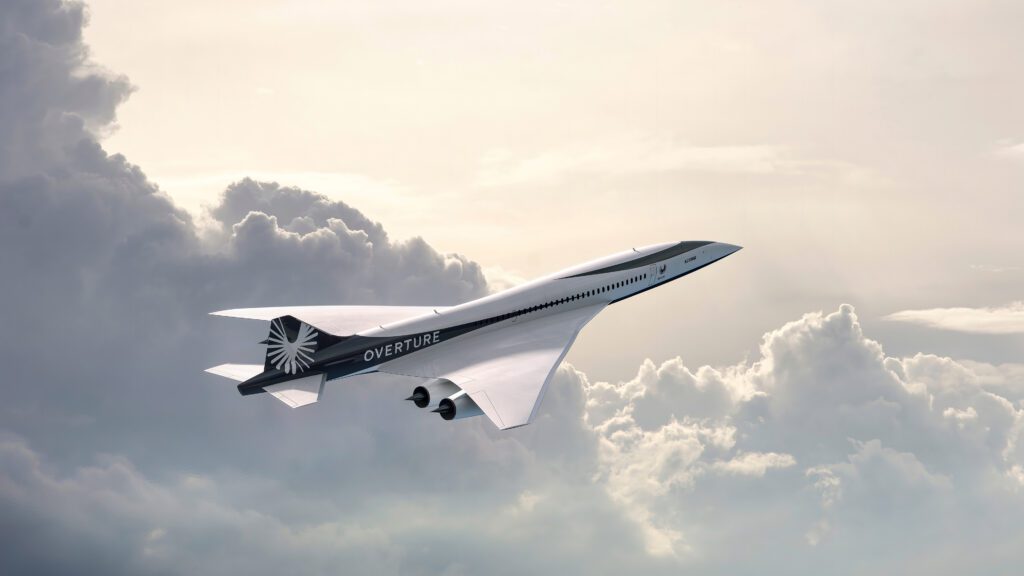
GREENSBORO, NC and DENVER – Boom Supersonic, the company building the world’s fastest airliner, kicked off construction of its Overture Superfactory today in Greensboro, North Carolina. The Overture Superfactory is a state-of-the-art manufacturing facility located on a 62-acre campus at the Piedmont Triad International Airport. This site will house the final assembly line, as well as test facility, and customer delivery center for Boom’s flagship supersonic airliner, Overture.
“Today’s groundbreaking for the Overture Superfactory represents a significant step forward in building sustainable and accessible supersonic travel for the world,” said Kathy Savitt, President of Boom Supersonic. “This milestone is a shared one and we are deeply appreciative of the input, leadership, and support of the Piedmont Triad Airport Authority, local community, and the state of North Carolina.”
By 2032, Boom will hire more than 2,400 workers at the Superfactory, and recruiting is already underway. North Carolina economists estimate that the full Boom manufacturing program will grow the state’s economy by at least $32.3 billion over 20 years. In addition to Boom’s job creation in the state, the company is creating over 200 internships for students in North Carolina public universities, community colleges, and trade schools to build the next generation of supersonic workers.
“Building on our legacy of ‘First in Flight,’ North Carolina is ready to partner with Boom Supersonic in leading the way to a fast and clean aviation future,” North Carolina Governor Roy Cooper said. “Our economy is taking flight with a talented workforce and strong infrastructure ready for these new, good-paying jobs in innovation and aerospace.”
Boom selected North Carolina as the site for Overture aircraft manufacturing because of its large skilled talent pool, access to exceptional universities, community colleges, and technical schools, proximity to the Eastern Seaboard for supersonic flight testing over water and close proximity to several top-tier aerospace suppliers. North Carolina’s aerospace manufacturing sector has grown three-times faster than the national average over the past few years.
“It’s an exciting time to live in North Carolina and see the influx of innovative companies establish roots in our state. The high-paying and skilled jobs that Boom Supersonic will create will make a significant economic impact in the Triad and across the entire state,” said North Carolina Senate Leader Phil Berger.
“Boom Supersonic continues to deliver on its commitments and is growing its presence in North Carolina, building excitement in the community,” said Paul Mengert, Chair of the Piedmont Triad Airport Authority. “On behalf of the Piedmont Triad Airport Authority and our board members, we congratulate Boom on this milestone for Overture.”
Throughout this year, Boom will focus on construction of the Overture Superfactory with BE&K Building Group and their design partner, BRPH. The building will be LEED certified in keeping with Boom’s commitment to environmental sustainability.
In 2024, Boom will install tooling, provided by Advanced Integration Technology (AIT), ahead of moving into the building and preparing the facility and staff for Overture production launch the same year.
Boom continues to complete critical program milestones including the unveiling of SymphonyTM, the new propulsion system designed and optimized for Overture, which also took place in Greensboro last month.
About Boom Supersonic
Boom Supersonic is transforming air travel with Overture, the world’s fastest airliner, optimized for speed, safety, and sustainability. Serving both civil and government markets, Overture will fly at twice the speed of today’s airliners and is designed to run on 100% sustainable aviation fuel (SAF). Symphony™, a Boom-led collaboration with industry leaders, is the propulsion system that will power Overture. Overture’s order book, including purchases and options from American Airlines, United Airlines, and Japan Airlines, stands at 130 aircraft. Boom is working with Northrop Grumman for government and defense applications of Overture. Suppliers and partners collaborating with Boom on the Overture program include Collins Aerospace, Eaton, Florida Turbine Technologies (FTT), a business unit of Kratos Defense & Security Solutions, Inc., GE Additive, Safran Landing Systems, StandardAero and the United States Air Force. For more information, visit https://boomsupersonic.com.
Connect with Boom Supersonic on Twitter, LinkedIn, Facebook, Instagram, YouTube
Source: Boom


News
FAA Certifies Boeing 737-7: What It Means for Airlines and the 737 MAX Program
The FAA has certified Boeing’s new 737-7, clearing the smallest 737 MAX variant for service as Boeing and Southwest prepare for first deliveries.


The U.S. Federal Aviation Administration has certified Boeing’s new 737-7, granting the company an amended type certificate that clears the smallest member of the 737 MAX family for commercial service. The milestone closes a multi-year certification effort and puts the focus on execution: Boeing and launch customer Southwest Airlines say preparations are underway to support first deliveries.
For STM Daily News readers, the headline isn’t just “another plane gets approved.” It’s a signal that Boeing has now cleared a key MAX variant designed for long-range flexibility in a smaller footprint—an aircraft type airlines can use to open or defend routes where demand is strong, but not strong enough to justify a larger narrowbody.
What FAA certification means
An amended type certificate means the FAA has approved the 737-7’s design as compliant with commercial aviation regulations. In practical terms, certification allows airlines to place the aircraft into revenue service once deliveries begin and operator-specific steps—training, manuals, maintenance programs, and entry-into-service planning—are completed.
Boeing also said the FAA updated Boeing Production Certificate No. 700 (PC 700) to include the 737-7, supporting production and delivery activities.
Why the 737-7 matters in the MAX lineup
Boeing positions the 737-7 as the smallest and longest-range member of the 737 MAX family. The company says it typically seats 135 to 160 passengers in a two-class configuration and offers a range of up to 3,800 nautical miles (7,040 km). That combination matters because it gives airlines more options to fly longer “thin” routes—markets where frequency and reach matter more than packing in additional seats.
Boeing also highlights performance for operations out of high-altitude airports and in hot climates, where takeoff performance and payload-range tradeoffs can shape fleet decisions.
Efficiency claims: fuel, emissions, and noise
Boeing says the 737-7, like other 737 MAX jets, reduces fuel use and CO2 emissions by 20% and cuts the noise footprint by 50% compared to the airplanes it typically replaces. For airlines, those improvements typically show up in two ways:
- Route economics: lower fuel burn can improve margins on longer sectors and reduce exposure to fuel-price swings.
- Operational constraints: quieter aircraft can help with airport noise requirements and community pressure, while lower emissions support sustainability targets.
Inside the certification effort
Boeing said the certification program began in 2018 and included more than 1,000 hours of flight and ground testing, extensive system safety analysis, and human factors reviews. The company also noted an updated engine anti-ice system to address a potential condition discovered during flight testing.
Boeing Commercial Airplanes President and CEO Stephanie Pope called the certification “important” validation of the airplane’s design and the work of the MAX development team. Mike Sinnett, senior vice president of Product Strategy, Product Development and Development Programs, said Boeing held regular discussions with the FAA and that the process has sharpened the company’s understanding of current regulatory requirements—knowledge Boeing expects will accelerate future development with a renewed emphasis on human factors, safety, and quality.
What to watch next
With certification complete, the next phase is about delivery timing and real-world deployment.
- First deliveries to Southwest: Boeing and Southwest are preparing for delivery of the first airplane, including updates to final configuration.
- Production stability: certification removes a major hurdle, but supply chain health and production cadence will determine how quickly the 737-7 shows up in airline schedules.
- The 737-10 timeline: Boeing reiterated it is working to certify the 737-10 this year, keeping attention on how quickly the final MAX variant clears regulatory review.
The bigger MAX picture
Boeing said the 737 MAX family order book stands at more than 7,200 airplanes, with more than 2,300 delivered through the end of June 2026. The 737-7’s certification adds another deliverable product to that portfolio—one aimed at airlines that want long range without stepping up to a larger gauge.
Bottom line
FAA certification of the 737-7 is a meaningful milestone for Boeing and for airlines looking for a smaller narrowbody with long-range capability. The real test now is operational: turning certification into on-time deliveries and reliable entry into service—while the industry watches Boeing’s push to certify the 737-10.
Related Links
- Boeing 737 MAX family overview (manufacturer background/specs): https://www.boeing.com/commercial/737max/
- FAA Aircraft Certification (how type certification works): https://www.faa.gov/aircraft/air_cert/
- FAA Airworthiness Directives (regulatory actions database): https://www.faa.gov/regulations_policies/airworthiness_directives
- Southwest Airlines newsroom (launch customer context / fleet updates): https://www.swamedia.com/
- Boeing Commercial Airplanes newsroom (for follow-ups and official updates): https://boeing.mediaroom.com/news-releases?item=130821
📰 Enjoying STM Daily News? Join the conversation!
💬 Leave a comment, share your thoughts, and subscribe to our newsletter for the latest stories, updates, and “News You Can Use This Moment!” delivered to your inbox.
Stay connected with STM Daily News!
Source:
Boeing (PRNewswire), Aug. 3, 2026 — “U.S. FAA certifies new Boeing 737-7 airplane.”
News
Joby Aviation and Toyota kick off manufacturing alliance to scale electric air taxi production
Joby Aviation and Toyota launch a joint venture to improve productivity, quality, and cost as they prepare to scale electric air taxi production.

Joby Aviation and Toyota Motor Corporation have launched the initial phase of a strategic manufacturing alliance aimed at accelerating commercial production of electric air taxis—an early step the companies say is designed to make “air mobility for all” a practical, everyday reality.
Announced June 30, 2026, the partnership formalizes a new joint venture that will combine Joby’s electric aviation development with Toyota’s production systems and operational expertise. The near-term focus: building the groundwork for commercial production while pushing improvements in productivity, quality, and cost—key factors as the industry moves from prototypes to scaled manufacturing.

What the joint venture is designed to do
According to the companies, the alliance will initially concentrate on:
- Establishing the foundation for commercial production capability
- Advancing manufacturing excellence with an emphasis on productivity, quality, and cost
- Supporting expansion of Joby’s production capacity as it works toward aircraft certification and prepares for anticipated demand
The announcement positions Toyota’s manufacturing playbook—known globally for lean production and continuous improvement—as a lever to help Joby move from development into repeatable, high-quality output at scale.
Why it matters: eVTOLs need scale, not just flight tests
Electric vertical take-off and landing (eVTOL) aircraft have become one of the most closely watched bets in next-generation transportation, but the path to viable air taxi services depends on more than successful test flights. Certification timelines, supply chain readiness, and the ability to produce aircraft consistently (and affordably) are often what separates promising technology from commercial reality.
By forming a joint venture focused on manufacturing readiness, Joby and Toyota are signaling that the next competitive frontier is industrialization—how quickly and reliably eVTOL aircraft can be built to meet safety standards and market demand.
Related Links for Further reading
- Joby Aviation (official): https://www.jobyaviation.com
- Joby Investor Relations / News (official updates & filings): https://ir.jobyaviation.com
- Toyota Newsroom (official): https://www.toyotanewsroom.com
- Toyota Global (corporate overview): https://global.toyota/en
- FAA Advanced Air Mobility / Air Taxis (context): https://www.faa.gov/air-taxis
What executives are saying
Joby founder and CEO JoeBen Bevirt emphasized the long-running relationship between the companies, calling the joint venture a reflection of shared confidence in the opportunity ahead.
“Toyota has been by Joby’s side for nearly a decade, providing invaluable guidance and support as we built the foundation for manufacturing our aircraft,” Bevirt said. “Together, we share a vision of making aerial mobility an everyday reality.”
Toyota Motor Corporation Chairman Akio Toyoda framed air mobility as an extension of the company’s broader mission.
“Since our founding, we’ve been guided by the philosophy of providing mobility for all,” Toyoda said, adding that Toyota views air mobility as “a natural extension of that philosophy—from the ground into the sky.”
About the companies
Joby Aviation (NYSE: JOBY) is a California-based transportation company developing an all-electric eVTOL air taxi. The company intends to operate its own air taxi service in cities worldwide and sell aircraft to other operators and partners.
Toyota (NYSE: TM) has operated in North America for nearly 70 years and says it is focused on sustainable, next-generation mobility through Toyota and Lexus brands. Toyota reports nearly 64,000 employees in North America, 14 manufacturing plants, and more than 1,800 dealerships. The company also noted that its North Carolina plant began assembling automotive batteries for electrified vehicles in 2025.
What to watch for next
For readers tracking the air taxi sector, the next milestones will likely center on:
- Details on how the joint venture will be structured operationally
- Updates on Joby’s certification progress and production ramp timelines
- Signs of how manufacturing improvements translate into cost reductions and throughput
- Additional agreements or expanded collaboration as the alliance progresses
While the companies highlighted expected benefits, they also noted the usual forward-looking risks—such as regulatory certification timelines, market conditions, and the ability to finalize additional agreements.
Source: Toyota Motor North America / PRNewswire (June 30, 2026)
📰 Enjoying STM Daily News? Join the conversation!
💬 Leave a comment, share your thoughts, and subscribe to our newsletter for the latest stories, updates, and “News You Can Use This Moment!” delivered to your inbox.
Stay connected with STM Daily News!
aerospace
Boom Supersonic Update 2026: Overture Progress, XB-1 Milestones, and What’s Next
Boom Supersonic’s 2026 update: XB-1 test success, Overture production timeline, funding progress, and the challenges facing the return of commercial supersonic travel.
By STM Daily News Staff
The race to bring back commercial supersonic travel is accelerating once again, led by Boom Supersonic, a Colorado-based aerospace company aiming to succeed where Concorde left off. As of 2026, the company has achieved meaningful technical milestones—but still faces significant financial, regulatory, and industrial hurdles.
Here’s a comprehensive look at where Boom stands today, and what it means for the future of high-speed air travel.
XB-1 Demonstrator Completes Historic Test Program
Boom’s experimental aircraft, the XB-1, has successfully completed its flight test campaign, marking a critical step toward validating the company’s supersonic technology.
- Achieved multiple supersonic flights in 2025
- Demonstrated aerodynamic stability and performance
- Tested “boomless cruise” capabilities to reduce sonic disturbances
The XB-1 program served as a scaled demonstrator for the company’s flagship commercial jet, proving that modern materials, software, and engine integration can support efficient supersonic flight.
With testing complete, the aircraft is expected to be preserved as a prototype, representing a turning point in private-sector aerospace innovation.
Overture: Boom’s Commercial Supersonic Jet
The centerpiece of Boom’s vision is the Overture, a next-generation supersonic passenger aircraft designed to carry between 60 and 80 passengers at speeds approaching Mach 1.7.
Current projected timeline:
- Prototype rollout: Targeted for 2026
- First flight: Expected around 2027
- Commercial service entry: Late 2020s (estimated 2029–2030)
Unlike Concorde, which catered primarily to elite travelers, Boom aims to position Overture with business-class pricing, potentially expanding access to faster global travel.
The aircraft is also being designed with sustainability in mind, including compatibility with sustainable aviation fuel (SAF).
Funding and Financial Momentum
In recent developments, Boom Supersonic secured an additional $100 million in funding, reinforcing investor confidence in the company’s long-term vision.
However, building a supersonic passenger aircraft remains one of the most capital-intensive challenges in aviation. Continued fundraising and strategic partnerships will be essential as the company moves from prototype to production.
Boomless Cruise: A Potential Game-Changer
One of Boom’s most significant innovations is its focus on “boomless cruise,” a method of flying supersonically without producing an audible sonic boom on the ground.
If proven viable at scale, this technology could influence regulatory changes—particularly in the United States, where overland supersonic flight is currently restricted.
The ability to fly faster-than-sound over land would unlock major domestic routes, dramatically reducing travel times between cities like New York and Los Angeles.
Manufacturing Challenges and Delays
Despite technical progress, Boom’s manufacturing ambitions face uncertainty. A planned production facility in North Carolina has experienced delays, raising questions about when large-scale assembly will begin.
Scaling production from prototype to commercial aircraft remains one of the most difficult phases of any aerospace program, requiring supply chain coordination, workforce development, and regulatory alignment.
Industry Skepticism Remains
While Boom has secured interest from major airlines, skepticism persists within the aviation industry.
Key concerns include:
- Certification complexity and regulatory approval timelines
- Operational costs versus ticket pricing
- Long-term demand for supersonic travel
Even airline executives have expressed cautious optimism, with some suggesting the project’s success remains uncertain.
The Bigger Picture: A Defining Decade for Supersonic Travel
Boom Supersonic has moved beyond concept and into real-world testing, demonstrating that modern supersonic flight is technically achievable.
However, the next phase—bringing Overture to market—will determine whether supersonic passenger travel becomes a viable industry once again or remains an ambitious experiment.
If successful, Boom could redefine global travel times. If not, it will join a long list of bold aerospace ventures that struggled to overcome economic reality.
Sources and External Links
- Boom Supersonic – Year in Review
- XB-1 Aircraft Overview
- Overture Aircraft Specifications
- Funding Announcement
- Industry Perspective
Dive into “The Knowledge,” where curiosity meets clarity. This playlist, in collaboration with STMDailyNews.com, is designed for viewers who value historical accuracy and insightful learning. Our short videos, ranging from 30 seconds to a minute and a half, make complex subjects easy to grasp in no time. Covering everything from historical events to contemporary processes and entertainment, “The Knowledge” bridges the past with the present. In a world where information is abundant yet often misused, our series aims to guide you through the noise, preserving vital knowledge and truths that shape our lives today. Perfect for curious minds eager to discover the ‘why’ and ‘how’ of everything around us. Subscribe and join in as we explore the facts that matter. https://stmdailynews.com/the-knowledge/




