Connect with us

Activism

Claudia Bartra Teams Up With Fusion Academy to Promote Anti-Bullying Initiative

Published

on

Last Updated on September 19, 2025 by Daily News Staff

child showing message written in a notebook.Anti-Bullying Initiative

Photo by RODNAE Productions on Pexels.com

Claudia Bartra Teams Up With Fusion Academy to Promote Anti-Bullying Initiative

Local entrepreneur and philanthropist teams up with Fusion’s three Florida campuses to stand up against bullying.

OCA RATON, Fla. (Newswire.com) – Businesswoman and philanthropist Claudia Bartra and Fusion Academy in Miami, Boca Raton, and Palm Beach Gardens are teaming up to prevent bullying in their schools and communities. 

“We’re excited to have Claudia on board,” said Christina Seamster, Ph.D., Area Head of School. “She is a great community partner and we’re thrilled to be teaming up with her for our zero-tolerance bullying initiative.”

Bartra is actively involved in the community, notably with La Granja, her successful chain of award-winning Peruvian restaurants. Her philanthropic contributions include her work with ASPIRA, a youth organization for Latin American children, providing scholarships to students attending Palm Beach State College, and being honored for her support of children’s education both in the United States and her home country of Peru. Bartra deeply values the power of education, and her collaboration with Fusion Academy is no exception. 

Founded in 1989 in Solana Beach, California, Fusion Academy has 80 campuses across the U.S., including three in Florida: Boca Raton, Miami, and its most recent addition in Palm Beach Gardens. With one-to-one classrooms and personalized instruction, Fusion Academy can center every student’s needs while providing opportunities to interact with other students. During “Homework Cafe” time, students can work on homework collaboratively, play games, and eat snacks together. A student’s five-hour day at the school is built for their needs and encourages them to be the full version of themselves. Fusion campuses operate between 7:30 A.M. and 7:30 P.M. which gives students flexible learning opportunities that best fit their schedules. 

Every Fusion Academy location ensures each student experiences both academic and social-emotional core learner outcomes: being resourceful, critical thinking, self-awareness, and inclusivity. 

Claudia Bartra and Fusion Academy want to confront the nationwide problem of bullying and provide a resource for students where they can feel comfortable in addressing their concerns to their parents and teachers. Bullying not only affects the students who are being bullied, but also the school community as a whole. According to a 2019 report by the National Center for Educational Statistics, nearly 20% of students in the United States aged 12-18 reported being bullied at school.

Together, Bartra and Fusion Academy created actionable goals to prevent bullying in the school community and beyond:

  1. Making every parent a partner in their child’s education and socio-emotional development. 
  2. Providing holistic socio-emotional learning experiences. 
  3. Being proactive and positive (for both teachers and students).
  4. Provide safe spaces and teacher mentors for each student. 
  5. Encourage peers to come to a common resolution with openness and inquiry. 
  6. Inspire positive change to be a more reflective person.
    7. Identify individual biases and prejudices to become more self-aware and diffuse tense situations. 

Both Bartra and Seamster look forward to implementing the new initiative in 2023. Visit Fusion Academy for information, and to learn more about Claudia Bartra, go to www.claudiabartra.com

Source: Fusion Academy

Nourishing Our Heroes: Eight Years of Impact at Phoenix VA’s Veggies for Veterans

Link: https://stmdailynews.com/nourishing-our-heroes-eight-years-of-impact-at-phoenix-vas-veggies-for-veterans/

Advertisement
Get More From A Face Cleanser And Spa-like Massage

Author


Discover more from Daily News

Subscribe to get the latest posts sent to your email.

Continue Reading
Advertisement SodaStream USA, inc

Sports

Hulk Hogan and the unraveling of worker solidarity

Published

on

Last Updated on August 29, 2025 by Daily News Staff

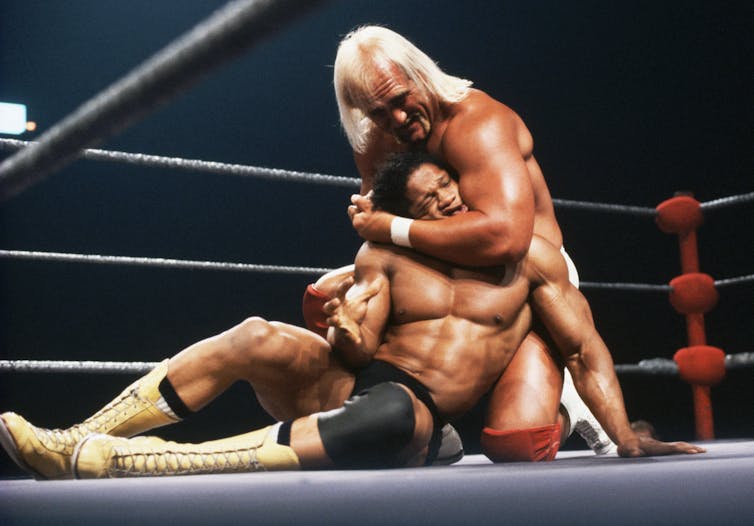
Hulk Hogan
Hulk Hogan was arguably WWE’s biggest star in the 1980s. Wally McNamee/Corbis via Getty Images

Hulk Hogan and the unraveling of worker solidarity

Brian Jansen, University of Maine Hulk Hogan’s death by heart attack at age 71 came as a shock to many fans of the larger-than-life wrestler who’d earned the nickname “The Immortal.” But in many respects, the real surprise was that Hogan, born Terry Gene Bollea, lived as long a life as he did. Despite the staged nature of its combat, professional wrestling is a notoriously dangerous career. Studies rank it among the riskiest professions. Wikipedia even maintains a comprehensive list of premature wrestler deaths. The reasons for professional wrestling’s dangers are largely tied up in the industry’s working conditions. And part of Hogan’s legacy may be his complicity in those conditions. In 1986, he allegedly played a key role in undercutting a unionization effort – arguably the closest pro wrestling has come to unionizing.

‘The Body’ sticks his neck out

WWE’s first WrestleMania was held in 1985. The pay-per-view event was enormously successful and established the company – then known as WWF – as the nation’s preeminent wrestling promotion. During the buildup to WrestleMania 2 the following year, wrestler Jesse “The Body” Ventura understood that performers had more leverage than they’d ever had. He began advocating behind the scenes for a wrestling union. The story, as recounted by Ventura, goes like this: An acquaintance of Ventura’s in the NFL encouraged him to start organizing behind the scenes. WWE was behind the ball: In 1956, the NFL became the first American pro sports league to have its union recognized. It was followed by the NBA in 1957, MLB in 1966 and the NHL in 1967. It helped that Ventura had little to lose. He’d be appearing in the forthcoming “Predator” film; should he get blackballed from wrestling for trying to form a union, he could probably earn a living as an actor. (Few could have predicted that he would go on to be elected governor of Minnesota in 1998.) As Ventura brought together his peers to hash out the details of what a pro wrestling union might look like, he also included the promotion’s reigning champion, Hogan, with the thinking that the support of the WWF’s biggest star would boost the cause and insulate others from retaliation. Instead, WWF owner Vince McMahon got wind of the effort and called his performers individually, threatening their jobs. The unionization effort sputtered, and McMahon eventually pushed Ventura out of wrestling.
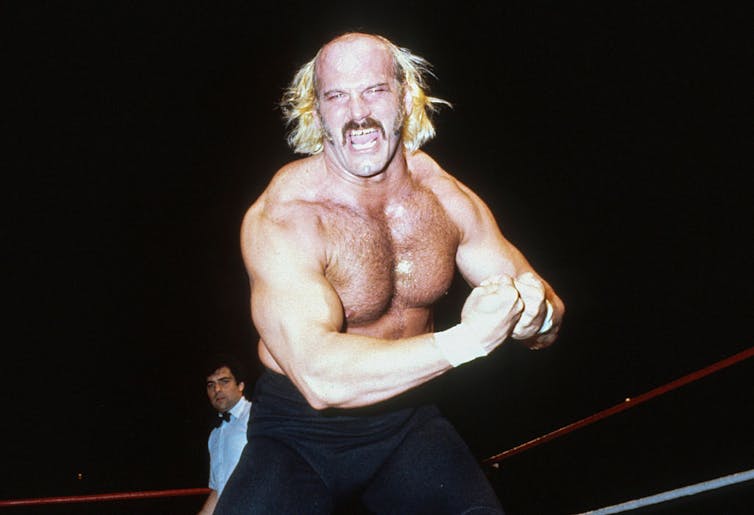
Balding man with huge muscles flexes and screams.
After Jesse ‘The Body’ Ventura tried to unionize his fellow wrestlers, WWE owner Vince McMahon caught wind of the effort – and nipped it in the bud. WWE/Getty Images
Ventura went on to sue the WWF over unpaid royalties. During the discovery process, Ventura testified that he had learned it was Hulk Hogan who snitched to McMahon and effectively sabotaged the union drive. Hogan never publicly admitted to telling McMahon about the rumblings of a union. The WWE has never confirmed nor denied the series of events. Either way, there have been no unionization campaigns in professional wrestling since then.

‘Do the job’

Today’s WWE performers are legally classified as “independent contractors.” They’re responsible for their own travel, training, costuming and insurance, even as their employer owns their likeness and is indemnified from liability due to injury or death. One of pro wrestling’s paradoxes is that the top promotion’s wrestlers aren’t unionized, even as its audience has historically skewed low income and blue collar. Wrestling has long been a family business, and most wrestlers are part-timers working additional jobs – often in blue-collar, union positions. Many of them are truck drivers and warehouse employees, construction workers and bouncers. Wrestler-turned-scholar Laurence de Garis has written about how the language of wrestling is rich with references to labor. A “work” in wrestling is a staged storyline; to “do the job” is to lose a match. The goal of many performers is to be considered a “good worker” by peers, and WWE performers wrestle as many as 300 nights per year. The company has no offseason. The steroid, painkiller and alcohol abuse that has been endemic to the industry may well stem from pressures on wrestlers to perform night after night, even if they’re in pain, for fear of losing their position. In the 1990s, Hogan himself confessed to extensive steroid use, which is known to contribute to heart disease. You’d think that these harsh working conditions would make wrestlers ripe for a union. Why that hasn’t happened is up for debate. WWE bought out its competition in the early 2000s; perhaps its status as the last remaining major wrestling promotion in the nation has weakened the leverage of wrestlers. Or maybe the testosterone-driven, masculine nature of the sport makes solidarity seem like weakness.

Workers left holding the bag

The story of Ventura’s failed unionization bid is a story of what could have been. But in some sense, I see the story of the WWE as part of a broader story of the U.S. economy. After a period of relative stability after World War II, American work since the 1980s has become dominated by mergers, buyouts, deregulation and financialization. Profits are increasingly generated by financial means such as interest and capital gains instead of through offering genuine goods or services. Layoffs and precarious work have become the norm. WWE’s profits exploded in the 1990s and 2000s. The company went public in 1999 – though the McMahon family retained majority control – and dipped its toes into film production, reality television and online streaming. In 2023, WWE merged with UFC’s parent company Endeavor to form TKO Group Holdings. TKO’s revenue was more than US$2.8 billion in 2024. Meanwhile, Endeavor has been spun off as a Hollywood talent agency and was acquired by a private equity firm. The fruits of these new revenue streams and mergers haven’t trickled down to its in-ring performers. So far in 2025, WWE has laid off or released more than 30 wrestlers and at least 10 employees from the company’s corporate wing.
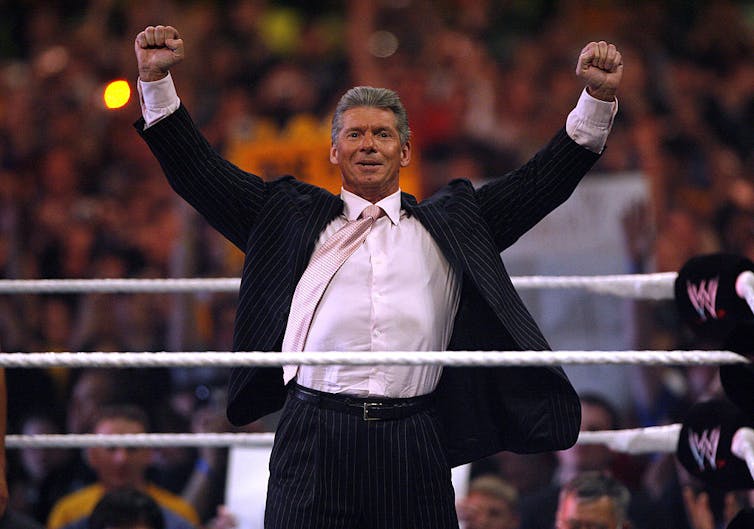
Middle-aged man with gray hair wearing a suit stands in a wrestling ring and raises both fists in celebration.
According to Forbes, Vince McMahon’s net worth is $3.1 billion. Leon Halip/WireImage via Getty Images
Much as professional wrestlers have remained independent contractors, this arrangement has become normalized in the broader American economy, with more than 36% of Americans participating in the gig economy. In 2022, Stanford researchers identified gig work as a “social determinant of health,” since most gig workers lack employer-sponsored health care, paid time off or sick days.

All for one and none for all

In today’s economy, luck or happenstance, rather than merit, seem more likely to influence who achieves financial security and who scrapes by, living paycheck to paycheck. Hulk Hogan, as professional wrestling’s biggest star for 20 years, certainly believed he earned his place at the top of the industry. But without diminishing his talents, it’s worth noting he arrived at precisely the correct moment in history to become that star. For many years, a wrestler was expected to have “shoot” skills – that is, actual wrestling expertise – should an opponent ever go rogue and turn a staged performance into a real fight. But as McMahon’s power and influence expanded, the look, the sound and the character of the wrestler became most important. How well could a wrestler perform for the camera? How well could he sell T-shirts to young fans? Despite Hogan’s limitations as a technical in-ring performer, his mullet, mustache and “24-inch pythons” – the nickname given to his enormous biceps – made him the right person at the right time. Hogan also succeeded because his opponents in the ring were willing to make him look like a star. They were able to “do the job” and do it safely. Another paradox of professional wrestling is that it requires performers to appear as if they are hurting one another. But their primary goal, in fact, is keeping one another safe. To me, that sounds a lot like solidarity. Brian Jansen, Assistant Professor of English and Media Studies, University of Maine This article is republished from The Conversation under a Creative Commons license. Read the original article.


Author


Discover more from Daily News

Subscribe to get the latest posts sent to your email.

Continue Reading

The Bridge

Bruce Springsteen’s ‘Born to Run’ still speaks to a nation vacillating between hope and despair

Published

on

Born to Run
Bruce Springsteen performs in Atlanta on Aug. 22, 1975, during the ‘Born to Run’ tour. Tom Hill/WireImage via Getty Images

Bruce Springsteen’s ‘Born to Run’ still speaks to a nation vacillating between hope and despair

Louis P. Masur, Rutgers University I was 18 when Bruce Springsteen’s third album, “Born to Run,” was released 50 years ago, and it couldn’t have come at a better time. I’d just finished my freshman year in college, and I was lost. My high school girlfriend had broken up with me by letter. I had no idea what I wanted to do with my life. I was stuck back in my parents’ apartment in the Bronx. So when I dropped the record onto my Panasonic turntable and Springsteen sang, “So you’re scared and you’re thinking/That maybe we ain’t that young anymore” on the opening track, “Thunder Road,” I felt as if he were speaking directly to me. But no song moved me more than the album’s title track, “Born to Run.” How I longed for that sort of love – and how I also felt strangled by the “runaway American dream.” The song was about getting out, but also about searching for a companion. I, too, was a “scared and lonely rider” who craved arriving at a special place. Decades later, I combined the personal and the professional and wrote a book about the making and meaning of the album.

All eyes on the Boss

The album was shaped by the times, particularly the malaise of the post-Vietnam and post-Watergate American landscape. There was an energy crisis, and it wasn’t only oil that was in short supply. The excitement of the 1960s had passed, and rock ’n’ roll itself was in the doldrums. Elvis had become a Las Vegas lounge act; the Beatles had broken up; Bob Dylan had been a recluse since his motorcycle accident in 1966. The No. 1 hit in 1975 was “Love Will Keep Us Together,” by the Captain and Tennille. Obituaries to rock music appeared regularly. Springsteen went into the studio feeling the pressure to produce. His first two albums had received good reviews but sold poorly. After seeing a show in Cambridge, Massachusetts, in 1974, writer Jon Landau proclaimed Springsteen “the future of rock ’n’ roll.” Springsteen wore the label uneasily, though he had more than enough ambition to try and fulfill the prophecy: He later called “Born to Run,” “my shot at the title, a 24-year-old kid aiming at the greatest rock ’n’ roll record ever.” But in the studio, he struggled. It took him six months to record the title song. He kept rewriting the lyrics and experimenting with different sounds. He was composing epics: “Tenth Avenue Freeze Out,” “Backstreets,” “Jungleland.” And he was trying to tie it all together thematically as his characters searched for love and connection and endured disappointment and heartbreak. When Springsteen was finally done with the album, he hated it. He even threw a test pressing into a pool. But Landau, who had come on to co-produce, convinced him to release it.

Poetry for the masses

Despite Springsteen’s apprehension, the response to “Born to Run” was remarkable. Hundreds of thousands of copies flew off the shelves. Springsteen appeared on the covers of Newsweek and Time, where he was hailed as “Rock’s New Sensation.” Writing in Rolling Stone, critic Greil Marcus called it “a magnificent album that pays off on every bet ever placed on him.” There was backlash from some corners: critics who resented all the hype Springsteen had received and who thought the music bombastic. But most agreed with John Rockwell of The New York Times, who praised the album’s songs as “poetry that attains universality. … You owe it to yourself to buy this record.”

An operatic drama

The album pulsates between hope and despair. Side 1 carries listeners from the elation of “Thunder Road” to the heartbreak of “Backstreets,” and Side 2 repeats the trajectory, from the exhilaration of “Born to Run” to the anguish of “Jungleland.” I felt I knew the characters in these songs – Mary and Wendy, Terry and Eddie – and I identified with the narrator’s struggles and dreams. They all wrestled with feeling stuck. They longed for something bigger and more exciting. But what was the price to pay for taking the leap – whether for love or the open road? These lyrical, operatic songs about freedom and fate, triumph and tragedy, still resonate, even though today’s music is more likely to emphasize beats, samples and software than extended guitar and saxophone solos. Springsteen continues to tour, and fans young and old fill arenas and stadiums to hear him because rock ’n’ roll still has something to say, still makes you shout, still makes you feel alive. “It’s embarrassing to want so much, and to expect so much from music,” Springsteen said in 2005, “except sometimes it happens – the Sun Sessions, Highway 61, Sgt. Peppers, the Band, Robert Johnson, Exile on Main Street, Born to Run – whoops, I meant to leave that one out.” In fall 1975, I played “Born to Run” over and over in my dorm room. I’d stare at Eric Meola’s cover photograph of a smiling Springsteen in leather jacket and torn T-shirt, his guitar pointing out and upward as he gazes toward his companion. Who wouldn’t want to join Springsteen and his legendary saxophonist, Clarence Clemons, on their journey? That October, I went on a first date with a girl. We’ve been married 44 years, and the stirring declaration from “Born to Run” has proven true time and again: “love is wild, love is real.”
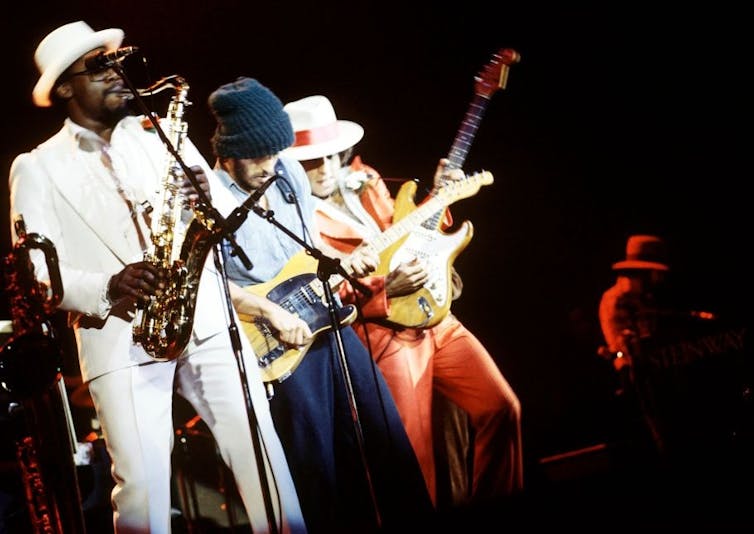
A saxophonist and two guitar players stand side-by-side as they perform on stage.
Saxophonist Clarence Clemons, Bruce Springsteen and guitarist Steven Van Zandt perform in the U.K. during the European leg of the ‘Born to Run’ tour. Andrew Putler/Redferns via Getty Images
Louis P. Masur, Distinguished Professor of American Studies and History, Rutgers University This article is republished from The Conversation under a Creative Commons license. Read the original article.
Discover more from Daily News

Subscribe to get the latest posts sent to your email.

Continue Reading

News

Lady Gaga bomb plot: Thwarted plan lifts veil on the gamification of hate and gendered nature of online radicalization

Published

on

Last Updated on May 23, 2025 by Rod Washington

Lady Gaga
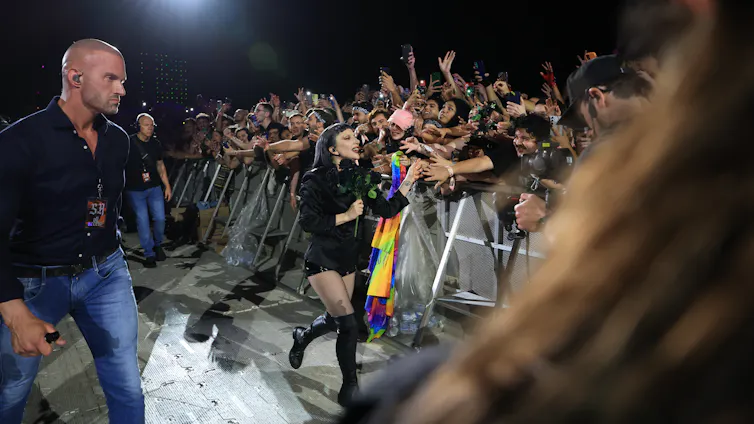
Lady Gaga performs at Copacabana Beach on May 3, 2025, in Rio de Janeiro, Brazil. Kevin Mazur/WireImage for Live Nation
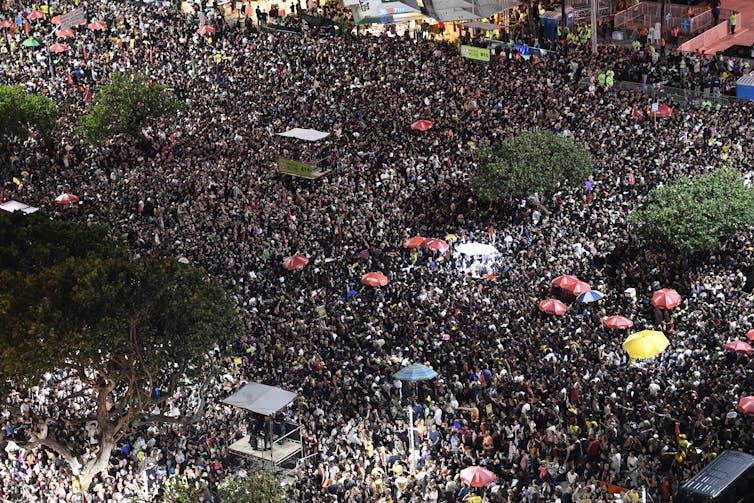
David Nemer, University of Virginia and Arthur Coelho Bezerra, Instituto Brasileiro de Informação em Ciência e Tecnologia (Ibict) The more than 2 million people who attended Lady Gaga’s free concert on Copacabana Beach on May 3, 2025, had no idea of a plot that, if successful, would have turned the event into a tragedy fueled by hate. Just hours before a sea of admirers waved fans in sync with the singer during the event, the Rio de Janeiro Civil Police thwarted a planned attack involving Molotov cocktails and improvised bombs – and targeting the American singer’s LGBTQ following. Two people have since been arrested over the plot, which was organized by users of digital platforms such as Discord. The intent, authorities say, was radicalizing and recruiting teenagers to carry out the planned attack. Those responsible hoped to entice these young people into actions that would gain online notoriety.
A crowd of people interspersed by umbrellas
More than 2 million people are said to have attended the Lady Gaga concert in Rio. Daniel Ramalho/AFP via Getty Images
Although authorities were able to prevent the attack, the incident stands as a stark warning about the growth of hate networks among youth − and how platforms fuel the radicalization of teenagers, especially boys and young men. As experts in the anthropology of technology and information science, we see something deeply generational about this phenomenon. The recent Netflix series “Adolescence” broke viewership records by portraying an environment in which young people live in hyperconnected online spheres, absent of state oversight and parental supervision. In these spheres, bullying toxic masculinity permeates, and violence – often targeted at women and sexual minorities – is normalized. The show was set in the U.K., but it holds up a mirror to the world. Data from polling company Gallup reveals a growing ideological divide between young men and women in Gen Z across the globe. Too often, that divide, in which young men and boys are turning against progressive values, is being expressed through actions associated with the “manosphere,” such as misogyny and incel behavior.

Platforms for hate

In the United States, women aged 18 to 30 are now 30 percentage points more liberal than their male counterparts, according to Gallup’s surveys. In Germany, where a right-wing coalition recently won national elections and the extreme-right AfD party is rising in popularity at an alarming rate, the gap is also 30 points. In Poland, although the far-right left power at the end of 2023 after eight years, nearly half of men ages 18 to 21 support far-right parties − compared with just one-sixth of women in the same age range. This polarization is emerging just as online platforms such as Discord, TikTok and Reddit have become formative spaces of identity. Instead of promoting diversity, however, many of these platforms have been used as machines for producing and spreading hate. The 2021 study Mapping Discord’s Darkside, published in the journal New Media & Society, shows that despite marketing efforts to distance itself from the far right, Discord hosts thousands of servers associated with neo-Nazi, misogynistic, racist, transphobic and conspiratorial discourse. Researchers identified 2,741 such servers − with more than 850,000 active members. These networks end up functioning as recruitment hubs, where young people − especially boys − are lured in by edgy memes, promises of belonging and identity games based on excluding others. Discord’s structure, which prioritizes privacy and decentralization, has become fertile ground for the emergence of what scholar Adrienne Massanari calls “toxic technocultures.” Services such as Disboard − an informal search engine for Discord servers − are used to recruit teens into communities that glorify Nazism, encourage hatred toward women and people from the LGBTQ+ community, and even offer “services” for coordinated attacks on other servers. And this appears to be the case in the thwarted attack on the Lady Gaga concert.

Presenting a challenge

A significant factor in the success of these radicalizing environments is gamification − the use of gamelike elements such as challenges, rewards and leaderboards in nongame contexts. When applied to social networks and extremist forums, gamification turns engagement into competition and hate speech into a playful challenge. This practice makes the entrance into extremism more palatable for young, impressionable people by masking violence behind seemingly harmless mechanics. As noted in the European Commission’s 2021 report Gamification and Online Hate Speech, gamification has become a powerful tool for normalizing and spreading hate, particularly among young people seeking recognition and belonging. This process, known as “bottom-up gamification,” occurs when users create the rules, symbolic rewards and challenges. For example, by turning hate speech into “challenges” that involve humiliating women or people from the LGBTQ+ community online, the dehumanization of targets is presented in playful, viral ways.

Turning hate into entertainment

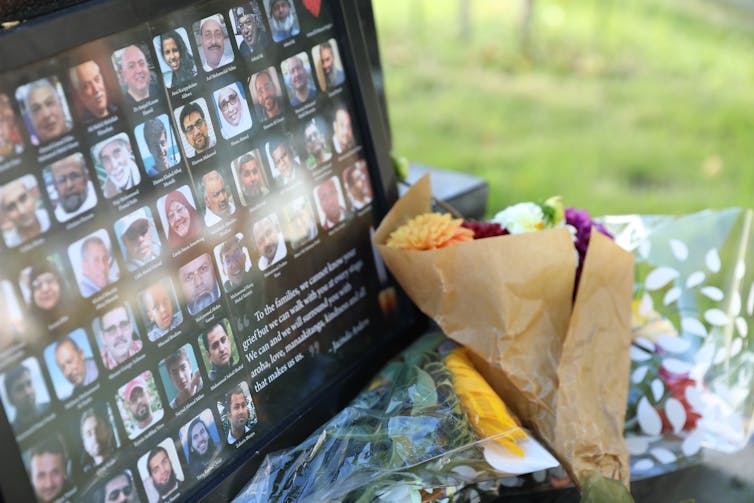
The investigation into the foiled attack on Lady Gaga’s Copacabana concert revealed exactly this mechanism: The attack was treated as a “collective challenge,” with youths recruited to build Molotov cocktails and explosive backpacks in order to gain notoriety on social media. The logic of gamification also creates a structure of “achievement” and “scoring” that fosters competition and reinforces radical ideology. As shown in the 2022 study by criminologists Suraj Lakhani and Susann Wiedlitzka, attacks such as the 2019 mosque attack in Christchurch, New Zealand, in which 51 people were killed, were planned and executed with strong inspiration from gaming, including live broadcasts similar to “Let’s Play” sessions, in which people offer live commentary during walk-throughs of games, typically first-person shooting games, and viewer comments that treat the number of deaths as a “score.”
Flowers are laid next to a board showing the names and faces of people
More than 50 people were killed in the terrorist attack on Christchurch mosques in New Zealand on March 15, 2019. Omer Kablan/Anadolu Agency via Getty Images
This aestheticization of violence serves as a bonding element among young men in digital spaces, especially those who already feel marginalized or frustrated and who find in these games of hate a sense of belonging and affirmation. In this way, gamification transforms hate into entertainment, strengthening ties in toxic communities and making it harder to recognize the behavior as extremism.

Turning a generation off hate

Society is, we believe, facing a dual challenge: the need for moderation of platforms and for support for measures preventing men and boys from being drawn into toxic digital spaces. The gender divide within Gen Z is no small matter, too. It reflects, in broad terms, a rift between a generation of young women who, empowered by #MeToo and other feminist movements, have embraced progressive causes, and a generation of men who, threatened by their perceived diminished power in this new environment, are being co-opted by far-right and misogynistic discourse in digital spaces. This gap has real consequences in personal relationships, in schools and for democracy at large. But it also reveals something that we believe must be stated clearly: Platform regulation is not just a technical issue. The future of a generation cannot be built on algorithms that reward hate and radicalization. This article is a translated and adapted version of a story that was originally published by The Conversation Brazil on May 8, 2025.The Conversation David Nemer, Associate Professor in the Department of Media Studies, University of Virginia and Arthur Coelho Bezerra, Professor titular, Instituto Brasileiro de Informação em Ciência e Tecnologia (Ibict) This article is republished from The Conversation under a Creative Commons license. Read the original article.
Author

Want more stories 👋
"Your morning jolt of Inspiring & Interesting Stories!"

Sign up to receive awesome articles directly to your inbox.

STM Coffee Newsletter 1

We don’t spam! Read our privacy policy for more info.


Discover more from Daily News

Subscribe to get the latest posts sent to your email.

Continue Reading

Trending