Connect with us

Consumer Corner

Debunking 5 myths about when your devices get wet

Published

on

Last Updated on July 13, 2025 by Daily News Staff

wet
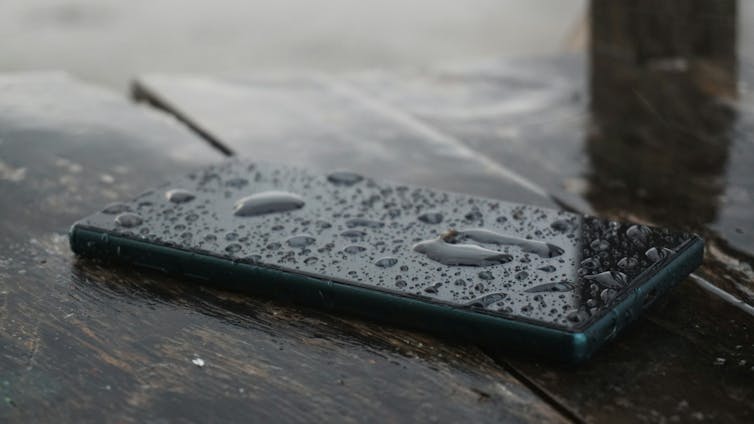
Consumer technologies get wet as a regular part of everyday life.
Shuvro Mojumder/Unsplash , CC BY-SA

Rachel Plotnick, Indiana University

Nearly everyone has encountered the unthinkable: Your smartphone landed in the toilet. Or you forgot to take off your smartwatch before jumping into the pool. Or maybe you meant to take those earbuds out of your pocket before running the laundry. What now?

Internet forums are chock-full of advice to dry out that drenched device, but problematic myths about liquid protection and repair make it hard for consumers to separate fact from fiction.

I’m a researcher who studies how technologies play a part in people’s everyday practices and experiences. My new book, “License to Spill: Where Dry Devices Meet Liquid Lives,” explores the wet-dry boundary in how people perceive and treat their electronic devices.

Here are five common myths about getting devices wet:

Myth 1: My device turned back on! It’s fine

While it’s a relief to see your technology rise from the dead, what you can’t see are subtle processes occurring inside, like corrosion. The breakdown of your device’s metal parts due to moisture often happens over time, in a period that can take place days, weeks or months after the offending incident.

That’s why even humidity from moist climates or your steamy shower can make a long-term impact, despite the fact that everything booted up right away after a splash or dunk.

Myth 2: My ‘waterproof’ device can tolerate any kind of wetness

The term “waterproof” is a controversial one – so controversial, in fact, that the Federal Trade Commission has strict rules about using the term in advertising, once even banning it from ad copy selling wristwatches.

Given the vagueness of the term, it’s better to examine different water resistance standards, such as ingress protection, or IP, ratings and MIL-SPEC, or ISO in the case of watches, and to read the fine print about what those standards actually cover.

Myth 3: My device has a great IP rating, so it’s been tested under real-world conditions

Companies often advertise IP ratings as a way to entice consumers to purchase their products, but it’s important to know that these ratings are based on contact with fresh water. If you’re worried about Jacuzzi suds or that tipped-over can of beer, there’s no guarantee that a manufacturer has tested your device in these – often sticky – situations, and an IP rating won’t account for them.

Advertisement
Get More From A Face Cleanser And Spa-like Massage

Myth 4: I’ve got some rice in the kitchen. I can fix this myself!

It’s natural to panic and seek out the quickest household solution when a spill or dunk happens, and a cup of rice is still a commonly sought-out option.

However, the rice hack doesn’t work very well, and rice particles can enter the device to cause even further damage. Aside from bringing your device to a professional repairer, you’re better off immediately powering down your product, removing its battery and plug if you can, and letting all the components dry over a day or two.

Myth 5: Well, this device is broken, but I’ve got a warranty to replace it

While you’re pulling your product from its watery grave, you might find relief in the fact that it came with a warranty. Not so fast.

Most traditional consumer technology limited warranties don’t cover liquid damage. These days, you usually need to purchase an add-on warranty, often called Accidental Damage from Handling. Beware, though: Even those policies may limit how many wetness “incidents” or “events” you’re allowed per year.

Air flow is the best way to dry a device that’s taken a dunk. Don’t expose your device directly to rice, cat litter or other particles.

Keeping it realistic

Water resistance features on devices like laptops, tablets, smartphones and smartwatches have recently improved, but the deck is still often stacked against consumers who must wade through the hype of advertising claims, mystifying classification systems and penalizing policies.

That’s why it’s critical for manufacturers to think carefully and ethically about how their products are designed, marketed and serviced. In terms of design, water resistance is no longer a niche feature meant solely for industrial workers or outdoor adventurers. While it’s unrealistic to expect a device that’s designed to resist every hazard, it’s also unreasonable to ask consumers to tiptoe around the products that provide them with access to critical resources and social support.

It’s important for manufacturers to avoid promising consumers the Moon. Samsung Australia, for instance, paid AU$14 million in penalties for exaggerating its phones’ protection for swimming. It’s certainly fun to watch commercials with Lil Wayne spraying a smartphone with champagne or see him dunk it in a fish tank, but if manufacturers are advising against these practices, then they shouldn’t be romanticizing them.

Sure, it’s probably common sense that your phone shouldn’t take a bath in champagne. Yet life is constantly happening around – and with – our devices, from the shower and the kitchen to the gym and the beach. This means that fairer policies around repair, like those promoted by the right-to-repair movement, and warranties should stop treating consumers like they’re “bad” users.

After all, we’re each just one splash away from crying over spilled milk.

Rachel Plotnick, Associate Professor of Cinema and Media Studies, Indiana University

Advertisement
Get More From A Face Cleanser And Spa-like Massage

This article is republished from The Conversation under a Creative Commons license. Read the original article.

Continue Reading
Advertisement SodaStream USA, inc

Consumer Corner

Frustration at the Pump: Why Americans are Exploring Electric Vehicles

Exploring Electric Vehicles: For more than one-third of Americans, one simple number is leading them to research electric vehicles: the final tally at a recent gas station fill-up. The pump is no longer just the close of a sale; for a growing number of drivers, it’s where questions begin.

Published

on

Frustration at the Pump: Why Americans are Exploring Electric Vehicles

Frustration at the Pump: Why Americans are Exploring Electric Vehicles

(Feature Impact) For more than one-third of Americans, one simple number is leading them to research electric vehicles: the final tally at a recent gas station fill-up.

This, according to new research from Hyundai Motor America, isn’t a hypothetical situation. In fact, 23% of respondents reported it’s happened to them more than once. For nearly half of Americans, pulling up to the pump now brings frustration or outright dread.

Many drivers have a number in mind where the math begins shifting, and once the shift happens, it rarely goes away. The pump is no longer just the close of a sale; for a growing number of drivers, it’s where questions begin.

For 23% of those surveyed, $5 per gallon is where they would start considering alternatives to a gas-powered vehicle. While some say they wouldn’t consider alternatives based on gas costs at all, this meaningful share of Americans points toward a specific tipping point.

Some begin by comparing models or brands while others find themselves on an automaker’s website, further along in the process than they initially expected to be. Most don’t act on this impulse right away, but drivers are increasingly caught somewhere between curious and committed – and 46% of those surveyed said they’d be likely to seriously research an EV.

The desire to leave the pump behind, which an EV would allow for, is a deal nearly half of respondents said they would take. However, the transition isn’t frictionless as charging access and range anxiety remain the top concerns for 28% of potential buyers.

While the move toward electric vehicles is often framed as a long-term decision made with spreadsheets and financial planning, for many Americans, it’s beginning somewhere smaller: a routine fuel stop and an eye-opening receipt.

If you’ve found yourself dismayed at the pump, find more information on electric vehicles at HyundaiUSA.com.

Photo courtesy of Shutterstock

collect?v=1&tid=UA 482330 7&cid=1955551e 1975 5e52 0cdb 8516071094cd&sc=start&t=pageview&dl=http%3A%2F%2Ftrack.familyfeatures
tracke

SOURCE:
Hyundai

Welcome to the Consumer Corner section of STM Daily News, your ultimate destination for savvy shopping and informed decision-making! Dive into a treasure trove of insights and reviews covering everything from the hottest toys that spark joy in your little ones to the latest electronic gadgets that simplify your life. Explore our comprehensive guides on stylish home furnishings, discover smart tips for buying a home or enhancing your living space with creative improvement ideas, and get the lowdown on the best cars through our detailed auto reviews. Whether you’re making a major purchase or simply seeking inspiration, the Consumer Corner is here to empower you every step of the way—unlock the keys to becoming a smarter consumer today!

Advertisement
Get More From A Face Cleanser And Spa-like Massage

https://stmdailynews.com/category/consumer-corner

Want more stories 👋
“Your morning jolt of Inspiring & Interesting Stories!”

Sign up to receive awesome articles directly to your inbox.

STM Coffee Newsletter 1

We don’t spam! Read our privacy policy for more info.

Continue Reading

home improvement

Simple Ways to Make At-Home Recycling More Effective

To create a more eco-friendly household, consider these practical tips to help you reduce waste, stay organized and make at-home recycling part of your everyday routine.

Published

on

Last Updated on May 12, 2026 by Daily News Staff

17862 Recycling detail intro

Simple Ways to Make At-Home Recycling More Effective

(Feature Impact) Recycling is a simple way households can reduce waste and help protect natural resources. While many communities offer curbside recycling programs, some people still wonder if they’re doing it correctly or if they’re missing opportunities to recycle more.

To create a more eco-friendly household, consider these practical tips to help you reduce waste, stay organized and make recycling part of your everyday routine.

Know What Your Local Program Accepts

Recycling rules vary depending on your city or waste management provider. Most curbside programs include items like cardboard, paper, aluminum cans and plastics, but others – such as glass – may require drop-off recycling. Review your community guidelines so recyclables don’t accidentally end up in the regular trash.

Create a Simple Sorting System

Set up clearly labeled bins – separated for paper, plastics and metals – in a high-traffic area like the kitchen, garage or laundry room.

Rinse Before You Recycle

Food residue can contaminate other recyclables and may cause entire batches of materials to be rejected during the recycling process. Quickly rinsing yogurt cups, jars or soup cans of leftover residue helps keep recycling streams clean and more likely to be processed properly.

Break Down Boxes

Cardboard boxes are among the most commonly recycled household materials. Flattening boxes before placing them in the recycling bin saves space and allows collection trucks to hold more.

Compost Food Scraps

Not everything belongs in the recycling bin, particularly food waste. Composting fruit peels, vegetable scraps, coffee grounds and eggshells is an easy way to reduce the amount of trash your household produces. Finished compost can be used in gardens, flower beds or houseplants, turning kitchen waste into a valuable resource.

Find more ideas for making recycling a natural part of your household routine at eLivingtoday.com.

Photo courtesy of Shutterstock

Advertisement
Get More From A Face Cleanser And Spa-like Massage
    collect?v=1&tid=UA 482330 7&cid=1955551e 1975 5e52 0cdb 8516071094cd&sc=start&t=pageview&dl=http%3A%2F%2Ftrack.familyfeatures
track

SOURCE:

eLivingtoday.com

Welcome to the Consumer Corner section of STM Daily News, your ultimate destination for savvy shopping and informed decision-making! Dive into a treasure trove of insights and reviews covering everything from the hottest toys that spark joy in your little ones to the latest electronic gadgets that simplify your life. Explore our comprehensive guides on stylish home furnishings, discover smart tips for buying a home or enhancing your living space with creative improvement ideas, and get the lowdown on the best cars through our detailed auto reviews. Whether you’re making a major purchase or simply seeking inspiration, the Consumer Corner is here to empower you every step of the way—unlock the keys to becoming a smarter consumer today!

https://stmdailynews.com/category/consumer-corner

Continue Reading

Automotive

Driving Habits May Cost More Than You Think: Data-Backed Driving Techniques to Reduce Fuel Costs and Vehicle Wear

Published

on

Last Updated on May 12, 2026 by Daily News Staff

17769 A detail intro

Rising Fuel Costs

(Feature Impact) If you’re feeling pain at the pump, you’re not alone. However, it’s not just rising gas prices that can impact your wallet – it might be your own habits on the road that negatively impact fuel efficiency and add extra strain to your vehicle.

With gas prices fluctuating by more than $1 per gallon nationally in recent years, Mercury Insurance is highlighting how driver behavior can significantly influence fuel costs.

According to the U.S. Department of Energy, aggressive driving – rapid acceleration and hard braking – can reduce fuel economy by up to 40% in city driving and 30% on highways, increasing annual fuel expenses by hundreds of dollars.

For the average American driver, that inefficiency adds up quickly. AAA estimates that annual fuel costs can exceed $2,000 depending on vehicle type and region. A 30-40% reduction in fuel economy can translate into hundreds of dollars in additional fuel expenses each year – before factoring in the added wear on key vehicle components.

“Most drivers think of aggressive driving as a safety issue, but it’s also a cost issue,” said John Dicken, director, material damage claims at Mercury Insurance. “From a claims standpoint, we see how habits like hard braking and rapid acceleration accelerate wear on brakes, tires and suspension components. Smoother driving isn’t just more efficient – it helps reduce preventable damage over time.”

17769 B detail embed1

The Hidden Cost of Driving Aggressively

Fuel is only part of the equation.

  • Brake replacement can range from $300-800 per axle, depending on the vehicle.
  • A new set of tires can cost $600-1,200 or more.
  • Poorly maintained or underinflated tires can lower gas mileage by roughly 0.2% for every 1 PSI drop in pressure, according to federal transportation data.

Over time, inconsistent maintenance and aggressive driving habits compound these costs.

“Driving behavior directly impacts how often certain parts need to be replaced,” Dicken said. “When drivers anticipate traffic, maintain steady speeds and keep up with routine maintenance, they reduce strain on their vehicle and potentially avoid unnecessary repair expenses.”

Practical Eco-Driving Tips That Make a Measurable Difference

Consider these strategies recommended by Mercury Insurance to improve efficiency and reduce vehicle wear:

Accelerate gradually: Avoid rapid starts and jackrabbit acceleration, which significantly reduce fuel economy.

Brake smoothly and anticipate stops: Looking ahead and easing into stops reduces stress on brake systems.

Advertisement
Get More From A Face Cleanser And Spa-like Massage

Maintain consistent speeds: Using cruise control on highways can help improve fuel efficiency.

Keep tires properly inflated: Check tire pressure monthly and before long trips. If you’re unsure what your vehicle’s tires should be inflated to, locate the sticker inside the driver’s side door jamb for the proper PSI inflation or refer to the owner’s manual.

Remove excess weight: Extra cargo and unused roof racks reduce efficiency and increase drag.

Efficiency, Safety and Sustainability

The Environmental Protection Agency reports that transportation accounts for roughly 28% of total U.S. greenhouse gas emissions. While vehicle technology continues to improve, individual driving behavior remains one of the most immediate ways drivers can reduce both fuel consumption and environmental impact.

“Small, consistent changes in how we drive can produce meaningful savings over time,” Dicken said. “It’s one of the simplest ways drivers can protect both their budget and their investment.”

For more information about efficient driving and other cost saving measures, visit MercuryInsurance.com/Resources.

Photos courtesy of Shutterstock

    collect?v=1&tid=UA 482330 7&cid=1955551e 1975 5e52 0cdb 8516071094cd&sc=start&t=pageview&dl=http%3A%2F%2Ftrack.familyfeatures
track

SOURCE:

Mercury Insurance

Explore the latest in innovation, AI, gadgets, startups, and digital trends in STM Daily News’ Techsection.

Advertisement
Get More From A Face Cleanser And Spa-like Massage
Continue Reading

Trending