

News
Diana Gregory Outreach Services: Nourishing Veterans and Seniors Through Food Access
DGOS fights food insecurity, supporting veterans and seniors through outreach services.

Last Updated on July 5, 2024 by Daily News Staff
Diana Gregory Outreach Services (DGOS) began as a humble fresh produce delivery service in 2009, operating out of a pick-up truck. Over the years, it has evolved into a remarkable organization that supports thousands of seniors, including many veterans, through mobile food drives and nutrition education initiatives. With the generous support of the Walmart Foundation and a LISC Equitable Food Access grant, DGOS is expanding its reach, hiring more staff, and increasing the number of individuals it can serve.
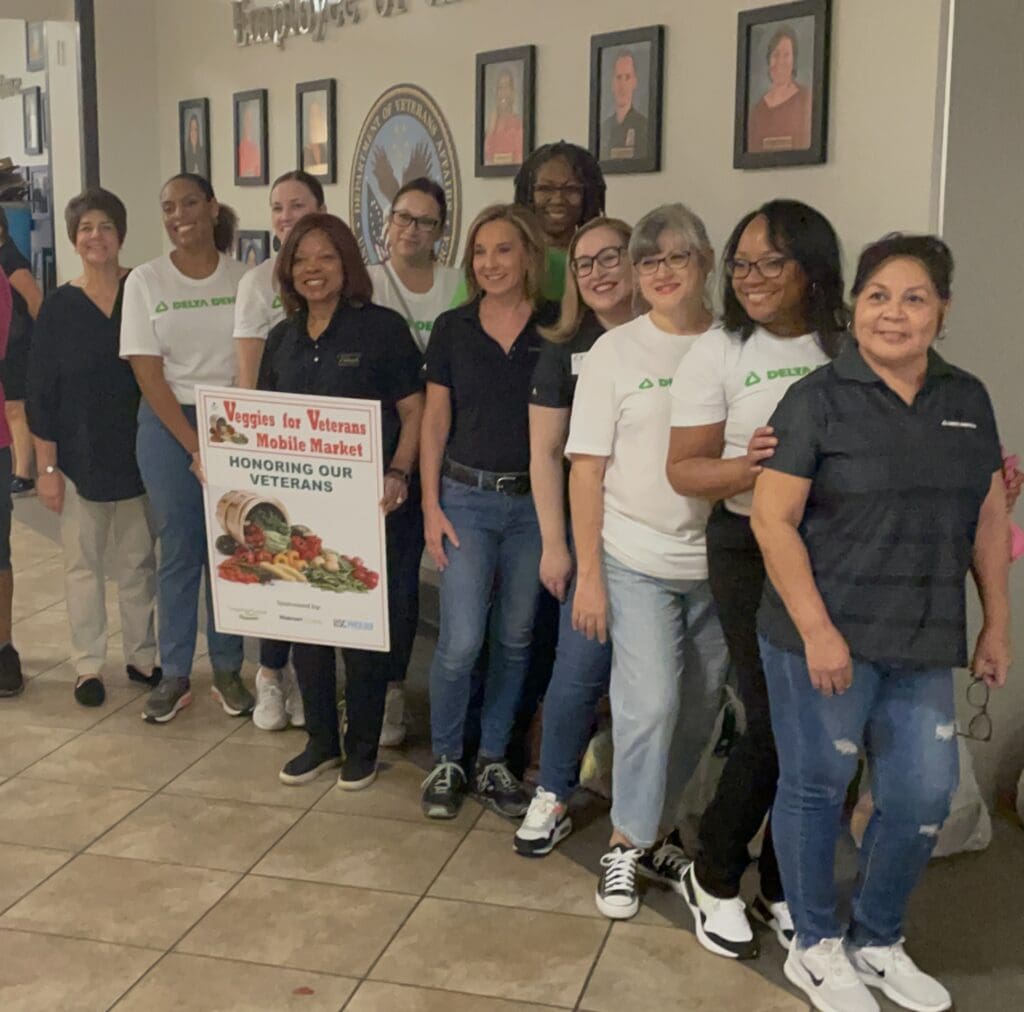
A Personal Journey:
The inspiration for DGOS came when Dennis McGarry, a Vietnam War veteran, noticed the lack of resources available to his fellow veterans and other individuals facing food and housing insecurity. Determined to make a difference, he crossed paths with Diana Gregory, the founder and CEO of DGOS, during a cooking class for residents of his Phoenix apartment building. Together, they embarked on a mission to fight food insecurity, initially focusing on seniors, many of whom were veterans. Six years ago, DGOS expanded its efforts to include pop-up events at VA hospitals, providing much-needed support to those who have served their country.
From Humble Beginnings to Impactful Initiatives:
What began with a pickup truck and a dedicated team of volunteers has grown into a passion project for Diana Gregory. Having retired from a successful career in sales and marketing at Anheuser-Busch, she now leads an initiative that delivers thousands of pounds of fresh produce to those in need. Thanks to a $110,000 LISC Equitable Food Access grant, funded by the Walmart Foundation, DGOS is scaling up its efforts and plans to support 20,000 seniors and veterans with food access and nutrition education this year.
Supporting the Cause:
DGOS has received additional support through the Funds to Feed Initiative, made possible by the City of Phoenix and administered by LISC, totaling $175,000 since 2020. The recent Equitable Food Access grant will allow DGOS to increase the frequency of its distribution events and serve 20% more people compared to the previous year. This milestone would not have been possible without the funding provided by LISC, as acknowledged by Diana Gregory.
Expanding Reach and Volunteer Engagement:
The grant has enabled DGOS to hire more staff and pilot a volunteer engagement model that offers stipends to trained drivers responsible for packing and delivering fresh produce. La Shonya McNeil, a program officer with LISC’s health team, explains that this approach has attracted a dedicated group of veteran and senior volunteers who are committed to improving food access and fostering social connections among underserved individuals in Phoenix.
Addressing Food Inequities:
DGOS is one among eight LISC Equitable Food Access grantee partners working to combat local food system inequities throughout the United States. They employ various interventions, such as hosting neighborhood client choice food pantries and advocating for food policy changes. By supporting organizations like DGOS, LISC aims to ensure that those who have selflessly served their country have consistent access to nourishing food.
Veggies for Veterans
Filling an Overlooked Need:
While mental health issues and homelessness among veterans receive significant attention, the lack of food access remains an often overlooked yet pressing concern. In the United States, one in nine working-age veterans lives in food-insecure households, and one in four veterans has diabetes—an ailment directly linked to poor nutrition. Diana Gregory hopes that by supplying fresh food, DGOS can provide healthier options for veterans and their families, making a tangible difference in their lives.
Gratitude and Enrichment:
A crucial aspect of DGOS’s program is recognizing veterans for their contributions. Each recipient of a bag of produce is personally thanked for their service, a gesture that holds significant meaning for many veterans. Expressions of gratitude may be rare for some veterans, particularly those who are homeless. By providing nourishing food and acknowledging their service, DGOS aims to enrich the lives of veterans and seniors in a meaningful and tangible way.
Diana Gregory Outreach Services has transformed from a grassroots initiative into a powerful force in the fight against food insecurity. Guided by the dedication and vision of Diana Gregory, DGOS continues to expand its reach, supporting thousands of seniors and veterans with fresh produce and nutrition education. With the support of grants and partnerships, DGOS is making a significant impact, ensuring that those who have served their country have access to the nourishment they need. Through their efforts, DGOS is not only filling stomachs but also uplifting spirits, one bag of produce at a time.
For more information on Diana Gregory’s Outreach Services, visit: https://dianagregory.com/
Check out this release about Veggies for Veterans: https://www.lisc.org/our-stories/story/thanking-veterans-their-service-one-bag-groceries-time/


Automotive
Hyundai Unveils All-New Tucson With Bold New Look, Smarter Hybrid Tech
Hyundai has unveiled the all-new Tucson, bringing bolder styling, a next-generation hybrid targeting up to 42 mpg, AI-powered infotainment and the rugged new XRT PRO.

Hyundai’s popular compact SUV gets a major makeover with a targeted 42 mpg hybrid, AI-powered infotainment and a more adventurous XRT PRO model.
Hyundai is preparing the Tucson for its next chapter, unveiling an all-new version of its popular SUV with a dramatically revised design, next-generation hybrid technology and a new digital experience built around artificial intelligence.
Hyundai Motor Company introduced the all-new Tucson in New York City against the Manhattan skyline, calling the redesigned model its “boldest SUV” yet.
For buyers, however, the bigger story may be what lies beneath the new styling. Hyundai is combining improved hybrid efficiency, more advanced infotainment and additional off-road capability in an effort to make the Tucson equally comfortable handling weekday commuting, family duty and weekend adventures.
A Bolder Tucson Takes Shape
The new Tucson adopts Hyundai’s “Art of Steel” design philosophy, giving the SUV a more muscular and purposeful appearance.
Rather than simply updating the outgoing Tucson, Hyundai appears to be pushing the model toward a stronger SUV identity while maintaining the everyday practicality that has helped make the Tucson one of the company’s most important global vehicles.
The new exterior is complemented by a redesigned cabin emphasizing space, storage and easier-to-use controls. Hyundai says the interior includes flexible storage solutions and available relaxation features designed to make longer trips more comfortable.
That combination could be important in a compact SUV segment where shoppers increasingly expect vehicles to serve several roles at once — commuter, family vehicle, road-trip machine and recreational vehicle.
Hybrid Targets Up to 42 MPG
One of the most significant changes is Hyundai’s Next-generation Hybrid System.
Hyundai says the new system is targeting fuel economy of up to 42 mpg, while also attempting to preserve responsive driving performance.
If that target carries through to production specifications and official fuel-economy testing, it could make the Tucson Hybrid particularly attractive to drivers who want SUV practicality without moving to a fully electric vehicle.
The strategy also reflects a broader automotive trend. Hybrids have increasingly become an important middle ground for consumers looking to reduce fuel consumption without changing their driving and charging habits.
Final EPA fuel-economy figures and U.S.-market specifications will ultimately determine how the new Tucson compares with its competitors.
Pleos Connect Brings AI Into the Cabin
Technology is another major focus of the redesign.
The Tucson introduces Hyundai’s Pleos Connect next-generation infotainment platform, which incorporates Gleo AI, an expanding app marketplace and a redesigned user interface.
Hyundai describes Pleos Connect as an evolving digital platform rather than simply a conventional infotainment system.
That could allow the Tucson’s capabilities to expand over time as software, applications and connected services develop.
The important question for drivers will be whether all that technology actually makes everyday tasks easier. Automakers continue adding increasingly sophisticated screens and software to their vehicles, but intuitive controls and minimal driver distraction remain just as important as the number of available features.
Tucson XRT PRO Heads Further Off the Pavement
Hyundai is also expanding the Tucson’s adventurous side with the introduction of the Tucson XRT PRO.
The more rugged model adds enhanced off-road technologies, including Hyundai’s first Smart Terrain Assist, or STA.
The system is designed to help the vehicle adapt to changing terrain and provide drivers with additional confidence when leaving paved roads.
The XRT PRO could broaden the Tucson’s appeal among buyers who like the practicality of a compact crossover but want more capability for camping, outdoor recreation and light off-road travel.
More detailed specifications will help determine just how far the XRT PRO moves beyond the appearance-oriented adventure packages commonly offered in the compact SUV market.
A Major Vehicle in Hyundai’s Bigger Product Push
The importance of the new Tucson extends beyond a single model.
“Millions of families around the world count on the Hyundai TUCSON, and this is the best one we have ever built,” Hyundai Motor Company President and CEO José Muñoz said during the announcement.
Muñoz also said the Tucson begins what Hyundai describes as the most ambitious product offensive in its history.
The automaker plans to introduce more than 100 new or refreshed vehicles globally by 2030, including 58 in North America.
That makes the Tucson something of an opening act for Hyundai’s next generation of vehicles.
The Tucson Enters Its Next Era
Compact SUVs remain some of the most versatile vehicles on the market, and Hyundai appears determined to keep the Tucson competitive by improving several areas simultaneously rather than relying on styling alone.
A targeted 42-mpg hybrid powertrain could appeal to fuel-conscious drivers. Pleos Connect and Gleo AI represent Hyundai’s push toward increasingly software-driven vehicles. Meanwhile, the new XRT PRO gives the Tucson lineup a more adventurous option.
There are still important details to come, including complete U.S. specifications, EPA-certified fuel economy, trim levels, pricing and availability.
But Hyundai’s message is already clear: the next Tucson is intended to be more than a routine redesign.
It is being positioned as a showcase for where Hyundai believes the modern SUV is headed — bolder in appearance, smarter inside and more efficient underneath.
Source: Hyundai Motor Company. Specifications and fuel-economy figures discussed by Hyundai are preliminary and may vary by market. Final U.S. specifications and EPA ratings may differ.
Sources & Related Links
- Hyundai Motor Company — Official All-New Tucson Announcement
Hyundai’s original newsroom announcement covering the redesign, next-generation hybrid system, Pleos Connect, Gleo AI and Tucson XRT PRO. Hyundai
Hyundai Motor: All-New Tucson Official Announcement - Hyundai — All-New Tucson Highlights
Official product page with more detail on the “Art of Steel” design, Pleos Connect, 17-inch display, app marketplace, hybrid technology and XRT PRO. Hyundai
Explore the All-New Tucson - Hyundai USA — Tucson
Hyundai’s U.S. consumer page for Tucson information, specifications, trims and future model updates.
Hyundai USA: Tucson - PR Newswire — All-New Hyundai Tucson Press Release
The syndicated release announcing the new Tucson and Hyundai’s target of up to 42 mpg for its next-generation hybrid system. PR Newswire
Read the Original PR Newswire Release - Car and Driver — 2027 Hyundai Tucson
Independent coverage with additional U.S.-market specifications, including powertrain, interior, cargo and XRT Pro information. Car and Driver
Car and Driver: 2027 Hyundai Tucson Details - Road & Track — 2027 Hyundai Tucson
Additional independent coverage of the Tucson redesign, hybrid powertrain, Pleos Connect and XRT Pro off-road features. Road & Track
Road & Track: New Hyundai Tucson Details

Consumer Corner
Jeep Goes Back to 1945 With the 2027 Wrangler JL-2A
Jeep is looking back more than 80 years with the 2027 Wrangler JL-2A, a Rubicon-based special edition inspired by the Willys CJ-2A, the first Jeep designed specifically for civilian use.
Last Updated on October 5, 2026 by Daily News Staff
The special-edition Wrangler pays tribute to the Willys CJ-2A, the vehicle that helped transform the wartime Jeep into an American civilian icon.
More than 80 years after the first civilian Jeep rolled onto farms, ranches and roads across America, Jeep is reaching deep into its history for a new special-edition Wrangler.
The 2027 Jeep Wrangler JL-2A is a modern tribute to the Willys CJ-2A, introduced in 1945 as the first Jeep vehicle developed specifically for civilian use.
Rather than simply adding a heritage badge to a modern Wrangler, Jeep has incorporated colors, wheels, interior materials and design details inspired by the vehicle that helped establish the civilian Jeep nearly eight decades ago.
The JL-2A is also the 11th installment in Jeep’s Twelve 4 Twelve series of special-edition vehicles.
From the Battlefield to Civilian America
The story behind the JL-2A begins at the end of World War II.
The military Willys MB had earned a reputation for ruggedness during the war, but Willys-Overland saw an opportunity for the basic concept beyond military service.
In July 1945, the company introduced the Willys CJ-2A.
The letters “CJ” stood for Civilian Jeep, and the CJ-2A adapted the military Jeep formula for farmers, ranchers, industrial workers and everyday civilian users.
Changes included a tailgate, larger headlights and a rear power takeoff that allowed the Jeep to operate certain agricultural and industrial equipment. The CJ-2A also helped establish the familiar seven-slot grille that would eventually become one of Jeep’s most recognizable design elements.
It wasn’t just a utilitarian machine, either.
Willys offered memorable postwar color combinations such as Harvest Tan with Sunset Red wheels and Pasture Green with Autumn Yellow wheels.
Those colorful early Jeeps provided much of the inspiration for the new JL-2A.
A 1945 Look on a Modern Wrangler
The 2027 Wrangler JL-2A is based on the modern Wrangler Rubicon, meaning the retro styling is paired with serious off-road hardware.
One of its most noticeable features is a set of exclusive 17-inch retro-style wheels finished in Joose, accompanied by orange front and rear tow hooks. The combination recalls the bright Sunset Red wheels found on some original CJ-2As.
The wheels are paired with standard 33-inch BFGoodrich KO2 All-Terrain tires.
Jeep is also bringing back Gobi exterior paint for 2027. The tan-like color is particularly appropriate for this edition because it echoes the Harvest Tan finish offered on the original CJ-2A.
Other available colors include ’41, Bright White, Sting Gray, Ghost and Joose.
Body-color fender flares and a three-piece hardtop give the JL-2A a relatively clean exterior appearance, while Dark Metallic Grey accents update the Wrangler’s familiar seven-slot grille.
Jeep Takes the Retro Theme Inside
Jeep has carried the historical theme into the cabin with a color and material combination never previously offered on a Wrangler.
The seats are covered in Nappa Heritage Tan leather, complemented by Bison Brown on the door panels, lower instrument panel and center console.
Desert Orange stitching ties the interior to the brightly colored exterior wheels and tow hooks.
There are also several details specifically aimed at Jeep history enthusiasts.
A satin-chrome Willys-Overland shifter medallion pays tribute to the company’s roots, while heritage-inspired HVAC vent graphics incorporate the seven-slot grille and a Willys silhouette.
Perhaps the most interesting detail is found at the rear.
Jeep has created a swing-gate plaque based on the dashboard data-plate artwork of the original CJ-2A. It includes farm and factory imagery recalling the original civilian Jeep’s role as a working vehicle rather than simply a recreational off-roader.
Modern conveniences haven’t been forgotten. The JL-2A includes remote start, an auto-dimming rearview mirror, universal garage-door opener and a front TrailCam with an integrated washer.
How Much Will the Wrangler JL-2A Cost?
Jeep says the JL-2A package will carry an MSRP of $4,995.
According to the automaker, that puts the special edition just $115 above a comparably equipped Wrangler Rubicon, making the package largely about choosing its unique heritage-inspired appearance and equipment rather than paying a substantial premium solely for a limited-edition name.
Orders are scheduled to open in October 2026.
Jeep has not presented the JL-2A as a recreation of the CJ-2A. Underneath the nostalgic colors and Willys-inspired details is a thoroughly modern Wrangler Rubicon.
And that may be the point.
More Than 80 Years of Civilian Jeep History
The original CJ-2A represented a turning point for Jeep.
A vehicle concept born from wartime necessity found a second life in civilian America, where Jeeps became farm equipment, work vehicles, recreational 4x4s and eventually lifestyle vehicles.
The CJ line evolved through multiple generations before eventually giving way to the Wrangler nameplate in the 1980s.
The 2027 Wrangler JL-2A connects those two ends of Jeep’s history — from the simple postwar CJ-2A built to work the back forty to today’s technology-packed Wrangler designed to tackle the trail.
More than eight decades separate them, but park the two side by side and the family resemblance would be difficult to miss.
Source: Stellantis / Jeep, September 12, 2026
A Civilian Legend Reimagined: Jeep Brand Introduces 2027 Jeep Wrangler JL-2A PR Newswire
Jeep Official Website:
Jeep Official Website
STM Daily News
Woman Charged With Felony Animal Cruelty in Santa Ana Puppy Killing
Santa Ana Puppy Killing: Prosecutors have filed felony charges against a 75-year-old Anaheim woman accused of deliberately running over and killing her puppy, Blackey, in Santa Ana.

Last Updated on October 3, 2026 by Daily News Staff
SANTA ANA, Calif. — A 75-year-old Anaheim woman accused of deliberately running over and killing her puppy on a Santa Ana street has now been formally charged with felony animal cruelty, marking a major development in a case that drew widespread attention after surveillance video was released by police.
The Orange County District Attorney’s Office announced Friday, October 2, that Hanh Minh Nguyen, 75, of Anaheim, has been charged with one felony count of animal cruelty, one felony count of animal abuse by a caretaker, and a felony enhancement alleging the personal use of a weapon — a vehicle — to kill the animal.
Nguyen was arrested by Santa Ana police on Thursday, October 1, after investigators used automated license plate reader technology to identify the green Honda Odyssey seen in surveillance footage from the September 8 incident. Police subsequently located Nguyen and found the minivan at her Anaheim residence.
According to the District Attorney’s Office, Nguyen was released from custody after posting $20,000 bail. She is scheduled to appear at the Central Justice Center in Santa Ana on November 2, 2026, in Department C55.
Surveillance video led to investigation
The case began on September 8 at approximately 9:15 a.m., when Santa Ana Animal Services officers responded to a report of a dead black-and-white male pit bull-mix puppy on West Park Lane.

Surveillance footage obtained during the investigation showed a woman removing the puppy from a minivan and placing food near the driver’s side of the vehicle. Authorities allege the woman then slowly drove forward as the puppy approached the food, running over the animal with the vehicle’s rear tire before leaving the scene.
The puppy, identified by authorities as Blackey, died.
The District Attorney’s Office describes Blackey as a 9-week-old puppy. Earlier statements and local news reports described him as approximately 9 months old.
Santa Ana police released surveillance footage of the incident on September 30 and appealed to the public for help identifying the driver.
Within a day, investigators said automated license plate reader technology helped them trace the Honda Odyssey to Nguyen. Police found the vehicle in her garage and took her into custody.
Police previously said Nguyen acknowledged owning and abandoning Blackey. According to the Los Angeles Times, a Santa Ana Police Department spokesperson said Nguyen told detectives she had left the puppy because he had been annoying her boyfriend by biting his shoes and belongings. Police said she acknowledged abandoning the dog but did not admit to intentionally running him over.
Prosecutors file felony charges
The filing of felony charges moves the case beyond the initial police investigation and into the Orange County court system.
Orange County District Attorney Todd Spitzer condemned the alleged killing in announcing the charges and said his office intends to prosecute acts of violence against animals.
Deputy District Attorney Danica Drotman of the Orange County District Attorney’s Animal Cruelty Unit is prosecuting the case.
Nguyen is accused of the offenses and has not been convicted. The allegations against her will now be addressed through the court process.
Her next scheduled court appearance is November 2.
STM Daily News will continue following the case and provide updates as additional information becomes available.
Source and Related Links
- Orange County District Attorney — October 2 charging announcement
- The DA’s release is the strongest source for this update. It provides case number 26CF4923, the exact charges, $20,000 bail, November 2 court date and the prosecutor assigned to the case. Orange County District Attorney
- For corroborating coverage, CBS Los Angeles reports the arrest, use of automated license-plate readers and the subsequent felony charges. CBS News
- CBS Los Angeles — arrest and charges update
- NBC Los Angeles — felony charges update





