

STM Blog
Finding the Missing Piece: One man’s journey to a von Willebrand disease diagnosis
Frank, a 65-year-old man, spent decades suffering from von Willebrand disease (VWD) without a diagnosis. His journey, marked by severe bleeds and uncertainty, changed when his granddaughter was diagnosed with VWD. This discovery led to Frank’s diagnosis and treatment with VONVENDI, which allows him to better manage his condition and regain control of his life.

Last Updated on October 19, 2025 by Daily News Staff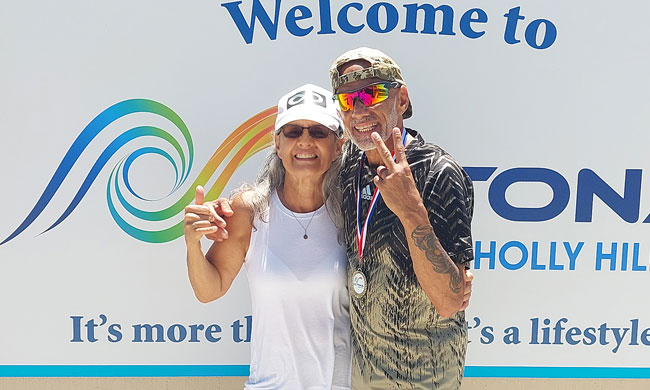
Finding the Missing Piece: One man’s journey to a von Willebrand disease diagnosis
(Family Features) “I wanted to live my life like there was nothing wrong, but the fear was always there.”
That’s how 65-year-old Frank described life with von Willebrand disease (VWD), the most common bleeding disorder, affecting more than 3 million Americans.
For Frank, the signs started early with nosebleeds so severe they seemed unstoppable. In his 30s, one gastrointestinal bleed required nearly 7 pints of blood to stabilize him – a staggering amount, considering most adults only have 8-12 pints total.
Life with VWD can mean living in constant uncertainty. Any injury, surgery or even simple dental procedure can trigger a dangerous bleed. Symptoms like frequent bruising or heavy menstrual bleeding in women can affect quality of life. The consequences for Frank, even before his diagnosis, were often urgent and life-threatening.
Hospital visits and bleeds became routine, draining both his body and spirit. Frank lost weight, struggled with temperature swings and each trip home from the hospital felt like borrowed time before his next bleeding episode.
Eventually, his body began rejecting the blood transfusions meant to treat him during these mysterious bleeding episodes – a complication known as hemolytic anemia. With few options left, Frank and his partner, Carla, faced a future filled with fear and uncertainty, unsure how much longer his body could keep going.
Journey to a Diagnosis
Like many living with VWD, Frank spent years searching for answers – managing symptoms without understanding their cause. Bleeds came without warning. Triggers were a mystery. A diagnosis felt out of reach.
Through it all, Frank and Carla were their own fiercest advocates. Carla became his second set of eyes and ears by researching symptoms, writing down questions and sitting beside him in countless exam rooms.
“I realized when he was in the hospital, I must be there with him,” Carla said. “I needed to be there when the doctors and the nurses were talking to him. I slept in his room to be there for morning rounds to make sure everyone had the correct information.”
For years, they pressed on without answers or an official diagnosis until 2013, when everything changed.
Frank’s granddaughter was diagnosed with VWD, which they learned is a hereditary bleeding disorder. In that moment, something clicked. After decades of uncertainty, Frank finally had a clue and a connection.
He and Carla immediately sought out VWD education. Testing confirmed what they suspected: Frank had been living with VWD all along.
“Getting the diagnosis was a turning point,” Frank said. “For the first time, we weren’t just waiting for the next bleed – we finally had a way to take control.”
A Path Forward
Frank finally found hope and a path forward. After discussing which treatment option may be right for him with his health care team, Frank began using VONVENDI® [von Willebrand factor (Recombinant)] on-demand to treat and control his bleeding episodes.
VONVENDI is the only von Willebrand factor (VWF) treatment made without human blood or plasma with approved uses in both adults and children with VWD. For someone whose body had begun rejecting transfusions, having a recombinant option was important. But more than that – it worked for Frank.
“Since starting VONVENDI, I feel like I finally found the right path forward for me,” Frank said. “I can control my bleeds when they happen, and I have a plan in place to treat the next one.”
The U.S. Food and Drug Administration recently approved an expanded indication for VONVENDI, which is now indicated for adults and children with VWD to treat and control bleeding episodes (on-demand), to prevent excessive bleeding during and after surgery (perioperative) and for adult patients only, to reduce the number of bleeding episodes when used regularly (prophylaxis). Please see below for Detailed Important Risk Information or click here for the full Prescribing Information.
With this expanded indication, VONVENDI can now help more patients like Frank – not just control bleeds but also try to prevent them. Frank and Carla know there’s no cure, but for the first time in a long time, they have a plan to address Frank’s VWD bleeds.
Visit VONVENDI.com or speak with your doctor to learn more about VWD and discuss if treatment may be right for you.
VONVENDI [von Willebrand factor (Recombinant)] Important Information
What is VONVENDI?
VONVENDI is used in adults and children with von Willebrand disease to:
- treat and control bleeding episodes
- prevent excessive bleeding during and after surgery
For adult patients only:
- reduce the number of bleeding episodes when used regularly (prophylaxis)
Detailed Important Risk Information
Who should not use VONVENDI?
You should not use VONVENDI if you:
- Are allergic to any ingredients in VONVENDI.
- Are allergic to mice or hamsters.
Tell your healthcare provider if you are pregnant or breastfeeding because VONVENDI may not be right for you.
How should I use VONVENDI?
Your first dose of VONVENDI for each bleeding episode may be administered with a recombinant factor VIII as instructed by your healthcare provider.
Your healthcare provider will instruct you whether additional doses of VONVENDI with or without recombinant factor VIII are needed.
What should I tell my healthcare provider before I use VONVENDI?
You should tell your healthcare provider if you:
- Have or have had any medical problems.
- Take any medicines, including prescription and non-prescription medicines, such as over-the-counter medicines, supplements or herbal remedies.
- Have any allergies, including allergies to mice or hamsters.
- Are breastfeeding. It is not known if VONVENDI passes into your milk and if it can harm your baby.
- Are pregnant or planning to become pregnant. It is not known if VONVENDI can harm your unborn baby.
- Have been told that you have inhibitors to von Willebrand factor (because VONVENDI may not work for you).
- Have been told that you have inhibitors to blood coagulation factor VIII.
What else should I know about VONVENDI and von Willebrand Disease?
Your body can form inhibitors to von Willebrand factor or factor VIII. An inhibitor is part of the body’s normal defense system. If you form inhibitors, they may stop VONVENDI or factor VIII from working properly.
Consult with your healthcare provider to make sure you are carefully monitored with blood tests for the development of inhibitors to von Willebrand factor or factor VIII.
What are the possible side effects of VONVENDI?
You can have an allergic reaction to VONVENDI.
Call your healthcare provider right away and stop treatment if you get a rash or hives, itching, tightness of the throat, chest pain or tightness, difficulty breathing, lightheadedness, dizziness, nausea or fainting.
Side effects that have been reported with VONVENDI include: headache, nausea, vomiting, tingling or burning at infusion site, chest discomfort, dizziness, hot flashes, itching, high blood pressure, muscle twitching, unusual taste, blood clots and increased heart rate.
Tell your healthcare provider about any side effects that bother you or do not go away.
You are encouraged to report negative side effects of prescription drugs to the FDA. Visit www.fda.gov/medwatch, or call 1-800-FDA-1088.
Please see VONVENDI full Prescribing Information.
©2025 Takeda Pharmaceuticals U.S.A., Inc., 500 Kendall Street, Cambridge, MA 02142. 1-877-TAKEDA-7 (1-877-825-3327). All rights reserved. TAKEDA and the TAKEDA Logo are registered trademarks or registered trademarks of Takeda Pharmaceutical Company Limited. VONVENDI is a registered trademark of Baxalta Incorporated. US-VON-1006v1.0 10/25
SOURCE:
Our Lifestyle section on STM Daily News is a hub of inspiration and practical information, offering a range of articles that touch on various aspects of daily life. From tips on family finances to guides for maintaining health and wellness, we strive to empower our readers with knowledge and resources to enhance their lifestyles. Whether you’re seeking outdoor activity ideas, fashion trends, or travel recommendations, our lifestyle section has got you covered. Visit us today at https://stmdailynews.com/category/lifestyle/ and embark on a journey of discovery and self-improvement.


STM Blog
Golden Bird in Compton: When Mom Took a Night Off
Golden Bird in Compton was an occasional Friday or Saturday treat when Mom wanted a break from cooking. A personal look back at its Alondra Boulevard location and the memories that linger.


Some childhood meals stay with you for decades. For me, Golden Bird fried chicken in Compton is one of them.
Growing up in the Los Angeles area, an occasional Friday or Saturday meant my mom wanted a break from cooking. Those were the nights when takeout became a treat, and Golden Bird was one of the places I remember enjoying most.
The location on East Alondra Boulevard sounds like the one we visited. Researching it brought me to 2600 East Alondra Boulevard, Compton—an address listed in Los Angeles County records under Golden Bird #1.
An address can help place a memory on a map. But what I remember most is much simpler: the chicken was delicious, and getting it was a welcome weekend treat.
Part of Our Family’s Takeout Rotation
Golden Bird wasn’t our only chicken stop. Over the years, there was Pioneer, KFC, Church’s, Louisiana Fried Chicken, and later Popeyes. I also remember Jim Dandy from when I was very young, especially its crinkle-cut fries.
Each name brings back a different memory. Golden Bird brings me back to Compton and those evenings when my mother could take some time off from preparing dinner.
As a kid, I thought about enjoying the food. Looking back, I also appreciate what those meals meant for her: one less dinner to cook and a chance to take a break.
The History Behind the Address
Golden Bird’s own history describes a family recipe associated with Zelma and a wet batter designed to give the chicken a crisp outside while keeping the meat moist. My own memory is simply that I loved eating it.
The Alondra Boulevard location also connects to another chapter in Southern California’s fried-chicken history. Vincent Williams opened a Compton Golden Bird franchise in 1983, according to the Los Angeles Times.
A later profile described Williams developing his Honey’s Kettle concept in his former Compton franchise location. Honey’s Kettle dates its beginnings on Alondra Boulevard to 2000, and a 2012 restaurant visit documented its original location at 2600 East Alondra Boulevard. Those accounts point to a connection between the two businesses at that address.
I haven’t established who operated the restaurant during every year my family visited. But learning about its history adds another layer to a place I remember through its food.
A Weekend Memory Worth Keeping
For me, Golden Bird’s place in the story starts with family. It was an occasional treat, a meal I enjoyed, and a Friday or Saturday when Mom could let someone else handle the cooking.
Decades later, that is still a good reason to remember a neighborhood restaurant.
Editor’s note: Golden Bird is still serving fried chicken in South Los Angeles at 8300 South Western Avenue, at West 83rd Street. For those of us who remember it as a weekend family treat, it’s good to know the Golden Bird name remains part of LA’s food scene. Order pickup and delivery
Did you eat at the Golden Bird on Alondra Boulevard—or another Golden Bird location? Share your memories and favorite orders in the comments.
Explore more food stories in STM Daily News’ Food & Drink section.

For generations, the Santa Monica Pier sign has marked the start of a day at the beach. Now, the familiar blue neon landmark is preparing for a journey of its own.
Santa Monica scheduled removal of the 1941 sign for October 20–22, with shipment to Las Vegas anticipated October 26. The timetable is subject to change, according to the city’s October 19 announcement.
The temporary removal accompanies replacement of the aging bridge connecting Ocean Avenue to the pier. It also creates an opportunity to preserve the historic sign.
YESCO will restore it at its Las Vegas facility. The company’s experience includes work on the “Welcome to Fabulous Las Vegas” sign.
Crews will repair neon tubing, treat rust, repaint components and address structural needs while retaining historic features. The sign will remain in secure storage during bridge construction.
Once the project is finished, it will return above the new bridge at a slightly greater height for visibility and vehicle clearance. The city’s latest announcement targets project completion by 2028, ahead of the Los Angeles Olympics and Paralympics.
Meanwhile, visitors can photograph a lighted, half-scale replica near Pier Burger.
For anyone who associates that glowing arch with Southern California memories, its absence will be noticeable. The restoration is intended to ensure future generations can make memories beneath it, too.
Source: City of Santa Monica — October 19, 2026 announcement
Related Links
- City of Santa Monica: Official sign restoration announcement — October 19, 2026. Primary source for removal dates, shipment to Las Vegas, YESCO’s restoration work and the sign’s planned return.
- Santa Monica Daily Press: Sign restoration during bridge rebuild — October 20, 2026. Additional local reporting on the project and visitor access.
- LAist: Sign removal and how to watch — Reporting on the removal schedule and public viewing opportunities.
Follow more Southern California stories at STM Daily News.

STM Blog | Commentary | October 14, 2026
The viral allegations involving Texas Roadhouse and the treatment of Black customers raised an understandably disturbing question: Could diners trust that they were being served safely and respectfully?
After reviewing available coverage again on October 14, STM Daily News did not locate new verified evidence establishing that the alleged food tampering occurred. We also did not locate a publicly released final report from the outside firm the company said it hired.
The central distinction remains unchanged: the allegations have not been substantiated in the reporting reviewed, while Texas Roadhouse says its investigation points to a hoax.
What the available reporting says
In August, social media posts alleged that restaurant workers deliberately tampered with food served to Black customers. The claims circulated widely and prompted calls for a boycott. Texas Roadhouse said it had not identified current or former employees connected to the accusations.
In reporting updated August 26, KTXS noted that the viral post did not identify a particular restaurant location and that there was no verified evidence connecting the claims to a Texas Roadhouse employee.
The company told the outlet it had found no credible evidence of food tampering. It also said the original Facebook post had been deleted, some users had retracted posts amplifying the claims, and an outside firm had been engaged to investigate the accusations’ source and motives. These details come from August coverage, rather than a new October announcement.
What remains unresolved publicly
Our latest review did not locate a final outside investigation report that readers could examine. We therefore cannot describe that investigation as complete or independently assess its findings.
The company’s description of the claims as a hoax should continue to be attributed to Texas Roadhouse. Likewise, the allegations should not be repeated as though they describe a confirmed incident.
Not locating a new public report does not establish whether investigative work has continued privately. It means the public information we found does not support a stronger conclusion.
Why careful wording still matters
For Black diners, allegations of racist mistreatment can strike a painful nerve. Everyone deserves to sit down for a meal without worrying that their race could make them a target.
Taking that concern seriously requires credible complaints to be investigated thoroughly. It also requires care before assigning blame to a restaurant, a location, or its workers.
Social media can spread a warning far beyond its original audience before anyone verifies the underlying claim. Once that happens, a correction or clarification may never reach everyone who saw the accusation.
That makes transparency essential. Restaurants should explain what they have investigated and what they can substantiate. Those sharing accusations should be equally willing to share corrections and acknowledge uncertainty.
For now, the responsible position is to keep the evidence and the allegations separate. If new, verifiable findings become public, they should be assessed on their merits.
Join the conversation: What do you look for before trusting a viral warning about a business? Share your thoughts in the comments, and keep the conversation respectful.
Editor’s note: This is an October 14 status review of previously reported allegations. It does not announce a new investigative finding.
Sources
- KTXS: Viral post alleges Texas Roadhouse mistreated Black customers; company responds — Includes the company’s statement and explains the lack of verified evidence connecting the allegations to an employee or location.
- Houston Chronicle: Texas Roadhouse investigates Facebook hoax alleging racist food tampering — Covers the company’s denial and its decision to hire an outside investigative firm.
- MySA: Texas Roadhouse faces social media backlash over viral allegations — Details how the claims spread and the restaurant chain’s response.
Related reading
- Snopes: Posts claim Texas Roadhouse servers contaminated Black customers’ food — Examines the viral allegations.
- Restaurant Business: Texas Roadhouse says post alleging racist practices was a hoax — Restaurant industry coverage of the controversy.
- Texas Roadhouse official website — Company information and customer contact options.




